ROLL CALL, NEWSLETTER OF THE FRIENDS OF THE NEW BRUNSWICK MILITARY HISTORY MUSEUM
AMIS/AMIESDE MUSEÉ D’HISTOIRE MILITAIRE DU NOUVEAU-BRUNSWICK
Extracts from previous issues, 2011 to 2022
5 Canadian Division Support Group Gagetown History
5 Canadian Division Support Group (5CDSG), aka Canadian Forces Base Gagetown was created at the beginning of the Cold War as a training facility for the Canadian Army which was in need of an exercise area suitable for the deployment of division-sized armoured, infantry and artillery units. Canada had just deployed two Brigades overseas, with one going to the battlefields of Korea and a second established in northern Germany to face the combined forces of the Warsaw Pact which were threatening NATO. Defence planners recognized the fact that existing facilities were relatively small, and a larger base site would need to be located relatively close to an all-season Atlantic port and have suitable railway connections. Regional economic development planners noted that the establishment of the new base in southwestern New Brunswick would provide considerable economic benefits to the province, although it would eventually come to disrupt the lives of over 900 families living in the area selected.
Following many years of construction, Camp Gagetown was officially opened in 1958, with its headquarters located near the community of Oromocto. The base occupies an expansive plateau west of the Saint John River between the cities of Fredericton and Saint John and encompasses 1,129 sq km. It was the largest military training facility in Canada and the British Commonwealth until the opening of CFB Suffield in 1971.
Initially, Camp Gagetown was the home base for many army regiments, including the Black Watch and the Royal Canadian Regiment, until defence cutbacks resulted in the removal of their parent formation, 3 Brigade Group, from the Canadian Army Order of Battle. Following the unification of the Canadian Forces on 1 February 1968, Camp Gagetown was renamed CFB Gagetown. Since that time, the base has served as the primary combat training centre for the Canadian Army, supported by 3 Area Support Group. Now 5 CDSG Gagetown. The year 2023 marks 64 years of service for both 3 ASG and CTC within our New Brunswick community.
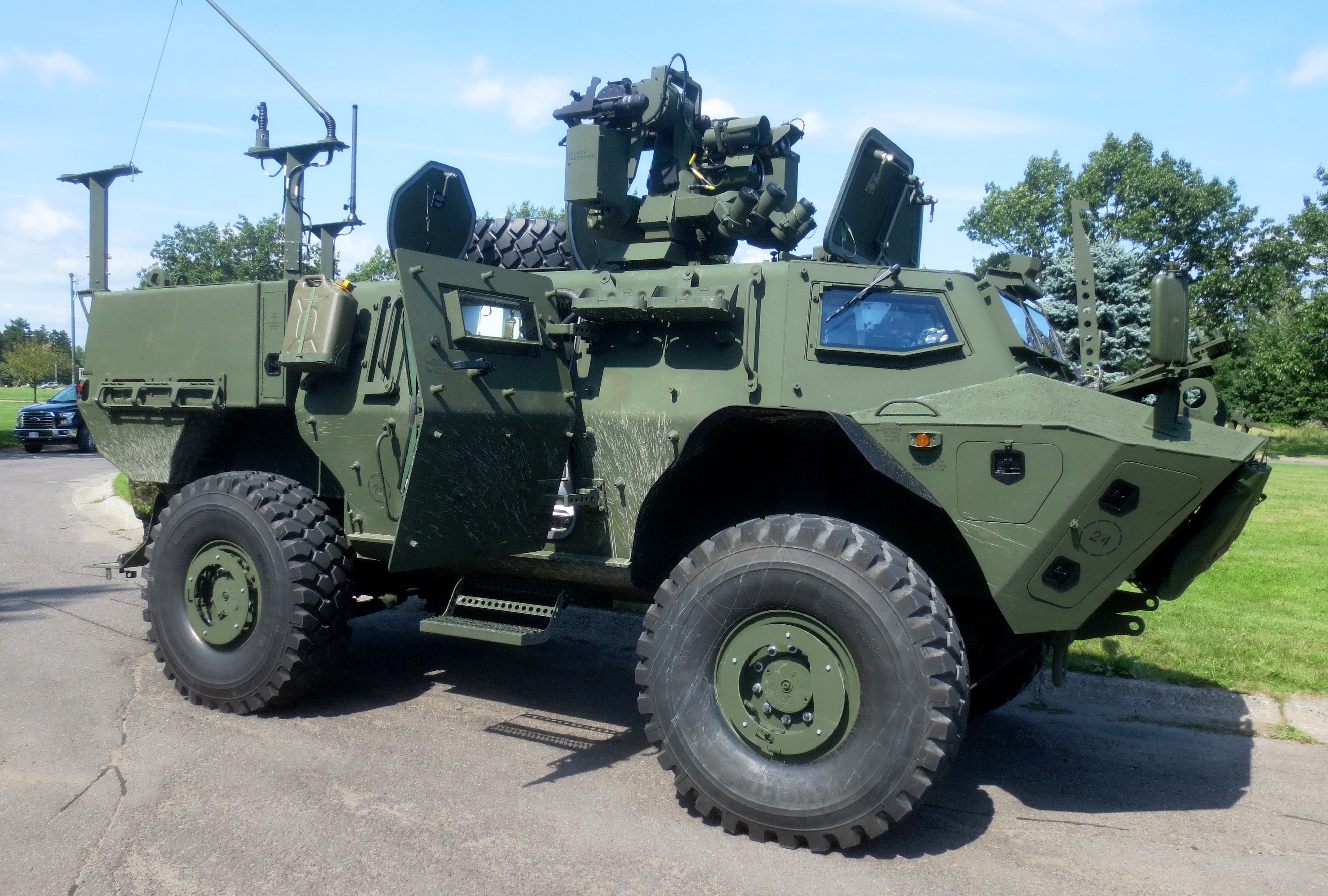
(Harold Skaarup Photo)
Tactical Armoured Patrol Vehicle (TAPV), 5 Canadian Division Support Base Gagetown, New Brunswick.
Fort Hughes (Sir Douglas Hazen Park),(1781 – 1782, 1813 – 1815), Oromocto
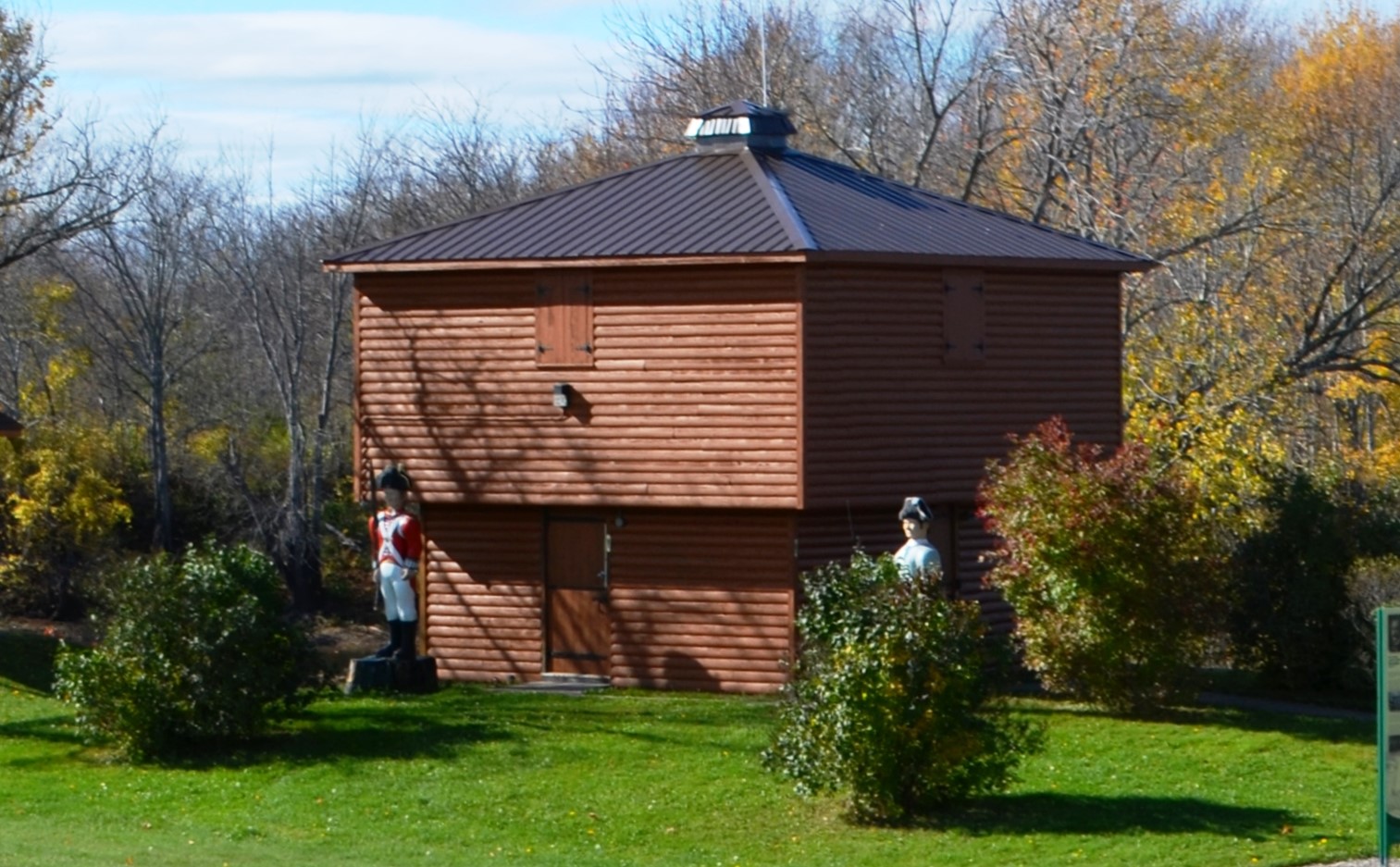
(Town of Oromocto Photo)
A reconstructed British wooden block house located at Sir Douglas Hazen Park. Originally built to protect the local masting operations, and as a relay station between Halifax, NS and Québec City, QC. Rebuilt and re-garrisoned in 1813, it was to be used as a place of refuge and defence if Saint John were to be captured.
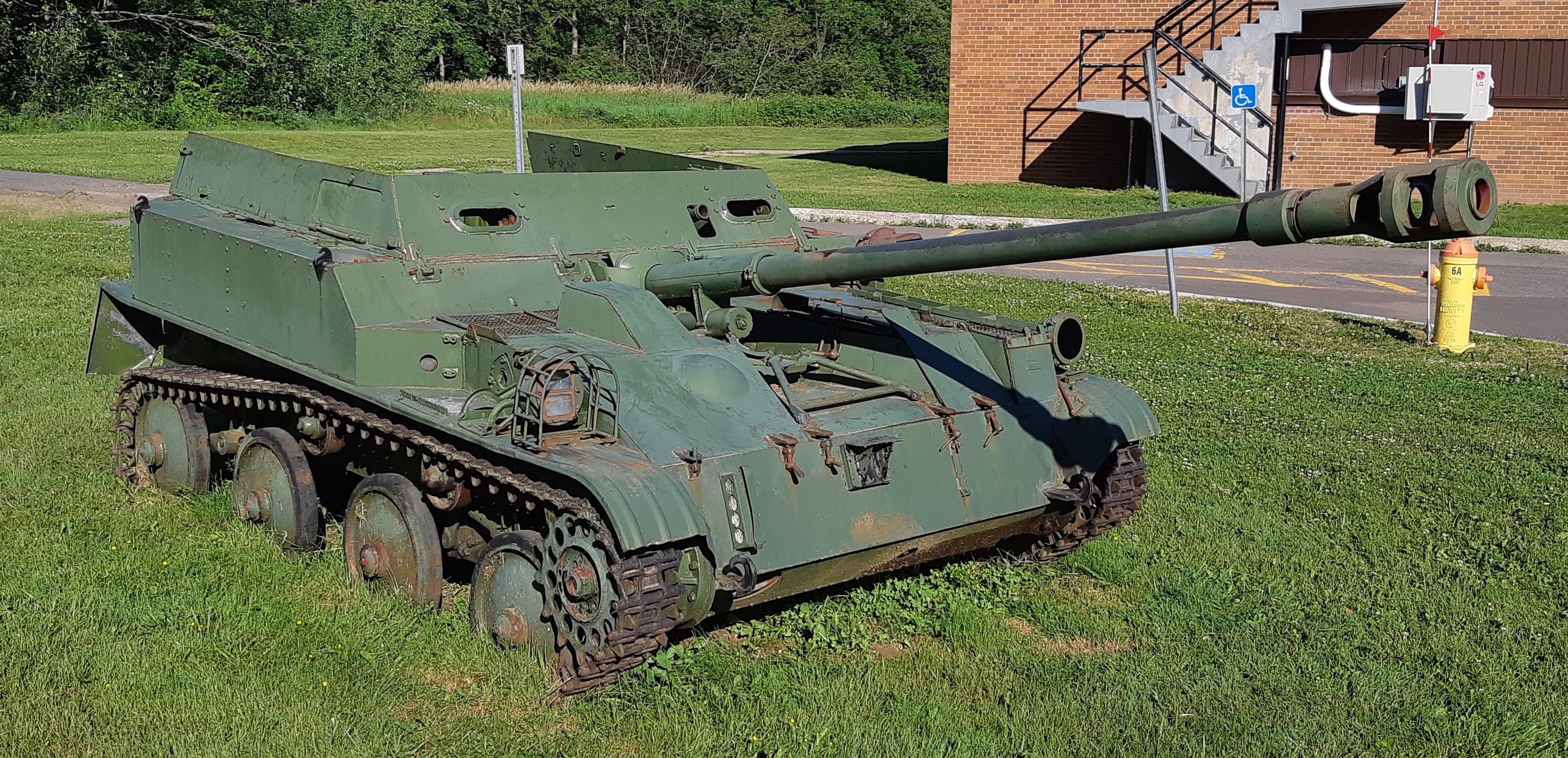
Soviet ASU-57 Assault Gun, NBMHM
(Harold Skaarup Photo)
Russian ASU-57 SP Airborne Assault Gun, Gun Serial No. 52-∏-270, N?556 on display in the NBMHM vehicle park. The ASU-57 is a small, lightly constructed Soviet assault gun that was specifically designed for use by Soviet airborne divisions. From 1960 onwards it was gradually phased out in favour of the ASU-85.
The ASU-57 was designed to be alight-weight assault gun that could be air-dropped and deployed by rocket-assisted parachute (PP-128-500 or P-7) along with the troops. It was lightly armored and armed with a 57 mm gun Ch-51, a development of the Second World War ZIS-2 but with some similarities to the Ch-26. From 1954, an improved 57-mm gun Ch-51M with much shorter double-baffle muzzle brake was fitted. The gun fired standard caliber 57x480R ammunition of the ZIS-2 anti-tank gun, such as the BR-271 series and the O-271U, of which it had 30 on board. The ASU-57’sengine was taken from the GAZ-M-20 “Pobeda” civilian car.
The ASU-57 was a successful design, and saw service with Soviet airborne divisions for around 20 years before being replaced by the ASU-85. During its years of operation 54 vehicles would have been assigned to each airborne division.
One main drawback was the vehicle’s welded aluminum hull, which offered little protection for the crew. However for airborne troops such vehicles are invaluable, giving lightly armed soldiers who are isolated behind enemy lines mobile artillery support on the battlefield.
Every vehicle was equipped with a radio 10 RT-12 and intercom system TPU-47. Late-production models (from 1961)had the R-113 and R-120, as well as a TVN-2 night vision device for the driver.[1]
There is another ASU-57 on display in the Petawawa Military Museum in Ontario. Both of these ASU-57s are reported to have been found in the Middle East and brought back to Canada via Lockheed C-130 Hercules transport sometime inthe early 1970s.
[1]http://en.wikipedia.org/wiki/ASU-57.
Centurion Bridgelayer, 5 CDSG Gagetown
(Library and Archives Canada Photo, MIKAN No. 4816313)
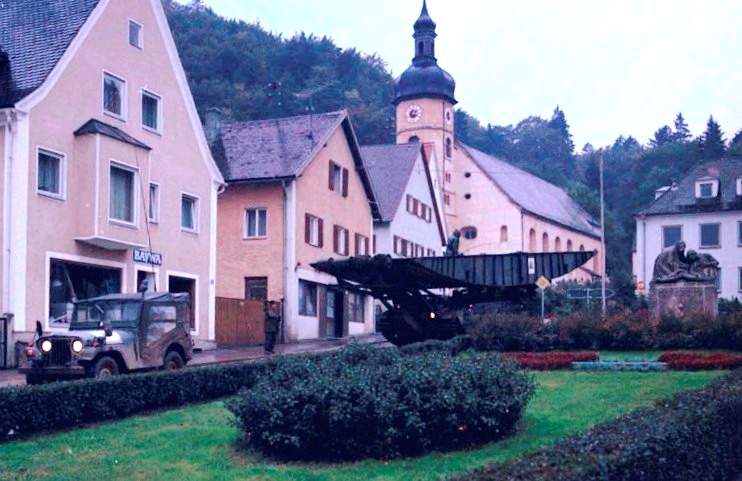
Centurion Armoured Vehicle Launched Bridge (AVLB), (aka No. 6 tank bridge), 4 Field Sqn, RCE, Ex Reforger 74, Eilheim, Germany, Oct 1974.
(Harold Skaarup Photo)
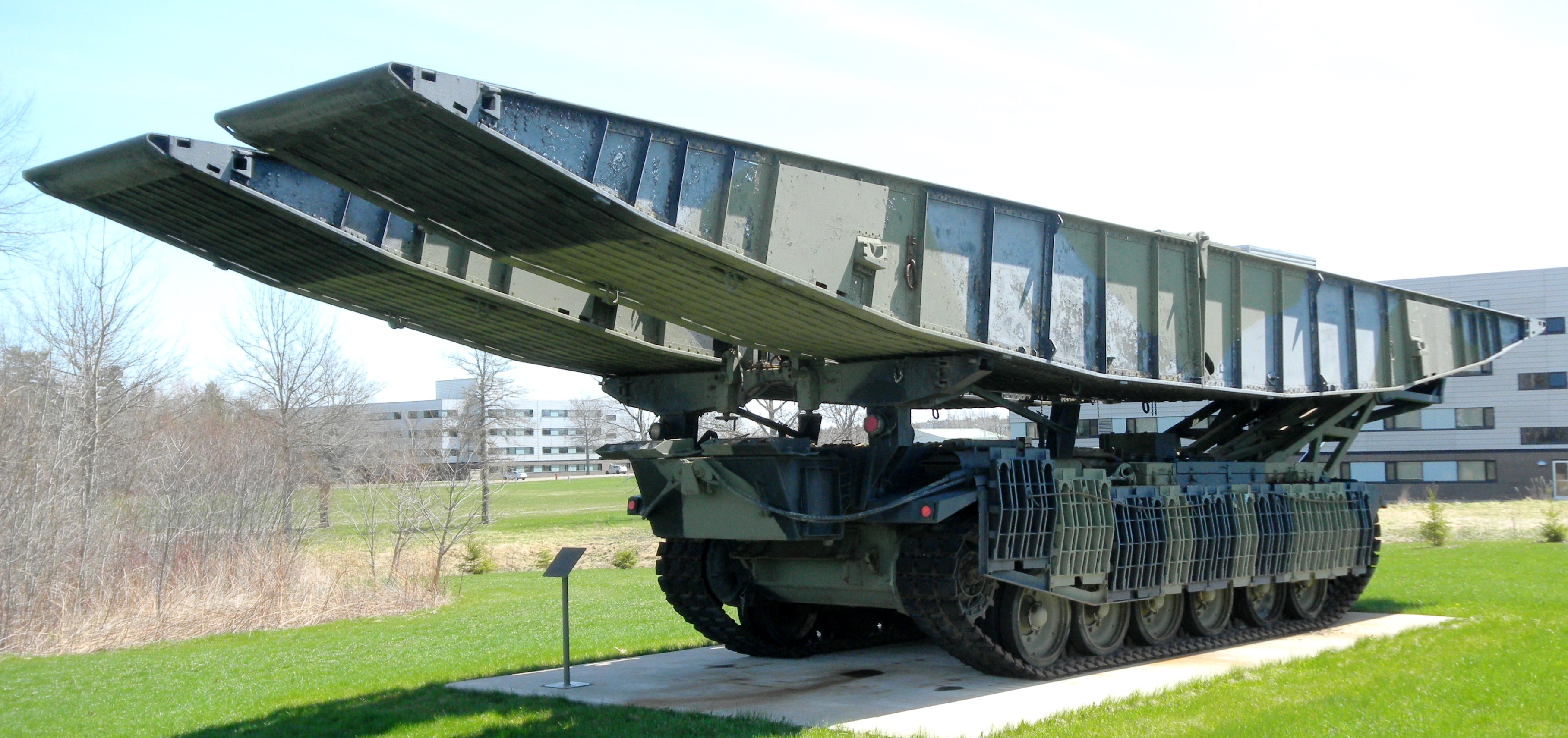
Centurion AVBL (aka Number 6 tank bridge), Canadian Military Engineering Museum, 5 Canadian Division Support Base Gagetown, New Brunswick. This AVBL carried a single piece bridge mounted on the Centurion that departed from the launch method employed by the Churchill Bridgelayer and used an up and over deployment. The bridge itself was 52 feet long, significantly longer than its predecessors and 4 feet 8 inches wide, able to accommodate a load class of 80. The bridge was dimensioned from extensive trials and was the largest single piece that offered a reasonable compromise on mobility. Although the folded or scissor bridge offered a lower visible footprint, it takes longer to deploy and recover. Although the single piece Number 6 tank bridge presented a conspicuous target when it was being deployed, it took less than two minutes to put in place.
When the designs were made for Centurion to become Britain’s main battle tank it was recognised that asuitable replacement for the Churchill bridgelayer would also be needed. The FV4002 was created from the Centurion Mk 5hull to launch and recover the aluminium alloy No. 6 Tank Bridge. It was manufactured by the Royal Ordnance Factory. In Canada the vehicle is identified as the Centurion Bridgelayer Mk. 5 CA, and one is on display outdoors at 5 Canadian Division Support Group Gagetown, not far from the NBMHM.
(Harold Skaarup Photo)
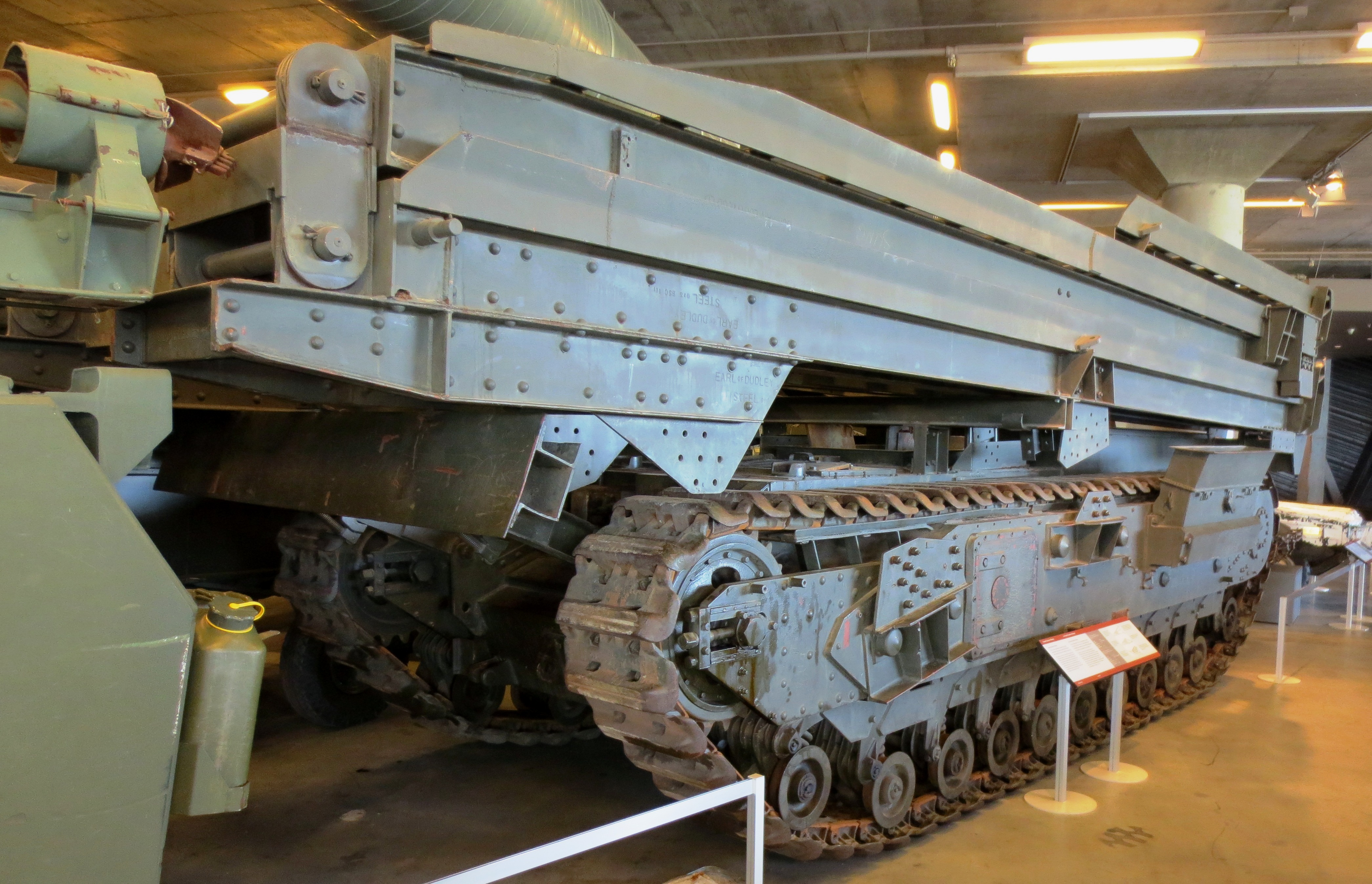
Churchill Infantry Tank Mk IV RE, (Serial No. BW9229), Great Eastern Armoured Ramp (Serial No. WD No T172796/D), only survivor. Great Eastern Tank Ramp, although designed in 1944 the Great Eastern ARC was not available before 1945 and not in time for the D Day landings, still based on the Churchill it was fitted with two ramps, one 27ft long and the other 25ft long. This was to enable higher obstacles to be traversed than the normal ARK’s. Canadian War Museum, Ottawa, Ontario.
The Centurion was a faster vehicle than the Churchill “Great Eastern” Bridgelayer, (one is preserved in the Canadian War Museum in Ottawa), but the heavier class of bridge it carried could span a gap of 15 metres and carry 80 tons. This meant that this bridge was capable of being used by tanks and could be deployed in 2 minutes and recovered within4 minutes. To enable the deployed bridge to be used by smaller vehicles a central roadway was installed by hand between the main bridge sections.
(Harold Skaarup Photo)
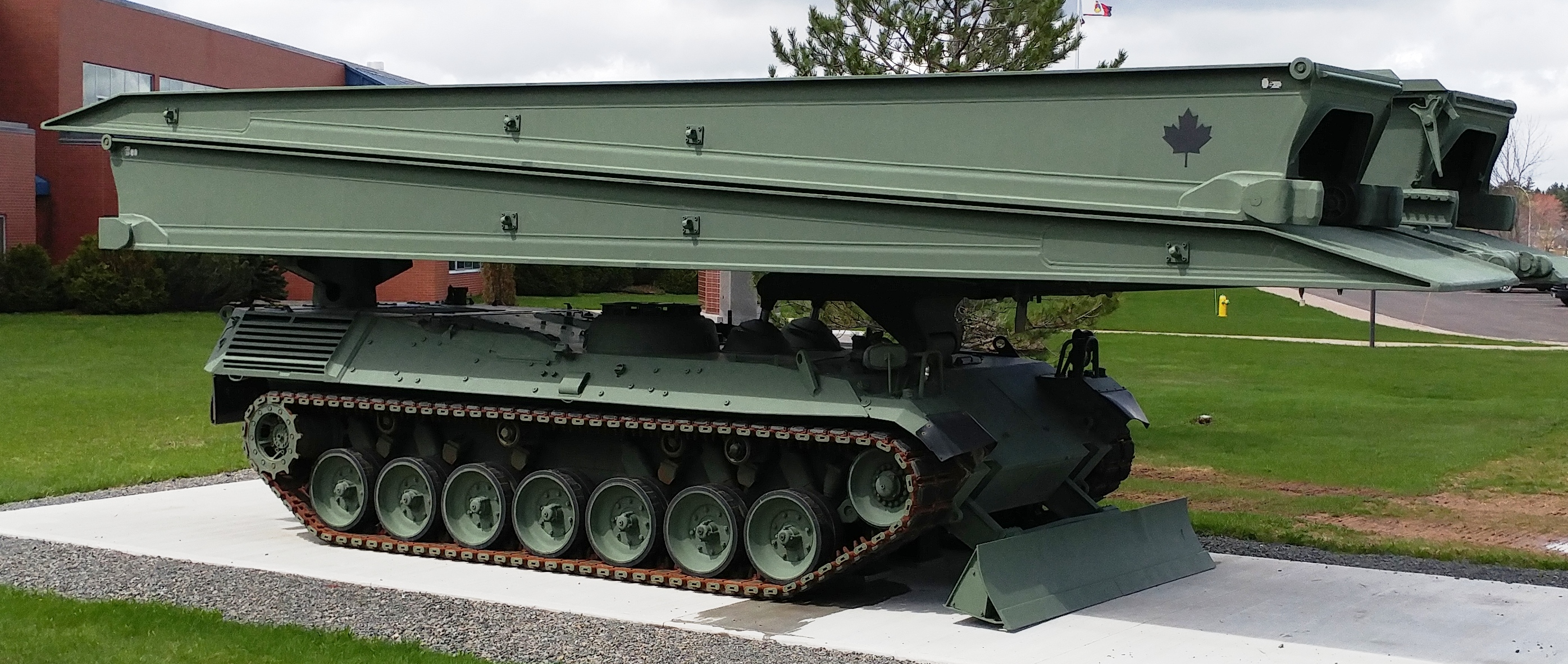
Beaver Armoured Vehicle Bridge Layer (AVBL), Canadian Military Engineering Museum, 5 Canadian Division Support Base Gagetown, New Brunswick.
The Centurion Bridgelayer was introduced in the 1960s and remained in service until 1974 when it was replaced in the UK by the Chieftain version and in Canada by the Leopard Beaver Bridgelayer version (one of which is held by the Canadian Military Engineer Museum at 5CDSG Gagetown). The vehicle carried a crew of 3 with the driver located in the same position as in the gun tank. The other members of the crew were located towards the left and centre of the vehicle within the superstructure which replaced the original turret. A Rolls-Royce B series gasoline engine powered the hydraulic system for the bridge launch equipment.
Canadian Warships with New Brunswick names
(Library and Archives Canada Photo, MIKAN No. 5671742)
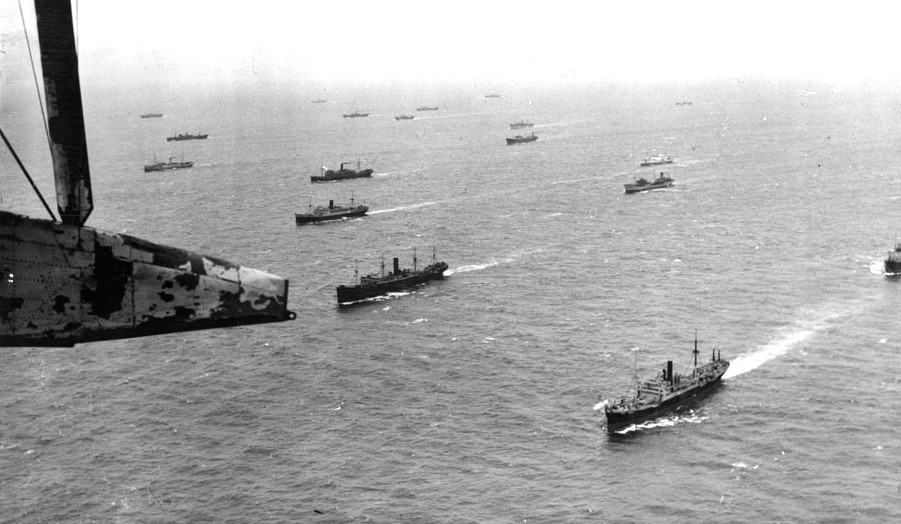
During the Second World War, from dawn till sunset every day shipping convoys bringing food and raw material to Britain were escorted by Short Sunderland aircraft of the RCAF and RAF, April 1941. A main focus of operations for the RCN and RCAF was the Battle of the Atlantic, fought to secure North Atlantic trade routes against enemy attack. Much of this effort was carried out by small escort vessels used to defend convoys of merchant ships against German U-boats.
(LCdr Stacy Photo)
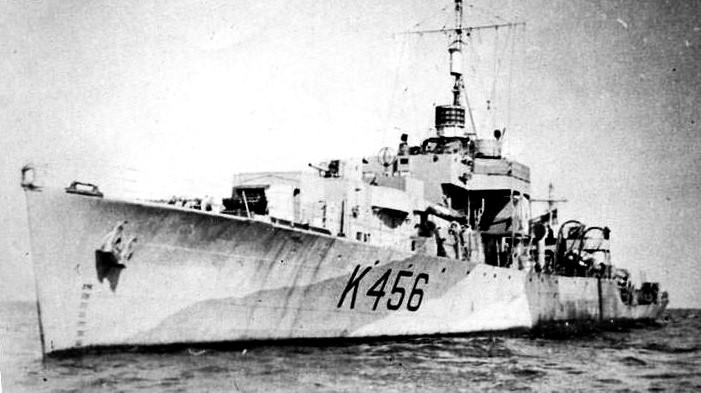
HMCS Saint John (K456) (River-class Frigate.
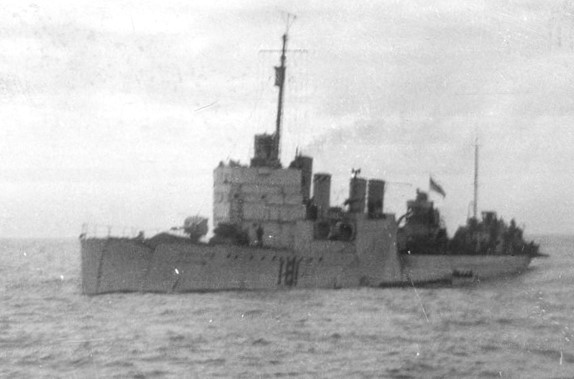
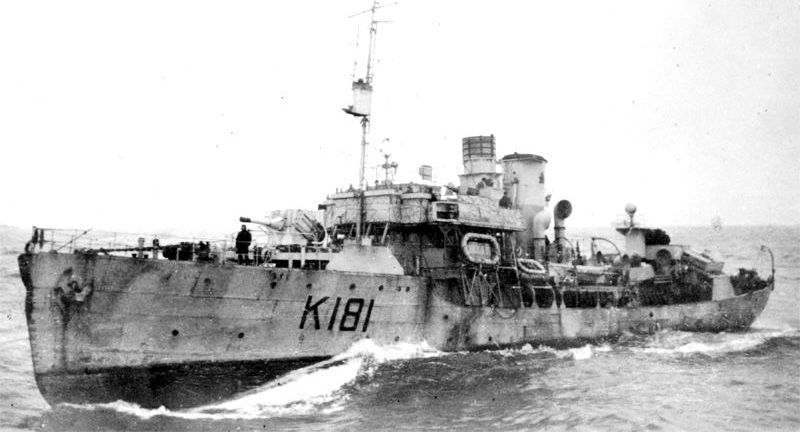
Several ships bearing New Brunswick names participated in the campaign. Among them was the frigate HMCS Saint John, which sank two German submarines, the second most successful submarine hunter of its class in the Canadian fleet. The destroyer HMCS St. Croix was also credited with destroying two U-Boats before being sunk in September 1943 by an acoustic torpedo. The Saint John-built corvette, HMCS Sackville, participated in several convoy battles. In July 1942, it engaged three U-Boats in a single night, damaging two of them. In May 1985, the restored Sackville was preserved in Halifax as Canada’s National Naval Memorial.
(RCN Photo)
HMCS St. Croix.
(RCN Photo)
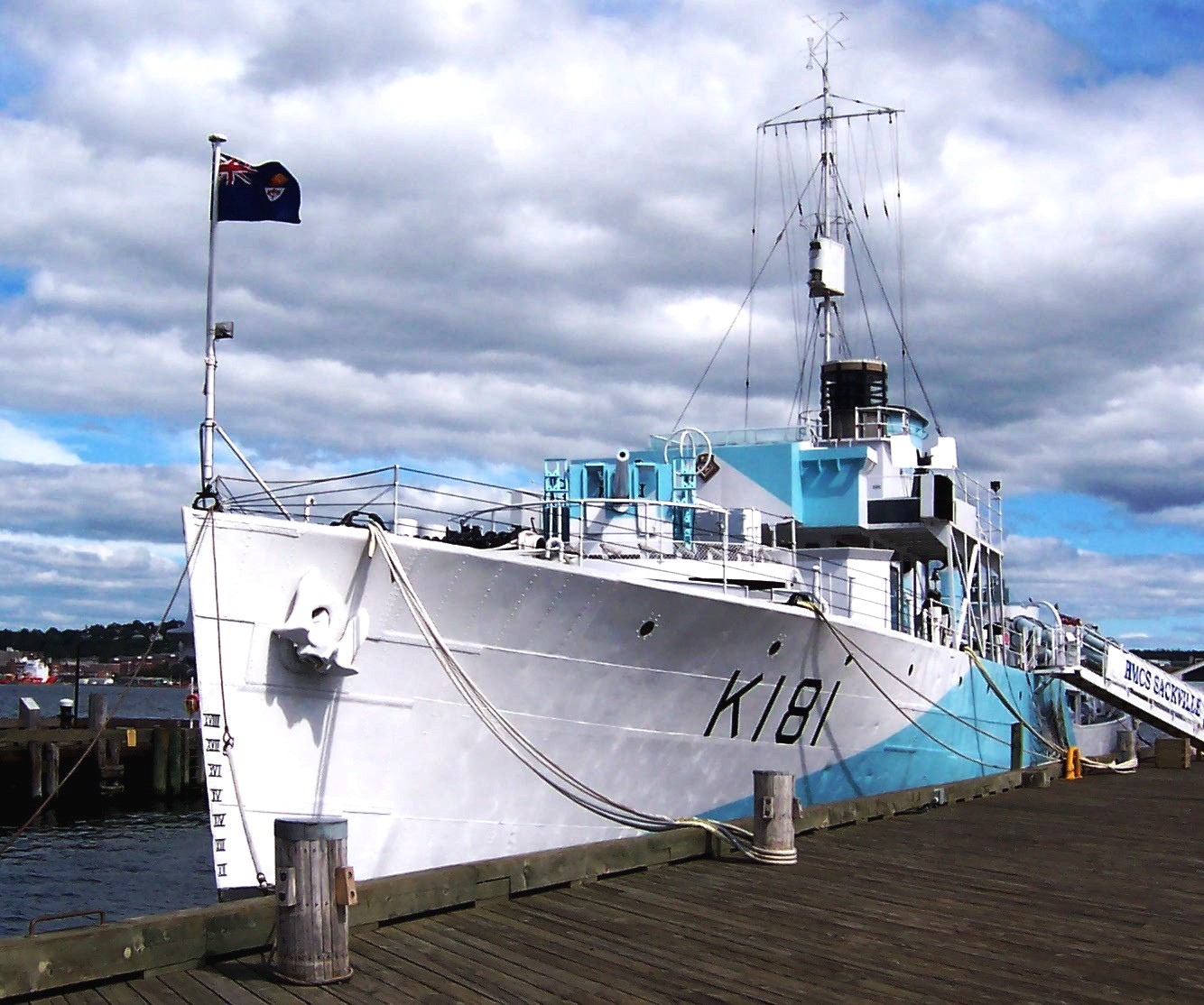
HMCS Sackville (K181) (Flower-class). Built by Saint John Dry Dock & Shipbuilding Co. Ltd., Saint John, NB, she was launched on 15 May 1941. Commissioned on 30 Dec 1941, at Saint John, N.B., HMCS Sackville arrived at Halifax on 12 Jan 1942. She joined NEF after working up, and on 26 May 1942 left St. John’s to escort HX.191 as part of the newly formed EG C-3. In Apr 1943, she transferred to C-1, and in Sep 1943 briefly joined EG 9 in support of the beleaguered combined convoy ONS.18 / ON.202, which lost six merchant vessels and three escorts. In Oct 1943 HMCS Sackville transferred to C-2 for the balance of her war career. She underwent two major refits: at Liverpool, NS, and Halifax, from 14 Jan to 02 May 1943; and at Galveston, Texas, from late Feb to 7 May 1944, when her fo’c’s’le was extended. Upon her return from working up in Bermuda, in Jun 1944, she made a crossing to Londonderry. Soon after leaving for the westward journey she split a boiler and had to return to ‘Derry for repairs. She left again on 11 Aug 1944, to limp home as escort to ONS.248, refitted at Halifax and, in Sep 1944, briefly became a training ship at HMCS Kings. In Oct 1944 she began, at Halifax, refit and reconstruction to a loop-laying vessel, and work was still in progress by VE-Day. The ship was paid off on 8 Apr 1946, but re-commissioned 4 Aug 1950, as a depot ship, reserve fleet. She was refitted in 1950 but remained inactive until 1953, when, as a Canadian Naval Auxiliary Vessel (CNAV), she began a survey of the Gulf of St. Lawrence that was to last several years. She also carried out a number of cruises to the Baffin Island-Greenland area. Extensive modification in 1968 reflected HMCS Sackville‘s new status as a research vessel, and she was operated by the Department of National defence on behalf of the Bedford Institute of Oceanography. In 1983, as the sole surviving corvette, she was transferred to the Canadian Naval Corvette Trust (now Canadian Naval Memorial Trust) and restored to her wartime appearance.
(Harold Skaarup Photo)
HMCS Sackville (K181) (Flower-class), alongside in Halifax Harbour, Nova Scotia.
Italian 75-mm Cannone da 75/27modello 06 Field Gun
(Harold Skaarup Photo)
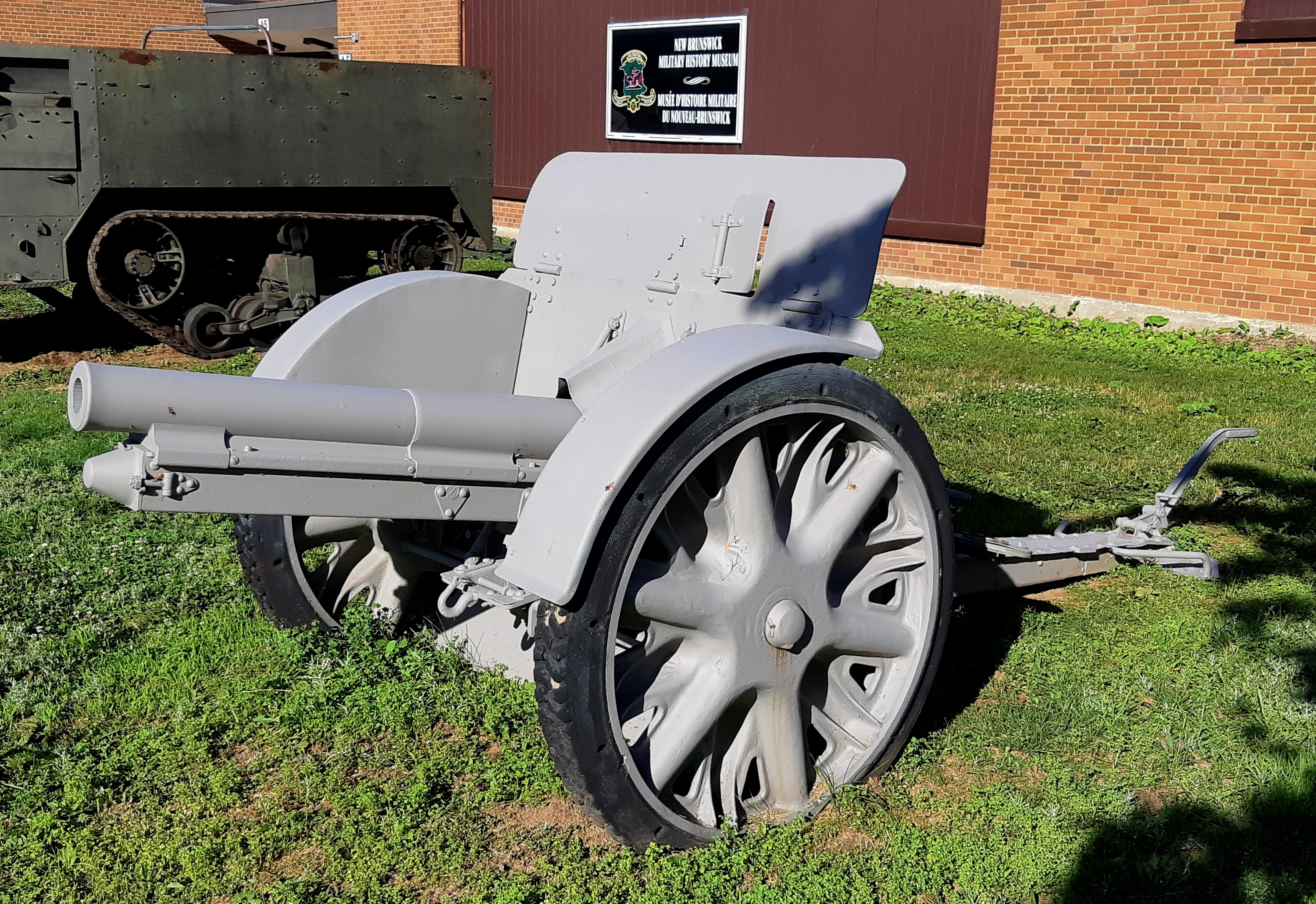
The NBMHM has an Italian 75-mm Cannone da 75/27 modello 06 Field Gun on display in the Museum’s outdoor park. The gun is stamped Gio. Ansaldo & C., Genova 1916, FCA 1099, MLA3432, KG 345. This gun was shipped from the Mediterranean Theatre in 1944 to Halifax, then went to the Canadian War Museum and then to CFB Gagetown.
The Cannone da 75/27 modello 06 was a Field Gun used by Italy during the First and Second World Wars. It was a license-built copy of the Krupp Kanone M 1906 gun. It had seats for two crewmen attached to the gunshield as was common practice for the period. Captured weapons were designated by the Wehrmacht during the Second World War as the 7.5-cm Feldkanone 237(i). Special fortress versions were produced as the Cannone da 75/27 modello 06 in Casmatta and in Caverna. These had different carriages suitable for static use. In March 1945 four Italian guns were shipped to Canada from the Middle East including the 75-mm Obice da75/27 now on display at the NBMHM, 5CDSG Gagetown, New Brunswick. This gun was allocated to 3 RCHA, and is on loan from the Canadian War Museum.
Japanese 70-mm Type 92 Battalion Gun
(Harold Skaarup Photo)
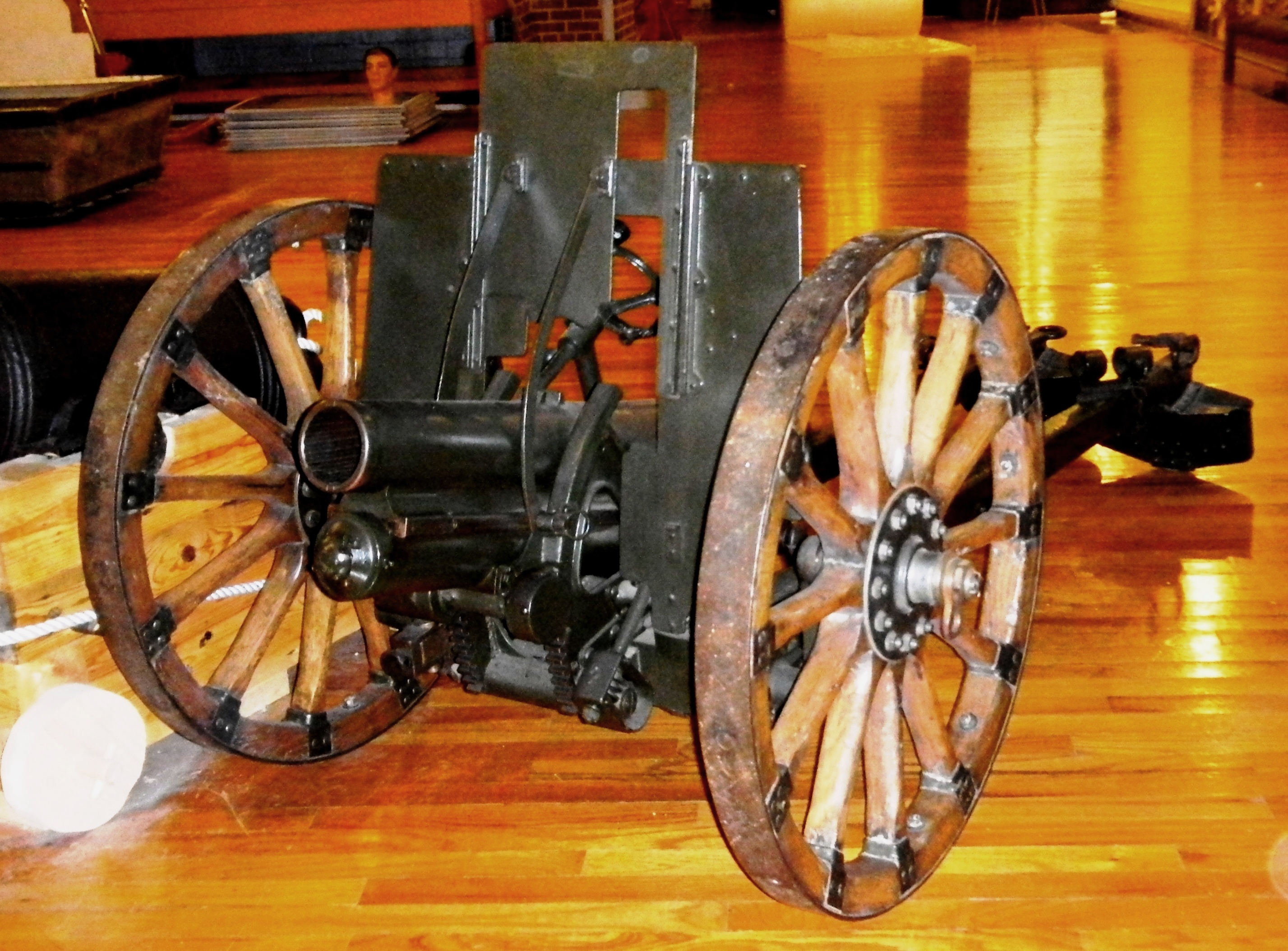
The NBMHM has a Japanese 70-mm Type 92 Battalion Gun (Serial No. 2561), on display inside museum. The Type 92 Battalion Gun was a light Howitzer used by the Imperial Japanese Army during the Second Sino-Japanese War and Second World War. Each infantry battalion included two Type 92 guns; therefore, the Type 92 was referred to as “Battalion Artillery”. This gun is on loan from the RCA Museum, CFB Shilo, Manitoba.
British King William IV 1822 Pattern Infantry Officer’s Sword
The NBMHM recently received a pair of British King William IV 1822 Pattern Infantry Officer’s Swords dates from the short reign of King William IV (1830-1837). They each have a distinctive Gothic hilt with fold down guard and a grip of fish skin wrapped with brass twist wire. The blade is of pipe back form. The original swords came with a leather and brass mounted scabbard. Both are slightly different in details.
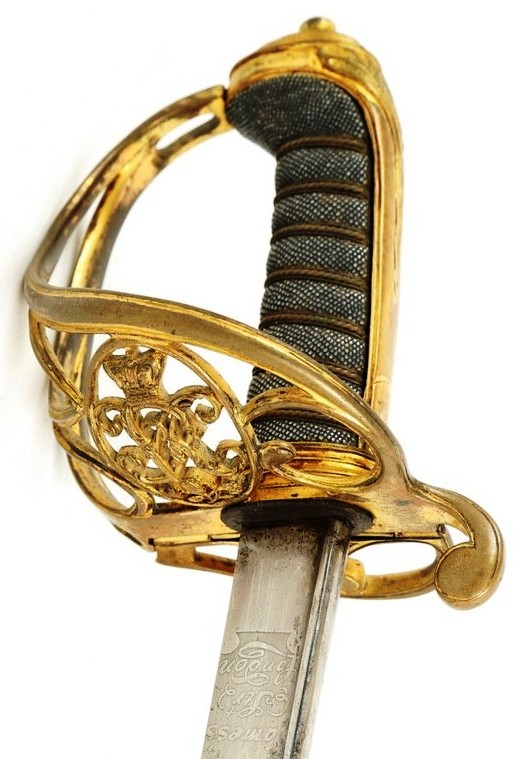
(Harold Skaarup Photo)
William IV (William Henry; 21 August 1765 – 20 June 1837) was King of the United Kingdom of Great Britain and Ireland and of Hanover from 26June 1830 until his death. William, the third son of George III and younger brother and successor to George IV, was the last king and penultimate monarch of Britain’s House of Hanover.
The 1822 Pattern Infantry Officer’s Sword was a radical departure from previous designs, with its half basket hilt becoming the standard format for British infantry swords until the end of the nineteenth century. Distinctive features of the sword include the “Gothic” style pierced hilt, so-called after its resemblance to the shapes of windows in Gothic architecture, and the “s-shaped” folding guard. Elegantin design, the slender pipe backed blade was sheathed in a black leather scabbard with decorated gilt brass mounts. The royal cypher was placed within an oval hilt cartouche and during its lifetime, this pattern featured three monarchs (George IV, William IV and Victoria). Victorian examples are pretty common with many varieties of design interpretations to the royal cypher. The blade’s foible is intricately etched with a crowned William IV monogram and decorations.
Later versions have the single fullered 1845 Pattern “Wilkinson” type blade that became the army standard. The pipe back version is more elegant in profile and truer to the original design. There is a “picquet”, “levee” or dress form of this sword whichis a lightweight version with a much narrower blade. It was carried bythe officer at social functions including balls, mess dinners and probably at Court.
As a fighting weapon, the 1822 Pattern was rather unsatisfactory, the blade being far too weak and the hilt bars affording little protection. When the 1845 Pattern blade was introduced, officers were not required to immediately change to the new pattern. They were allowed to carry the old pipe back sword blade until it became unserviceable. As with many new items of equipment introduced into a regular army, it was unlikely to have been a seamless and rapid introduction. Some years would pass before all officers carried the new official regulation sword. The idea that in 1845, all British infantry officers suddenly discarded the 1822 Pattern pipe back blade in favour of the1845, would be a little fanciful and completely impracticable, and not to say, uneconomic. The purchase of an officer’s sword was a major financial strain on many officers and they were not likely to discard an expensive sword because the authorities deemed it necessary.
Both George IV and William IV had relatively short reigns and, consequently, examples are scarce, especially in good condition. They tend to be more delicate than later Victorian pieces and many are found with broken or missing folding guards, and damage to the hilt piercings. It is a good idea to check carefully to see that the folding guard is working properly as they were easily damaged. Also take care when folding guards as they were held together with very thin pins and can easily snap.
Late Georgian blades are very finely etched with much less decoration than later Victorian examples. Consequently, thepre-Victorian swords tend to have very worn etching (sometimes to the point of obscurity). Up until around 1835, there would also have been a black leather hilt lining. Very few of these survive intact.[1]
Average market price ca $350, sword only. With scabbard ca $1,200 – $1500. Internet:http://www.antiqueswordsonline.com/british-1822-pattern-infantry-officer-sword.
Communist Weapons used in the Korean War in the NBMHM
The NBMHM has a fair number of weapons on display in its collection that were used in the Korean War which ran from 1950 to1953. Most of the weapons in use by the United Nations (UN) forces including Canada, and the Communist opposition forces they faced in Korea were the same as those in use during the Second World War. The North Korean forces were largely equipped with Soviet weapons and equipment including tanks, artillery, small arms and aircraft. Although newer kinds of infantry weapons, radios, and vehicles had either been developed or were in production on both sides, few were sent to the theatre and no nuclear weapons came into play. Communist arms were of more recent manufacture, or in better condition, than those in the hands of UN and Republic of Korea (ROK) soldiers in 1950, and included the standard Soviet model AK-47 automatic rifle.
One significant development on the battlefield was the use of helicopters for reconnaissance, transport, and evacuation on a largescale. Modern jet fighters including the North American F-86 Sabre, were deployed when Communist forces first introduced their MiG-15.
Throughout the combat action in Korea, enemy forces managed to capture and make use of significant numbers of UN weapons and equipment. In the first three months of the war, the North Korean People’s Army (NK) secured enough equipment from ROK and US divisions to equip several of their own. Early in the war the Chinese Communist Forces (CCF), were often equipped with Western arms that had originally been supplied to the Nationalist government both during and after the Second World War which had fallen into Communist hands.
The Chinese also had considerable quantities of surrendered Japanese weapons, from rifles to field artillery. The principal source of armament for the NK combatants, however, and, after the first year also for the CCF, was the Soviet Union. The majority of these weapons and equipment had been in use during the Second World War. A number of weapons used by the Communist forces were brought to Canada as souvenirs and may be found in military museums across the country including a few of the following weapons in the NBMHM.

Yugoslav 7.62-mm Simonov M59.66 (SKS) carbine. This is a bolt-action rifle of 1944 vintage.

Japanese 7.7-mm Model 99 (1939) Imperial Army rifle with 5-round internal box magazine. Many were seized from the Kwantung Army by the Soviets in 1945 and turned over to the CCF. Rifles were largely discarded when submachine guns became available in quantity.
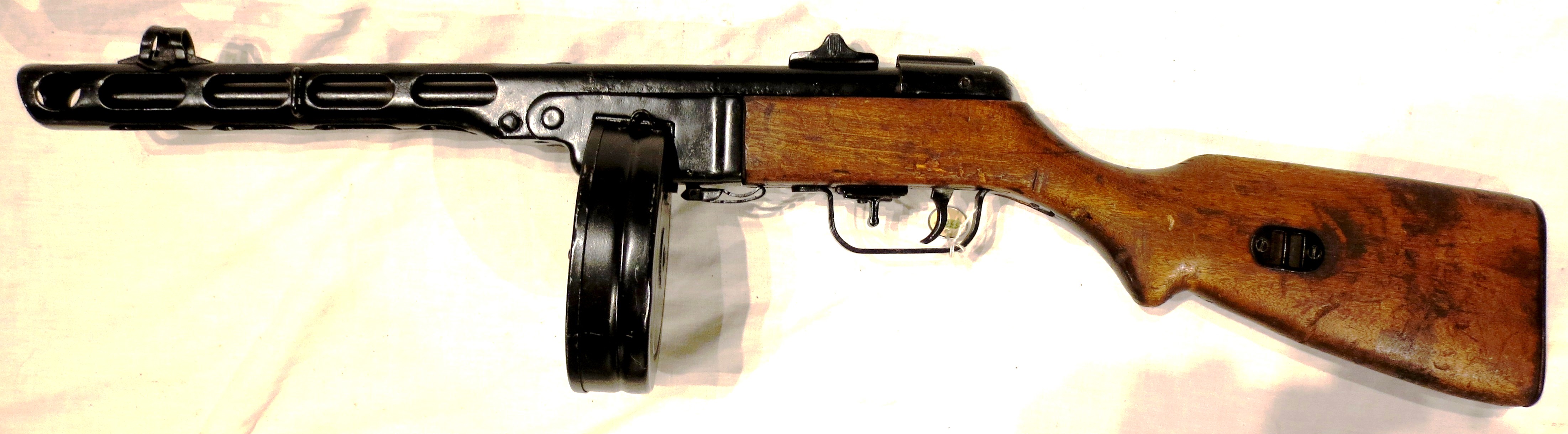
Soviet 7.62-mm Shpagin PPSh41 submachine gun. The “paypayshah” SMG held a 72-round drum magazine or a 35-round curved box magazine. This SMG was inexpensive to make, simple to operate and could function well in battlefield conditions.

Soviet 7.62-mm Tokarev SVT40 semi-automatic rifle. This rifle was fitted with a flash hider and bipod. There are a number of different machine guns that were used by the NK and CCF.
Soviet 7.62-mm SG43 Goryunov Heavy Machine Gun, wheel mounted.
Soviet 14.5-mm PTRD-1941 anti-tank rifle. Originally designed to penetrate armour, in the Korean War it was primarily used against vehicles and for long-range sniping. Each North Korean division was equipped with 36 PTRD-1941.
Chinese stick hand grenades.
Soviet 61-mm, 82-mm and 120-mm Mortars. An NK regiment had six 120-mm mortars, each of its 3 battalions had nine 82-mms, and the 61-mms were deployed at company level. Their 82-mm and 61-mm guns could use US 81-mm and 60-mm ammunition, which the Communists captured in large quantities.
Rocket launchers and recoilless rifles were not standard NK or CCF issue, but were used when captured.
Soviet 45-mm AT Gun, 76-mm Field Gun, 76-mm SU-76 SP Gun and 122-mm Howitzer. A division contained twelve 122-mm howitzers, twenty-four 76-mm field guns, twelve 76-mmSU-76 self propelled guns, and twelve 45-mm anti-tank guns. In addition, each of a division’s three regiments was issued four 76-mm howitzers, and the 122-mm howitzer was also furnished by the Soviets.
Soviet T-34/85 main battle tank, weighing 35 tons and capable of 34 mph, had excellent traction and was well suited to Korean terrain. One is on display in the Canadian War Museum; another is on display at the Base Borden Military Museum, and a third is with 3 CDSB Edmonton.
Canadian Nursing Sisters
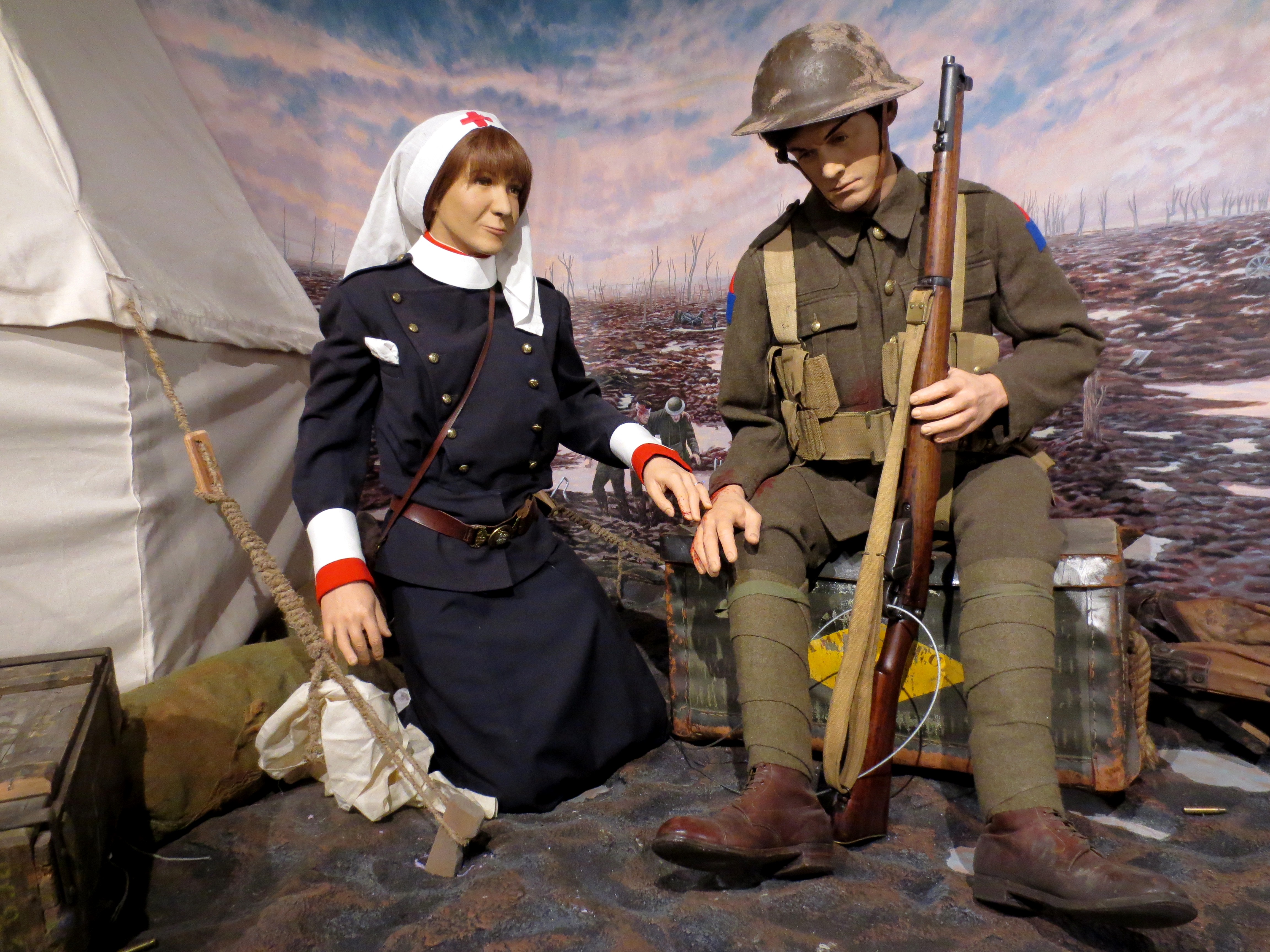
(Harold Skaarup Photo)
Canadian Nursing Sister ministering to a soldier in the Great War (1914-1918), maniquin display in the New Brunswick Military History Museum, 5 CDSB Gagetown, New Brunswick.
In April 1885, orders were issued from Ottawa requesting that a medical and surgical department be organized for service in the Northwest. This led to Canada’s Nursing Sisters taking to the field later that year, providing care to the Canadian troops sent to putdown the North-West Rebellion. A total of seven nurses, under the direction of Reverend Mother Hanna Grier Coome, served in Moose Jaw and Saskatoon, Saskatchewan served a tour of duty which lasted four weeks, providing treatment to wounded soldiers. With the discovery of gold in the Yukon in 1898, a contingent of Royal Canadian Dragoons was sent to the Klondike to reinforce the Northwest Mounted Police. Included with this contingent were four members of the Victorian Order of Nurses.
Following the formation of the Canadian Army Medical Department in June of 1899, the Canadian Army Nursing Service was created and four Canadian nurses were dispatched along with the volunteer force of 1,000 other Canadians to South Africa. They were granted the relative rank, pay and allowances of an army lieutenant. Before the war was over on 31 May 1902, eight Canadian Nursing Sisters and more than 7,000 Canadian soldiers had volunteered for service in South Africa.
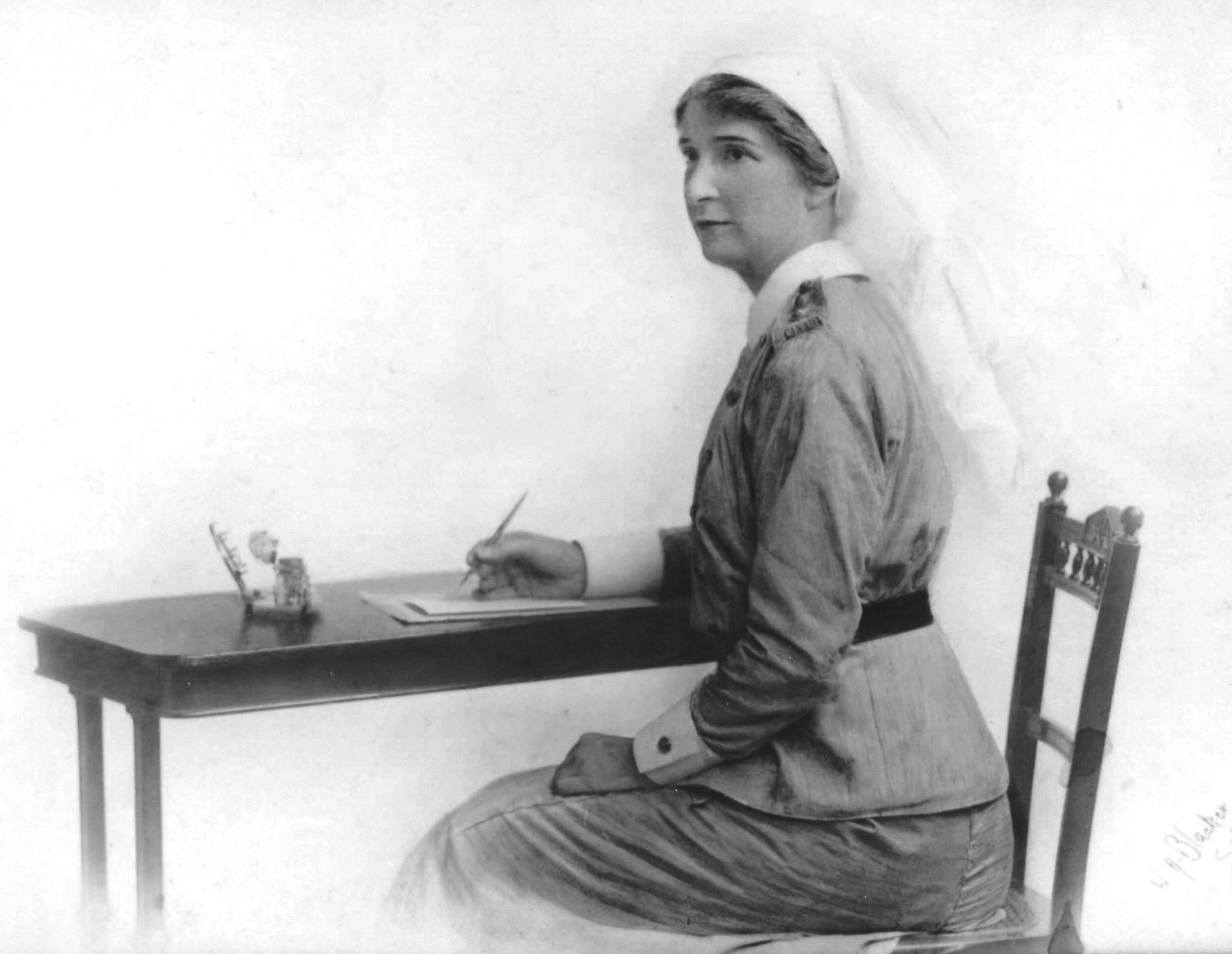
(Balloch Family Photo)
Pauline Douglas Balloch, of Centreville, N.B., seated at her desk. She joined the Canadian Army Medical Corps in the spring of 1917. Pauline D. Balloch, a nurse from Centreville N.B. Pauline was a graduate nurse and an experienced professional employed in Toronto. She joined the CAMC (Canadian Army Medical Corps) in May of 1917, and served overseas at No. 3 Canadian Stationary Hospital BEF, France. Visiting her parents at their general store in Centreville on her way to Halifax and overseas, she tried to reassure them that she would be safe. It was a message she had to repeat often in her letters as she travelled to England and then to France. In the end, Pauline did return home safely. As it turned out, her parents’ fears were not unfounded. The hospital ship on which she returned was sunk by a German U-boat a few months later and her good friend and fellow nurse was killed by German bombing at the hospital she had served at in France. Over 3,500 Canadian women served as nurses in the CAMC and 45 perished. Very few collections of nurses’ letters, let alone women’s correspondence, have survived.
At the beginning of the Great War of 1914-18 there were five Permanent Force nurses and 57 listed in reserves. By 1917, the Canadian Army Nursing Service included 2,030 nurses (1,886overseas) with 203 on reserve. In total, 3,141 Canadian nurses volunteered their services. Because of their blue dresses and white veils they were nicknamed the “bluebirds”.
In many ways, the First World War was a time of great change and innovation in the field of military medical services. At first, medical units were set up in hospitals. However, the eventual establishment of Casualty Clearing Stations provided faster and more effective treatment to the injured at the front line.
One of the innovations of the First World War Medical Services was the introduction of the hospital ship. These ships were also subject to the dangers of enemy attack. On the night of 27 June 1918, the Canadian hospital ship Llandovery Castle was torpedoed by a German U-boat and 234 people lost their lives, including all 14 sisters on board.
A total of 3,141 Nursing Sisters served in the Royal Canadian Army Medical Corps and 2,504 of those served overseas in England, France and the Eastern Mediterranean at Gallipoli, Alexandria and Salonika. By the end of the First World War, approximately 45 Nursing Sisters had given their lives, dying from enemy attacks including the bombing of a hospital and the sinking of a hospital ship, or from disease. The Nursing Sisters’ Memorial in the Hall of Honour in the Parliament Buildings in Ottawa commemorates their service.
During the Second World War the Canadian nursing service was expanded to all three branches of the military, each branch having its own distinctive uniform and working dress, while all wore the Nursing Sisters’ white veil. They were all commissioned officers. By the end of the war 4,480 Nursing Sisters had enlisted, including: 3,656 with the Royal Canadian Army Medical Corps, 481 with the Royal Canadian Air Force Medical Branch, and 343 with the Royal Canadian Naval Medical Service. During an air raid on Catania, Sicily, on 2 September1943, an anti-aircraft shell fell on No. 5 Canadian General Hospital and 12Nursing Sisters were wounded. With the end of the war in Europe, the medical units gradually disbanded. Some of the Nursing Sisters as well as other personnel stayed on with the Army of Occupation to care for both military and civilian prisoners of war.
During the Battle of the Atlantic, which lasted for the duration of the war, the Canadian Navy had two hospital ships, the Letitia and the Lady Nelson. Both were staffed by army sisters. The navy sisters served on naval bases on both coasts of Canada, in Newfoundland, and at HMCS Niobe, Scotland. Sub-Lt. Agnes Wilkie died following more than two hours of struggle to hold out in alife boat, after the sinking of the SS Caribou on 13 October 1942, inthe Cabot Strait off Newfoundland.
The Nursing Service of the Royal Canadian Air Force was authorized in November 1940. More than 100 station hospitals were built and the Nursing Sisters were more and more in demand. Some of them were trained for evacuation by air, 12 served in Newfoundland to participate in air-sea rescue missions and 66 served overseas.By the end of the Second World War, 3,649 Nursing Sisters had served in the Army, 481 in the Air Force and 343 in the Navy.
(Library and Archives Canada Photo, MIKAN No. 3194287)
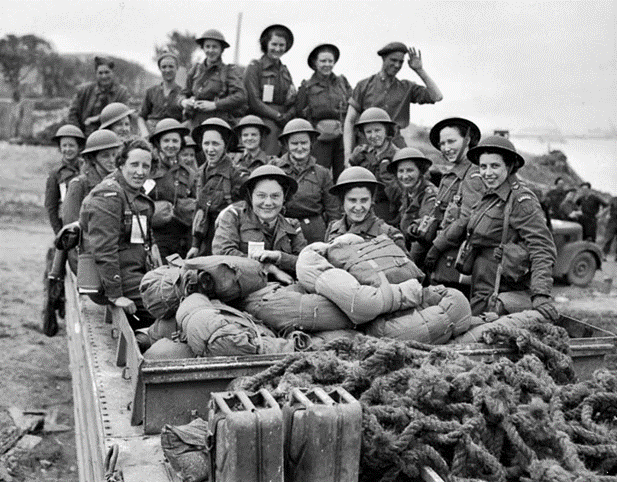
Nursing Sisters of No. 10 Canadian General Hospital, RCAMC, landing at Arromanches, France, 23 July1944.
At the end of the Second World War a total of 80 nurses, 30 RCAMC, 30 RCAF and 20 RCN sisters joined the permanent force and served at military establishments across the country; many more staffed the Department of Veterans Affairs’ hospitals to care for hundreds of returning Veterans. Nursing Sisters continued to serve with the Armed Forces after the end of the Second World War. During the United Nations Operations in Korea, 60 RCAMC Nursing Sisters served in Japan and Korea. RCAF Sisters qualified as Flight Nurses, flew air evacuation with casualties to Canada. Others served on the Air Ambulance in Canada. Another specialty was the formation of a para-rescue service with five RCAF volunteering, four of whom received the Para-rescue Badge. With Canada’s commitment to NATO, Canadian nurses served in Europe with the RCAMC in Soest, Germany, while RCAF Sisters served at fighter bases in France and Germany.
Nursing Officers continue to serve in the present day Canadian Armed Forces Medical Service, many having deployed on tours of duty overseas in the Gulf War, Bosnia-Herzegovina, Rwanda, Somalia, Afghanistan and Mali. Internet: http://www.veterans.gc.ca/eng/remembrance/those-who-served/women-and-war/nursing-sisters.
RML 9-pounder8-cwt Gun
(Harold Skaarup Photo)
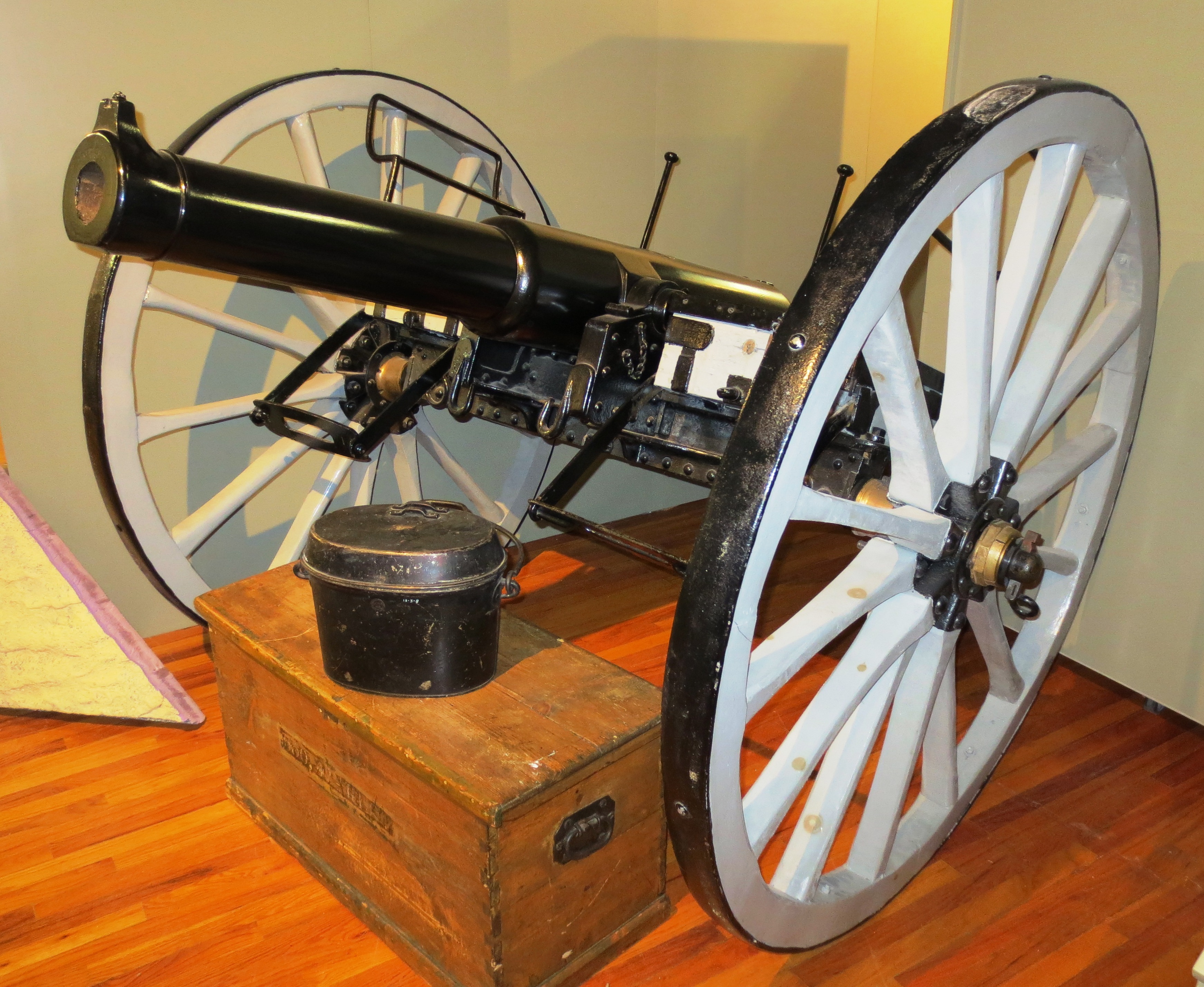
The NBMHM has a Rifled Muzzle Loaded (RML) 9-pounder 8-cwt Gun on display inside the main display area. This field gun was developed by a British officer, William Palliser. With a range of 3,300 metres, the RML 9-pounder threw a shell fitted with studs that held and slid along three grooves which lined the gun’s bore.
The 9-pounder was the first Gun used by the Royal Regiment of Canadian Artillery in action. “A” Battery employed six of this type of gun at the battles of Fish Creek and Batoche during the Riel Rebellion in 1885 in the North West Campaign. The 9-pounder arrived in 1873 and within the decade, it was being used extensively throughout the Regiment.
In the autumn of 1873, Lieutenant-Colonel (later Major-General Sir) George A. French, the first Commandant of A Battery Garrison Artillery, was appointed as the first Commissioner of the North West Mounted Police. Together with 32 Gunners of A and B Batteries, he formed the nucleus of the new police force.
In February 1874, North West Mounted Police Commissioner George French travelled from Lower Fort Garry to Ontario to meet with the Governor General, Lord Dufferin. Responding immediately to French’s concerns about the possible outbreak of armed conflict at Fort Whoop-Up, Lord Dufferin cabled England for two 16 pound mortars and two 9-pounder 8-cwtGuns. These guns would be manned by members of the North West Mounted Police. (RCAM)
In1879, there were sixteen artillery batteries in Canada. Up to 1871, with one exception, these batteries had been armed with SBML Brass field pieces including three guns and one howitzer to each battery. From that time forward, all batteries were armed with the RML 9-pounder 8-cwt Gun with “modern wrought iron carriages with Madras Wheels from the Woolwich Royal Gun and carriage factories.” At this time there were 60 RML 9-pounder 8-cwt Guns in service with the Canadian Militia.[1]
RML 9-pounder 8-cwt Guns were used by Canadian gunners for over 25years. There are at least 35 RML 9-pounder 8-cwt Guns on display in Canada, including four in New Brunswick. The one shown above is inside the NBMHM is an RML 9-pounder 8-cwt Gun, weight 8-1-4(928 lbs), (Serial No. 1520), Firth Steel on the muzzle, W arrow D, R.C.D.1877, No. 459, I, stamped on the iron carriage with wood wheels.
(Harold Skaarup Photo)
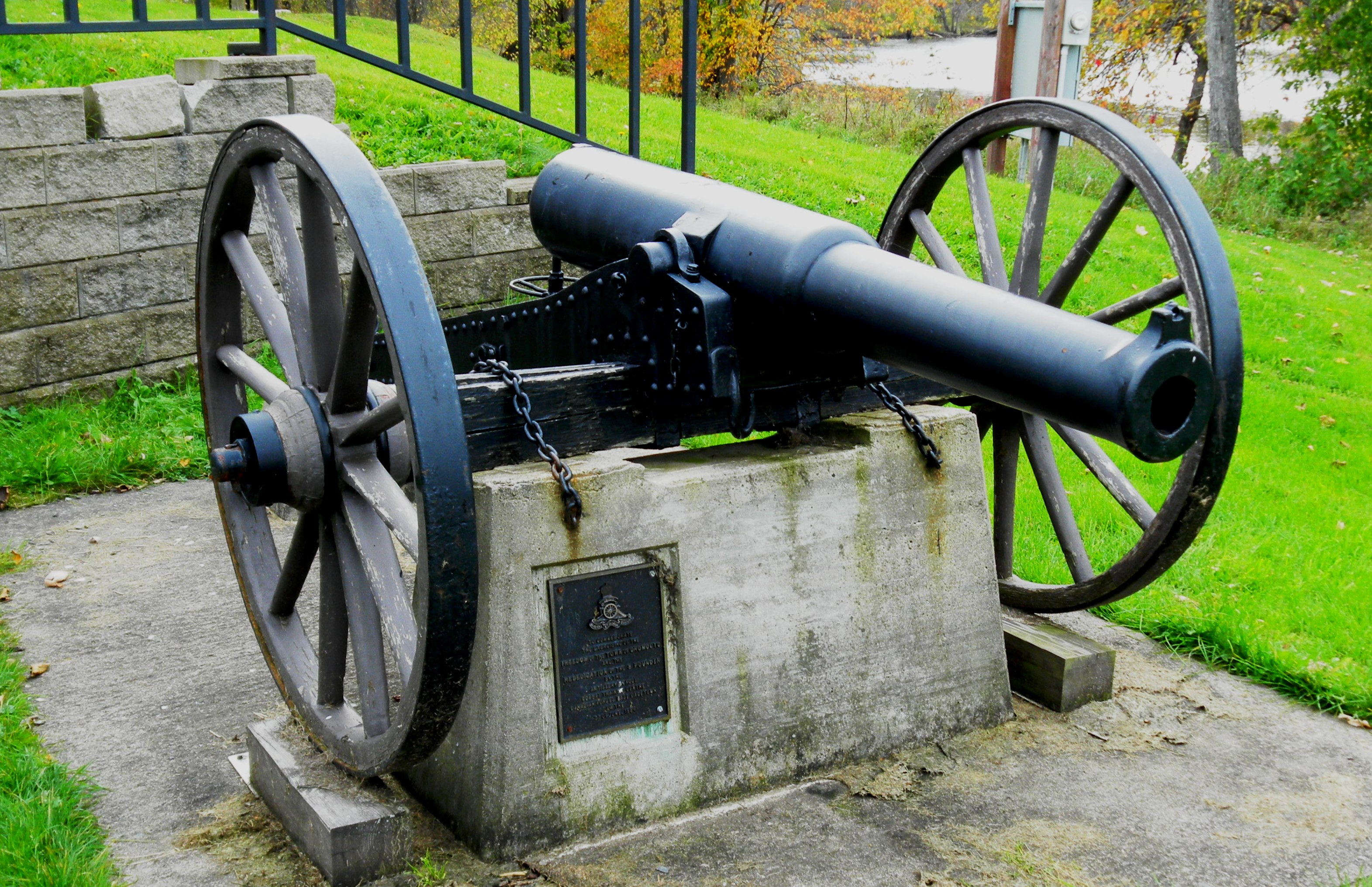
One is mounted outdoors at Fort Hughes in the Sir Douglas Hazen Park in Oromocto. It is an RML 9-pounder 8-cwt Gun, weight 8-1-8 (932 lbs), stamped 1873, (Serial No. 2857), mounted on a field carriage stamped Sir W.G. Armstrong and Co., Newcastle on the Tyne. This gun was used in the North West Rebellion, 1885.
(Harold Skaarup Photo)
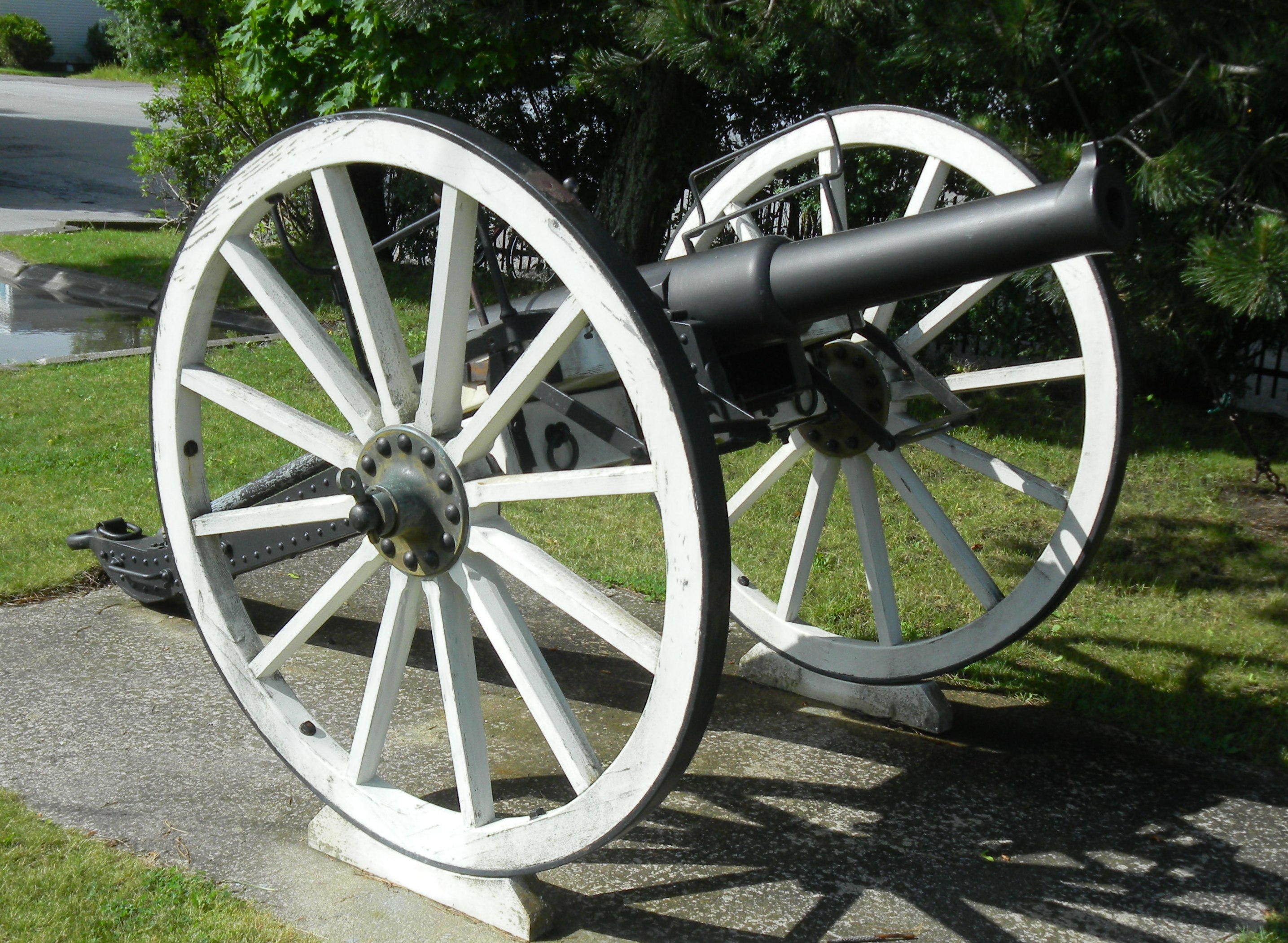
A third gun is on display outdoors at the Kennebecassis Yacht Club in Saint John. It is an RML 9-pounder 8-cwt Gun, weight 8-1-1 (925 lbs), stamped1873, (Serial No. 92), I, mounted on an iron field carriage, stamped RCD 1873,Sir W.G. Armstrong and Co., Newcastle on the Tyne. 1042 Millidge Ave.
(Harold Skaarup Photo)
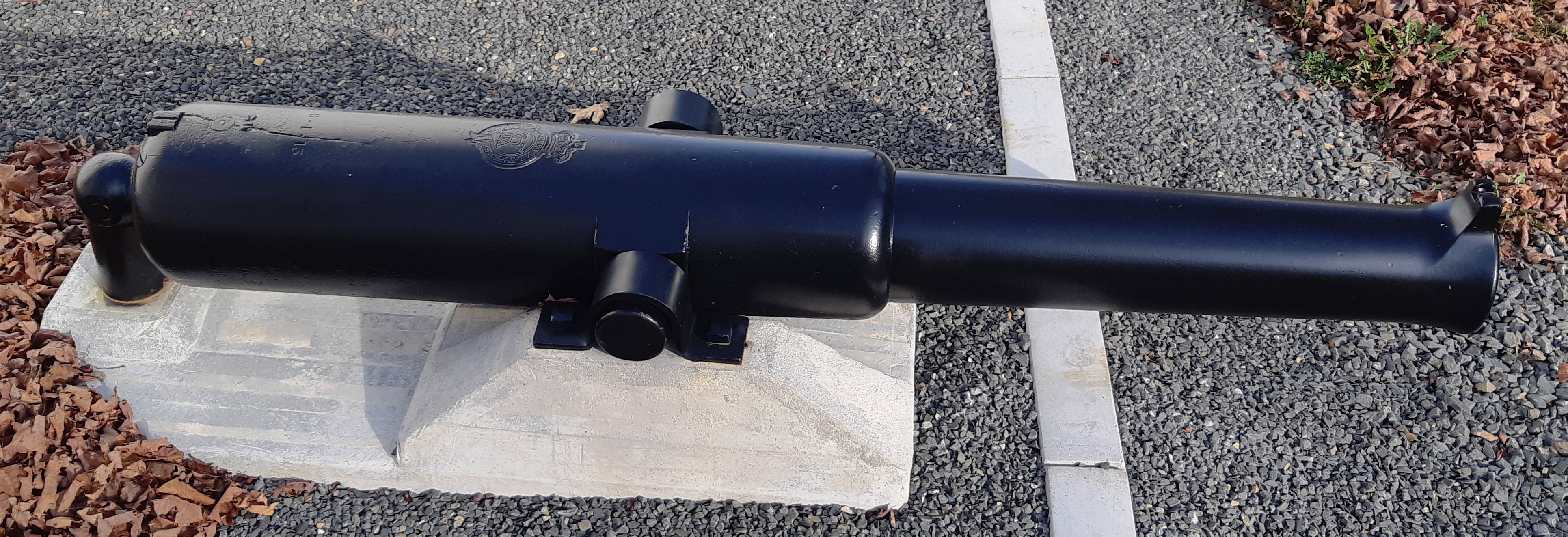
The fourth 9-pounder 8-cwt Muzzleloading Rifle, weight 8-1-13 (937 lbs), Queen Victoria cypher, Sir W.G. Armstrong and Co., No. 285, Newcastle on the Tyne on the left trunnion. This gun was previously located at Maces Bay. It now stands outside the Keswick Ridge Historical Society Museum.
[1] Sessionial Papers (No. 5),A. 1879, Appendix No. 8. Thomas Wily, Director of Stores and Keeper of Militia Properties, and Colonel W. Powell, Adjutant-General of Militia, Ottawa, 27 Dec 1878, p. 280.
All comments are subject to our Comment Policy. You must be at least 18 years old to comment.
See a comment that violates our guidelines? Report it here.