RCN Prestonian class Frigates: HMCS Ste. Thérèse (309), HMCS Stettler (311), HMCS Sussexvale (313), HMCS Swansea (306), HMCS Toronto (319), HMCS Victoriaville (320).
HMCS Ste. Thérèse (309)
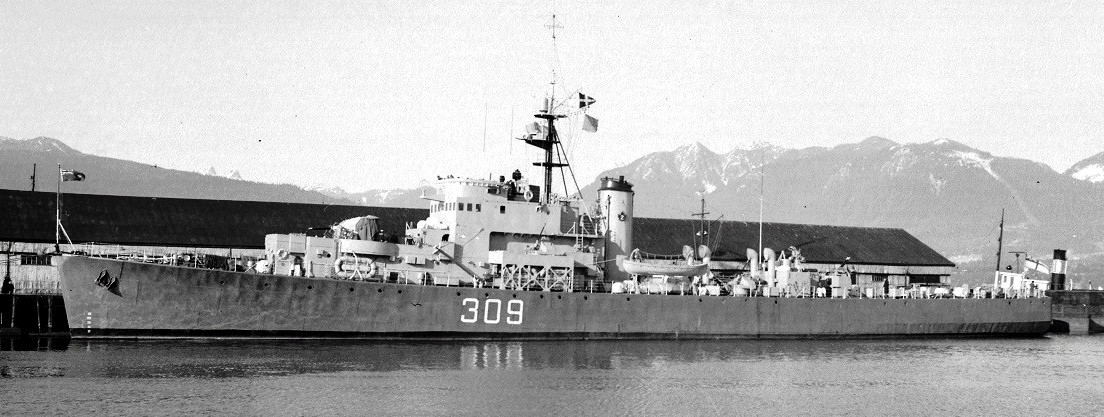
(City of Vancouver Archives Photo)
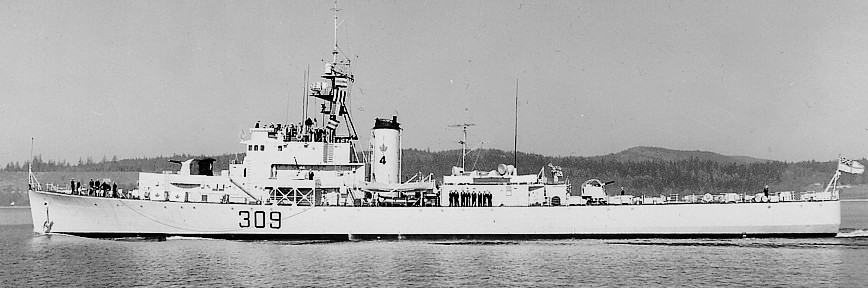
HMCS Ste. Thérèse (309) Prestonian class Frigate. Built by Davie Shipbuilding & Repairing Co. Ltd., HMCS Ste. Thérèse (K366) was commissioned on 28 May 1944, at Lévis, Quebec. She arrived at Halifax early in Jul 1944 and, after preliminary workups in St. Margaret’s Bay, NS, proceeded to Bermuda to complete the process. Returning n mid-Aug 1944, HMCS Ste. Therese left Halifax in late Oct 1944 to join convoy HX.317 for passage to Londonderry. There she joined EG 25 and served with it in UK waters until Feb 1945, when she was re-assigned to EG 28, Halifax. She served locally with EG 28 until the end of the war, and on 22 Nov 1945 was paid off at Sydney, NS, and placed in reserve at Shelburne, NS. She re-commissioned on 22 Jan 1955, after conversion to a Prestonian class ocean escort (309), finally being paid off at Esquimalt on 30 Jan 1967. She was broken up in Japan that year.
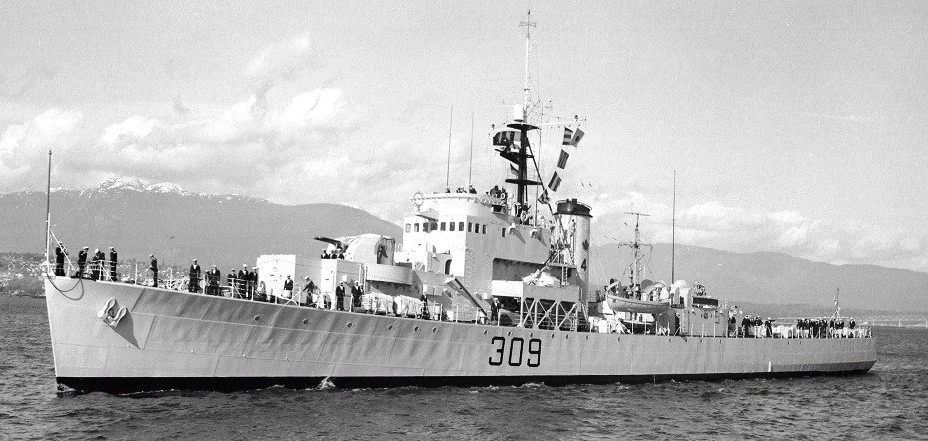
(City of Vancouver Archives Photo)
HMCS Ste. Thérèse (309) Prestonian class Frigate.
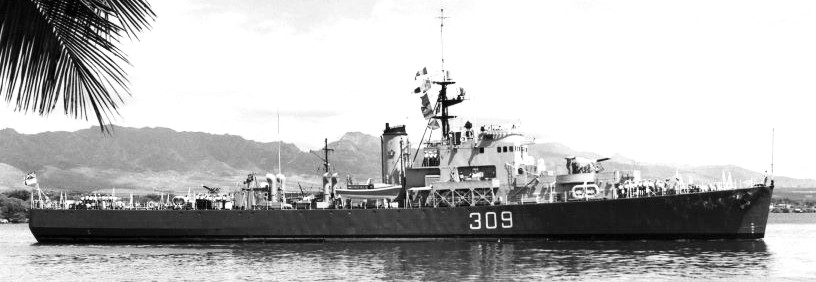
(US Naval History and Heritage Photo, 80-G-1078605)
HMCS Ste. Therese (309) Prestonian class Frigate.
(RCN Photo)
HMCS Ste. Therese (309) Prestonian class Frigate.
HMCS Stettler (311)
(DND Photo)
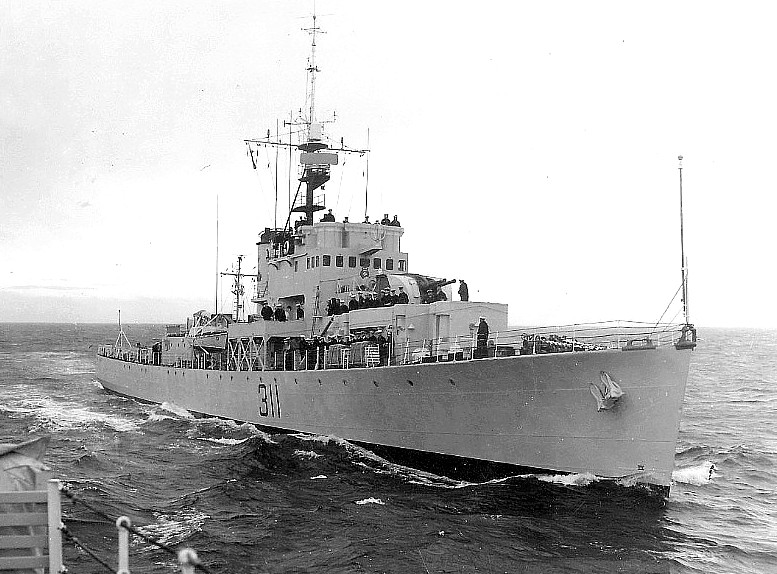
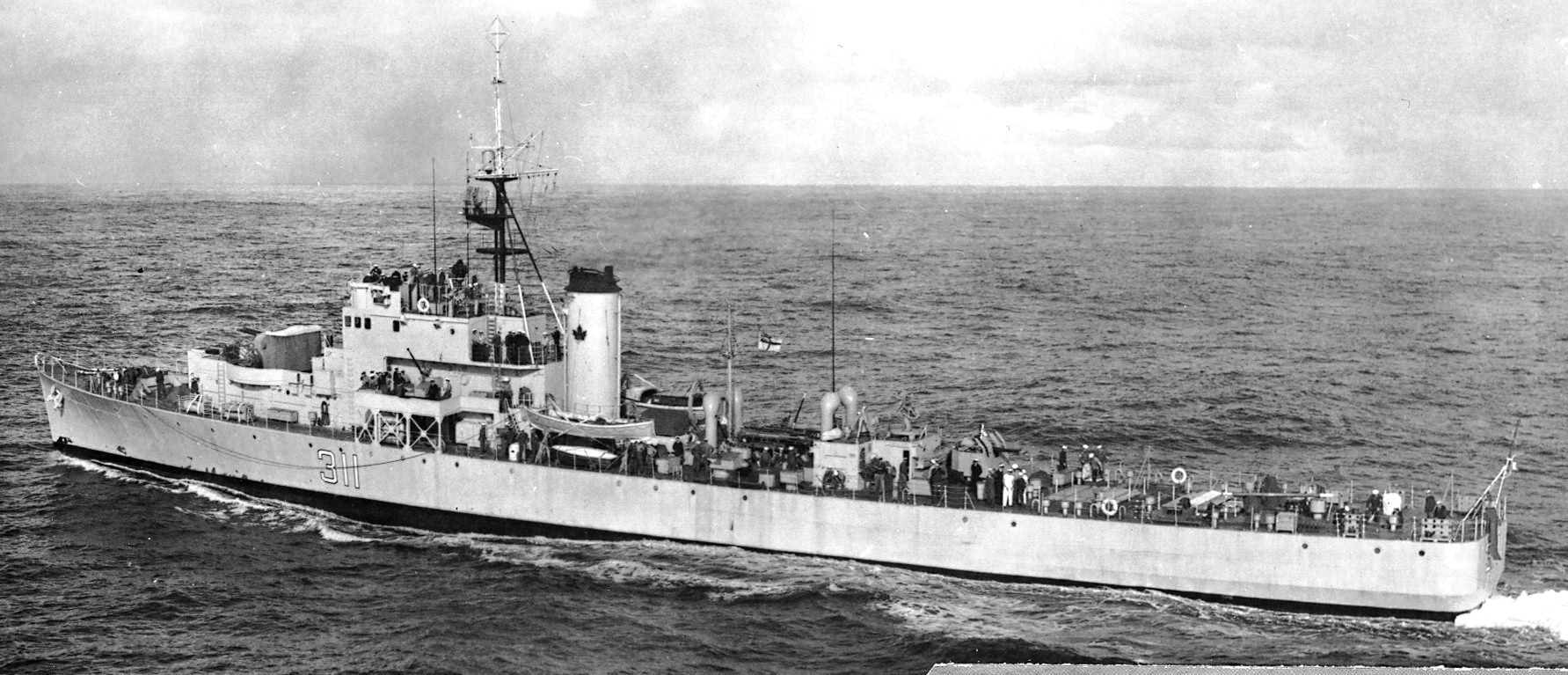
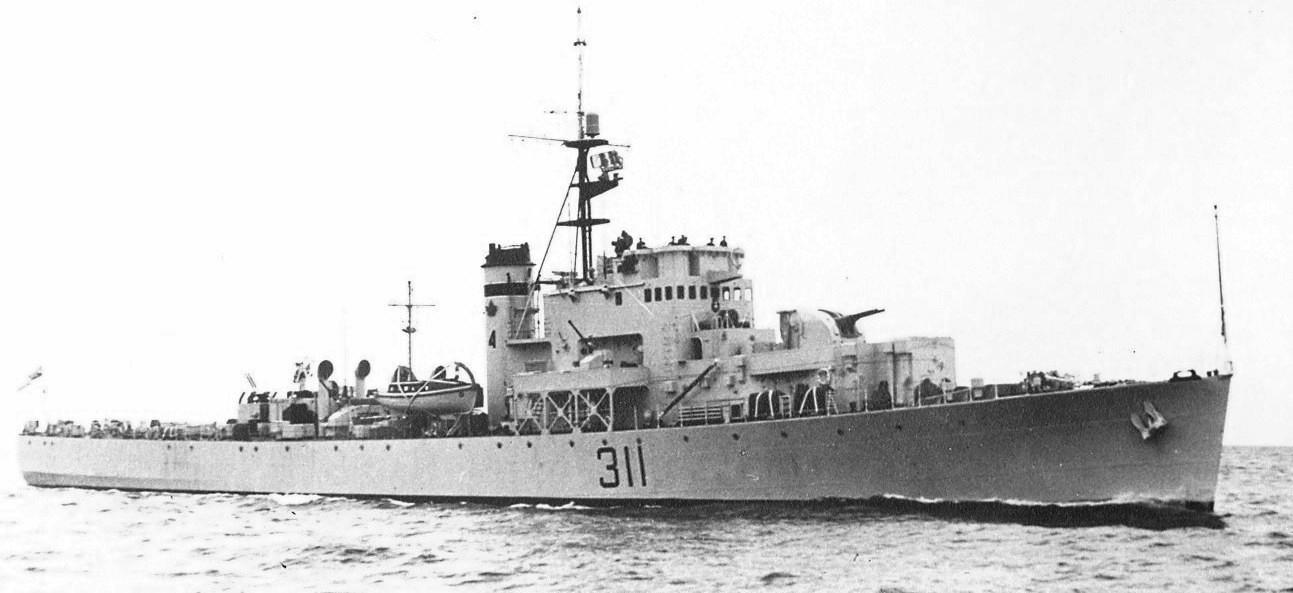
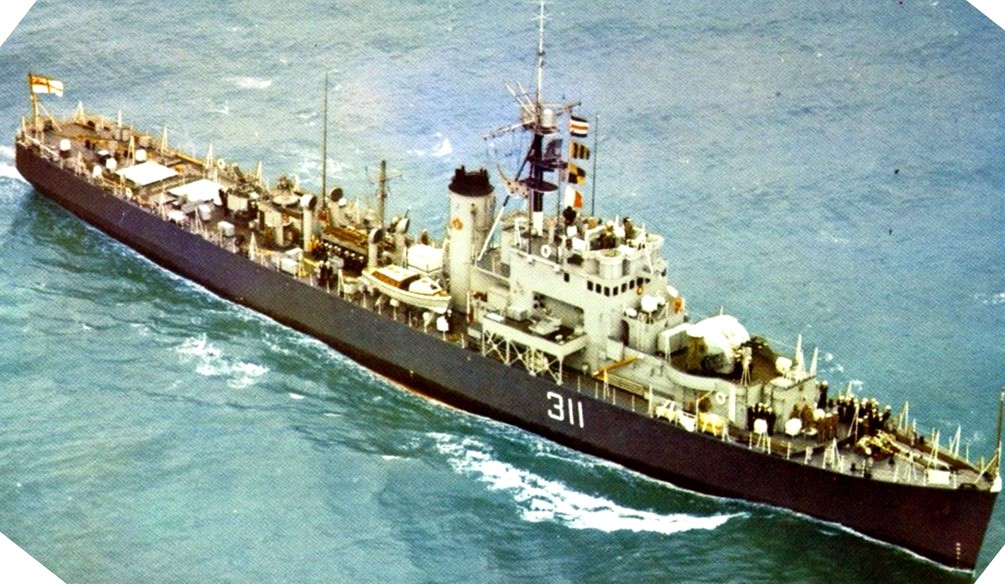
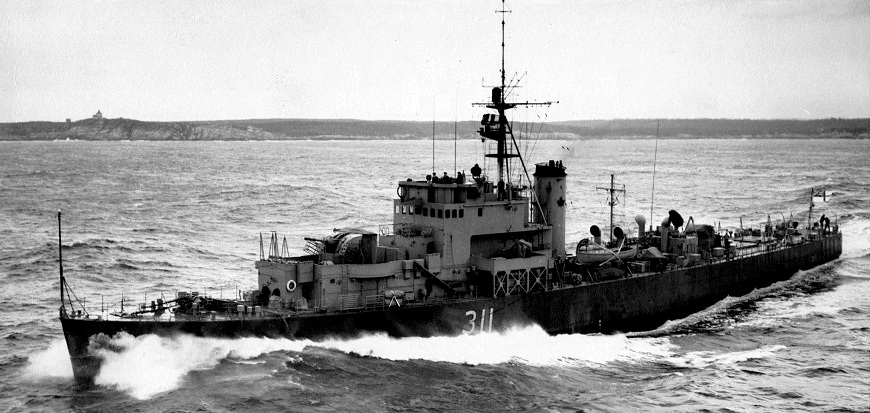
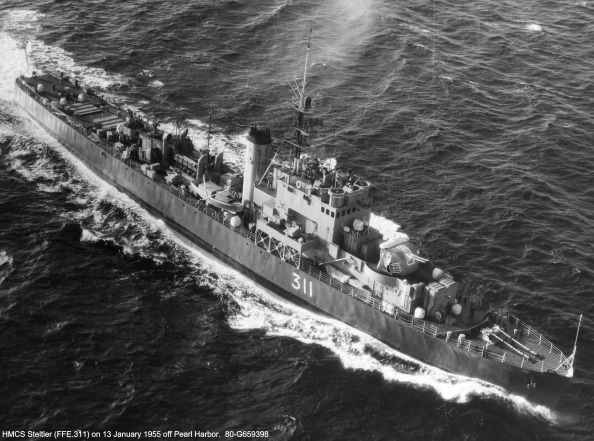
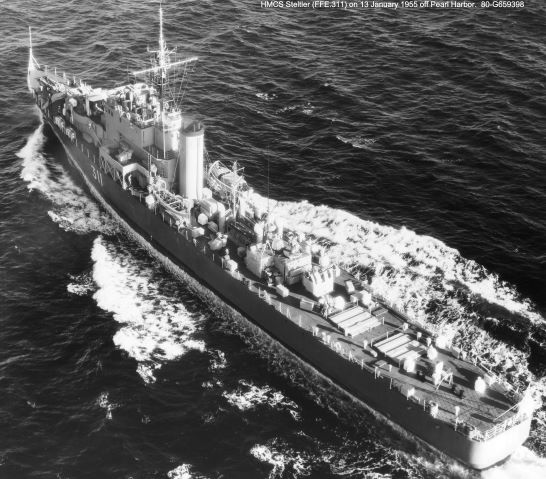
HMCS Stettler (311) Prestonian class Frigate. Built by Canadian Vickers Ltd., Montreal, Quebec, HMCS Stettler K681, was commissioned on 7 May 1944, at Montreal. She arrived at Halifax on 28 May 1944 then carried out workups in Bermuda in Jul 1944. On her return to Halifax she was assigned to EG 16. On 7 Mar 1945, she left for Londonderry, EG 16’s new base, and was thereafter employed in UK waters except for two round trips to Gibraltar in May and Jun 1945. She left ‘Derry for home on 16 Jun 1945, the last Canadian warship to do so, and began tropicalization refit at Shelburne, NS. Work was suspended in Aug 1945 and the ship was paid off 9 Nov 1945. She was sold but later recovered and converted to a Prestonian class ocean escort (311), being re-commissioned on 27 Feb 1954. In the Spring of 1966, HMCS Stettler participated in exercise Maple Spring along with HMCS Grilse and HMCS St. Croix, with port visits along the east coast of South America. She subsequently moved to the west coast, and was finally paid off there on 31 Aug 1966. She was purchased by Capital Iron and Metal, Victoria, BC, in 1967 to be broken up. Shortly after purchase the price of scrap metal plummeted and she was not broken up late 1971, early 1972.
(Cathy Robinson Photo)
HMCS Stettler (311) Prestonian class Frigate.
(Cathy Robinson Photo)
HMCS Stettler (311) Prestonian class Frigate.
(Cathy Robinson Photo)
HMCS Stettler (311) Prestonian class Frigate.
(RCN Photo via Ted Moller)
HMCS Stettler (311) Prestonian class Frigate.
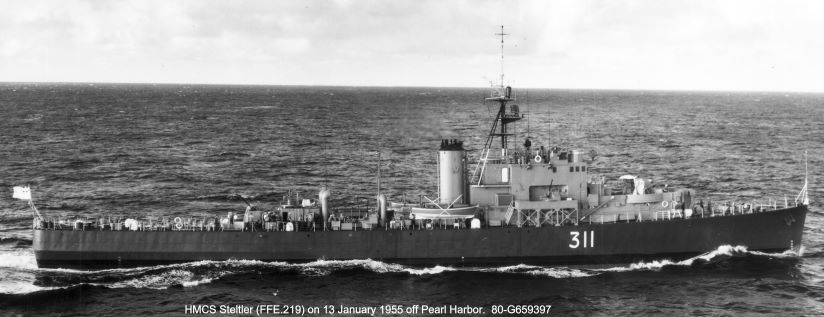
(US Naval History and Heritage Photos)
HMCS Stettler (311) Prestonian class Frigate.
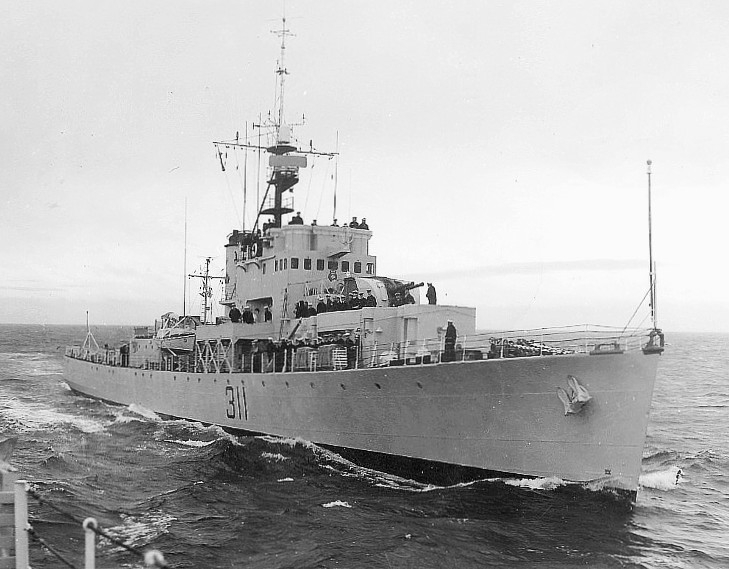
(RCN Photo)
HMCS Stettler (311) Prestonian class Frigate.
HMCS Sussexvale (313)
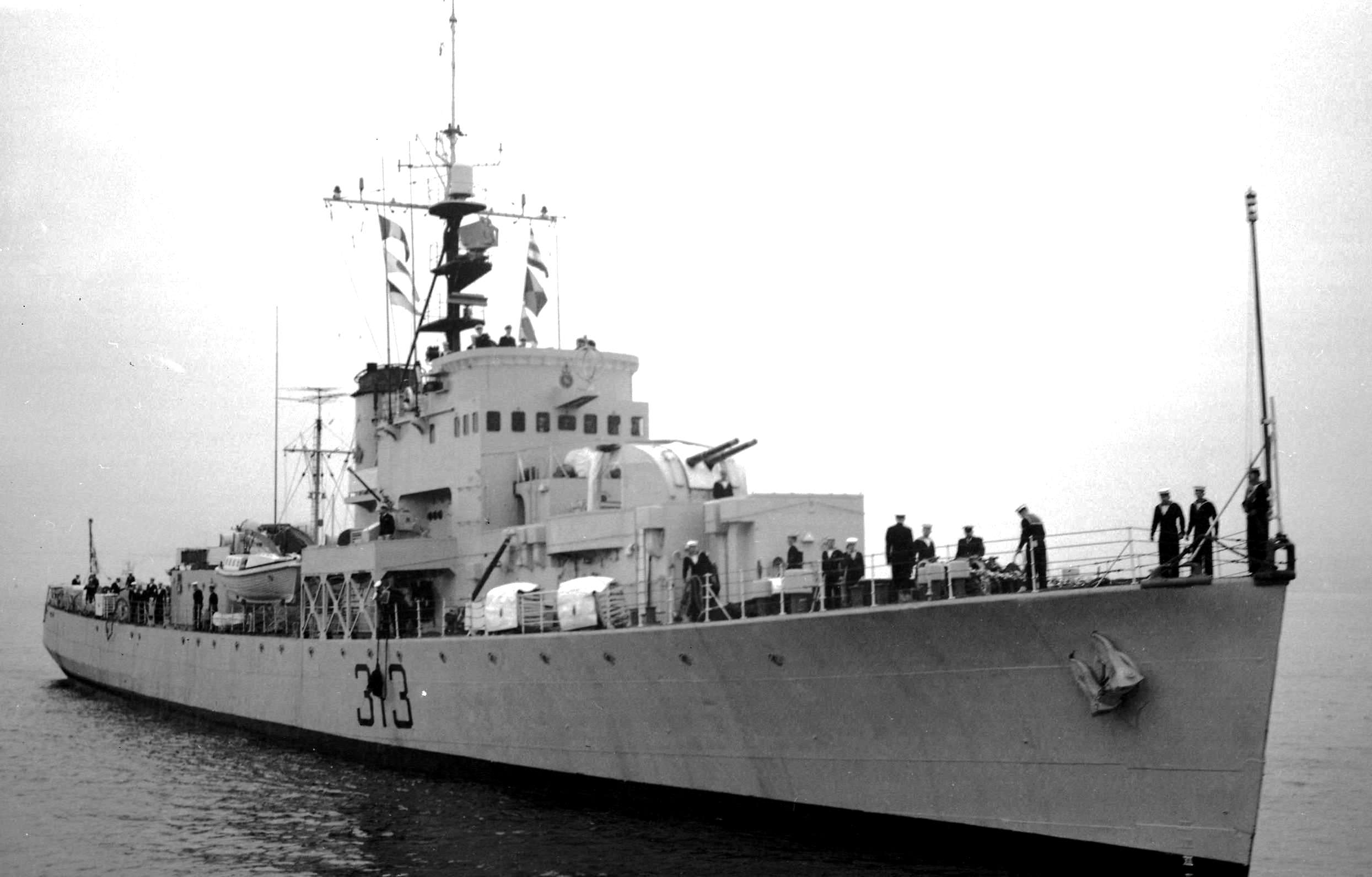
(City of Vancouver Archives Photo)
HMCS Sussexvale (313) Prestonian class Frigate. Launched on 12 Jul 1944, she was the last frigate launched for the RCN. HMCS Sussexvale (K683) was commissioned on 29 Nov 1944, at Quebec City, and arrived at Halifax on 16 Dec 1944. She left on 8 Jan 1945, for a months’ workups in Bermuda, on completion of which she was assigned to EG 26. She arrived in Londonderry to join the group on 6 Mar 1945 and spent the remainder of the war in UK waters, based primarily at Portsmouth. She returned home in May to begin tropicalization refit at Shelburne, NS, but this was called off and the ship was paid off at Sydney on 16 Nov 1945. Placed in reserve at Shelburne, she was subsequently sold to Marine Industries Ltd., but re-acquired by the RCN and converted to a Prestonian class ocean escort (313). Re-commissioned 18 Mar 1955, she served as a training ship until paid off on 30 Nov 1966. Sold in Dec 1966 to Kennedy & Mitsui, Vancouver, BC. She was scrapped in Japan in 1967.
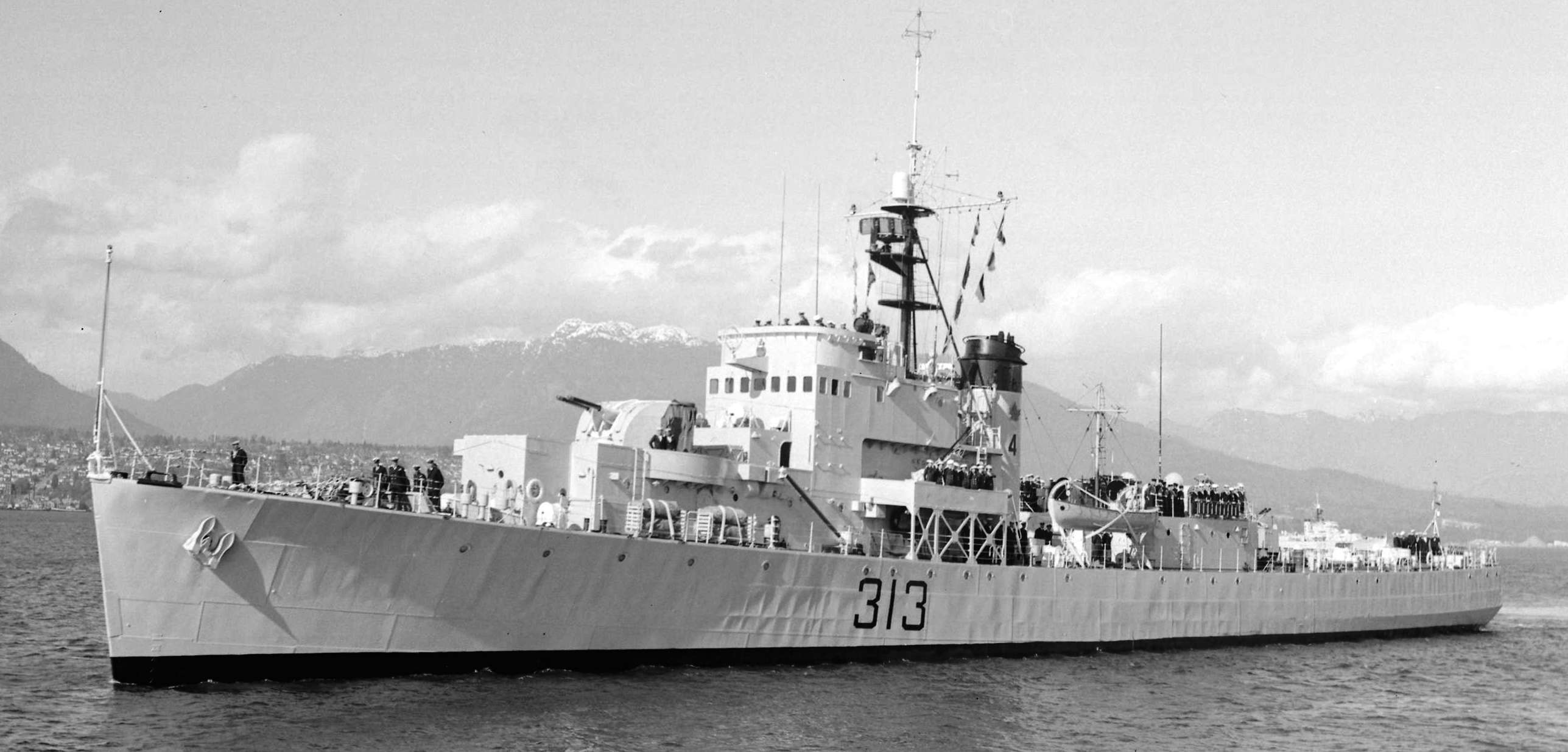
(City of Vancouver Archives Photo)
HMCS Sussexvale (313) Prestonian class Frigate.
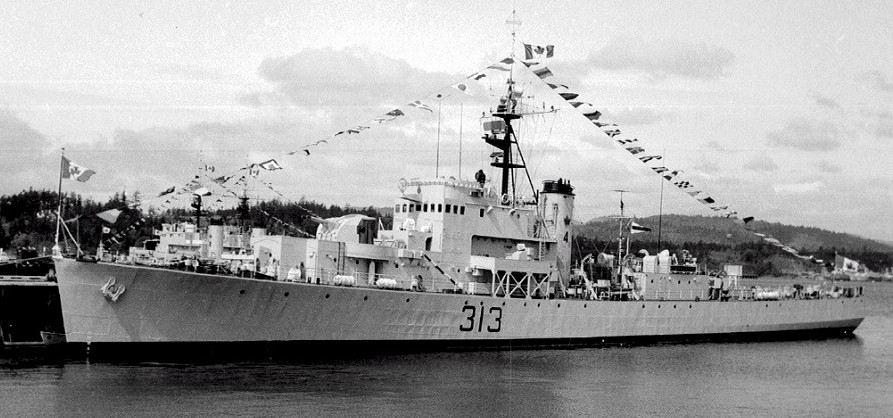
(Wayne Egeland Photo)
HMCS Sussexvale (313) Prestonian class Frigate.
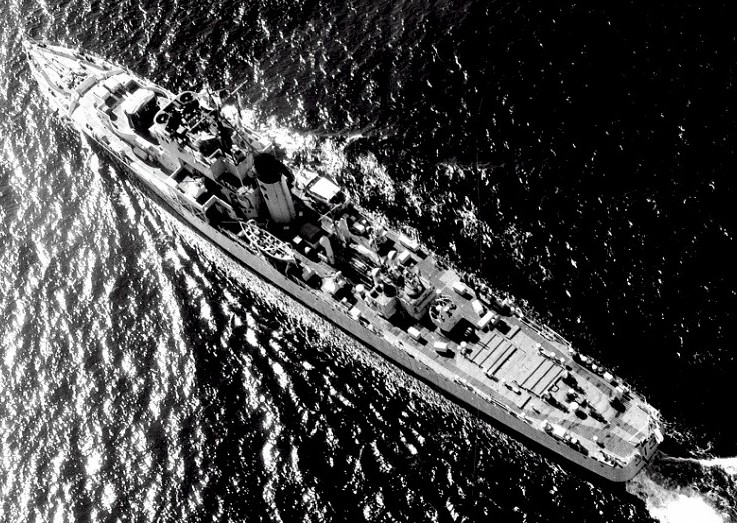
(Wayne Egeland Photo)
HMCS Sussexvale (313) Prestonian class Frigate.
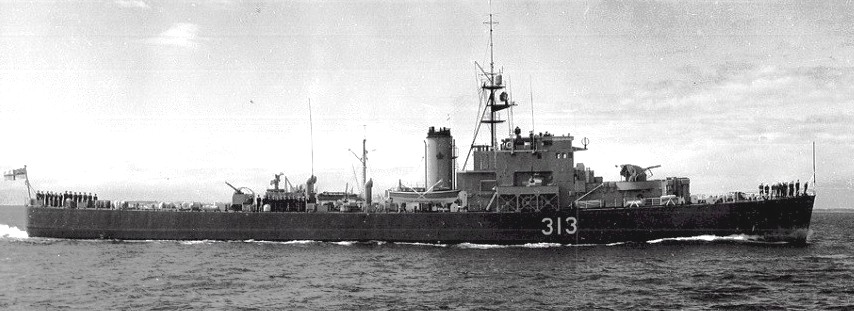
(Wayne Egeland Photo)
HMCS Sussexvale (313) Prestonian class Frigate.
HMCS Swansea (306)
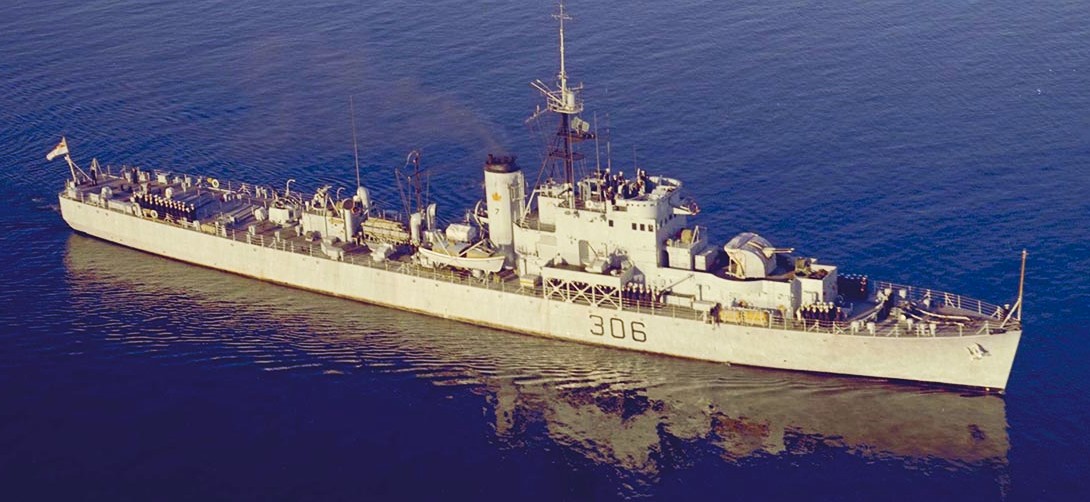
(DND Photo)
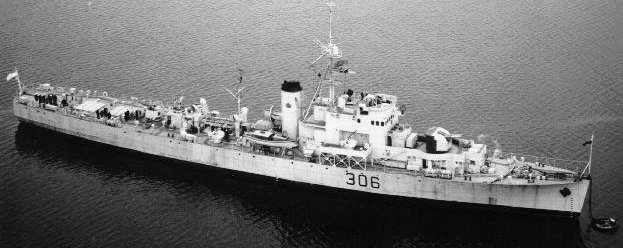
HMCS Swansea (306) Prestonian class Frigate. Built by Yarrows Ltd., Esquimalt, she was commissioned at Victoria on 4 Oct 1943, HMCS Swansea arrived at Halifax on 16 Nov 1943 and worked up off Pictou and in St. Margaret’s Bay, NS. Assigned to EG 9, Londonderry, she made her passage there with convoy SC.154, taking part in the sinking of U-845 on 10 Mar 1944. On 14 Apr 1944 she repeated the process in company with HMS Pelican, the victim this time being U-448. Eight days later, on 22 April 1944, this time with HMCS Matane, HMCS Swansea sank U-311 southwest of Iceland. This kill was only awarded long after the war once the records of German and British intelligence became available. She was present on D-Day, and for the next four months patrolled the Channel in support of the ships supplying the invasion forces. While thus employed, she and HMCS Saint John sank U-247 off Land’s End on 1 Sep 1944. She left Londonderry on 5 Nov 1944 for a major refit at Liverpool, NS, from Dec 1944 to Jul 1945. She received the first tropicalization of a frigate for Pacific service, and on VJ-Day HMCS Swansea was assessing the results in the Caribbean. She was paid off 2 Nov 1945 to reserve in Bedford Basin, but was twice re-commissioned for training cadets and new entries between Apr 1948, and Nov 1953. In early June, 1949, while the Maingay Commission was still hearing testimony, a group of junior hands on the HMCS Swansea, incensed at poor treatment by their commanding officer, locked themselves in their mess. The response was a forceful entry by armed troops, a rapid court-martial of the senior hands, and their sentencing to 90 days’ hard labour and dishonorable discharge from the navy. In Jun 1953 HMCS Swansea was part of the Canadian Squadron that attended the Coronation of Queen Elizabeth II Fleet Review at Spithead. HMCS Swansea was rebuilt from 1956 to 1957, as a Prestonian class ocean escort (306). On 13 Feb 1959, HMCS Fort Erie, HMCS Buckingham, HMCS Swansea and HMCS La Hulloise returned to Halifax after a 5 week exercise in southern waters that included a port visit to Kingston, Jamaica. In Apr 1963, 12 RCN ships, HMCS Algonquin, Micmac, Cayuga, St. Croix, Terra Nova, Kootenay, Swansea, La Hulloise, Buckingham, Cape Scott, CNAV Bluethroat and CNAV St. Charles, took part in NATO Exercise New Broom Eleven, an exercise designed to test convoy protection tactics. She was paid off 14 Oct 1966 and broken up in 1967 at Savona, Italy.
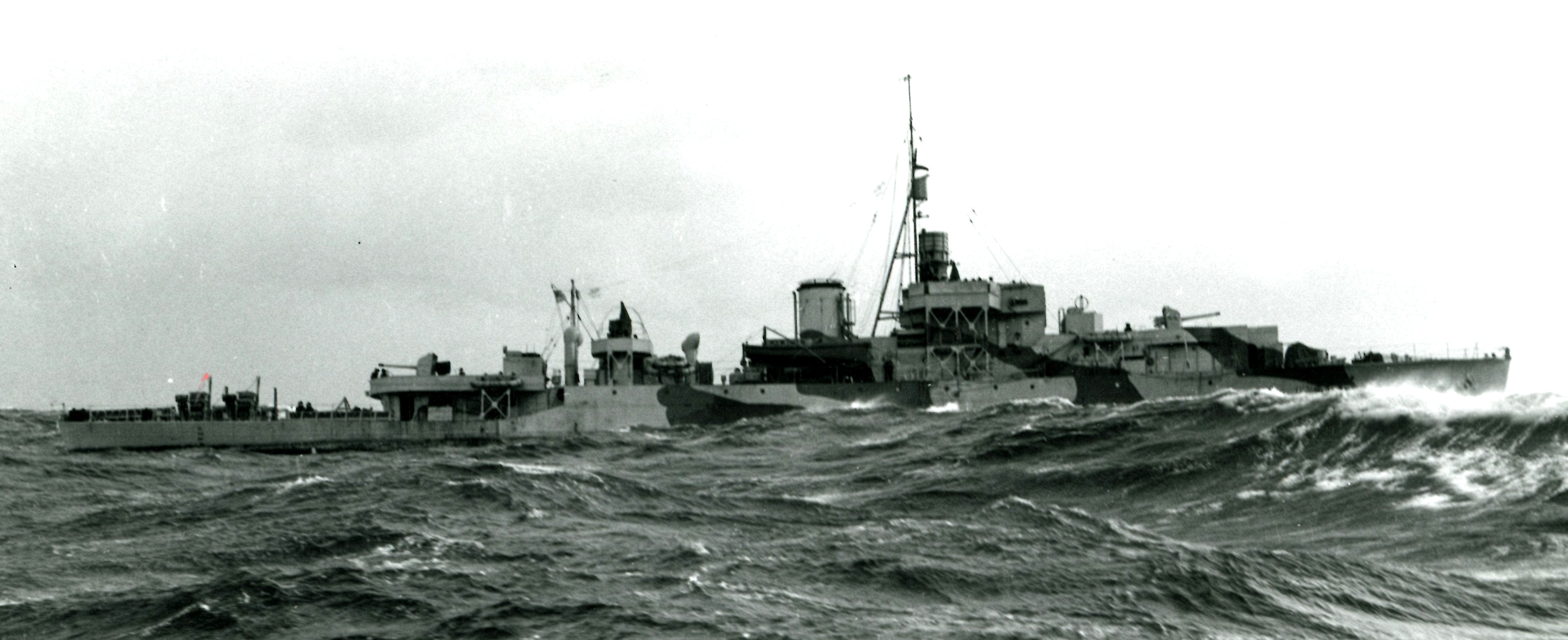
(Naval Museum of Halifax Photo)
HMCS Swansea (K328) Prestonian class Frigate.
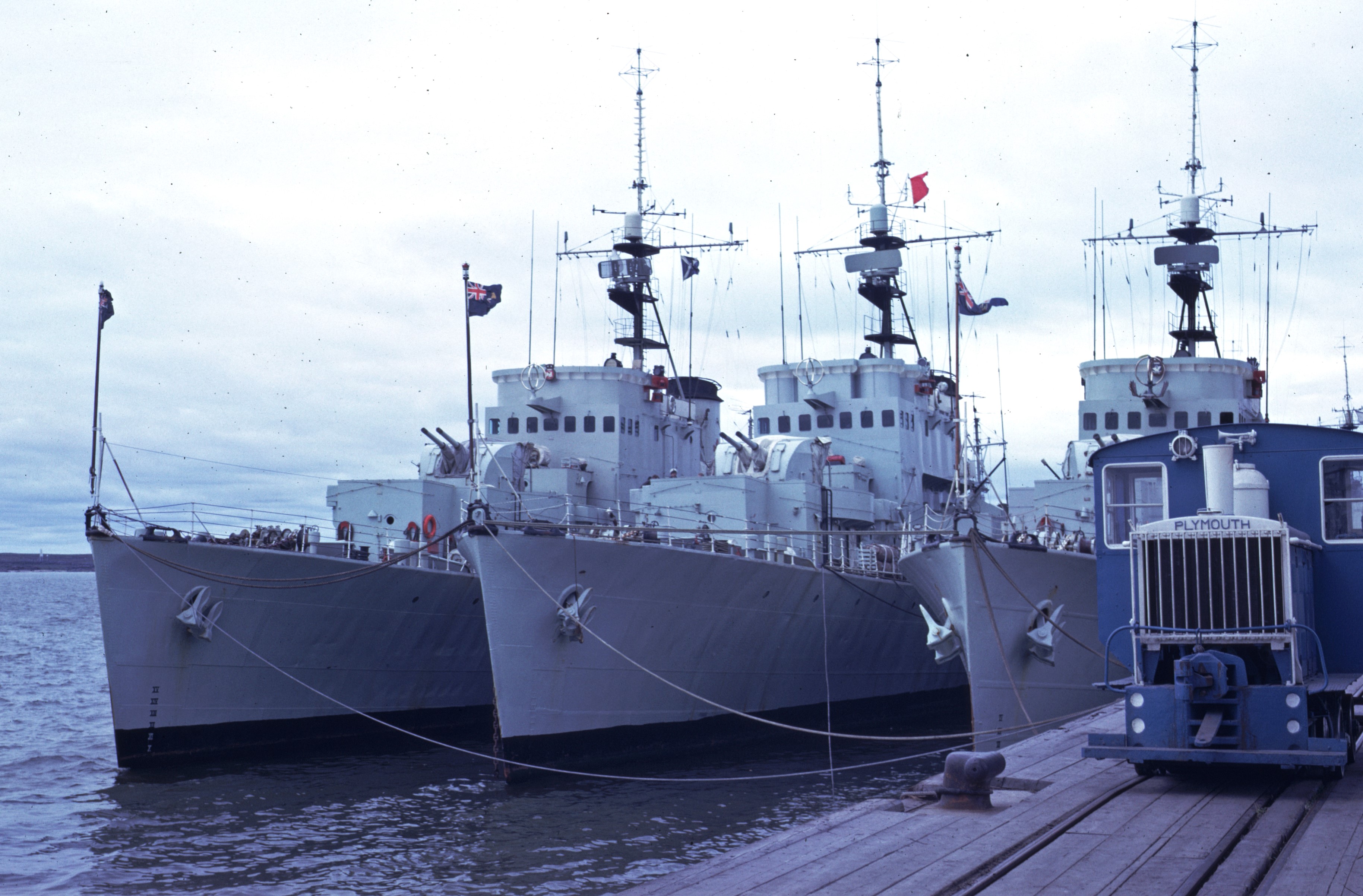
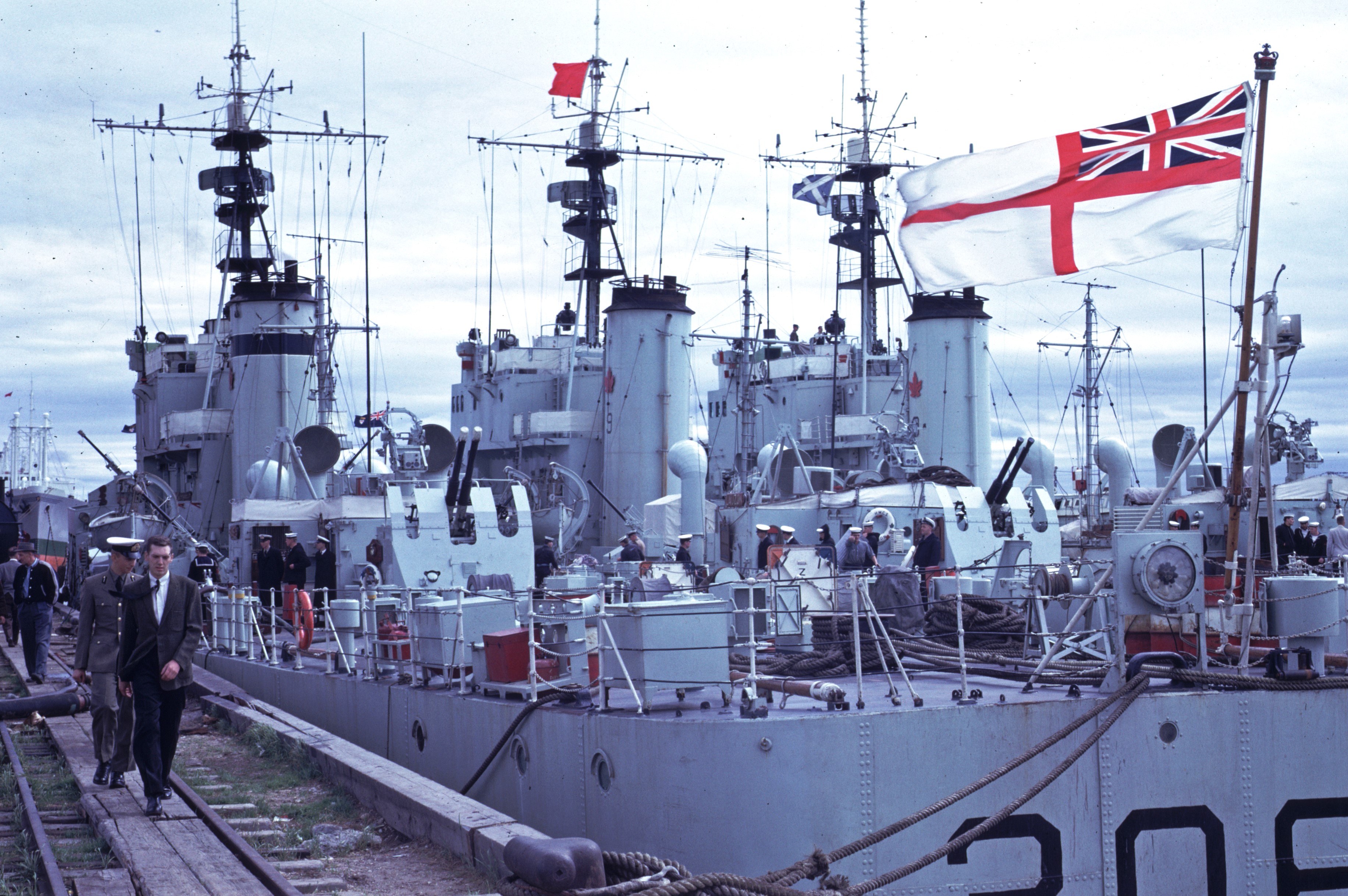
(Angus Gillingham Photos via Peter Gillihgham)
HMCS Swansea (306) Prestonian class Frigate Autumn 1962, taken during the 9th Squadron’s visit to Churchill, Manitoba.
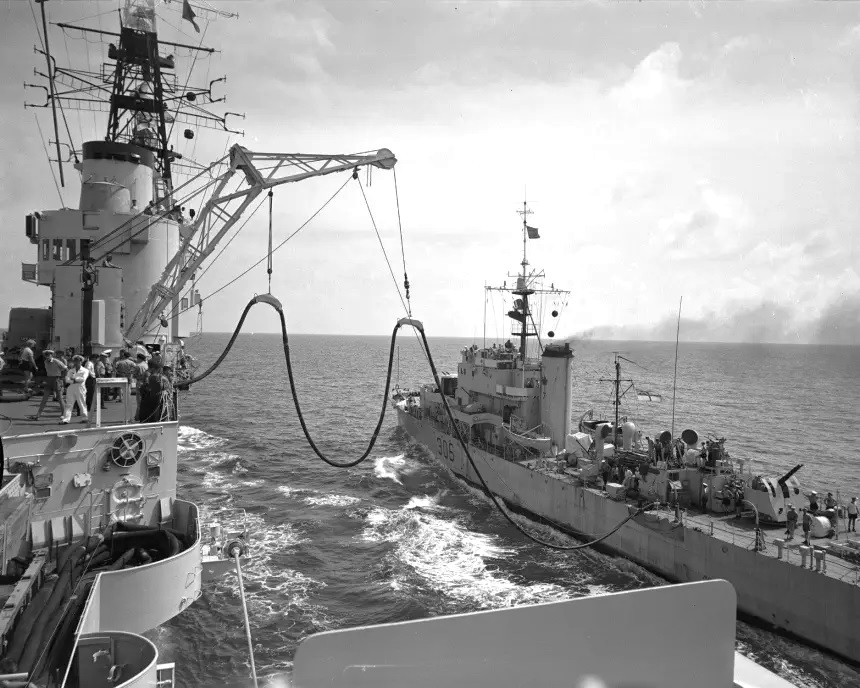
(laststandonzombieisland blog Photo)
HMCS Swansea (305) Prestonian class Frigate fuelling from HMCS Bonaventure, 18 May 1959.
(DND Photo)
HMCS Swansea (306) Prestonian class Frigate.
HMCS Toronto (319)
(Library and Archives Canada Photo, MIKAN No. 3209069)
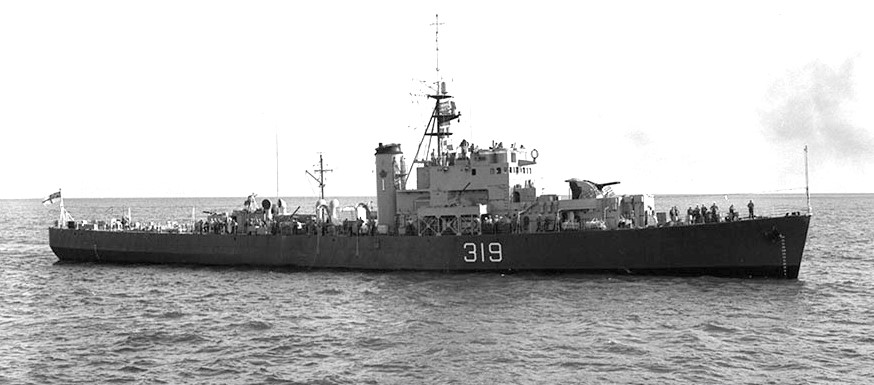
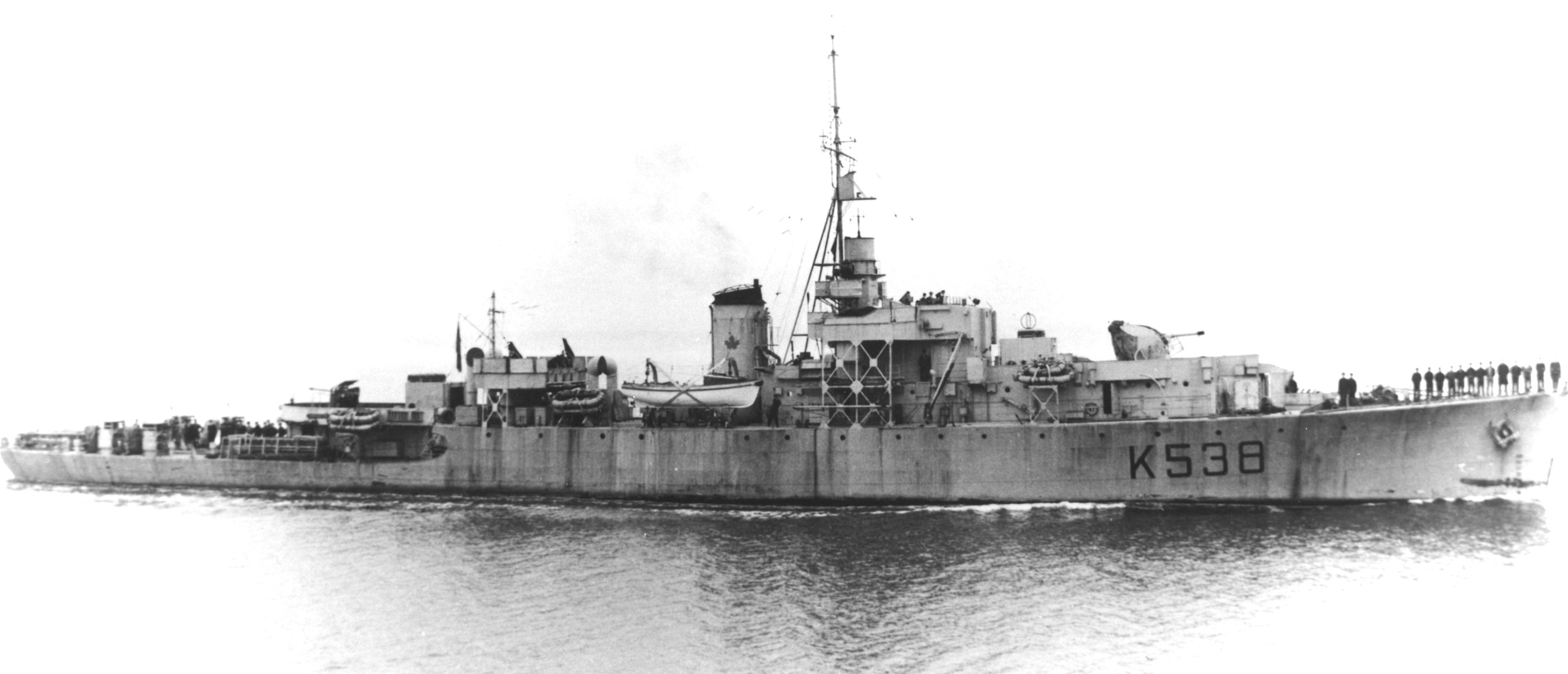
HMCS Toronto (319) Prestonian class Frigate, 24 March 1954. Laid down as HMCS Giffard (K538), she was renamed and commissioned on 6 May 1944, at Lévis as HMCS Toronto (K538). She arrived at Halifax on 28 May 1944 leaving on 18 Jun 1944 for a month’s working-up in Bermuda. In Aug 1944, HMCS Toronto was allocated to EG 16, Halifax, but for the next few weeks operated principally from Sydney. Following repairs in Nov 1944 she joined Halifax Force and was employed locally until May 1945, when she began five months’ training duty at HMCS Cornwallis. Paid off on 27 Nov 1945, she was placed in reserve at Shelburne, but was re-commissioned on 26 Mar 1953, after conversion to a Prestonian class ocean escort (319). She was paid off for the last time on 14 Apr 1956, having been lent to the Norwegian Navy, which renamed her HNoMS Garm. She was permanently transferred in 1959, and re-classed in 1965 as a torpedo boat depot ship – simultaneously renamed HNoMS Valkyrien, she served a further 13 years before being disposed of.
(RCN Photo)
HMCS Giffard (K538) Prestonian class Frigate.
HMCS Victoriaville (320)
(DND Photo)
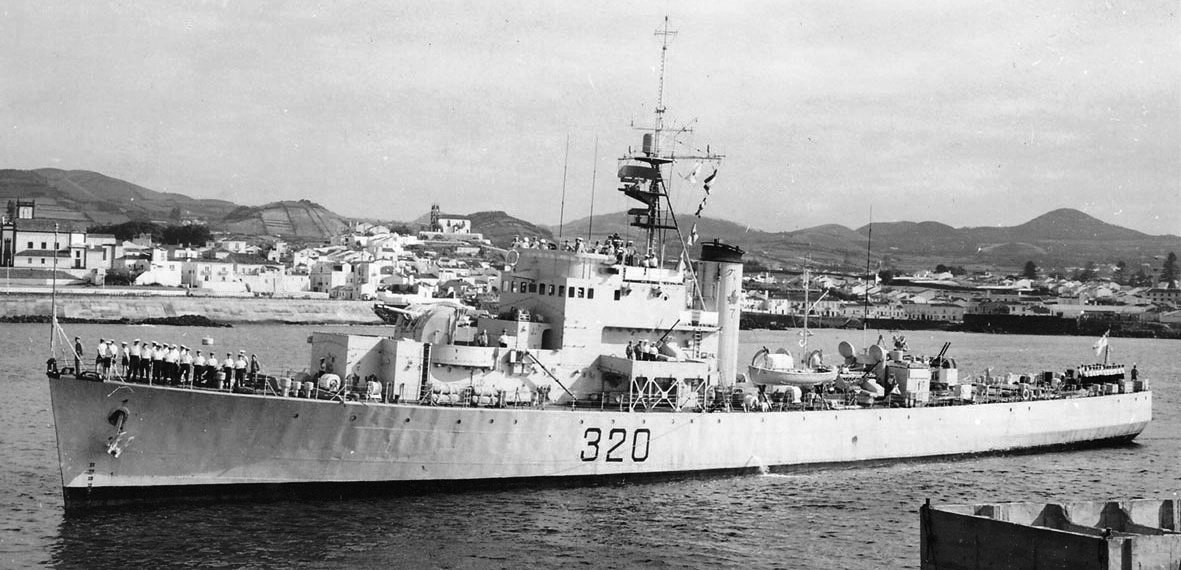
HMCS Victoriaville (320) Prestonian class Frigate. Commissioned on 11 Nov 1944, at Quebec City, she arrived at Halifax on 03 Dec 1944 and late that month proceeded to Bermuda to work up. In Feb 1945, she was assigned to EG C-9, leaving Halifax on 27 Feb 1945 to join convoy SC.168 for her passage to Londonderry, where the group was based. HMCS Victoriaville (K684) spent the balance of the war on North Atlantic convoy duty. She left Barry, Wales, on 02 May 1945 to pick up convoy ON.300 on her way home to Canada, and on 12 May 1945 escorted the surrendered U-190 into Bay Bulls, Newfoundland. She began tropicalization refit at Saint John, NB, on 24 May 1945, but work was stopped on 20 Aug 1945, and on 17 Nov 1945 the ship was paid off at Sydney and laid up at Shelburne. Subsequently sold to Marine Industries Ltd., she was re-acquired by the RCN and re-commissioned on 25 Sep 1959, following conversion to a Prestonian class ocean escort (320). On 21 Dec 1966, she assumed the name and duties of the retiring diving tender HMCS Granby (180), but was paid off 31 Dec 1973, and sold for scrap the following year.
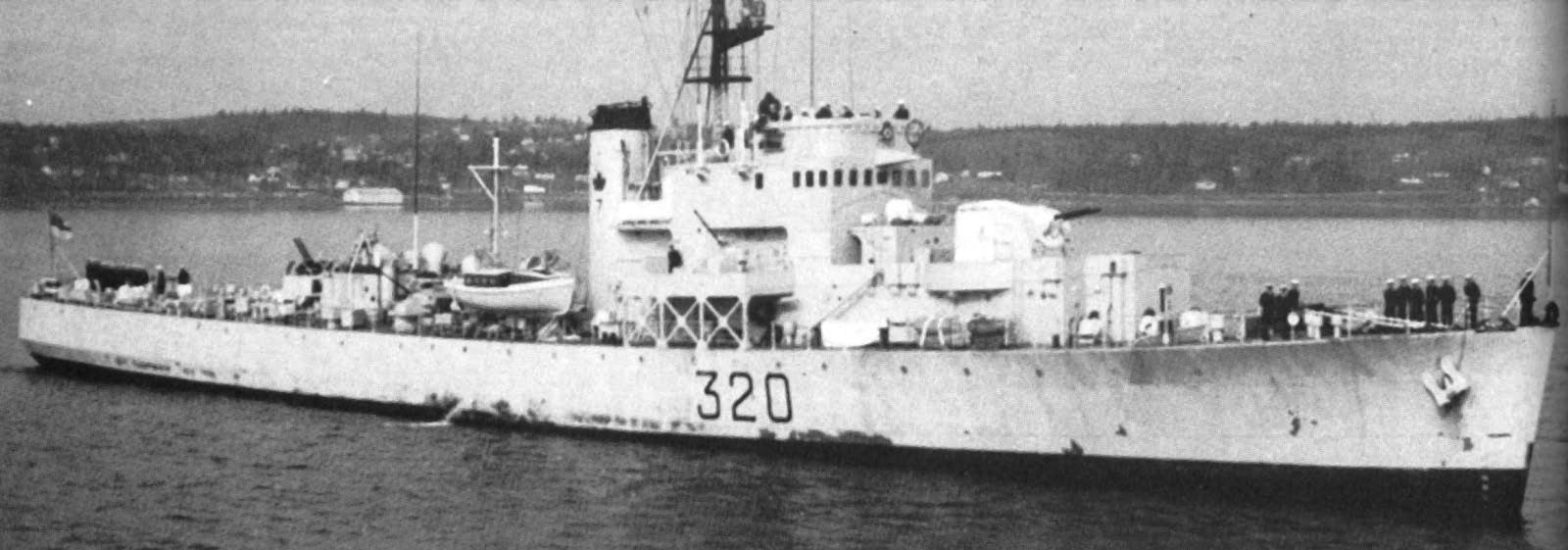
(DND Photo)
HMCS Victoriaville (320) Prestonian class Frigate.
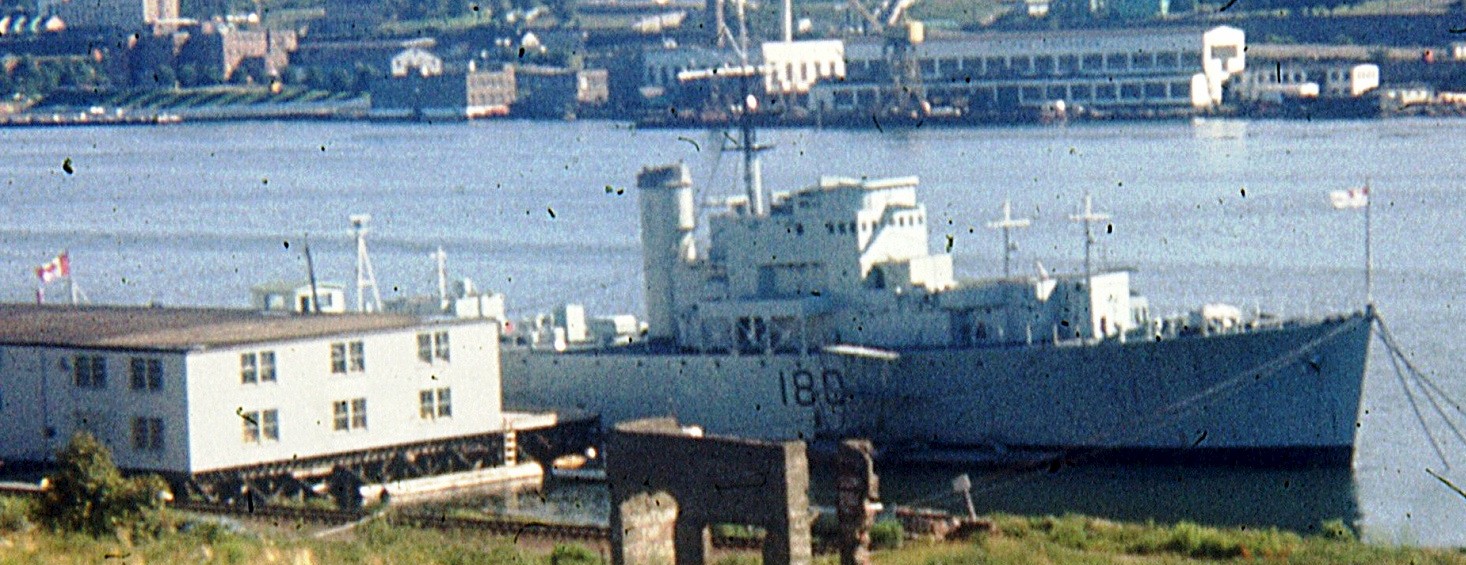
(Dan Delong Photo)
HMCS Granby (180) Prestonian class Frigate, at French Cable Wharf, Dartmouth, Nova Scotia, in the late 1960s early 1970s.
All comments are subject to our Comment Policy. You must be at least 18 years old to comment.
See a comment that violates our guidelines? Report it here.