
RCN Minesweepers (Bangor Class): HMCS Guysborough (J52), HMCS Ingonish (J69), HMCS Kelowna (J261), HMCS Kenora (J281)
HMCS Guysborough (J52)
(DND Photo)
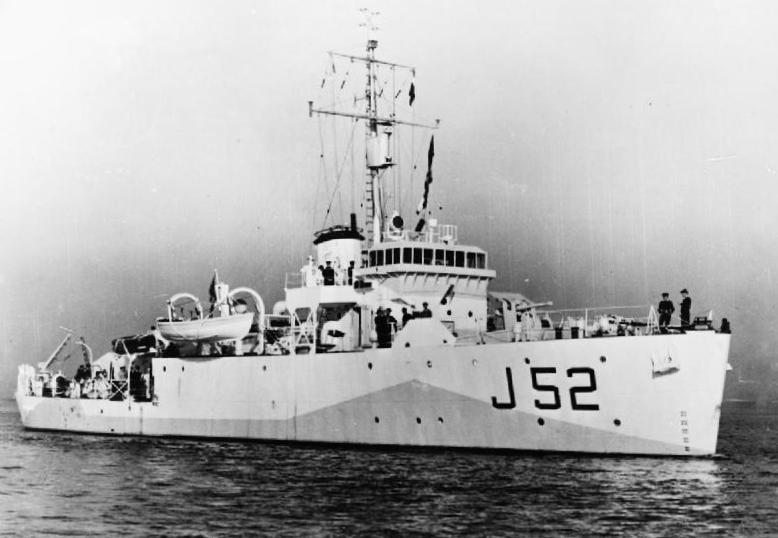
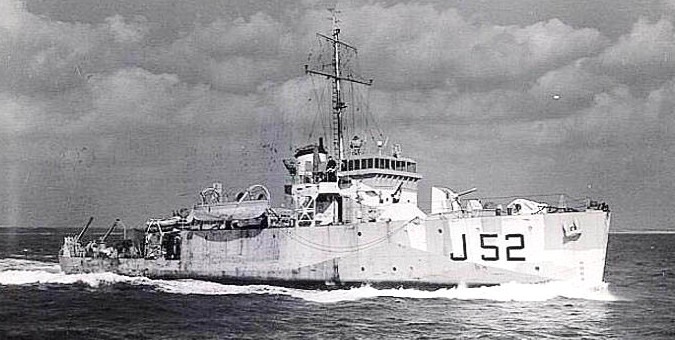
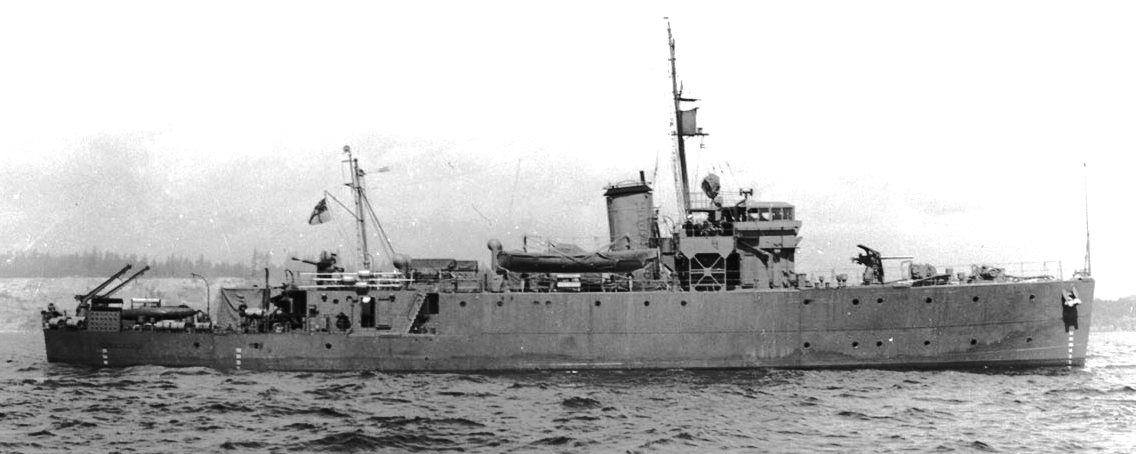
HMCS Guysborough (J52) (Bangor-class). Built by North Vancouver Ship repairs Ltd, Vancouver for the RN she was transferred to the RCN for manning. She was commissioned on 22 Apr 1942, and assigned to Esquimalt Force. On 17 Mar 1943, she left for Halifax, arriving on 30 April 1943 . After brief service with WLEF, she joined Halifax Force. In mid-Sep 1943 Guysborough underwent six weeks’ refit at Baltimore, MD. On 21 Feb 1944, with HMCS Canso, HMCS Kenora and HMCS Wasaga, she left Halifax for the Azores en route to Plymouth, where she arrived on 8 Mar 1944. She was assigned to the 14th Minesweeping Flotilla and was present on D-Day. In Dec 1944 she returned to Canada for refit at Lunenburg, after which, bound again for Plymouth, she was torpedoed and sunk with a loss of 53 of her crew.
At 18.50 hours on 17 Mar 1945, HMCS Guysborough (J 52) (T/Lt B.T.R. Russell, RCNR) was hit in the stern by a Gnat from U-868 about 210 miles north of Cape Finisterre in the Bay of Biscay. Sailing alone the minesweeper towed a CAT gear against acoustic torpedoes but the Gnat nevertheless hit the stern, probably because the gear was streamed too close to the ship to confuse the warhead. Settling by the destroyed stern with a slight list to port, the vessel did not sink and the U-boat fired a coup de grâce at 19.35 hours. The torpedo hit on the starboard side amidships and caused the minesweeper to sink fast by the stern. Two crew members had been killed in the explosions and the remaining men had to abandon ship on five Carley floats because the motor cutter and the whaler were unusable. A first group of 48 survivors lashed four rafts together, while the fifth raft drifted away overcrowded by the remaining men. They had managed to send a distress signal and several vessels were sent to their rescue, but it took HMS Inglis (K 570) (T/A/LCdr A.P. Cobbold, RNVR) around 19 hours to arrive. In the meantime 49 of the survivors had died of injuries or exposure – 36 on the overcrowded raft. Interestingly, a Spanish trawler with “a suspicious amount of electronic gear” and suspected of having played a part in HMCS Guysborough‘s sinking was chased out of the area by HMS Loring. Obviously the trawler picked up the body of at least one Canadian sailor since GF Adam is buried in the British cemetery at Bilbao, Spain.
On 10 Apr 1945, U-878 was sunk west of St. Nazaire, France in position 47-35N, 10-33W, by depth charges from HMS Vanquisher and HMS Tintagel Castle. Of her crew of 53, there were no survivors.
(DND Photo)
HMCS Guysborough (J52) (Bangor-class).
(DND Photo)
HMCS Guysborough (J52) (Bangor-class).
HMCS Ingonish (J69)
(DND Photo)
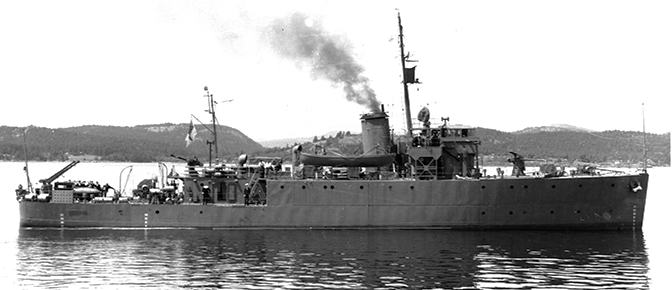
HMCS Ingonish (J69) (Bangor-class). Built by North Vancouver Ship Repairs Ltd., Vancouver, BC, for the RN but transferred to the RCN for manning, HMCS Ingonish was commissioned on 8 May 1942. She saw her first service with the Esquimalt and Prince Rupert Forces. She left Esquimalt 17 Mar 1943, for Halifax where, after her arrival on 30 Apr 1943, she was allocated briefly to Western Local Defence Force and then, in Jun 1943, to Halifax Force. In mid-Nov 1943 she had a nine-week refit at Baltimore, MD. In May 1944, she was transferred to Sydney Force and in Feb 1945, back again to Halifax Force. Following an extensive refit at Saint John she went in May 1945 to work up in Bermuda and in June sailed for the UK. She was returned to the RN at Sheerness on 2 Jul 1945 and placed in reserve until taken to Dunston-on-Tyne for scrapping in 1948.
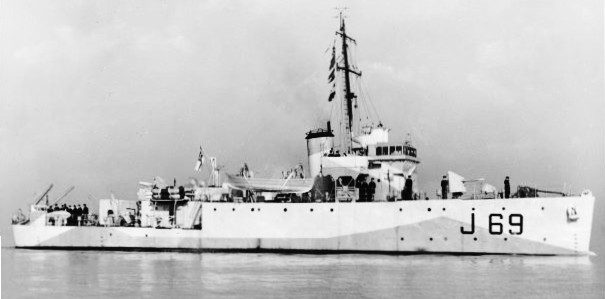
(USN Naval History and Heritage Photo)
HMCS Ingonsih (J69).
HMCS Kelowna (J261)
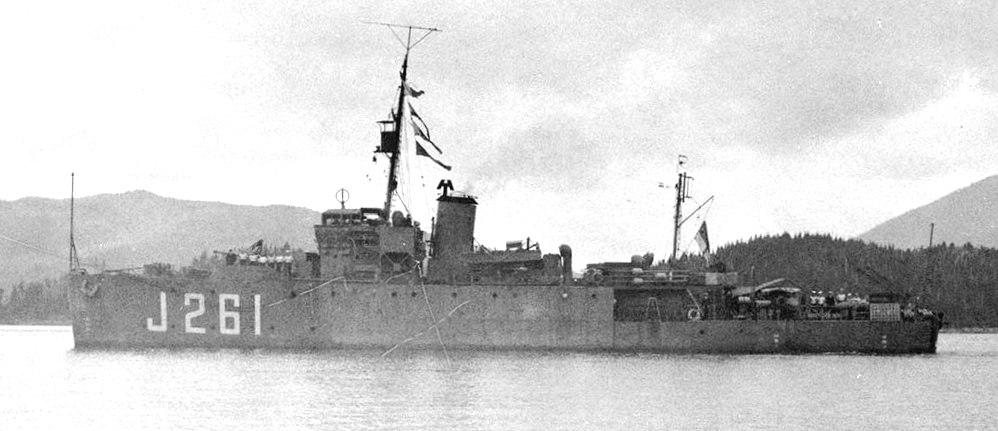
(DND Photo)
HMCS Kelowna (J261) (Bangor-class). Built at Prince Rupert, BC, she was commissioned there on 5 Feb 1942. HMCS Kelowna spent her entire career on the west coast, alternately a member of Prince Rupert Force and Esquimalt Force. She was paid off at Esquimalt on 22 Oct 1945, and sold the following year for commercial purposes, first re-named Condor and later, in 1950, Hung Hsin. Owned in Shanghai, she disappeared from Lloyd’s Register after 1950.
HMCS Kenora (J281)
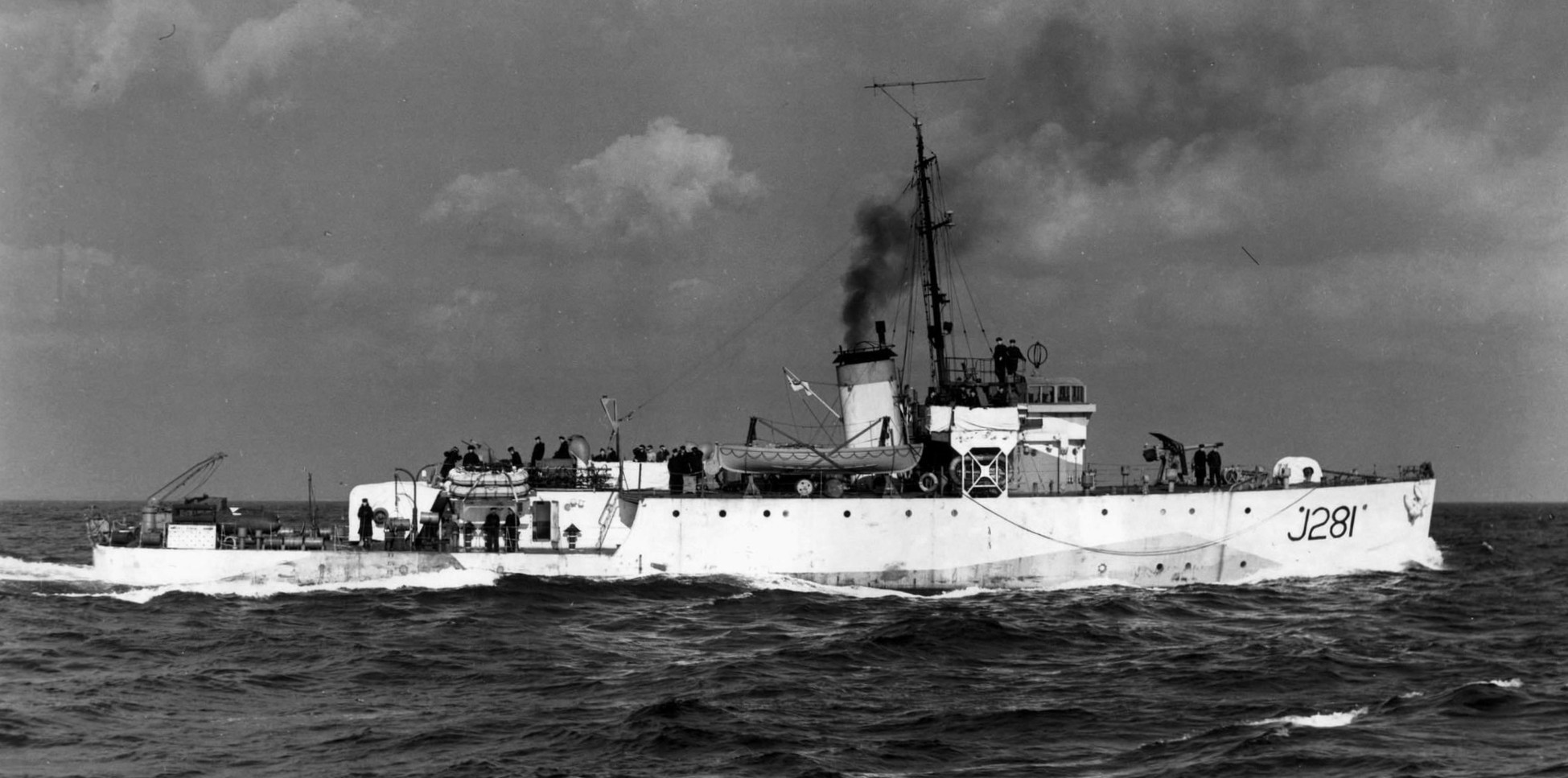
(DND Photo)
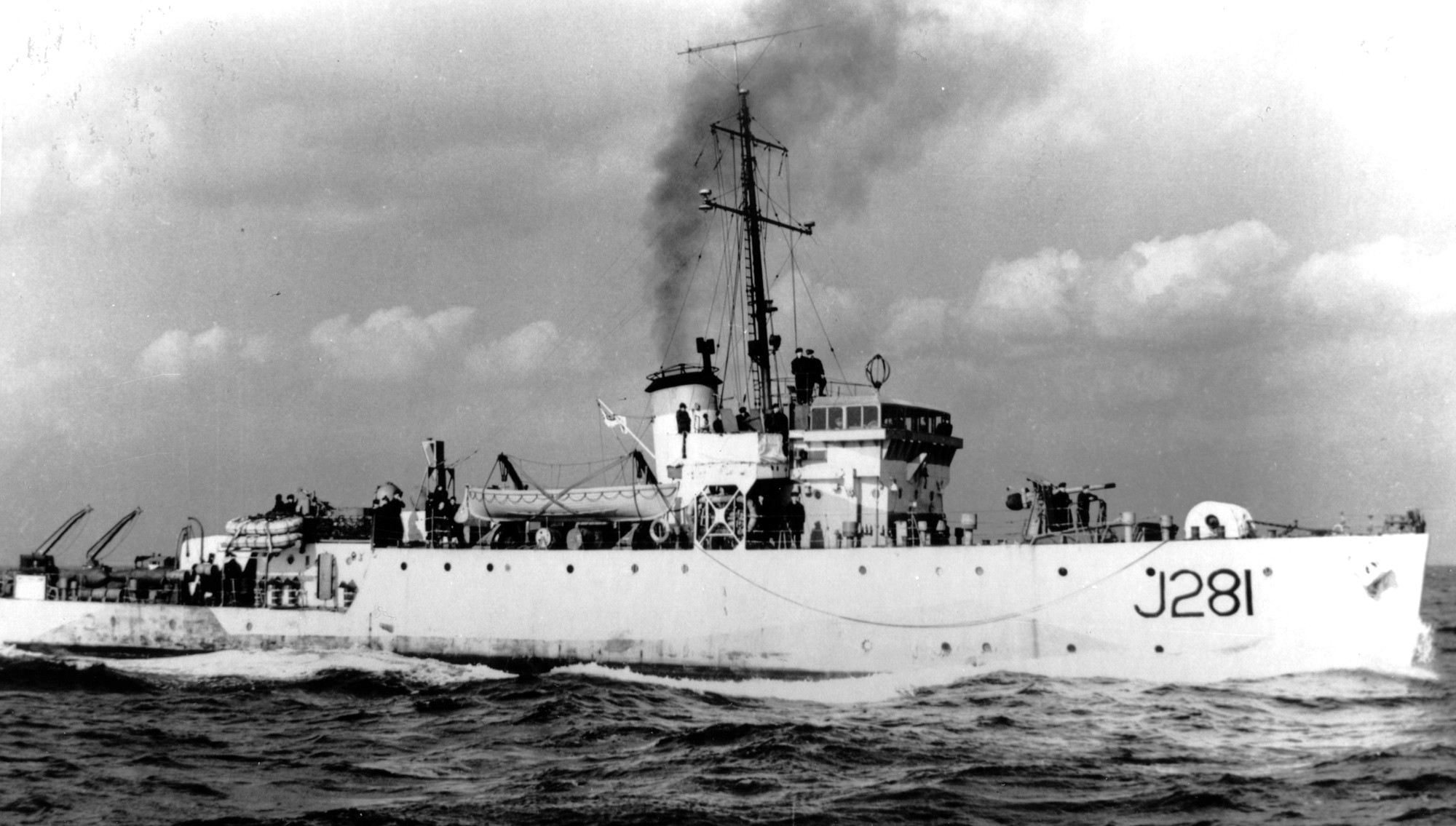
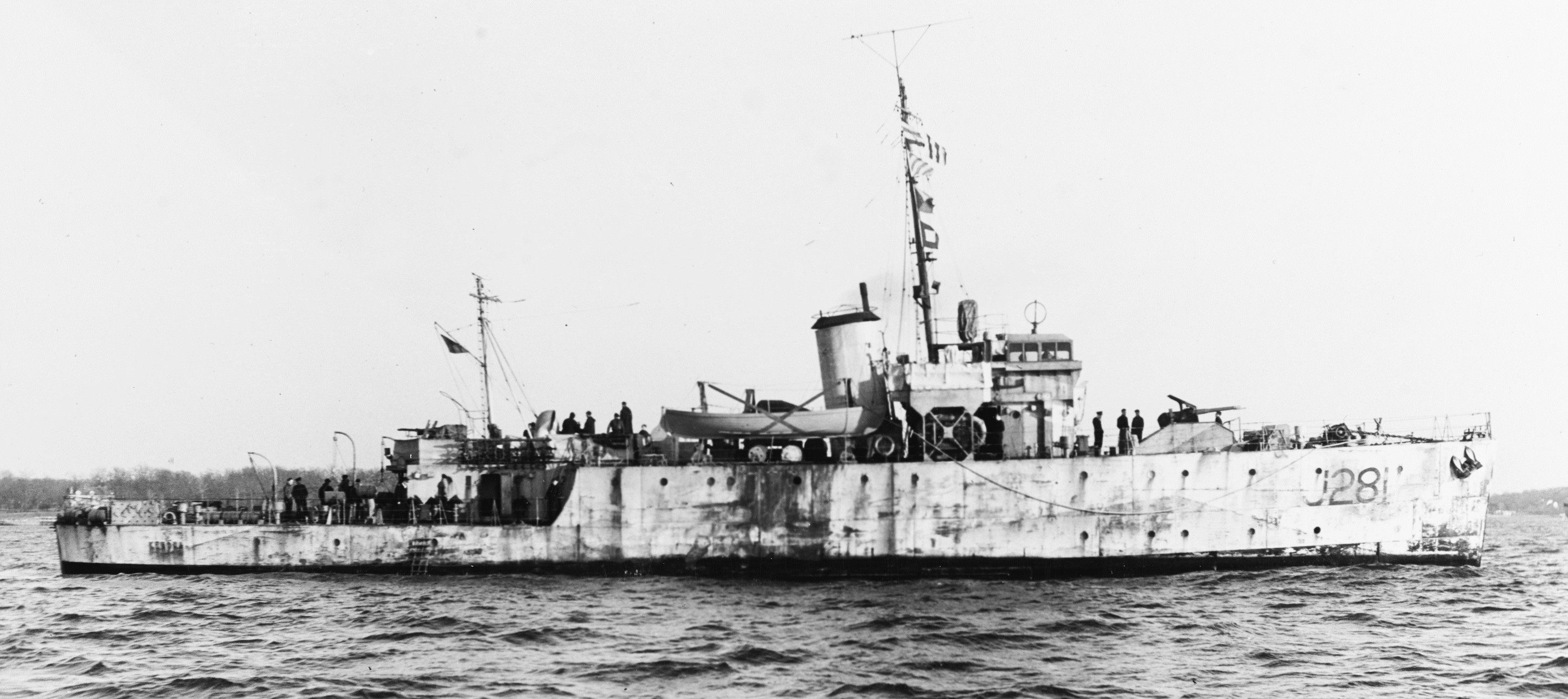
HMCS Kenora (J281) (Bangor-class). Commissioned on 6 Aug 1942, at Port Arthur, she arrived at Halifax on 7 Sep 1942 and proceeded to Pictou for workups. She was then assigned to WLEF and in Jun 1943, became a member of EG W-8. She left Halifax on 21 Feb 1944 with HMCS Canso, HMCS Guysborough and HMCS Wasaga via the Azores for Plymouth, arriving on 8 Mar 1944. HMCS Kenora was assigned to the 14th Minesweeping Flotilla, with which she was present on D-Day, and in October returned to Canada for a refit at Liverpool, NS. She proceeded to the UK again in Feb 1945, and was assigned to the 31st Minesweeping Flotilla until 4 Sep 1945, when she left Plymouth for Canada. Kenora was paid off at Halifax on 6 Oct 1945, and placed in reserve at Shelburne. In 1946, she went into strategic reserve at Sorel until re-acquired by the RCN in 1952 and moved to Sydney. On 29 Nov 1957, she was transferred to the Turkish Navy as Bandirma. She was removed from service in 1972.
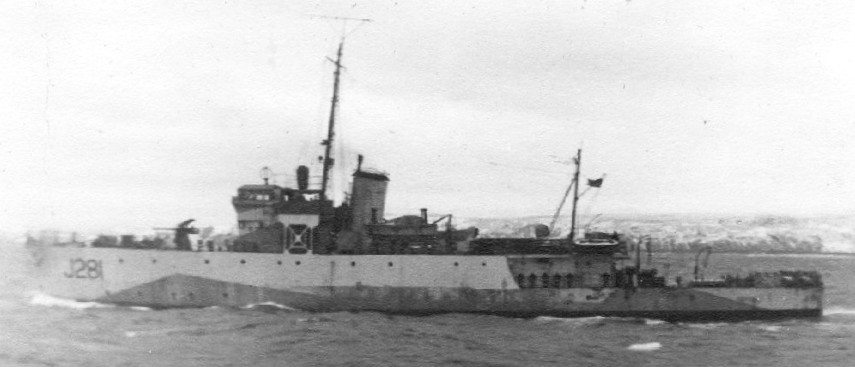
(Virtual Museum Photo)
HMCS Kenora (J281) (Bangor-class).
(DND Photo)
HMCS Kenora (J281) (Bangor-class.
(DND Photo)
HMCS Kenora (J281) (Bangor-class).
All comments are subject to our Comment Policy. You must be at least 18 years old to comment.
See a comment that violates our guidelines? Report it here.