RCN Minesweepers (Bangor Class): HMCS Esquimalt J272, HMCS Fort William J311, HMCS Gananoque J259, HMCS Georgian J144
HMCS Esquimalt (J272)
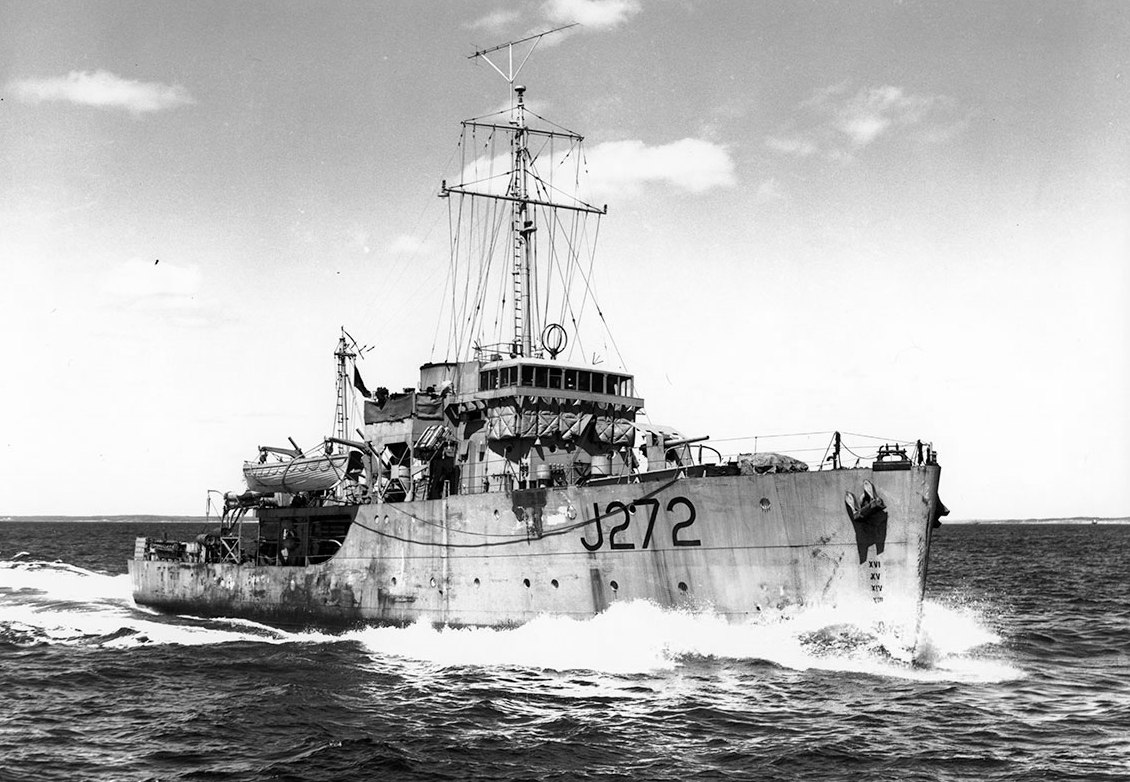
(DND Photo)
HMCS Esquimalt (J272). Commissioned at Sorel on 26 Oct 1942, HMCS Esquimalt arrived at Halifax on 21 Nov 1942. Chronically plagued by mechanical troubles, she underwent repairs there until 27 Mar 1943, and again throughout most of May 1943. She was then assigned to Newfoundland Force until Sep 1944, when she was transferred to Halifax Local Defence Force. Late in Sep 1944 she underwent a three-month refit at Halifax. While on A/S patrol on 16 Apr 1945, she was torpedoed and sunk by U-190 five miles off Chebucto Head, near Halifax, with the loss of 44 of her ship’s company. HMCS Esquimalt‘s survivors were rescued by HMCS Sarnia (J309).
U-190 was a IXC/40 type U-boat, built by Deutsche Schiff und Machinenbau AG Weser, Bremen, launched 8 Jun 1942, commissioned 24 Sep 1942, in service 32 months, with a record of sinking 2 ships, for a total of 7,605 tons. She was taken over by the RCN at the end of the war and commissioned as HMCS U-190, serving for a year or so before being sunk near the last resting place of HMCS Esquimalt.
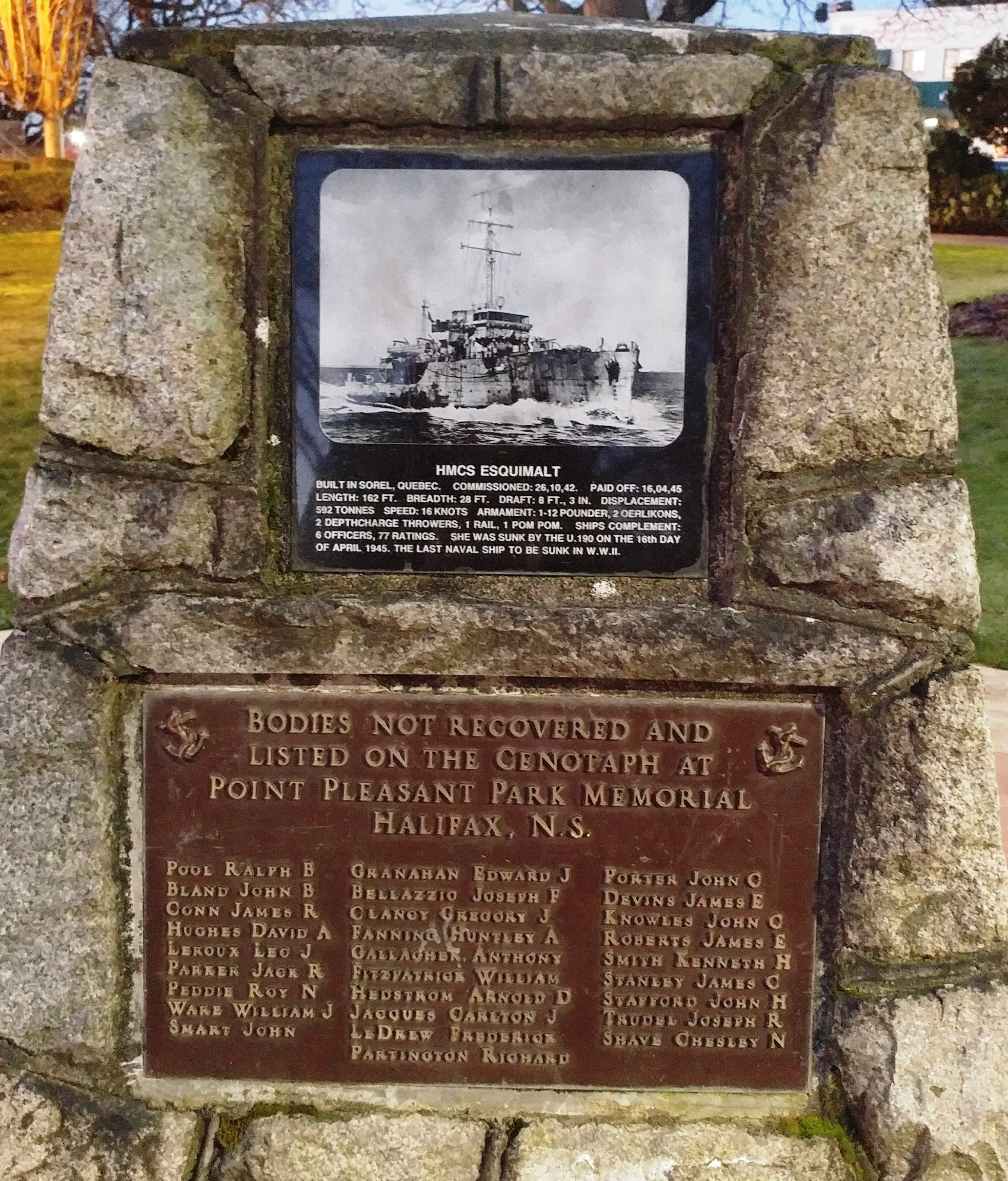
(Author Photo, 30 Jan 2019)
HMCS Esquimalt (J272) memorial in the town of Esquimalt.
HMCS Fort William (J311)
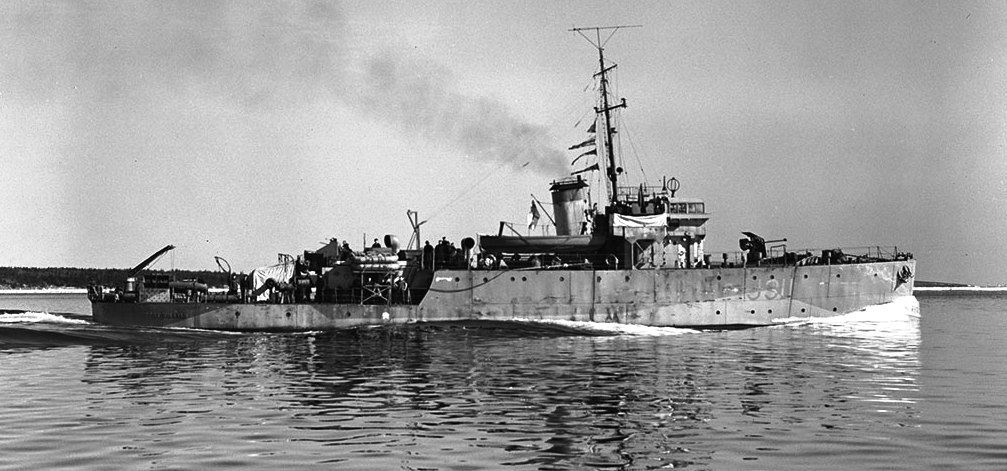
(DND Photo)
HMCS Fort William (J311) (Bangor-class). Commissioned at Port Arthur on 25 Aug 1942, HMCS Fort William arrived at Halifax on 24 Sep 1942 with a good many defects, and did not commence working up until mid-Oct 1942. A month late she was assigned to Halifax Force for local convoys. On 11 Jan 1943, she suffered considerable damage in collision with the government vessel Lisgar at Halifax, and was under repair there for a month. In Jun 1943, she was transferred to Newfoundland Force . She returned to Halifax in Feb 1944, for a short refit, and on 20 Feb 1944 left with HMCS Blairmore, HMCS Milltown and HMCS Minas for Plymouth via the Azores, arriving on 8 Mar 1944. Assigned to the 31st Minesweeping Flotilla, she was present on D-Day. HMCS Fort William refitted at St. John’s Mar 1945, re-joining the 31st Flotilla in Jul 1945 and remaining until 21 Sep 1945, when she left Plymouth for Canada. She was paid off on 23 Oct 1945, at Sydney and was placed in strategic reserve at Sorel in 1946. Re-acquired in Jun 1951, and extensively modernized, she lay in reserve at Sydney until 29 Nov 1957, when she was transferred to the Turkish Navy and re-named Bodrum. She was removed from service in 1971 and broken up.
HMCS Gananoque (J259)
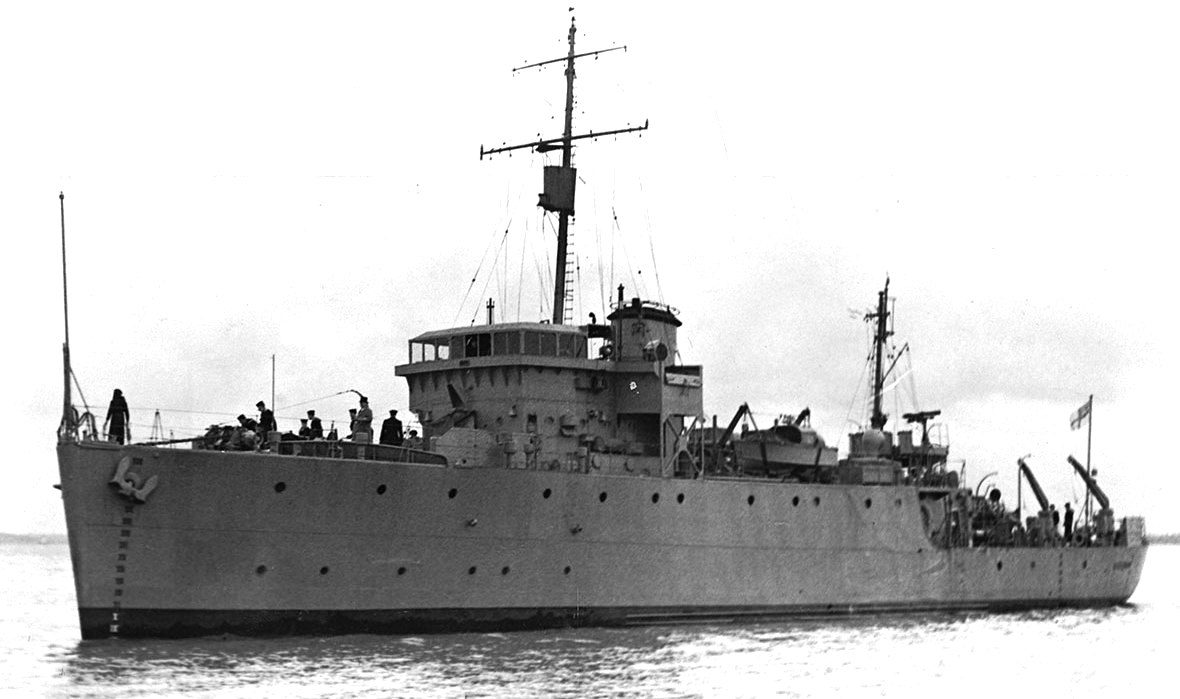
(DND Photo)
HMCS Gananoque (J259) (Bangor-class). Built at Toronto, she was commissioned there on 8 Nov 1941. HMCS Gananoque arrived at Halifax on 23 Nov 1941. She was assigned to Halifax Local Defence Force and subsequently for brief periods to Halifax Force, St. John’s Local Defence Force, Gulf Escort Force, and Sydney Force. In Jan 1943, she was assigned to WLEF, returning to Halifax Force in Jul 1943, and to Sydney Force once again in May 1944. During this period she had the distinction of twice refitting at other than Atlantic coast ports: in May 1943, she underwent a six-week refit at Quebec City, and in Jul 1944, an eight-week refit at Charlottetown. In Feb 1945, she was allocated to Newfoundland Force, based at St. John’s, until the force was disbanded in Jun 1945, whereupon she went to Atlantic Coast Command. Gananoque was paid off at Sydney on 13 Oct 1945, and laid up at Shelburne. Placed in strategic reserve at Sorel in 1946, she was re-acquired by the RCN in 1952 but not re-commissioned, and in Feb 1959, she was sold for scrap.
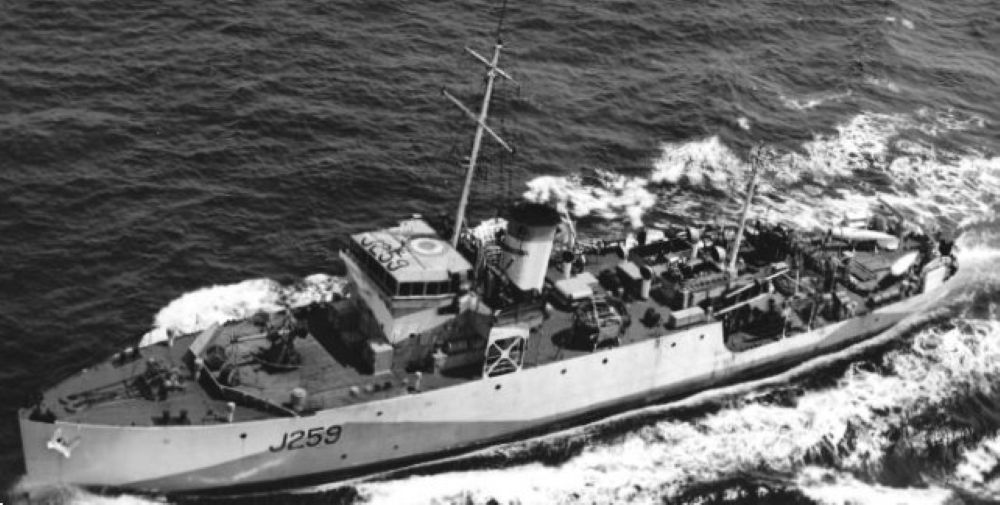
(USN Naval History and Heritage History Photo, 80-G-233778)
HMCS Gananoque (J259)
HMCS Georgian (J144)
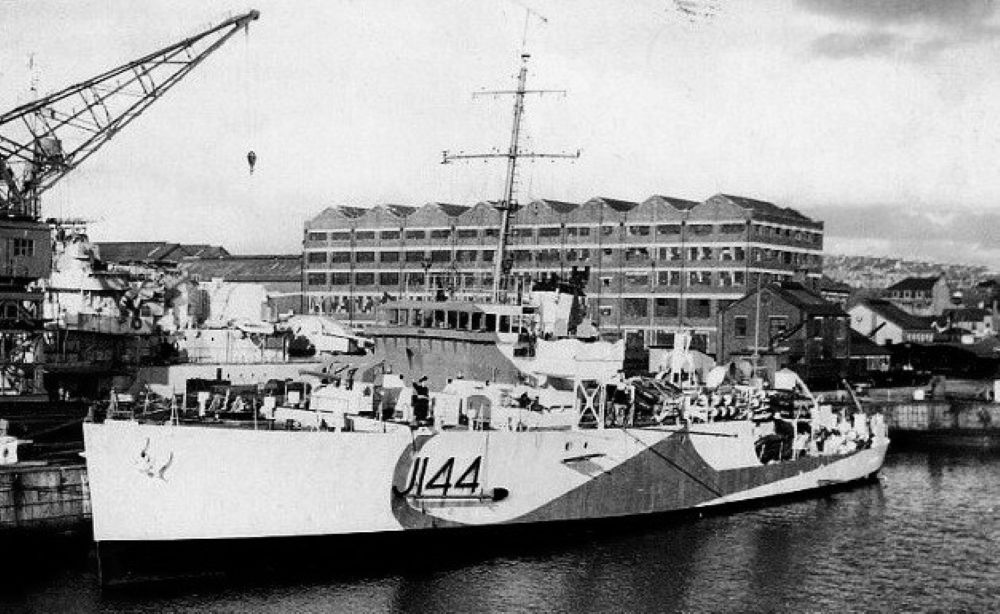
(Paul Lake Photo)
HMCS Georgian (J144) (Bangor-class). Commissioned at Toronto on 23 Sep 1941, HMCS Georgian arrived at Halifax on 13 Oct 1941. On completing workups she was assigned to Sydney Force, but in Jan 1942, she joined Newfoundland Force and remained with it until Feb 1944. Through a tragic error on 12 Jun 1942, she rammed and sank the British submarine P.514 off Newfoundland.
It was just after midnight on 21 Jun 1942. The tragedy took place off Cape Race when the path of the eastbound submarine & her corvette escort, which were heading for St. John’s from Argentia, intercepted that of a westbound convoy CL.43 being escorted by the minesweeper. Problems with one of the ships in CL.43 had delayed the start of the convoy & it was several hours behind schedule. At the same time an eastbound convoy, SC.88, which had been blown north of its intended track, intercepted & passed through CL.43. The situation was confusing & dangerous. Visibility was poor & the night sky was overcast with frequent mist patches. HMCS Georgian detected approaching diesel engine HE on her hydrophones & turned onto the bearing to investigate. When the lookouts spotted the submarine the helm was immediately put over & she rammed P.514 amidships. According to one testimony, the submarine’s navigation lights flicked on, then off. According to the CO of the corvette escorting P.514, her lights had been on for some time. The bridge personnel in Georgian could look down into the bridge of the submarine & they observed that it was empty & the hatch was shut. At 00:40 hours Atlantic Time, the submarine went down in 27 fathoms. There were no survivors. A lone body was spotted in the water at the time but sank before it could be recovered. The body of ERA, N.C. Bennett came ashore near Ferrylands a month later. He was interred in the local graveyard with full military honors. At the enquiry, no blame was attached to anyone concerned. It was NSHQ policy then, & throughout the war, to not inform escort forces of the movements of Allied submarines for fear they would hesitate in attacking U-boats. The only measure of safety offered to Allied submarines passing through an operational area was the establishment of temporary no-attack zones for aircraft, but the submarines were always on their own when it came to both ships & aircraft.
Nominated for duties in connection with the invasion of Europe, she left Halifax on 18 Feb 1944,with HMCS Bayfield, HMCS Mulgrave and HMCS Thunder for Plymouth via the Azores, arriving on 07 Mar 1944. Assigned to a series of minesweeping flotillas, particularly the 14th, she was present on D-Day. She returned to Canada in Jan 1945, for refit at Lunenburg, NS, then returned to the UK for service with the 31st Flotilla in Apr 1945. That fall she sailed again for Canada, where she was paid off at Sydney on 23 Oct 1945 and laid up at Shelburne until sold for scrap.
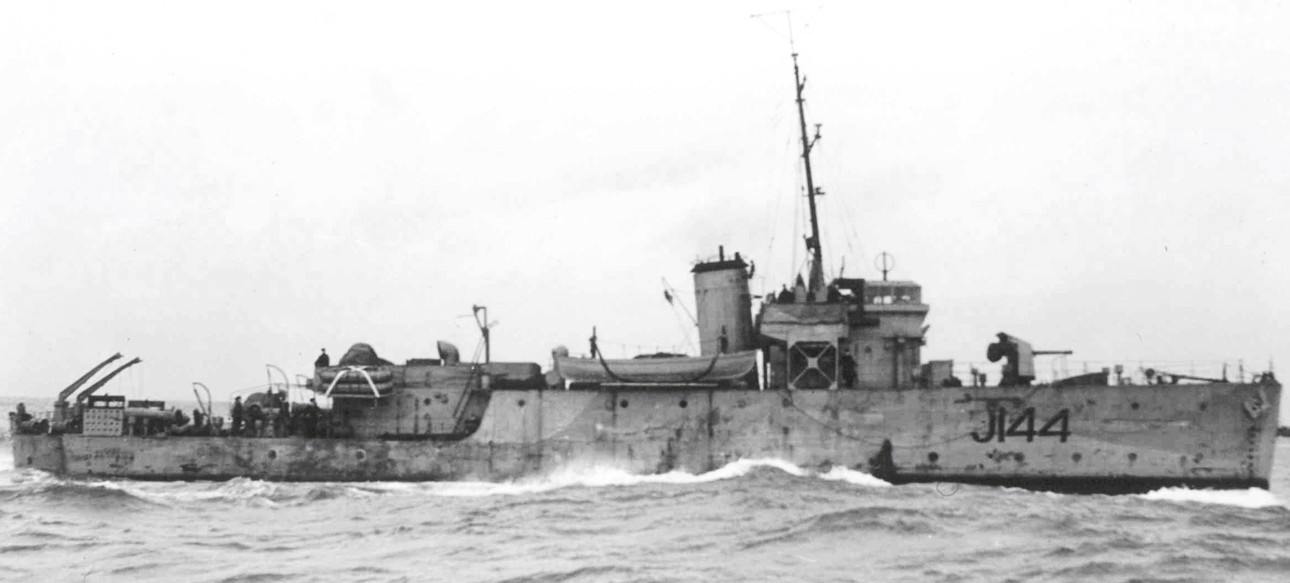
(DND Photo)
HMCS Georgian (J144) (Bangor-class).
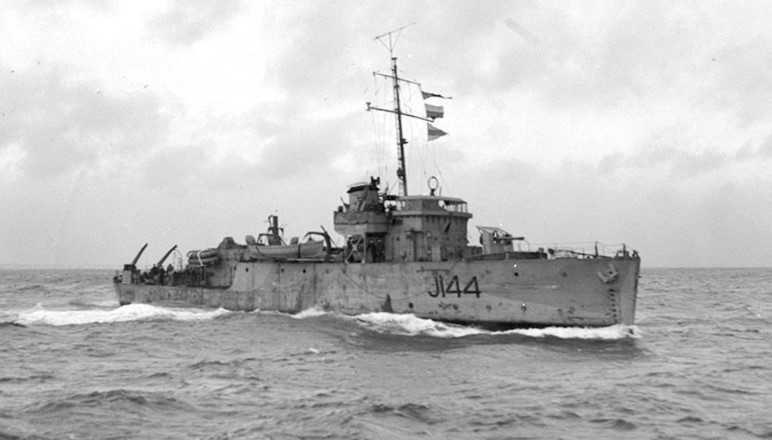
(Library and Archives Canada Photo, MIKAN No. 3524172)
HMCS Georgian (J144) (Bangor-class).
All comments are subject to our Comment Policy. You must be at least 18 years old to comment.
See a comment that violates our guidelines? Report it here.