RCN Flower class Corvettes: HMCS Rimouski (K121), HMCS Rivière du Loup (K357), HMCS Rosthern (K169), HMCS Saskatoon (K158)
HMCS Rimouski (K121)
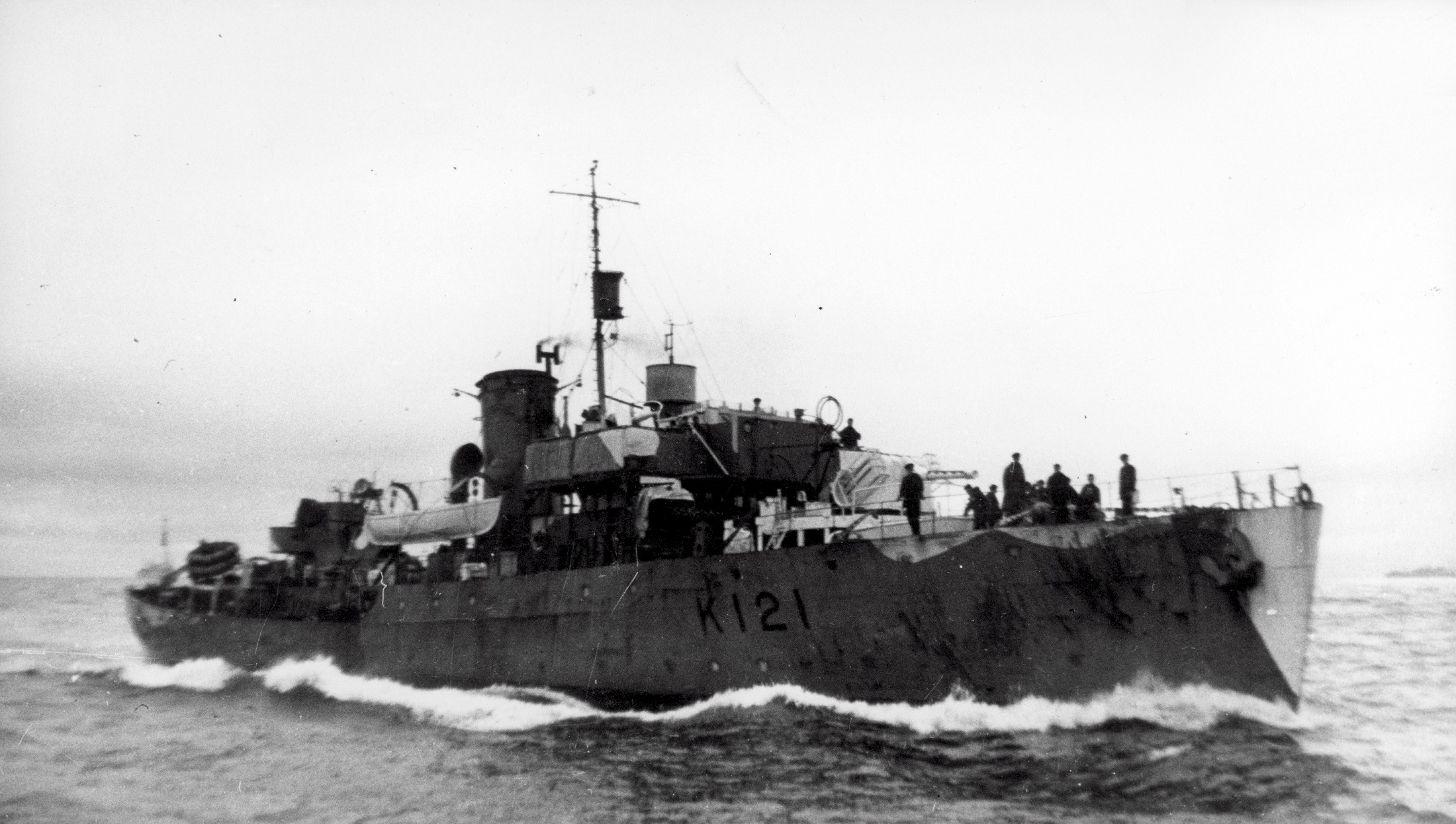
(John Pickford Photo)
HMCS Rimouski (K121) Flower class Corvette. Commissioned on 26 Apr 1941 at Quebec City, HMCS Rimouski arrived at Halifax on 12 May 1941 and was assigned to Newfoundland Command. She shared with HMCS Pictou the honour of being one of the first two corvettes to escort an HX convoy (HX.131, in Jun 1941). On 20 Jan 1942, after three months’ refit at Halifax, she left St. John’s to join convoy SC.65 for Londonderry. After three round trips, she joined WLEF in Jun 1942. In the course of a five-month refit at Liverpool, Nova Scotia, begun 24 Mar 1943, she received her extended fo’c’s’le. Upon completion she was assigned to EG C-1, MOEF, transferring to C-3 in Dec 1943. In Apr 1944 while at Londonderry, she was allocated to Western Approaches Command, Greenock, for invasion duties, and left Oban on 31 May 1944 to escort blockships for Normandy. She was employed until Aug 1944 as escort to Channel and coastal convoys, and then returned to Canada, where she served briefly as a Halifax-based training ship. A refit begun at Louisbourg early in Nov 1944 was completed at Liverpool and Halifax in Feb 1945. After working up, she returned to the UK to be based at Milford Haven as a member of EG 41, Plymouth, for the duration of the war. Returning to Canada in Jun 1945 she was paid off at Sorel on 24 Jul and broken up at the Steel Company of Canada, Hamilton, Ontario in 1950.
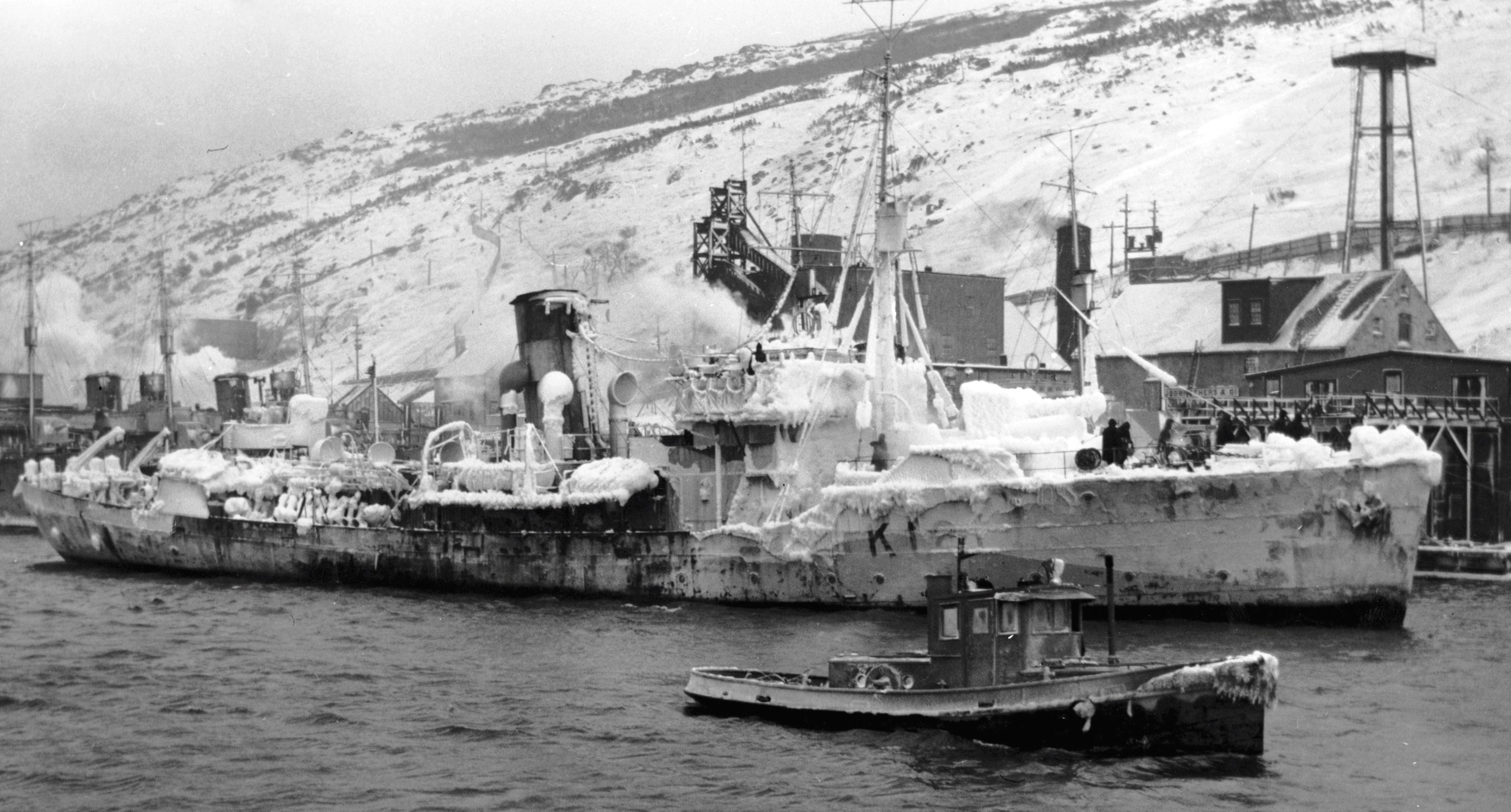
(John Pickford Photo)
HMCS Rimouski (K121) Flower class Corvette, St. John’s, Newfoundland.ette.
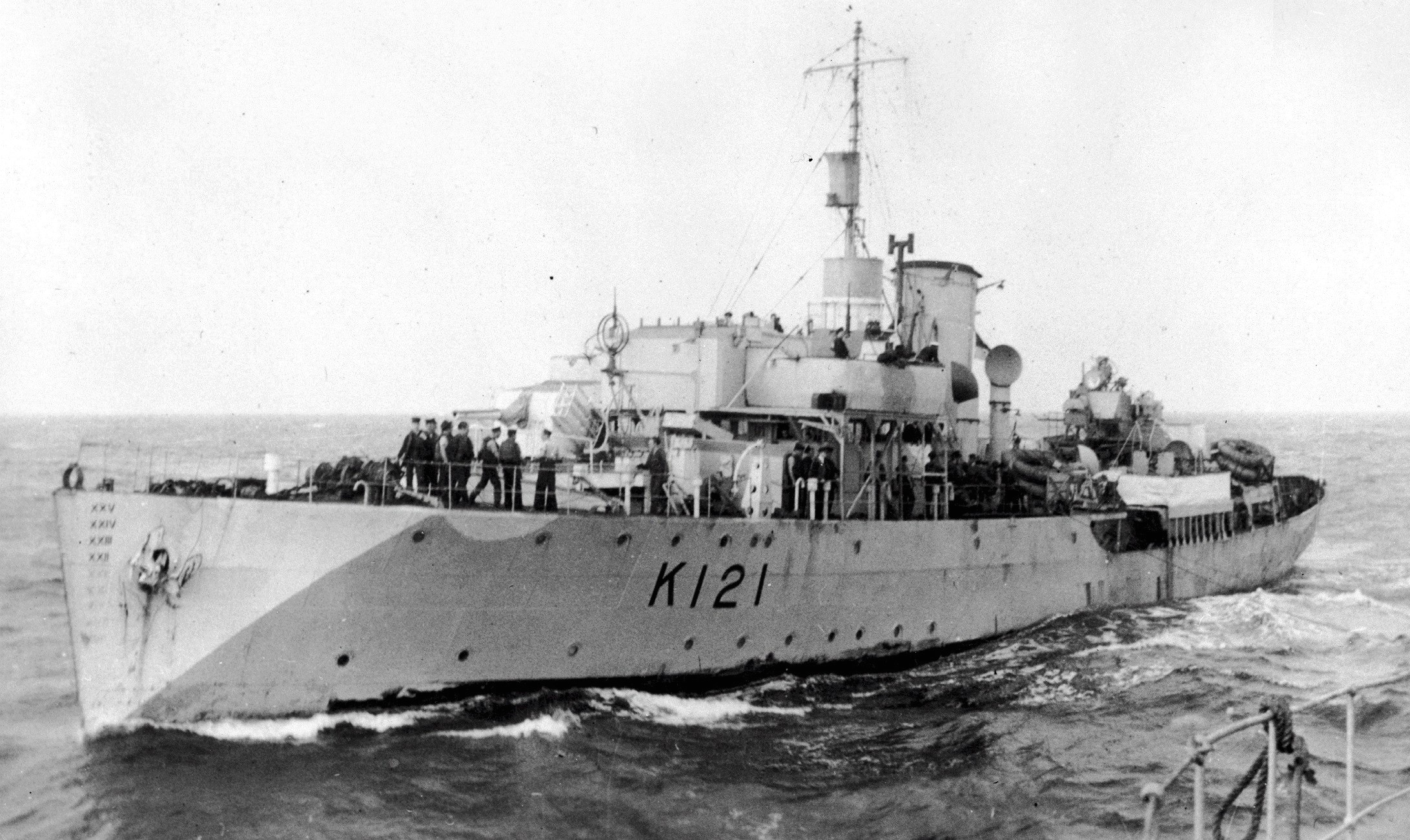
(John Pickford Photo)
HMCS Rimouski (K121) Flower class Corvette.
HMCS Rivière du Loup (K357)
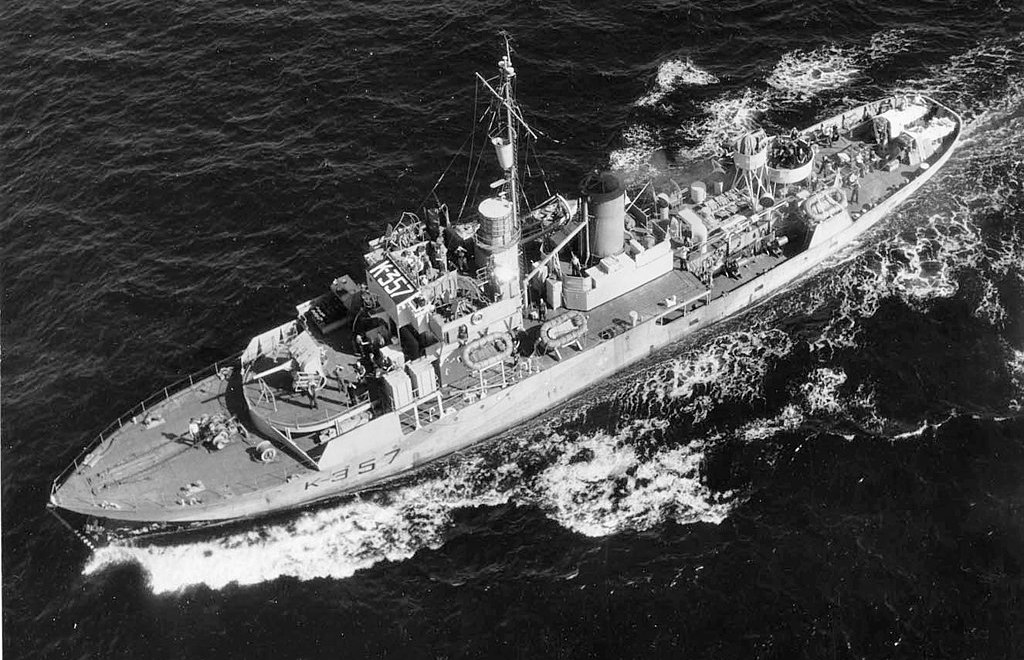
(USN Naval History and Heritage Photo)
HMCS Rivière du Loup (K357) Flower class Corvette, off the eastern Seaboard on 1 Nov 1944.
Built at Quebec City, she was commissioned there on 21 Nov 1943. She arrived at Halifax on 18 Dec1943 requiring a month’s repairs. She carried out working-up exercises in Bermuda early in Feb 1943, returning on 18 Feb 1943 to complete the exercises in St. Margaret’s Bay. Continuing mechanical problems necessitated further repairs, which continued at Halifax until early in Aug 1943. Having lost most of her original crew during this period, she had to return to Bermuda to work up again. Early in Sep 1944, Riviere du Loup returned to Halifax and joined EG W-3, WEF. In Oct 1944 she was assigned to EG C-3 and left St. John’s on 13 Nov 1944 to pick up her first transatlantic convoy, HX.319. On arrival in the UK, still dogged by troubles, she underwent a month’s repairs at Belfast.
On 10 Jan 1945, forty-seven sailors on HMCS Riviere-du-Loup refused to turn to for duty. The following is from the book “Mutiny and the Royal Canadian Navy” by Christopher M. Bell – “The most serious wartime mutiny, if judged by the punishments handed out, took place during the final year of the war in the corvette HMCS Rivière-du-Loup, also attached to the Western Approaches command. The ship had been an unhappy one for some time, and the executive officer was especially unpopular with the crew, who had little respect for his professional abilities. When the ship’s captain, Lieutenant R.N. Smillie, RCNVR, went into hospital to have an infected hand treated, men became alarmed by rumours that the first lieutenant would be taking the ship to sea the following day. On the morning of 10 January 1945, forty seven sailors refused to turn in for duty and instead locked themselves in the forward mess. Smillie rushed back to the ship but was unable to gain access to the mutineers. Rear-Admiral R.H.L. Bevan, the Flag-Officer-in-Charge, Northern Ireland, decided to wait matters out rather than attempt to force entry into the mess deck. The mutineers surrendered several hours later and were escorted ashore. They left behind a long list of complaints to justify their action. The most serious charge, that senior officers (and especially the first lieutenant) were incapable of properly handling the ship, was clearly what had triggered the mutiny. Other complaints, which undoubtedly contributed to the men’s general discontent, were presumably added to the list to bolster their case for mutiny. These included excessive drinking by officers, the use of foul language to address ratings, and other disrespectful behaviour. The subsequent board of enquiry blamed the incident primarily on ‘injudicious and tactless handling of the ratings by the Executive Officer’, and the crew’s concerns about his competence. Both the captain and the first lieutenant were relieved of their duties. Petty officers and leading seamen were reprimanded for failing ‘to notice trouble brewing’ and were drafted to other ships. Forty-four of the 47 mutineers were sentenced to terms of between 42 and 90 days in Belfast Gaol.”
Riviere-de-Loup’s career as a mid-ocean escort ended with her arrival at Halifax late in May 1945, from convoy ON.304, and she was paid off on 02 Jul 1945 and placed in reserve at Sorel. In 1947 she was sold to the Dominican Navy and renamed Juan Bautista Maggiolo. She was broken up in 1972.
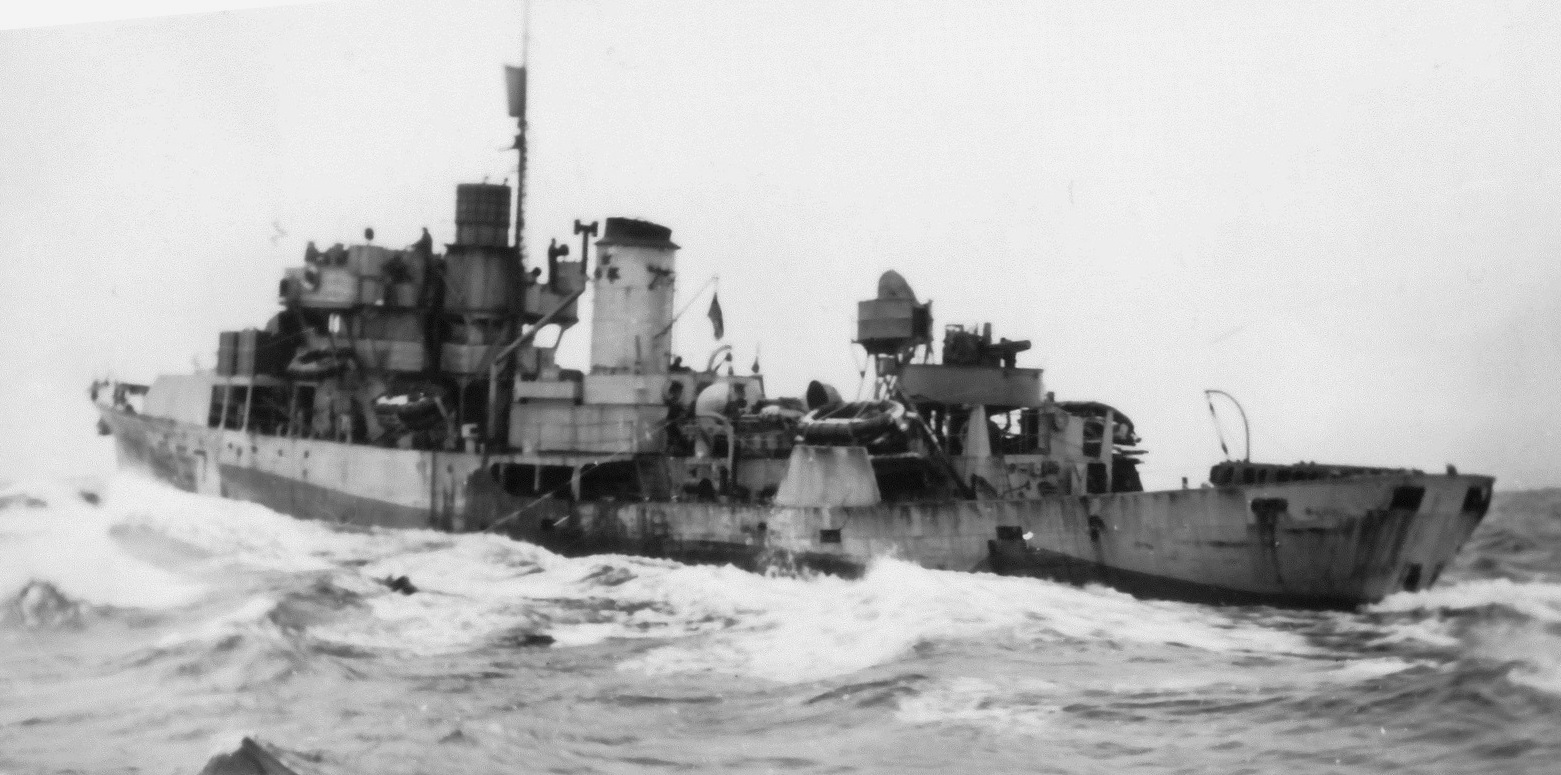
(Steve Rose Photo)
HMCS Rivière du Loup (K357) Flower class Corvette.
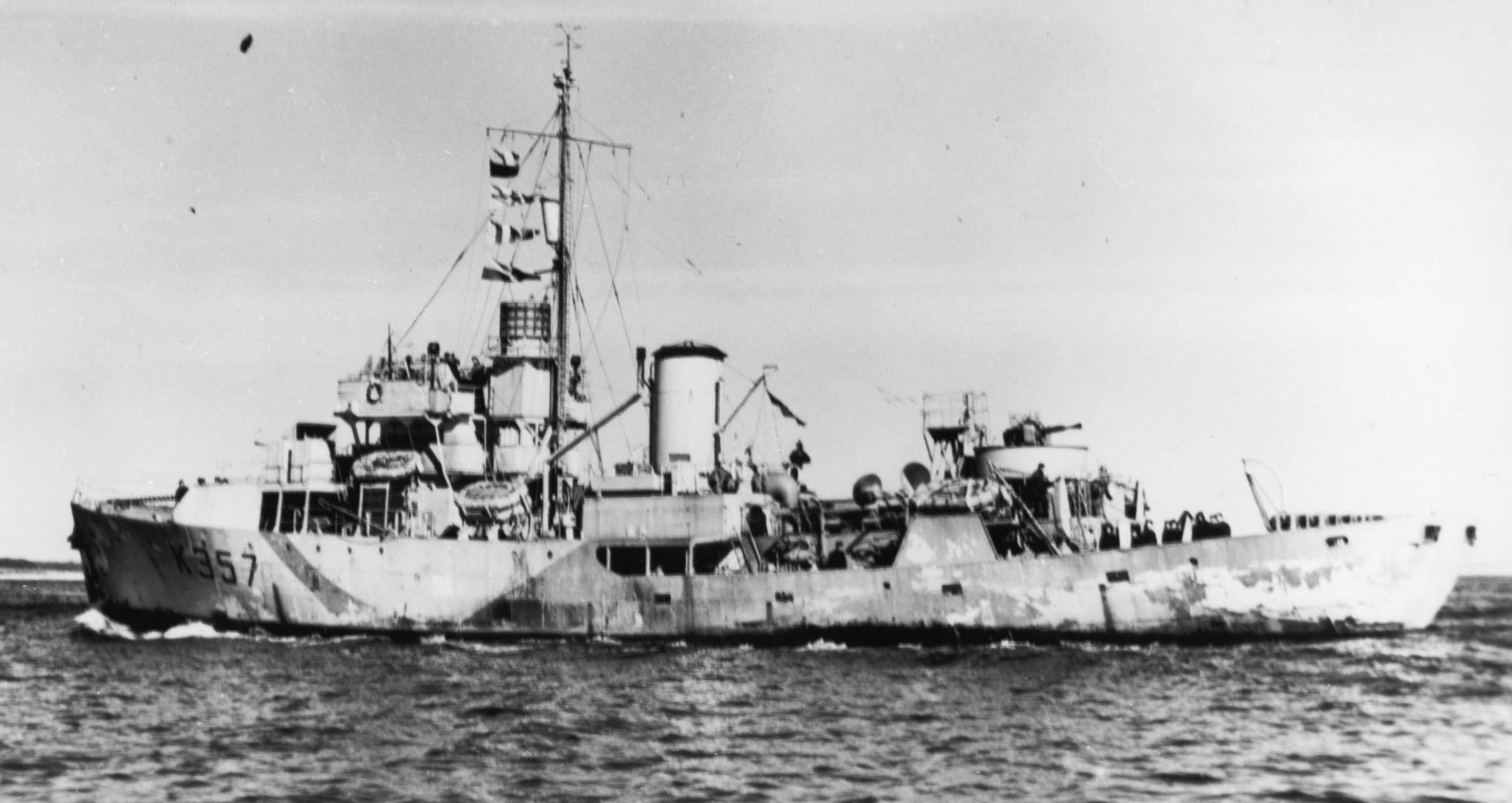
(RCN Photo)
HMCS Rivière du Loup (K357) Flower class Corvette.
HMCS Rosthern (K169)
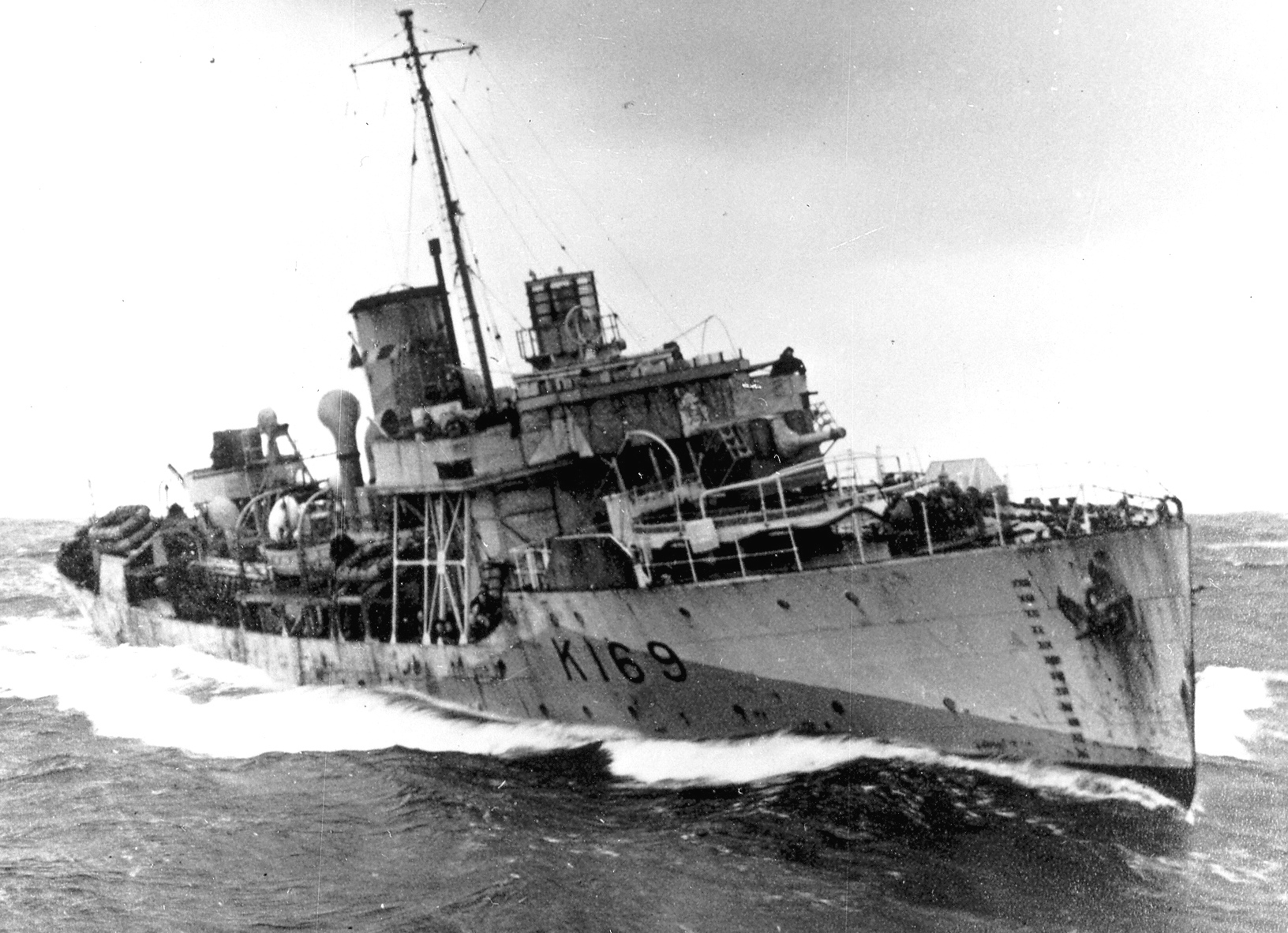
(RCN Photo)
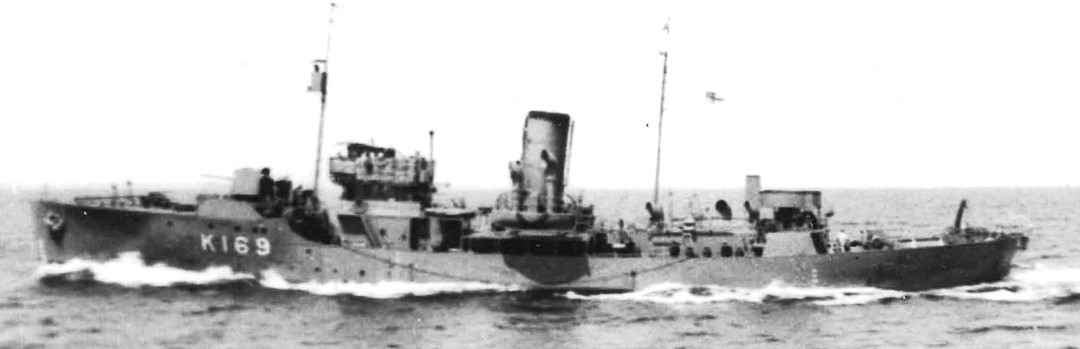
HMCS Rosthern (K169) Flower class Corvette. Built by Port Arthur Shipbuilding Co. Ltd, she was commissioned on 17 Jun 1941, at Montreal. HMCS Rosthern arrived at Halifax on 26 Jun 1941. She joined Newfoundland Command and left St. John’s for Iceland on 7 Oct 1941 as ocean escort to convoy SC.48. She proceeded on to the Clyde, where mechanical defects kept her for two months, and arrived at Halifax on 28 Dec 1941 for further repairs, not resuming service until mid-Feb 1942. She left Argentia, Newfoundland, on 27 Feb 1942 with HX.177 for Londonderry, and was thereafter employed continuously on North Atlantic convoys until Jun 1944. In Apr 1942 she became a member of EG A-3, re-numbered C-5 in May. HMCS Rosthern took part in three major convoy battles: SC.100 (Sep 1942); ON.166 (Feb 1943); and SC.121 (Mar 1943). She left Londonderry for the last time on 27 May 1944, and on her return to Canada became a training ship at Halifax for navigation and ship-handling, attached at first to WLEF and then, from Dec 1944 onward, to Halifax Force. She carried out workups at Bermuda in Dec 1944 escorting HMCS Provider on the homeward trip. Rosthern had no long refits during the war, and never did have her fo’c’s’le lengthened. Paid off on 19 Jul 1945, at Sorel, she was sold to Steel Co. of Canada, Hamilton, Ontario, in Jun 1946 and broken up there the same year.
(Gary Medford Photo)
HMCS Rosthern (K169) Flower class Corvette.
(Flower class Corvette Association)
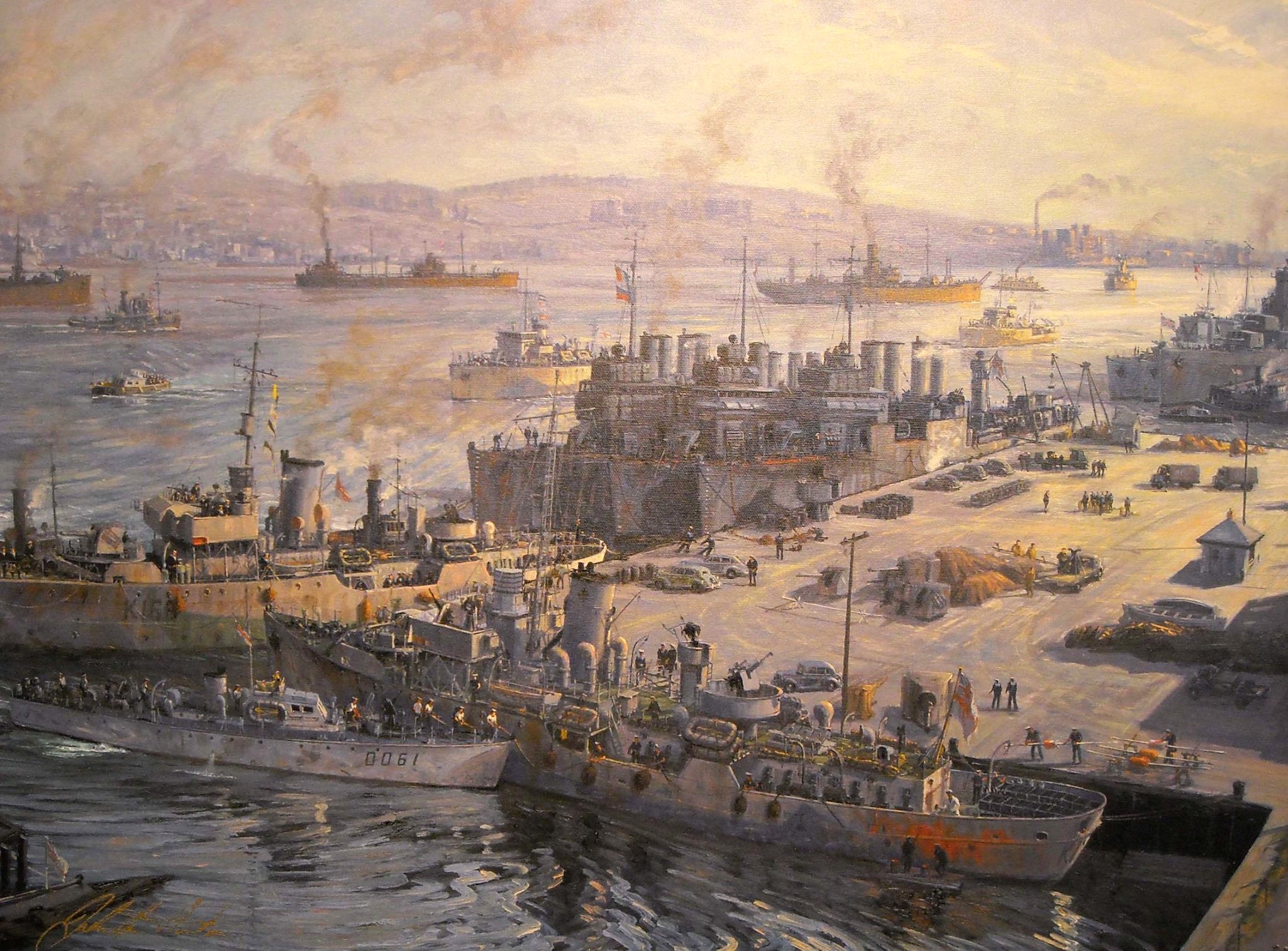
HMCS Rosthern (K169) Flower class Corvette at the left of this painting showing Halifax harbour in the Second World War. There are Flower class Corvettes, auxiliary craft, and First World War American destroyers lent to Canada and England early in the war. This painting huung for a time in a maritime museum in Victoria, BC.
HMCS Saskatoon (K158)
(Naval Museum of Manitoba Photo)
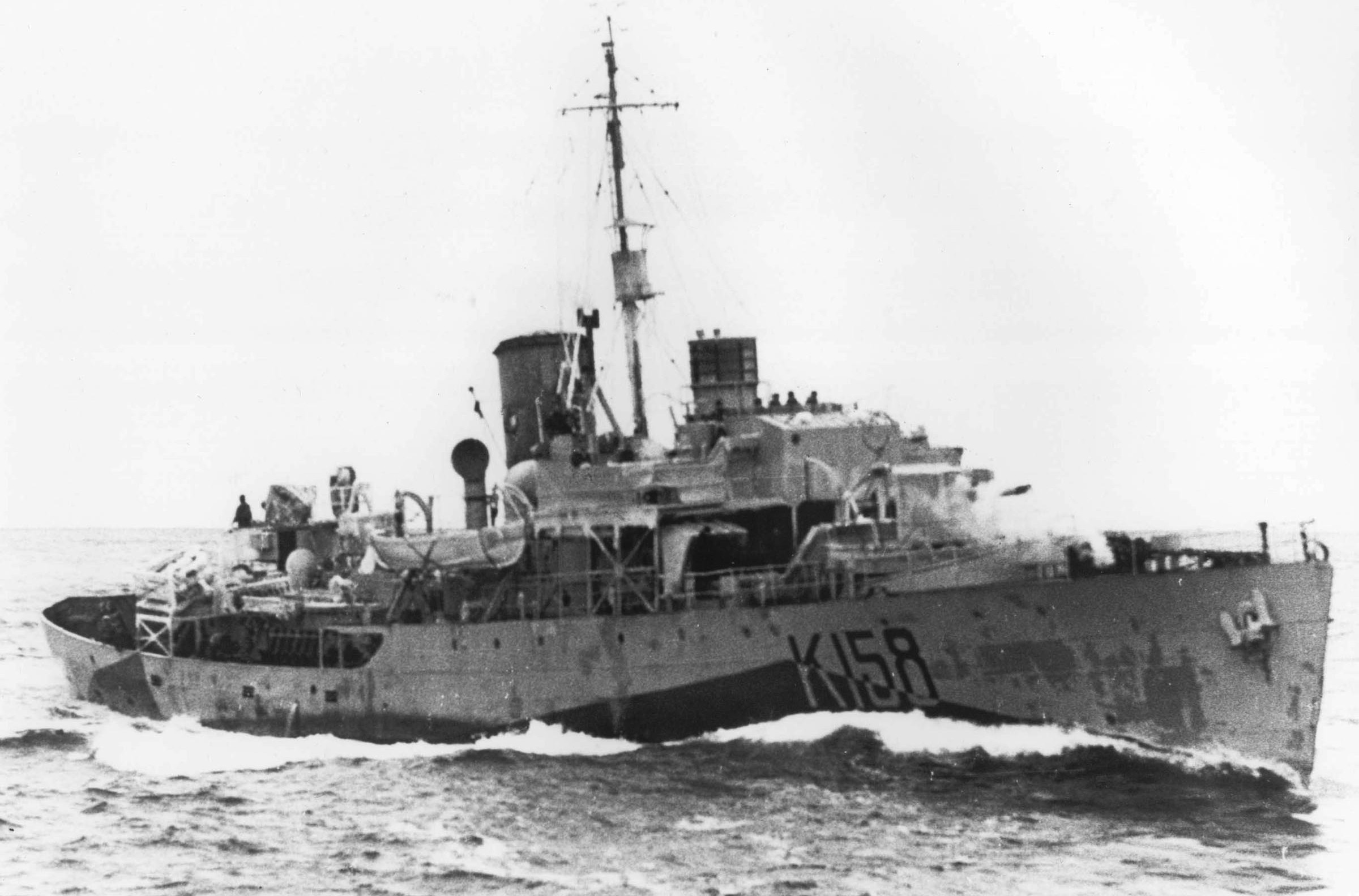
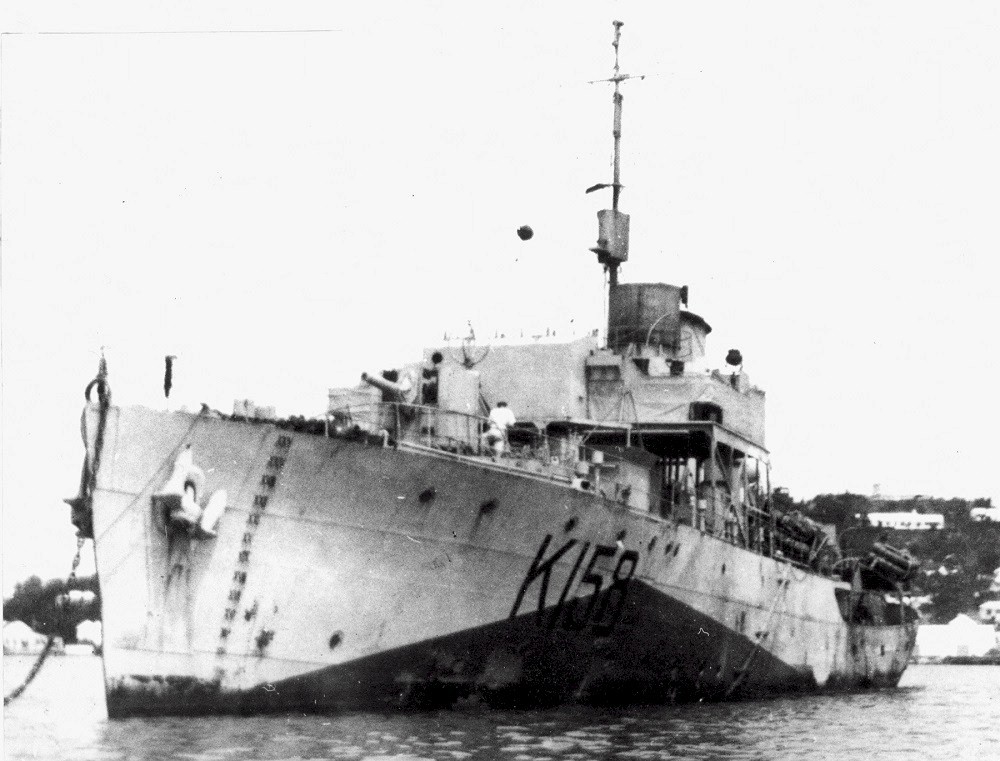
HMCS Saskatoon (K158) Flower-class Corvette. Commissioned at Montreal on 9 Jun 1941, HMCS Saskatoon arrived at Halifax on 22 Jun 1941. She joined Halifax Force after working up and in Aug 1941 made a trip to the Bahamas, returning at the end of Sep 1941. She remained on local escort duty until Mar 1942, then joined WLEF on its formation. She served with this force on the “triangle run” until the end of the war, becoming a member of EG W-8 when it was established in Jun 1943, and transferring to W-6 in Apr 1944. During her career she had two major refits: at Halifax from 11 Aug to 17 Nov 1942; and at Pictou from mid-Dec 1943 to 01 Apr 1944. Following the latter, which included fo’c’s’le extension, she worked up for three weeks at Pictou and another three in Bermuda. She was paid off on 25 June 1945 at Sorel and soon afterward sold for conversion to a merchant vessel. Renamed Tra los Montes, she served as a whaler from 1948. Renamed Olympic Fighter (1950), Otori Maru No. 6 (1956), and Kyo Maru No. 20 (1961). Last in Lloyd’s Register for 1978.
(Ron Bell Photo)
HMCS Saskatoon (K158) Flower-class Corvette.
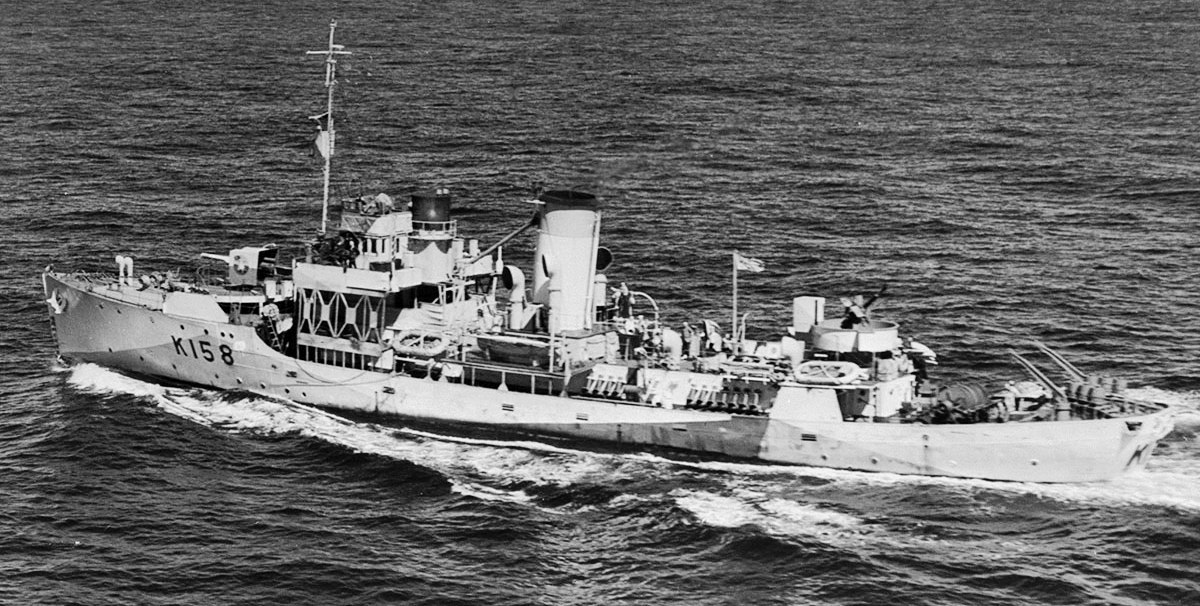
(DND Photo)
HMCS Saskatoon (K158) Flower-class Corvette.
All comments are subject to our Comment Policy. You must be at least 18 years old to comment.
See a comment that violates our guidelines? Report it here.