RCN Flower class Corvettes: HMCS Midland (K220), HMCS Mimico (K485), HMCS Moncton (K139), HMCS Moose Jaw (K164)
HMCS Midland (K220)
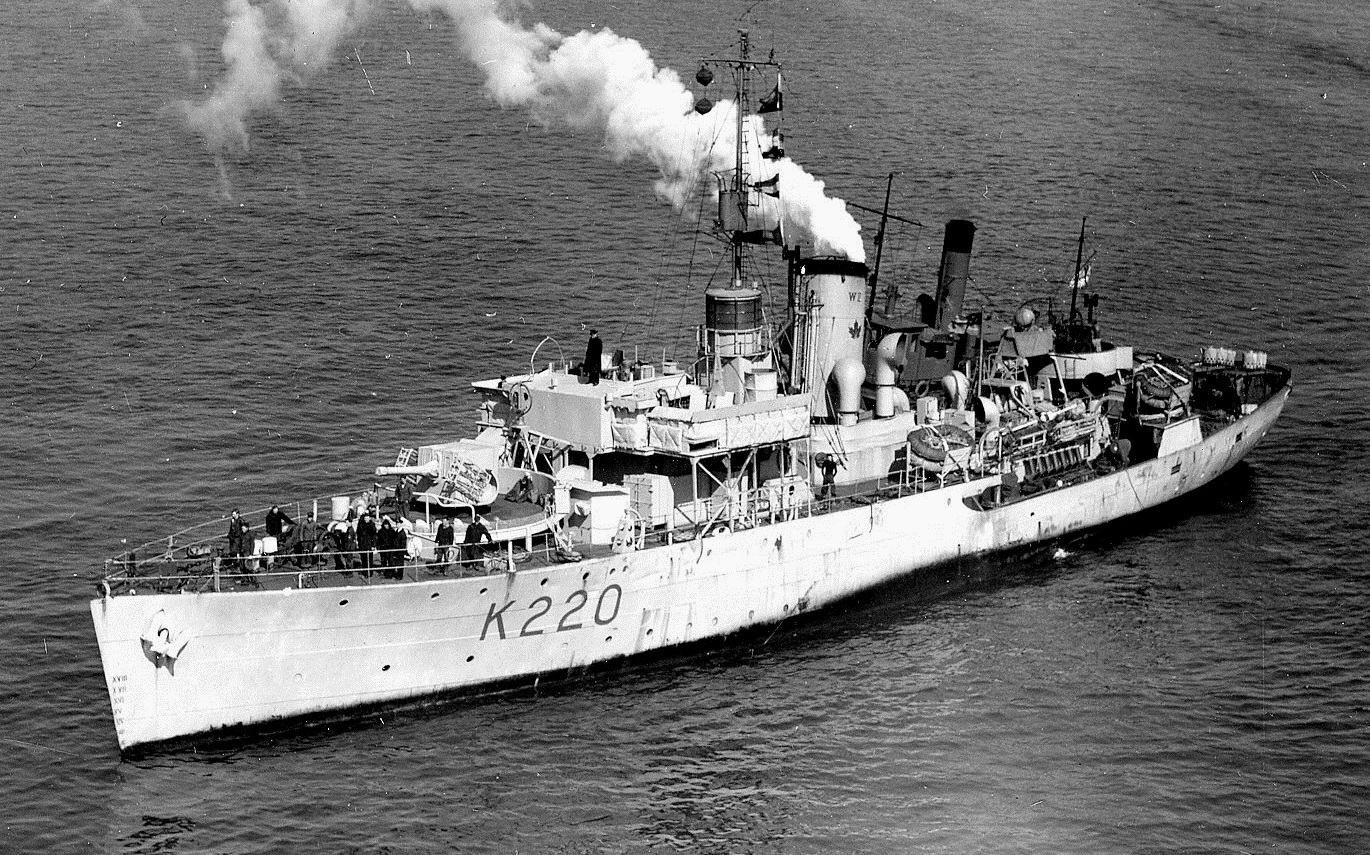
(Ron Bell Photo)
HMCS Midland (K220) Flower class Corvette. Built at Midland, Ontario, she was commissioned at Montreal on 17 Nov 1941. She arrived at Halifax on 30 Nov 1941, and spent her entire career with the Western Local Escort Force (WLEF), from Jun 1943, as member of EG W-2. She underwent two extensive refits: the first at Liverpool, NS, from 30 Nov 1942 to 14 Apr 1943; the second at Galveston, Texas from mid-Mar 1944 to 25 May 1944. The latter refit included the extension of her fo’c’s’le. Upon its completion she returned briefly to Halifax before leaving on 1 Jul 1944 for three weeks’ working-up in Bermuda. She was paid off at Sydney on 15 Jul 1945. Sold in 1946 to the Great lakes Lumber Co., she was broken up the same year at Fort William (now Thunder Bay), Ontario.
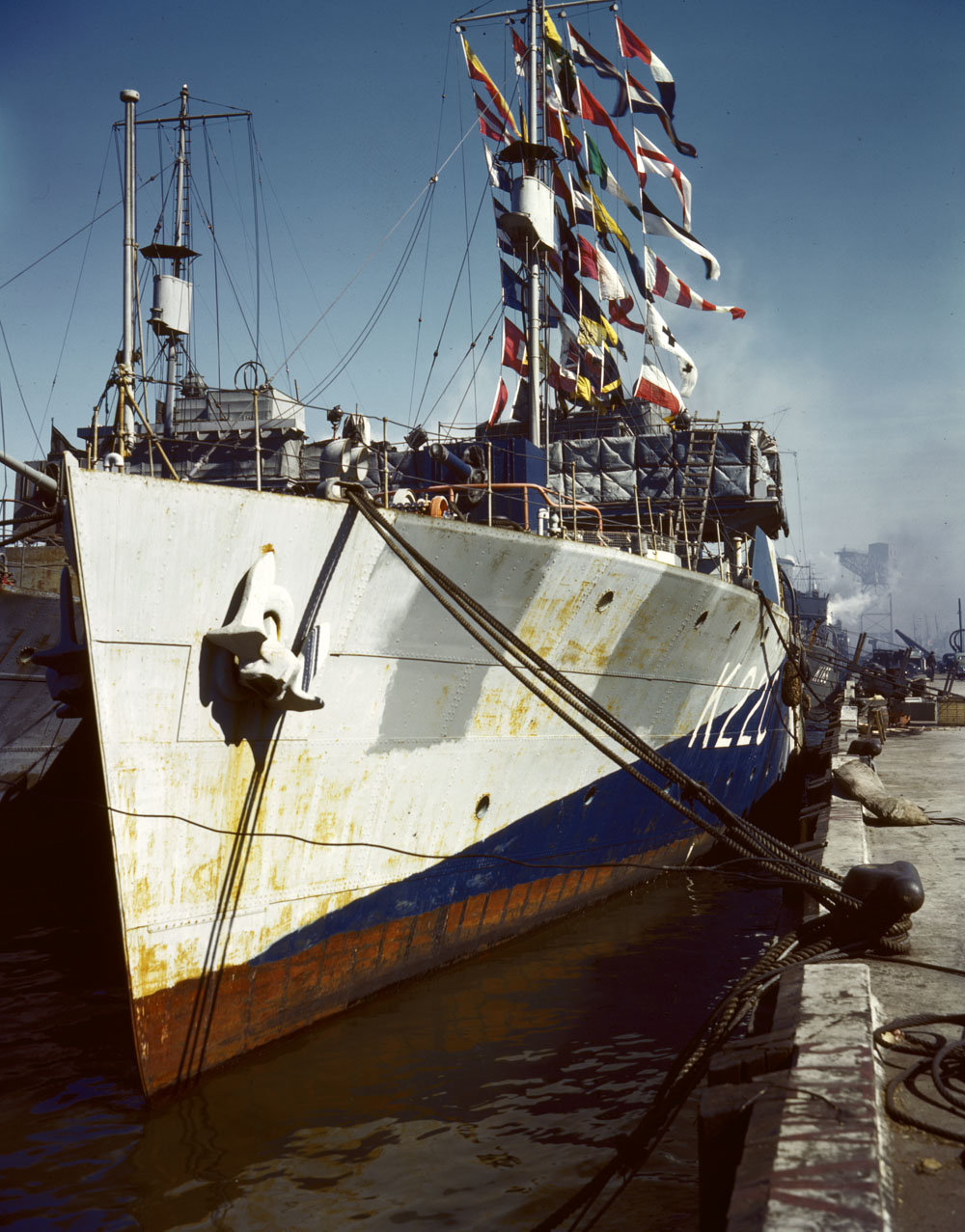
(Library and Archives Canada Photo, MIKAN No. 4821041)
HMCS Midland (K220) Flower class Corvette, in dock drying signal flags, c 1944.
HMCS Mimico (K485)
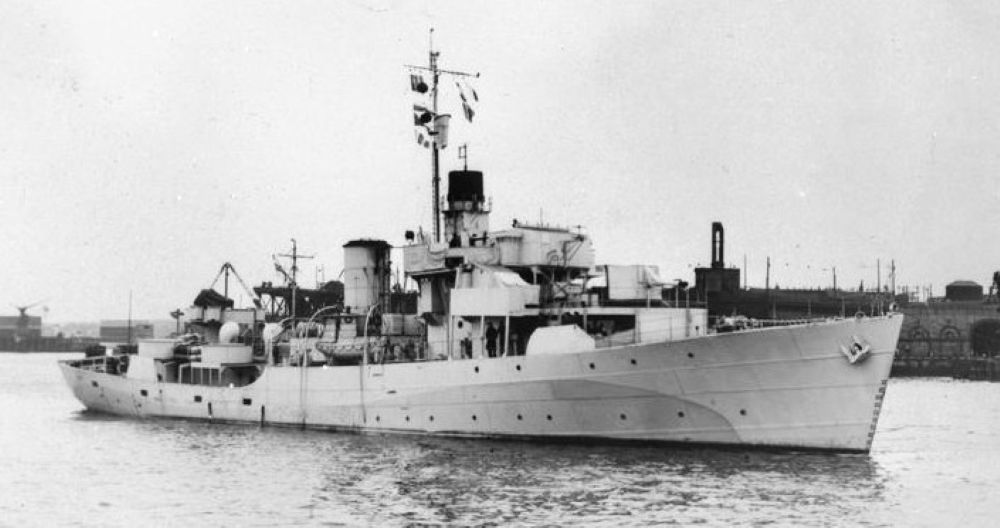
(IWM Photo, (FL 5458)
HMCS Mimico (K485) Flower class Corvette Laid down as HMS Bulrush, she was transferred to the RCN and renamed HMCS Mimico prior to launching. She was commissioned on 8 Feb 1944 at Sunderland, UK. On 18 Apr 1944, after working up at Stornoway, she arrived at Oban, Scotland, where she was assigned to Western Approaches Command for escort duty in connection with the invasion. She arrived off the Normandy beaches with a convoy on the day after D-Day. She remained on escort duty in the Channel, assigned briefly in Sep 1944 to Portsmouth Command and, in Oct 1944, to Nore Command, based at Sheerness. In Feb and Mar 1945, she refitted at Chatham, then returned to Sheerness and resumed her previous role until late in May 1945, when she left the UK for the last time. She was paid off on 18 Jul 1945, and laid up at Sorel. After the war, Mimico was sold to civilian service and became Honduran Olympic Victor in 1950, Japanese Otori Maru No. 12 in 1956, Kyo Maru No. 25 from 1962-1978.
HMCS Moncton (K139)
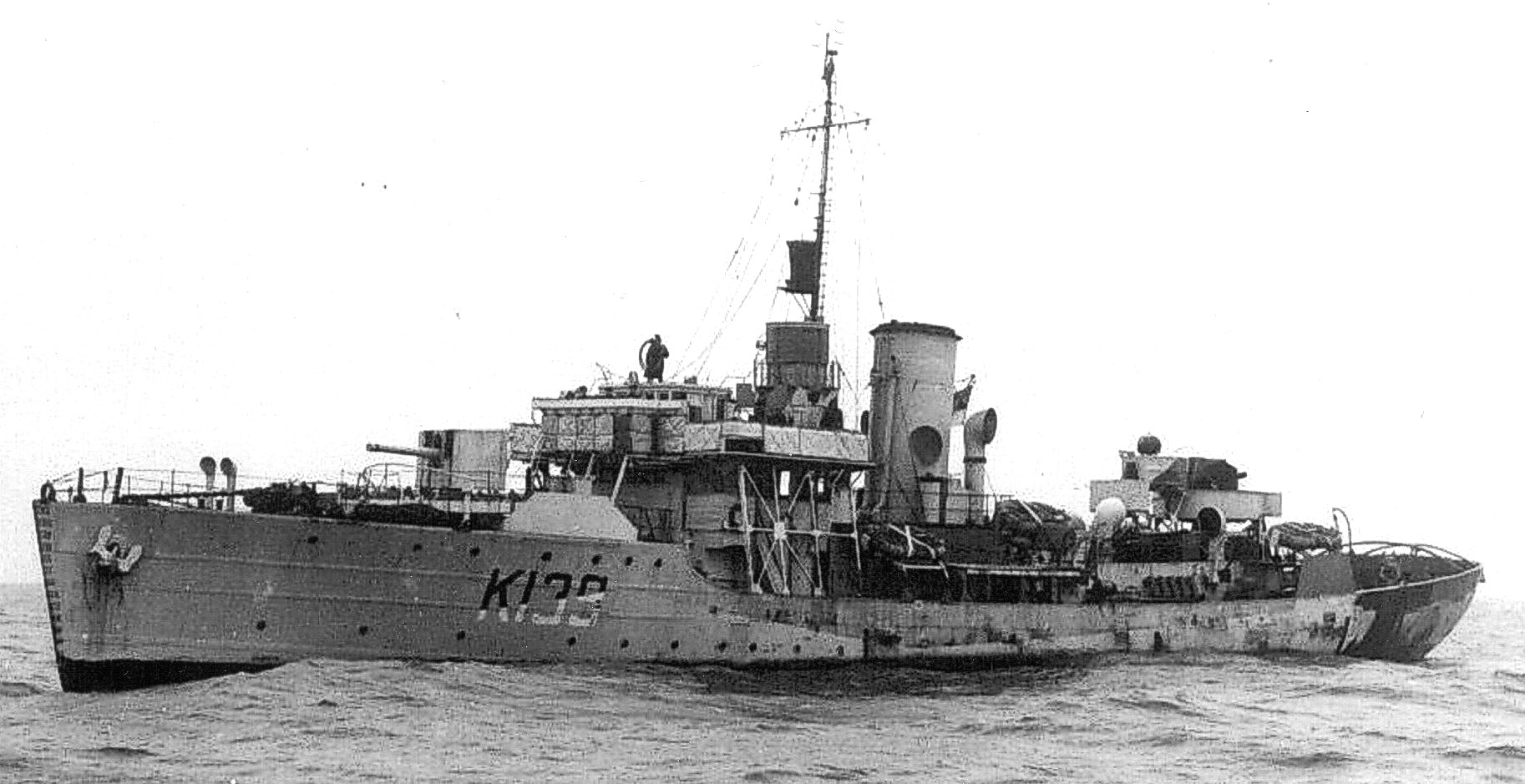
(Ron Bell Photo)
HMCS Moncton (K139) Flower class Corvette. Commissioned at Saint John, NB on 24 Apr 1942, she arrived at Halifax on 12 May 1942. She was the last of the RCN’s initial Flower class programme to complete, owing to heavy demands on her builder, the Saint John Dry Dock Co., for repair work to war-damaged ships. After working up she joined WLEF, Halifax, and when the force was divided into escort groups in Jun 1943, she became a member of EG W-5. She remained in this service until transferred to the west coast in Jan 1944, proceeding there via Guantanamo, Cristobal, Balboa, and San Pedro, Cal. Upon arrival she was assigned to Esquimalt Force, of which she remained a member until VJ-Day. In the course of an extensive refit at Vancouver from 5 May to 7 Jul 1944, her fo’c’s’le was extended. She was paid off at Esquimalt on 12 Dec 1945, and sold for conversion to a whale-catcher at Kiel. She entered service in 1955 as the Dutch-flag Willem Vinke and was broken up at Santander, Spain, in 1966.
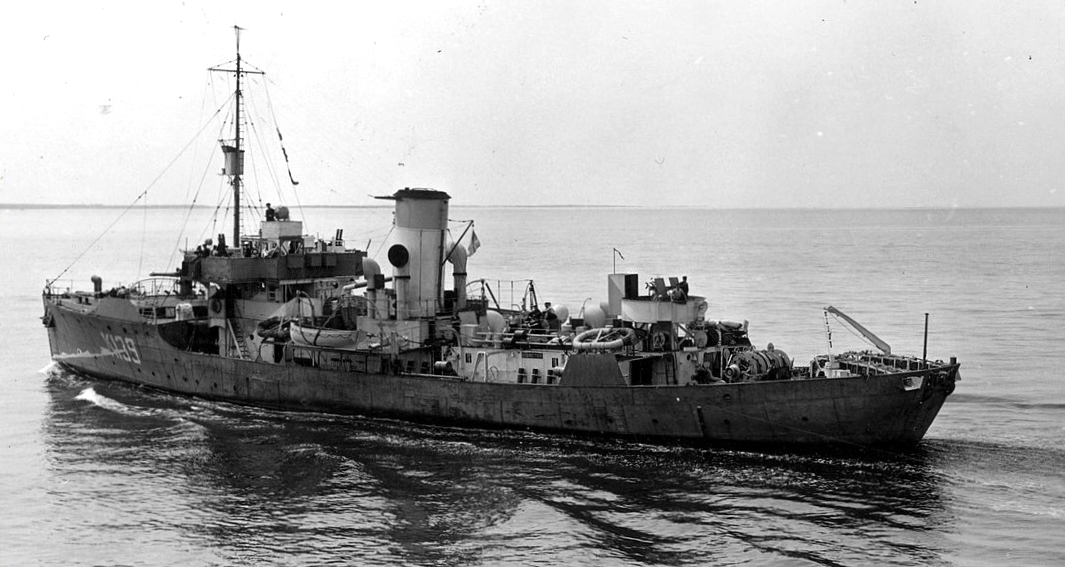
(RCN Photo, via Ken Macpherson / Naval Museum of Alberta. – Canadian Navy Heritage website. Image Negative Number MC-2631)
HMCS Moncton (K139) Flower class Corvette, ca 1942.
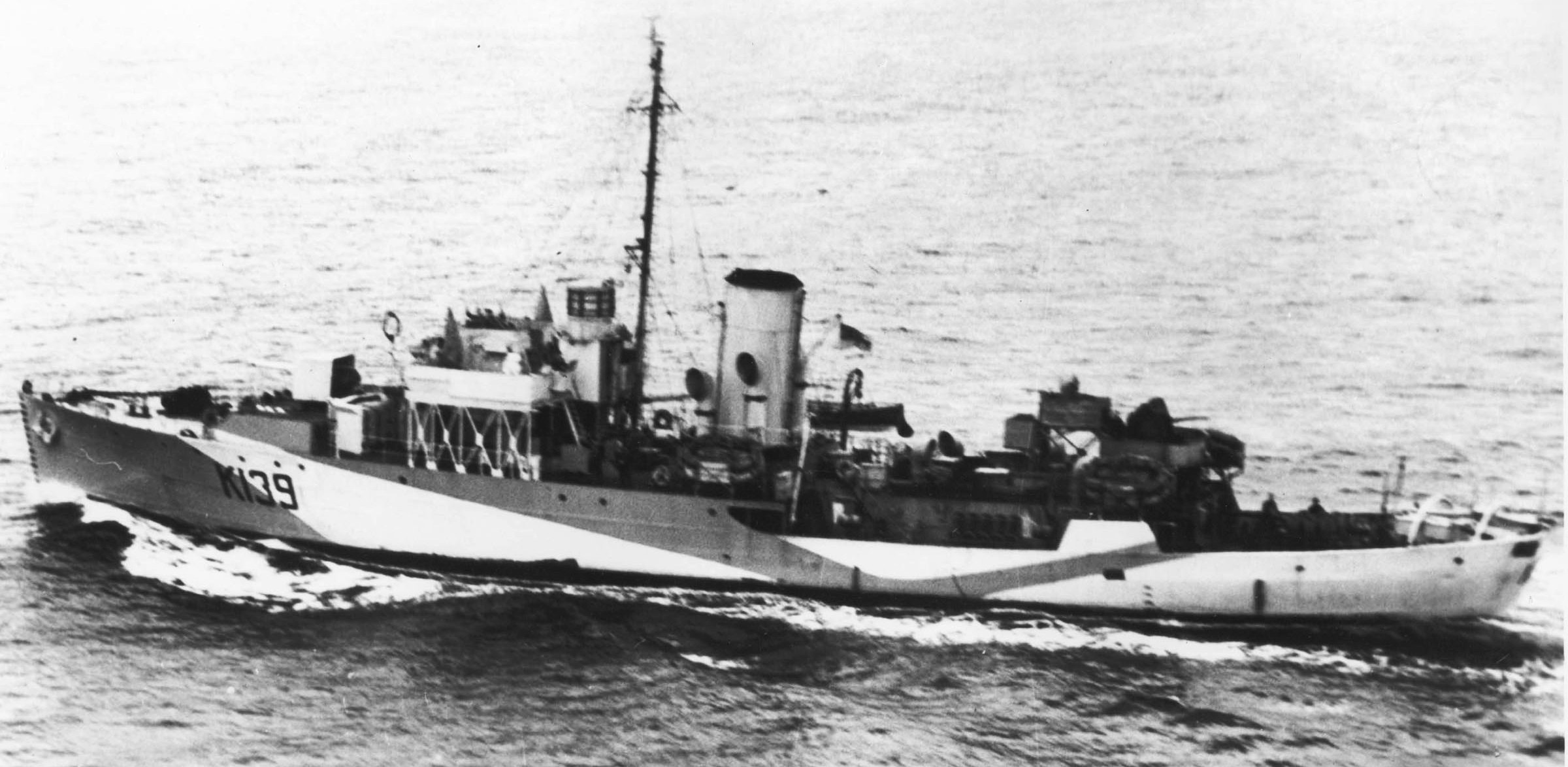
(RCN Photo)
HMCS Moncton (K139) Flower class Corvette.
HMCS Moose Jaw (K164)
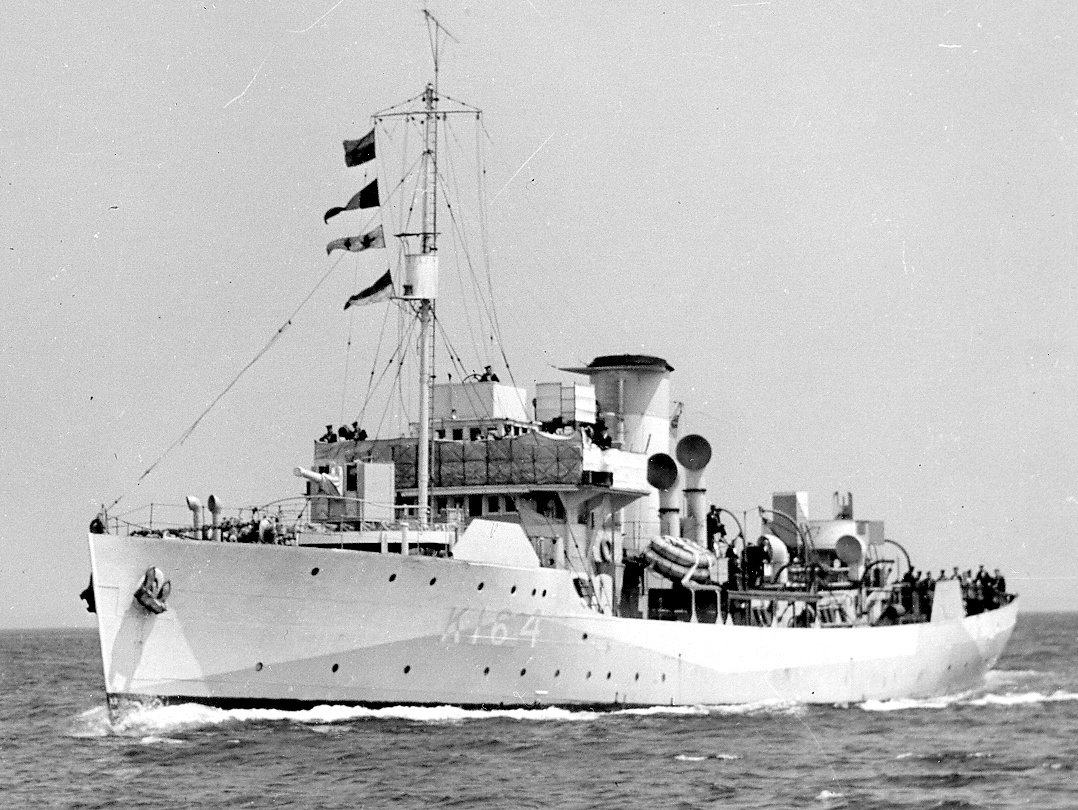
(RCN Photo)
HMCS Moose Jaw (K164) Flower class Corvette. Built at Collingwood, she was commissioned at Montreal on 19 Jun 1941, and arrived at Halifax on 27 Jun 1941 for final fitting-out. After working up, she arrived at St. John’s on 25 Aug 1941 to join Newfoundland Command, and on 5 Sep 1941, sailed with HMCS Chambly for exercises. The two were ordered to reinforce the beleaguered convoy SC.42, which lost 18 ships, and just before joining on 10 Sep 1941, they surprised and sank U-501 astern of the convoy. HMCS Moose Jaw, which had rammed the U-boat, required ten days’ repairs at Greenock, following which she arrived at Tobermory on 1 Oct 1941 to work up. For the next four months she operated between St. John’s and Iceland, but in Jan 1942, she arrived at Londonderry from SC.64, the inaugural “Newfie-Derry” convoy. On 19 Feb 1942, she ran aground on the south entrance of St. John’s harbour en route to join convoy HX 176, and although re-floated soon afterward proved to be holed and leaking in several places.
Temporary repairs were carried out at St. John’s from 20 Feb to 05 Mar 1942 and permanent repairs at Saint John, NB, from 15 Mar to 25 Jun 1942. Briefly assigned to WLEF, she was detached in Sep 1942 for duties in connection with Operation “Torch”, and made her passage to the UK with convoy SC.107, which lost 15 ships to U-boats. During the next five months HMCS Moose Jaw was employed escorting UK-Mediterranean convoys, returning to Halifax on 19 Apr 1943 with convoy ONS.2. Refitted there, she joined Quebec Force at the end of May 1943 for escort duties in the Gulf of St. Lawrence, later transferring to Gaspé Force. She underwent a major refit, including fo’c’s’le extension, at Liverpool, NS, from 19 Dec 1943 to 23 Mar 1944. After working up in St. Margaret’s Bay she left Halifax on 1 May 1944 for the UK, to join Western Approaches Command, Greenock, for invasion duties. She served in the Channel until Sep 1944, when she joined EG 41, Plymouth, and escorted coastal convoys from her base at Milford Haven until the end of the war. She left for home in May 1945, was paid off at Sorel on 08 Jul 1944 and broken up at Hamilton in 1949.
All comments are subject to our Comment Policy. You must be at least 18 years old to comment.
See a comment that violates our guidelines? Report it here.