
RCN Flower class Corvettes: HMCS Lindsay (K338), HMCS Long Branch (K487), HMCS Louisburg (K143), HMCS Louisburg (K401)
HMCS Lindsay (K338)
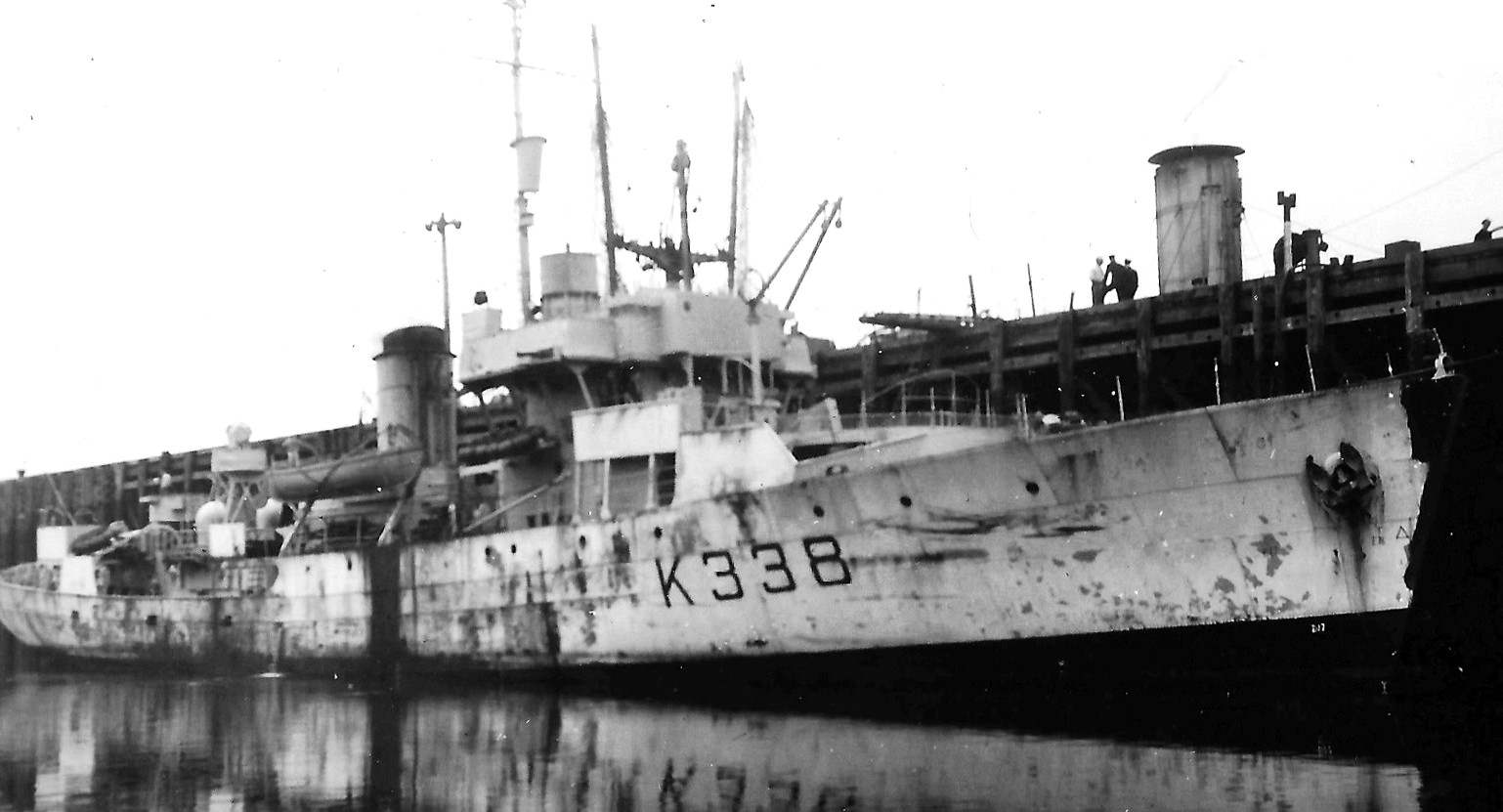
(Dave Chamberlain Photo)
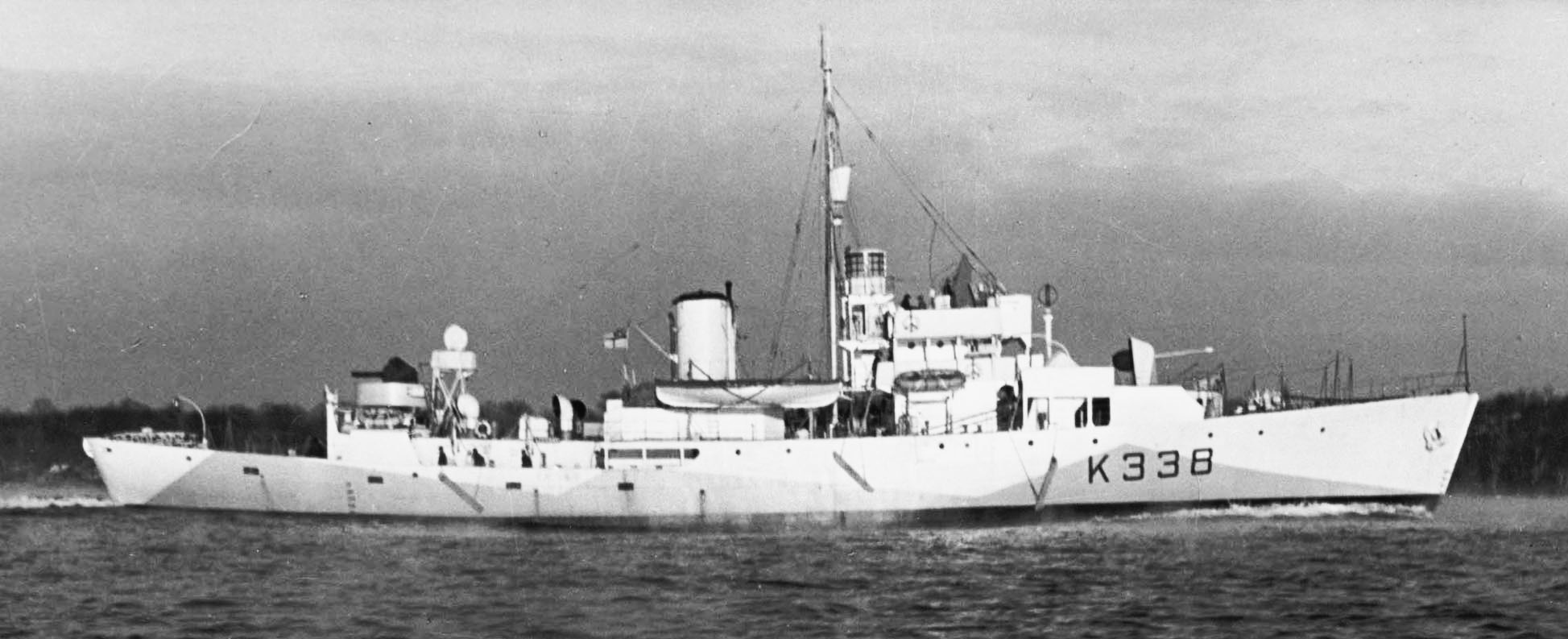
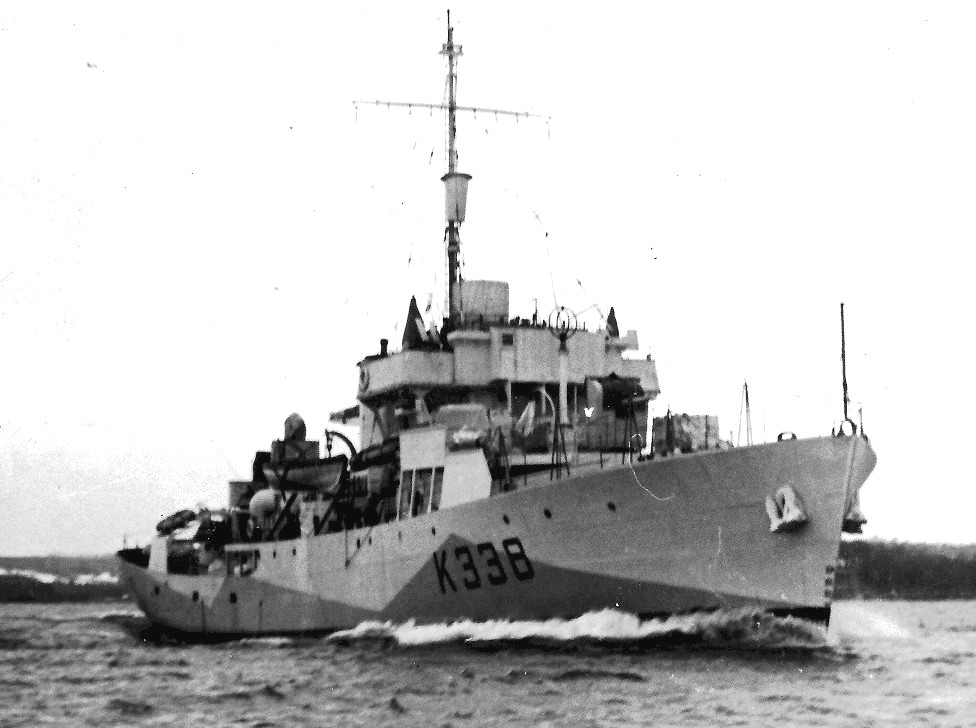
HMCS Lindsay (K338) Flower class Corvette. Launched and commissioned at Midland on 15 Nov 1943, HMCS Lindsay arrived at Halifax in Dec 1943 and late in Jan 1944, sailed to Bermuda for three weeks’ workups. Upon her return she was briefly attached to EG W-5, but left Halifax on 23 Apr 1944 to join Western Approaches Command at Londonderry. For the next four months she served in UK waters, taking part in the D-Day invasion, as an unallocated unit. In Sep 1944, she joined the RN’s EG 41, Plymouth Command, for service in the Channel. On Saturday May 20th 1944 at 04:50 hrs while sailing back to Londonderry from Larne at 12 knots in line with HMCS Port Arthur, HMCS Trentonian, HMCS Alberni (Senior Officer), and HMCS Lindsay, last in the column – HMCS Lindsay was involved in a collision with a civilian fishing trawler, the St. Springwell. Damage was minimal. HMCS Springwell was found totally responsible. The owners of the trawler attempted to sue for damages but later dropped the suit due to impending travel and witness costs. In Aug 1944, HMCS Lindsay went into drydock in Milford Haven, South Wales, to have the damage to her bow from her collision with St. Springwell repaired. On 22 Jan 1945, HMCS Lindsay was damaged in collision with HMS Brilliant southwest of the Isle of Wight. Following temporary repairs at Davenport from 22 Jan to 19 Feb 1945, she sailed for Canada via Londonderry, arriving at Halifax early in Mar 1945. She left there on 15 Mar 1945 for Saint John, where she was under refit until 22 Jun 1945, then proceeded to Sydney and was paid off on 18 Jul 1945. She was sold for mercantile use in 1946 and renamed North Shore, later passing into Greek registry for Mediterranean passenger service until the name of Lemnos. She was broken up ten years later.
(RCN Photo)
HMCS Lindsay (K338) Flower class Corvette.
(Dave Chamberlain Photo)
HMCS Lindsay (K338) Flower class Corvette.
(RCN Photo)
HMCS Lindsay (K338) Flower class Corvette.
(For Posterity’s Sake)
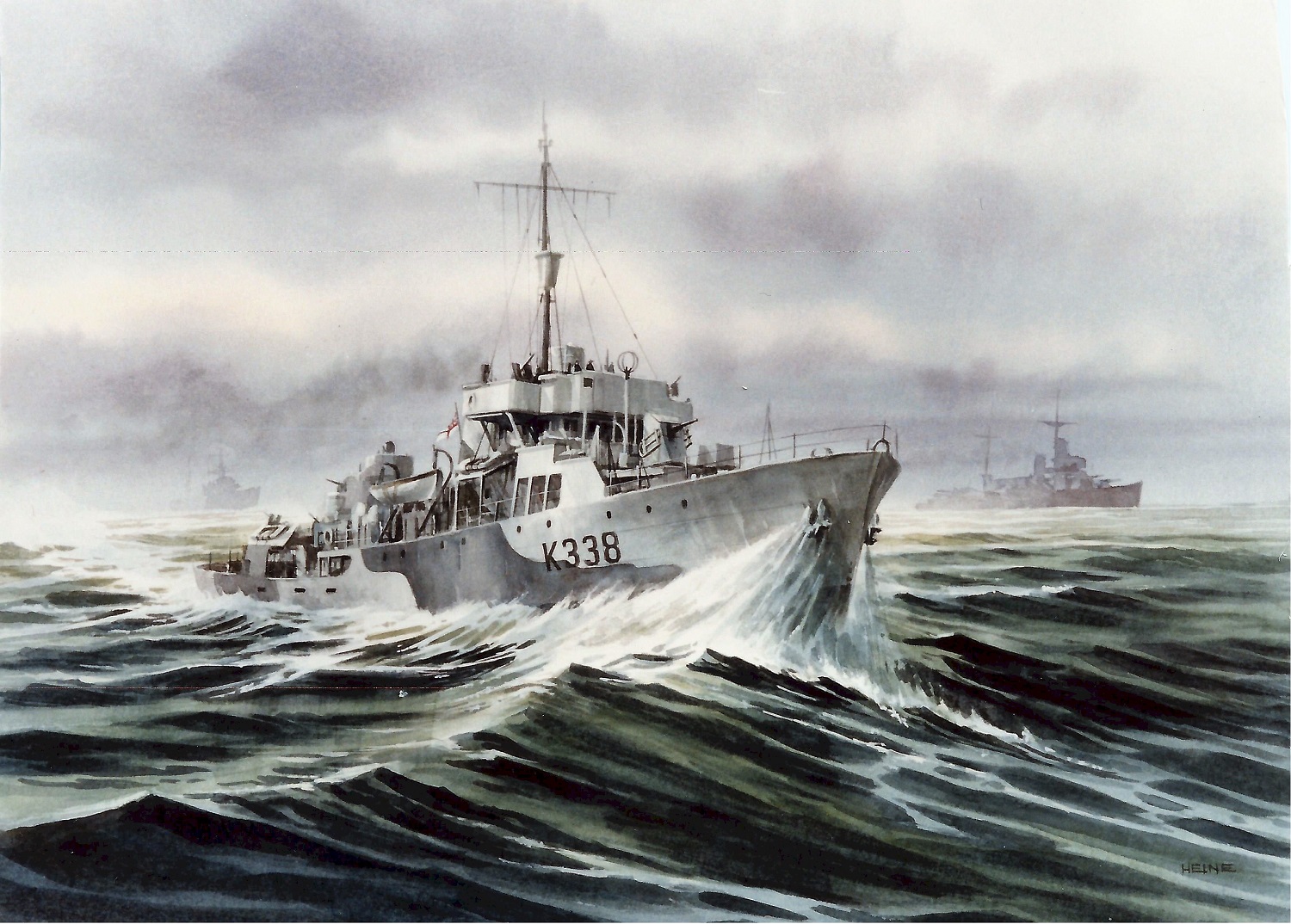
HMCS Lindsay (K338) Flower class Corvette. Painting by Canadian artist Harry Heine, RSMA, CSMA, NWWS, FCA (1928–2004)
HMCS Long Branch (K487)
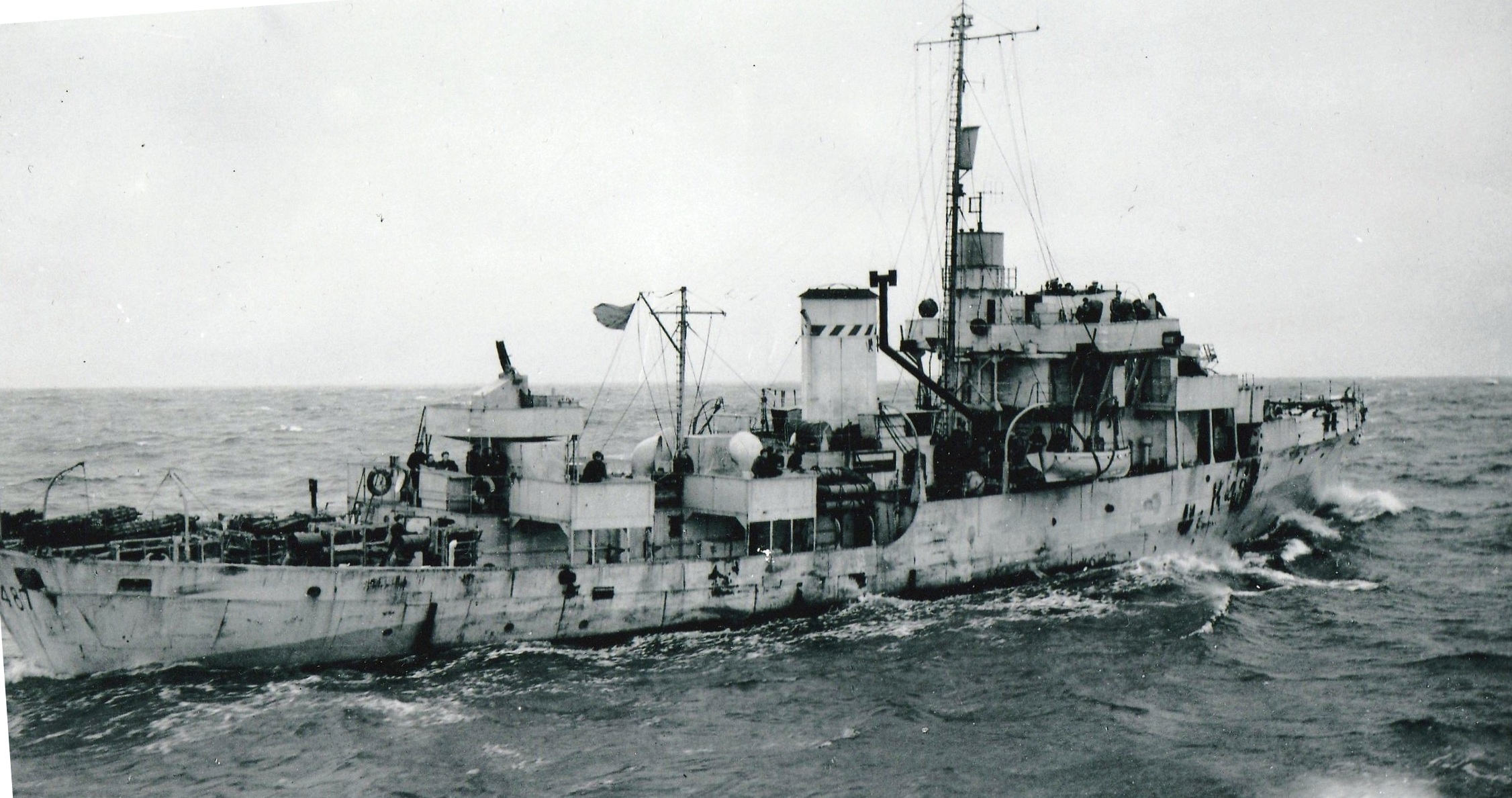
(Dale Davies Photo)
HMCS Long Branch (K487) Flower class Corvette. Built for the RN as HMS Candytuft, she was launched on 28 Sep 1943. Transferred to the RCN in Sep 1943 she was commissioned on 5 Jan 1944 as HMCS Long Branch K487; named after a village near Toronto. In Apr 1944, following a month’s workups at Tobermory, HMCS Long Branch joined EG C-5 at Londonderry, and sailed to pick up her maiden convoy, ONS.233. She developed mechanical defects on the crossing and was under repair at St. John’s for six weeks. She left St. John’s 14 Jun 1944 to resume her duties, but returned from her next westbound convoy with the assistance of HM tug Tenacity. Repaired, she left St. John’s on 23 Jul 1944 to join HXS.300, the largest convoy of the war, and continued as an ocean escort until her final departure from “Derry on 27 Jan 1945. Arriving at Halifax on 11 Feb 1945, she commenced a refit on completion of which, in Apr 1945, she was assigned to Halifax Force for local duties. On 17 Jun 1945 she was paid off at Sorel for disposal. Sold for commercial use in 1947, she was renamed Rexton Kent II (later dropping the “II”) and finally scuttled off the east coast in 1966.
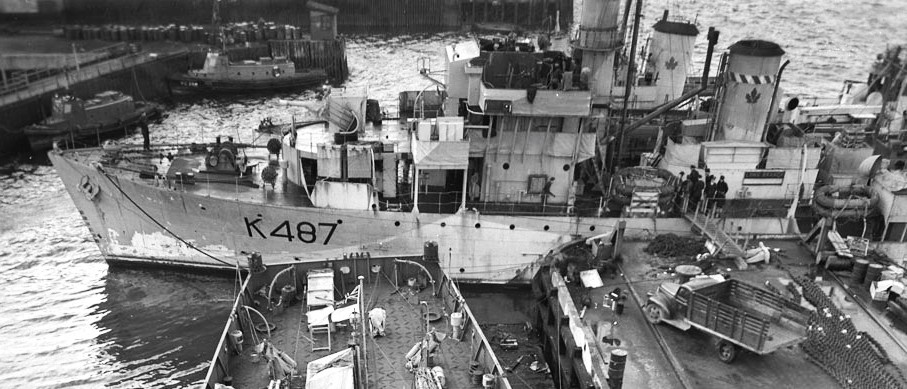
(Library and Archives Canada Photo, MIKAN No. 3398246)
HMCS Huntsville (K499) Castle class Corvette, view from the mast looking aft towards HMCS Long Branch (K487) Flower class Corvette, 16 Nov 1944.
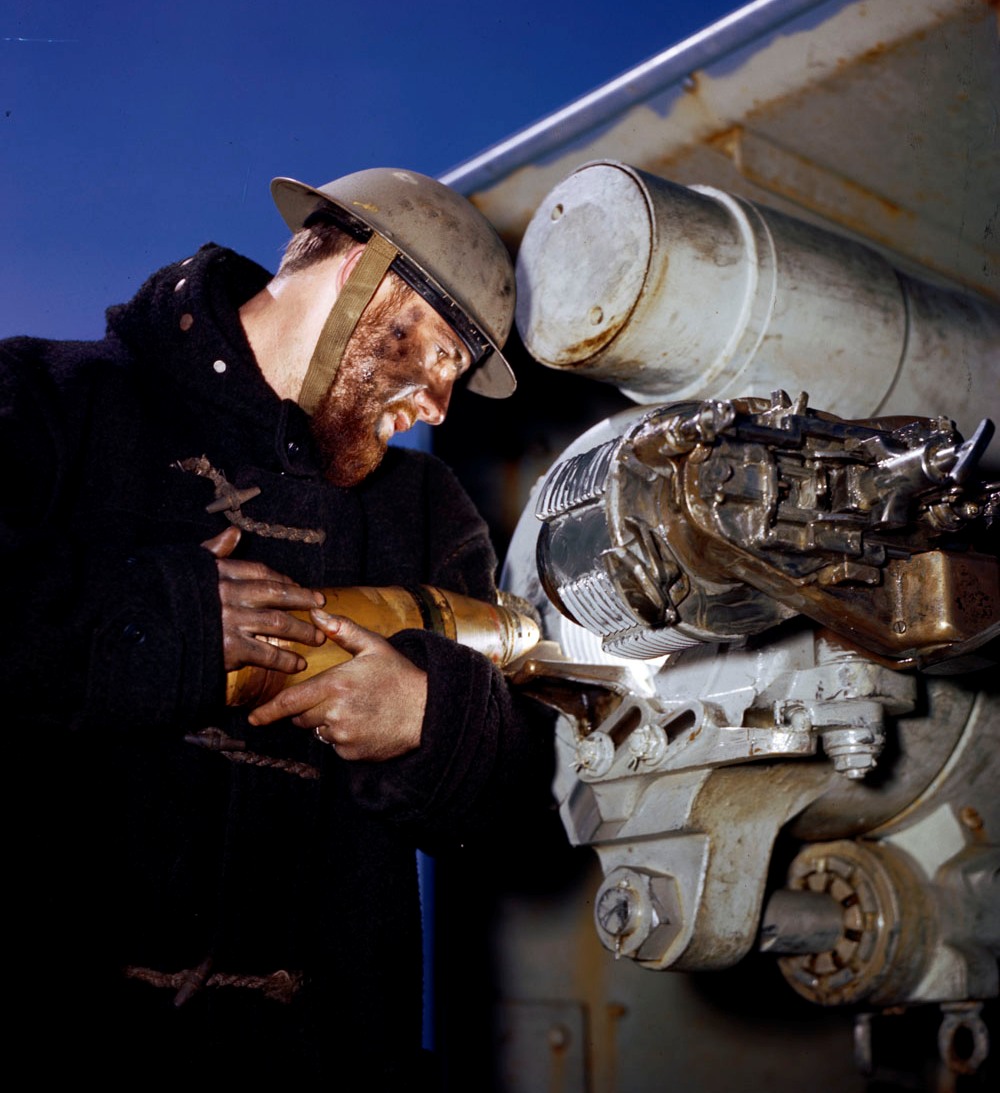
(Library and Archives Canada Photo, MIKAN No. 4950836)
HMCS Long Branch (K487) Flower class Corvette.
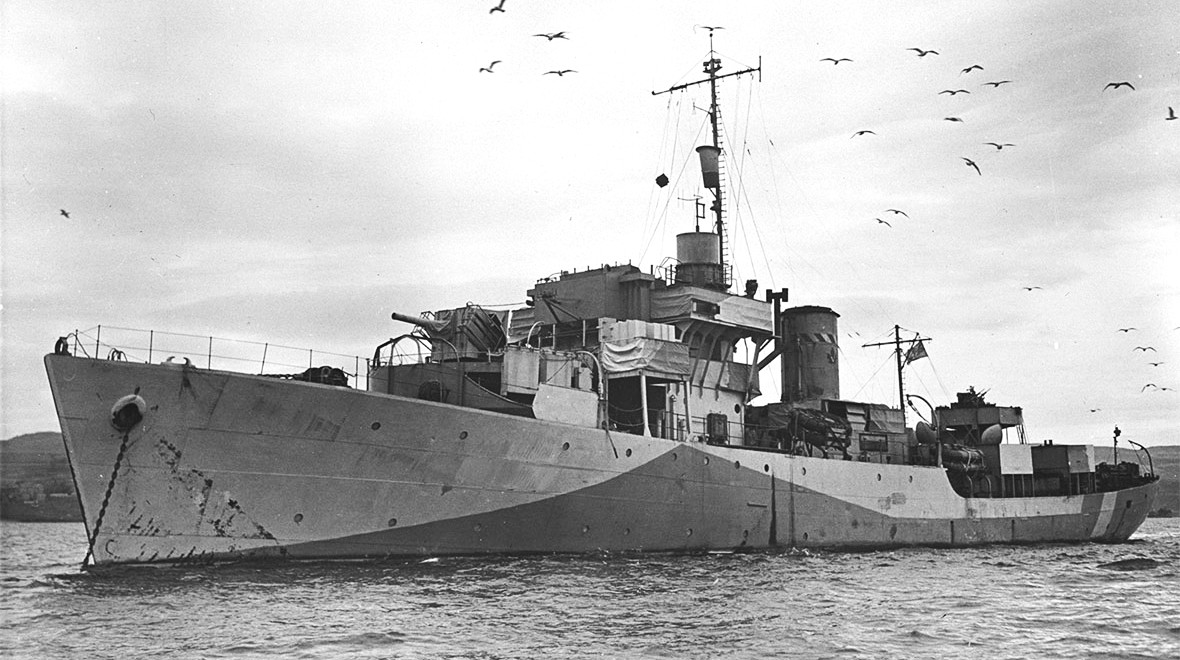
(RCN Photo)
HMCS Long Branch (K487) Flower class Corvette, 1944.
HMCS Louisburg (K143)
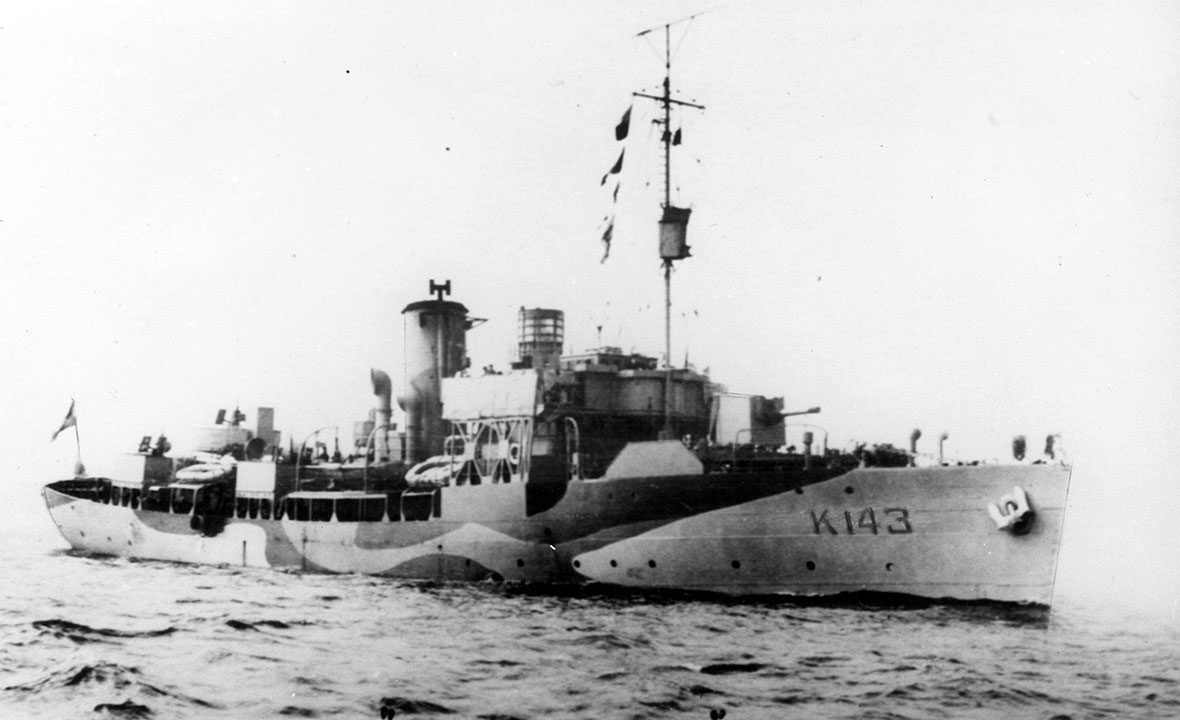
(DND Photo)
HMCS Louisburg (K143) Flower class Corvette. Built at Quebec City and commissioned there on 2 Oct 1941, HMCS Louisburg arrived at Halifax on 15 Oct 1941. She was assigned to Sydney Force until mid-Jan 1942, when she was transferred to Newfoundland Command. On 1 Feb 1942 she left St. John’s for Londonderry as escort to convoy SC.67, another of whose escorts, HMCS Spikenard, was lost. After a long refit at Halifax, from 27 Mar 1942 to 27 Jun 1942, HMCS Louisburg made two more round trips to ‘Derry before being assigned to duties in connection with Operation “Torch,” the invasion of North Africa. She arrived at Londonderry on 23 Sep 1942, then proceeded to the Humber for fitting of extra A/A/ armament. This work was completed on 18 Oct 1942. On 9 Dec 1942, while anchored at Londonderry, she was accidentally rammed by HMS Bideford, necessitation five weeks’ repairs at Belfast. HMCS Louisburg had scarcely commenced her “Torch” duties when, on the afternoon of 6 Feb 1943 near Cape Tenes, Algeria convoy KMF-8 (Gibraltar to Bone) was attacked by Italian Savoia-Marchetti SM.79 Sparviero bombers. HMCS Louisburg was hit by bombs and torpedoes and sank in position 36º15’N, 00º15’E. Forty-three of her crew were lost including several RN sailors and 2 Canadian sailors who died later of injuries received as a result of the sinking.
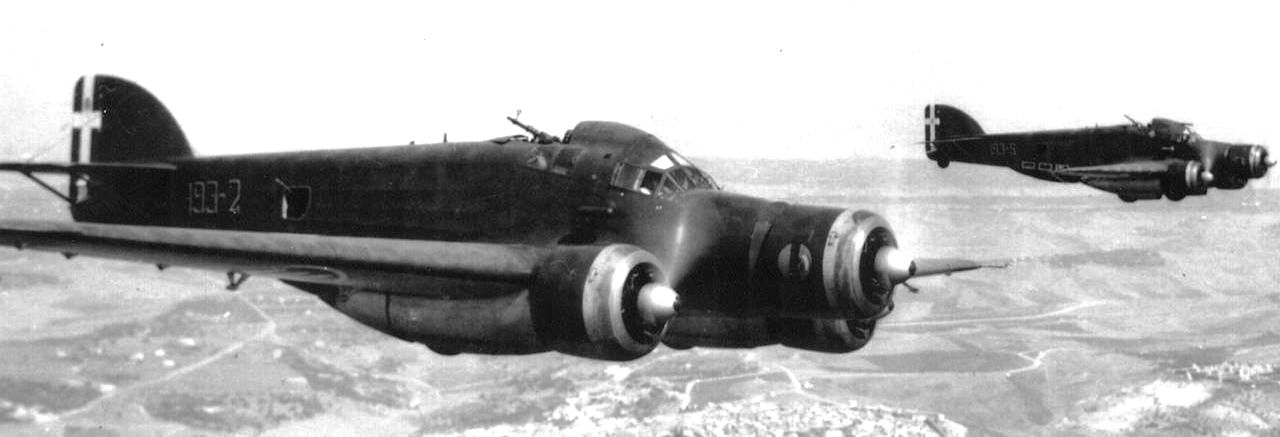
(Riggio family, Photo)
Savoia-Marchetti S.M.79 bombers of the 193ª Squadriglia Bombardamento Terrestre (193th Land Bombing Squadrilla), 87º Gruppo (87th Group), 30º Stormo(87th Wing).
HMCS Louisburg (K401)
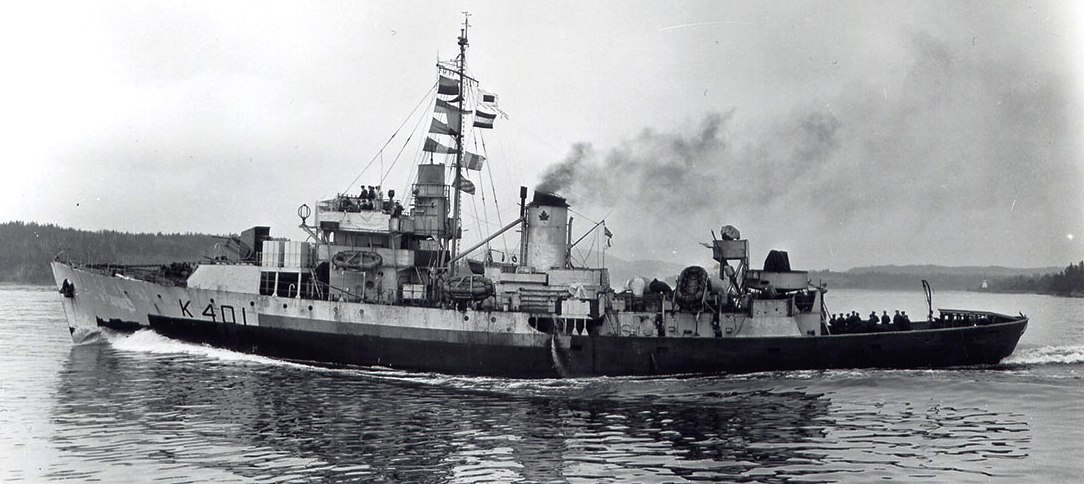
(DND Photo)
HMCS Louisburg (K401) Flower class Corvette. Built at Quebec City, she was launched on 13 Jul 1943 and commissioned there on 13 Dec 1943. She sailed to Halifax in advance of completion in order to escape the freeze-up, arriving in late Dec 1943, and was not ready for service until Feb 1944. Late in Mar 1944 she went to Bermuda for workups and upon returning to Halifax was assigned as an unallocated unit to Western Approaches Command, Londonderry. She sailed for the UK on 23 Apr 1944 and spent the next four months on escort duties associated with the invasion. In Sep 1944 she was allocated to EG 41, Plymouth, and late in Mar 1945, returned home for refit at Saint John. Upon completion of this refit she was paid off at Sorel on 25 Jun 1945 and placed in reserve there. She was sold in 1947 to the Dominican Navy and renamed Juan Alejandro Acosta. Deleted from active list in 1978, she was driven ashore in a hurricane on 31 Aug 1979 alongside her sister Colon (former HMCS Lachute).
All comments are subject to our Comment Policy. You must be at least 18 years old to comment.
See a comment that violates our guidelines? Report it here.