
Canadians in the Italian campaign: 1943-1945, Part 2, Mainland Italy, from the Strait of Messina to the Battle of Ortona
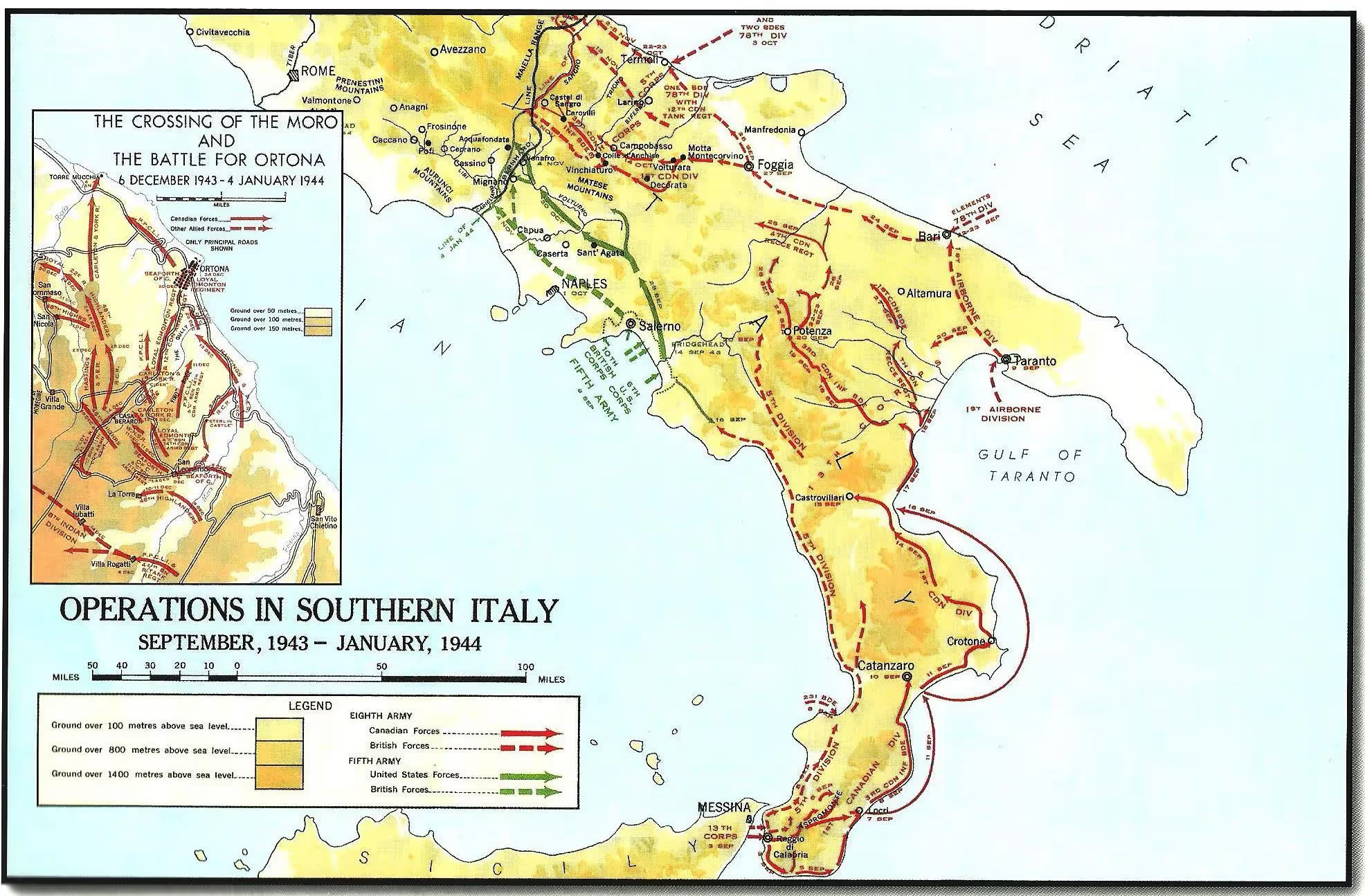
Map of Allied operations in Southern Italy, September 1943 to January 1944. (Map drawn by C.C.J. Bond, in C.P. Stacey, The Canadian Army 1939-1945: An Official Historical Summary (1948), Department of National Defence)
One result of the Allied invasion of Sicily was the overthrow of the Italian dictator, Mussolini. However, although the new Italian government surrendered on 3 September 1943,the Germans immediately seized control and thus it was German troops that the Allies faced in their advance up the Italian peninsula.
The Eighth British Army (including the 1st Canadian Division, the 5th British Division and the 1st Canadian Army Tank Brigade) would lead the way across the Strait of Messina to the toe of Italy and then advance toward Naples. The Fifth U.S. Army (with two British and two U.S. divisions) would make a seaborne landing in the Gulf of Salerno, seize Naples and advance on Rome. The 1st British Airborne Division would land by sea in the Taranto region and seize the heel of the peninsula.
(Library and Archives Canada Photo, MIKAN No. 3228095)
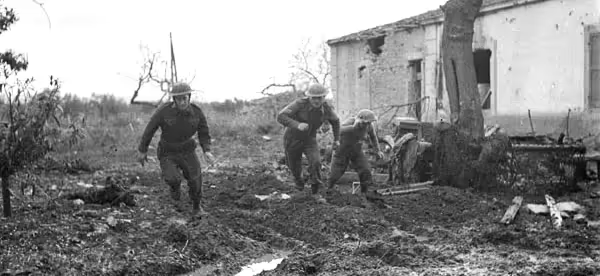
Infantrymen of The 48th Highlanders of Canada dealing with a German counterattack, San Leonardo di Ortona, Italy, 10 December 1943.
(Library and Archives Canada Photo, MIKAN No. 3724219)
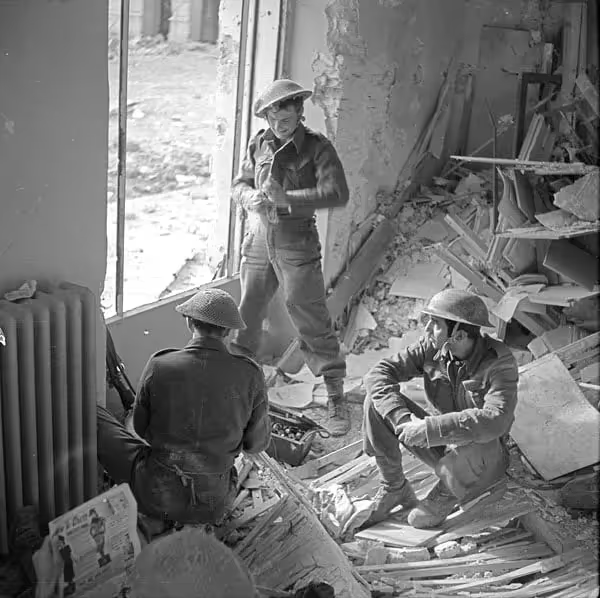
Cpl Smokey Atkinson cleaning the grime off a hand grenade, Ortona, Italy, 1943.
(Library and Archives Canada Photo, MIKAN No. 3231063)
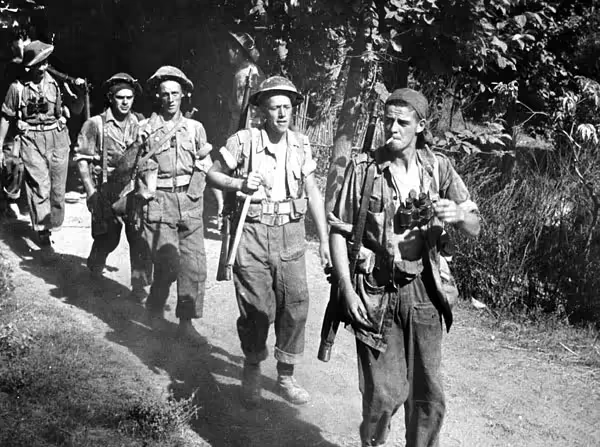
48th Highlanders of Canada advancing towards the Gothic Line near the Foglio River, Italy, 1944.
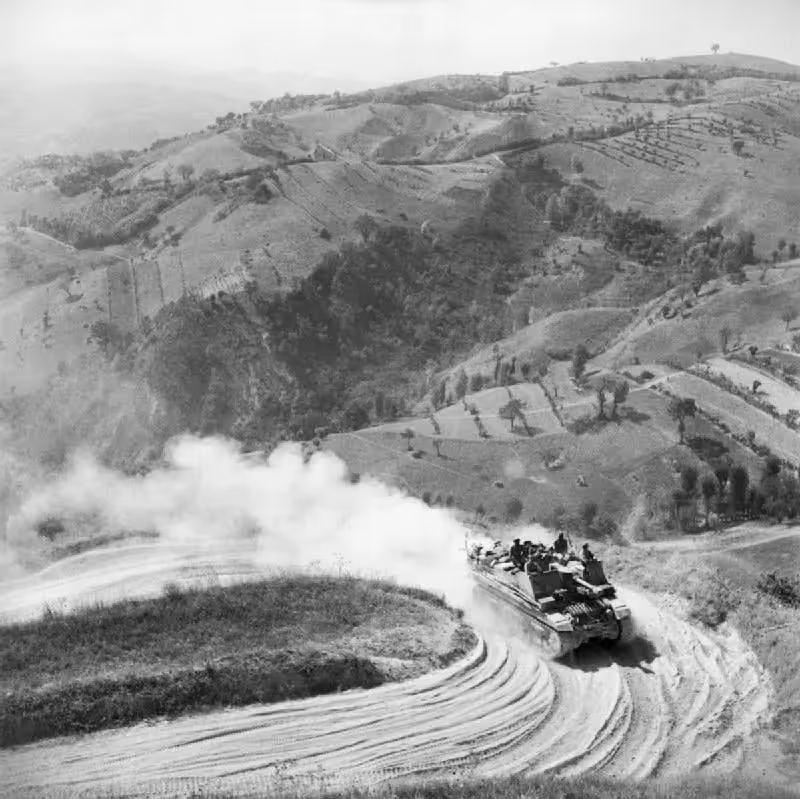
(IWM Photo, NA 18392)
A Canadian-built Sexton 25-pounder self-propelled gun negotiates a hairpin bend on a mountain road near Mondaino during the advance through the Gothic Line, Italy, 6 September 1944.
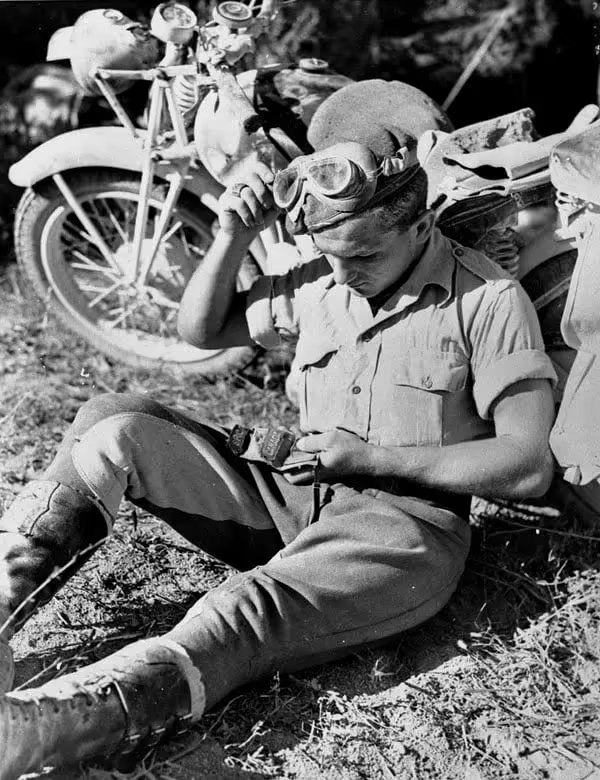
(Library and Archives Canada Photo, MIKAN No. 3512558)
Canadian despatch rider holding regimental shoulder flashes during the assault on the Gothic Line, Italy, ca. 26 August – 3 September 1944. He is sewing them back on after removing them for the Candian’s move from the Florence area, to the Adriatic coast in preparation for the attack on the Gothic Line.
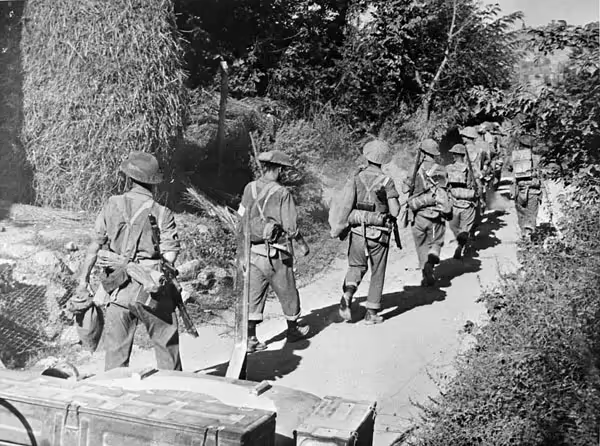
(Library and Archives Canada Photo, MIKAN No. 3262370)
Infantrymen of the 48th Highlanders of Canada advancing on Point 146 during the advance on the Gothic Line near the River Foglia, Italy, ca. 28-29 August 1944,
(Library and Archives Canada Photo, MIKAN No. 3591199)
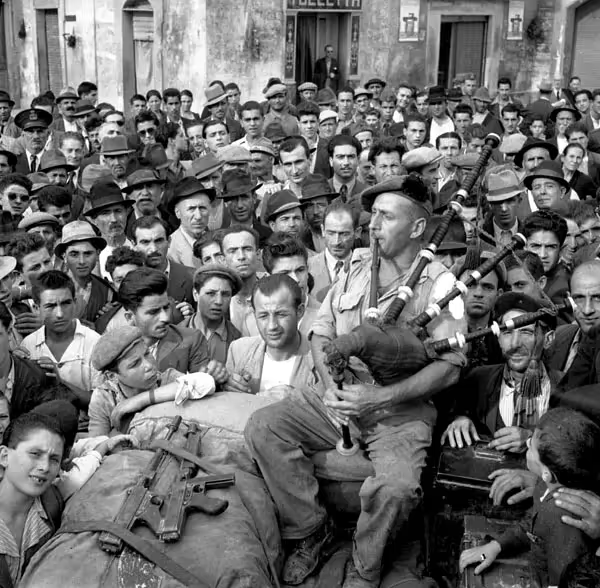
Piper Roderick Grant of the 48th Highlanders of Canada playing his bagpipes for a crowd of liberated civilians, Matera, Italy, 24 September 1943.
(Library and Archives Canada Photo, MIKAN No. 3586726)
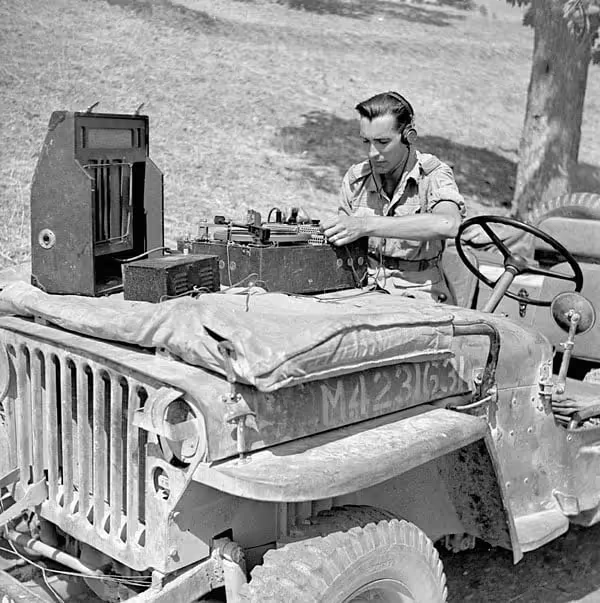
Engineer Paul Johnston of the Canadian Broadcasting Corporation setting up equipment to record a broadcast by CBC correspondent Matthew Halton, Catangora, Italy, 14 September 1943. The piece of equipment in front of the sound engineer is a acetate disc cutter that takes the sound from the microphone and puts it into the disk. In the later stages on the war the CBC experimented with dictaphone wire recorders as they were more light weight and produced an acceptable recording for rebroadcast back home in Canada. The Canadian Army photo and motion picture units focused on visual productions, while the CBC did sound recording of military actions. (Jim Bunting)
(Library and Archives Canada Photo, MIKAN No. 3612982)
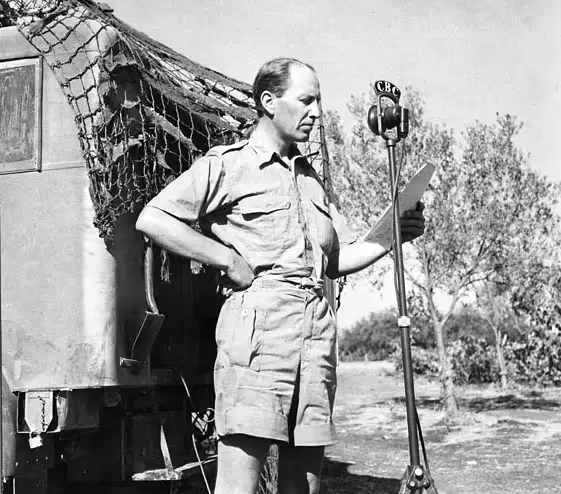
Matthew Halton at the CBC microphone, Italy, 20 August 1943.
(Library and Archives Canada Photo, MIKAN No. 3191712)
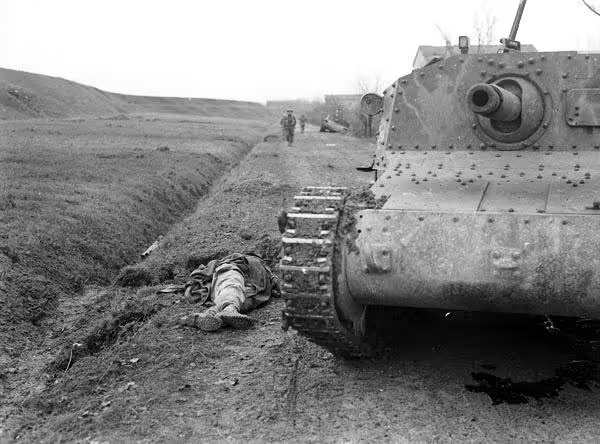
Italian Semovente da M40/41 75/18 SP Gun confiscated by the Germans after the Italian surrender on 8 Sep 1943, near Lamone, Italy, December 1944.
(Library and Archives Canada Photo, MIKAN No. 3534551
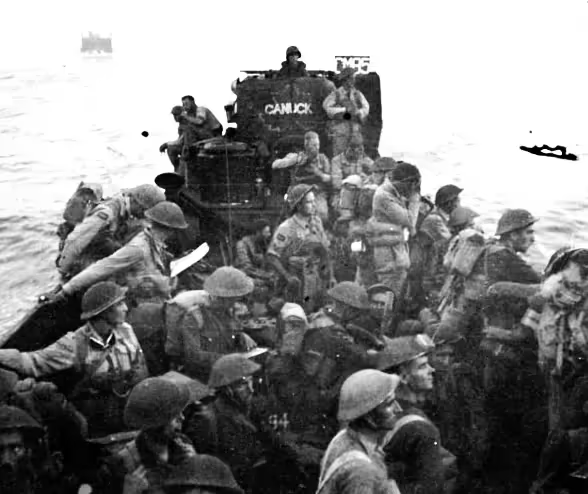
Personnel of the 3rd Canadian Infantry Brigade landing at Reggio di Calabria, Italy, 3 September 1943.
The assault across the Strait of Messina began on 3 September 1943. The Canadians, directed on Reggio Calabria, met little resistance since the Germans had withdrawn to establish a line of defence across the narrow, mountainous central part of the peninsula. The Canadians captured Reggio Calabria and advanced across the Aspromonte Mountains and along the Gulf of Taranto to Catanzaro. In spite of rain, poor mountain roads and German rearguard actions, they had moved 120 kilometres inland from Reggio by 10 September.
(Library and Archives Canada Photo, PA-144103)
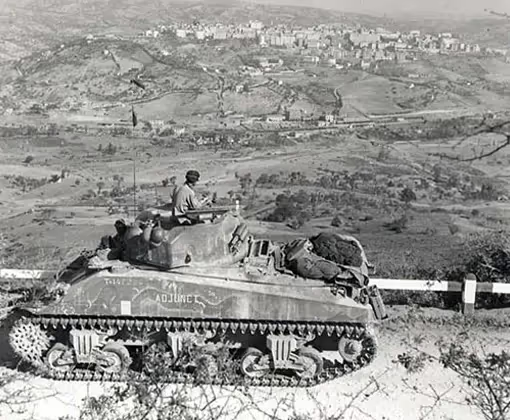
From higher ground, a 14th Armoured Regiment (Calgary) Sherman tank covers the progression of the West Nova Scotia Regiment towards Potenza, September 20th, 1943.
Meanwhile, the Fifth U.S. Army met stiff German resistance as it assaulted the beaches of Salerno. To assist American troops in the breakout from the bridgehead, a Canadian brigade was diverted from the main Canadian line of advance to seize Potenza, an important road centre east of Salerno. Potenza was taken on September 20. The breakout was accomplished, and on 1 October, the Fifth U.S. Army entered Naples. In the meantime, the 1st Canadian Infantry Brigade proceeded eastward, joined the British Airborne Division in the Taranto region, and then pushed boldly inland to the north and northwest. The 5th British Corps seized the Foggia airfield.
By the end of September, the German hold on northern and central Italy was still unshaken,but the Allies had overrun a vast and valuable tract of southern Italy. Allied armies stood on a line running across Italy from sea to sea. The next objective was Rome.
As the Allies drove north from Naples and Foggia, the Canadians found themselves pushing into the central mountain range. Now the enemy resisted with full force. On 1 October at Motta, the Canadians fought their first battle with Germans in Italy, and a series of brief, but bloody actions followed.
(Library and Archives Canada Photo, MIKAN No. 3599873)
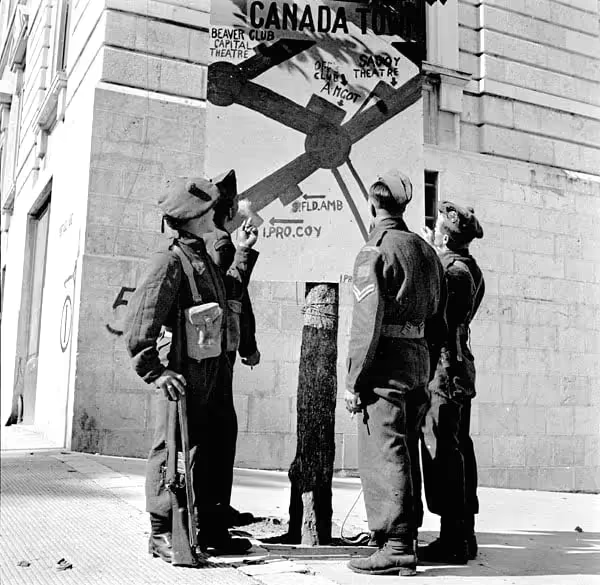
Canadian soldiers looking at the “Canada Town” billboard, Campobasso, Italy, 21 October 1943.
(Library and Archives Canada Photo, MIKAN No. 3607765)
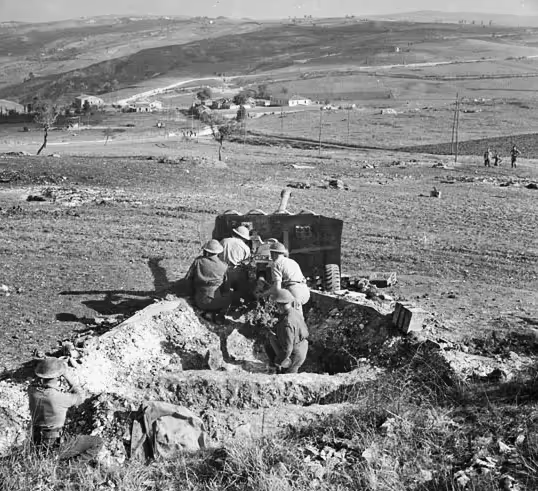
17-pounder anti-tank gun detachment going in to action on the road to Campobasso – Termoli, Italy, 1943.
(Library and Archives Canada Photo, MIKAN No. 3217088)
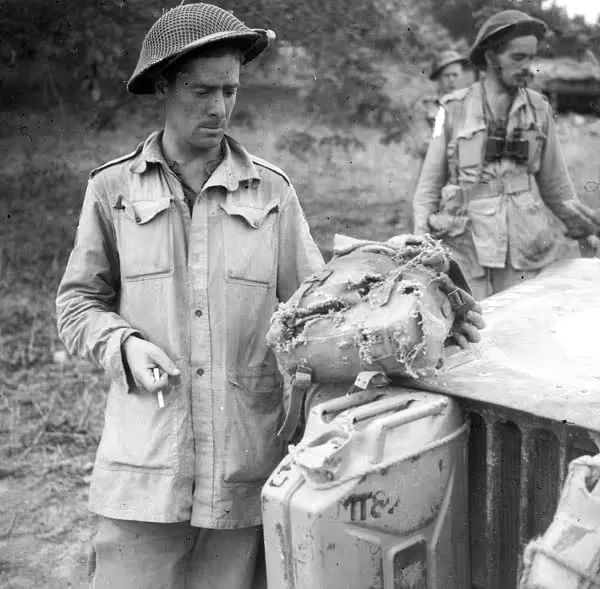
Private Paul-Eugene Jacques, Royal 22e Regiment looking at his shrapnel-riddled backpack, near Campobasso, Italy, October 1943. He was wounded twice in Italy and was returned to Canada in 1944.
(Library and Archives Canada Photo, MIKAN No. 3607613)
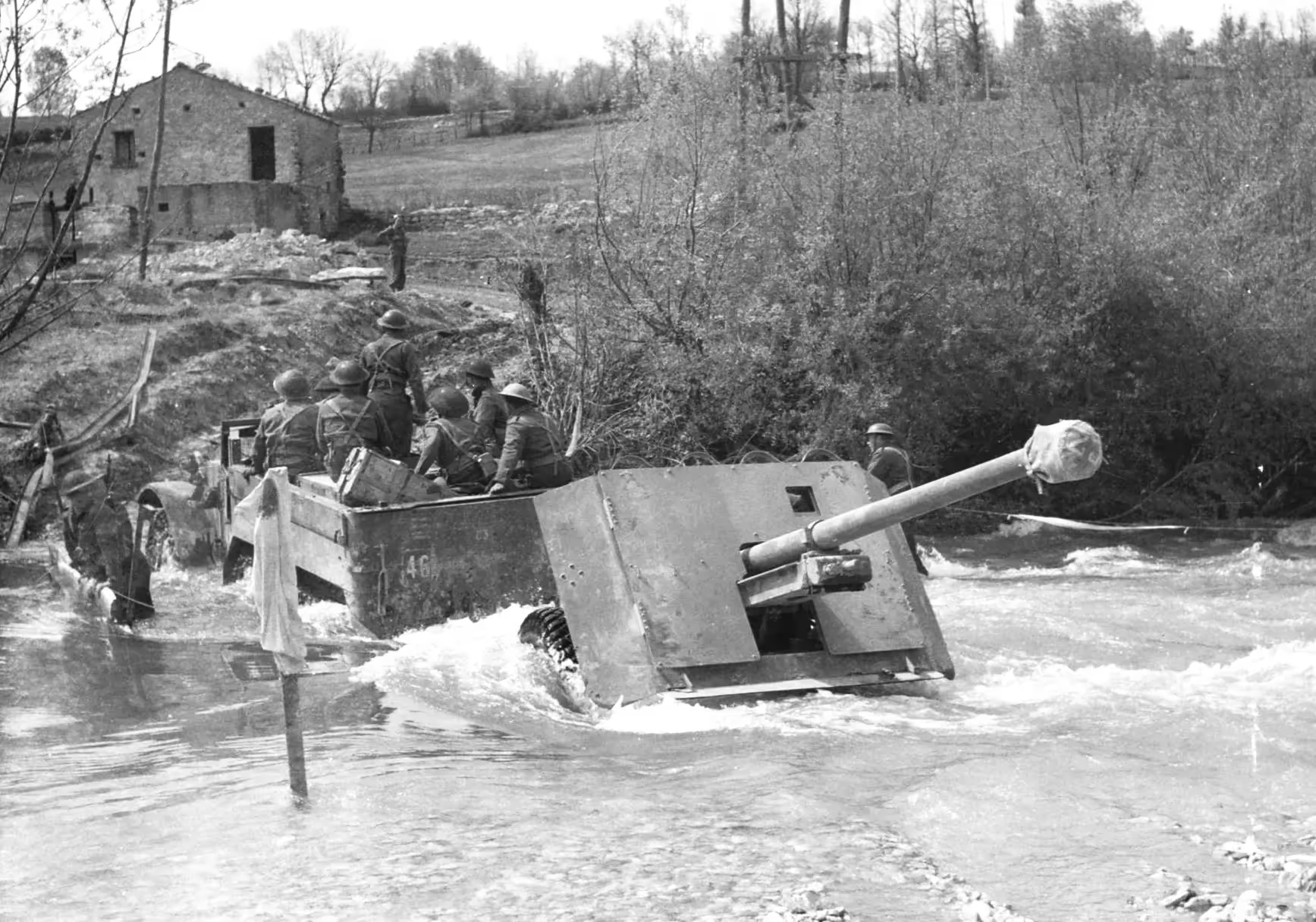
17-pounder anti-tank gun being forded across the River Biferno, 2 May 1944. This took place in the area of Vinchiatura during the Army Commander’s visit to 1st Canadian Division. During the afternoon demonstration, the official party saw various phases that might be included in any tough cross-country advance.
On 14 October 1943, the Canadians took Campobasso. The next day they took Vinchiaturo and the advance continued across the Biferno River. During the same period, one unit of the Canadian Army Tank Brigade played a distinguished role on the Adriatic coast by supporting a British assault at Termoli and its advance to the Sangro River.
(Library and Archives Canada Photo, MIKAN No. )
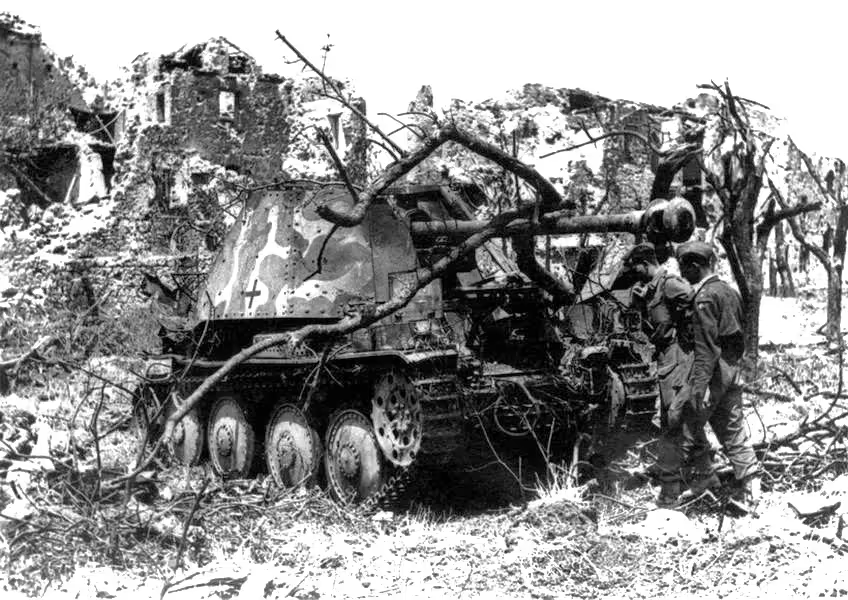
German Marder III tank destroyed near the town of Aquino. They mounted the 7.5-cm PaK 40 anti-tank gun in an open-topped fighting compartment on top of the chassis of the They offered little protection to the crew, but added significant firepower compared to contemporary German tanks. They were in production from 1942 to 1944, and served on all fronts until the end of the war.
(DND Photo)
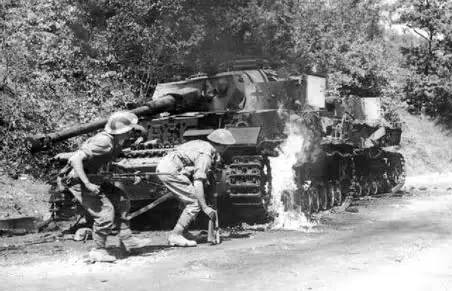
Canadians sheltering behind a destroyed Panzer IV tank, hinterland of Salerno. Operation Avalanche. September 1943.
In the 63 days since landing, the Eighth British Army had covered 725 kilometres. The “pursuit from Reggio” was over, however, as the Germans were prepared to make a stand from the coast south of Cassino on the Naples-Rome highway, to Ortona on the Adriatic shore. The German strength was now almost equal to that of the Allies and they had the advantage of being on the defensive. The liberation of Rome would not be easy.
(Library and Archives Canada Photo, MIKAN No. 4232973)
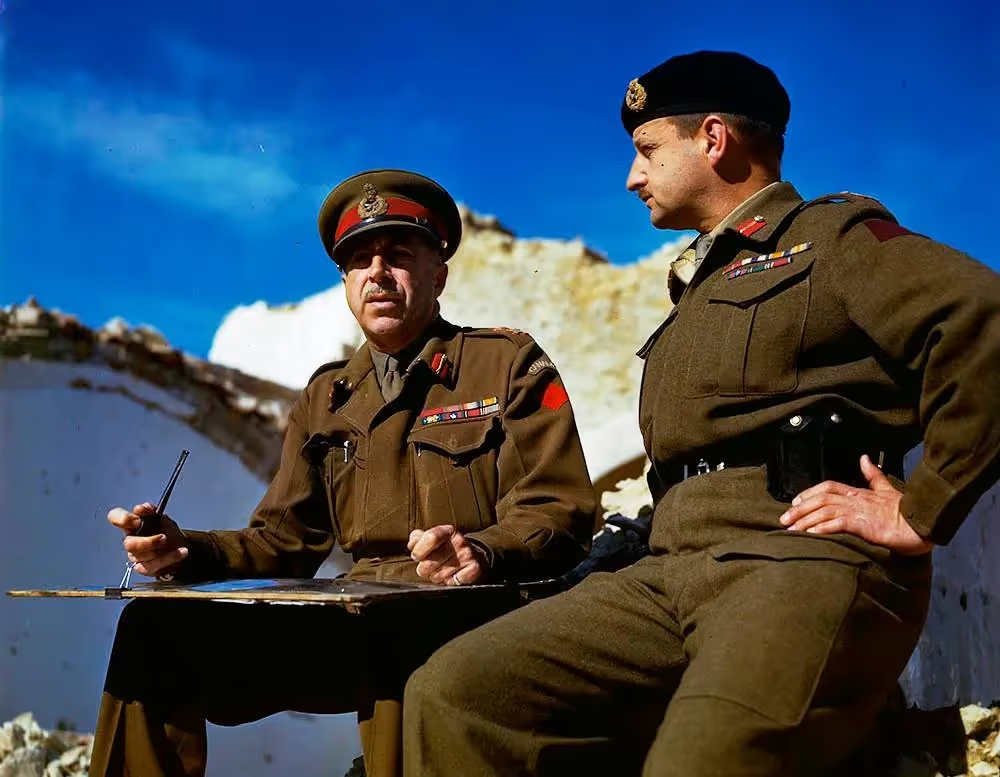
Gen HDG Crerar and MGen ELM Burns, ca 1943.
Meanwhile, the decision had been made to strengthen the Canadian forces in the Mediterranean. On 5 November, the Headquarters of the 1st Canadian Corps under Lieutenant-General H.D.G. Crerar and the 5th Canadian Armoured Division arrived in Italy. General G.G. Simonds took over command of this division and was replaced in the 1st Division by Major-General C. Vokes. General McNaughton, who had objected to the division of the Canadian Army, retired soon afterward.
(Library and Archives Canada Photo, MIKAN No. 3228144)
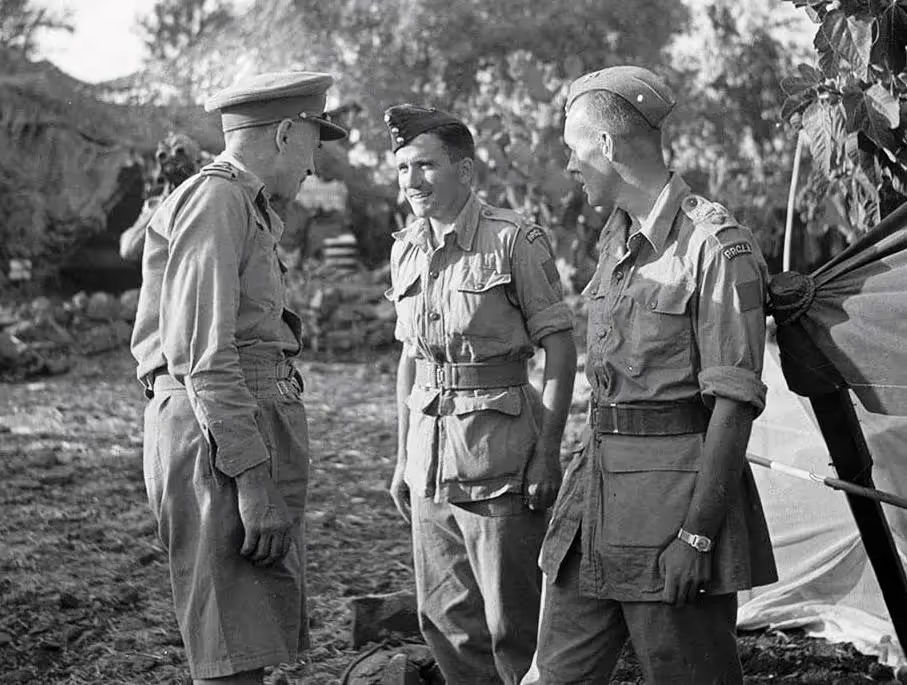
Officers, including two with the PPCLI in Sicily, 1943.
(Library and Archives Canada Photo, MIKAN No. 4002440)
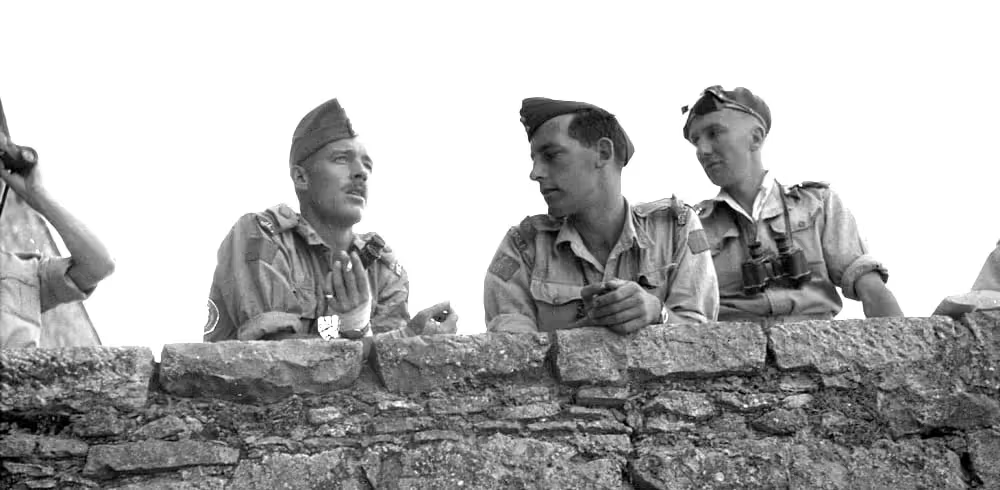
Studying a map and viewing the locations of German forces in Italy from the ramparts of a castle in Italy. Left to right: With field glasses (arm only shown) PPCLI O/C Lt-Col. Cameron B. Ware, Winnipeg and London, Ontario; Lieut. J.P.S. Amoore, British Intelligence Corps (Interpreter) attached to 1st Canadian Division (home Richmond Surrey); Brig. C. Vokes, Ottawa and Kingston (2 CIB Brigadier); LCol. G. Kitching, Montreal, Staff Officer, 1st Canadian Division.
(Library and Archives Canada Photo, MIKAN No. 3228149)
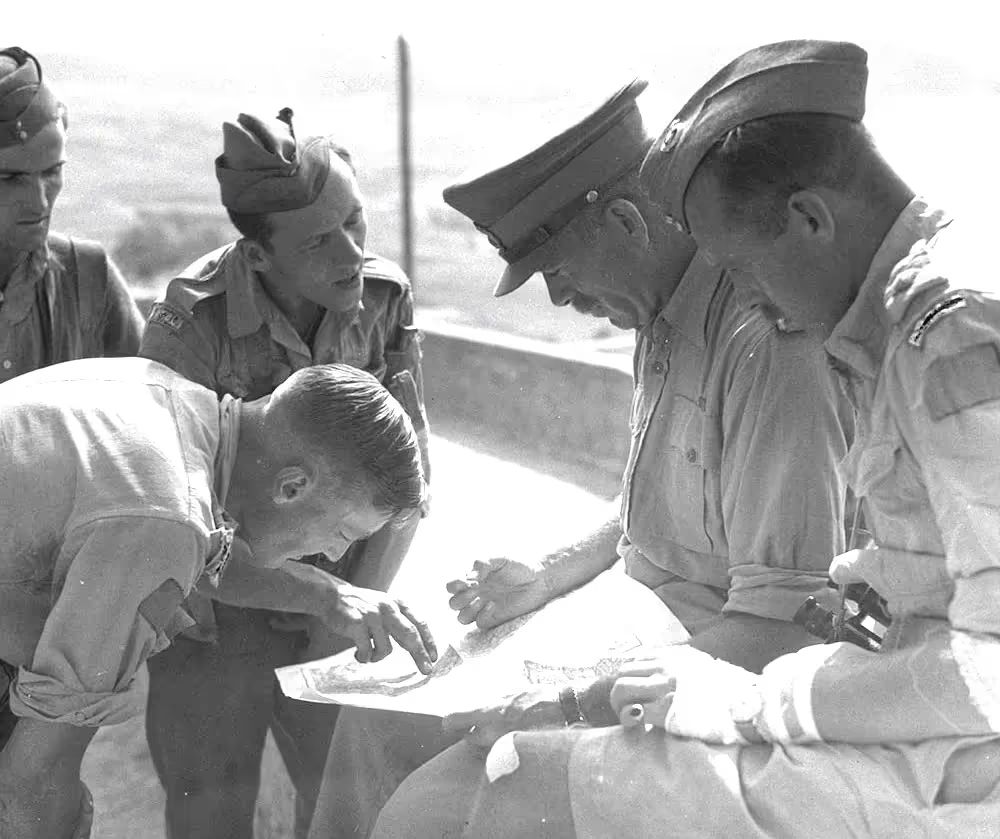
Sniper Officer Lieut. D.E. Jones (over map) and Sniper Scout Private J.W. Slimkowich (pointing) reporting back from a 20 hour patrol, to Brigadier C. Vokes (2nd right) and Officer-in-Charge, Princess Patricia’s Canadian Light Infantry Lieutenant-Colonel, September 1943.
(Library and Archives Canada Photo, MIKAN No. 3588753)
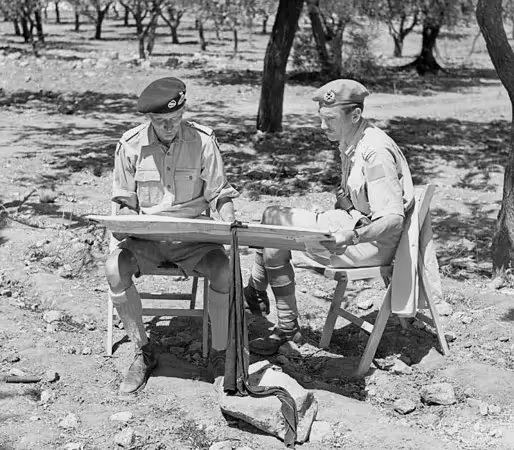
General Sir Bernard Montgomery (left), Commander-in-Chief British Eighth Army, and General G.G. Simonds, General Officer Commanding 1st Canadian Infantry Division, consulting maps at 1st Canadian Infantry Division Headquarters near Valguarnera, Sicily, 20 July 1943. General Montgomery awarded the Distinguished Service Order (DSO) to General Simonds in September 1943 for his “boldness, efficiency and inspiring example” in Sicily.
(Library and Archives Canada Photo, MIKAN No. 4232748)
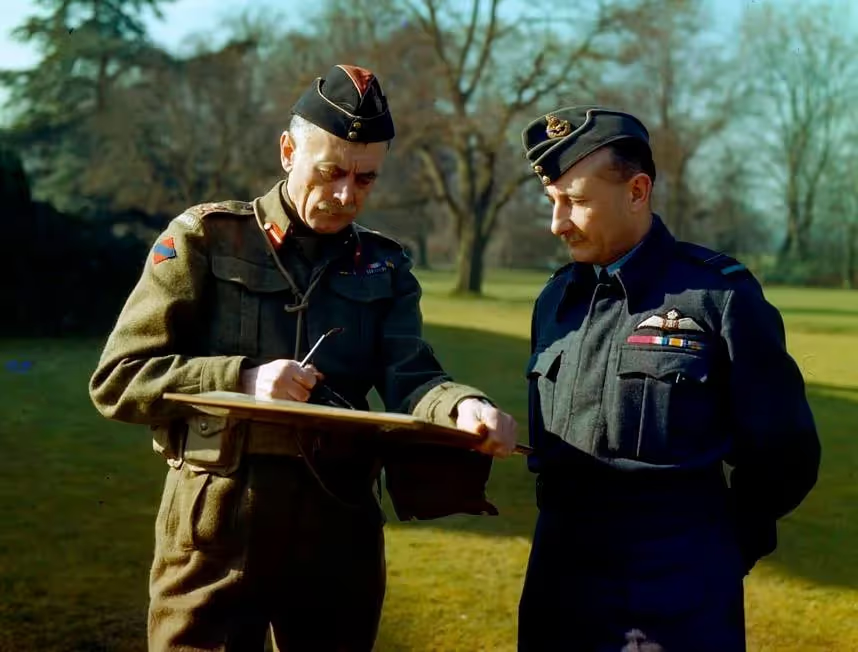
LGen A.G.L. McNaughton and AV Marshal J. Whitworth Jones, ca 1943.
(Library and Archives Canada Photo, MIKAN No. 3222050)
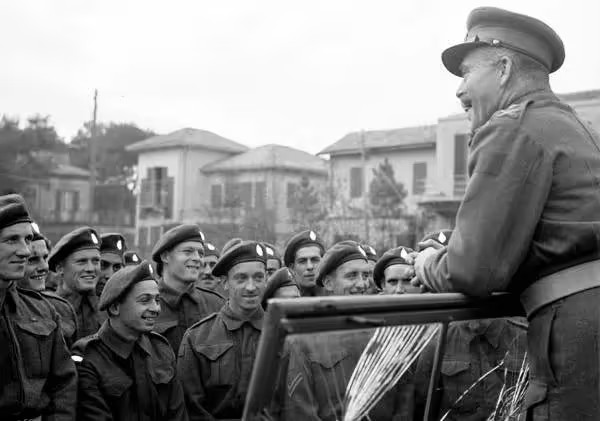
MGen Chris Vokes, GOC 1st Canadian Infantry Division speaking to PPCLI soldiers, Riccione, Italy, 13 Nov 1944.
As the first snow of winter began to fall, the Eighth British Army struck hard at the German line along the Sangro River on the Adriatic Coast. The aim was to break the stalemate that had developed and relieve the pressure on the Fifth U.S. Army in the drive to take Rome. The task was not easy as the Adriatic shoreline was cut by a series of deep river valleys. The British and Canadians succeeded in driving the Germans from the Sangro but were faced with the same task a few kilometres further north. Here, along the line of the Moro River, some of the most bitter fighting of the war took place. The Germans counter-attacked repeatedly and often the fighting was hand-to-hand as the Canadians edged forward to Ortona on the coast.
(Library and Archives Canada Photo)
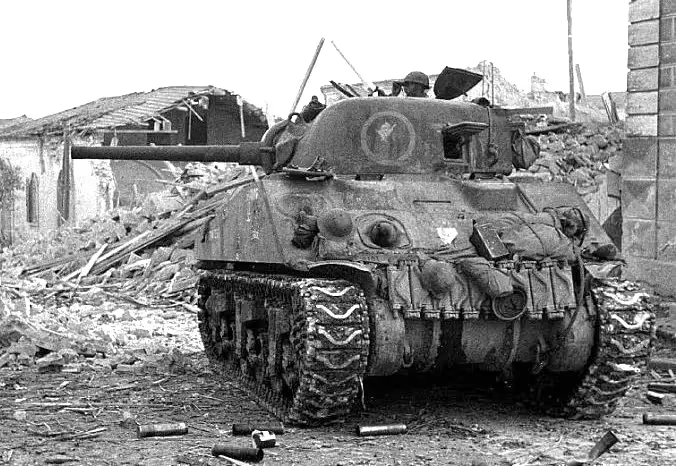
Canadian Sherman tank positioned at a street corner ready to destroy a group of Germans firing from a house. Note the tank commander using binoculars. The road around the tank is littered with empty casings. Ortona, Italy, December 1943.
The mediaeval town of Ortona, with its castle and stone buildings, was situated on a ledge overlooking the Adriatic Sea. Its steep, rubble-filled streets limited the use of tanks and artillery and thus made this an infantryman’s struggle. During several days of vicious street fighting, the Canadians smashed their way through walls and buildings – “mouse-holing” as they called it. This was Christmas 1943. Meanwhile, a subsidiary attack had been launched to the northwest and the Germans, in danger of being cut off, withdrew from Ortona. The city officially fell on 28 December.
(Library and Archives Canada Photo, MIKAN No. 3227877)
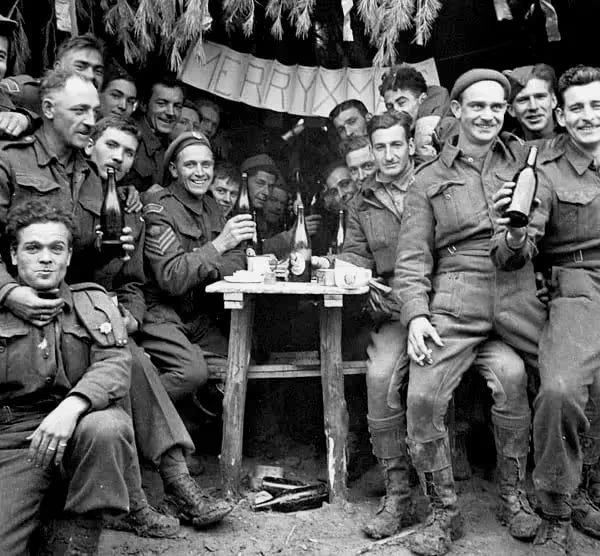
Canadian soldiers enjoying a few drinks on Christmas Day at the front, Ortona, Italy, 25 December 1943. Lee Taylor noted: My Dad is in this picture, on the upper right curly black hair (Seaforth Highlander), his friend with arm around him was KIA a few days later. My dad’s still with us just turned 98. There are a few skeptics say this picture was not taken at the church in Ortona on Christmas day due to people in the picture based on uniforms , cap badges, clean uniforms etc etc. I asked my dad about that , he said this picture was taken while they were leaving to return to the town, some HQ, dispatch, tank crews, support and service, reinforcements , correspondents and other scattered rear support people, pulled them in to this alcove for a picture and one last swig of whatever they had. He also mention there were other groups of men all around outside sitting at makeshift tables if there wasn’t room inside.
During the Battle of Ortona, the Canadian Army created a tactic called ‘mouseholing’ (and gave the tactic its name) and used it to great effect. In concept, a hole was prepared in the common wall between adjacent houses to gain entry to the second house from within. This breach was accomplished either by hand tools or by anti-tank weapons. If the enemy occupied the upper floors a demolition charge was generally used that quickly destroyed the house. This procedure allowed the Canadians to advance up the street unseen by the enemy. This technique and tactic proved successful and was adopted by other Allied armies.
(Library and Archives Canada Photo, MIKAN No. 3203278)
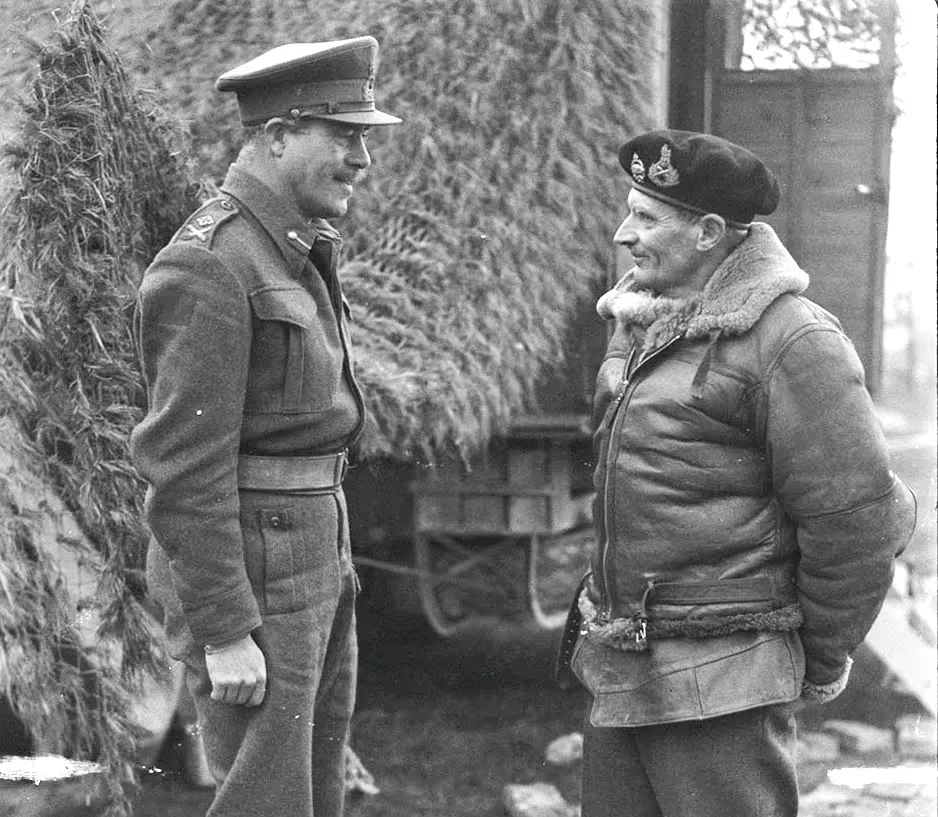
General Sir Bernard Montgomery (right) congratulating Major-General Christopher Vokes on the capture of Ortona by the 1st Canadian Infantry Division,20 December 1943.
(Library and Archives Canada Photo, MIKAN No. 3203266)
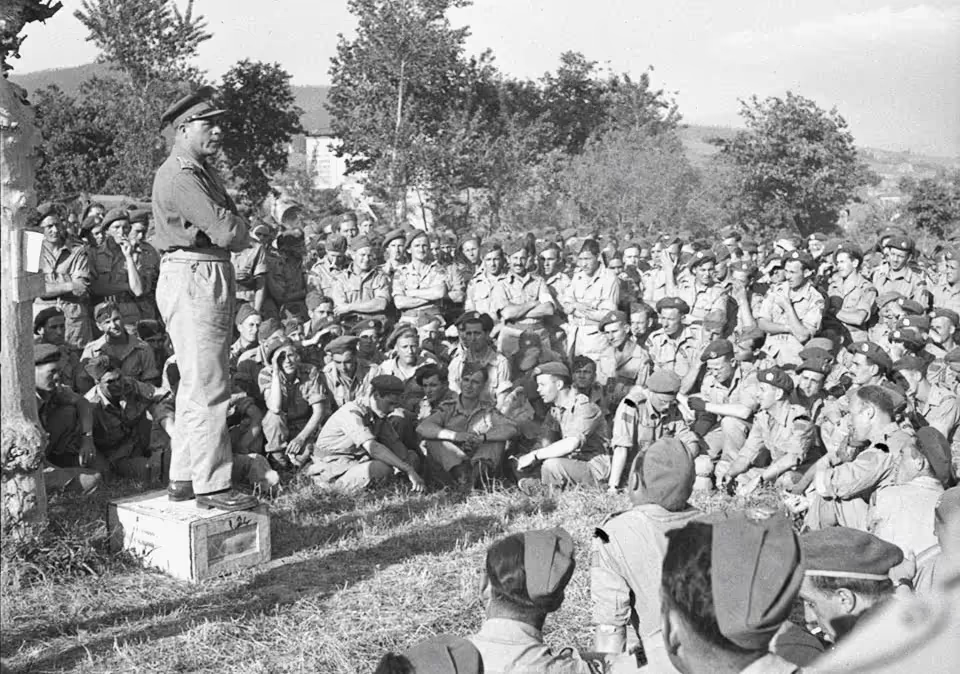
Major-General Christopher Vokes addressing personnel of the Hastings and Prince Edward Regiment, Italy, 13 May 1944.
(Library and Archives Canada Photo, MIKAN No. 3607768)
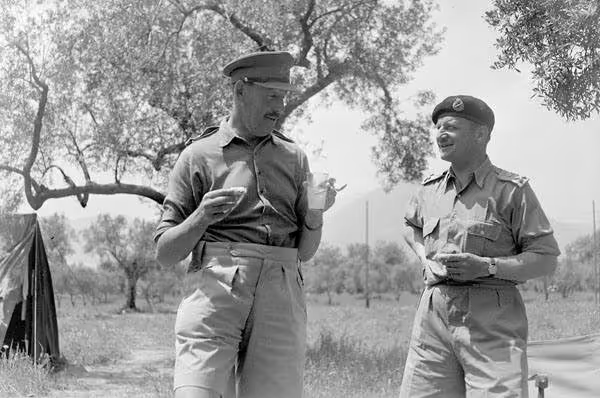
Field Marshall Sir Harold Alexander and Lieutenant-General Eedson Louis Millard “Tommy” Burns, CC DSO OBE MC CD ca 1944.
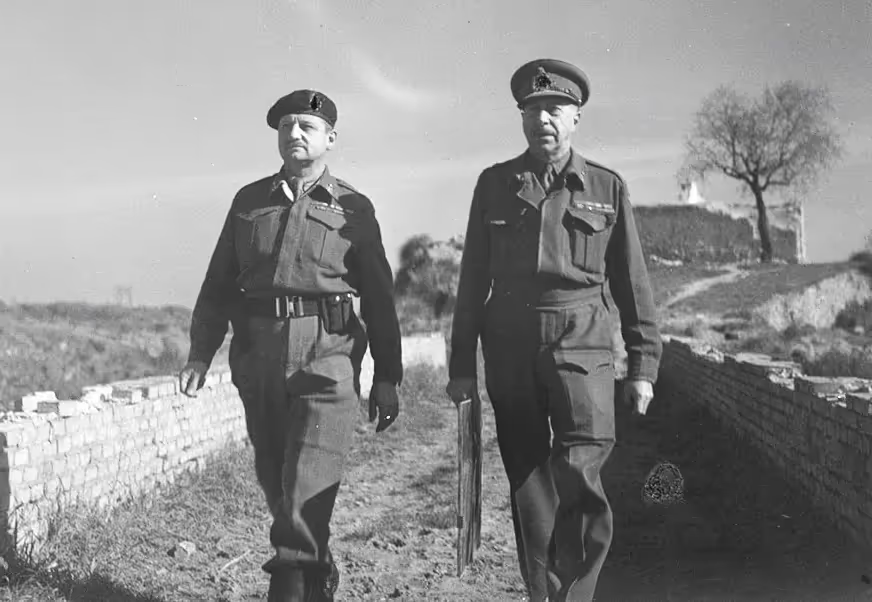
Further offensives ground to a halt due to atrocious winter weather. During the lull, Simonds left for England and Major-General E.L.M. Burns succeeded him. In March, Burns took over the 1st Canadian corps from Lieutenant-General Crerar, who returned to command the First Canadian Army in England. The 5th Canadian Armoured Division was taken over by Major-General B.M. Hoffmeister.
(Library and Archives Canada Photo, MIKAN No. 3203279)
Lieutenant-General H.D.G. Crerar (right) turning over command of the 1st Canadian Corps to Major-General E.L.M. Burns, 3 March 1944.
(Library and Archives Canada Photo, MIKAN No. 3225468)
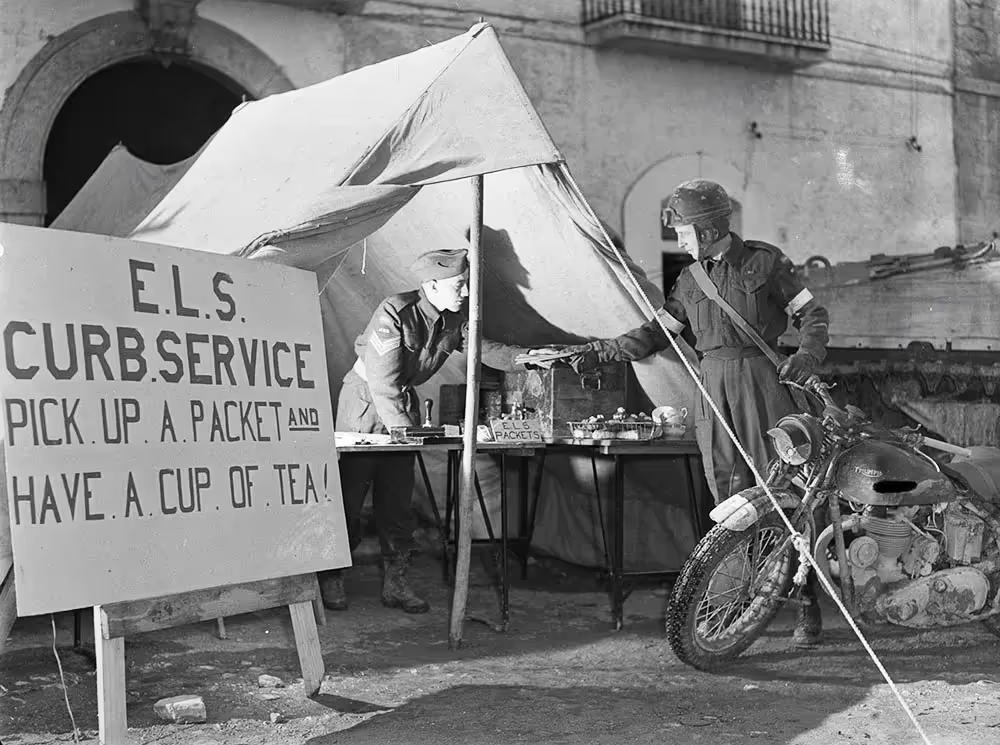
Sergeant R.H. Easby (L) handing a message to a despatch rider, Signalman J.K. Armstrong, at 5th Canadian Armoured Division Headquarters, 17 March 1944.
(Library and Archives Canada Photo, MIKAN No. 3203274)
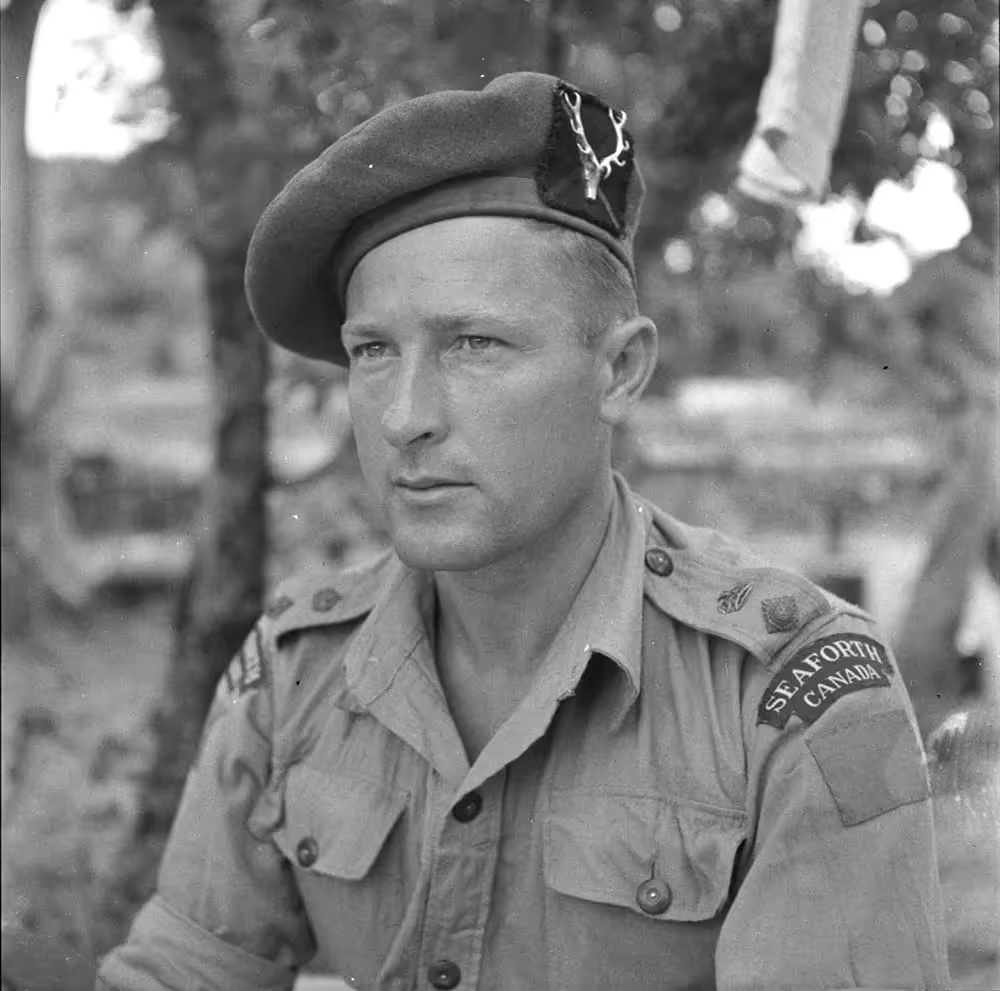
Lieutenant-Colonel B.M. Hoffmeister, Commanding Officer, Seaforth Highlanders of Canada, Sicily, August 1943.
(Library and Archives Canada Photo, MIKAN No. 3576486)
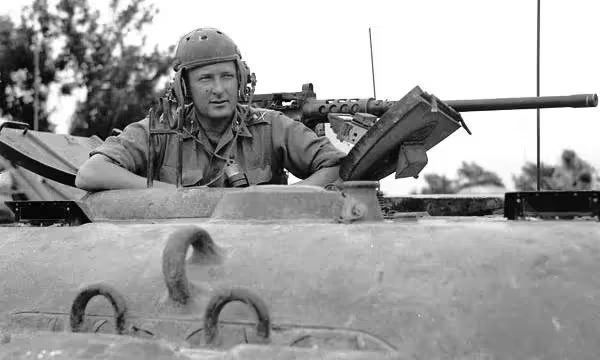
Major-General Bertram Meryl Hoffmeister, General Officer Commanding 5th Canadian Armoured Division, in the turret of the Sherman V tank “Vancouver” near Castrocielo, Italy, 23 May 1944. He was awarded the OC, CB, CBE, DSO and Two Bars (15 May 1907 – 4 December 1999)
(Library and Archives Canada Photo, MIKAN No. 3607771)
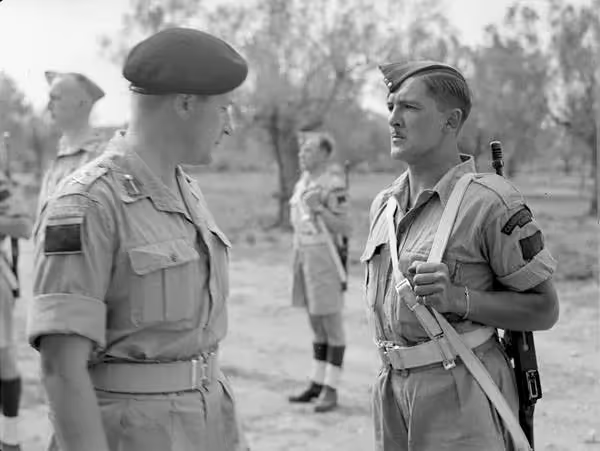
MGen Hoffmeister inspecting C Pro C, Italy, 1944. The Provosts are armed with .45 cal Thompson SMGs.
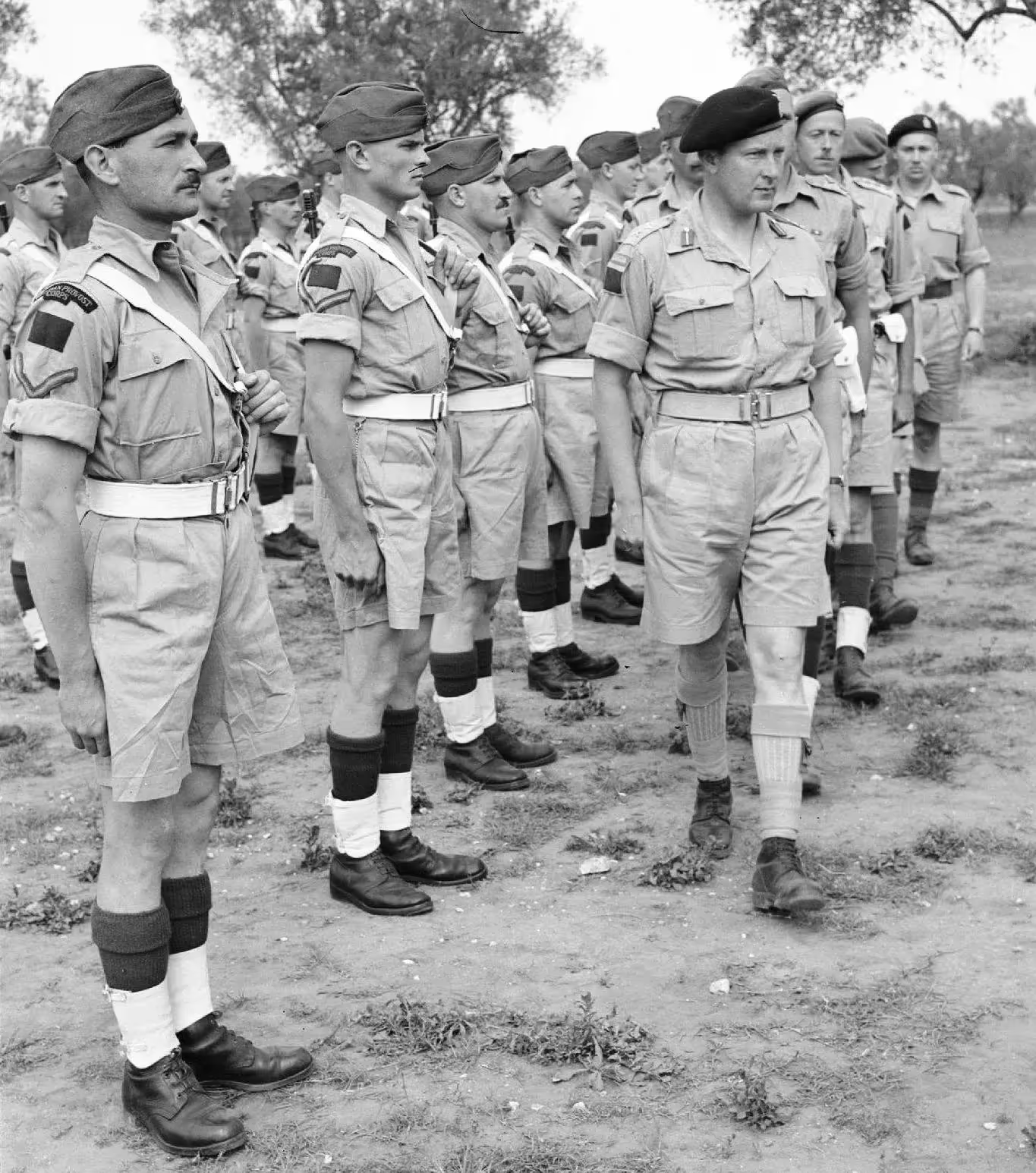
(Library and Archives Canada Photo, MIKAN No. 3613495).
MGen Hoffmeister inspecting members of the Canadian Provost Corps, Italy, 1944.
By now the Canadian Army in Italy had reached its peak theatre strength of nearly 76,000. Total casualties in the Corps had climbed to 9,934 in all ranks, of which 2,119 had been fatal.
Long Mainland March
After a brief rest, the Canadians were placed in the British Eighth Army’s vanguard for the invasion of mainland Italy. A long, arduous march up Italy’s boot began when the West Nova Scotia and Carleton and York regiments of the 3rd Canadian Infantry Brigade landed immediately north of Reggio Calabria on 3 September.
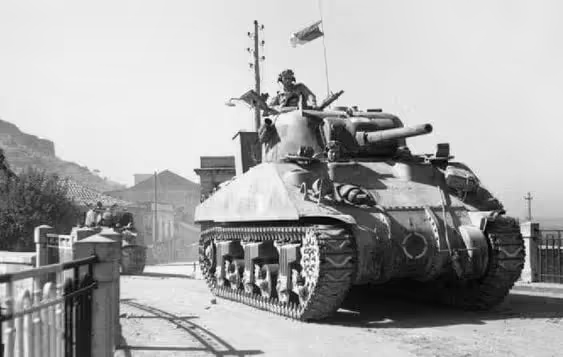
(IWM Photo, NA6209)
Sherman V tank, 14th Canadian Tank Regiment (Calgary Regt), C Sqn, on the Strada Statale No. 18 “Tirrena Inferiore”, in the district called “Pentimele” on the northern outskirts of Reggio Calabria, Italy, 3 Sep 1943.
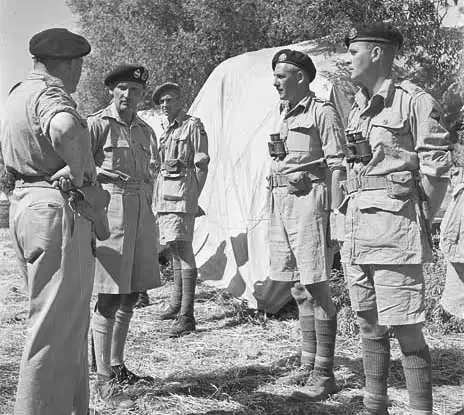
(Library and Archives Canada Photo, MIKAN No. 3202301)
General Sir Bernard Montgomery meeting Lieutenant-Colonel C. Neurotsos, Commanding Officer, 14th Armoured Regiment (The Calgary Regiment) in Sicily, 20 August 1943.
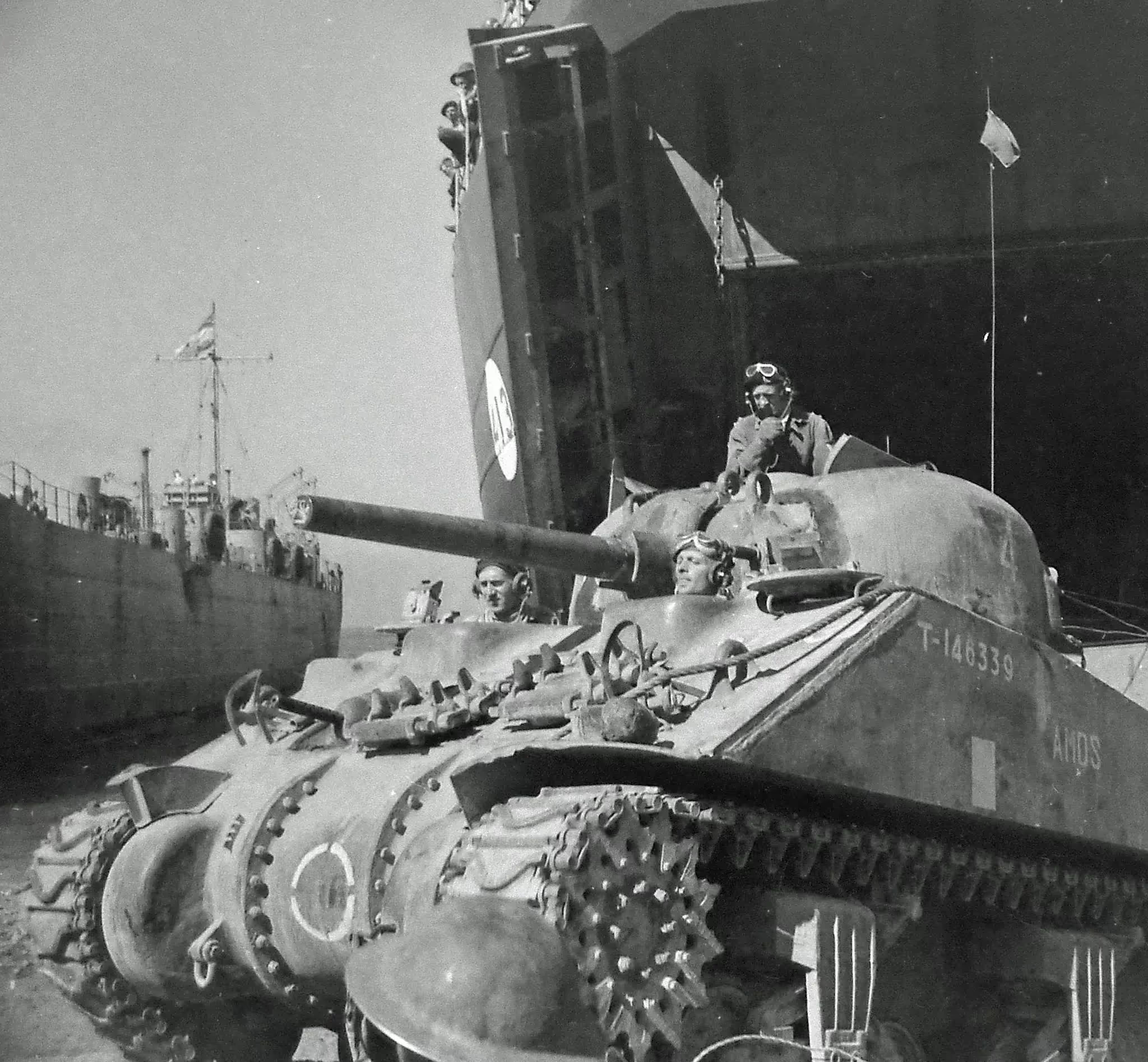
(Library and Archives Canada Photo, PA-171703)
The quartered’ circle on this Sherman tank leaving a Landingshiptank (LST), was an Allied ID device during operations in Sicily and Italy.
(Library and Archives Canada Photo, MIKAN No. 3260951)
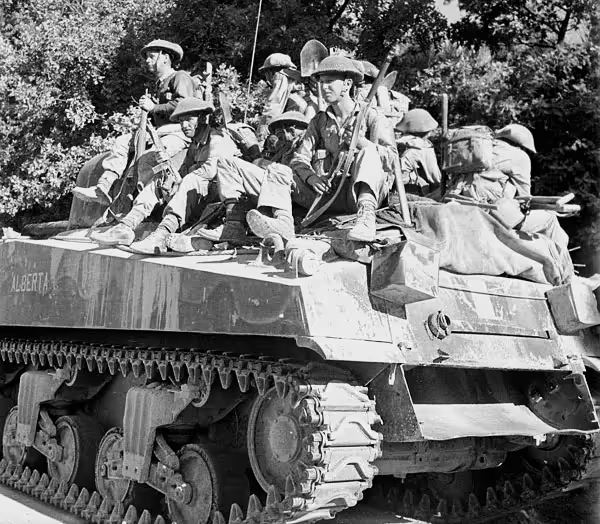
Infantrymen of the West Nova Scotia Regiment riding on a Sherman V tank of the Calgary Regiment during the advance from Villapiano to Potenza, Italy, 18 September 1943.
(Library and Archives Canada Photo, MIKAN No. 3191584)
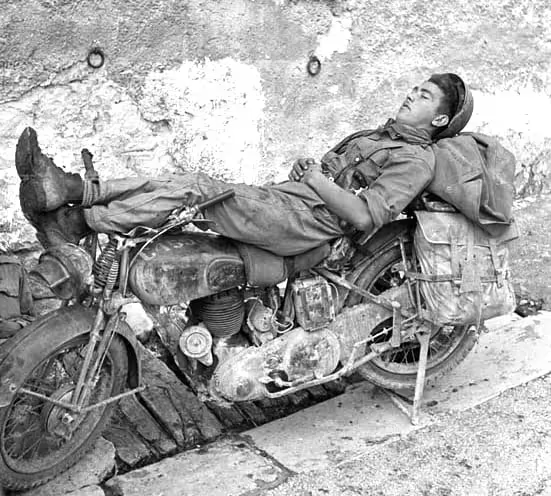
Trooper Albert Andre Coulombe H/100590 (aged 20) from Benard, Manitoba, of the 14th Armoured Regiment (The Calgary Regiment), resting on his Norton 16H motorcycle in Volturara, Italy, 3 Oct 1943. Sadly, he was killed at Monte Cassino, 12 May 1944 and lies at the Cassino War Cemetery, Cassion in the Province of Frosinone, 139 kms from Rome.
(IWM Photo, NA6209)
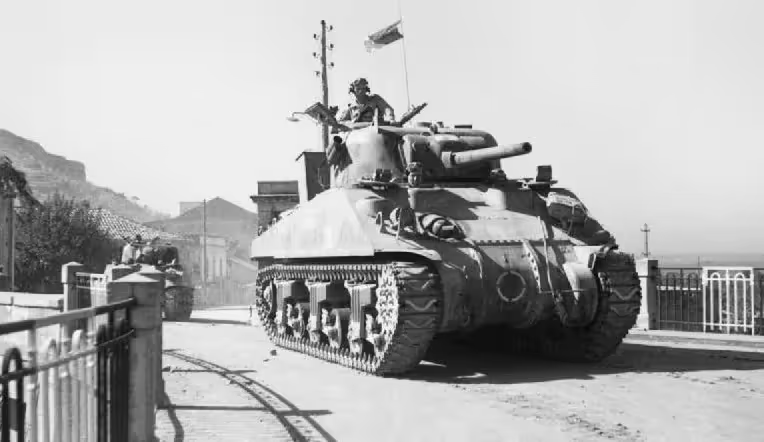
14th Canadian Tank Regiment (Calgary Regt), 1943, at Reggio, during Operation Baytown, 3 September 1943.
Again, opposition came mostly in the form of Italian soldiers surrendering by the hundreds. On 8 September, the Italian government itself surrendered to the Allies. In the surrender’s wake, German troops raced to intercept the Allied advance. Southern Italy’s rugged country was ideally suited for defence. It took the Canadians two weeks in October to advance just 40 kilometres from Lucera to Campobasso. This stubborn fighting withdrawal by the Germans bought them time to create a fortified system of defensive lines well south of Rome. Dubbed the Gustav Line, the system hinged on the high point of Monte Cassino in the west and the Sangro River in the east. On 28 November, British troops assaulted the Sangro River. After nearly a week of heavy fighting, the Germans pulled back from this river to a new line behind the Moro River.
Assault on The Gully
(Library and Archives Canada Photo, MIKAN No. 3228756)
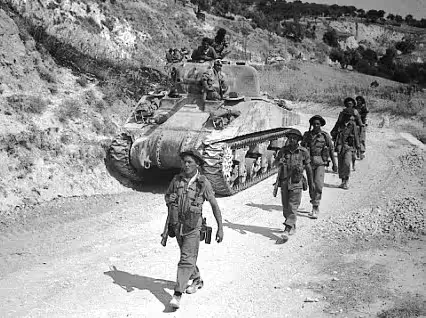
Personnel of Princess Patricia’s Canadian Light Infantry advancing past a Sherman V tank, 19 July 1943.
Winter rains had turned the landscape into a quagmire. On 6 December, Canadians assaulted the Moro River defences. Only the Princess Patricia’s Canadian Light Infantry made headway, capturing Villa Rogatti before ordered to withdraw. A firm bridgehead was finally established across the Moro on 9 December, but further advance was blocked by a deep, narrow pass nicknamed The Gully.
(Library and Archives Canada Photo, MIKAN No. 3224761)
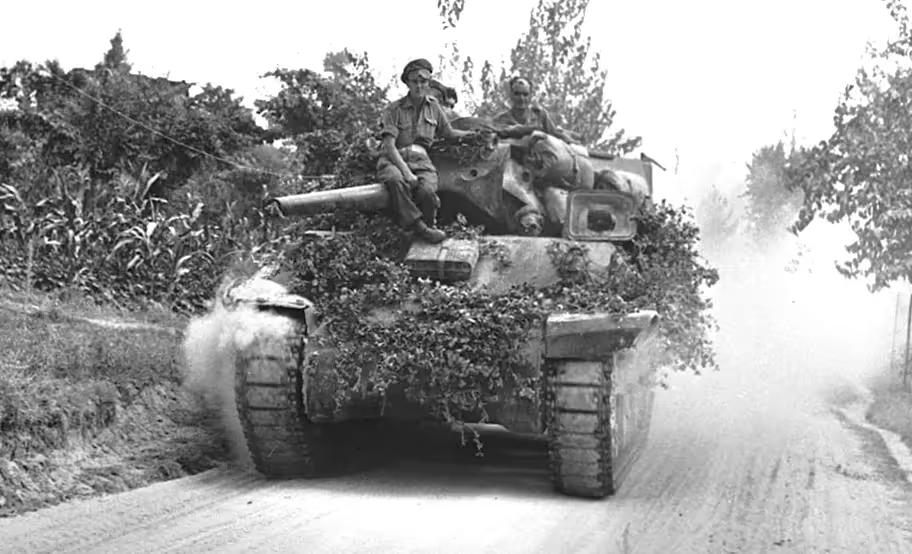
M10 (3-inch Gun) Tank Destroyer (American made), in Commonwealth service, pursuing units of the Herman Goering Panzer Division, Italy, 18 July 1944.
(Library and Archives Canada Photo, MIKAN No. 3574989)
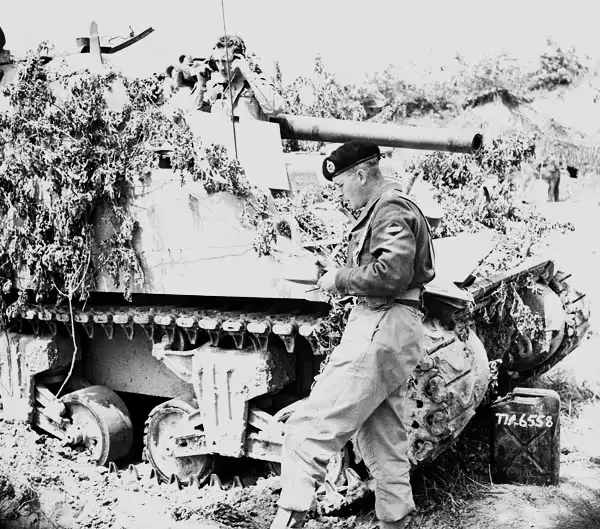
A Sherman V tank of the Ontario Regiment during the advance towards Rome, Italy, 12 May 1944.
(Library and Archives Canada Photo, MIKAN No. 3405747)
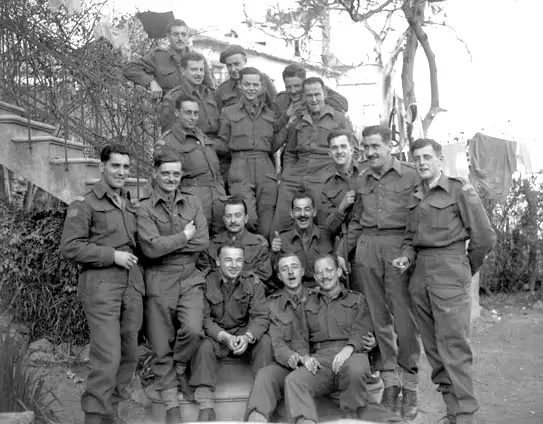
Officers of the Royal 22e Régiment, Major Paul Triquet, VC, 2nd from the left, San Leonardo di Ortona, Italy, 26 January 1944.
(Library and Archives Canada Photo, MIKAN No. 3521115)
Company Sergeant-Major Irene Roy distributing rum ration to infantrymen of the Royal 22e Régiment, who are in weapon pits along the main road between Gildone and Campobasso, Italy, October 1943. The personnel in this photo are (L-R): Privates A. Levesque and Walter Hebert, Company Sergeant-Major Irene Roy and Private John Parent. The photographer was Alexander Mackenzie Stirton.
(Library and Archives Canada Photo, MIKAN No. 3521114)
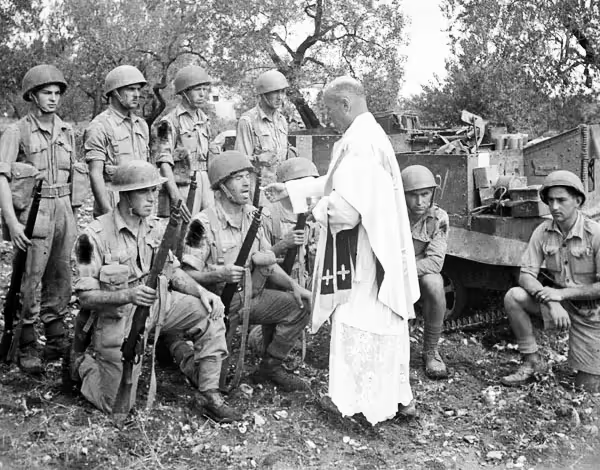
Infantrymen of the Royal 22e Régiment receiving Holy Communion from the unit’s chaplain, H/Major Leo Gratton, before going on a reconnaissance patrol, Italy, October 1943.
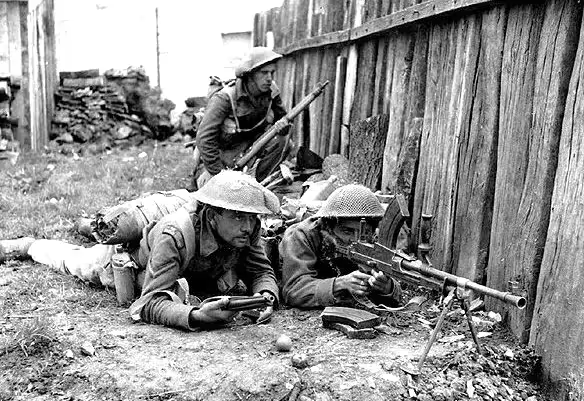
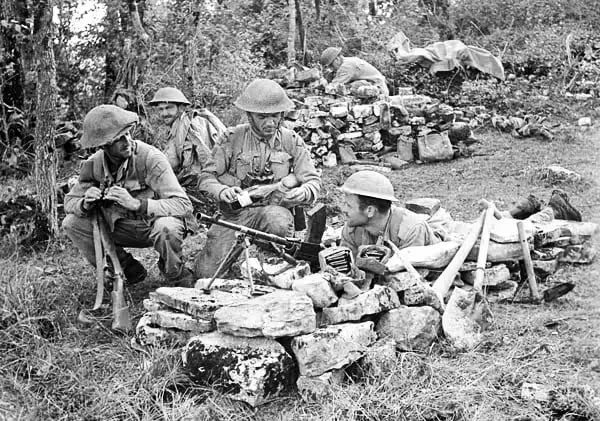
Lance-Corporal George Netherwood (left) and Private W.L. Soderberg (right) with Bren guns, Private Earl Israel (rear), December 1943, Ortona, Italy.
Repeated frontal assaults by multiple battalions were cut to pieces. Then on the night of 14-15 December, the Royal 22e Regiment outflanked The Gully. Eighty-one men of Captain Paul Triquet’s ‘C’ Company and seven Ontario Regiment tanks headed for a farmhouse called Casa Berardi. When the company’s dwindling ranks wavered, Triquet shouted, “The safest place for us is the objective.” At 2:30 p.m., Casa Berardi was taken. Triquet became the first Canadian in Italy to win a Victoria Cross for valour. After four more days of fighting to gain a vital crossroads, the Germans withdrew from The Gully into the town of Ortona.
(Library and Archives Canada Photo, MIKAN No. 3203790)
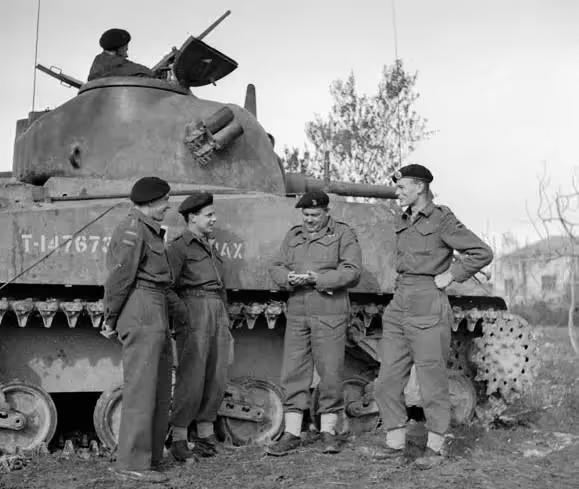
Sherman V tank “Ajax“, 5 Troop, Ontario Regiment. 2nd from the right is Brigadier Bob Wyman, OC 1 CAB. Lanciano, Italy, 8 Feb 1944.
Captain Triquet, ignoring the heavy fire, was everywhere encouraging his men and directing the defence and by using whatever weapons were to hand personally accounted for several of the enemy. This and subsequent attacks were beaten off with heavy losses and Captain Triquet and his small force held out against overwhelming odds until the remainder of the battalion took Casa Berardi and relieved them the next day.
(Excerpt from the Victoria Cross citation for Captain Paul Triquet, London Gazette, No. 36408, 6 March 1944)
Ortona
(Library and Archives Canada Photo, MIKAN No. 3207117)
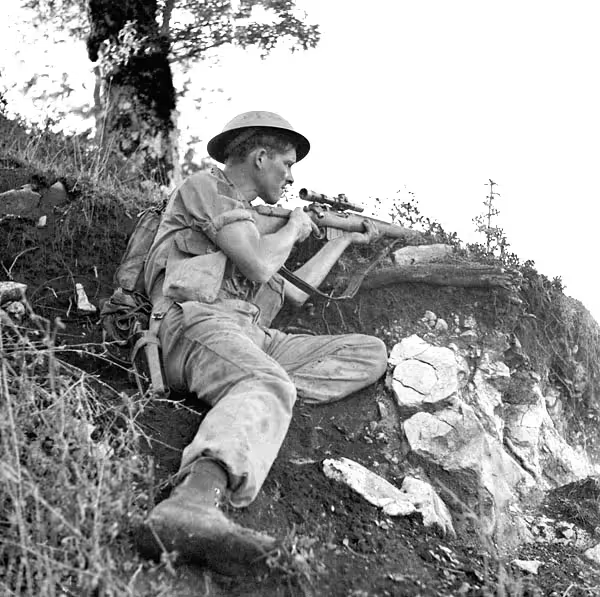
Private J.E. McPhee of The Seaforth Highlanders of Canada, who is armed with a sniper rifle, under German mortar fire, Foiano, Italy, 6 October 1943.
(Library and Archives Canada Photo, MIKAN No. 3200382)
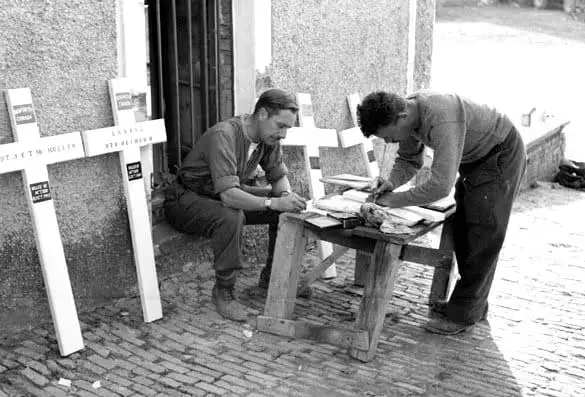
Corporal W.F. Blackwood and Private R.J. Barnes, both of the Pioneer Platoon, The Seaforth Highlanders of Canada, preparing grave crosses for casualties, Baranello, Italy, 19 October 1943.
(Library and Archives Canada Photo, MIKAN No. 3723835)
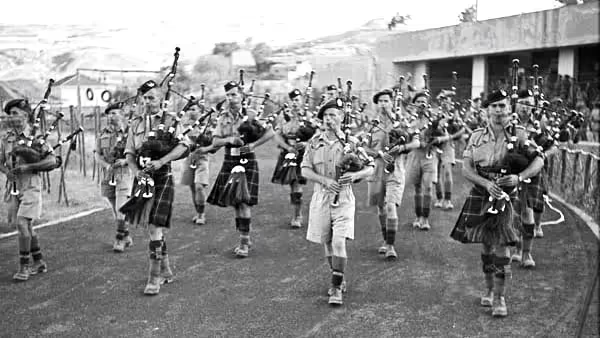
The Seaforth Highlanders of Canada in kilts, and the 48th Highlanders, in a groupo of six pipe bands playing at a sports day in Potenza, Italy, 29 September 1943.
(DND Photo)
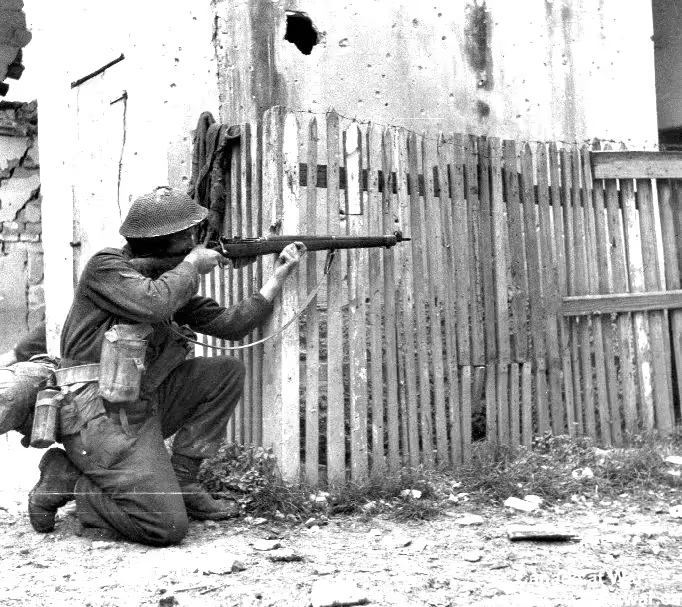
A Canadian soldier takes aim from behind a fence during the Battle of Ortona, December 1943.
(DND Photo)
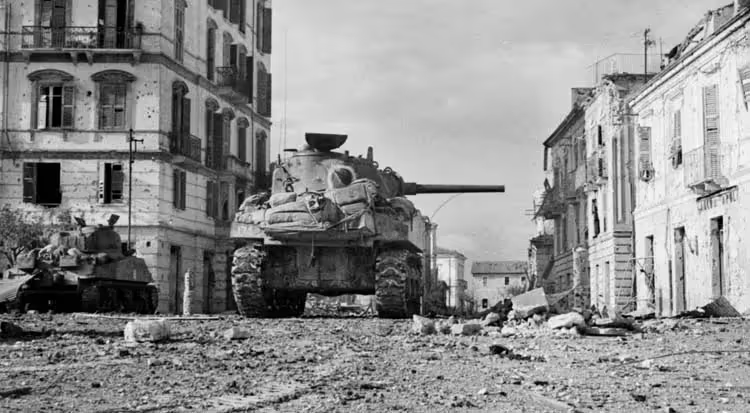
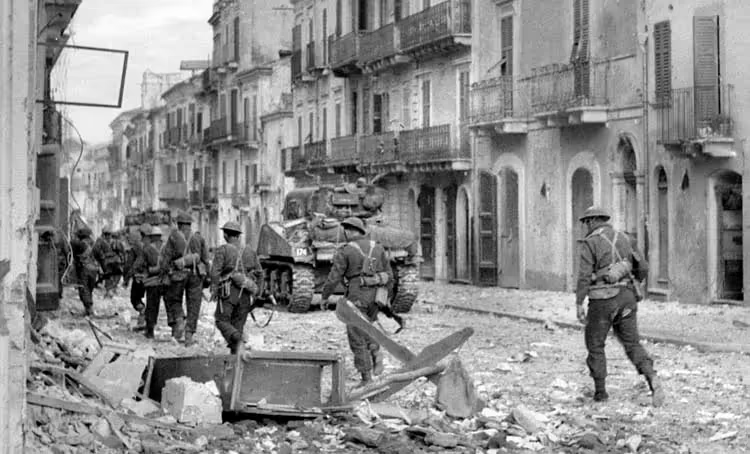
Wary of German snipers and antitank teams, a pair of tanks belonging to the Canadian Three Rivers Regiment advances into Ortona on 22 December 1943. Six days later, the Germans had withdrawn from the town despite an order from Hitler to stand fast.
(DND Photo)
Tanks of the Three Rivers Regiment are supported by infantry of the Loyal Edmonton Regiment trudging through the rubble-strewn streets of Ortona, Dec 1943.
(Library and Archives Canada Photo, MIKAN No. 3260960)
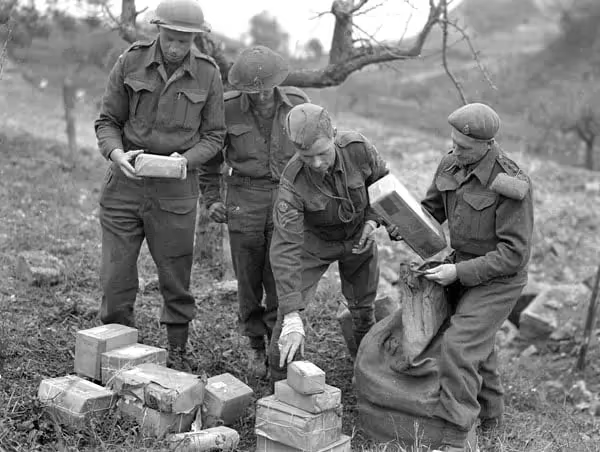
Sorting of mail for personnel of the Loyal Edmonton Regiment near Ortona, Italy, 21 December 1943. The Staff Sergeant reach for a package has both hands in bandages.
(Library and Archives Canada Photo, MIKAN No. 3724222)
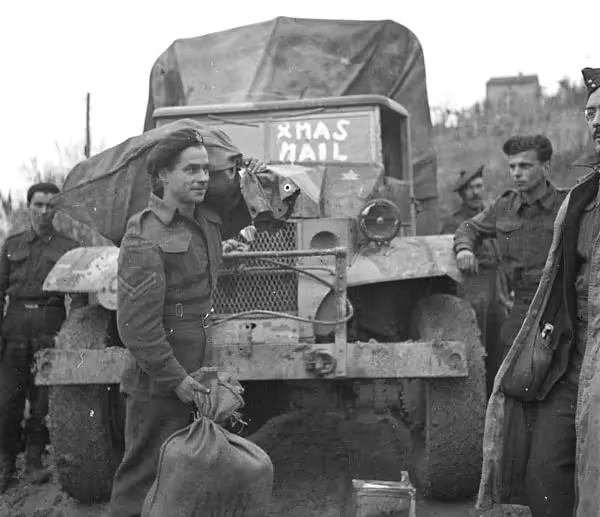
Mail being delivered by C60L truck on Christmas day, Italy, 1944.
(Library and Archives Canada Photo, MIKAN No. 3592285)
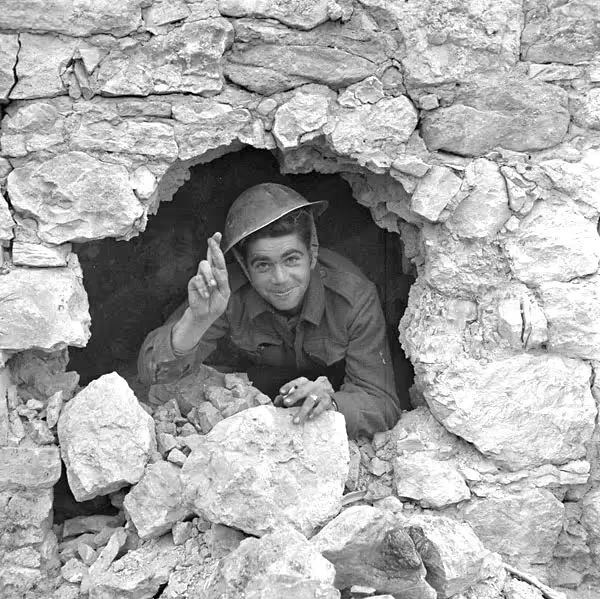
Private J.A. Robb of The Loyal Edmonton Regiment looking through a shell hole in the foundation of a building, Colle d’Anchise, Italy, 27 October 1943.
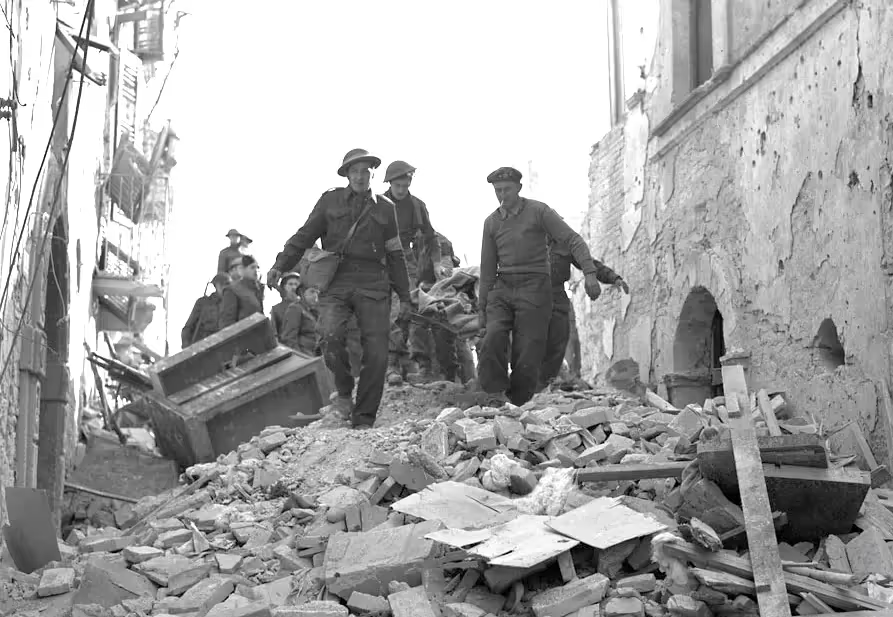
On 20 December, the Loyal Edmonton Regiment and the Seaforth Highlanders of Canada, supported by tanks from the Three Rivers Regiment, became embroiled in vicious house-to-house fighting in Ortona with the German 1st Parachute Division. Finding that advancing along the streets was impossible, the Canadians blasted their way through the interlinked walls of the town’s buildings — a technique called mouse holing. There was no pause in the fighting for Christmas Day, but the Seaforth’s quartermaster and headquarters staff organized asumptuous dinner. One by one, Seaforth companies withdrew to a church on Ortona’s outskirts, were served dinner, and then returned to battle. The Edmontons and most tankers had no such reprieve.
(Library and Archives Canada Photo, MIKAN No. 4113916)
Rescuing L. Cpl. Roy Boyd, Loyal Edmonton Regiment, Ortona, Italy, 30 December 1943.
Not until the night of 28 December did the Battle of Ortona end with a German withdrawal. The December fighting cost 2,605 Canadian casualties, including 502 killed. There were also 3,956 evacuations for battle exhaustion and 1,617 for sickness, out of a total Canadian strength at the beginning of December of about 20,000. The 1st Canadian Infantry Division, however, had mauled two German divisions and achieved its objective.
Battle of Ortona
The New Year found an expanded Canadian force facing the Germans across the Arielli River, just north of Ortona. In early November, I Canadian Corps was formed by the addition of the 5th Canadian Armoured Division to Italy. Its baptism of fire, however, came on 17 January 1944 with an attempt to cross the Arielli that was repulsed at a cost of 185 casualties.

The formation sign used to identify vehicles associated with I Canadian Corps-level units.
I Canadian Corps (April 1942 to November 1943; February 1945 to July 1945)
(Library and Archives Canada Photo, MIKAN No. 3397086)
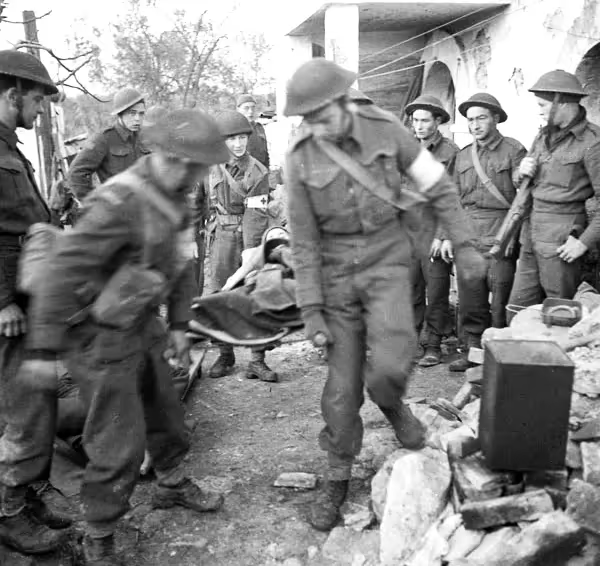
Stretcher bearers evacuating casualties from “A” Company Headquarters, Princess Patricia’s Canadian Light Infantry (PPCLI) north of Ortona, Italy, 20 January 1944.
All comments are subject to our Comment Policy. You must be at least 18 years old to comment.
See a comment that violates our guidelines? Report it here.