
Canadair F-86E Sabres flown by Nos. 416, 421, and 422 Squadrons
No. 416 Squadron RCAF
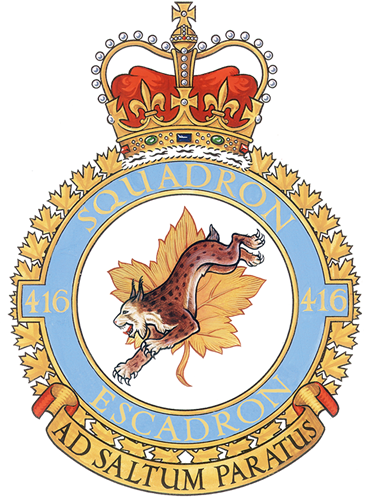
No. 416 Squadron RCAF was formed at RAF Peterhead, Aberdeenshire, Scotland in 1941 as a fighter squadron for service during the Second World War and was based at various RAF stations in Scotland, England and continental Europe. The squadron was disbanded in March 1946.
No. 416 Squadron was reformed at RCAF Station Uplands in Ottawa, Ontario, on 8 Jan 1951, initially flying Mustang Mk. IVs and then Sabres. It was deployed to 2 (Fighter ) Wing at RCAF Station Grostenquin, France, for operations in Europe as part of Canada’s Cold War presence. the squadron flew Sabre Mk. 2s from Mar 1952 to Mar 1954, Sabre Mk. 5s from Mar 1954 to May 1955, and Sabre Mk. 6s from Apr 1955 to Jan 1957.
By 1957, the squadron was deactivated on 31 Jan 1957 and reactivated as an All Weather (Fighter) squadron at RCAF Station St. Hubert flying the Avro CF-100 Canuck. This unit was deactivated on 1 Sep 1961 and subsequently moved to RCAF Station Chatham, New Brunswick in Nov 1951. Reactivated on 1 Jan 1962, the squadron’s CF-100s were replaced with the McDonnell CF-101 Voodoo, flying the interceptor until the end of 1984. 416 Squadron thus became the world’s last front-line unit flying Voodoos.
In 1988 the squadron relocated to CFB Cold Lake, Alberta as a Tactical Fighter Squadron flying McDonnell CF-188 Hornet fighters and later merged with 441 Tactical Fighter Squadron to reform 409 Tactical Fighter Squadron in 2006. The squadron’s nickname was City of Oshawa, Lynx.
(DND Photo)
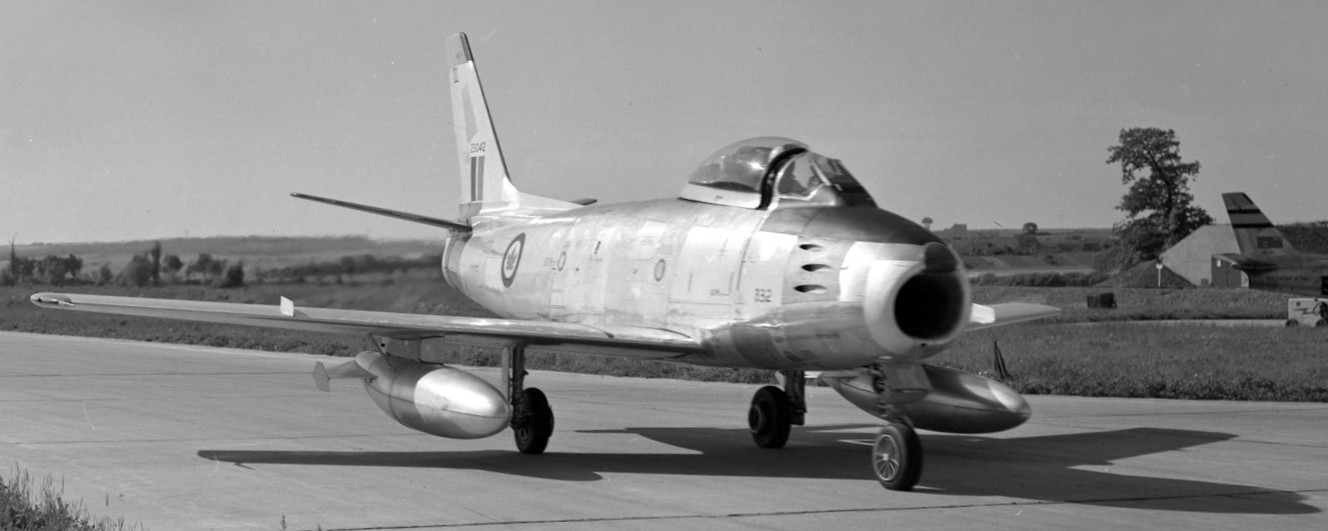
Canadair F-86E Sabre Mk. 5, RCAF (Serial No. 23042), No. 416 Squadron, taxis in to dispersal after landing at No. 2 (F) Wing, RCAF Station Grostenquin, France, after completing the long Trans-Atlantic flight from Canada.
(RCAF Photo)
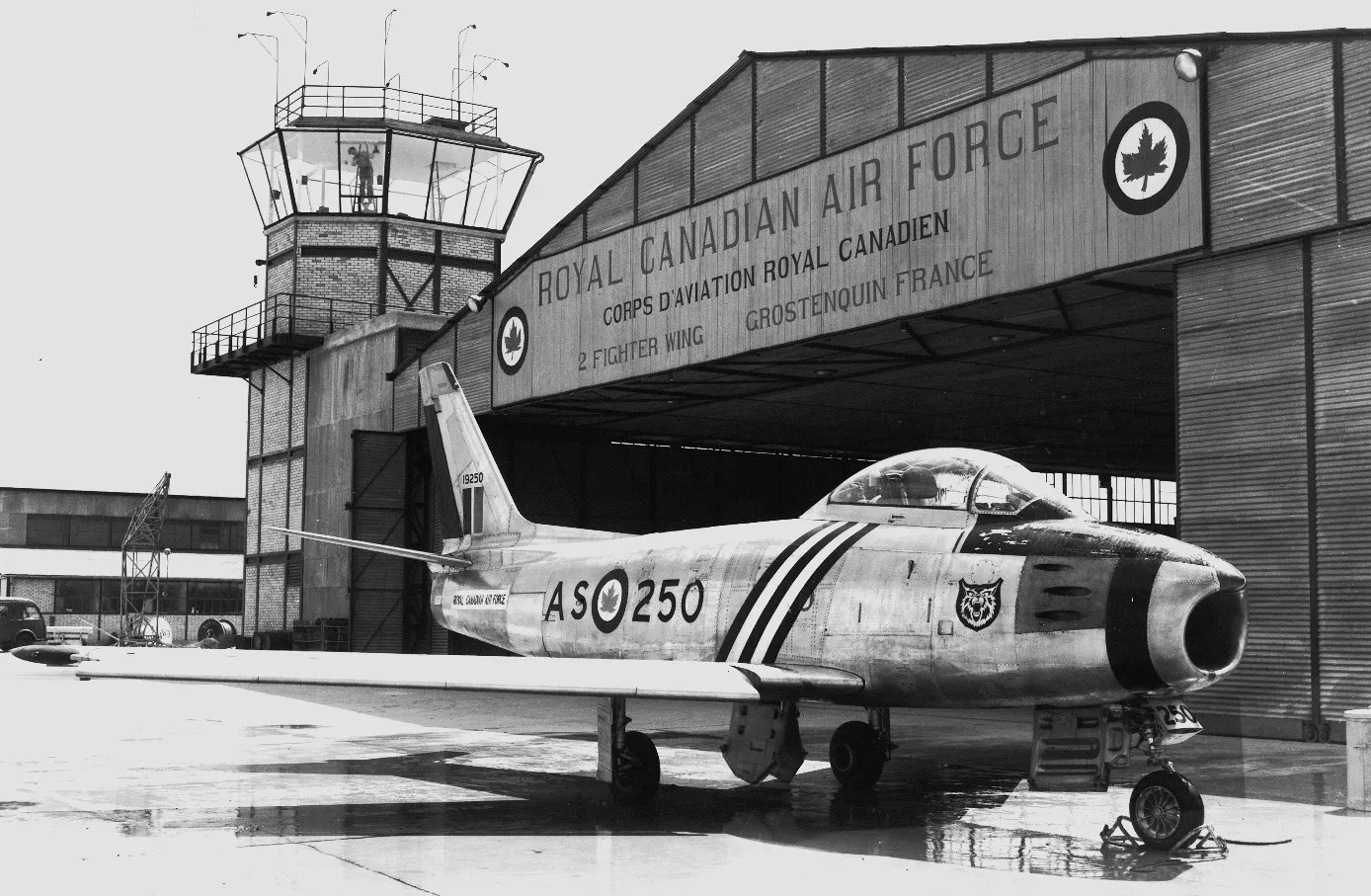
Canadair F-86 Sabre Mk. 5, RCAF (Serial No. 19250), No. 416 Squadron, coded AS, at No. 2 (F) Wing, RCAF Station Grostenquin, France, 1953.
(CFJIC DND Photo via Don Smith)
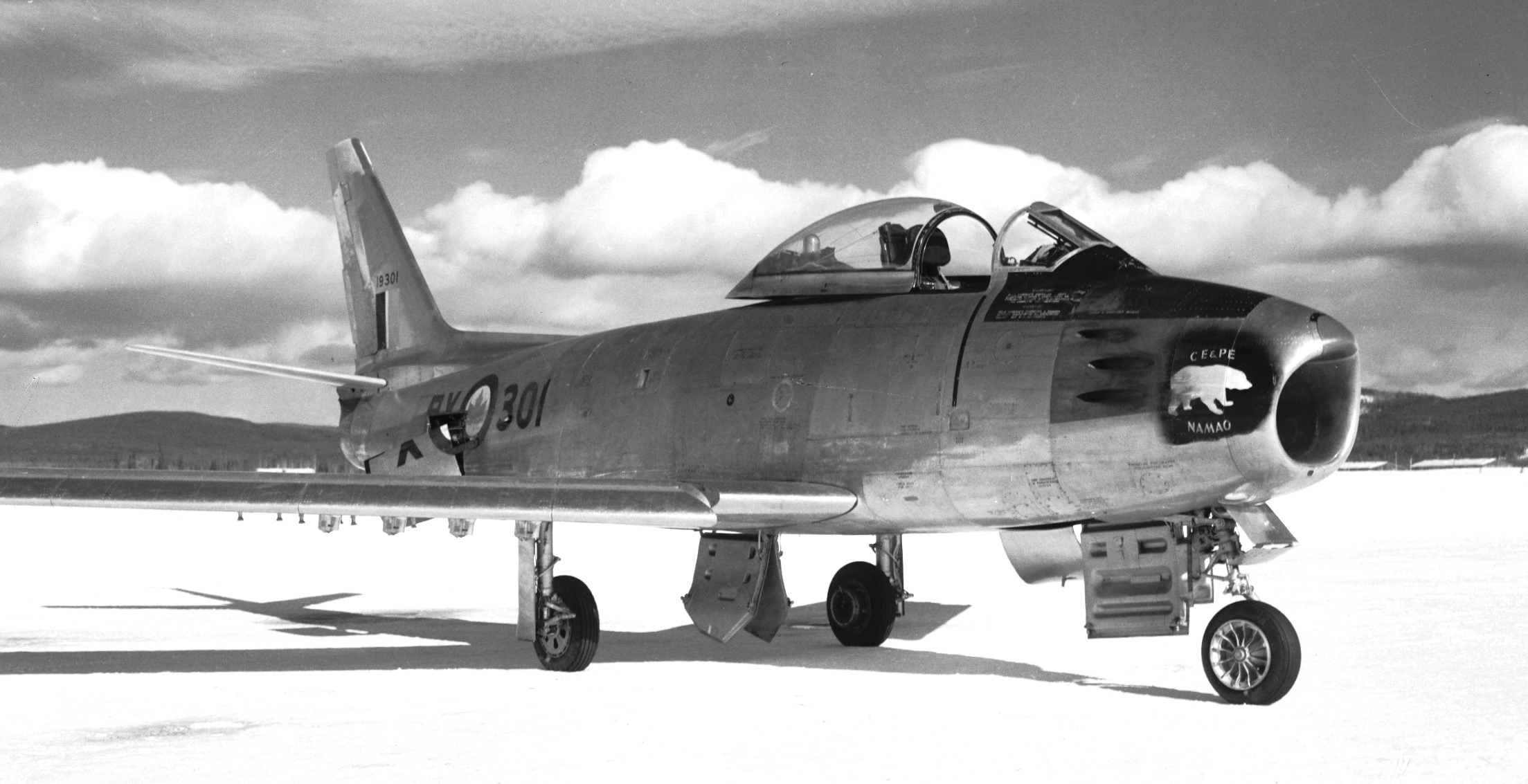
Canadair F-86 Sabre Mk. 5, RCAF (Serial No. 19301), AETE, coded PX, “Polar Bear” nose art, undergoing cold weather testing and evaluation connected to AETE at RCAF Station Cold Lake, Alberta.
(RCAF Photo)
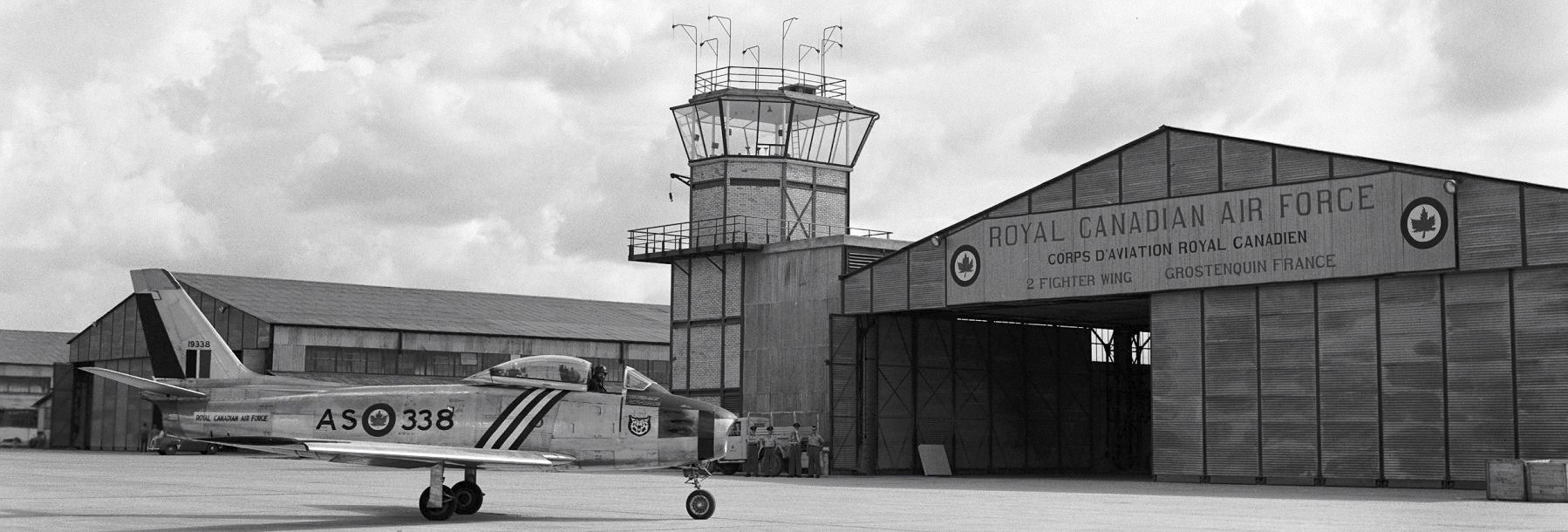
Canadair F-86 Sabre Mk. 2, RCAF (Serial No. 19338), 2 (F) Wing, No. 416 Squadron, coded AS, at No. 2 (F) Wing, RCAF Station Grostenquin, France, 1953.
(DND Photo via James Craik)
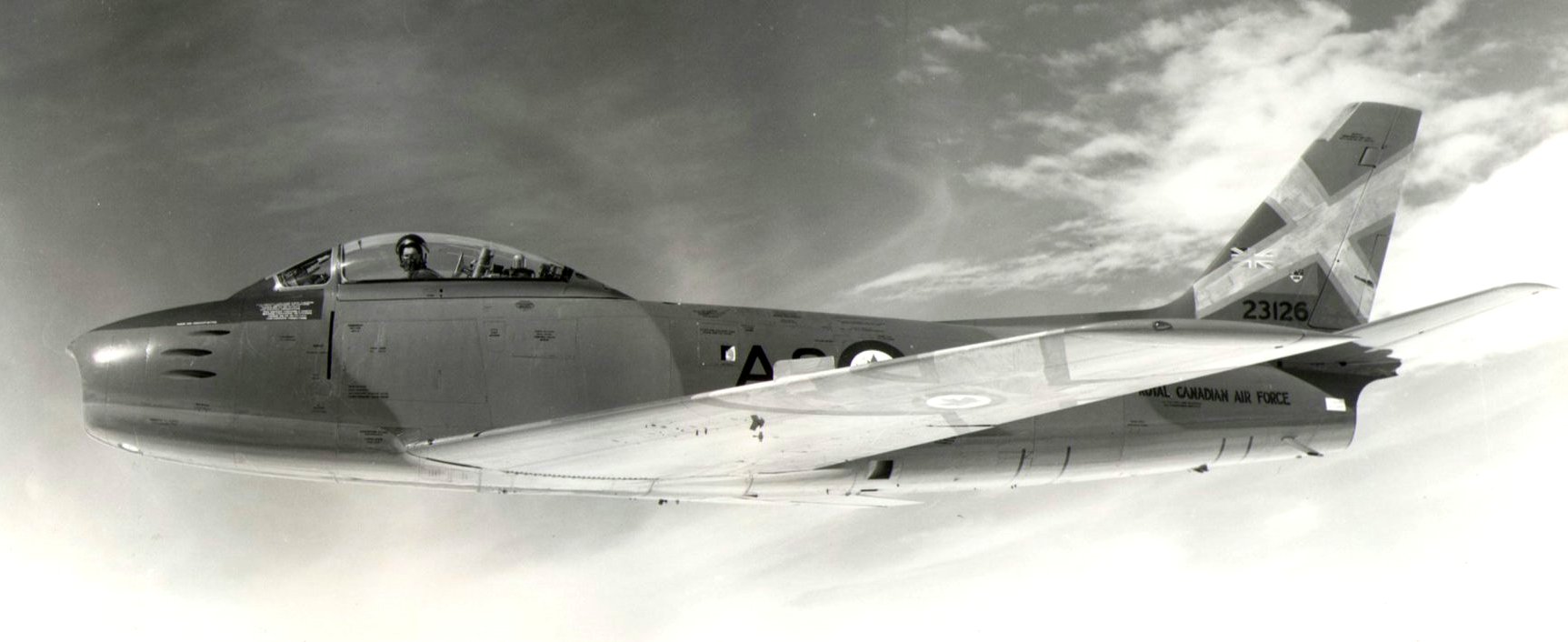
Canadair F-86 Sabre Mk. 5 (Serial No. 231256, No. 416 Squadron, coded AS, Exercise Carte Blanche, June 1955.
(DND Photo via James Craik)
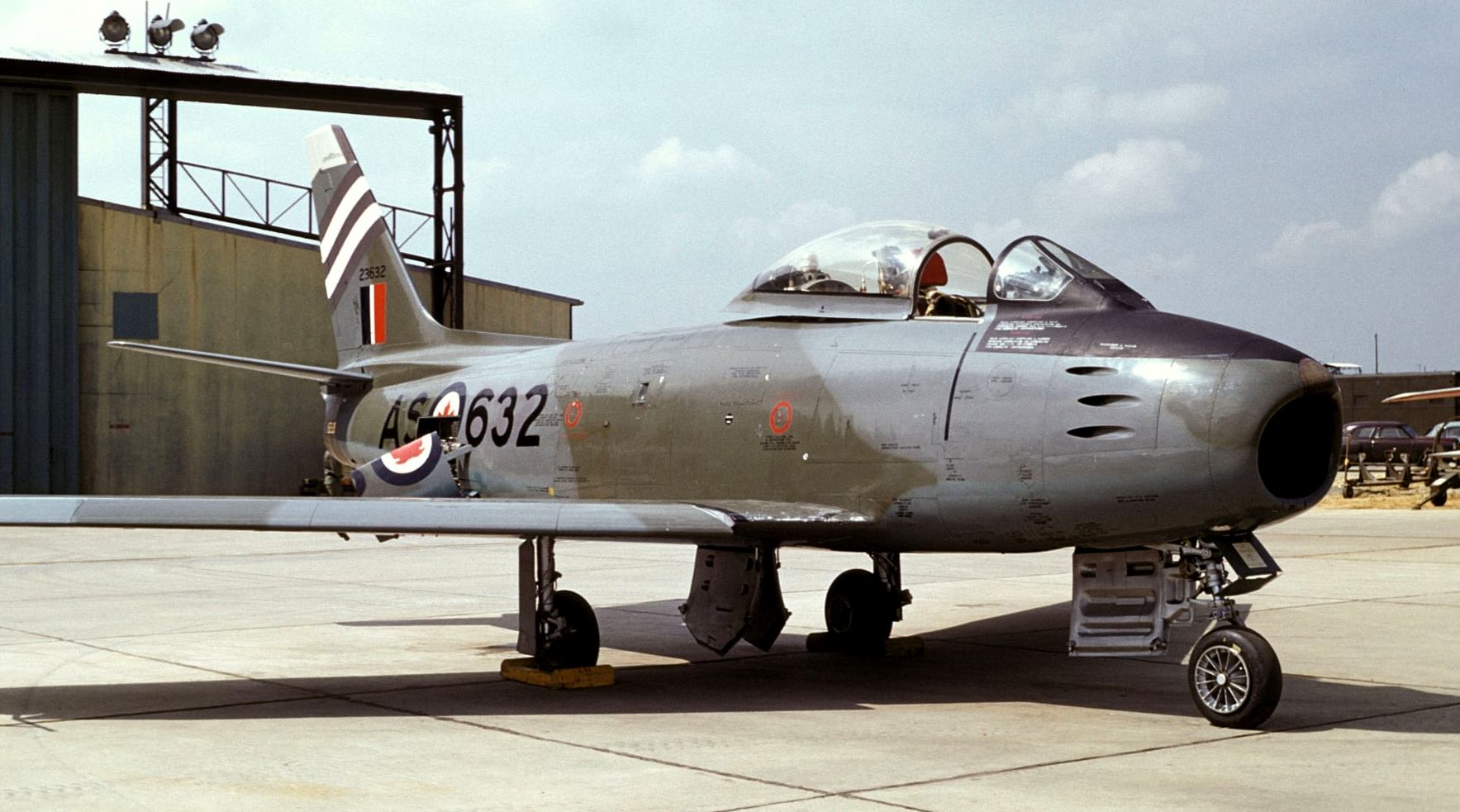
Canadair F-86 Sabre Mk. 6 (Serial No. 23632), No. 416 Squadron, coded AS.
No. 421 Squadron RCAF
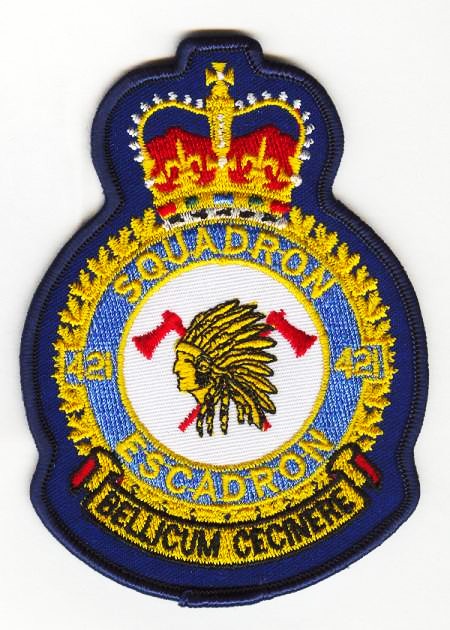
Formed at Digby, Lincolnshire in England on 9 Apr 1942, No. 421 Squadron was the last RCAF fighter squadron to be formed in the UK during the Second World War. Initially equipped with Supermarine Spitfire Mk. VA, the squadron moved to RAF Fairwood Common in May and received the Spitfire Mk. VB. The squadron’s motto was Bellicum cecinere (“They have sounded the war trumpet”). Its badge was, in front of two tomahawks in saltire, a Red Indian warrior. During 1942 the squadron was under 10 Group and flew its missions from RAF Warmwell, RAF Bolt Head, RAF Ibsley, RAF Zeals and RAF Charmy Down. In January 1943 the squadron joined No. 127 (Canadian) Wing and moved to Redhill Aerodrome airfield. Late in the spring of 1943 the squadron received the Spitfire Mk. IX and flew under the command of Wing Commander Johnnie Johnson.
In preparation for the Normandy landings, No. 127 Wing was assigned to RAF Second Tactical Air Force. On 16 June 1944, the squadron, along with the other squadrons of No. 127 Wing, was the first to be moved to Normandy and flew air superiority missions. After the allied breakout and quick advance towards the Reich, No. 421 Squadron was based in Evere, Belgium by October 1944. During December 1944 the squadron received the Spitfire Mk. XIV. In 1945 the unit participated in the liberation of the Netherlands, before moving into Germany. At the end of the war the unit had achieved over 90 aerial victories. The squadron was disbanded at Utersen, Germany on 10 Jul 1945.
No. 421 Squadron was reactivated as a Fighter unit at RCAF Station Chatham, New Brunswick on 15 Sep 1949. The squadron initially flew de Havilland Vampire fighters from bases in the UK for operational training with the RAF. In Dec 1951 the squadron was re-equipped with Sabres and joined No. 2 (Fighter) Wing at RCAF Station Grostenquin, France.
The squadron flew Sabre Mk. 5s from Mar 1954 to Jun 1956, and Sabre Mk. 6s from Jun 1956 to Jul 1963.
The squadron was deactivated on 1 Aug 1963 and was reactivated as a Strike Attack squadron on 21 Dec 1963. When 2 Wing was disbanded in Feb 1964, the squadron moved to 4 Wing at Baden-Soelligen, Germany. The |Squadron was equipped with Canadair CF-104 Starfighters and in 1967 the squadron moved to Zweibrücken, West Germany, becoming part of 1 Air Division RCAF (later renamed 1 Canadian Air Group) based at CFB Baden-Soellingen, West Germany. During the early 1980s it was equipped with McDonnell CF-188 Hornets. At the end of the Cold War, the squadron was disbanded and its aircraft and personnel returned to Canada.
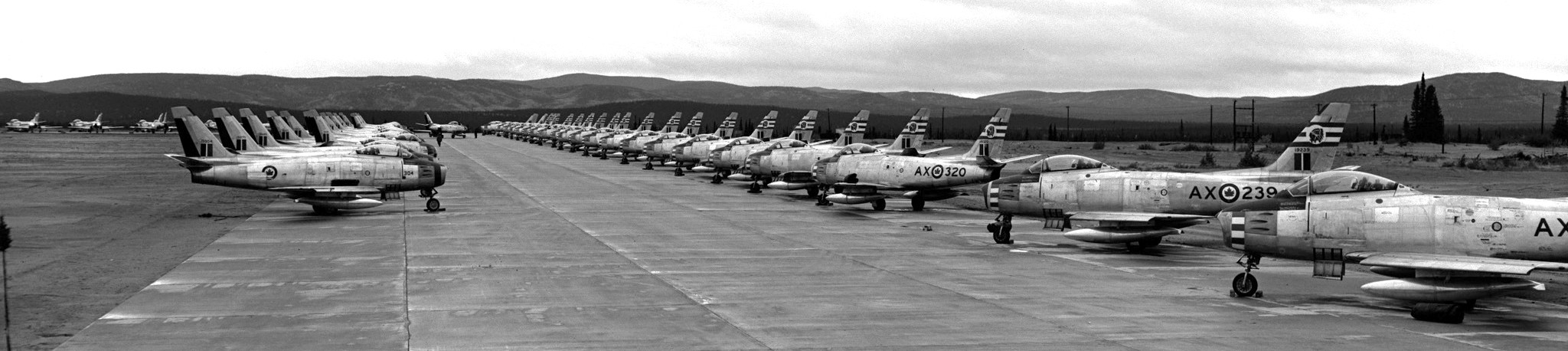
(RCAF Photo)
Sabres from No. 421 ‘Red Indian’ (F) Squadron on the right. The Sabres on the left should be from No. 416 ‘Black Lynx’ (F) Squadron. They are taking part in Operation Leap Frog II, which took place between 16 September and 10 October, 1952. The other squadron crossing over at the same time was No. 430 ‘Silver Falcon’ (F) Squadron.
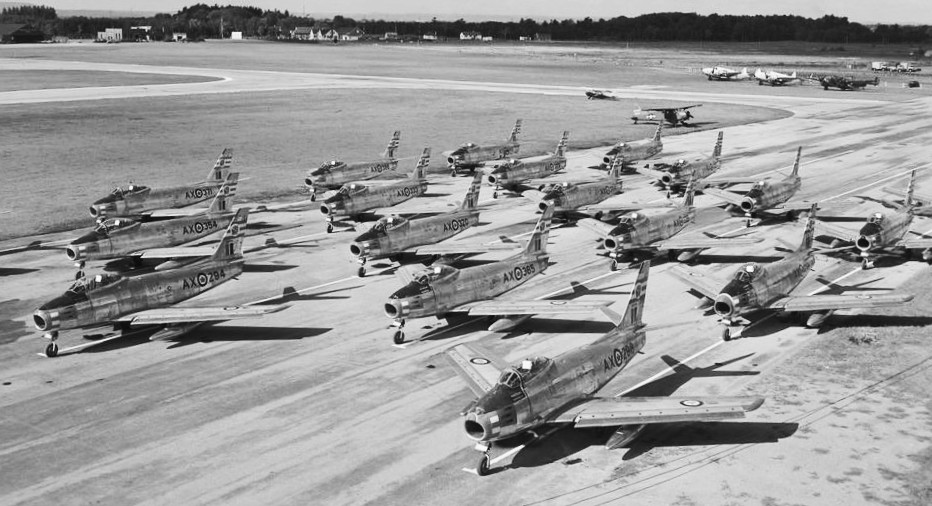
(RCAF Photo)
No. 421 Squadron Sabres just prior to their deployment to Europe.
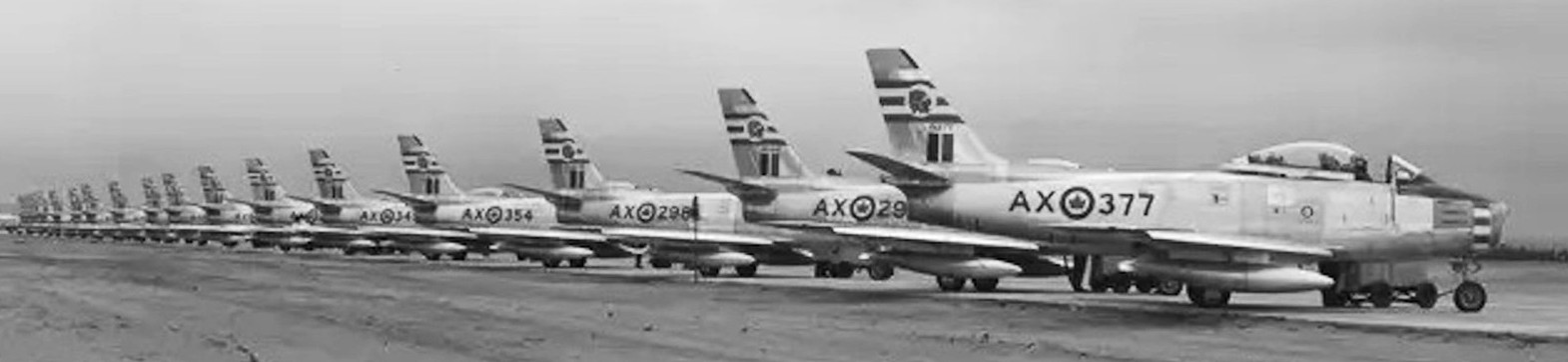
(DND Photo via James Craik)
Canadair F-86E Sabre Mk. 2 (Serial No. 19377), No. 421 Squadron, 2 (F) Wing.
(DND Photo via James Craik)
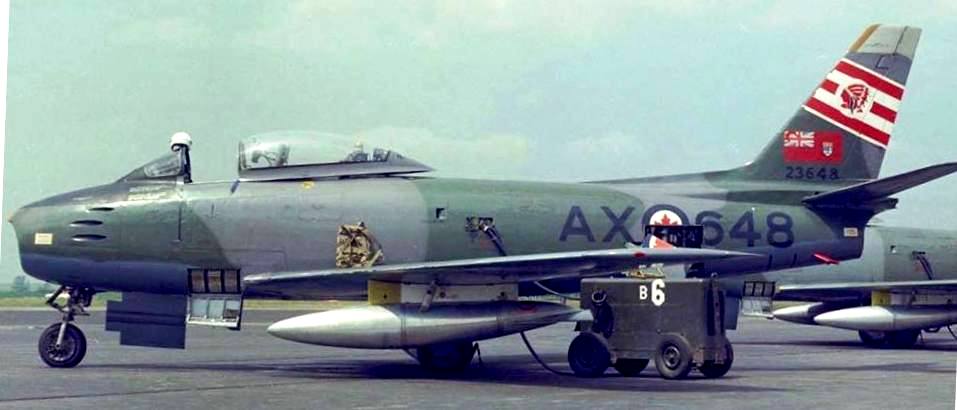
Canadair F-86 Sabre Mk. 6 (Serial No. 23648), 421 Squadron, coded AX.
(DND Photo via James Crail)
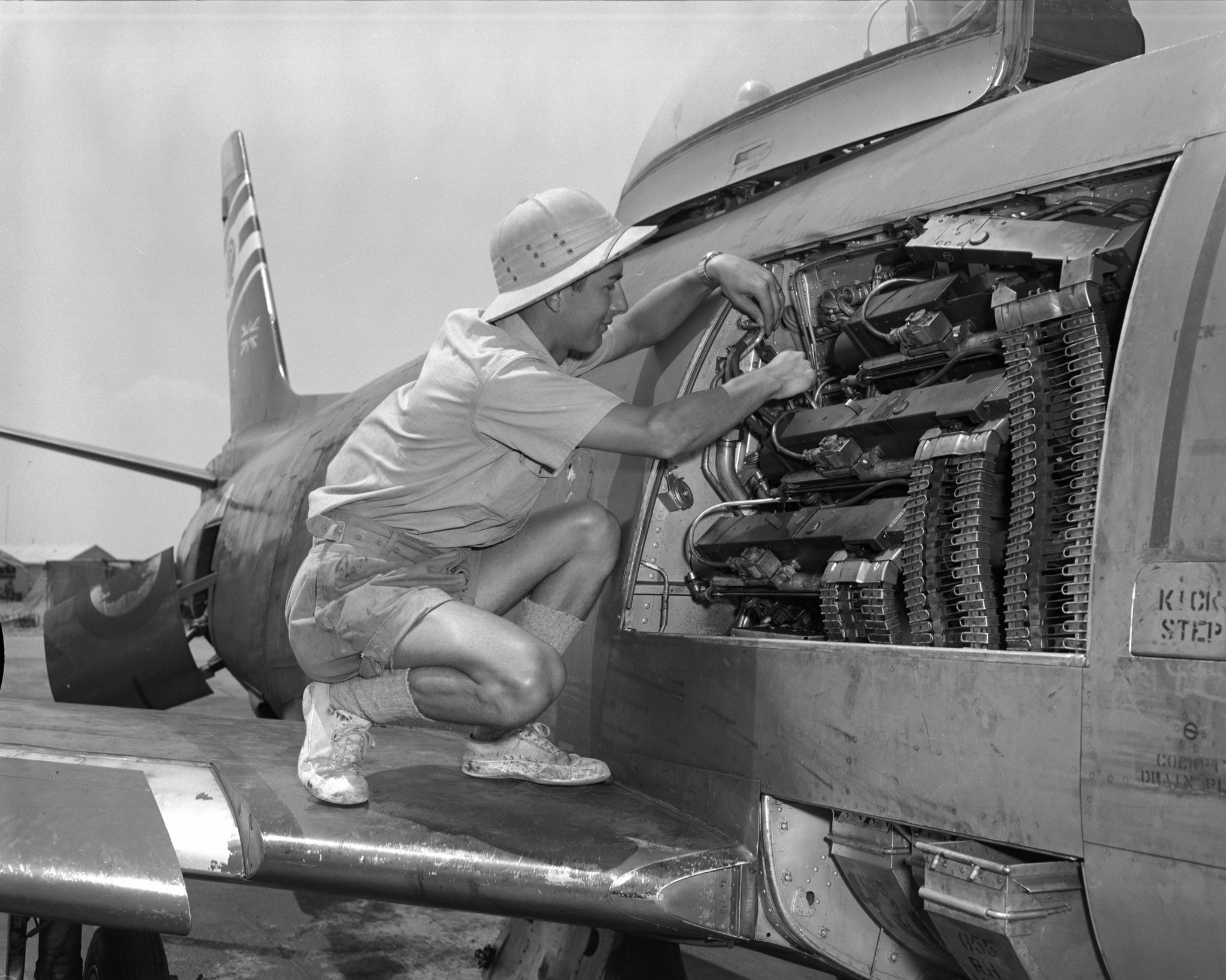
Canadair F-86 Sabre, No. 421 Squadron, coded AX, view of armament panel, RCAF Air Weapons Unit, Decimomannu, Sardinia.
No. 422 Squadron RCAF
No. 422 General Reconnaissance Squadron was initially formed at RAF Castle Archdale near Lough Erne, Northern Ireland, on 2 April 1942. It was a flying-boat squadron, flying Consolidated PBY Catalinas and Short Sunderlands to patrol the North Atlantic for German U-boats. They were redesignated as a Transport Squadron in June 1945, and disbanded on 3 Sep 1945.
The squadron was reformed at RCAF Station Uplands, near Ottawa on 1 Jan 1953 as No. 422 Fighter Squadron. The squadron went to 4 (Fighter) Wing based at RCAF Station Baden-Soellingen, Germany, in August 1953. The squadron flew Sabre Mk. 2s from Jan to May 1953, Sabre Mk. 4s from Apr 1953 to Dec 1954, Sabre Mk. 5s from Jan to Sep 1955, and Sabre Mk. 6s from Sep 1955 to Apr 1963.
The Squadron was deactivated on 15 Apr 1963 and reactivated as a Strike Attack unit on 15 July 1963. It was based at 4 (F) Wing until its deactivation in July 1970.
The squadron was reactivated as 422 Tactical Helicopter Squadron in January 1977, and remained a helicopter squadron until it was disbanded again in August 1980.
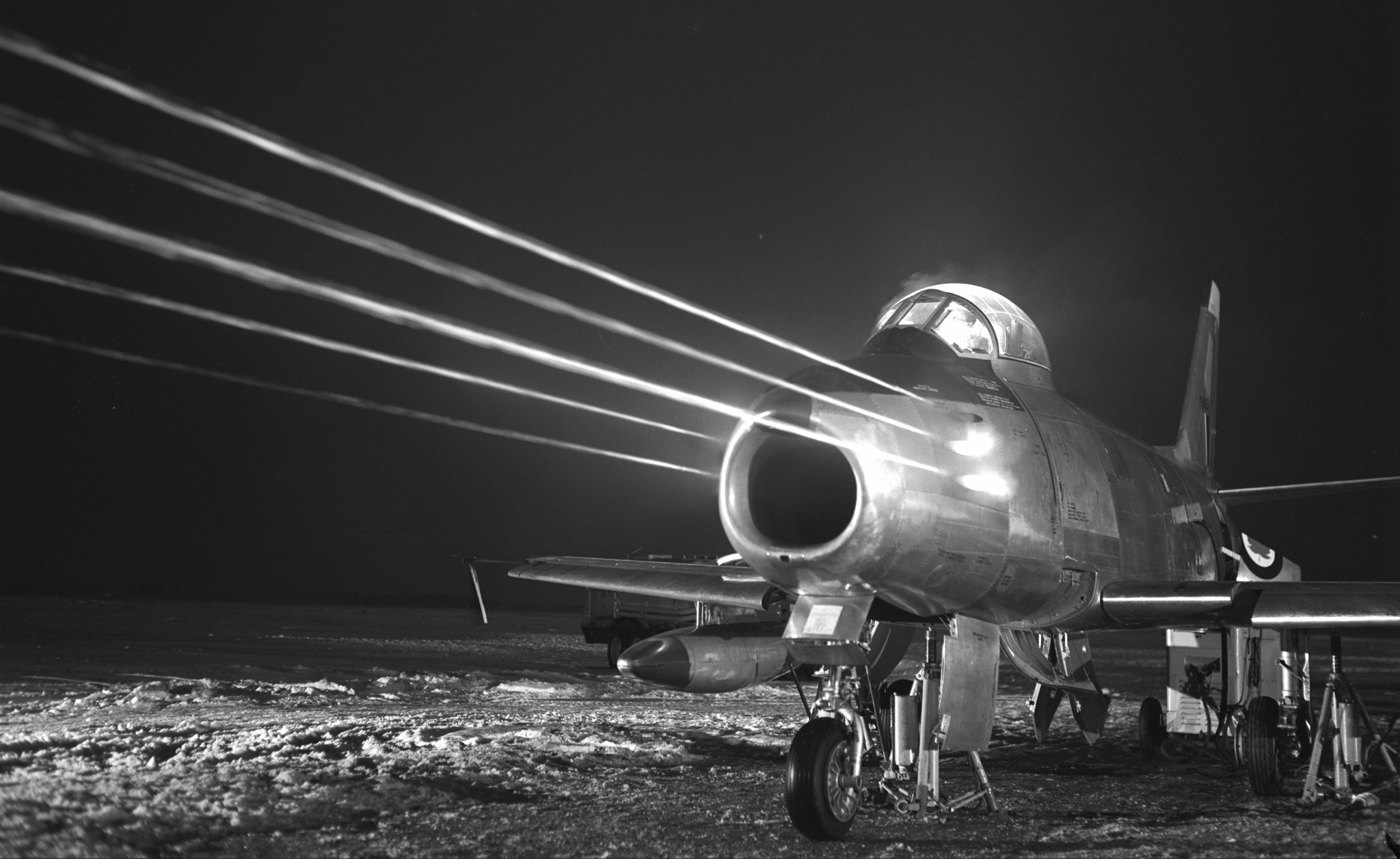
(DND Archives Photo, PL-55764)
Canadair F-86 Sabre, No. 422 Squadron, having its six .50 cal machine guns harmonized at night at RCAF Station Uplands in 1953. The procedure ensures that all six machine-guns are aimed properly.
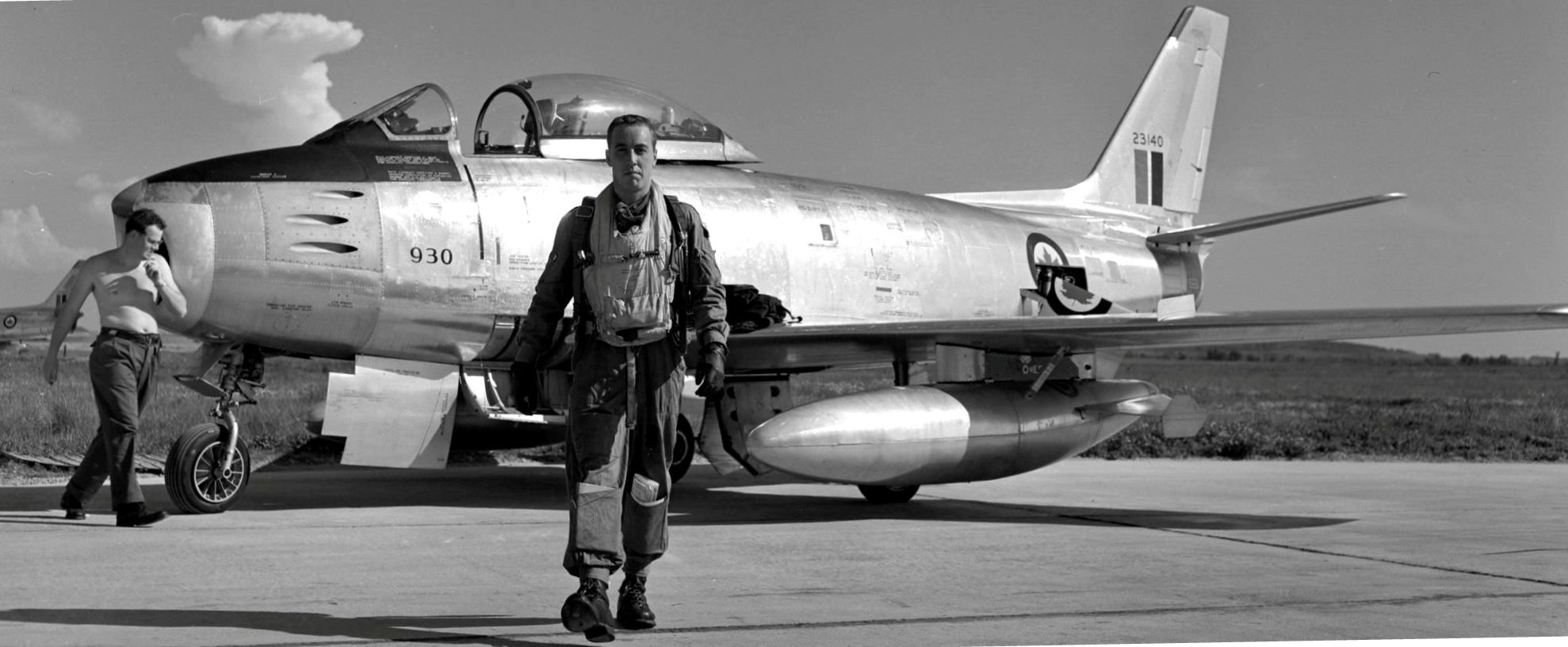
(DND Photo via James Craik)
Canadair F-86 Sabre Mk. 5 (Serial No. 23140), No. 930, F/O J.S. Randle, No. 422 Squadron.
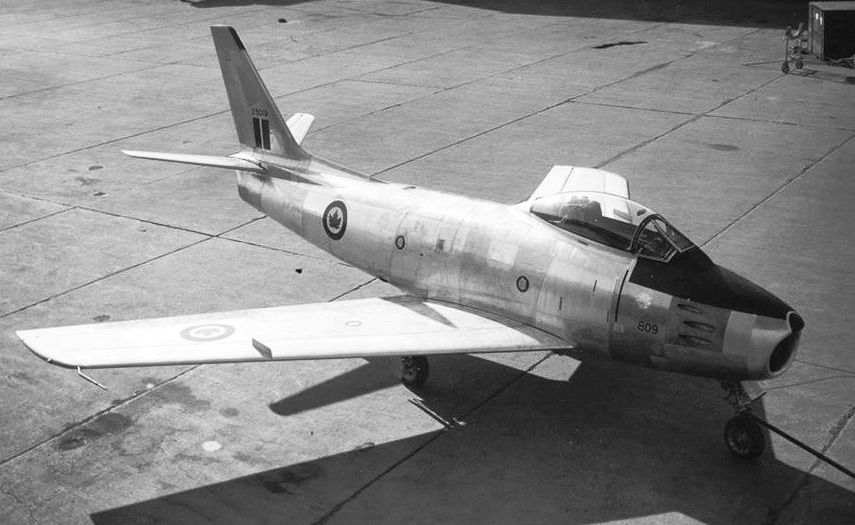
(DND Photo via Mike Raymond Semrau)
Canadair F-86 Sabre Mk. 5 (Serial No. 23019), likely at the manufacturer’s facility at Cartierville, near Montreal. First flown on 6 November 1953, this Sabre served with No. 422 “Tomahawk” Squadron at 4 (F) Wing, Baden-Soellingen, Germany. It was withdrawn from service on 26 May 1960.
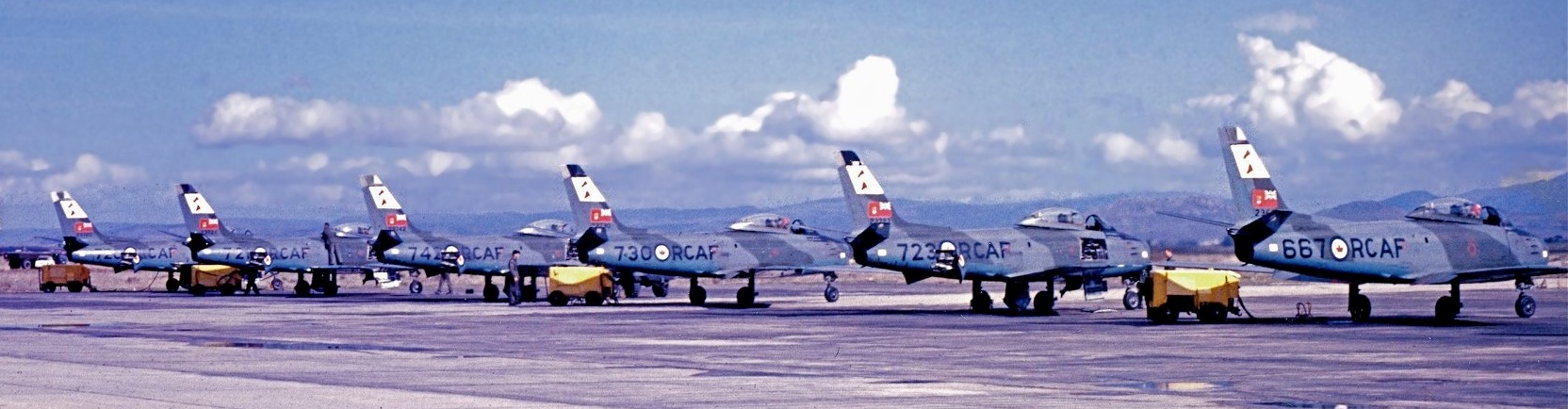
(James Craik Photo)
Canadair F-86 Sabre Mk. 6 (Serial Nos. 23667, 23723, 23730, 23742, 23721 and 23720), 422 Squadron, Sardinia, ca 1960-61.
(DND Photo via James Craik)
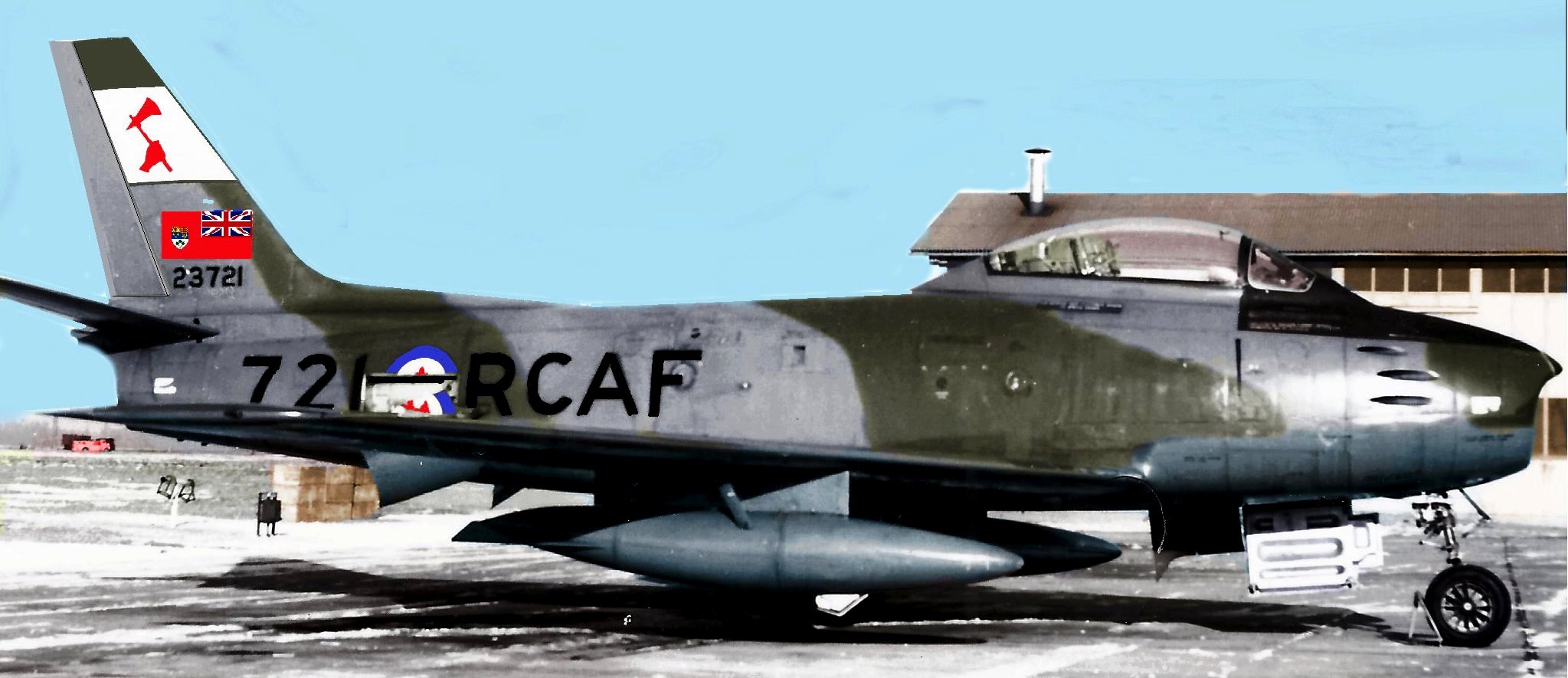
Canadair F-86 Sabre Mk. 6 (Serial No. 23721), No. 422 Squadron in front of the maintenance hangar at 4 Wing.
(DND Photo)
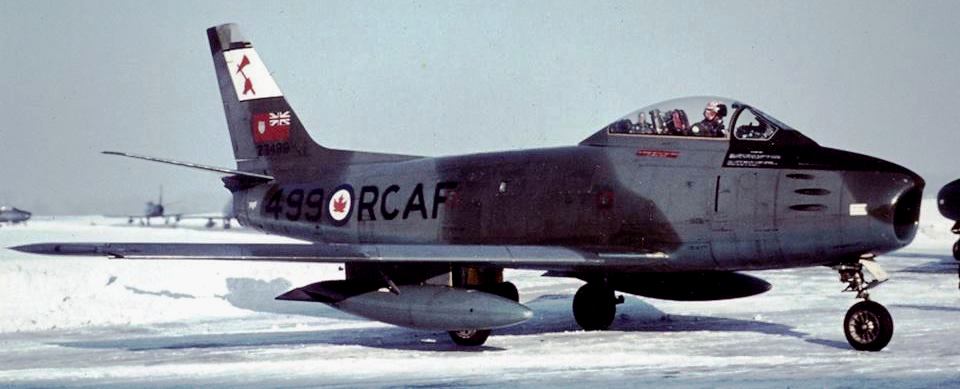
Canadair F-86 Sabre Mk. 6 (Serial No. 23499) of No. 422 Squadron, Norway, 1963.
(422 Potpouri Photo)
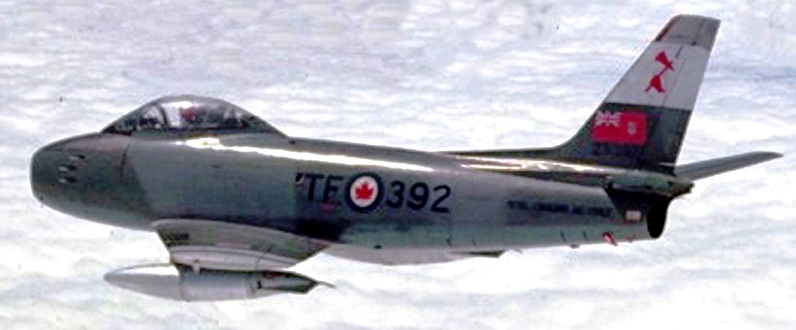
Canadair F-86 Sabre Mk. 6 (Serial No. 23392), No. 422 Squadron, coded TF.
(DND Photo via James Craik)
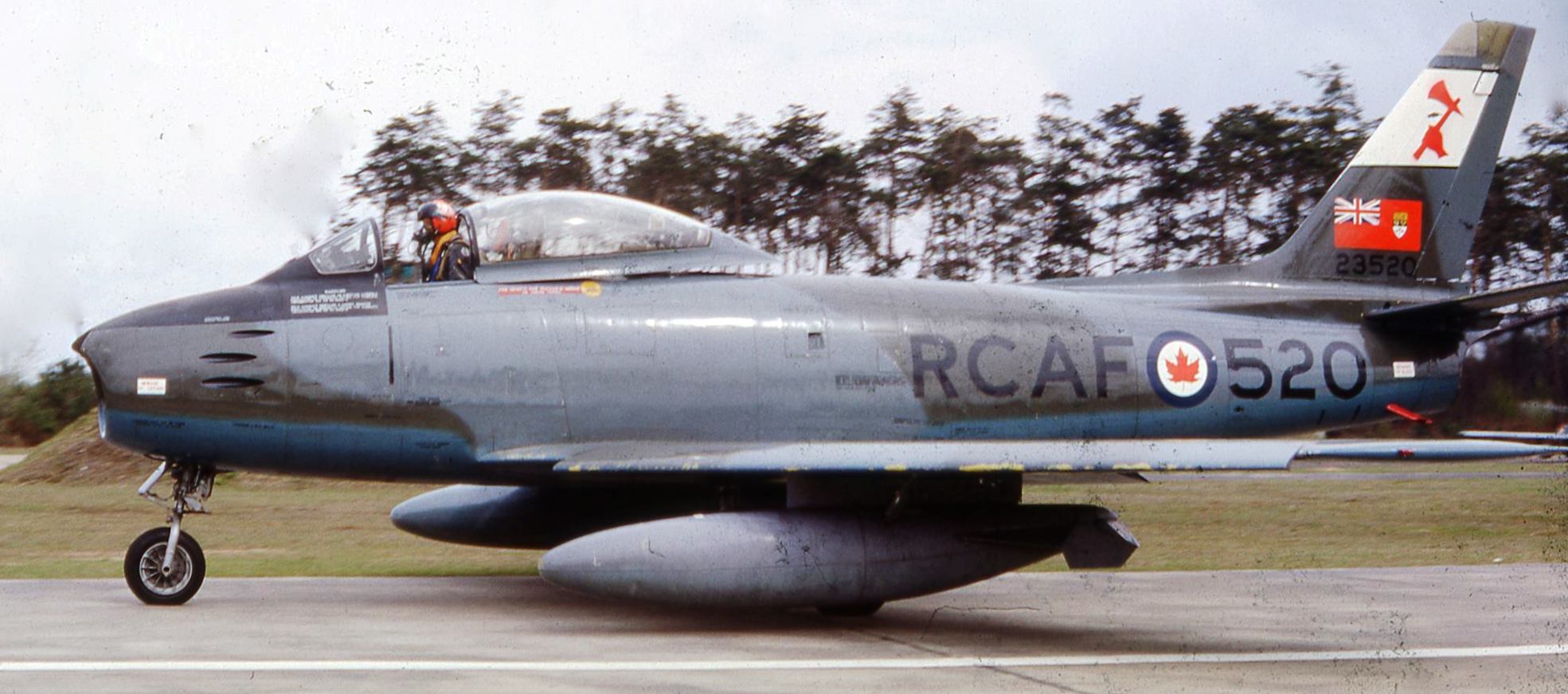
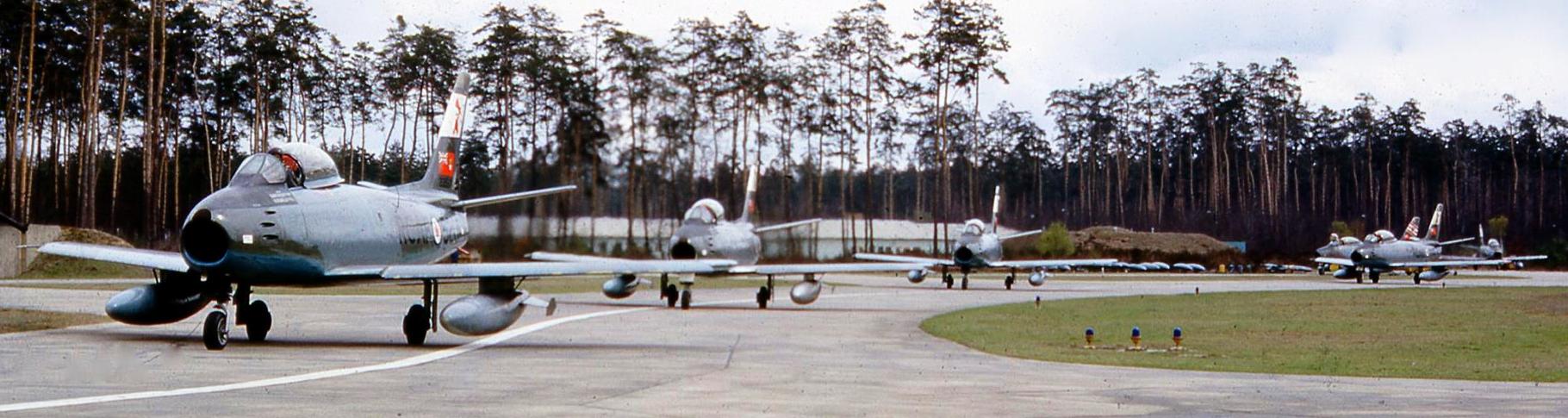
Canadair F-86 Sabre Mk. 6 (Serial No. 23520), No. 422 Squadron, leaving the dispersal area for the last time.
(DND Photo via James Craik)
Canadair F-86 Sabre Mk. 6, No. 422 Squadron, leaving the dispersal area for the last time.
(DND Photo)
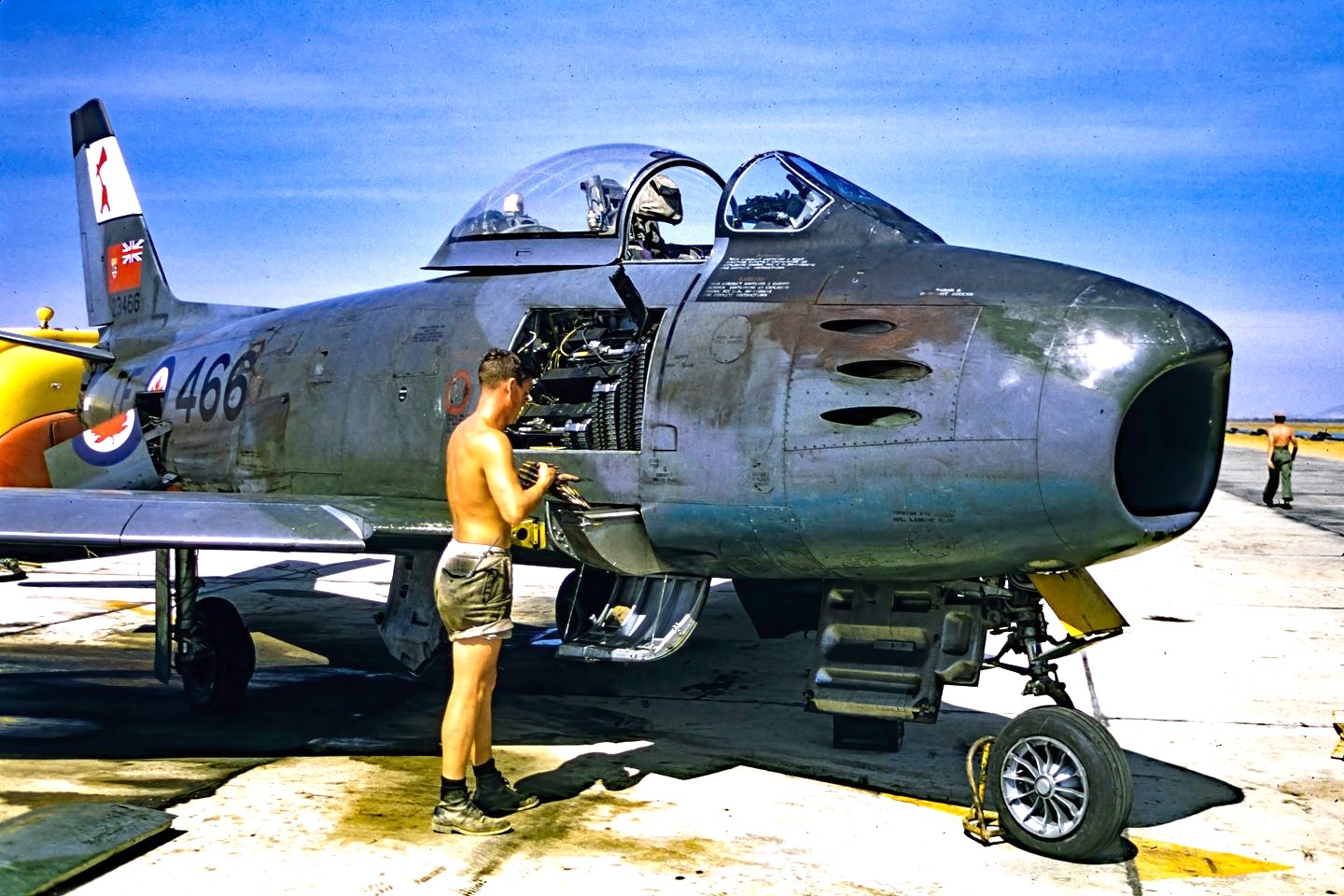
Canadair F-86 Sabre Mk. 6 (Serial No. 23466), No. 422 Squadron, possibly being serviced in Decimomannu, Sardinia.
All comments are subject to our Comment Policy. You must be at least 18 years old to comment.
See a comment that violates our guidelines? Report it here.