Canadair F-86E Sabres flown by Nos. 411, 413, and 414 Squadrons
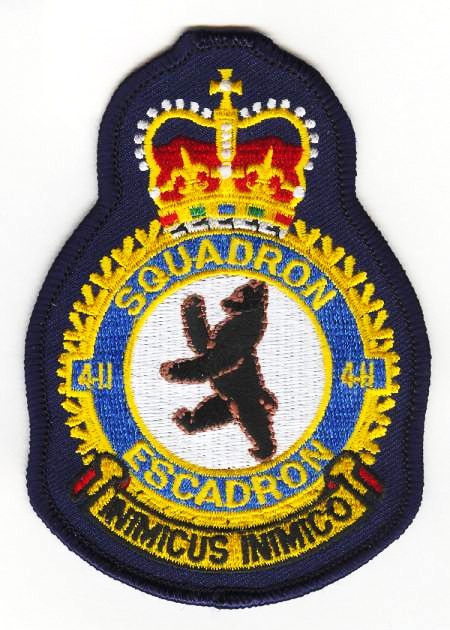
No. 411 Squadron RCAF
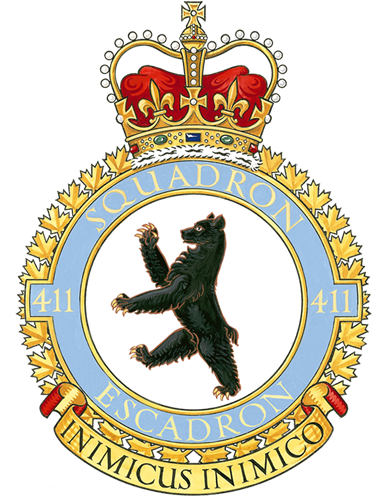
No. 411 “County of York” Squadron (Auxiliary) was was formed at Toronto, Ontario on 1 Oct 1950. The squadron flew Sabres from Oct 1956 to Sep 1958.
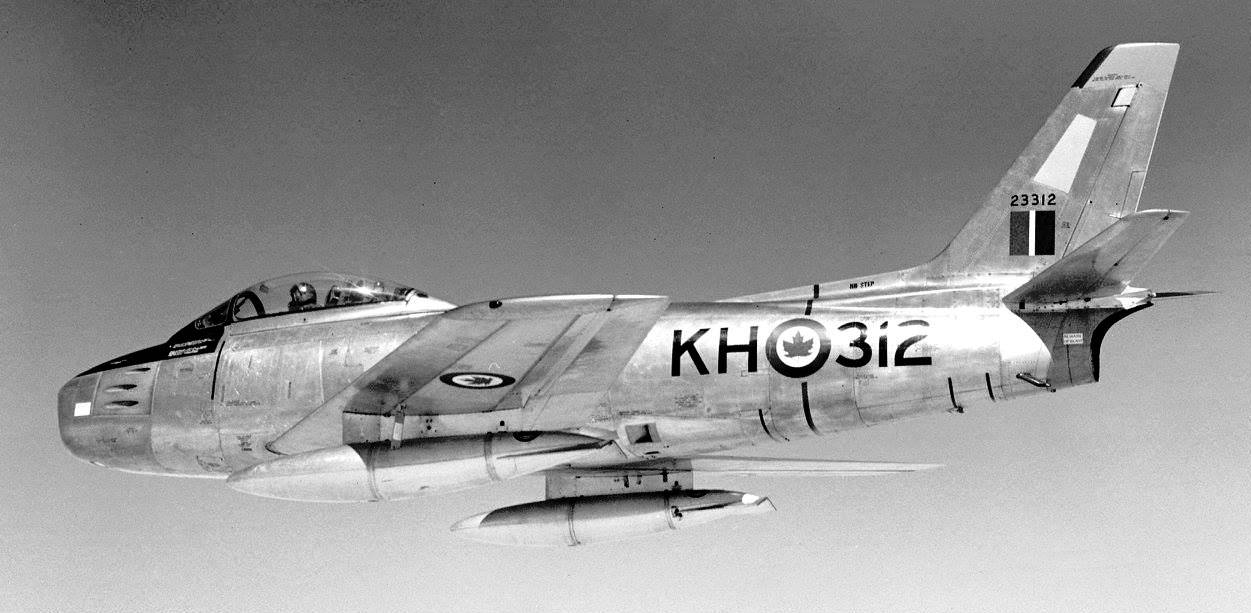
(RCAF Photo)
Canadair F-86 Sabre Mk. 5, RCAF (Serial No. 23312), No. 411 “County of York” Squadron (Auxiliary), coded KH, Downsview, Ontario.
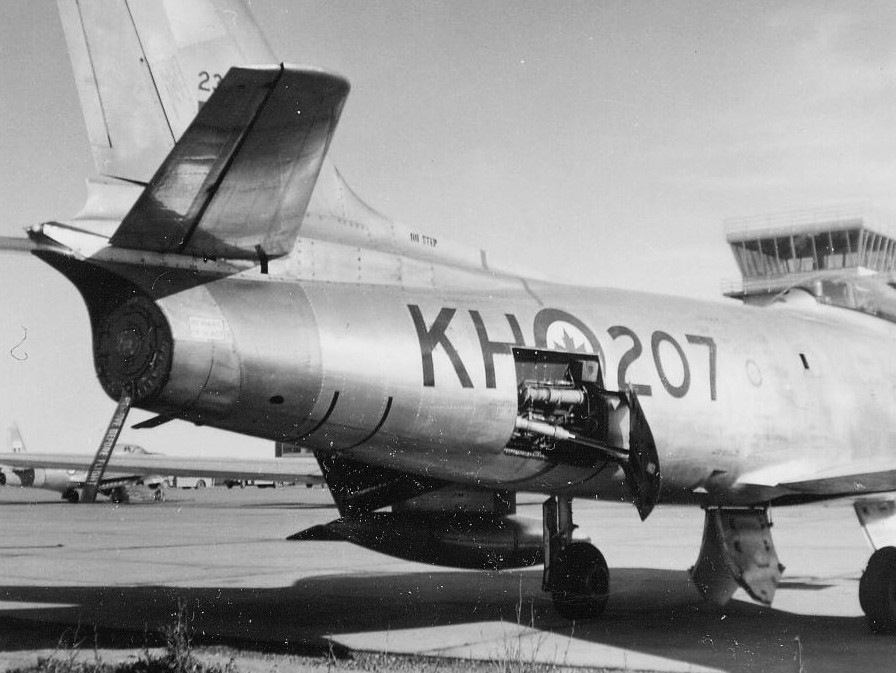
(RCAF Photo)
Canadair F-86 Sabre Mk. 5, RCAF (Serial No. 23207), No. 411 “County of York” Squadron (Auxiliary), coded KH, Downsview, Ontario.
No. 413 Squadron RCAF
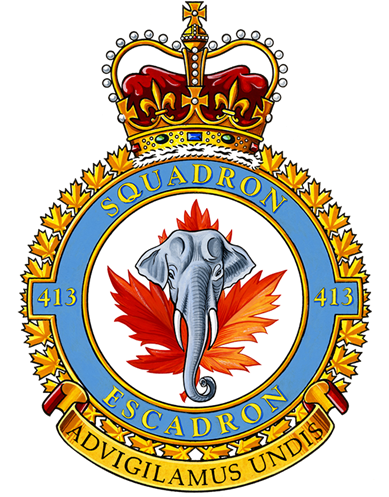
No. 413 Squadron was formed at Stranraer, Scotland on 1 Jul 1941, as the third RCAF squadron attached to RAF Coastal Command and first flying boat General Reconnaissance (G.R.) squadron formed overseas. It was equipped with Consolidated PBY Catalina flying boats. The squadron gained fame for the actions of Squadron Leader Leonard Birchall, who detected a large Japanese task force approaching Ceylon (now Sri Lanka). This allowed time for the defenders to prepare, and foiled what could have been a major blow to the Royal Navy in the Indian Ocean. The squadron was disbanded at Bournemouth, Hampshire on 23 Feb 1945.
The squadron was unofficially formed as No. 13 (Photographic) Squadron at RCAF Station Rockcliffe on 20 May 1944 and officially renumbered as No. 413 Squadron on 1 April 1947, and took over the duties of No. 13 (Photographic) Squadron. It served in this role until it was disbanded on 1 November 1950. The squadron was reformed again on 1 August 1951, as a fighter squadron at RCAF Station Bagotville, Quebec. It was equipped with the Canadair F-86 Sabre before deploying to Zweibrücken. The squadron flew a Sabre team in the 1952 Canadian National Exhibition (CNE), over Toronto, Ontario. The squadron stood down on 7 April 1957, and was then reformed on 1 May 1957 operating the Avro CF-100 Canuck at Bagotville. The squadron was again disbanded on 30 December 1961. The squadron was reactivated at CFB Summerside, PEI on 8 July 1968, as a Transportation and Rescue Squadron. With the closure of CFB Summerside, the squadron was relocated to CFB Greenwood, Nova Scotia on 10 June 1991.
No. 413 Squadron flew Sabre Mk. 2s from Nov 1951 to Jun 1954, Sabre Mk. 5s from Jun 1954 to Sep 1955, and Sabre Mk. 6s from Sep 1955 to Apr 1957. The Sabres were replaced with Avro CF-100 Canuck Mk. 5s in May 1957.
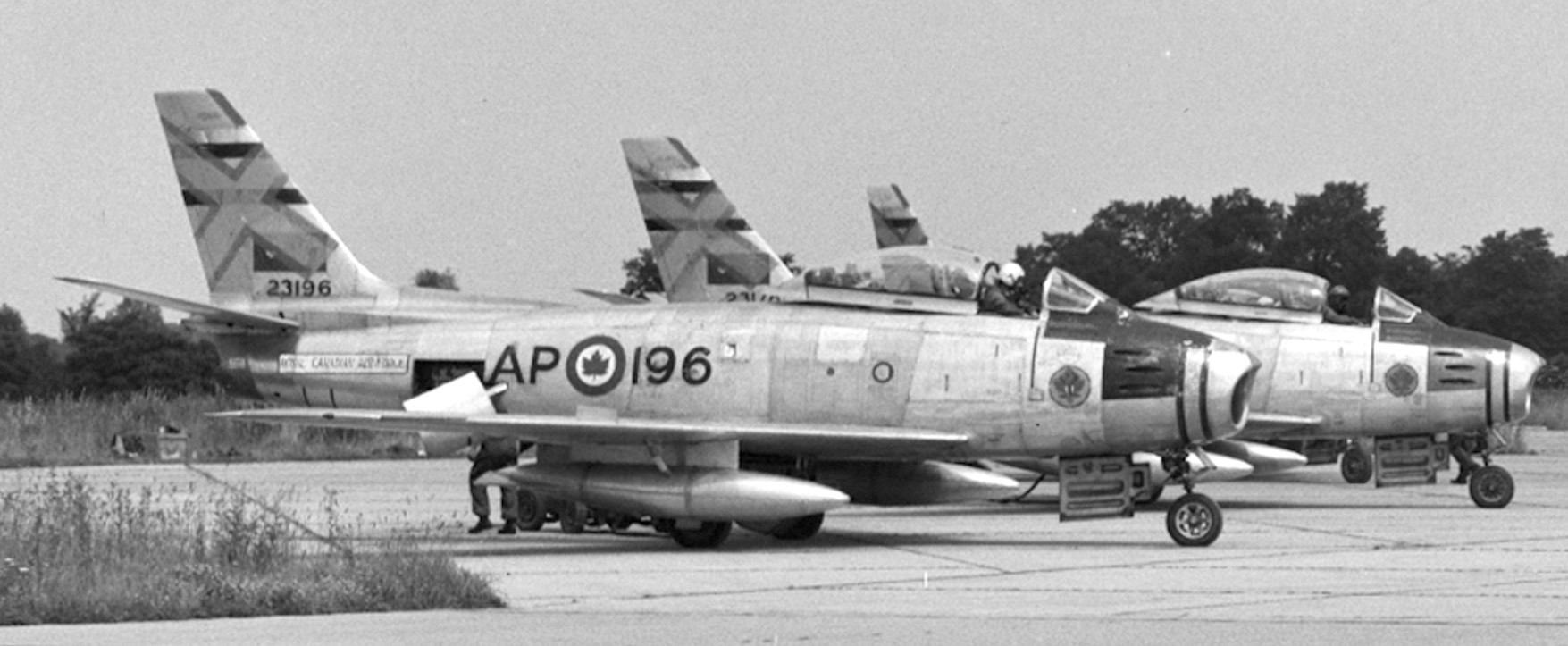
(DND Photo via James Craik)
Canadair F-86 Sabre Mk. 5 (Serial No. 23196), No. 413 Squadron, coded AP, .
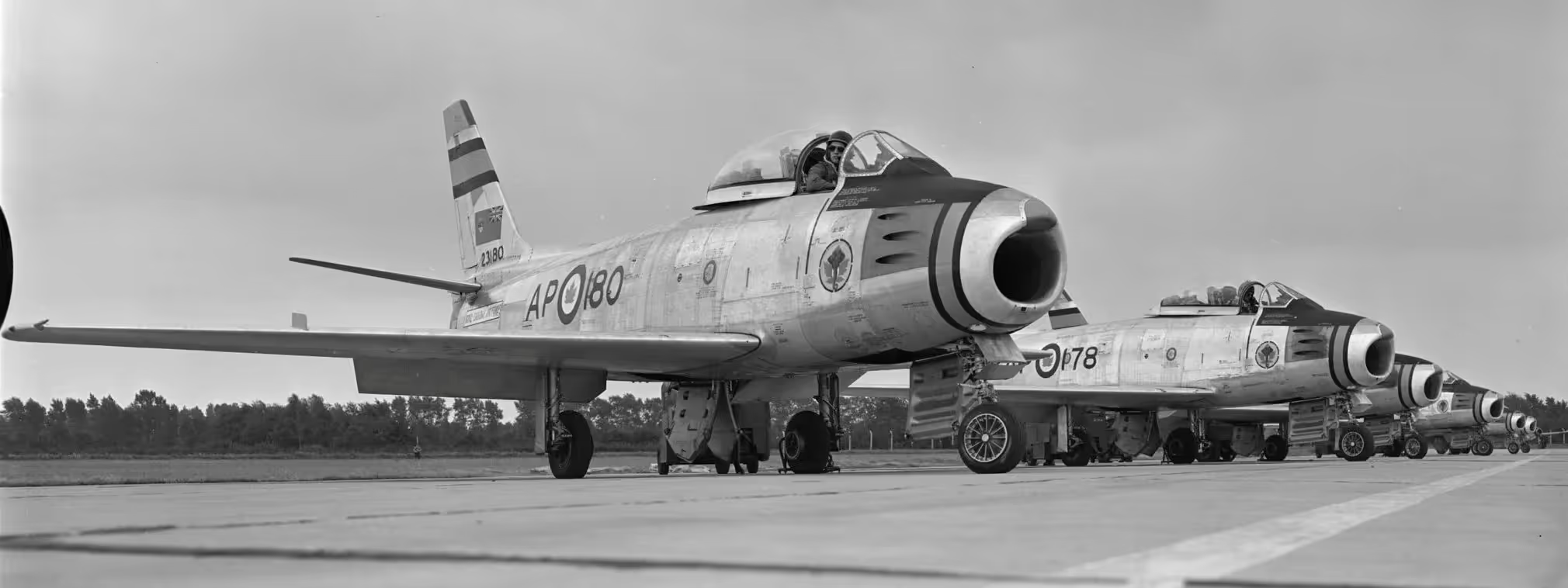
(DND Photo via James Craik)
Canadair F-86 Sabre Mk. 5 (Serial No. 23180), No. 413 Squadron, coded AP. Pilots strapped in the cockpits of their Sabres are on two minute readiness awaiting the signal flares which will send them into the air to intercept ‘enemy’ raiders. No. 413 Squadron was on an exchange exercise with the Dutch Air Force, to test mobility and cross-servicing in the late 1960s.
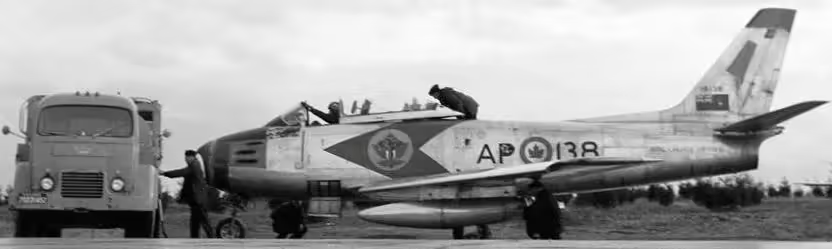
(DND Photo via James Craik)
Canadair F-86 Sabre Mk. 2 (Serial No. 19138), No. 413 Squadron, coded AP.
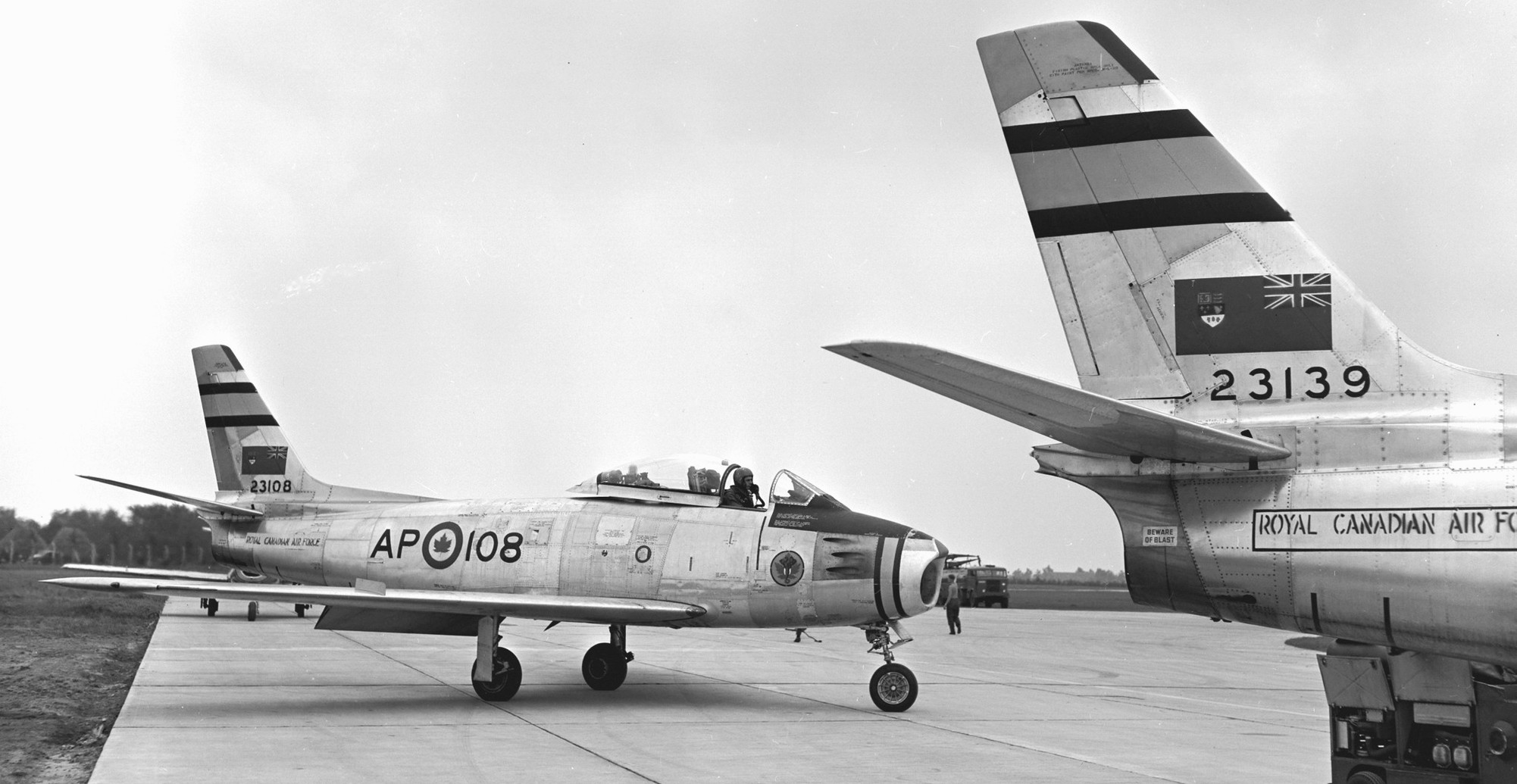
(DND Photo via James Craik)
Canadair F-86 Sabre Mk. 2 (Serial No. 23108), No. 413 Squadron, coded AP and (Serial No. 23139).
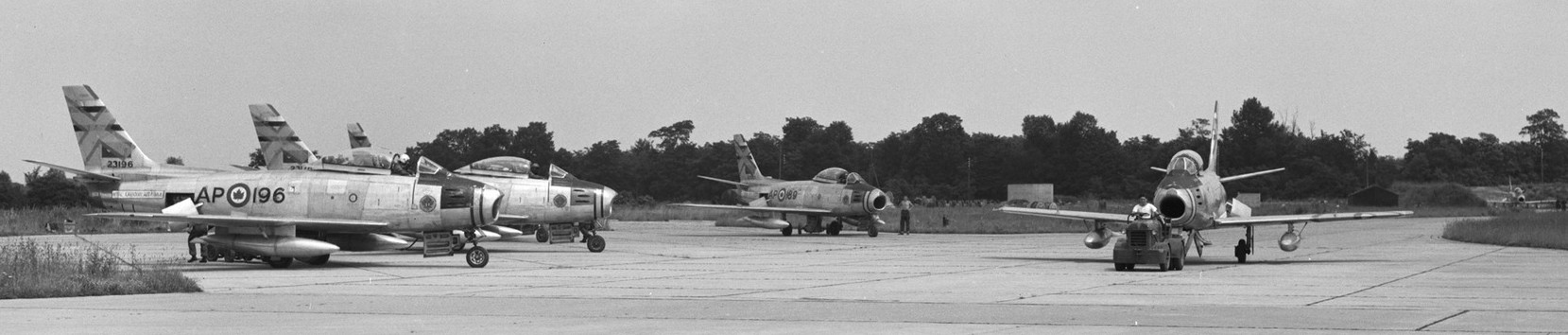
(DND Photo via James Craik)
Canadair F-86E Sabre Mk. 5 (Serial No. 23196), No. 413 Squadron, Volkel, Holland. Exercise Carte Blanche.
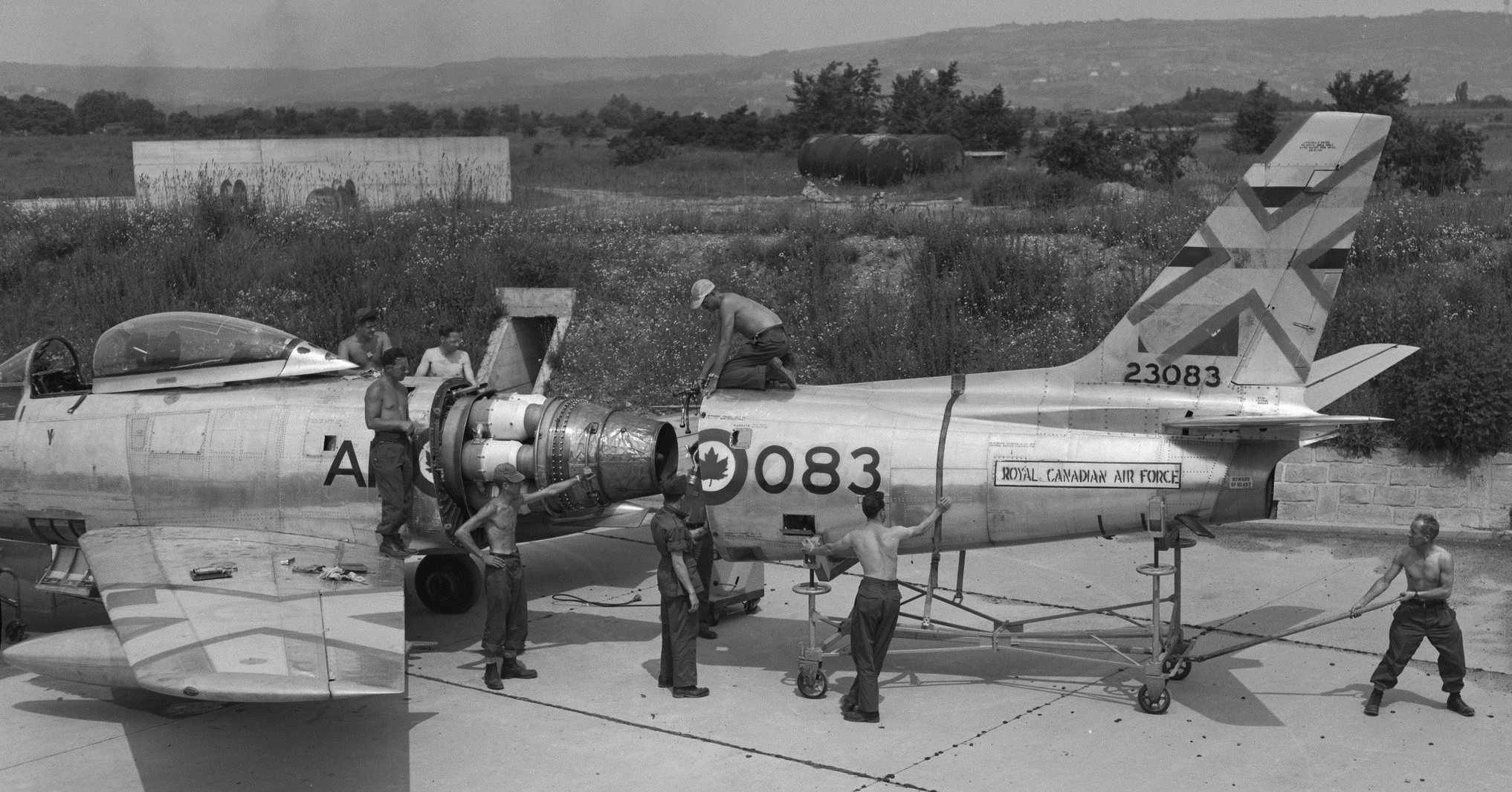
(DND Photo via Michael Kaye)
Canadair F-86 Sabre Mk. 5 (Serial No. 23083), No. 413 Squadron, coded AP, 3 (F) Wing, Germany.
(DND Photo via Michael Kaye)
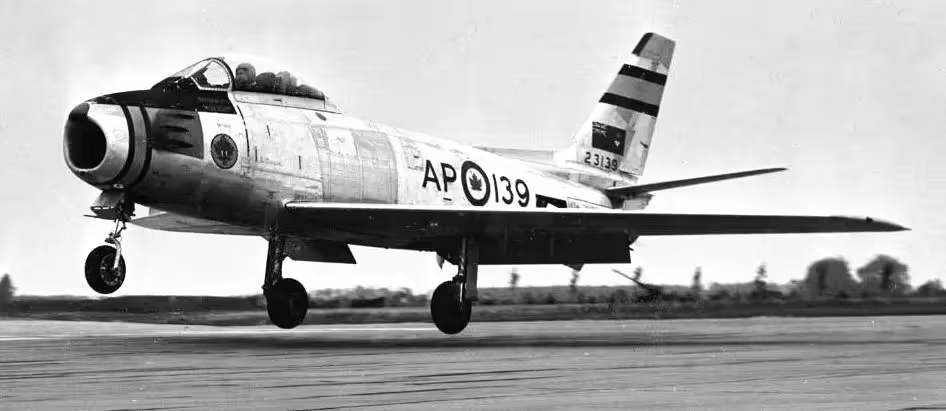
Canadair F-86 Sabre Mk. 2 (Serial No. 19139), No. 413 Squadron, coded AP. Sept 2 1954, Exercise Lucifer, Voelkel, Netherlands.
(RCAF Photo via James Craik)
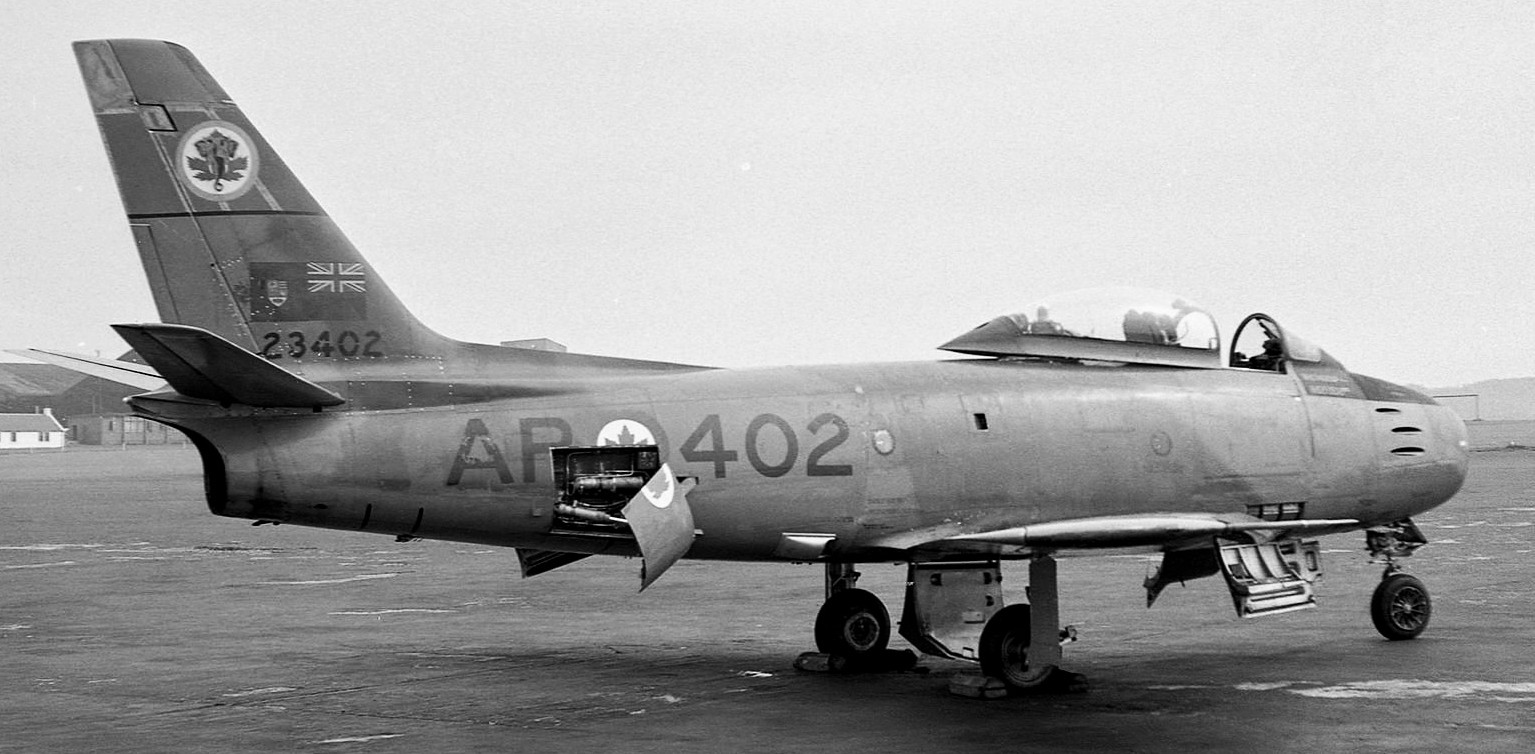
Canadair F-86 Sabre Mk. 6 (Serial No. 23402), No. 413 Squadron, coded AP.
(RCAF Photo via James Craik)
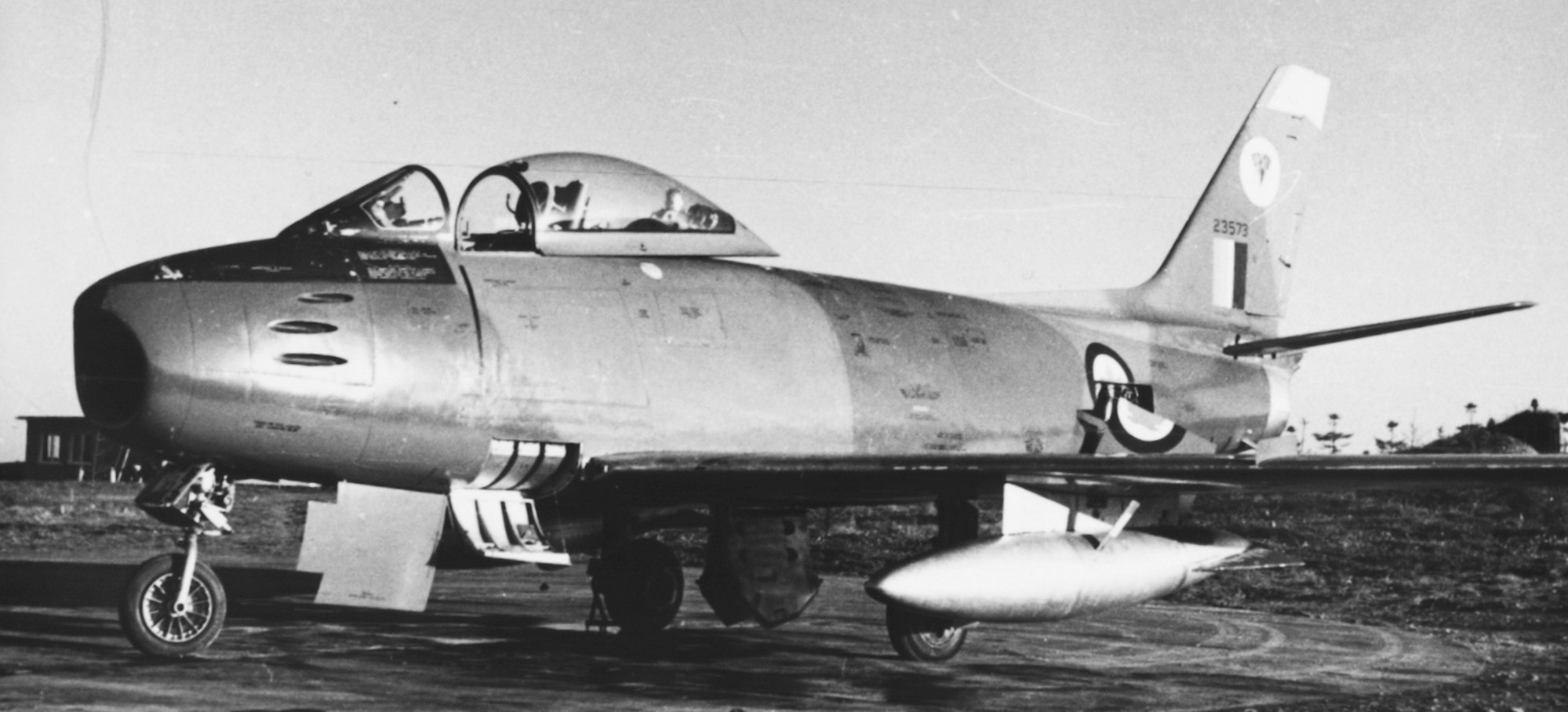
Canadair F-86 Sabre Mk. 6 (Serial No. 23573), No. 413 Squadron.
No. 414 Squadron RCAF
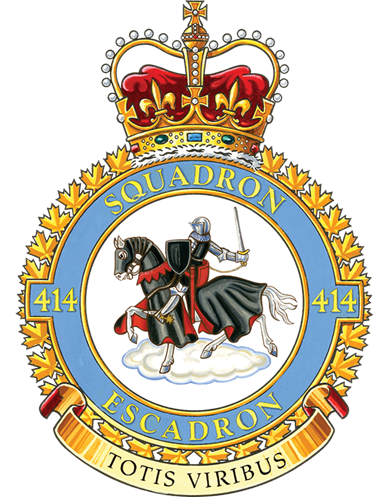
On 13 August 1941, No. 414 Army Co-operation Squadron was formed at RAF Croydon, England, flying Westland Lysander and Curtiss P-40 Tomahawk aircraft. On 28 June 1943 the squadron’s name was changed to 414 Fighter Reconnaissance Squadron to reflect its role. During the Second World War the squadron was based at numerous airfields in England and in continentental Europe flying Supermarine Spitfires and North American P-51 Mustang fighters. During this period, the squadron provided photo reconnaissance, intelligence and ground attacks for both the Dieppe Raid and the allied Invasion of Europe. It accounted for 29 enemy aircraft destroyed and 11 damaged, 76 locomotives and 12 naval vessels destroyed. After the war ended, the squadron disbanded at Lüneburg, Germany on 7 August 1945.
Unofficially formed as No. 14 (Photographic) Squadron at RCAF Station Rockcliffe, Ontario on 12 June 1944 and officially renumbered No. 414 Squadron on 1 April 1947. The squadron flew the Douglas CC-129 Dakota to photograph 323,754 square miles (838,520 km2) of Canada’s North. When this task was completed it was disbanded on 1 November 1950.
No. 414 Fighter Squadron was reformed as a fighter unit at RCAF Station Bagotville, Quebec, on 1 November 1952. The following summer on 24 August 1953 as part of “Leap Frog IV” the squadron moved to 4 (F) Wing, Baden-Soellingen, Germany The squadron flew Sabre Mk. 4s from Nov 1952 to Nov 1953, Sabre Mk. 5s from Nov 1953 to Aug 1955, and Sabre Mk. 6s from July 1955 to Jul 1957. On 14 July 1957 the squadron was disbanded to make room for the arrival of No. 419 Squadron flying the Avro CF-100 Canuck.
On 5 August 1957, the squadron was reformed at RCAF Station Norh Bay, Ontario, where it operated as an all-weather fighter squadron flying the CF-100 Canuck and the McDonnell CF-1-1 Voodoo until 30 June 1964 when it was disbanded once more. The squadron was reformed on 15 September 1967 at RCAF Station St. Hubert, Quebec in its new role as an electronic warfare squadron flying the CF-100. In August 1972 the squadron moved to CFB North Bay where it remained for the next twenty years flying the CF-100, Boeing CC-117 Globemaster and EF-101. In 1992 the squadron was split into two parts with one part going to CFB Comox, BC as No. 414 Composite Squadron and the other part going to Greenwood, Nova Scotia, as 434 Composite Squadron. In 1993 the squadron changed its name to No. 414 Combat Support Squadron when it was equipped with the Canadair CT-133 Silver Star. The Squadron was disbanded in 2002 when its duties were contracted out to a civilian company.
On 7 December 2007 approval was received for the squadron to stand up again, this time as 414 EWS (Electronic Warfare Support) Squadron. Flying from 3 Wing Bagotville, the squadron is based in Ottawa and is composed of military Electronic Warfare Officers who fulfill the combat support role, flying on civilian contracted aircraft. The squadron was re-formed at Gatineau Airport, Quebec, on 20 January 2009 to operate the Dassault/Dornier Alpha Jet provided by Discovery Air Defence Services.
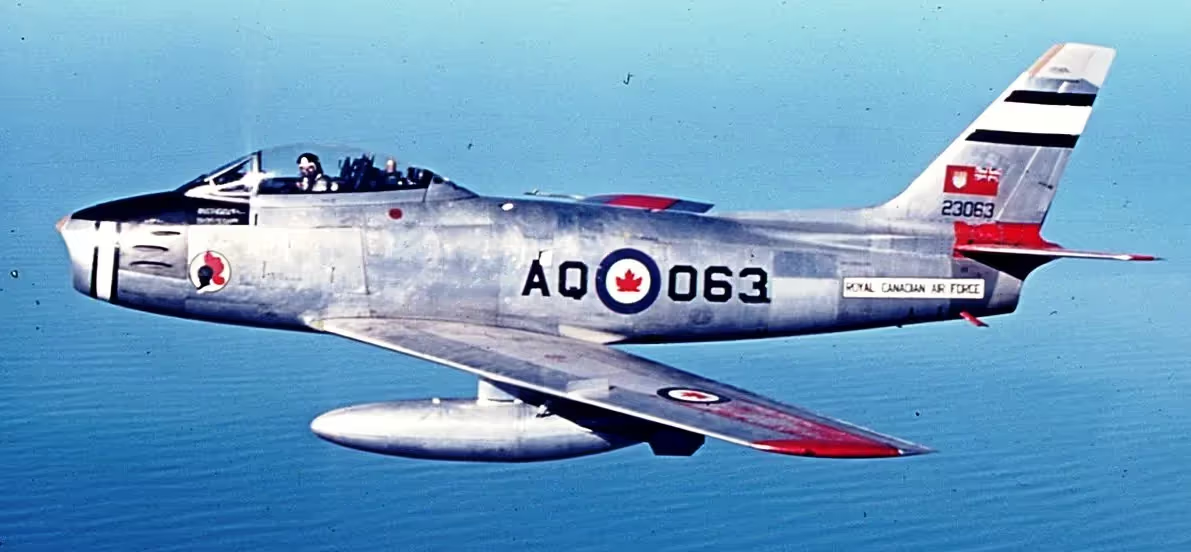
(DND Photo via James Craik)
Canadair F-86 Sabre Mk. 5 (Serial No. 23063), No. 414 Squadron, coded AQ.
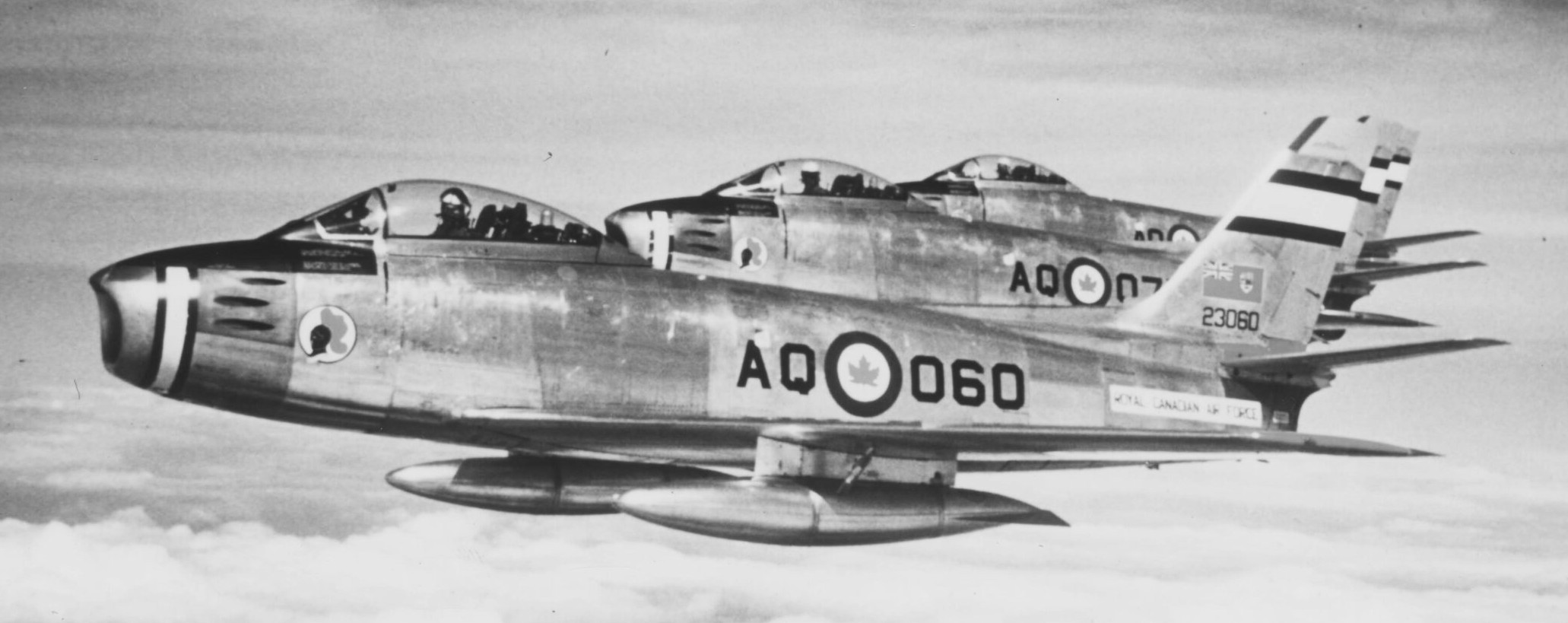
(NMRCAF Photo)
Canadair F-86 Sabre Mk. 5 (Serial No. 23060), No. 414 Squadron, coded AQ.
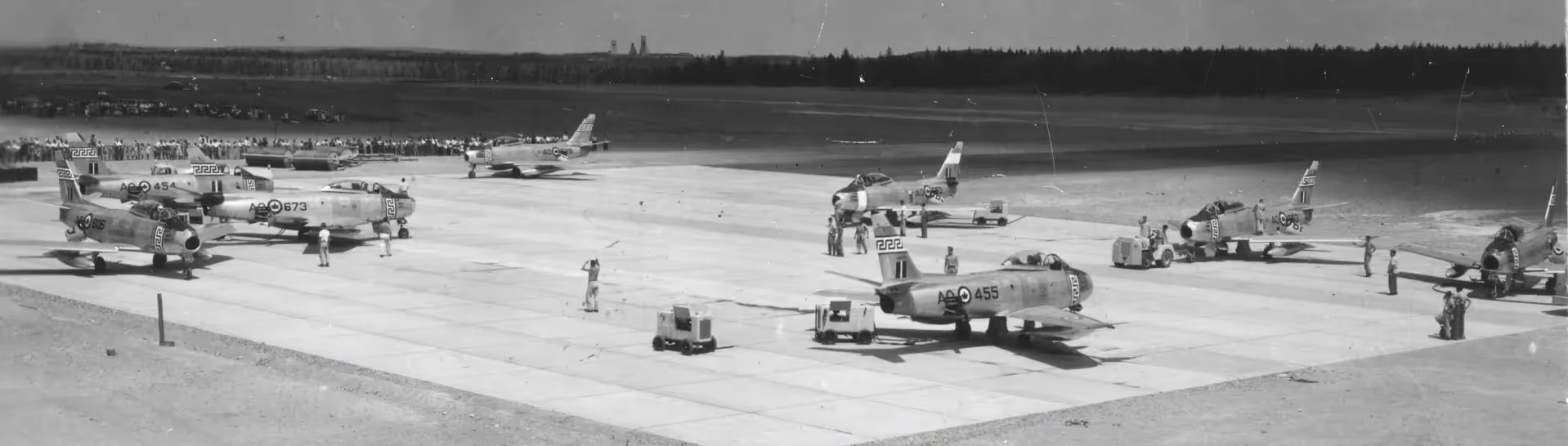
(RCAF Photo via James Craik)
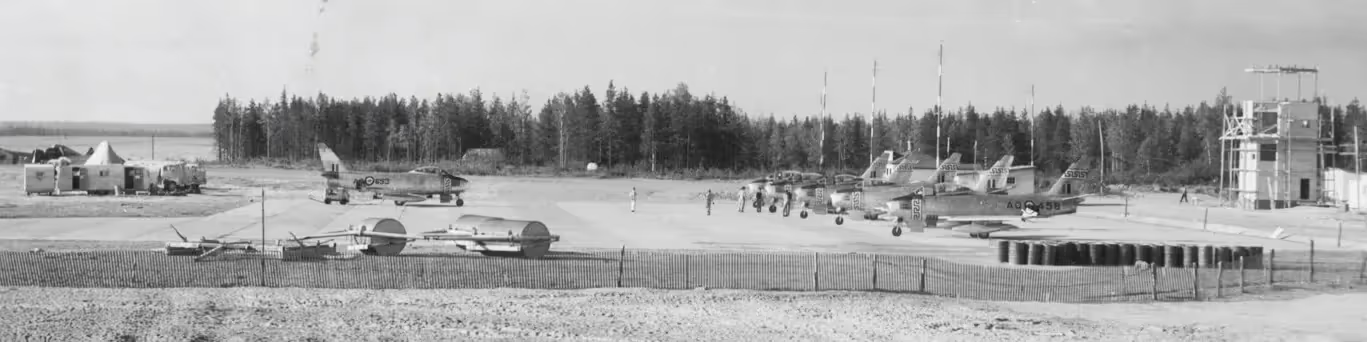
Canadair F-86 Sabre, No. 414 Squadron, coded AQ, RCAF Station Val d’Or, Quebec, 8 July 1953.
(RCAF Photo via James Craik)
Canadair F-86 Sabre, No. 414 Squadron, coded AQ, RCAF Station Val d’Or, Quebec, 8 July 1953.
(DND Photo via James Craik)
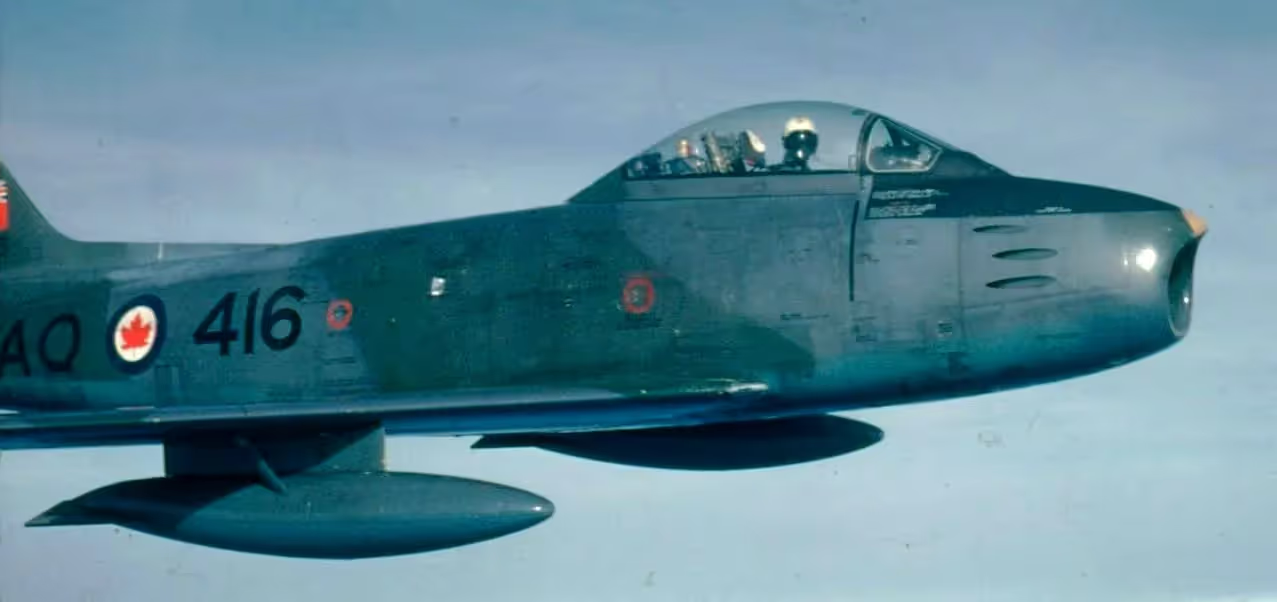
Canadair F-86 Sabre Mk. 6 (Serial No. 23416), No. 414 Squadron, coded AQ.
All comments are subject to our Comment Policy. You must be at least 18 years old to comment.
See a comment that violates our guidelines? Report it here.