National Air Force Museum of Canada
CFB Trenton, Ontario
The aim of this website is to locate, identify and document all warplanes preserved in Canada. Many contributors have assisted in the hunt for these aircraft to provide and update the data on this website. Photos are by the author unless otherwise credited. Any errors found here are by the author, and any additions, corrections or amendments to this list of Warplanes in Canada would be most welcome and may be e-mailed to the author at hskaarup@rogers.com.
CFB Trenton, National Air Force Museum of Canada (NAFMC), 8 Wing. Website: http://www.airforcemuseum.ca/
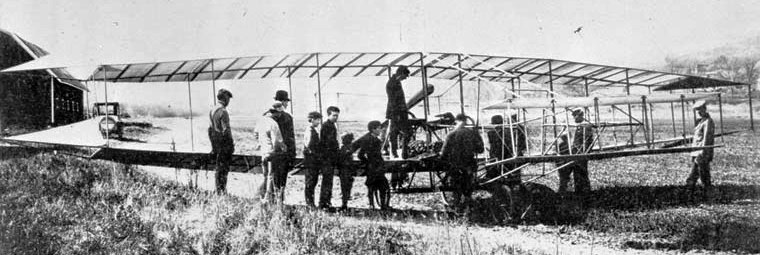
(Library and Archives Canada Photo, MIKAN No. 3650308)
AEA Silver Dart, ca 1910.
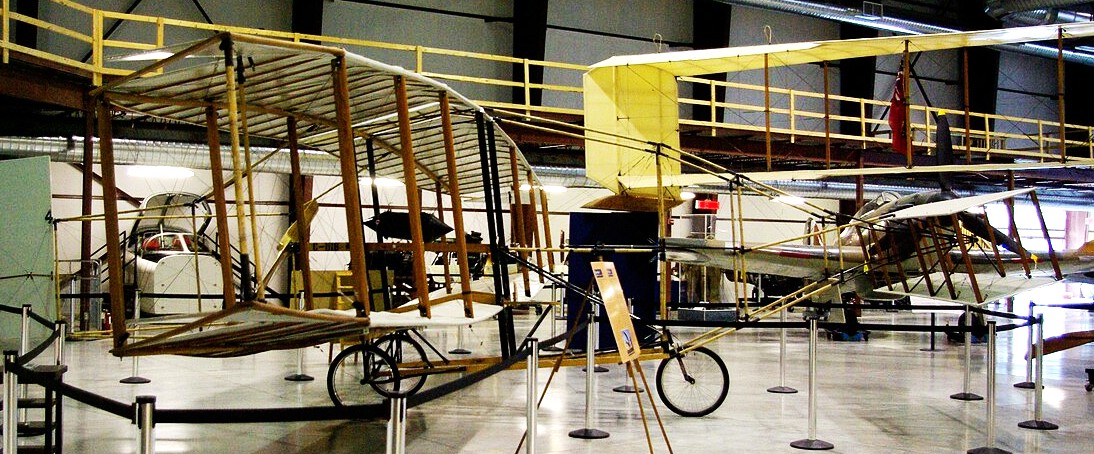
(André Gerwing Photo)
Aeronautical Experimental Association (AEA) Silver Dart 5 (Serial No. Mach 0.046). On 23 Feb 1909, that John McCurdy flew the Silver Dart at Baddeck, Nova Scotia, marking the first flight of a powered aircraft in Canada. This aircraft was designed in 1908 by John McCurdy and the construction was supervised by Alexander Graham Bell’s Aeronautical Experimental Association at Glen Curtis’s facilities in Hammondsport, New York, where it was flown before being transferred to Canada in January of 1909. Two aviation enthusiasts, Ed Lubitz and Mark Taylor, chose to mark and celebrate this important aviation event. In October 2008 they began building their own Silver Dart replica, and after 8 months of construction activity, their masterpiece was completed in March 2009. This well researched project, used the original drawings, with the overall philosophy of the replica’s construction being the aircraft was made to the original specifications with concessions to modern materials. Mach 0.046 is 35 miles per hour, the cruise speed of the original aircraft. This incredible replica was donated to the NAFMC in early November of 2010. (NAFMC)
(Library and Archives Canada Photo, MIKAN No. 3617348)
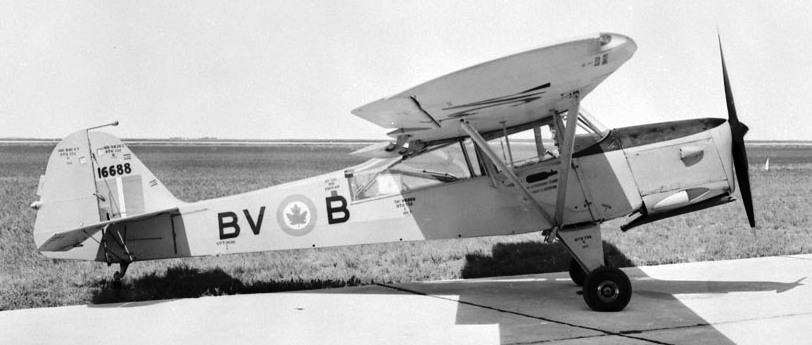
Auster T7, RCAF (Serial No. 16688), BV-B, No. 444 Squadron, 5 Aug 1952.
(RCAF Photo)
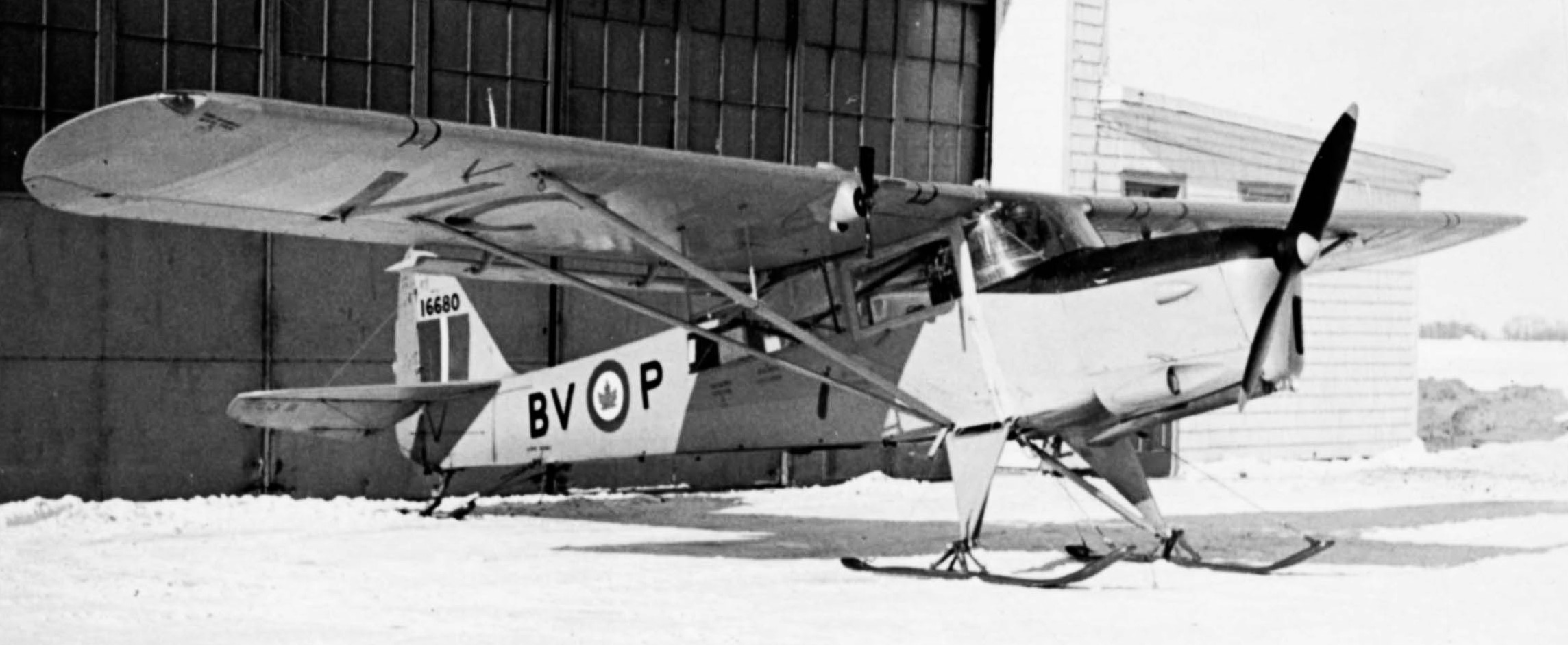
Auster T7, RCAF (Serial No. 16680), BV-P, No. 444 Squadron, c1952.
(André Gerwing Photo)
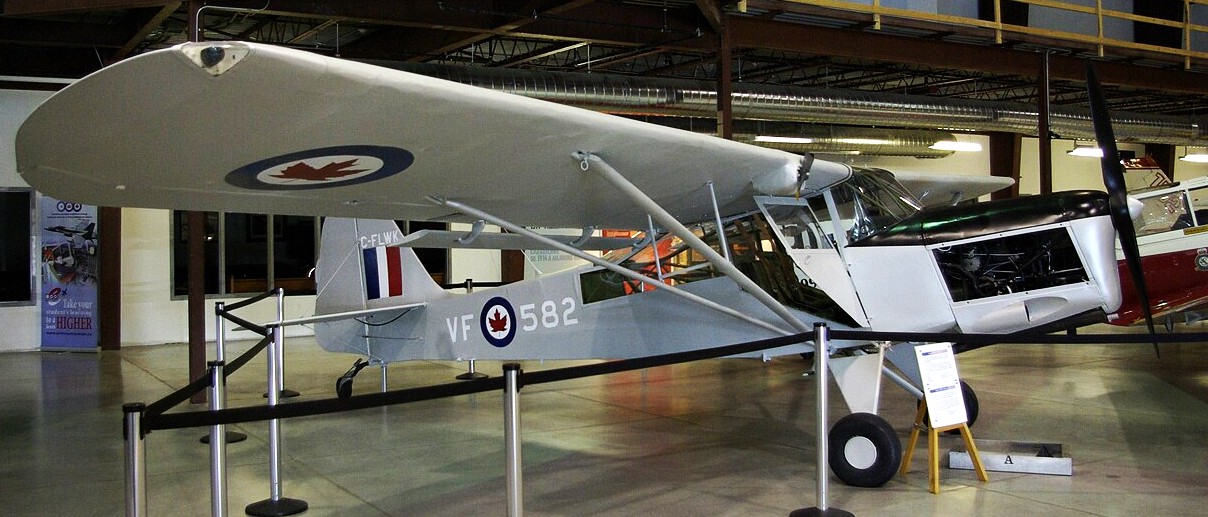
Auster AOP.6, RCAF (Serial No. 16670), 2598, (Serial No. VF582), CF-LWK. This aircraft has been with the museum since 1991. Donated by Dr. P. Kelley, the museum’s Auster was purchased by the RCAF in 1948, but spent most of its air force life in storage. When it was sold to a private company in 1957, it had accumulated only 22 flight hours. It is currently painted in RCAF silver training colour scheme, however the civilian registration number as used by previous owner has been maintained on the tail. (NAFMC)
(Library and Archives Canada Photo, MIKAN No. 3582082)
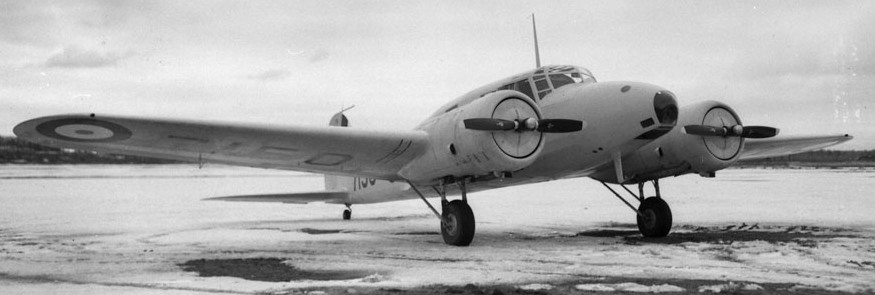
Avro Anson Mk. II, RCAF (Serial No. 7150), 24 Mar 1942.
(Library and Archives Canada Photo, MIKAN No. 3388009)
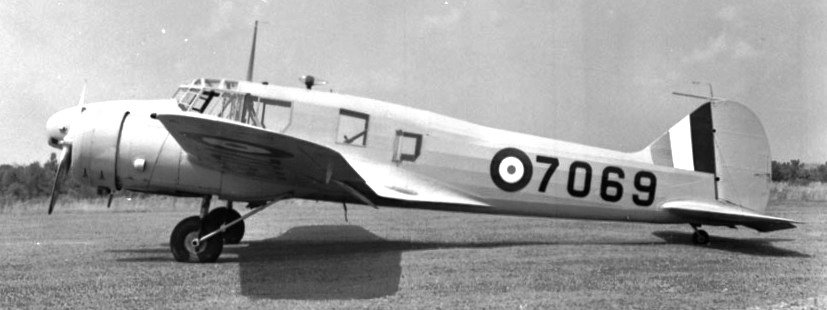
Avro Anson Mk. II, RCAF (Serial No. 7069), Rockcliffe, 30 June 1942.
(RCAF Photo)
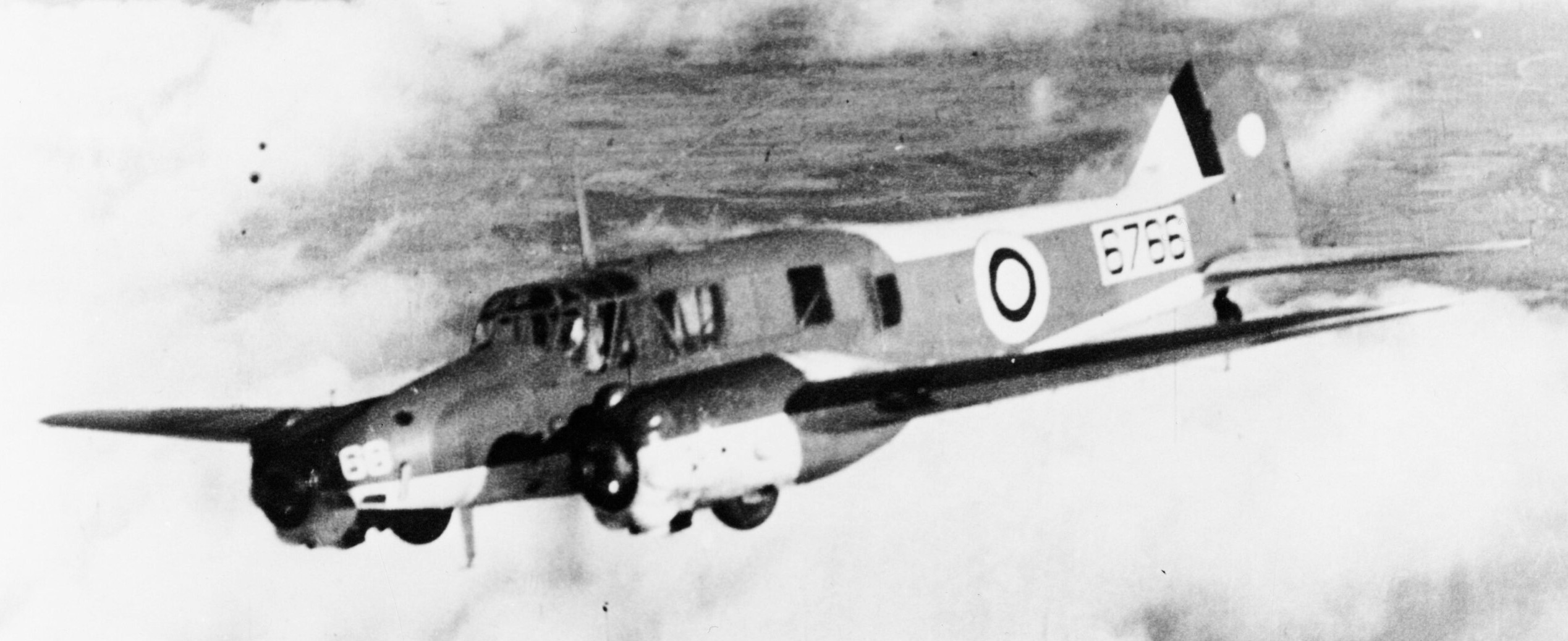
Avro 652A Anson Mk. II (Serial No. 6766), c1942.
Avro 652A Anson Mk. II (Serial No. unknown), painted as RCAF (Serial No. 7207), No. 13 Bombing and Gunnery School, Picton, Ontario, which crashed on 28 June 1942. This recently restored aircraft is on display next to the Halifax bomber.
The manufacturer’s serial number/tail number of this particular Avro Anson is not known, as it was nothing but a steel frame with two Jacobs L-6 MB engines when it arrived at the Museum from a farmer’s field in Westaskiwin, Alberta. The wood and fabric wings and fuselage covering had rotted away in the decades it spent stored outside, and thus no RCAF markings remained to identify it. Though its original serial number is not known the Museum has chosen 7207 due to its local history.
Avro 652A Anson Mk. II 7207 was built by Federal Aircraft Limited in Montreal, Quebec. It was taken on strength with the Royal Canadian Air Force on 26 January 1942 and immediately placed into storage with No. 1 Training Command at Picton, Ontario and in 1942 it was placed on strength at No. 31 Bombing and Gunnery School at Picton, Ontario. On 28 June 1943, during an instrument training flight the aircraft was observed to do a stall turn, then loop and strike the water north of Waupoos Island in Lake Ontario, 16 km east of Picton. As a result of the crash, Sergeant William Craig Rodger, (RAF) and Sergeant Raymond Cecil Evans Brown, (RAF Volunteer Reserve), were killed. The aircraft was recovered from the lake and was officially struck off charge on 26 July 1943 by No. 6 Repair Depot at RCAF Station Trenton, Ontario.
(RCAF Photo)
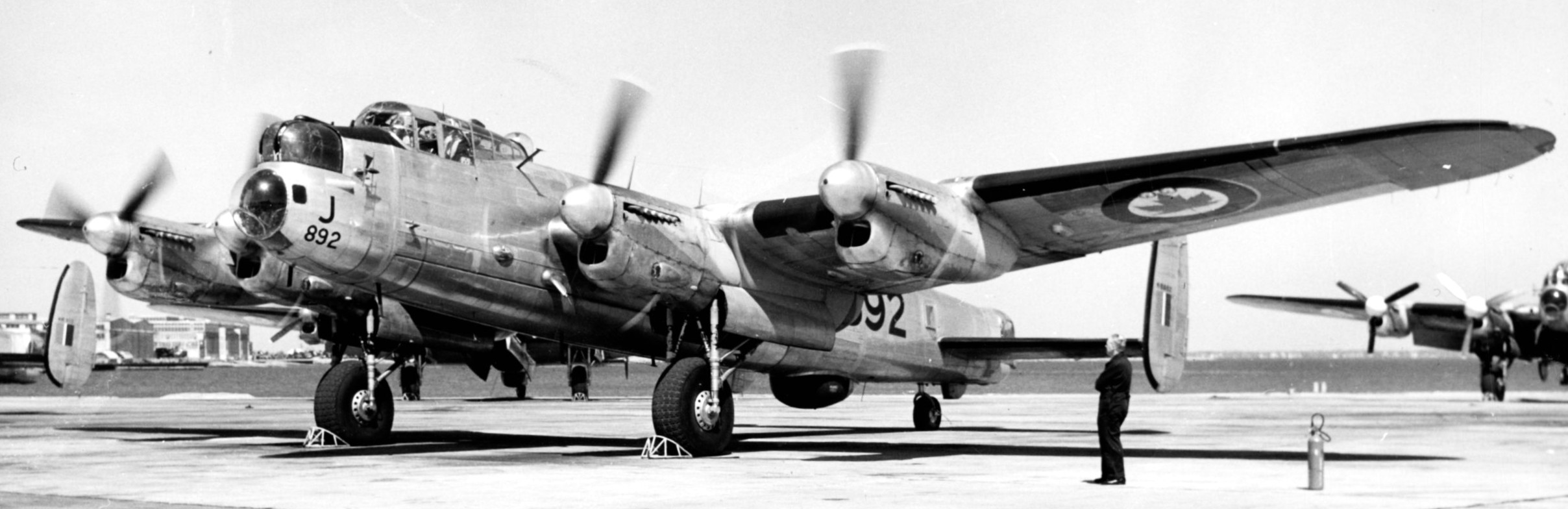
Avro Lancaster (Serial No. 892).
(RCAF Photo)
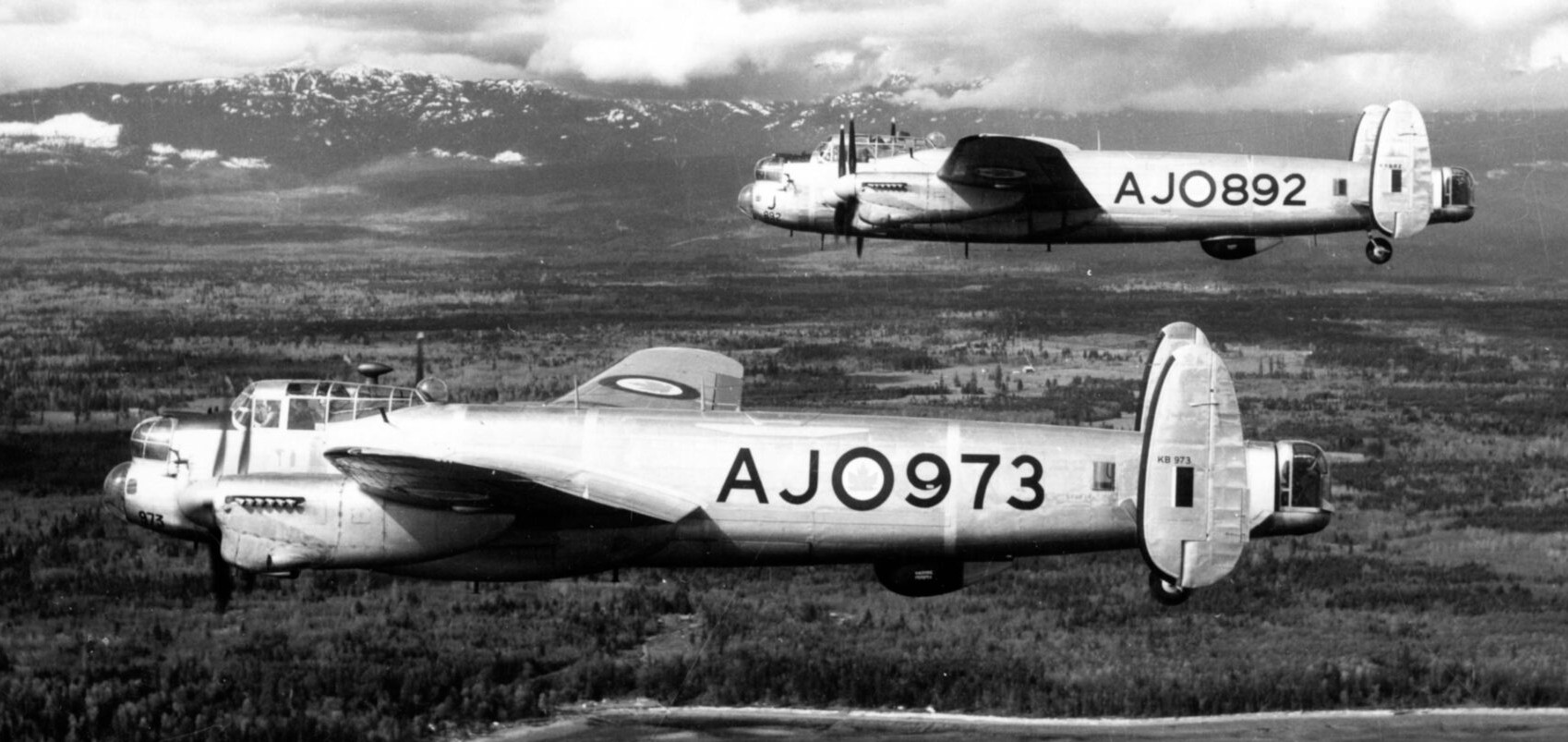
Avro Lancaster (Serial Nos. 973 and 892).
(RCAF Photo)
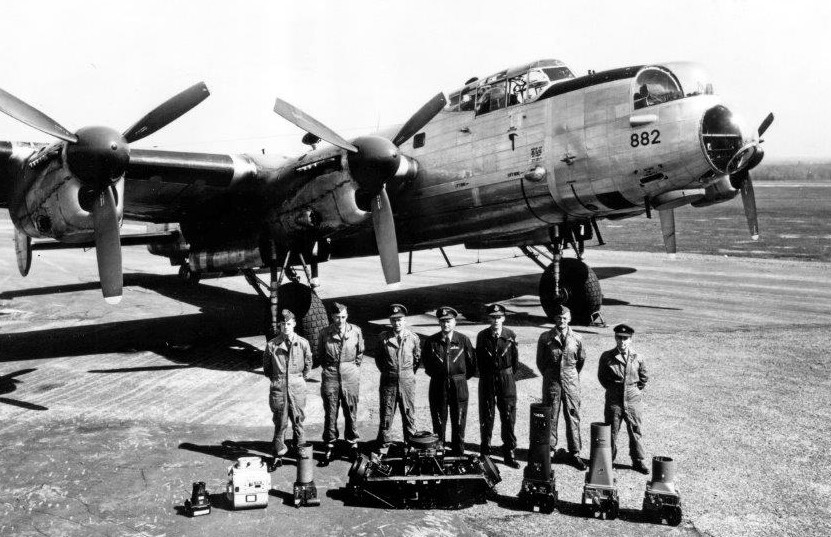
Avro Lancaster (Serial No. KB882), No. 408 Squadron crew with photo equipment.
(National Air Force Museum of Canada Photo)
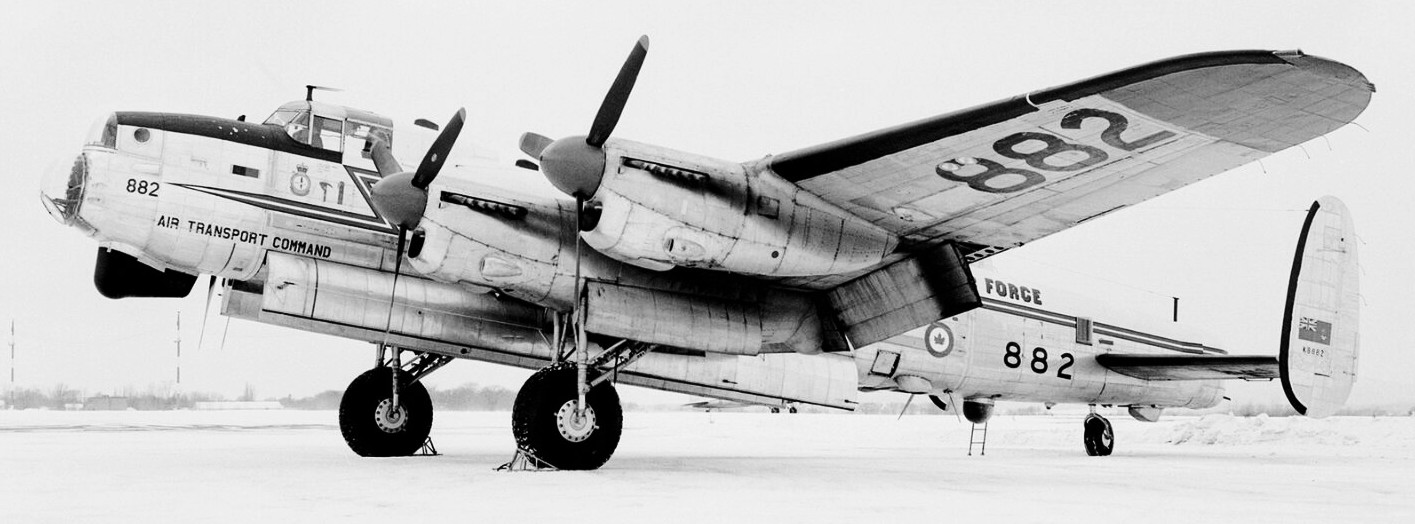
Avro Lancaster (Serial No. KB882), NAFM RCAF.
Avro Lancaster KB 882 was built in November 1944 by Victory Aircraft Ltd in Malton, Ontario; one of 430 Mk. 10 Lancasters built under licence in Canada. Ferried to England in March 1945, it was taken on strength by 428 “Ghost” Squadron, 6 Bomber Group and based at Middleton St. George, Yorkshire. Wearing the Squadron code NA-R, it flew 11 combat missions prior to the end of hostilities in Europe. KB 882 returned to Canada in June 1945 as it was destined to become part of “Tiger Force”, Canada’s contribution to the air war in the Pacific. The war ended prior to deployment and KB 882 was placed in storage at MacLeod, Alberta.
In 1956, KB 882 was taken out of storage, extensively modified and eventually delivered to 408 “Goose” Squadron at RCAF Station Rockcliffe, Ontario a little more than 12 years since its last operational mission. The most notable modification to KB 882 was to Mk 10 AR (Area Reconnaissance) configuration which included a 40-inch extension ahead of the cockpit in order to house the additional camera and radar installations. For the next 8 years, KB 882 flew a wide variety of photo mapping, intelligence gathering, and photo reconnaissance missions including the surveillance of numerous Soviet ice stations.
Struck off strength in 1964, KB 882 was bought by the City of Edmundston, New Brunswick and placed on static display at the local airport. The City of Edmundston gave KB 882 to the National Air Force Museum of Canada in 2017, at which time it was transported to Trenton and restoration began. External restoration was completed in 2024, and the aircraft was moved for display at Base31 in Picton, Ontario on a temporary loan while the Museum works towards a building expansion to house the aircraft.
(RCAF Photo)
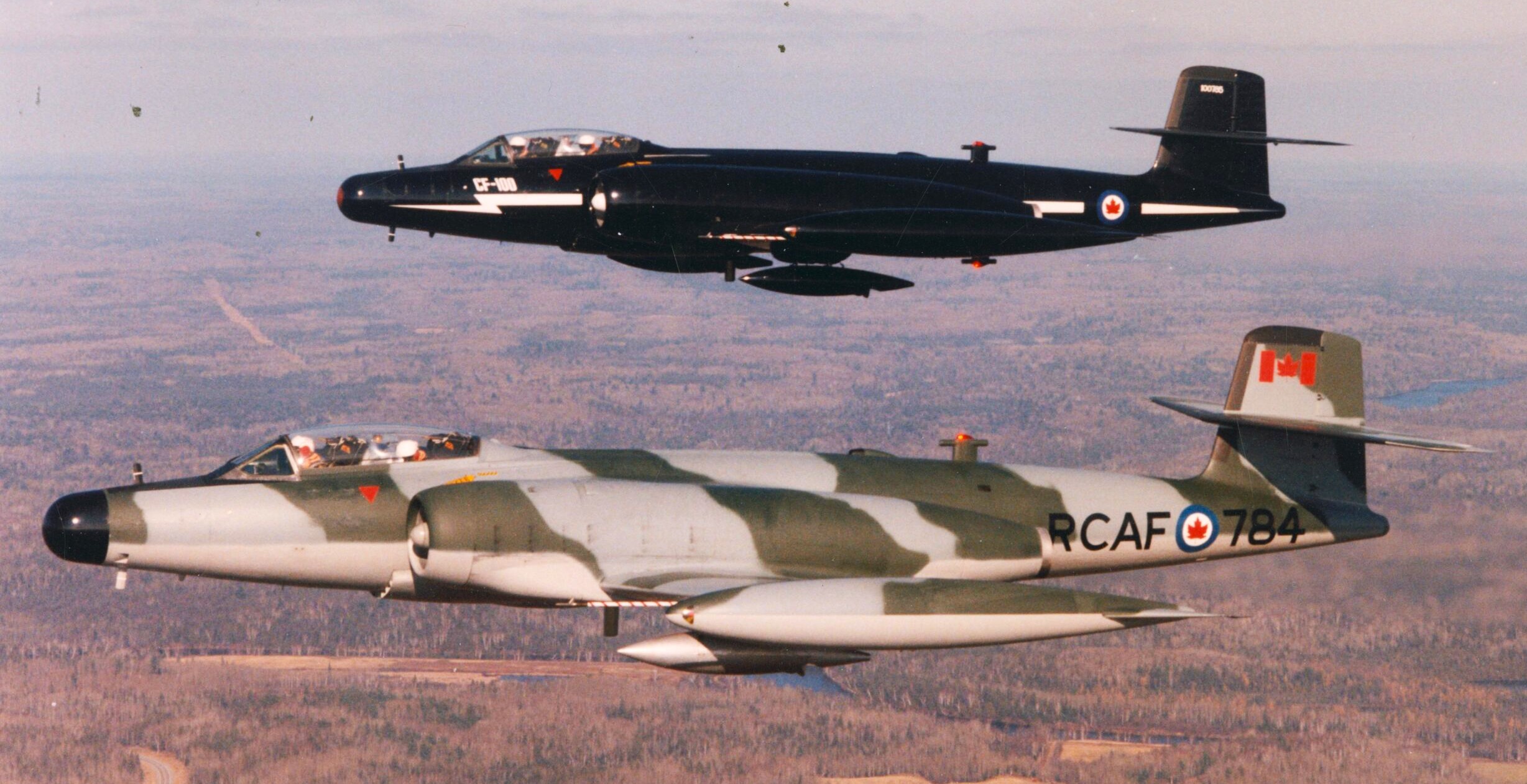
Avro CF-100 Canuck Mk. 5, RCAF (Serial No. 18784), and black-painted Avro CF-100 Canuck Mk. 5 (Serial No. 18774).
(Alain Rioux Photo)
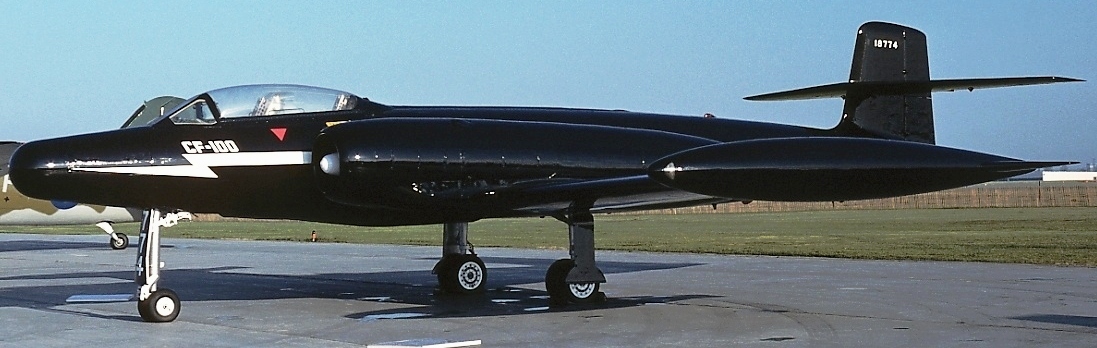
Avro CF-100 Canuck Mk. 5 (Serial No. 18774), (Serial No. 100774), painted black to represent the CF-100 prototype.
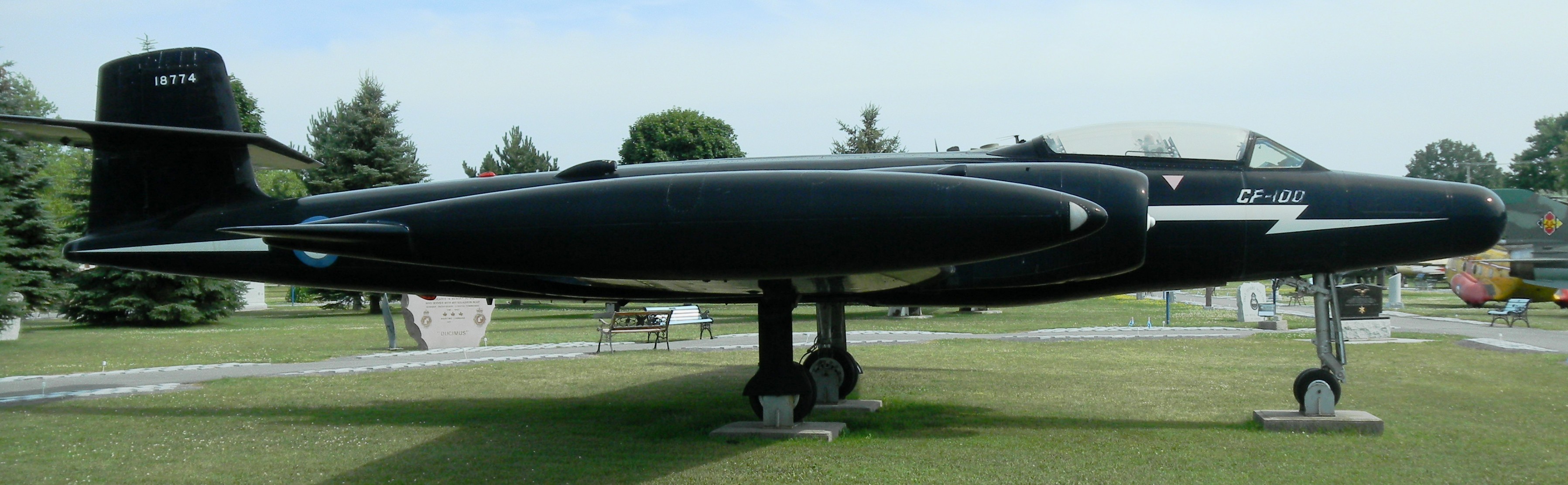
(Author Photo)
Avro CF-100 Canuck Mk. 5 (Serial No. 18774), (Serial No. 100774), painted black to represent the CF-100 prototype.
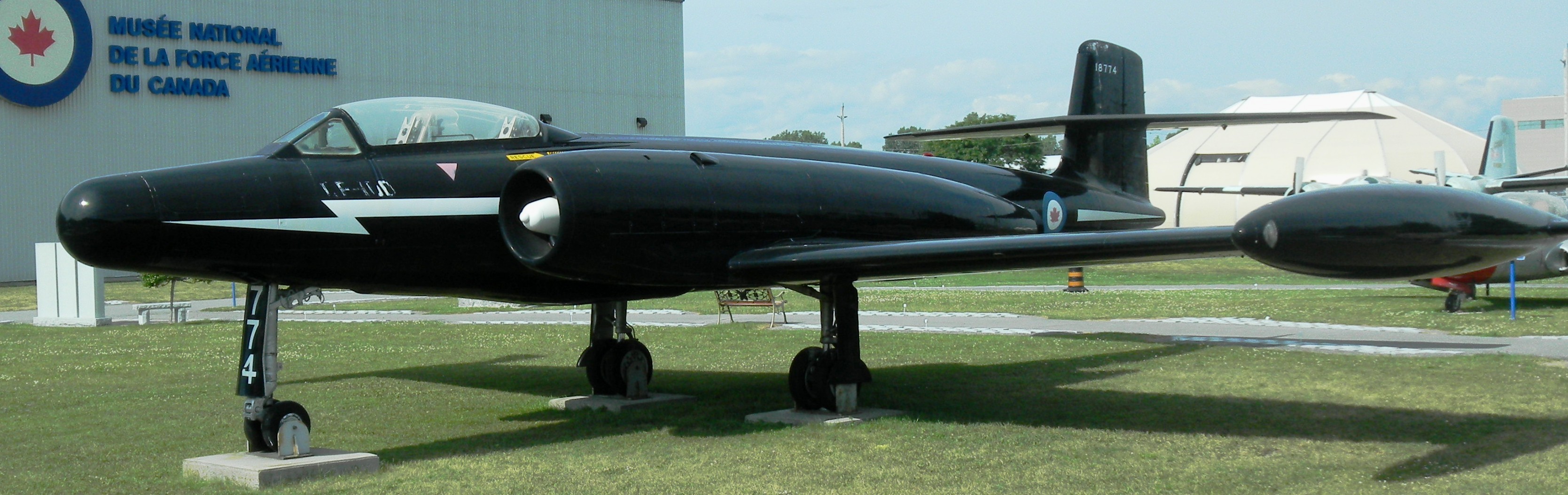
(Author Photo)
Avro CF-100 Canuck Mk. 5 (Serial No. 18774), (Serial No. 100774), painted black to represent the CF-100 prototype.
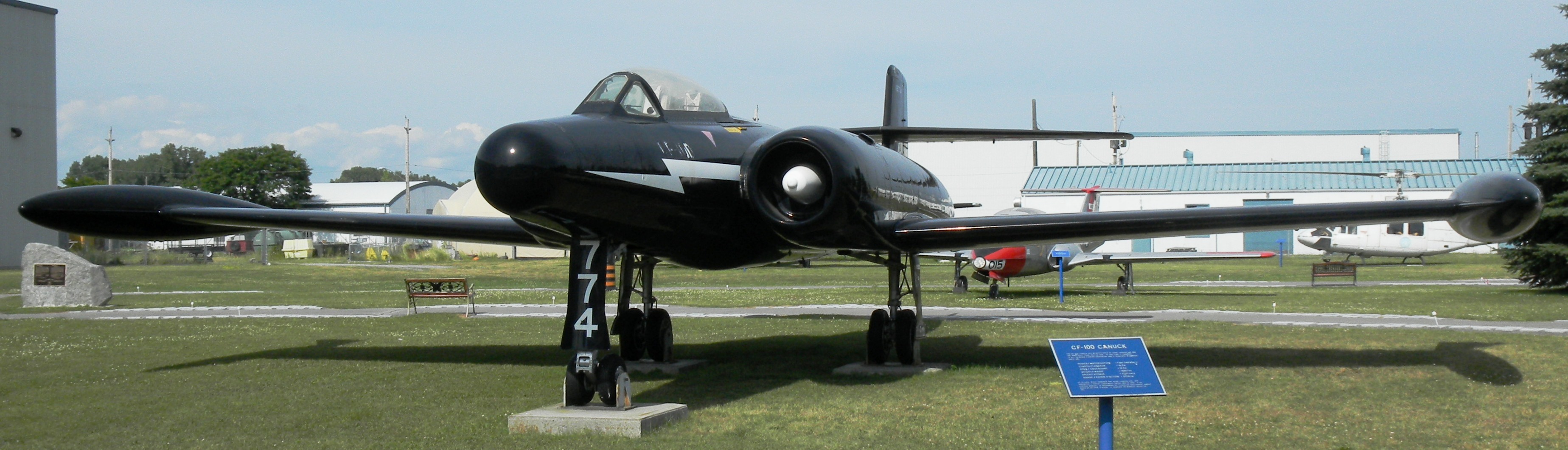
(Author Photo)
Avro CF-100 Canuck Mk. 5 (Serial No. 18774), (Serial No. 100774), painted black to represent the CF-100 prototype. CF-100 18774 was officially taken on strength with the RCAF on October 8, 1958. It began its service flying with 428 All-Weather Fighter Squadron out of RCAF Station Uplands, Ontario, before eventually transferring to 410 All-Weather Fighter Squadron, also at RCAF Station Uplands. In 1961, 428 Squadron was disbanded and 410 Squadron started replacing its CF-100 Canucks with CF-101 Voodoos. CF-100 18774 was put into storage at RCAF Station Mountain View. It was officially removed from service in June 18, 1976, remaining in storage until it was transferred to the Museum in 1994. (NAFMC)
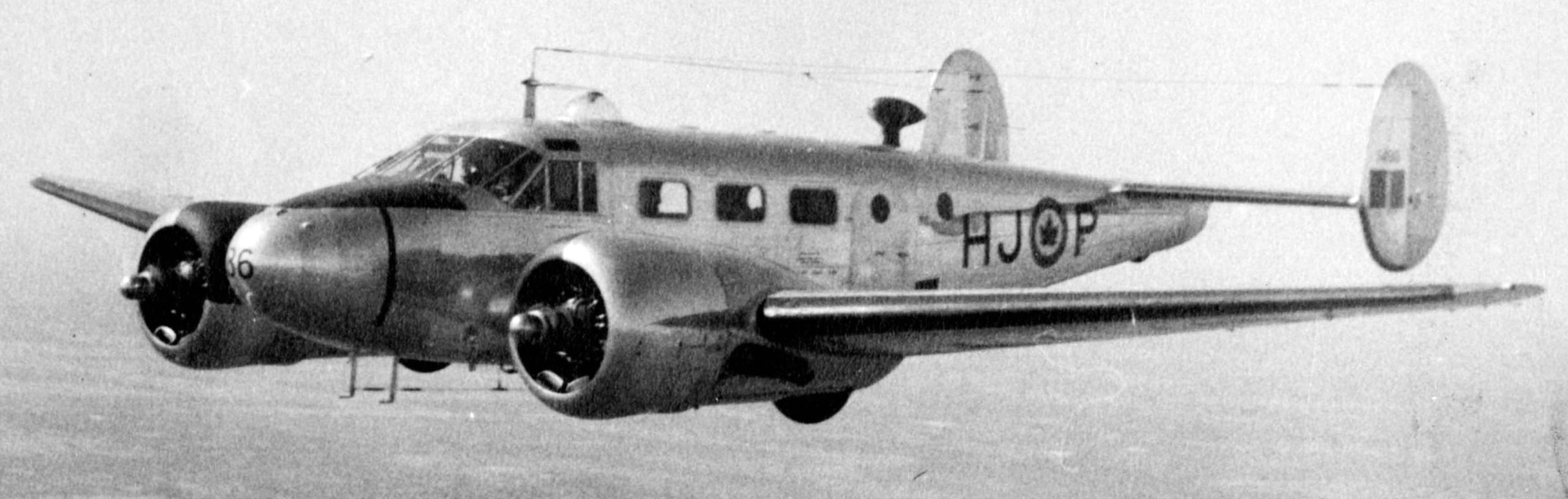
(RCAF Photo)
Beechcraft CT-128 Expeditor (Serial No. 1386), coded HJ-P.
(RCAF Photo)
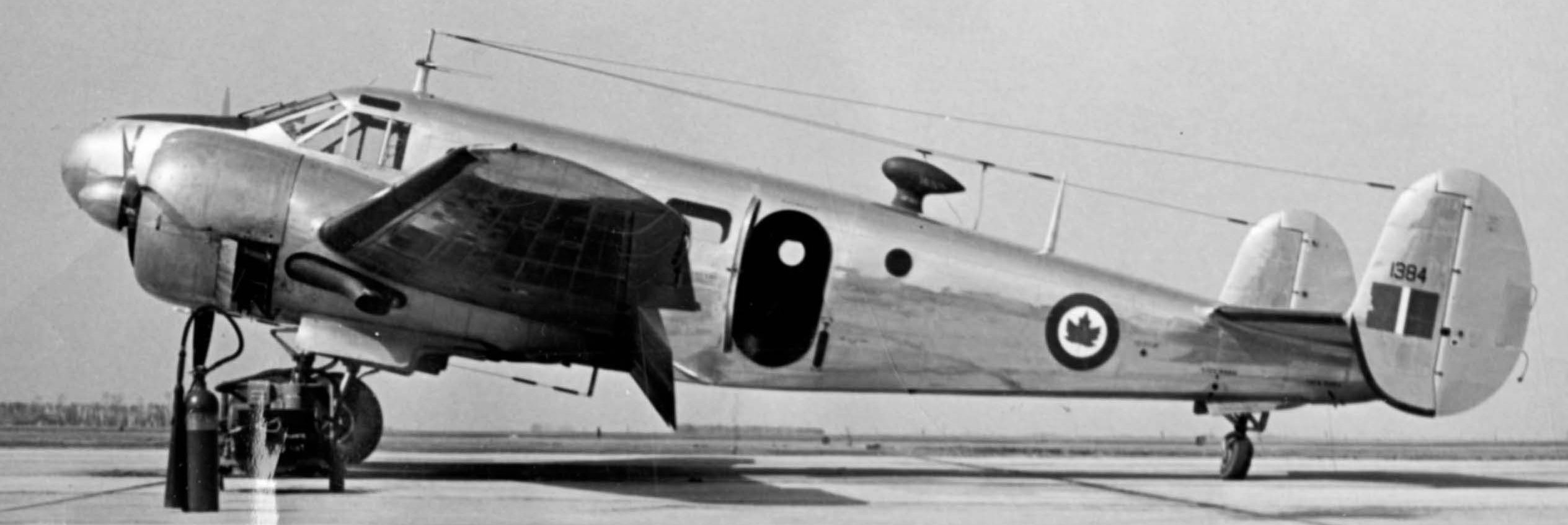
Beechcraft CT-128 Expeditor (Serial No. 1384).
(RCAF Photo)
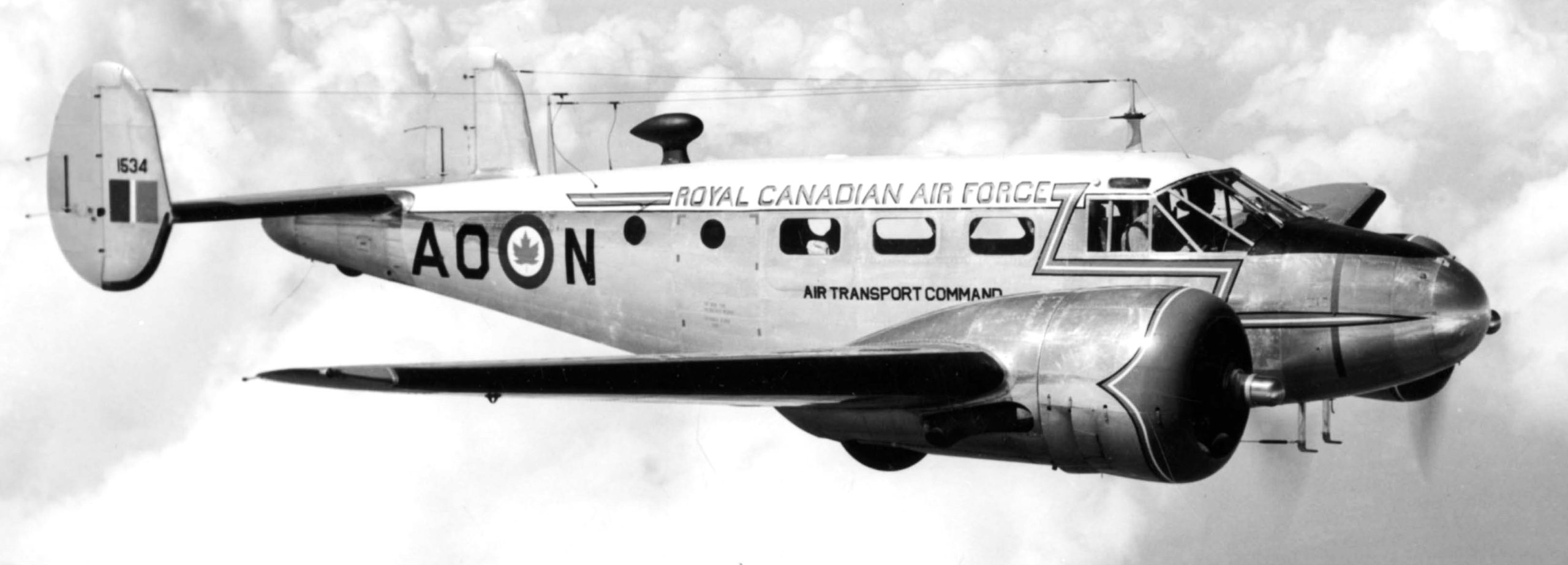
Beechcraft CT-128 Expeditor Mk. III TM (Serial No. 1560). The Museum’s Expeditor, 1560, is a Mk III TM. It was taken on strength at RCAF Station Trenton on the April 28, 1952. Flown by a number of units including Central Flying School, No 103 (KU), Training Command, and Air Transport Command, it eventually was sold to Ontario Central Airlines in the late 1960s. Eventually, it went on static display at the entrance to the Southport Airport in Portage La Prairie Manitoba for over 30 years. In 2012 it was acquired by the Museum and transported from Manitoba to Ontario in 2013. It is painted as it appeared on the ramp at RCAF Station Trenton in 1959 operated by Air Transport Command. (NAFMC)
(CAF Photo)
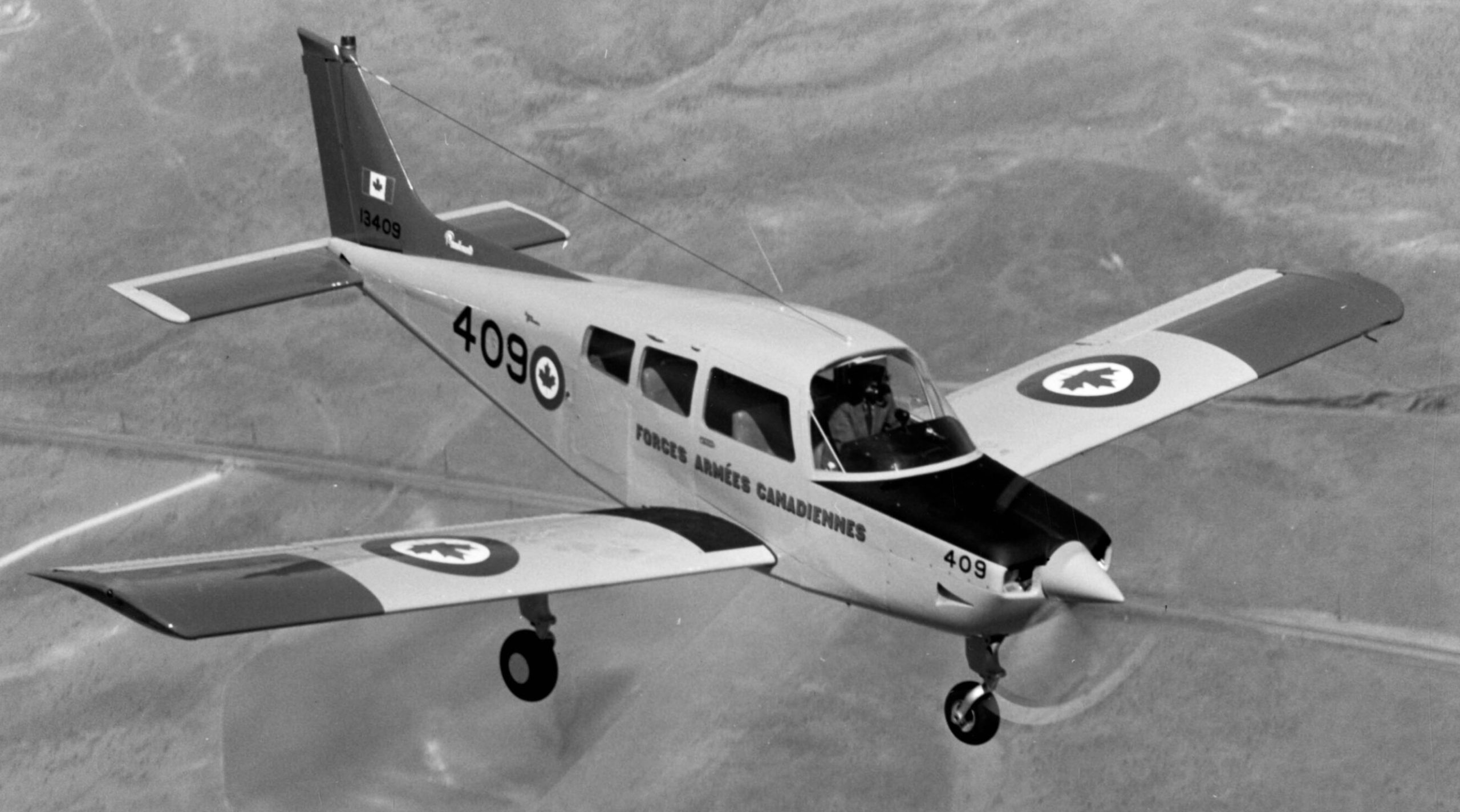
Beechcraft CT-134A Musketeer (Serial No. 13409)
(John Davies Photo)
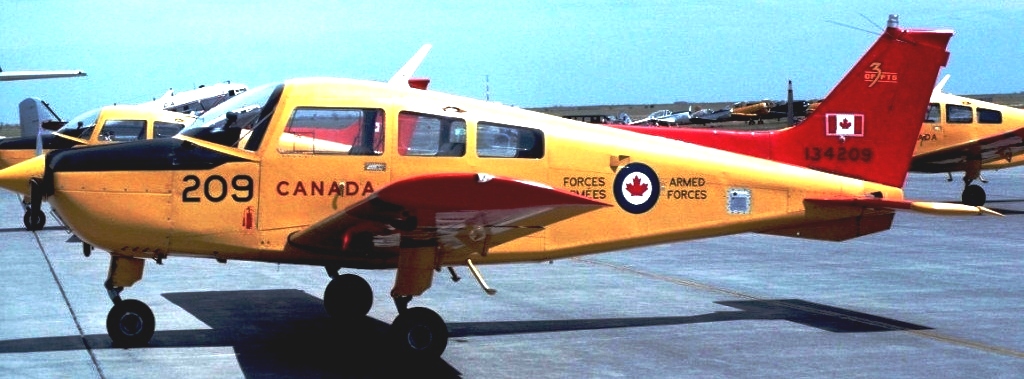
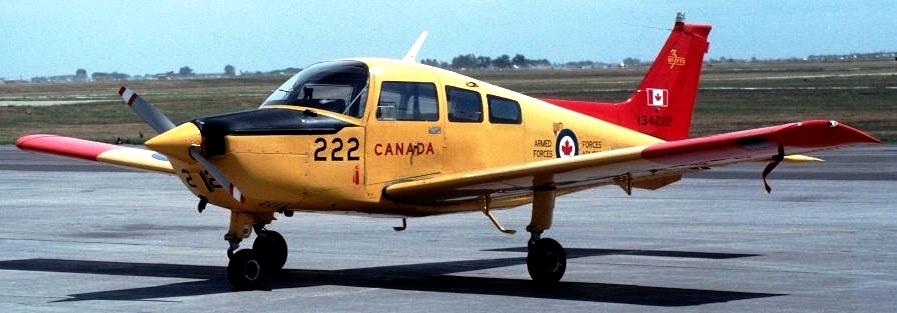
Beechcraft CT-134A Musketeer (Serial No. 134213), (A800). The museum’s Musketeer flew with No. 3 Flying Training School at CFB Portage la Prairie, Manitoba. (NAFMC)
(John Davies Photo)
Beechcraft CT-134A Musketeer (Serial No. 134213), (A800).
(Andre Gerwing Photo)
(Mike Kaehler Photo)
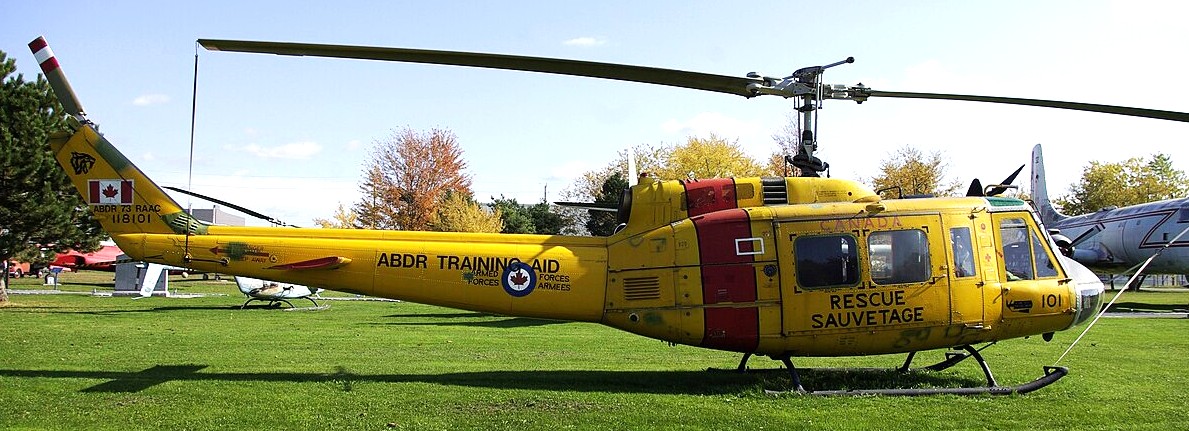
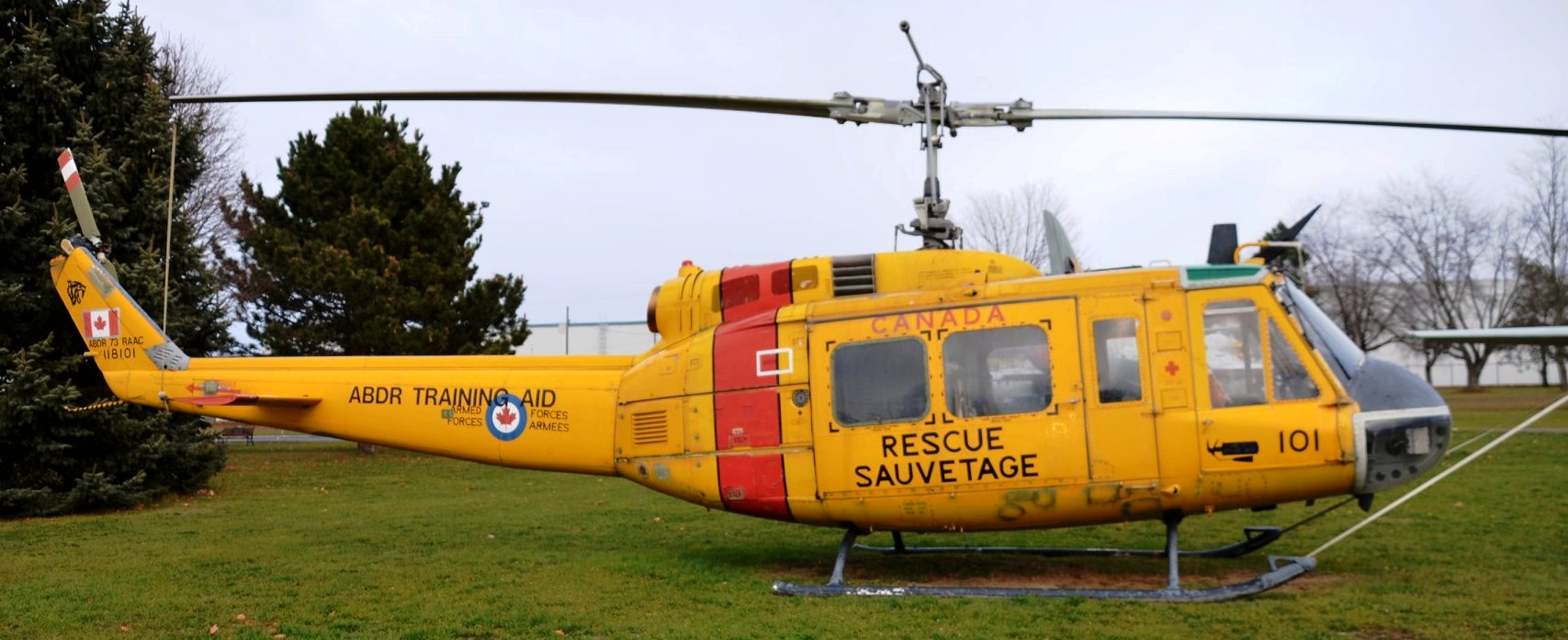
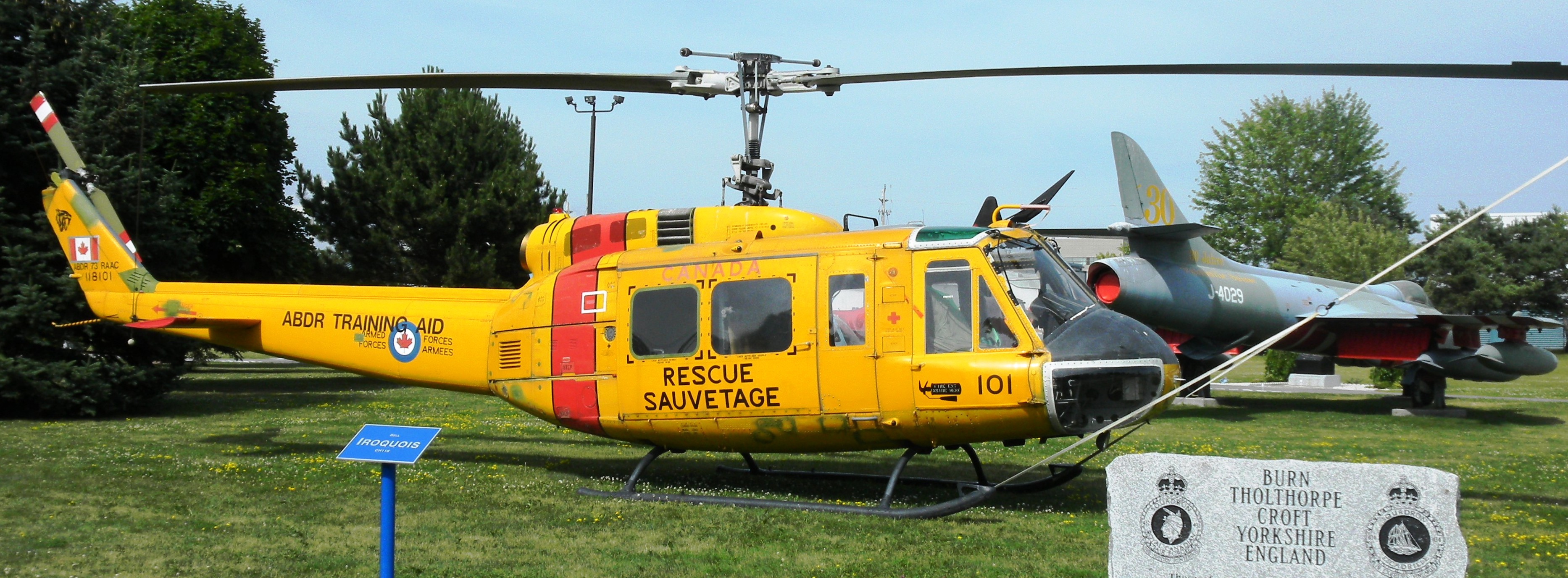
Bell CH-118 Iroquois Helicopter (Serial No. 118101). The museum’s Iroquois served part of its service life with No. 439 ‘Tiger’ Squadron, which was activated in Bagotville in 1993 as a Combat Support unit. All Iroquois were replaced by Bell Griffon helicopters in 1995. The museum’s helicopter was used for Aircraft Battle Damage Repair training at CFB Borden and then at CFB Trenton. (NAFMC)
(Author Photo)
Bell CH-118 Iroquois Helicopter (Serial No. 118101).
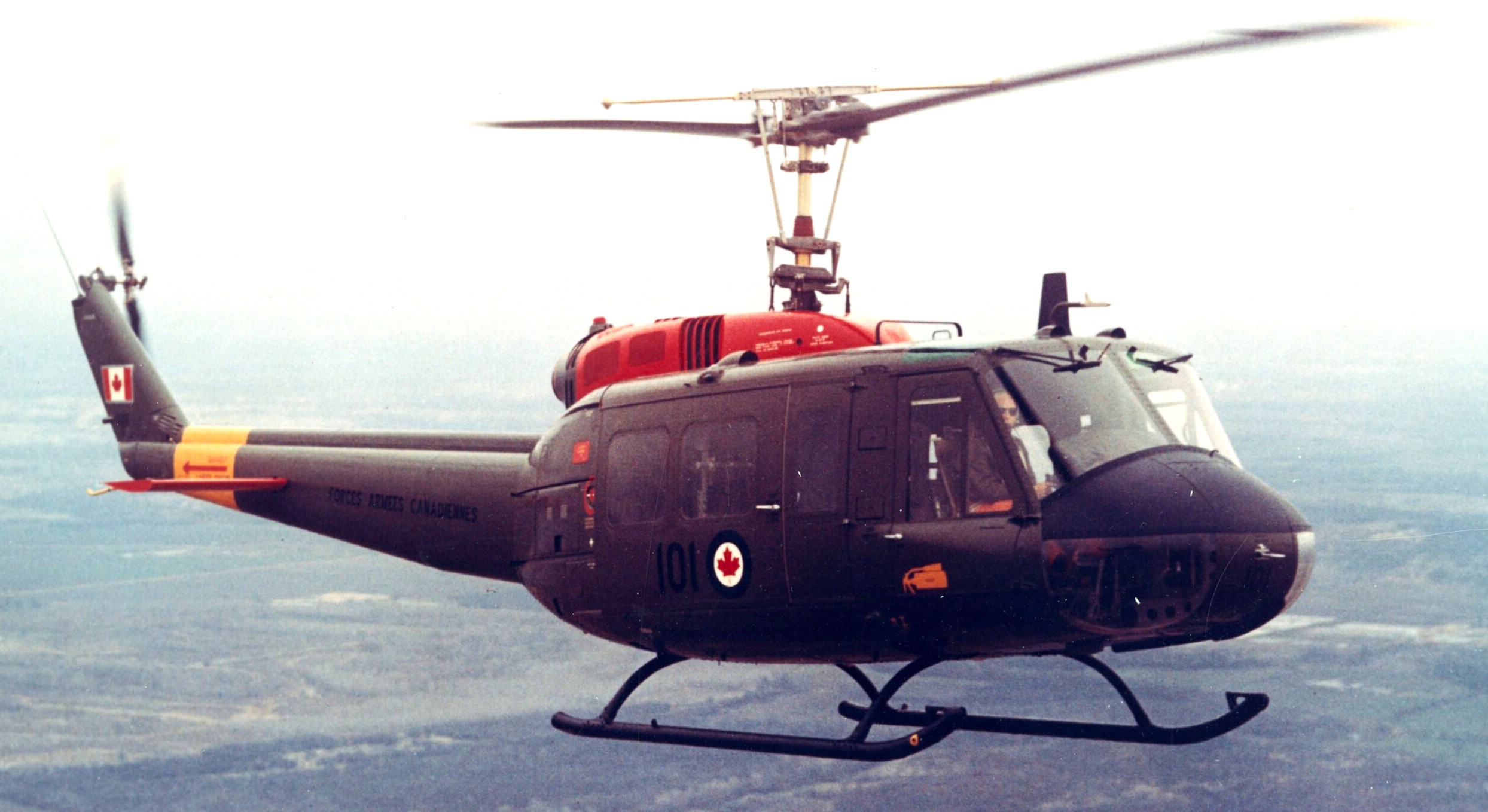
(CAF Photo)
Bell CH-135 Twin Huey.
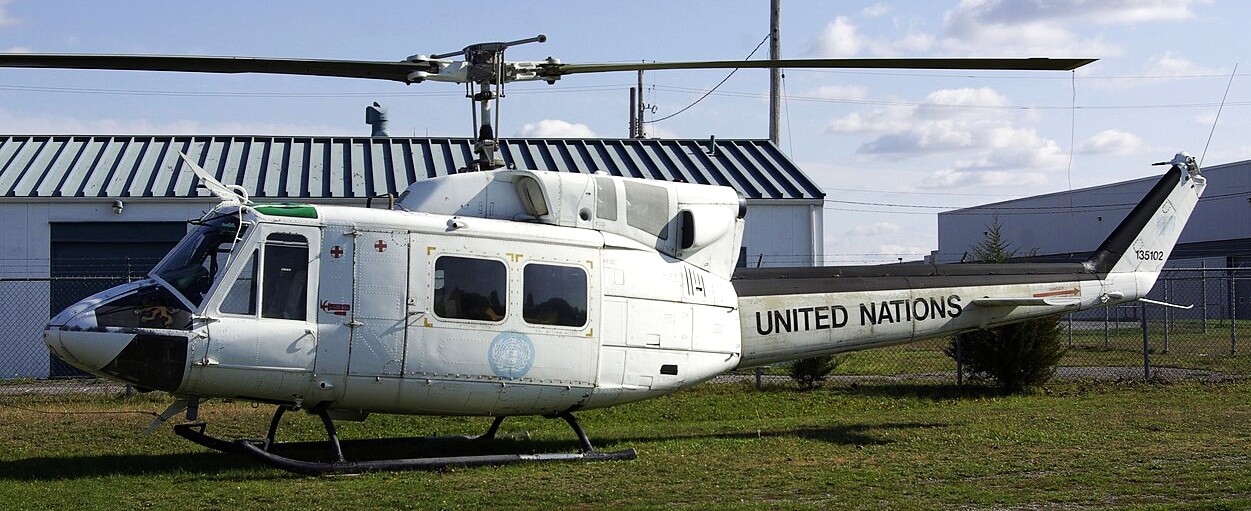
(Andre Gerwing Photo)
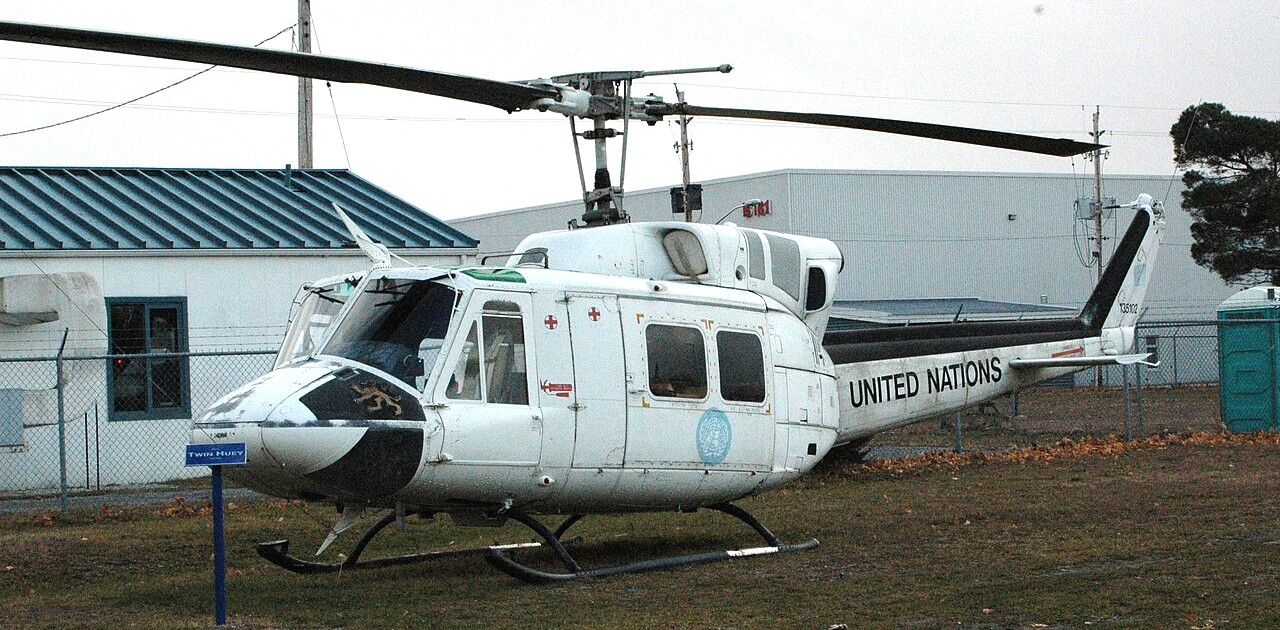
(airforcefe Photo)
Bell CH-135 Twin Huey Helicopter (Serial No. 135102). Twin Huey helicopters primarily served Army bases and were frequently used on United Nations peacekeeping missions. The museum’s Huey served No. 427 ‘Lion’ Squadron on overseas missions in Egypt (1987, Multinational Force & Observers), Honduras (1989, UN) and Haiti (1995, UN). No. 427 Squadron is a Tactical Helicopter squadron based at CFB Petawawa, Ontario. (NAFMC)
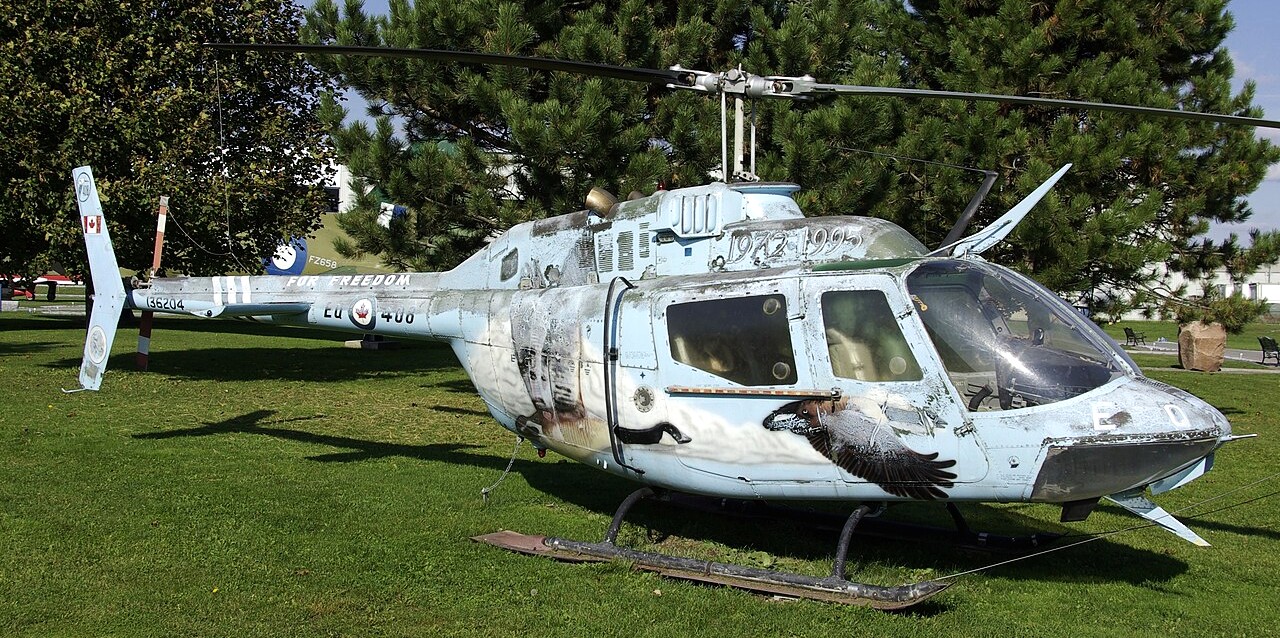
(Andre Gerwing Photo)
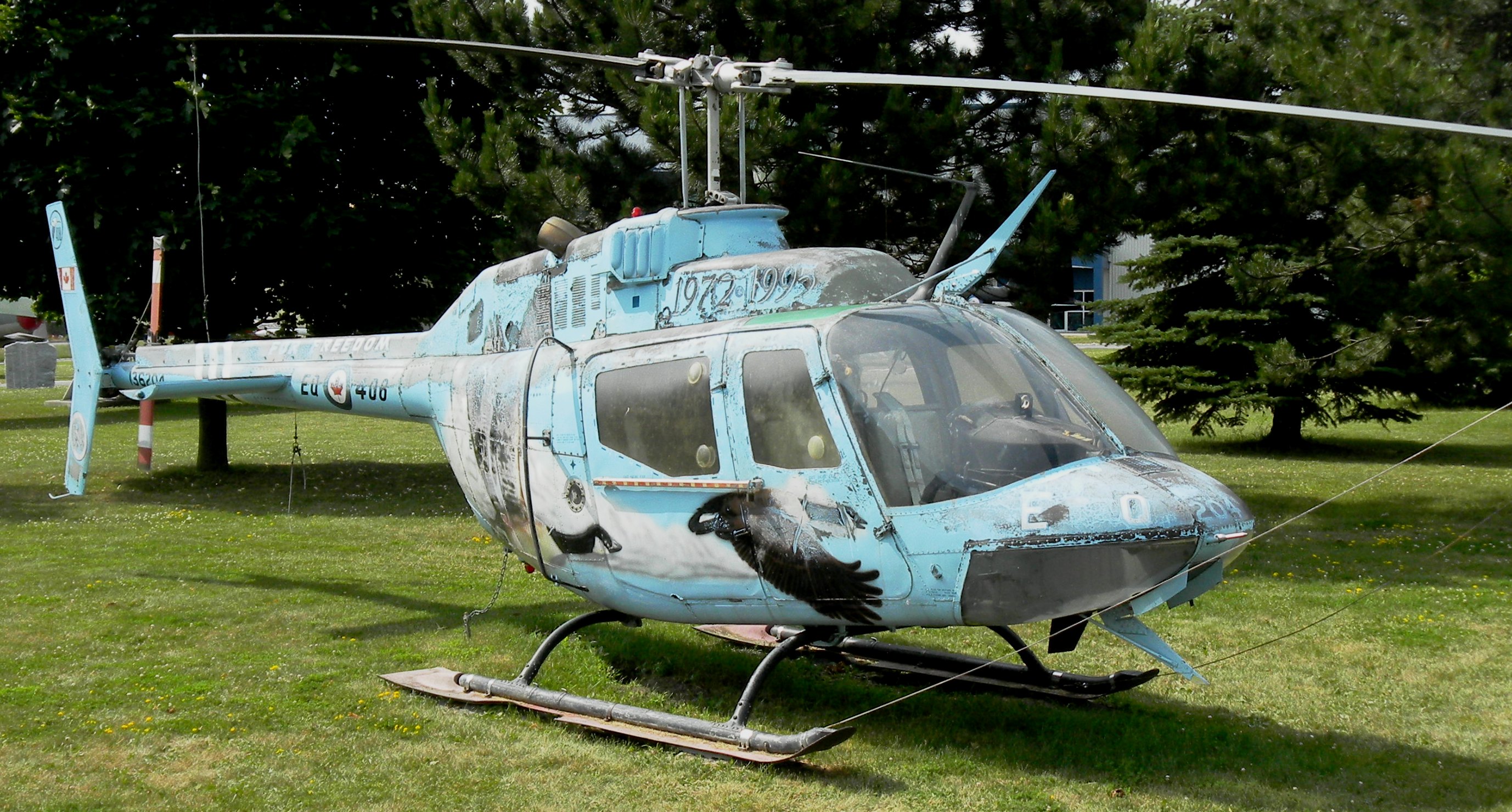
(Author Photo)
Bell CH-136 Kiowa Helicopter (Serial No. 136204). The museum’s example served No. 408 ‘Goose’ Squadron in Edmonton, where its primary goal was to provide tactical air support for the army. Upon its retirement in 1996, the aircraft was given its current paint scheme to honour both the Kiowa and 408 Squadron’s contribution to the Canadian Forces. The image of the flying geese represents 408’s mascot, while the ‘For Freedom’ phrase is the squadron’s motto. The black-and-white markings on the tail are the same markings used by Allied Invasion aircraft during the Second World War, in which 408 Squadron was involved. The ‘EQ’ represents the unit’s Second World War tail code. (NAFMC)
(NAFMRCAF Photo)
(NAFMRCAF Photo)
(JustSomePics Photo)
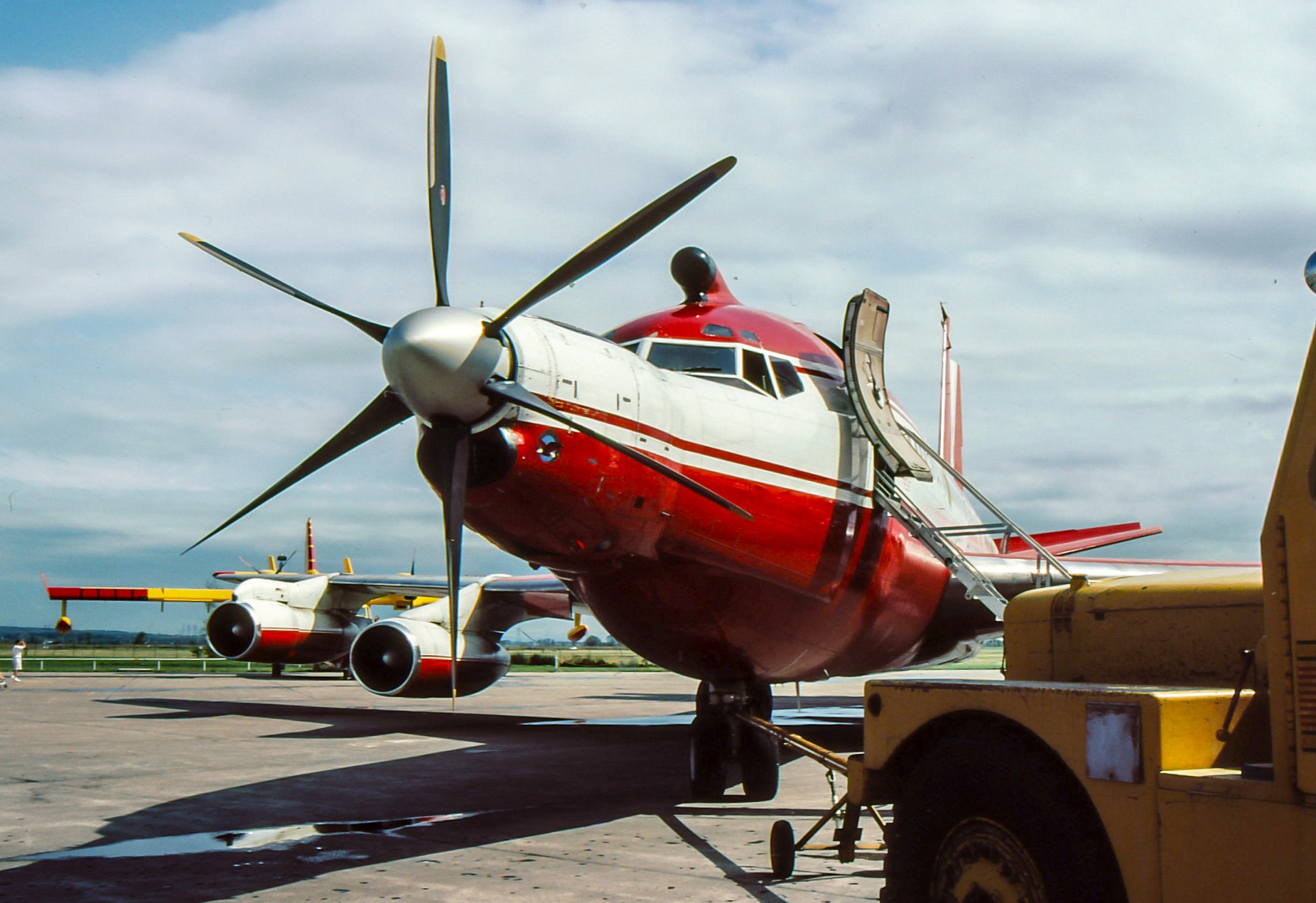
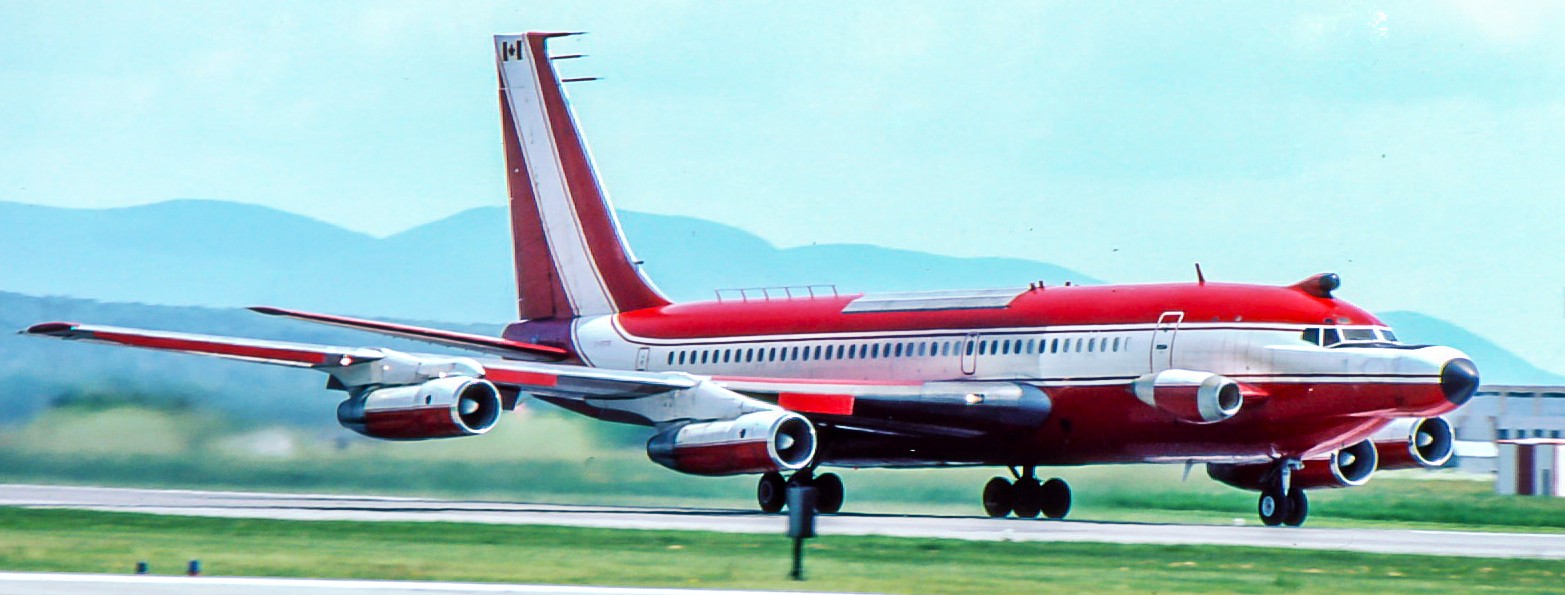
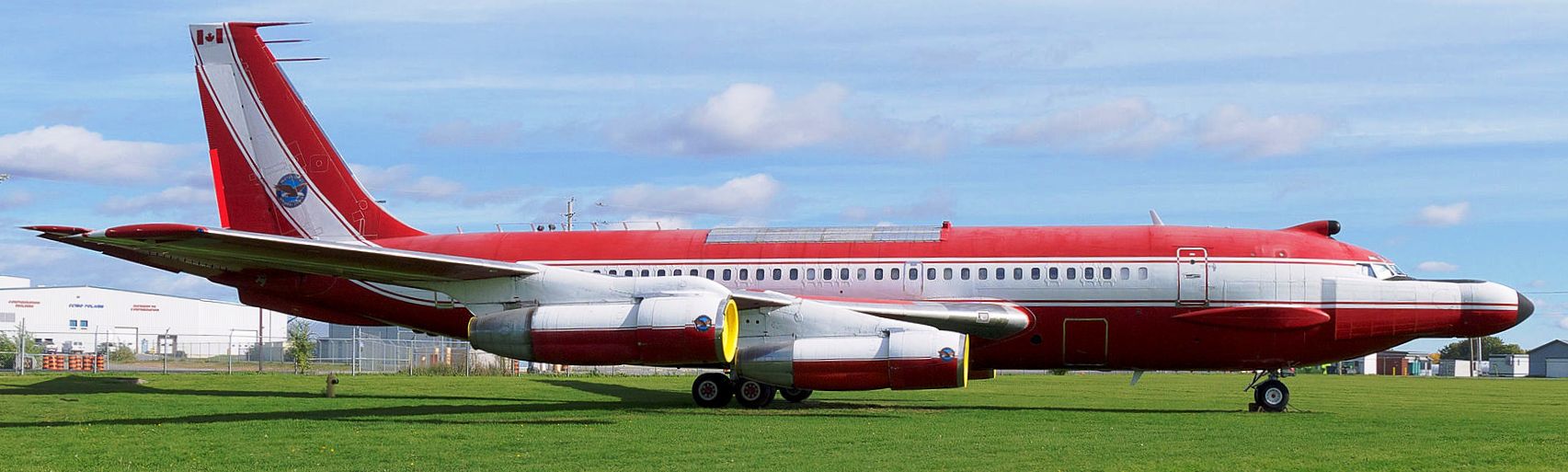
Boeing 707 aerial research aircraft with modified nose. Introduced by Boeing in 1959, the 720 was a smaller capacity, lighter, medium range variant of the 707, one of the most successful airliners of the 20thcentury. C-FETB was a 720 flying test bed operated by Pratt & Whitney Canada until 2010. The Model 720-023B (construction number 18024) was the 177th Model 707-type airplane made by Boeing Airplane. R olled out on 28 Oct 1960, the airplane, Reg. No. N7538A, flew on 14 Jan 1961. It was delivered to American Airlines on 3 Feb. This airline operated N7538A until August 1971, when it was put in storage in Tulsa, Oklahoma. Middle East Airlines (MEA), the largest airline in Lebanon, bought the airplane on 25 Sep 1971. Re-registered as OD-AFQ, the airplane was delivered to its new owner on 30 Sep. Like many, if not most MEA airplanes, OD-AFQ was forced to stay away from its main base in Beirut when Israel invaded Lebanon, in June 1982, occupying a good part of the country until 1985. Based at Orly, an airport near Paris, the airplane occasionally flew passengers for Air France and Air Inter, another French airline. Pratt & Whitney Canada (PWC) bought the Model 720B in December 1985 and re-registered it as C-FETB (Flying Experimental Test Bed) on 10 Jan 1986. A series of modification were made after this date. C-FETB did its flight acceptance flight on 9 Oct 1986. A PWC crew flew the airplane across the Atlantic on 12 Oct. Known internally as FTB1 (Flying test bed 1), C-FETB was thoroughly modified for its new role between October 1986 and January 1988. It was equipped to test a variety of engines. (NAFMC).
(Andre Gerwing Photo)
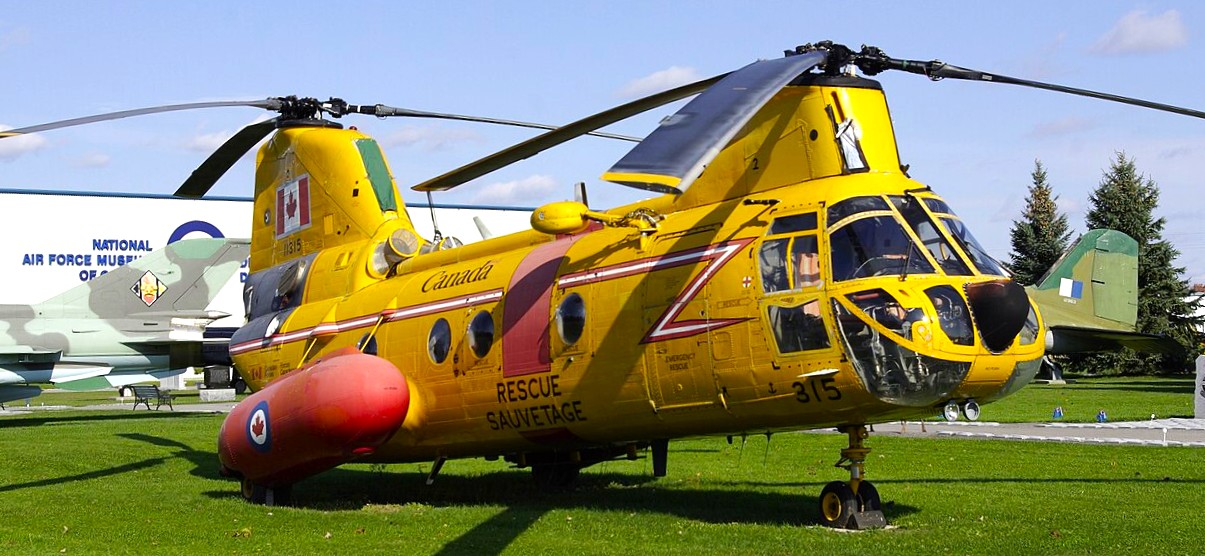
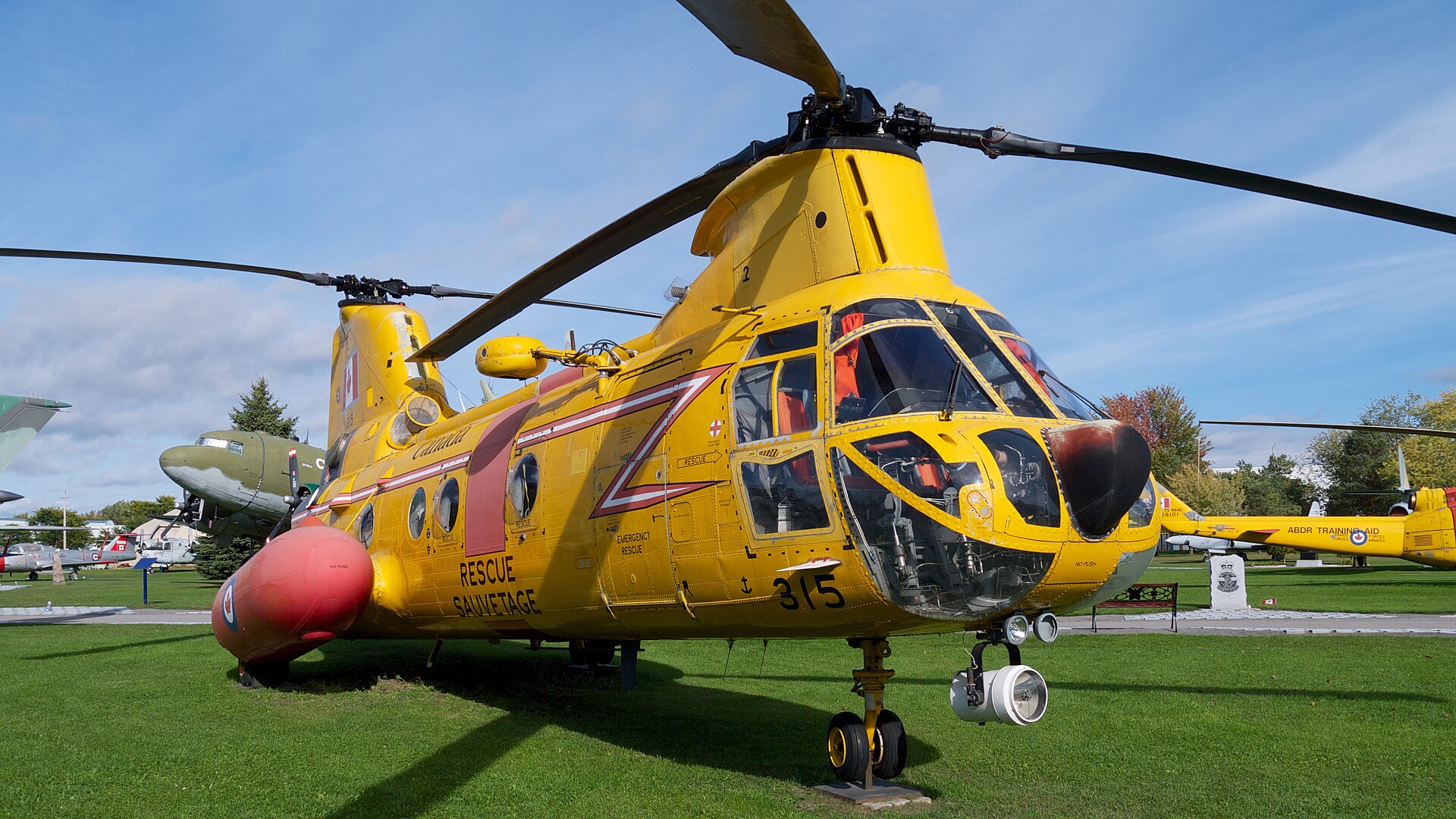
Boeing Vertol CH-113A Labrador Helicopter, RCAF (Serial No. 11315). The museum’s Labrador was one of the last three to fly in Canada. It was put into service in 1965 and initially served with No. 450 Squadron in Uplands (Ottawa). This Labrador was originally designated as ‘Voyageur’, a helicopter specifically designed for army transport. It was gradually modified with Search and Rescue equipment and was later officially re-designated as ‘Labrador’. It served with No. 424 Squadron in Trenton before its retirement in 2004. (NAFMC)
(Justsomepics Photo)
Boeing Vertol CH-113A Labrador Helicopter (Serial No. 11315).
(JustSomePics Photos)
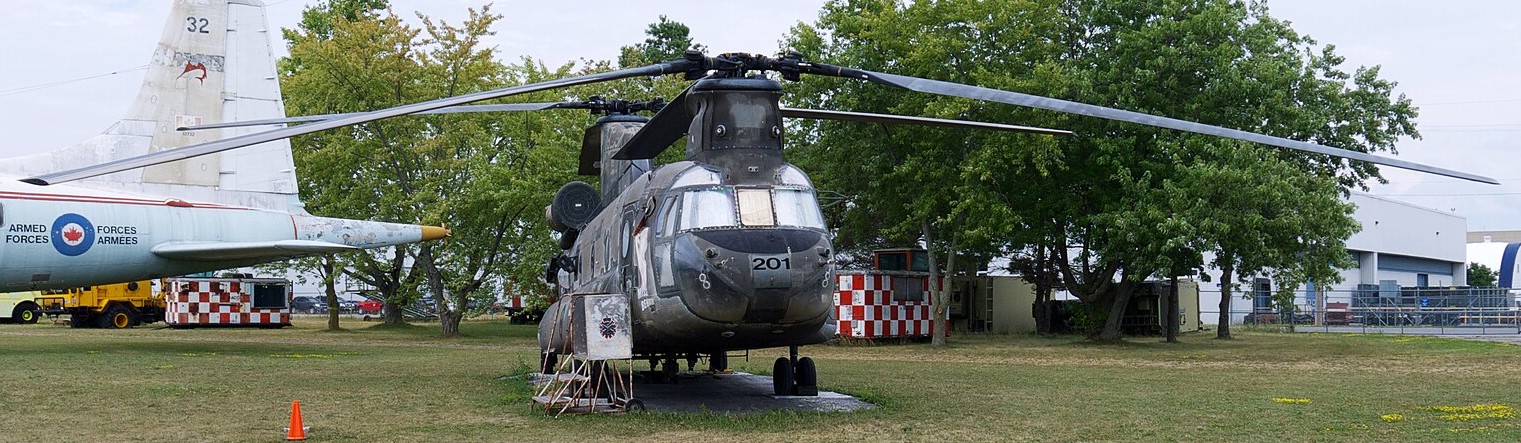
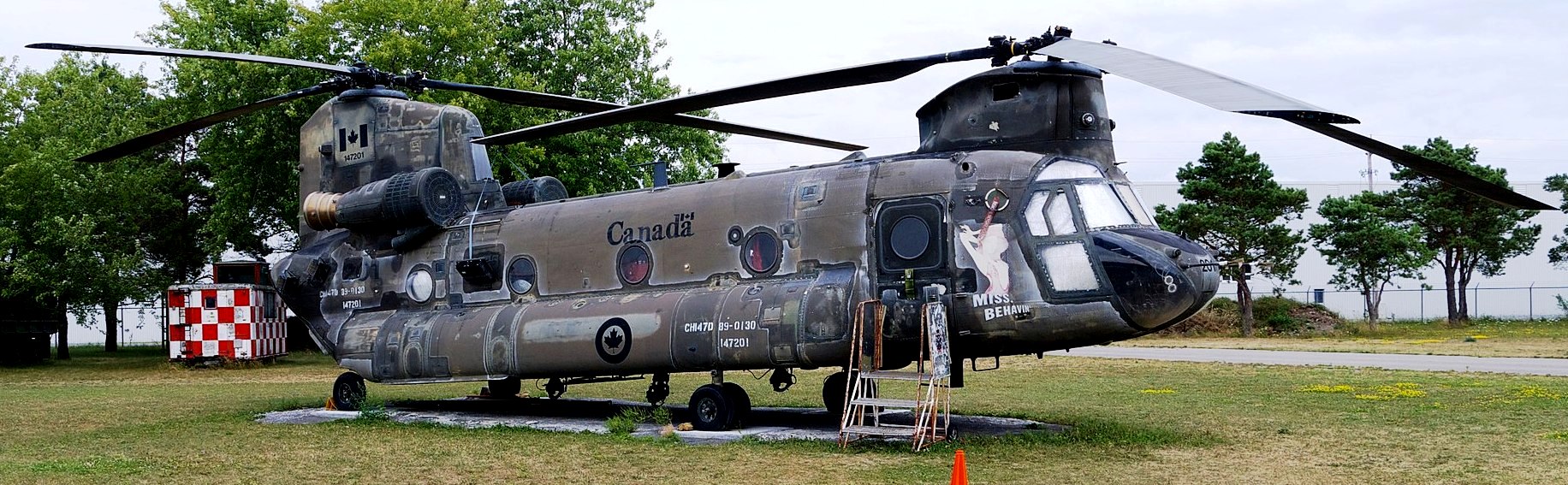
Boeing-Vertol CH-147D Chinook (Serial No. 147201) “Miss Behavin“. This helicopter was originally built as a CH-47C, US Army (Serial No. 68-16017), c/n B.609. It was converted to a CH-47D, new (Serial No. 89-00130), c/n M.3284. The helicopter was over 39 years old when it was supplied to the Canadian Forces. It was purchased second-hand from the US Army for use by Canadian Forces Joint Task Force Afghanistan Air Wing at Kandahar, Afghanistan.
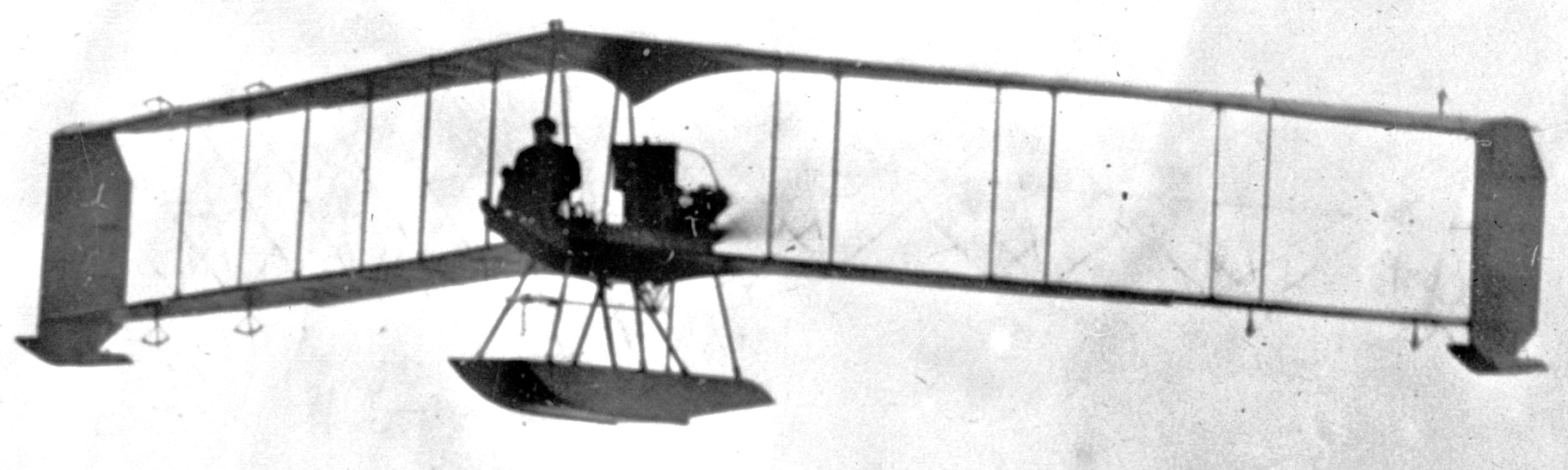
(Library of Congress Photo)
The Burgess-Dunne floatplane.
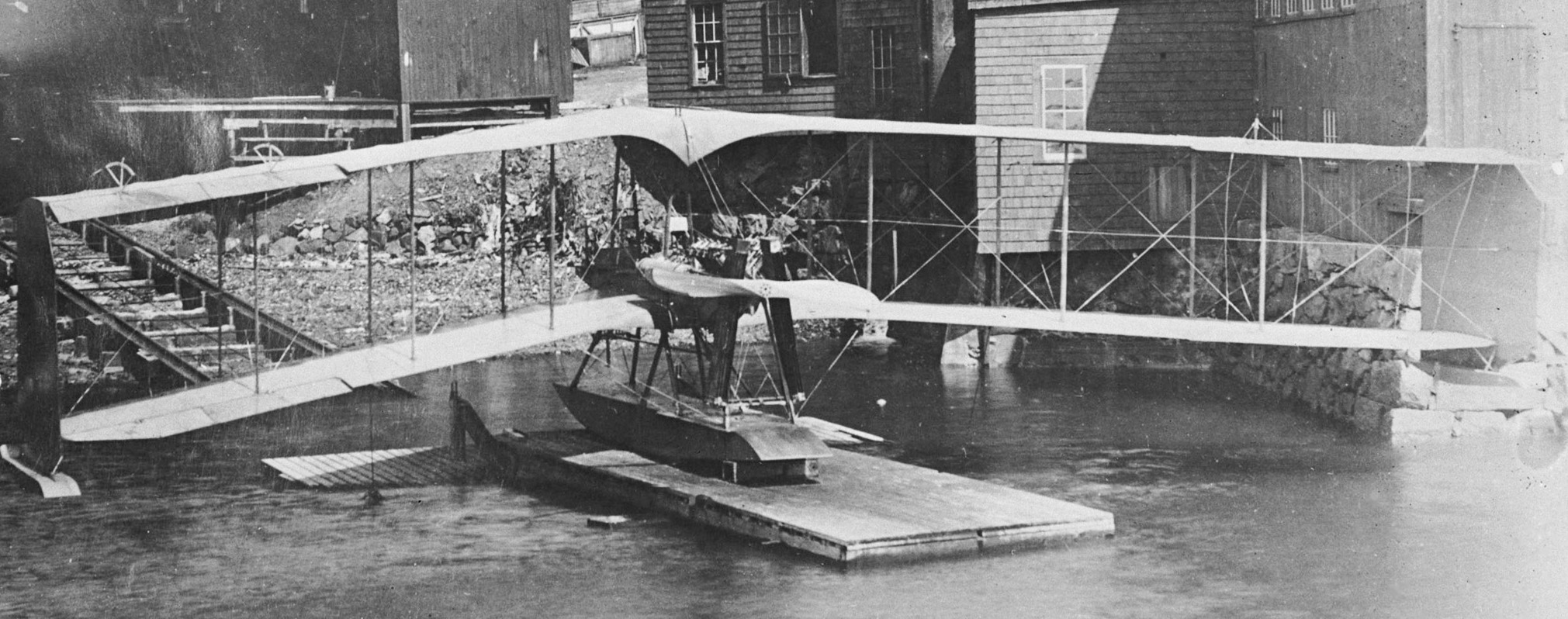
(DND Archives Photo, PL-115112)
Burgess-Dunne floatplane, resting on a floating dock.
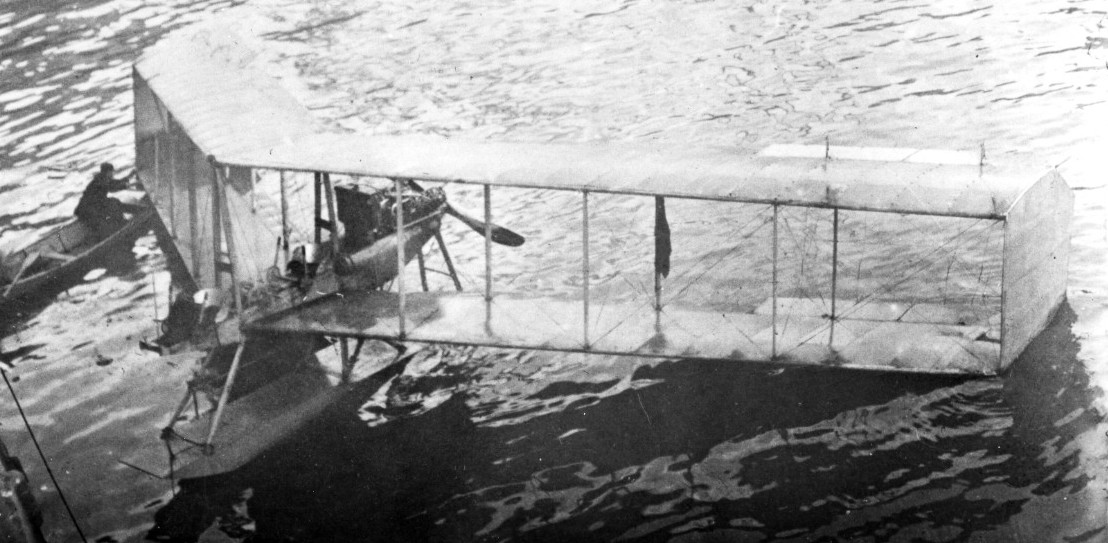
Burgess-Dunne floatplane, in Quebec City. RE17706
Burgess-Dunne floatplane. This replica biplane was acquired from Barry MacKeracher and has been with the Museum since 2001. An origianl Burgess-Dunne floatplane was the first Canadian military aircraft, purchased from the Burgess Company in Sep 1914. Burgess-Dunne was the first licensed aircraft manufacturer in the United States. It later became a subsidiary of Curtiss Aeroplane in 1914. One of the company’s best projects was a tailless biplane with central floats for water take off/landing based on a prototype designed by English engineer John William Dunne (1875 – 1949). This aircraft was known as the Burgess-Dunne. (NAFMC)
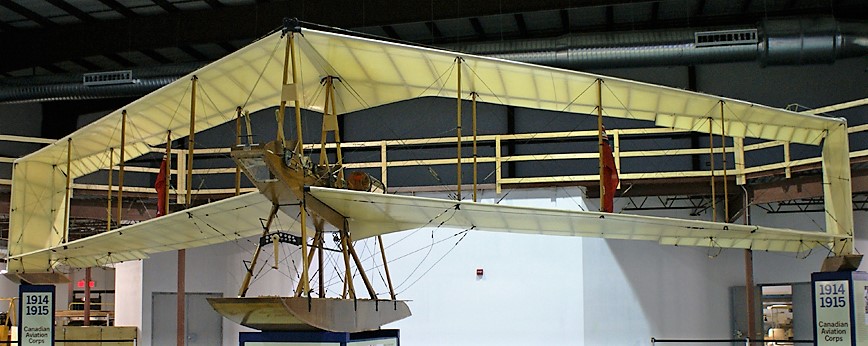
(National Air Force Museum of Canada Photo)
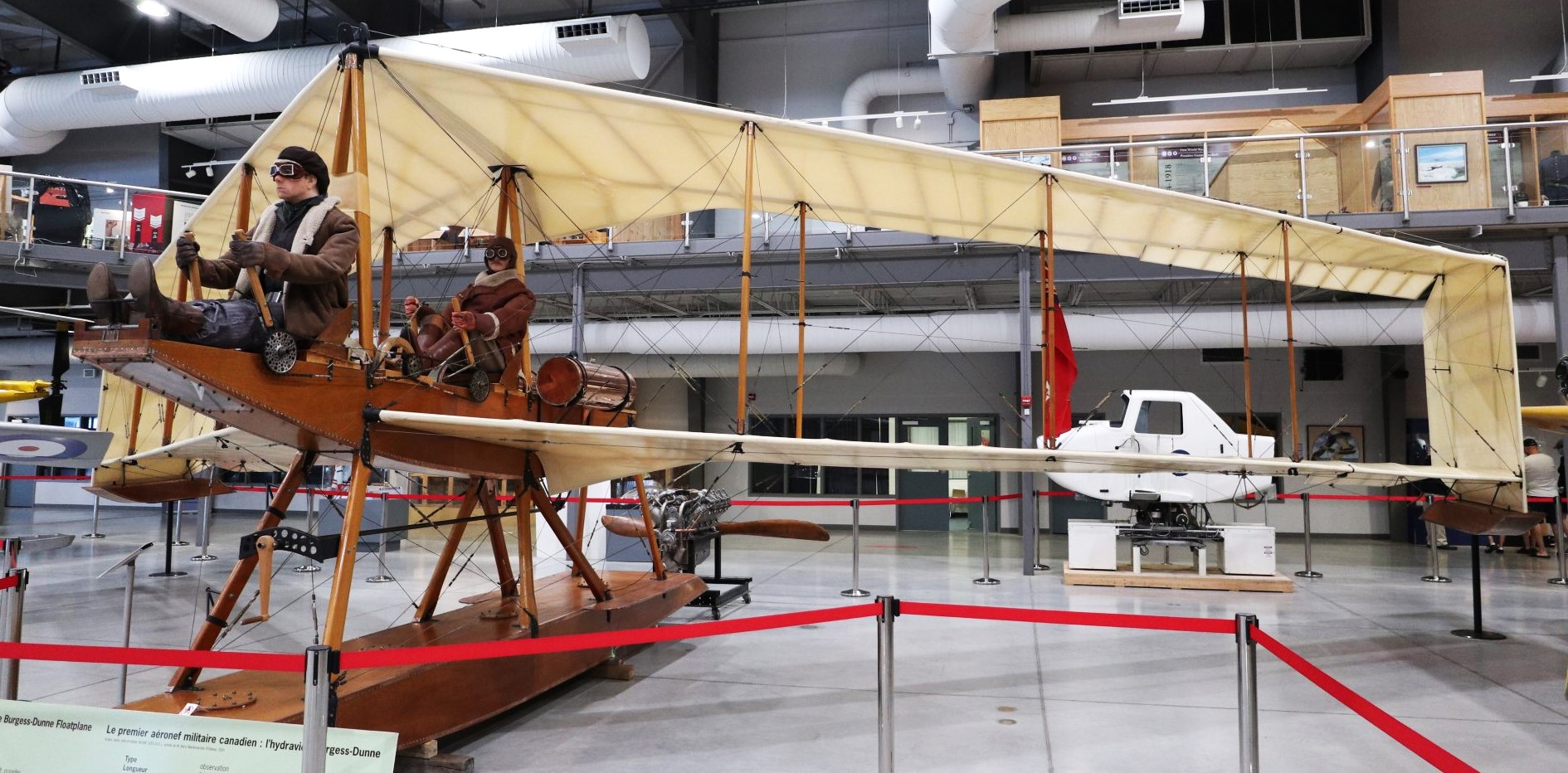
(National Air Force Museum of Canada Photo)
Burgess-Dunne floatplane, replica, National Air Force Museum of Canada, CFB Trenton, Ontario
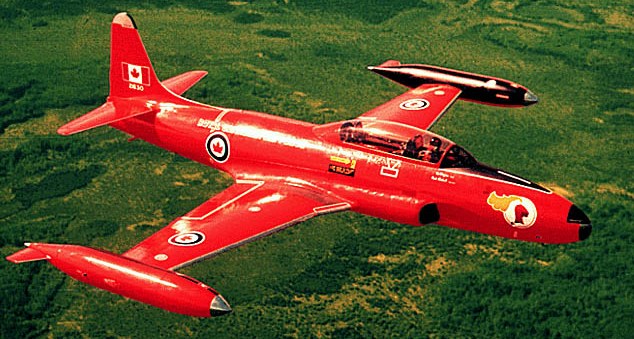
(RCAF Photo)
Canadair CT-133 Silver Star, Red Knight colours.
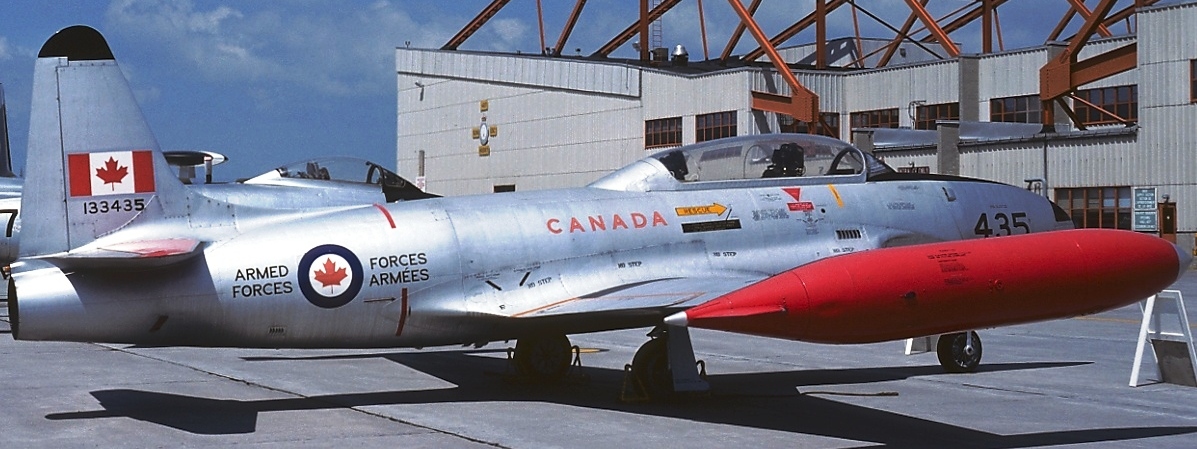
(Alain Rioux Photo)
Canadair CT-133 Silver Star (Serial No. 133435), before being painted in Red Knight colours.
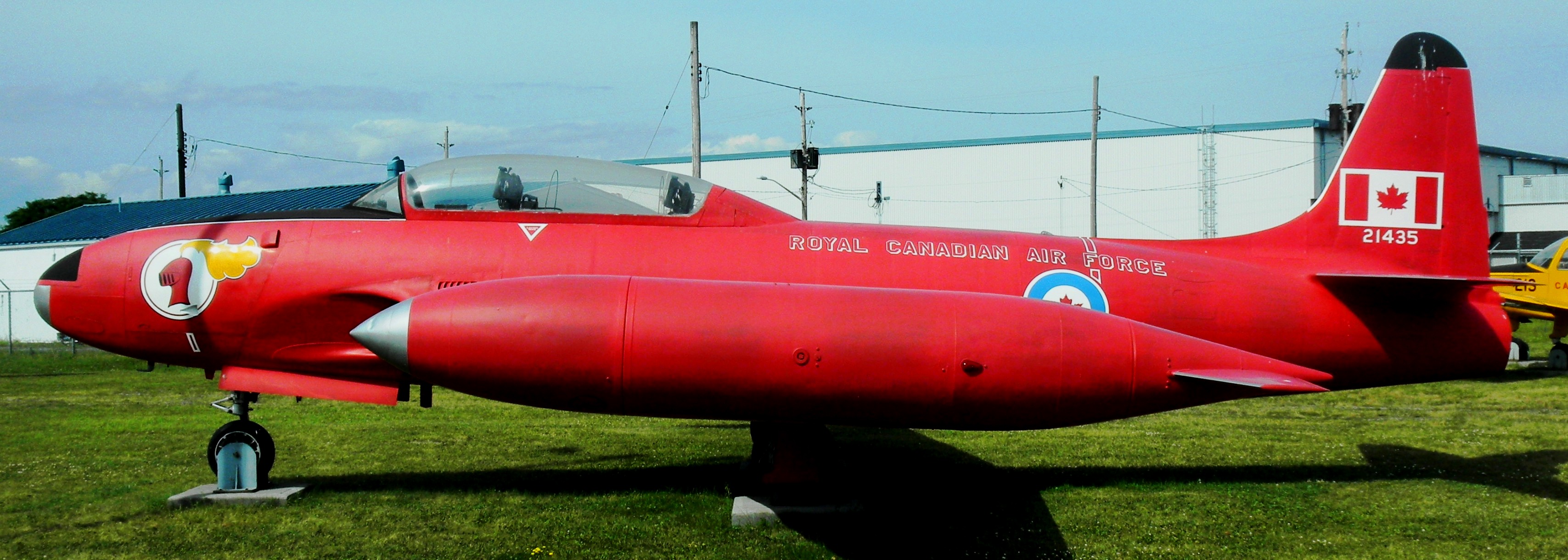
(Author Photo)
Canadair CT-133 Silver Star (Serial No. 133435), (Serial No. 21435). This Silver Star is painted to represent the colours of the ‘Red Knight,’ a solo aerobatic pilot who performed from 1959-1968. The museum’s aircraft was not a Red Knight, but served with VU 33 Squadron on Vancouver Island, British Columbia. The last Canadian T-33 flew on 31 Mar 2005 in Cold Lake, Alberta. (NAFMC)
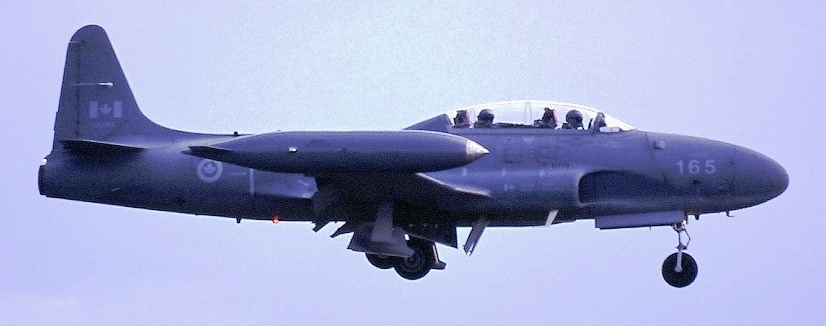
(John Davies Photo)
Canadair CT-133 Silver Star, RCAF (Serial No. 1331650, landing.
Canadair CT-133 Silver Star (Serial No. 133593). Silver Star tail number 133593, went into service in 1957. It served with No. 1 Flying Training School at CFB Gimli during the 1960s. It went onto serve with VU-32 at CFB Shearwater, 414 “Black Knight” Squadron at various Canadian bases, and 434 Squadron at CFB Greenwood. It also had Delmar Target Tow gear installed, to be used for target towing training. Silver Star 133593 was retired 2002. It was one of the last Silver Stars still in service.
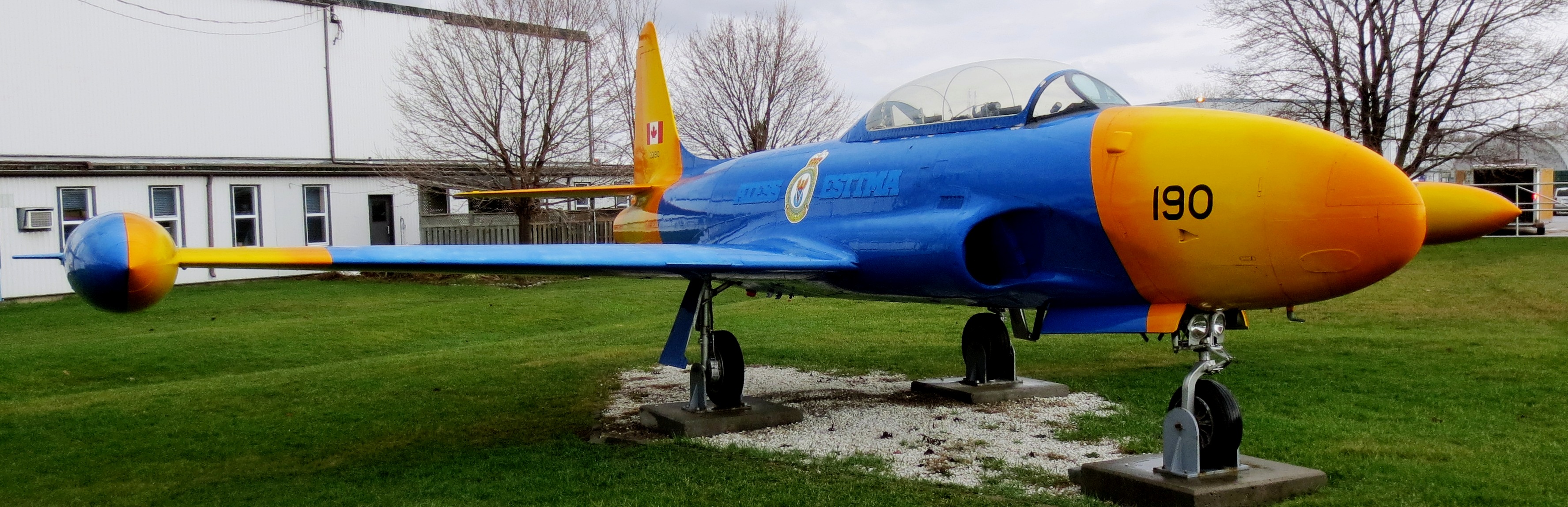
(Author Photo)
Canadair CT-133 Silver Star (Serial No. 133190). North Gate.
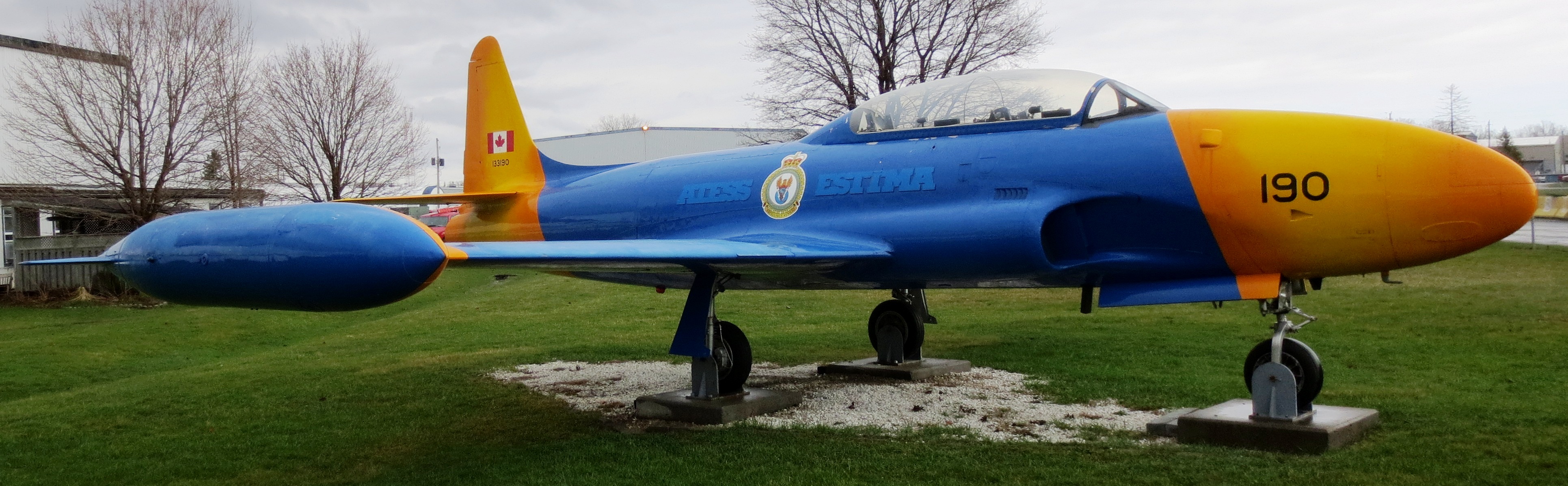
(Author Photo)
Canadair CT-133 Silver Star (Serial No. 133190). North Gate.
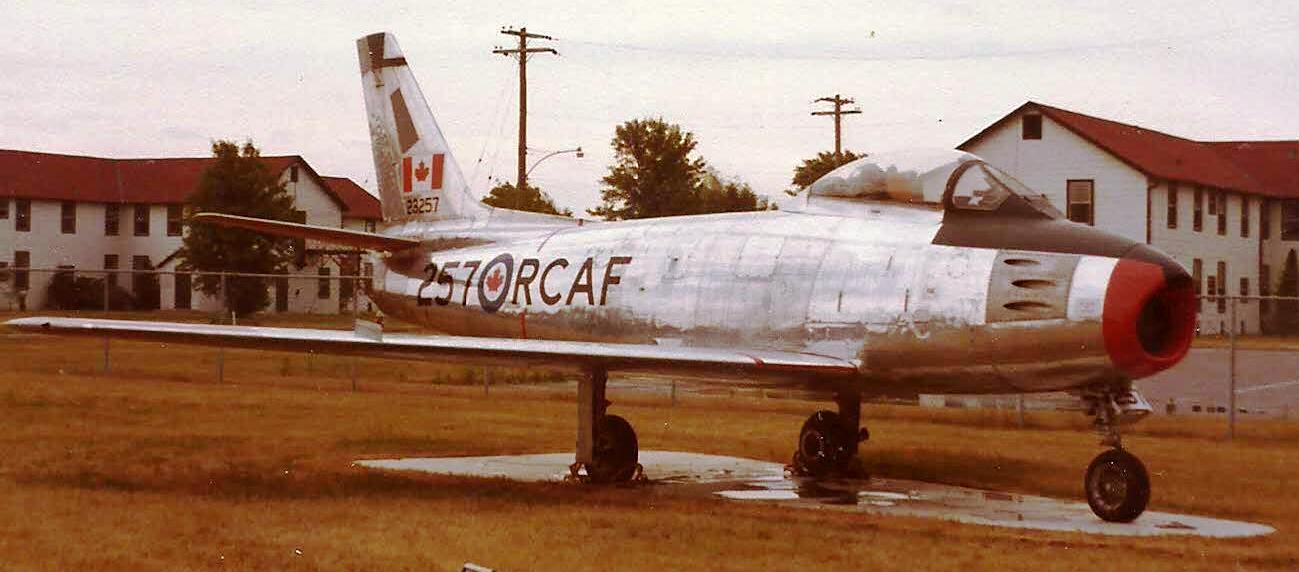
(Author Photo, ca 1979)
Canadair F-86E Sabre Mk. 5 (Serial No. 23257). The museum’s Sabre served No. 439 ‘Tiger’ Squadron at various RCAF bases in Europe. After its retirement in 1967, it was mounted as a gate guard for the Air Maintenance and Development Unit at CFB Trenton. It was previously painted in the colours of the ‘Golden Hawks’ similar to the two on display in Trenton and Belleville. It currently wears the colours of its original squadron. (NAFMC)
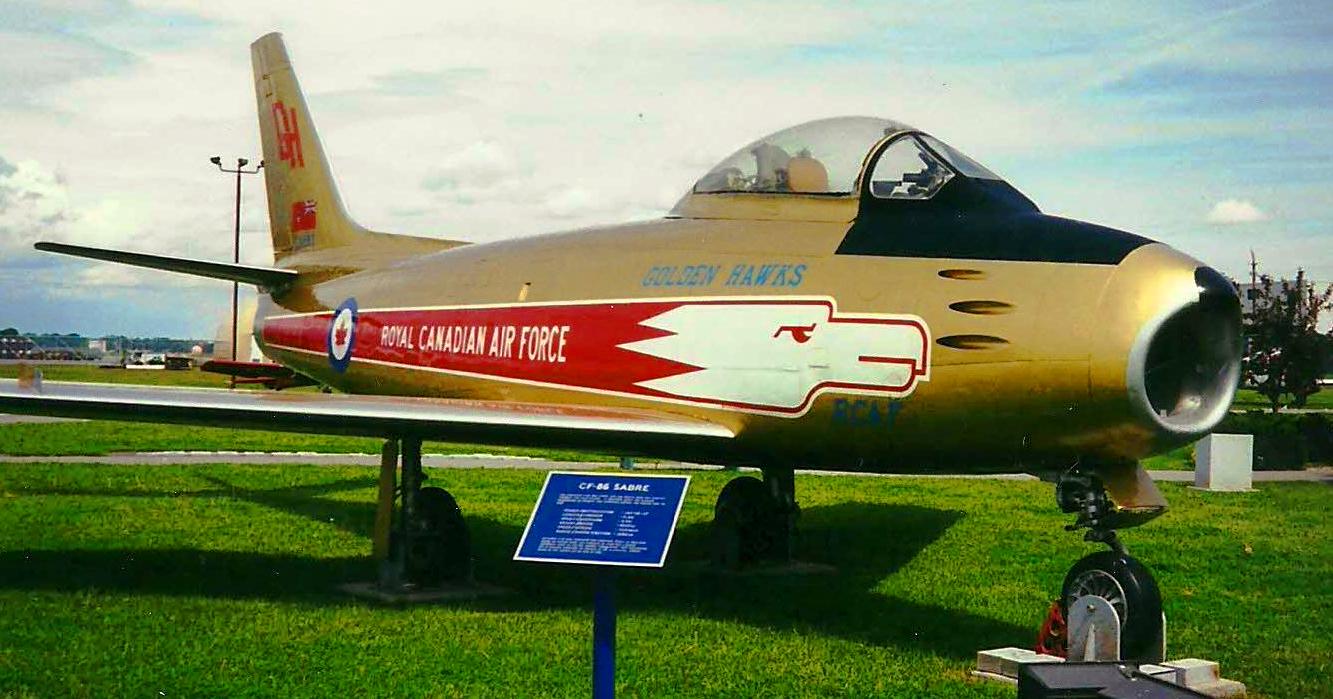
(Author Photo)
Canadair F-86E Sabre Mk. 5 (Serial No. 23257), Golden Hawks colours. The Museum’s F-86E was assigned to RCAF Air Defence Command’s No. 1(F) Operational Training Unit at RCAF Station Chatham, New Brunswick on the 12th of May, 1954. Although not officially disbanded until the 10th of July 1962, No. 1(F) OTU had effectively been replaced by the Sabre Conversion Unit which was also known as the Sabre Transition Unit. Sabre 23257 was transferred to AMDU’s detachment at Mountain View on the 17th of January, 1969. It was then assigned to Training Command’s Canadian Forces Air Trades School at CFB Borden, Ontario in June, 1969 where it was converted to an ‘Instructional Airframe’. It has been restored and repainted to reflect how it appeared on the ramp at Chatham in 1960.
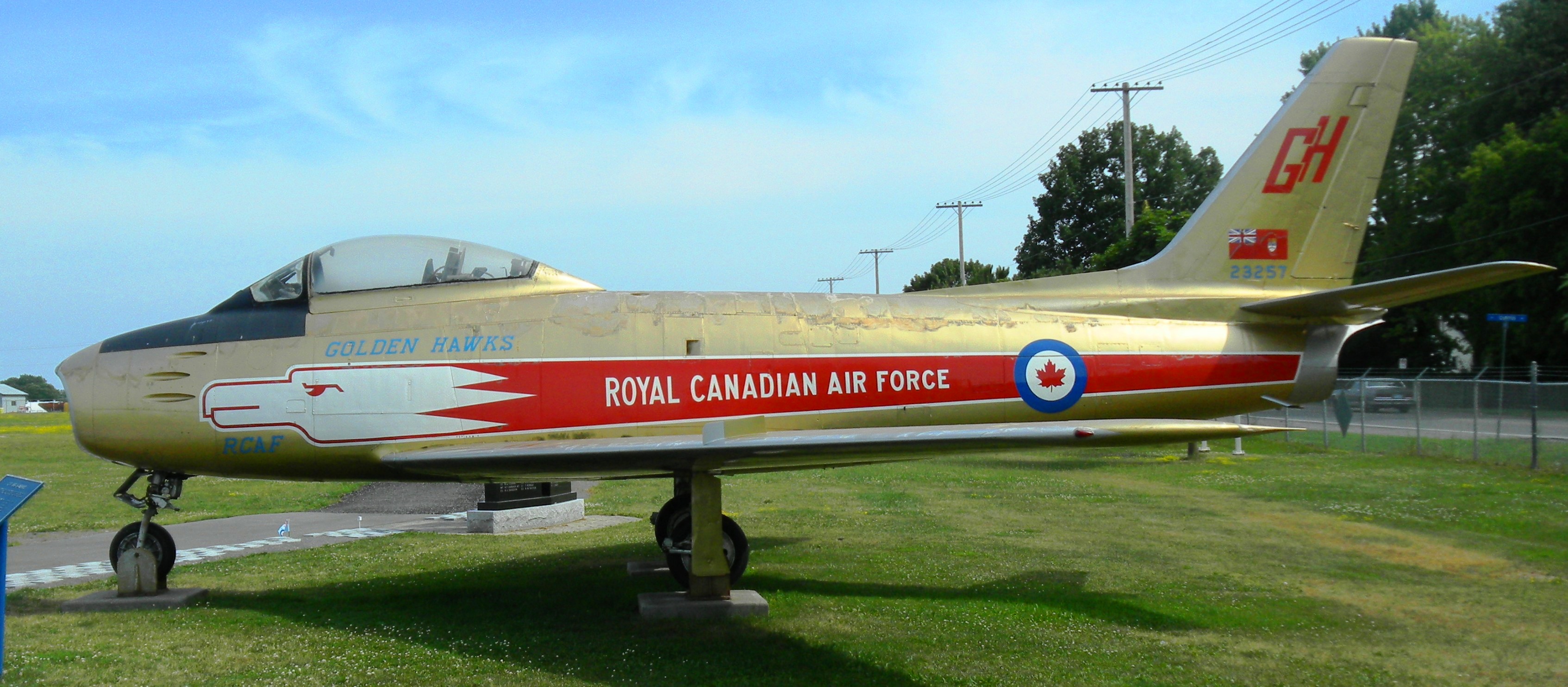
(Author Photo)
Canadair F-86E Sabre Mk. 5 (Serial No. 23257), Golden Hawks colours.
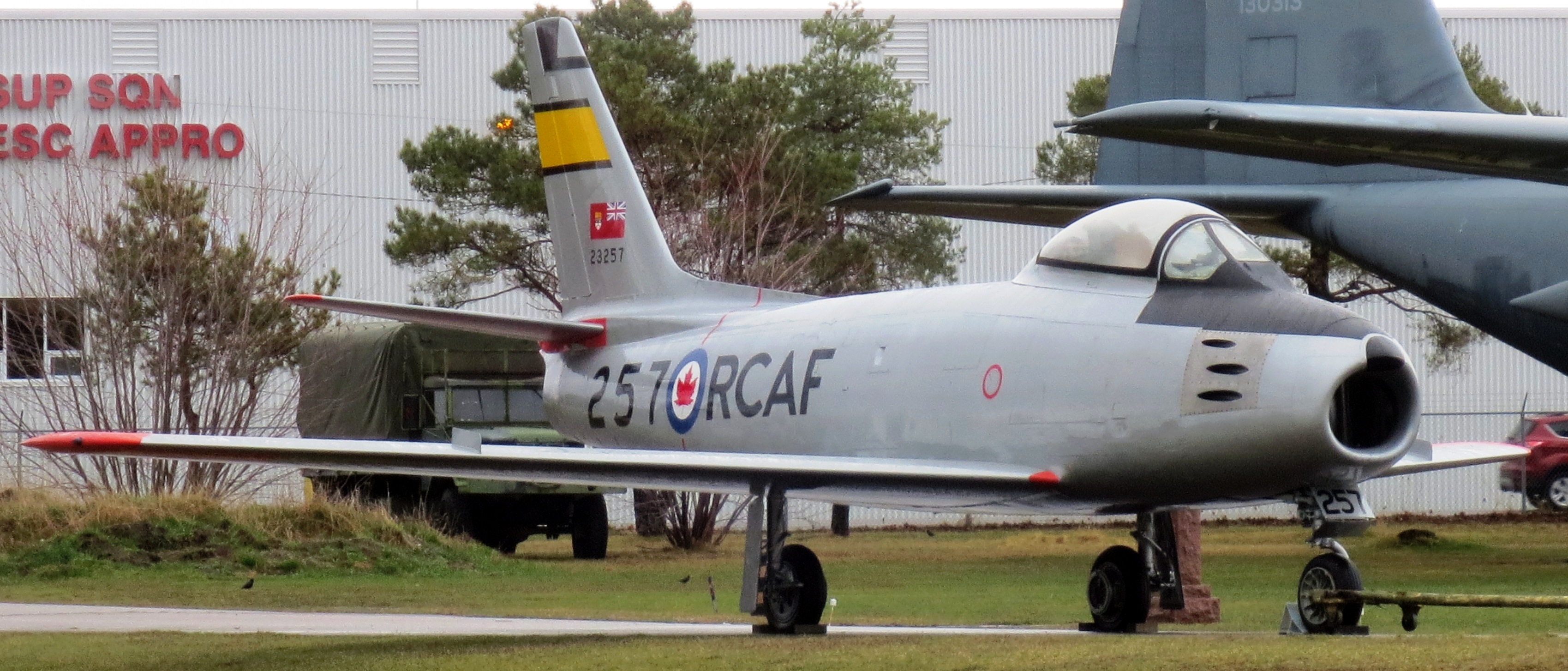
(Author Photos)
Canadair F-86E Sabre Mk. 5 (Serial No. 23257), currently in the colours of No. 439 ‘Tiger’ Squadron.
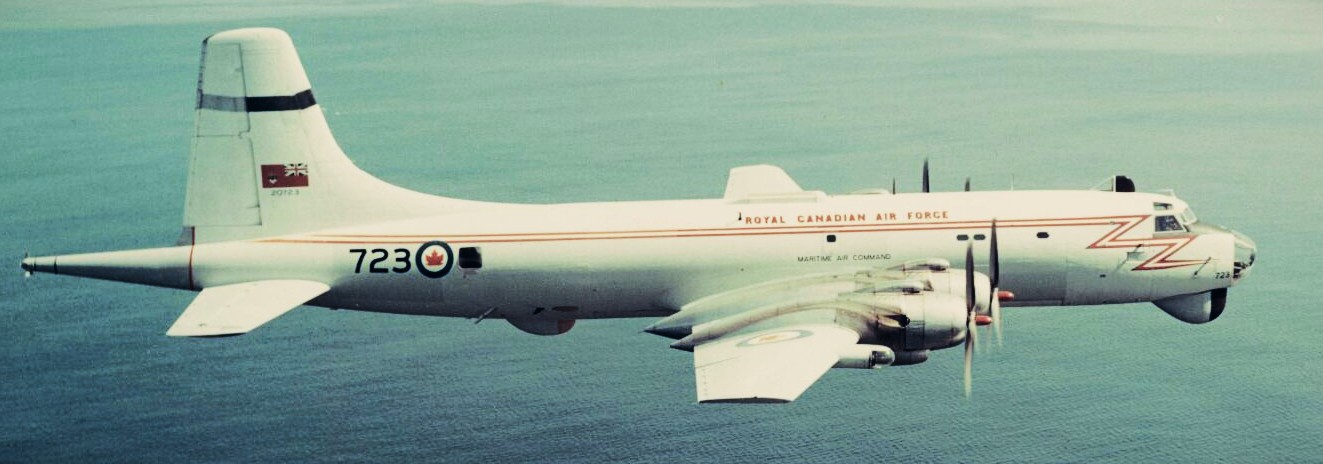
(RCAF Photo)
Canadair CP-107 Argus (CL-28) Mk. 1, RCAF (Serial No. 20723), c1960s.
(RCAF Photo)
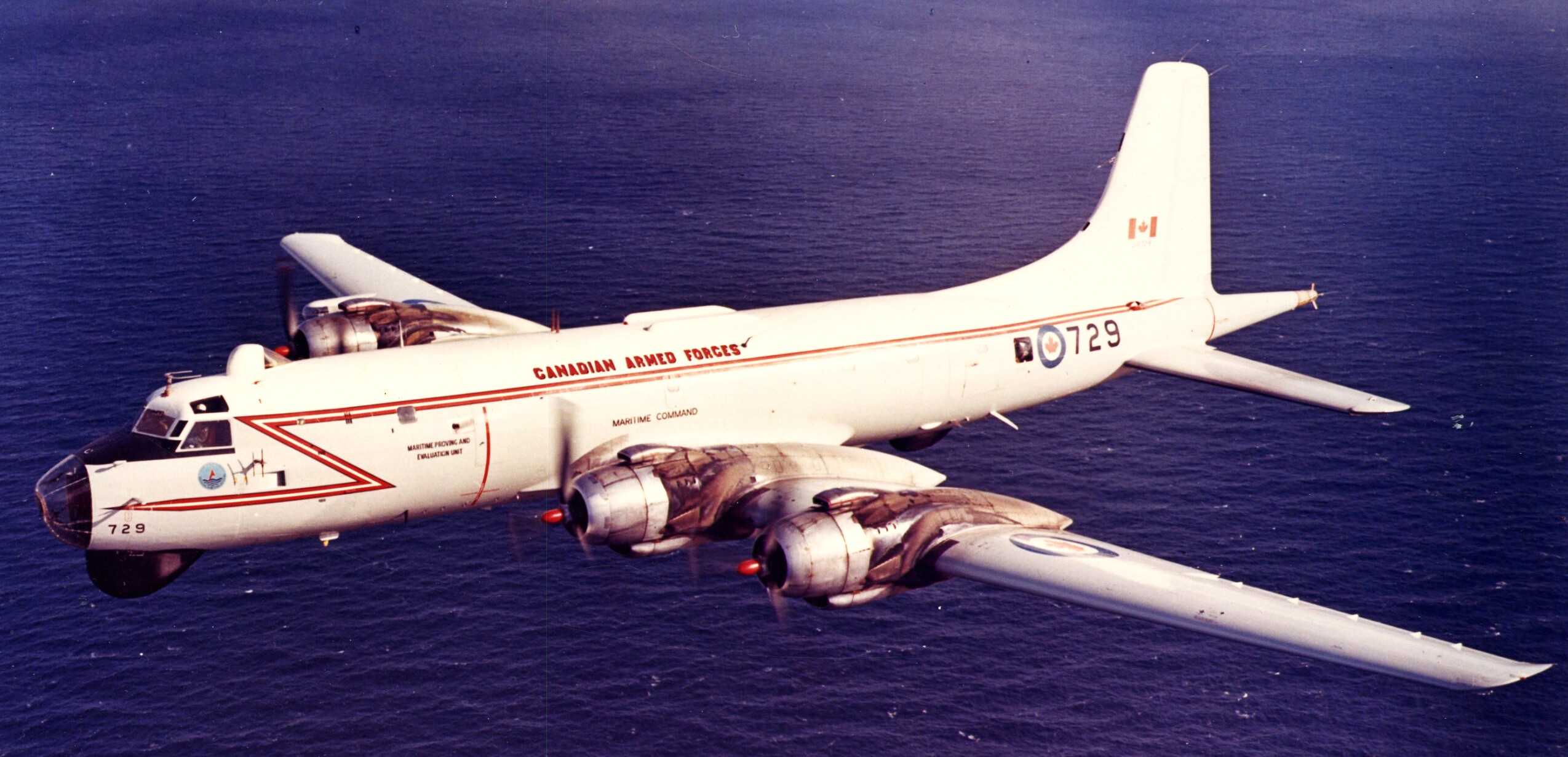
Canadair CP-107 Argus (CL-28) Mk. 1, RCAF (Serial No. 20729), c1970s.
(Author Photo)
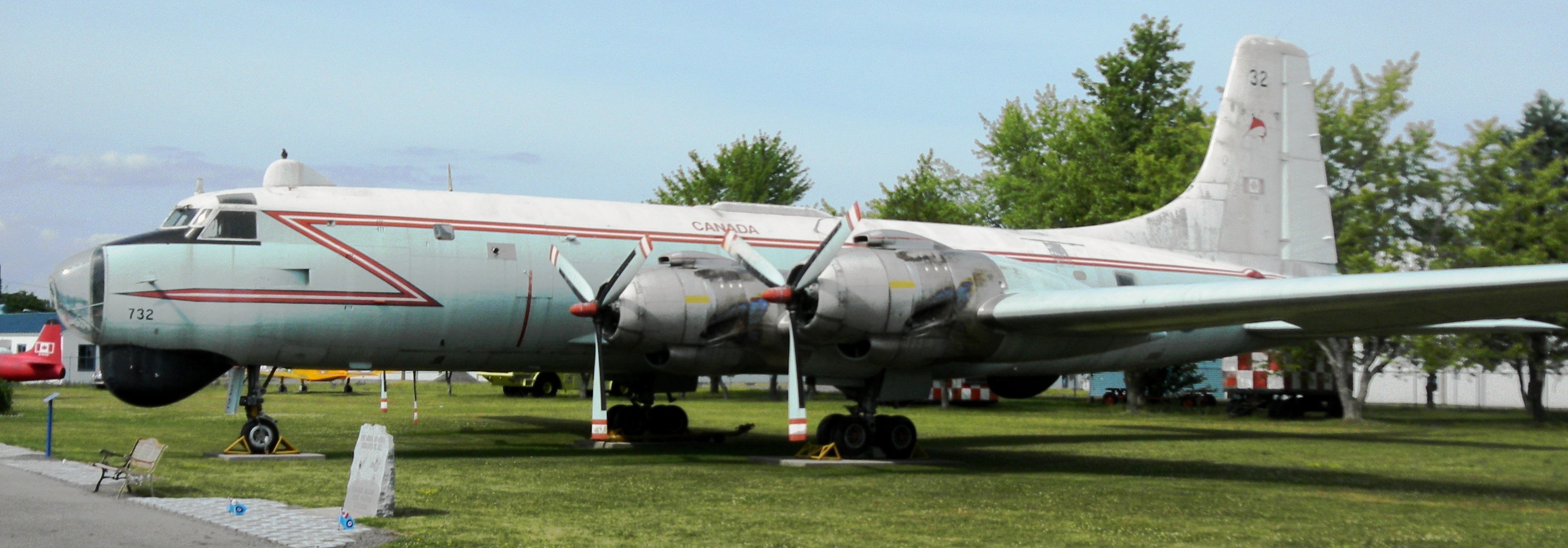
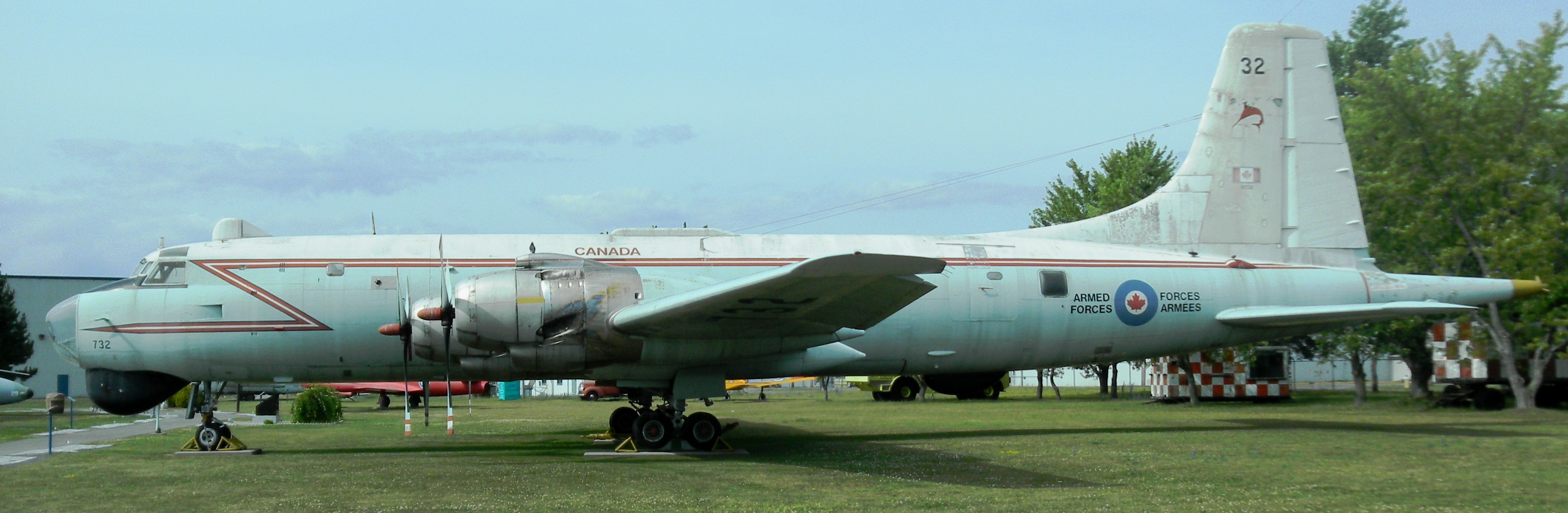
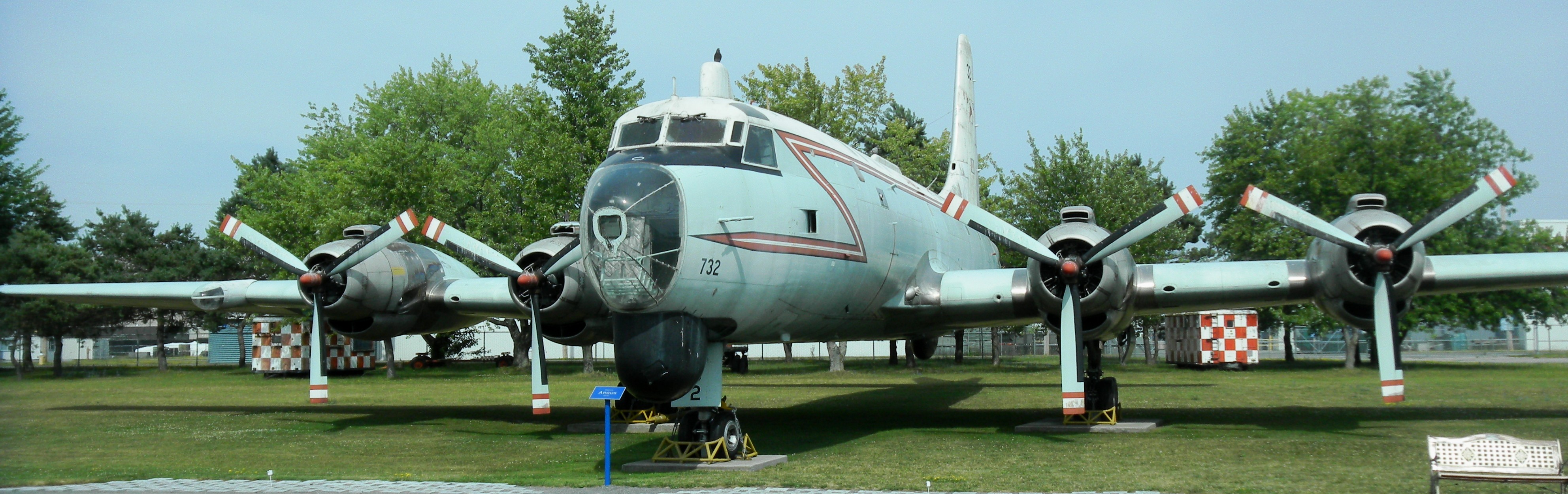
Canadair CP-107 Argus Mk. 2 (Serial No. 10732), 783C. The museum’s Argus was one of twenty purchased by the RCAF in 1958. The Argus normally flew with a crew of 3 pilots, 2 flight engineers, 3 navigators and 7 radio officers. It flew with No. 415 Maritime Patrol ‘Swordfish’ Squadron at CFB Summerside, Prince Edward Island, until 1981, (thus the swordfish markings on the tail of the aircraft). The Argus was replaced by the Lockheed CP-140 Aurora patrol aircraft when No. 415 Squadron was moved to CFB Greenwood, Nova Scotia. This Argus was stored at Mountainview, Ontario, and painted at CFB Trenton before it was brought to the museum. (NAFMC)
(Author Photo)
Canadair CP-107 Argus Mk. 2 (Serial No. 10732), 783C.
(Author Photo)
Canadair CP-107 Argus Mk. 2 (Serial No. 10732), 783C.
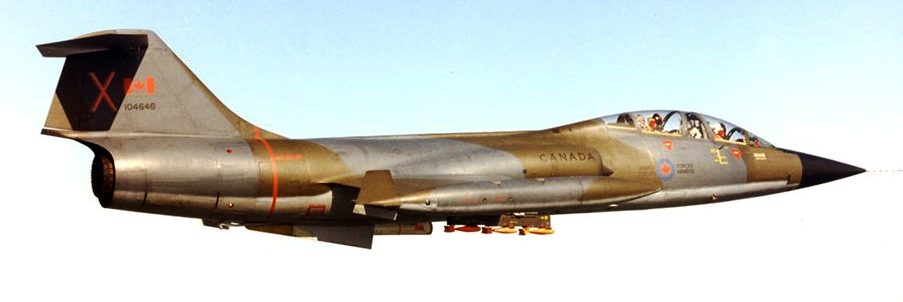
(DND Photo via Chris Charland)
Lockheed CF-104D Starfighter Mk. I (Serial No. 104646), with AETE at CFB Cold Lake Alberta.
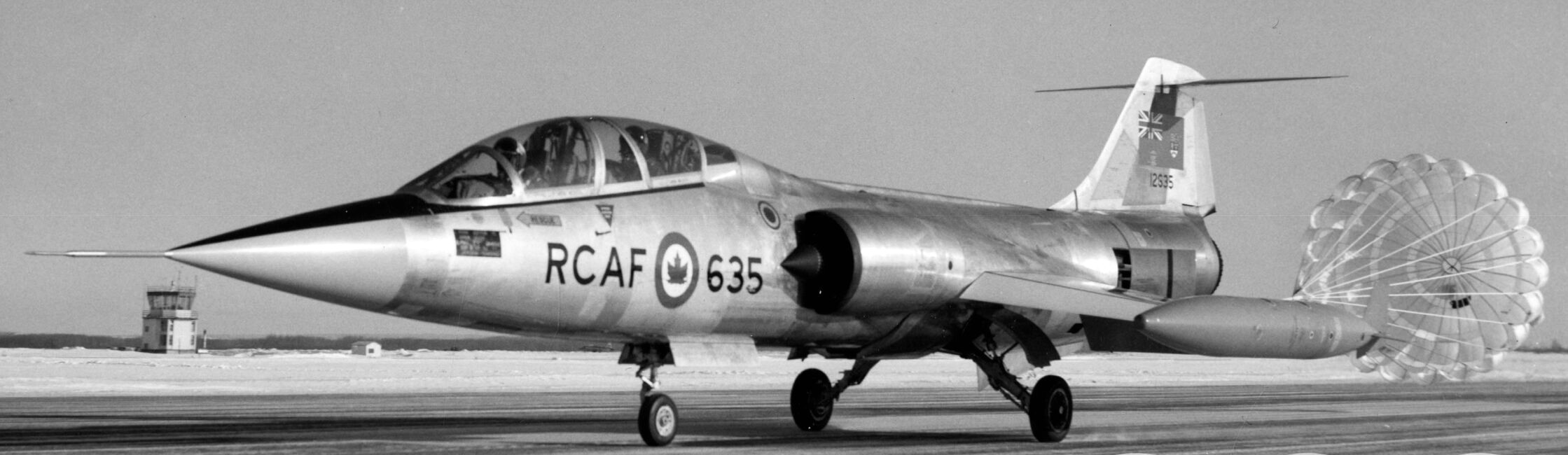
(DND Photo)
Lockheed CF-104D Starfighter Mk. I (Serial No. 104635), with drag chute deployed.
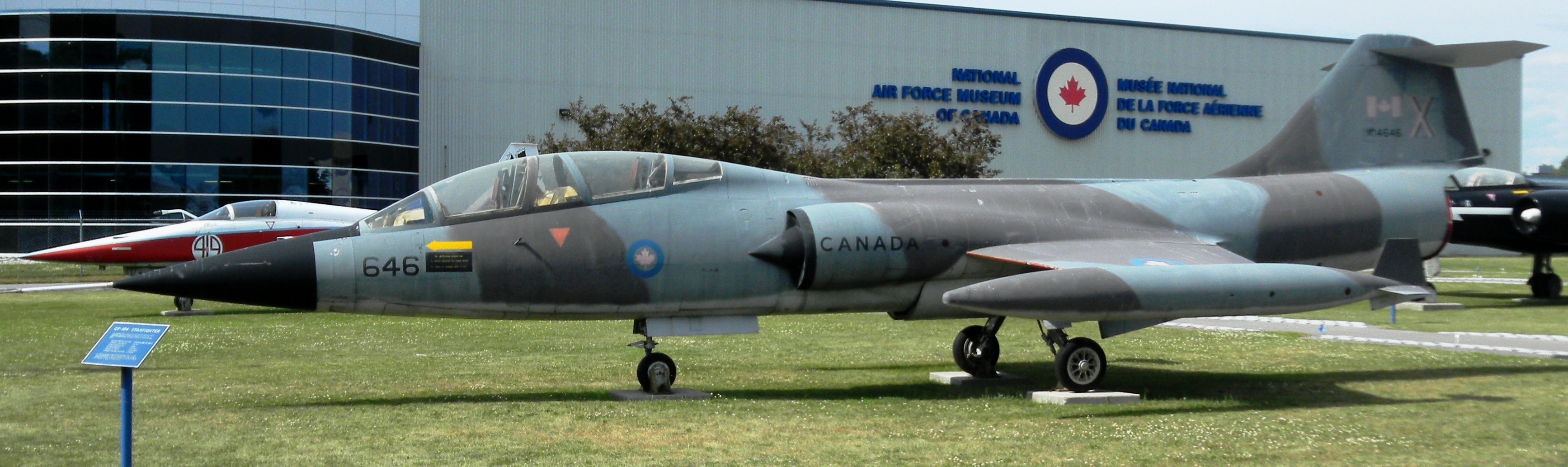
(Author Photo)
Lockheed CF-104D Starfighter Mk. I (Serial No. 104646). This dual-seat Starfighter served with the No. 6 Operational Training Unit in Cold Lake, Alberta, during the 1960s. The ‘X’ marking on the tail indicates that it was also operated by Aerospace Engineering Test Establishment, a unit that evaluates safety and effectiveness of air force aircraft. When 104646 flew from Cold Lake to Trenton in 1983, it was the last Starfighter to fly in Canada. It was stored at the Mountainview storage facility before it was acquired by the museum. (NAFMC)
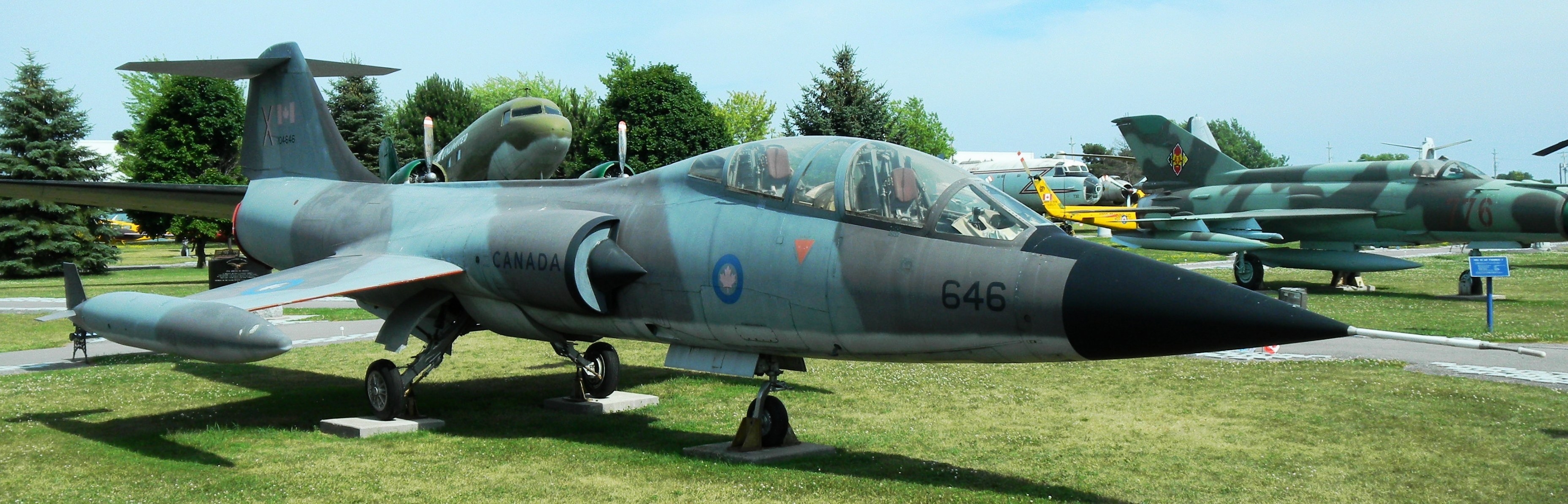
(Author Photo)
Canadair CF-104D Starfighter Mk. I (Serial No. 104646).
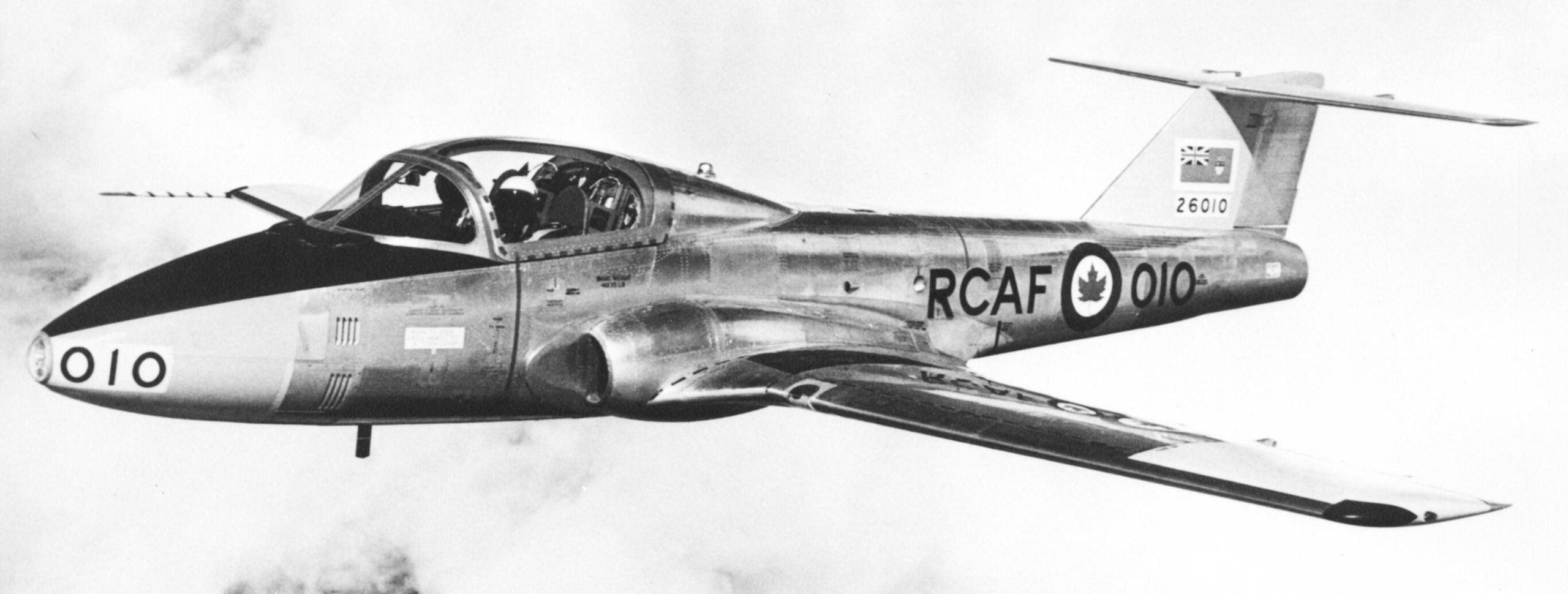
(DND Photo)
Canadair CT-114 Tutor (Serial No. 114010).
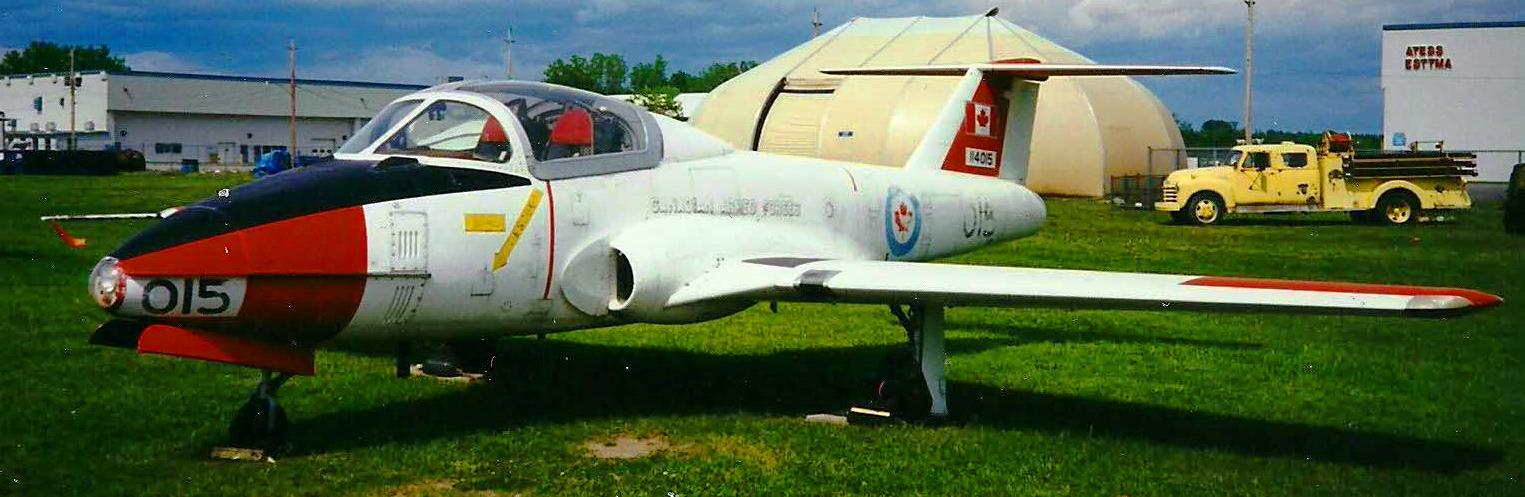
(Author Photo)
Canadair CT-114 Tutor (Serial No. 114015). Tail number 114015 was one of the original Tutors acquired by the RCAF in 1963. It served at No. 2 CFFTS in Moose Jaw, Saskatchewan until it was retired on June 8, 1993. It joined the collection of the NAFMC in 2012. (NAFMC)
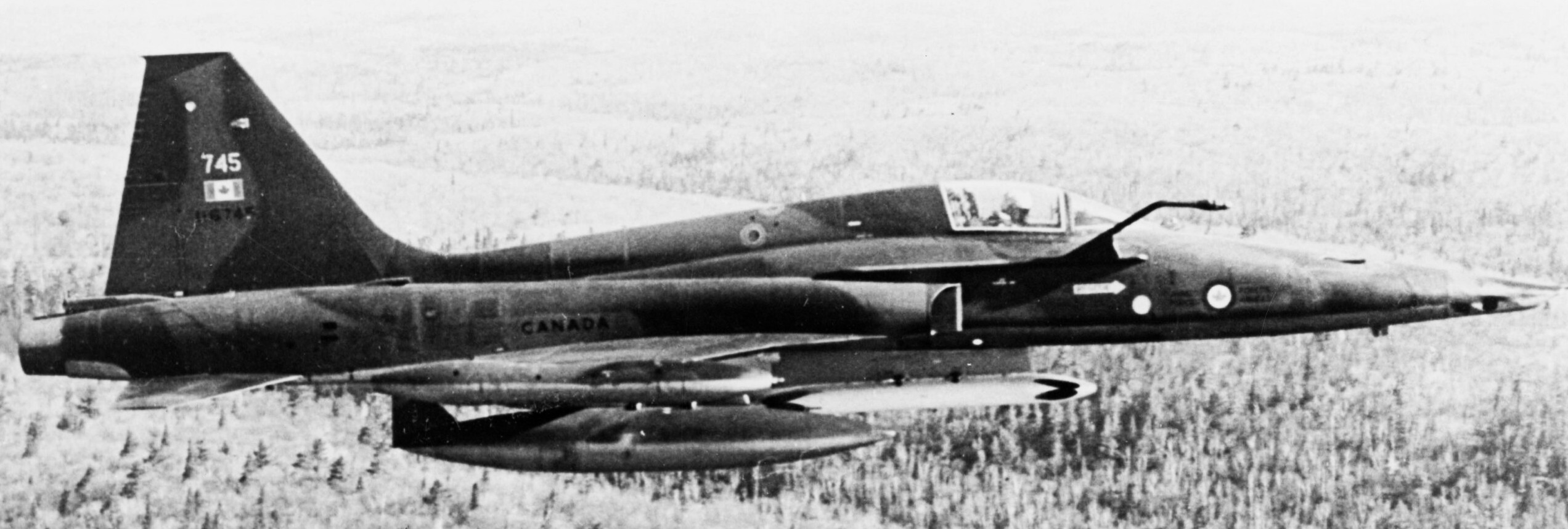
(CAF Photo)
Canadair CF-116 Freedom Fighter (Serial No. 116745) in flight.
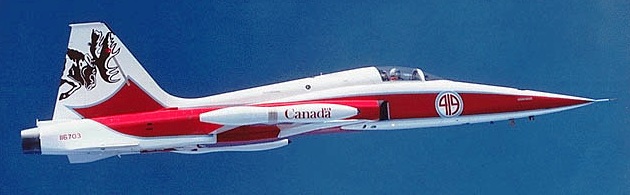
(RCAF Photo)
Canadair CF-116 Freedom Fighter, 419, (Serial No. 116703) in flight.
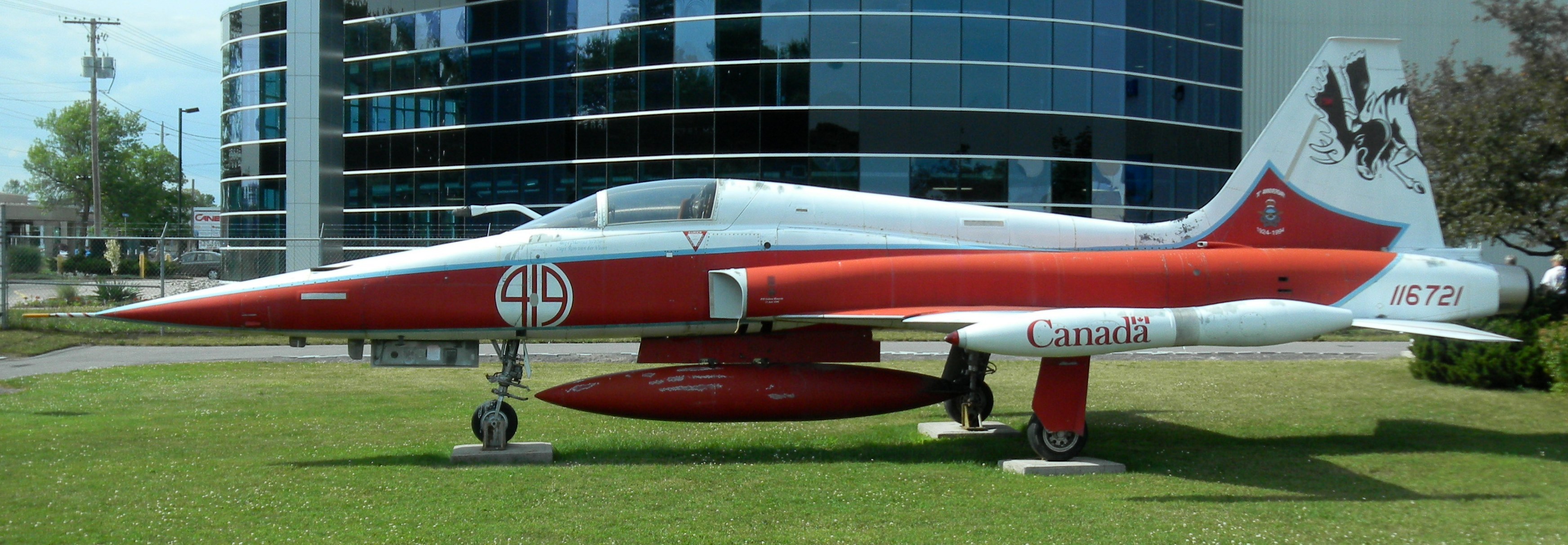
(Author Photo)
Canadair CF-116 Freedom Fighter (Serial No. 116721). The museum’s Freedom Fighter initially served as a tactical fighter and trainer for No. 434 Squadron in Cold Lake, Alberta. In 1976, it was transferred to No. 419 ‘Moose’ Squadron, where it was used primarily for training. The paint scheme for 116721 commemorates the history of ‘Moose’ Squadron and the colours of our national flag. (NAFMC)
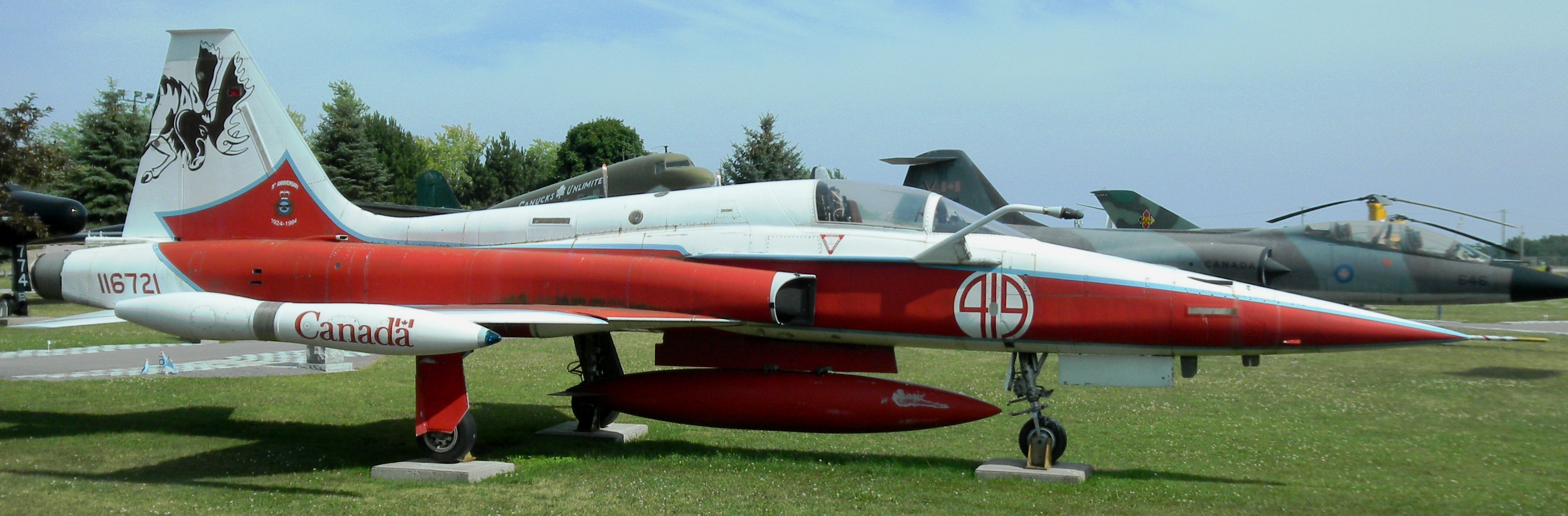
(Author Photo)
Canadair CF-116 Freedom Fighter (Serial No. 116721).
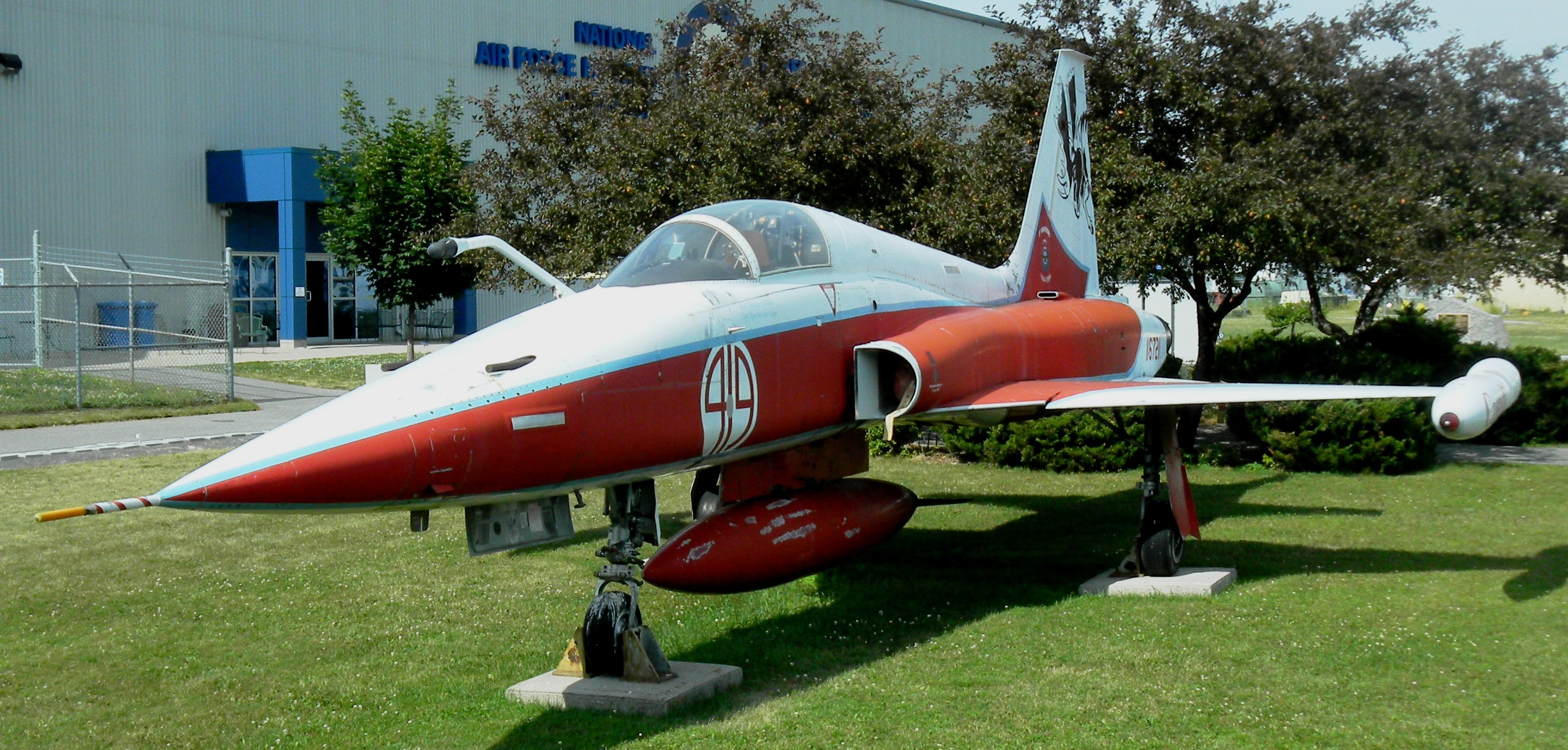
(Author Photo)
Canadair CF-116 Freedom Fighter (Serial No. 116721). In service with the Canadian Armed Forces from 1968 to 1995, the Museum’s Freedom Fighter, tail number 116721, was first used as a tactical fighter and trainer with 434 Squadron in Cold Lake, Alberta. In 1976, it was transferred to 419 “Moose” Squadron, where it was used mainly for training. It entered storage at the Aircraft Maintenance Development Unit at CFB Trenton in 1995. The aircraft is painted to commemorate the Moose Squadron’s air show “Moose Bird” markings, designed by Robert Thomson. It was on display at Kamloops Airport before it joined the Museum’s collection in 1997. (NAFMC)
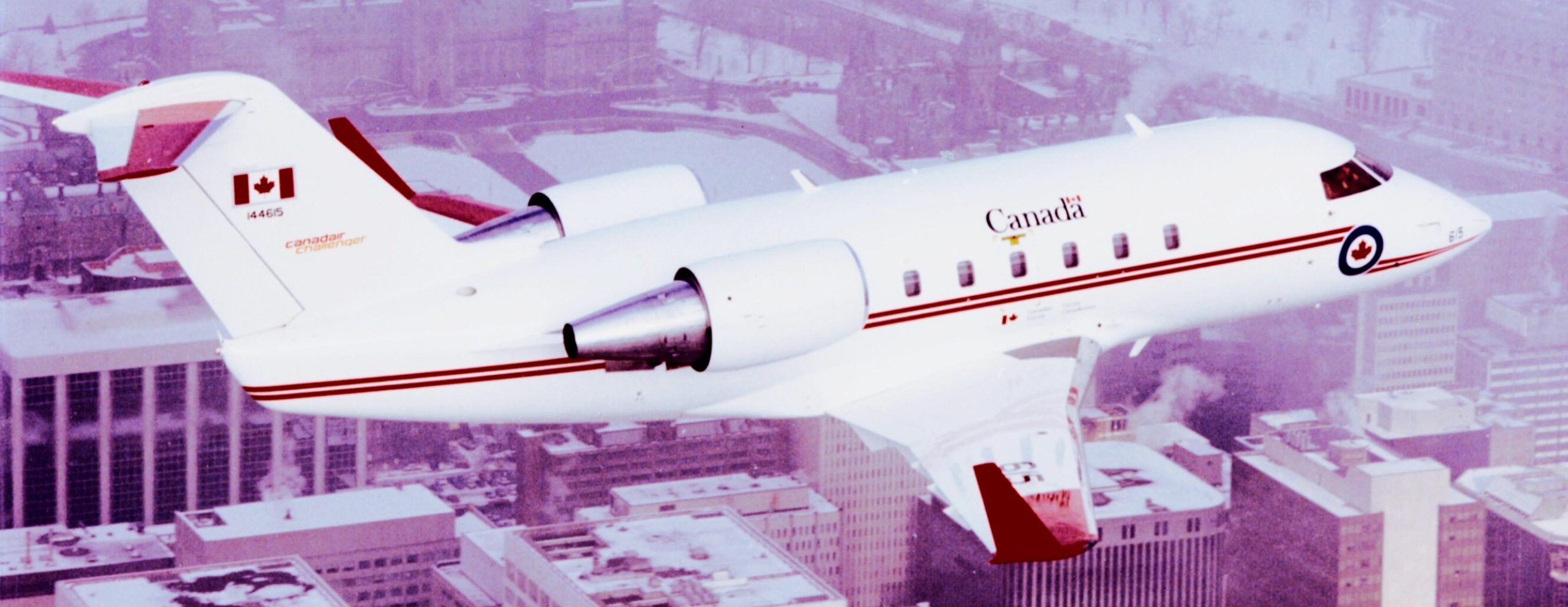
(CAF Photo)
Canadair CC-144 Challenger (Serial No. 144615).
(jiggs11 Photo)
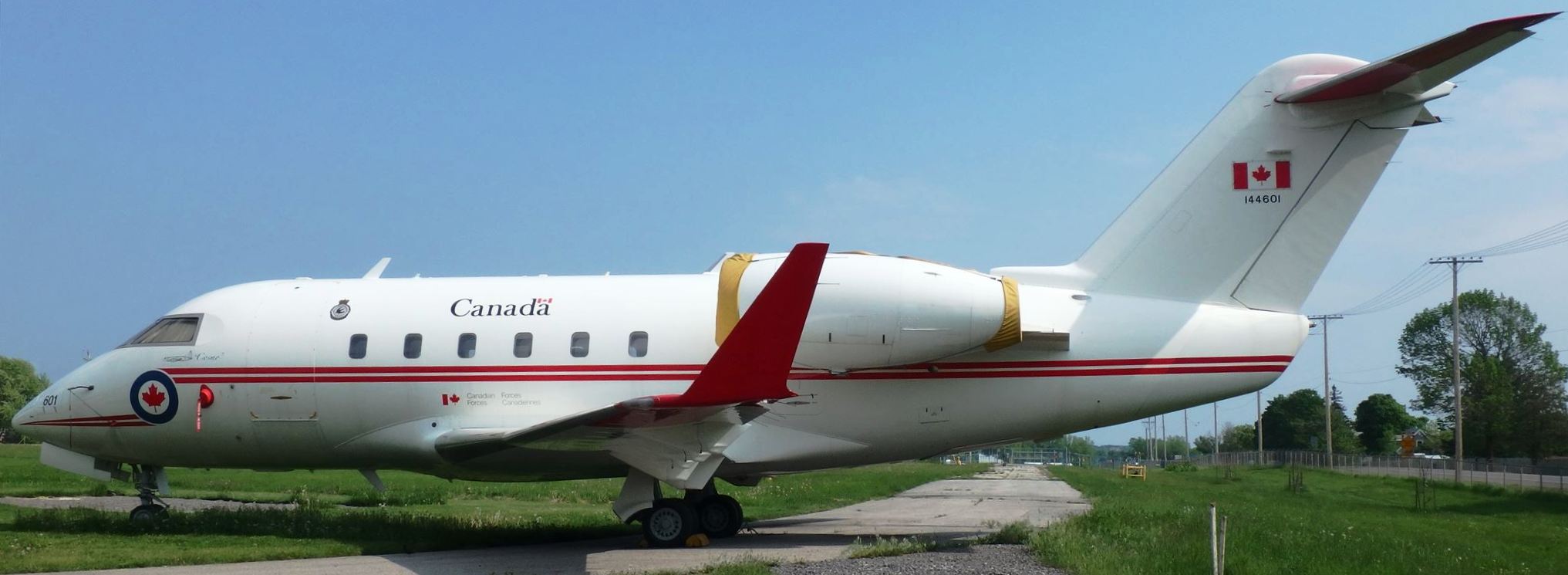
Canadair CC-144 Challenger (Serial No. 144601).
CC-144601 flew with No. 412 (Transport) Squadron at CFB Ottawa (Uplands) starting in April 1983 transporting VIPs. In 1995, Challenger 601 was transferred to 434 Squadron at CFB Greenwood, Nova Scotia in an electronic warfare capacity where it served as a trainer for 5 years. In 2000, the aircraft was returned to 412 Squadron at Ottawa International Airport, where it again served as VIP transport until its retirement in 2014. Between 1983 and 2014, 412 Squadron carried a number of VIP while staying in Canada. It has included such notables as Her Majesty, Queen Elizabeth II; The Duke of Edinburgh; HRH Prince Charles and the Princess of Wales; Queen Elizabeth the Queen Mother; Governors General Sauvé, Hnatyshyn, LeBlanc, Clarkson, Jean, and Johnston.
In May 2012, Challenger 601 was heavily damaged by a bird strike while in Florida at MacDill Air Force Base. It underwent a temporary repair before being flown back to Ottawa, where much of the starboard side nose was replaced. CC144601 served as a VIP transport until 2014, when the Challenger fleet was reduced from six to four aircraft. It was delivered to the National Air Force Museum of Canada in 2015. (NAFMC)
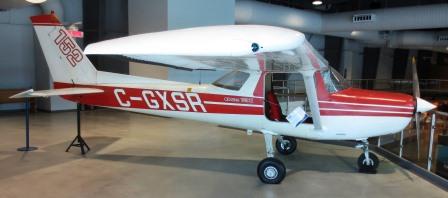
Cessna 152, Reg. No. C-GXSR.
(RCAF Photo)
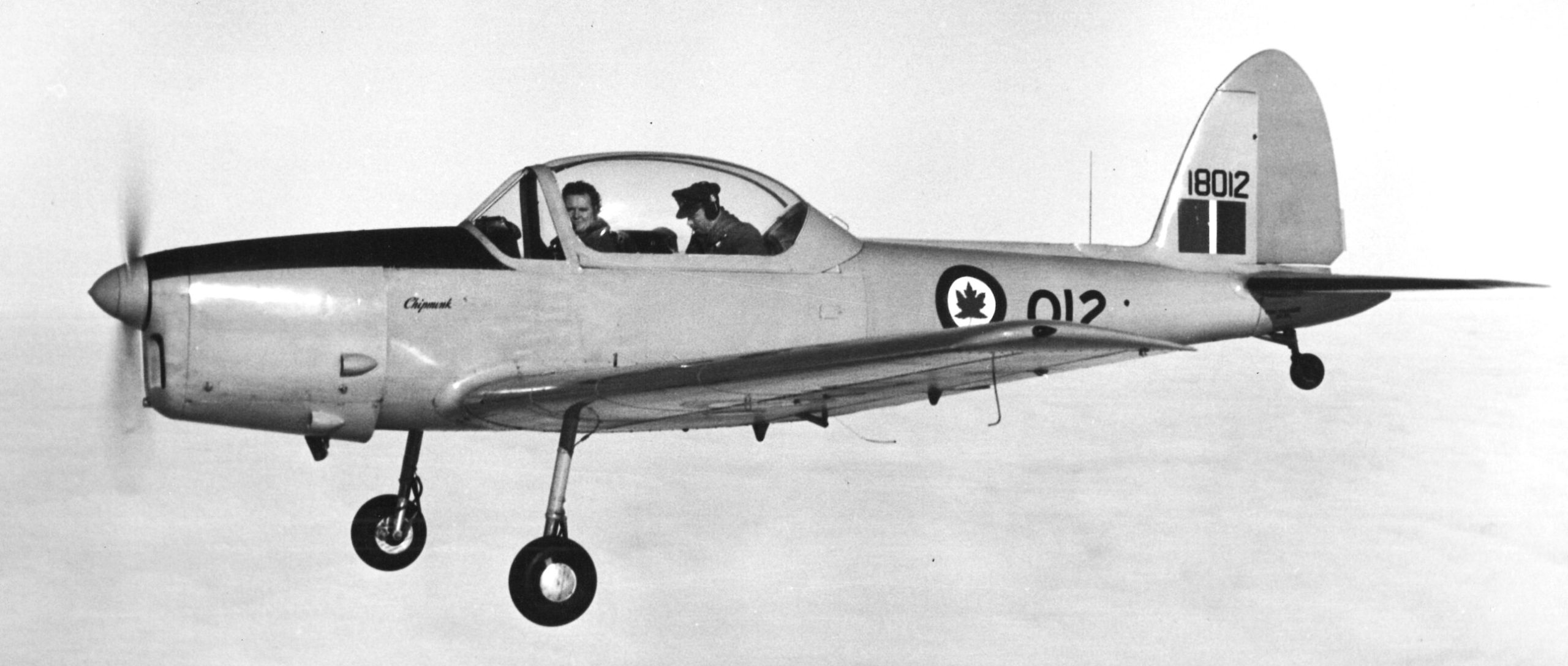
de Havilland Chipmunk (Serial No. 18012).
(Author Photo)
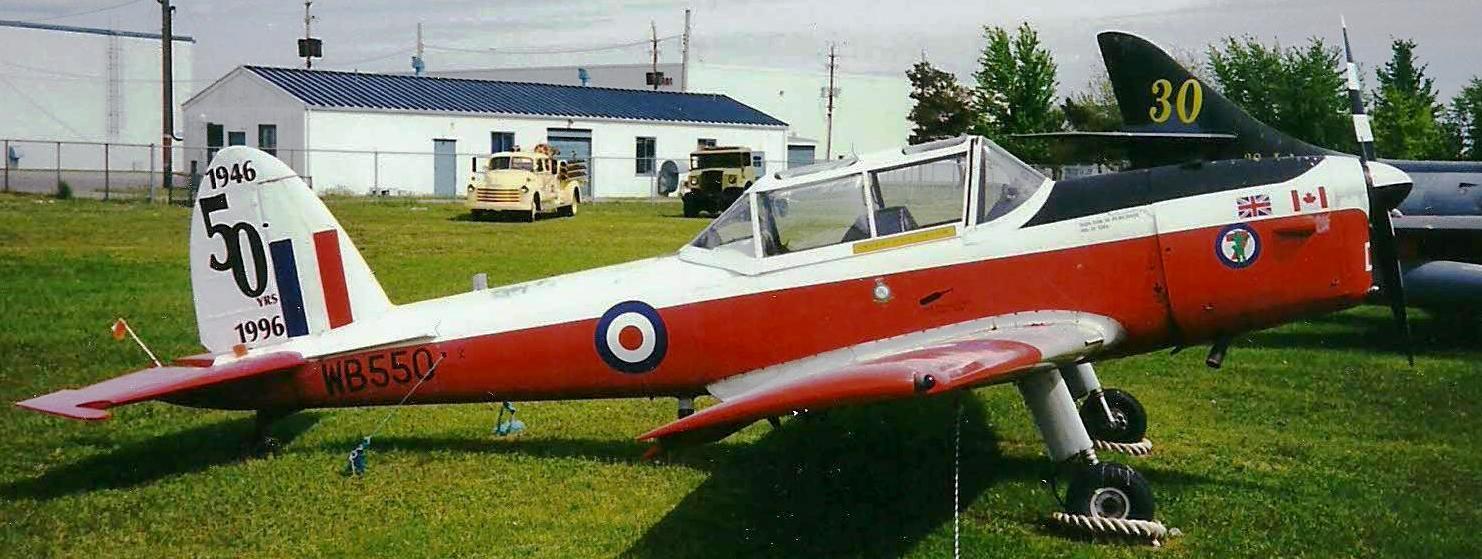
de Havilland Chipmunk T10 (Serial No. WB550), C1/0002. Chipmunk aircraft were used extensively by the RCAF, however the museum’s example was flown by the Royal Air Force. The RAF purchased it in 1949 from DeHavilland Canada and when it was retired in 1996, it had the status of being the longest serving Chipmunk in British aviation history. (NAFMC)
(DND Photo)
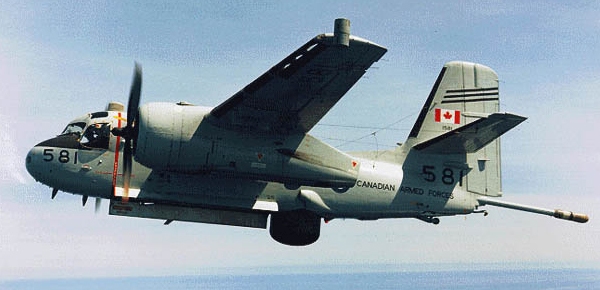
de Havilland (Grumman) CS2F-1 Tracker, RCN, (Serial No. 581).
de Havilland (Grumman) CP-121, CS2F Tracker (Serial No. 1545). Trackers were purchased by the Royal Canadian Navy (RCN) to be used on aircraft carriers. However, when the last RCN carrier, HMCS Bonaventure, was phased out in 1969, the Tracker’s role changed from anti-submarine to coastal patrol. The museum’s example was one of the first Trackers built by DeHavilland and has served with every squadron in the RCN. (NAFMC)
(RCAF Photo)
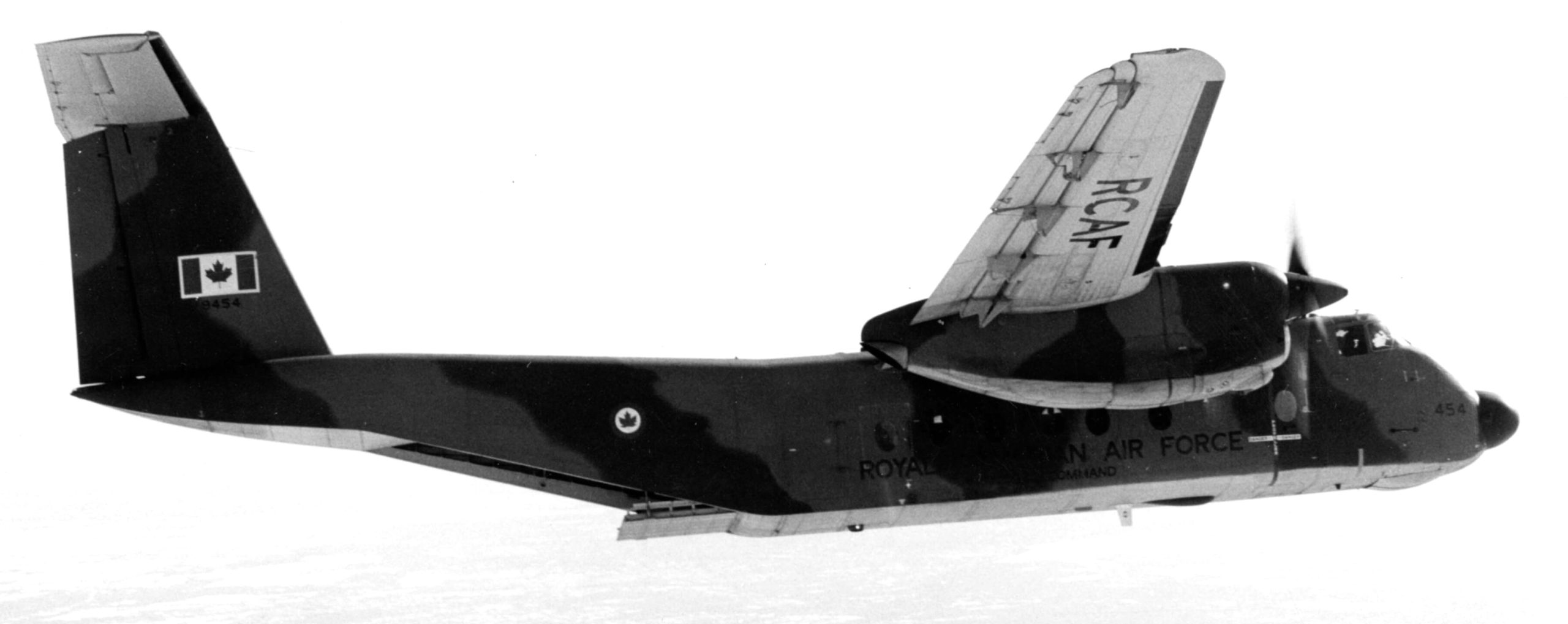
de Havilland CC-115 Buffalo (Serial No. 115454).
(RCAF Photo)
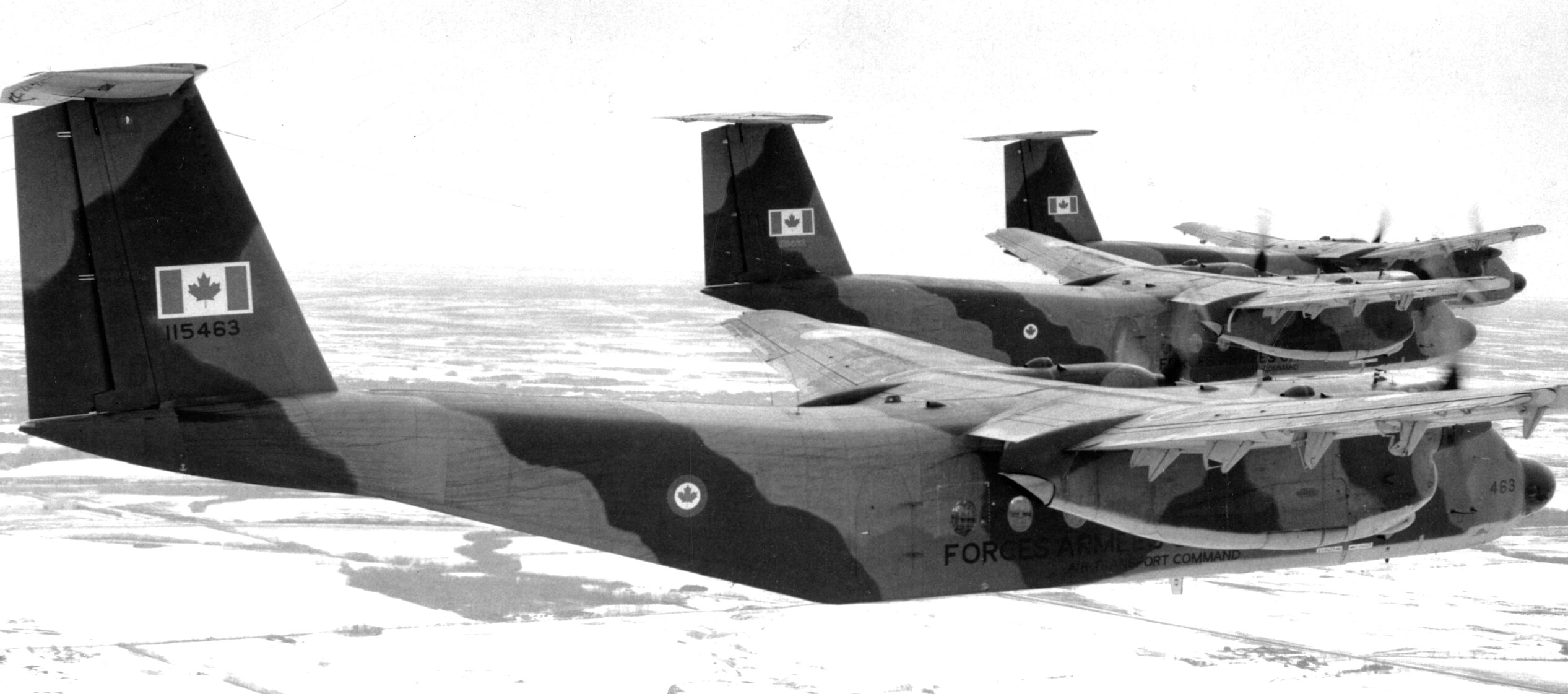
de Havilland CC-115 Buffalo (Serial No. 115463) in formation.
(CAF Photo)
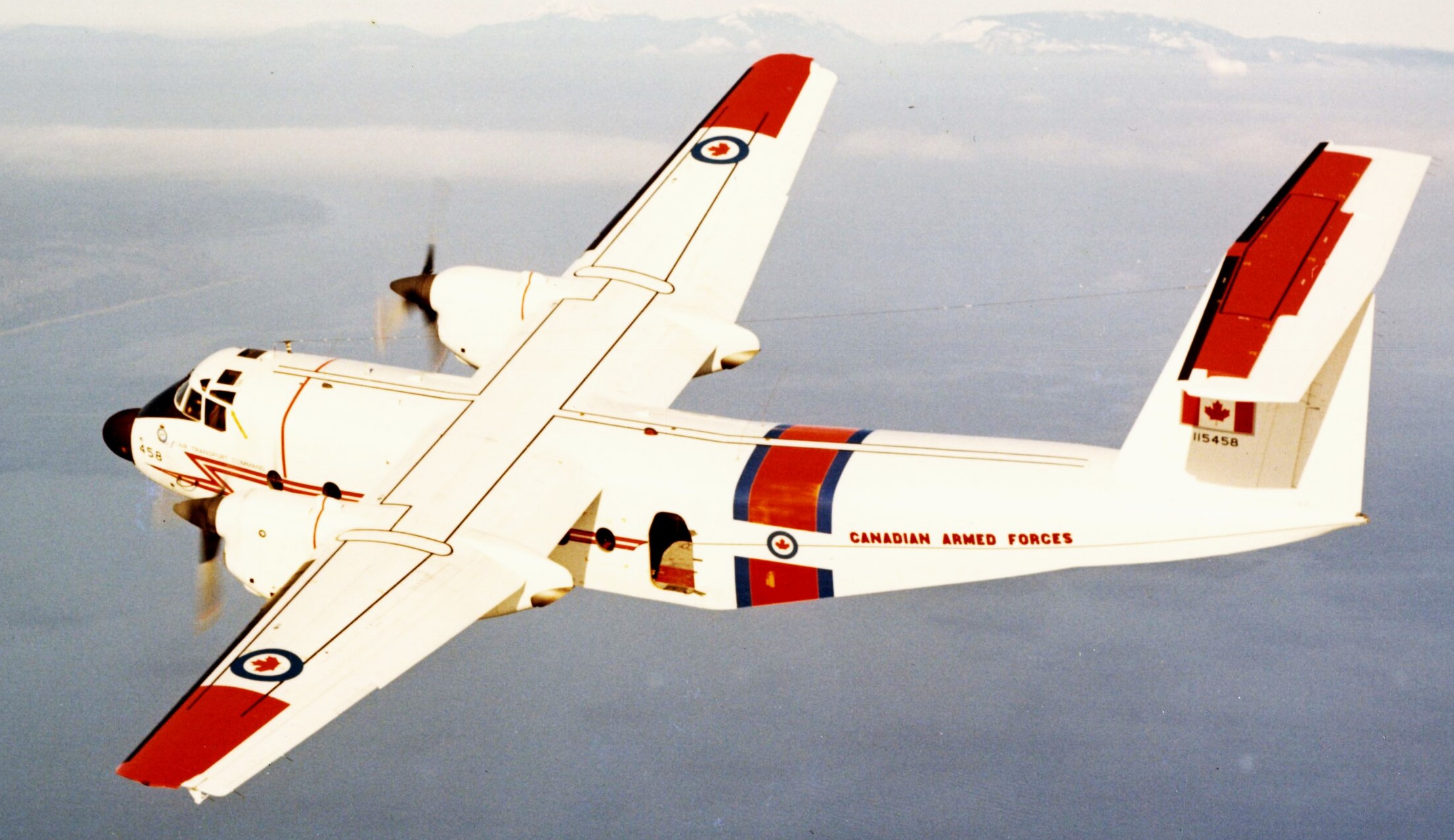
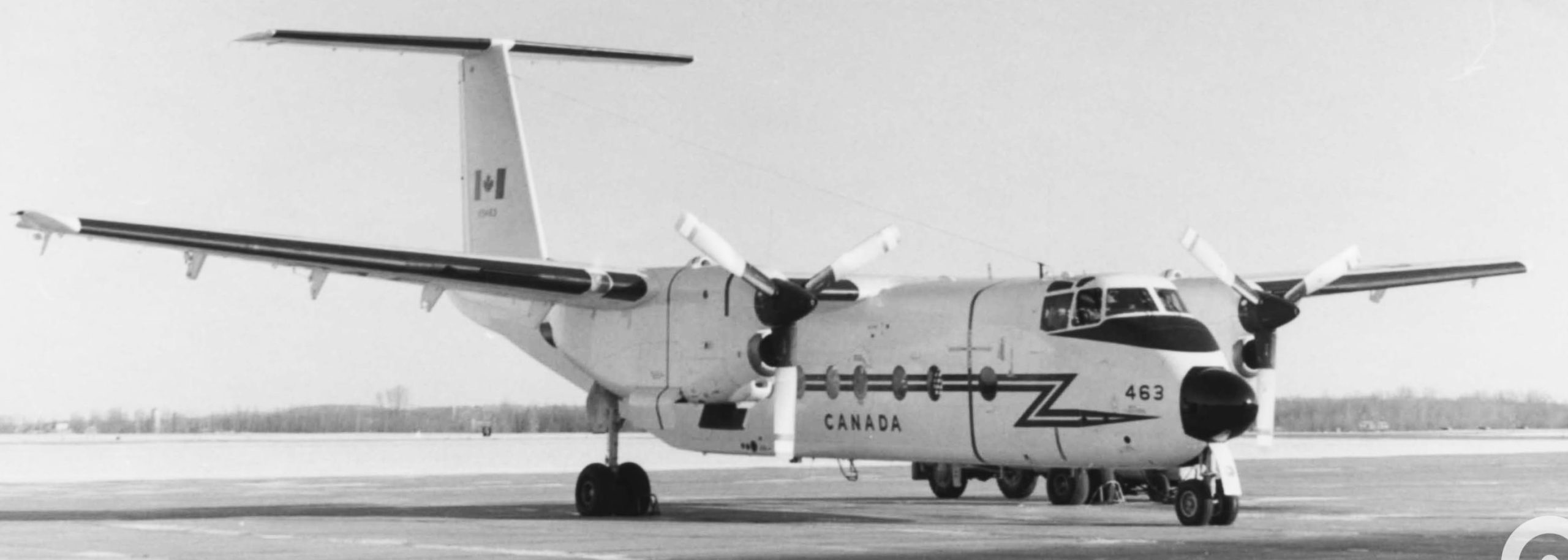
de Havilland CC-115 Buffalo (Serial No. 115458).
(CAF Photo)
de Havilland CC-115 Buffalo (Serial No. 115463).
de Havilland CC-115 Buffalo (Serial No. 115456). Buffalo 115456 left the De Havilland Plant at Downsview, Ontario on August 27, 1967 and was officially taken on strength with the RCAF on October 12, 1967. It began its service with 429 Tactical Transport Squadron at St. Hubert, Quebec on November 9, 1967. On October 29, 1975 Buffalo 115456 was converted to a dual role Transport / Search and Rescue aircraft, and subsequently served with 442 Transport and Rescue Squadron at CFB Comox, BC until its retirement in September 2020. During this time, CC-115456 served in search and rescue operations, conducted fishery patrols, and even carried the famous SkyHawks parachute demonstration team. Buffalo 115456 was retired and transferred to the Museum, arriving from CFB Comox, BC, in October 2020. (NAFC)
(RCAF Photo)
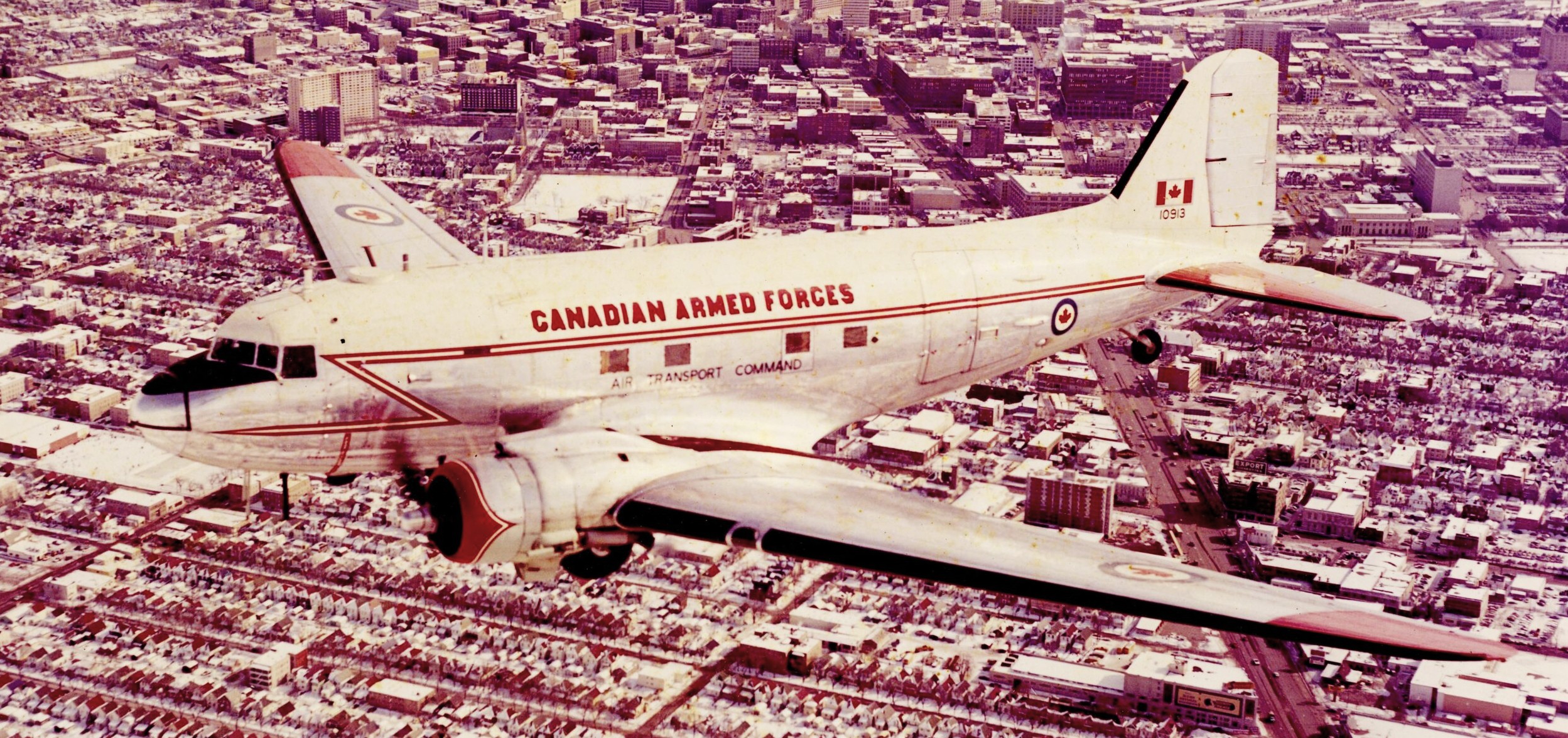
Douglas CC-129 Dakota.
(Robert Taylor Photo)
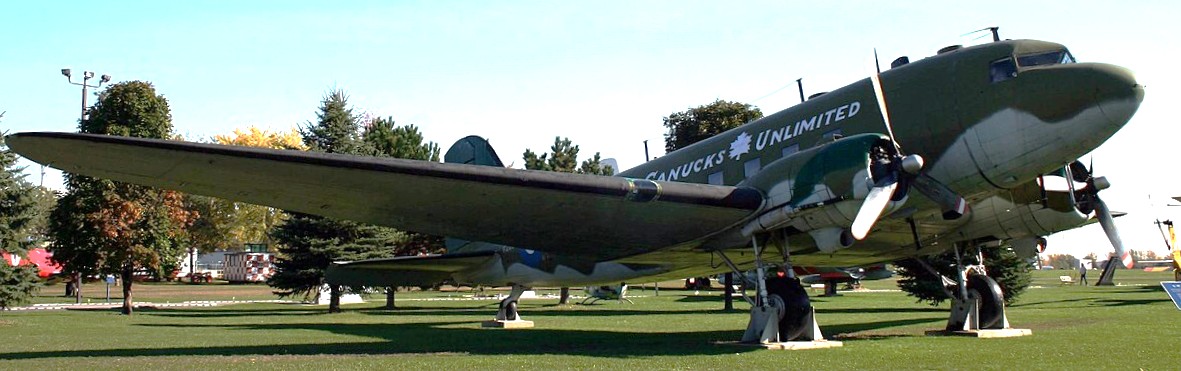
Douglas CC-129 Dakota in Second World War markings, NAFM.
(Library and Archives Canada Photo, MIKAN No. 4233648)
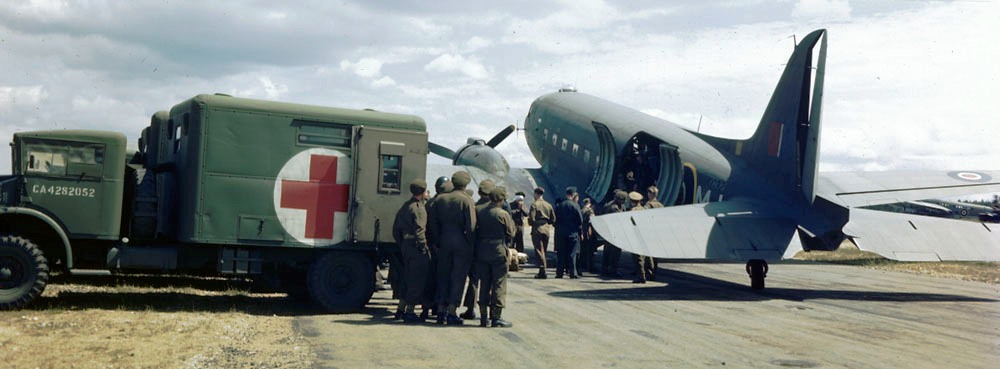
Douglas Dakota loading wounded, ca 1944.
(Library and Archives Canada Photo, MIKAN No. 4233638)
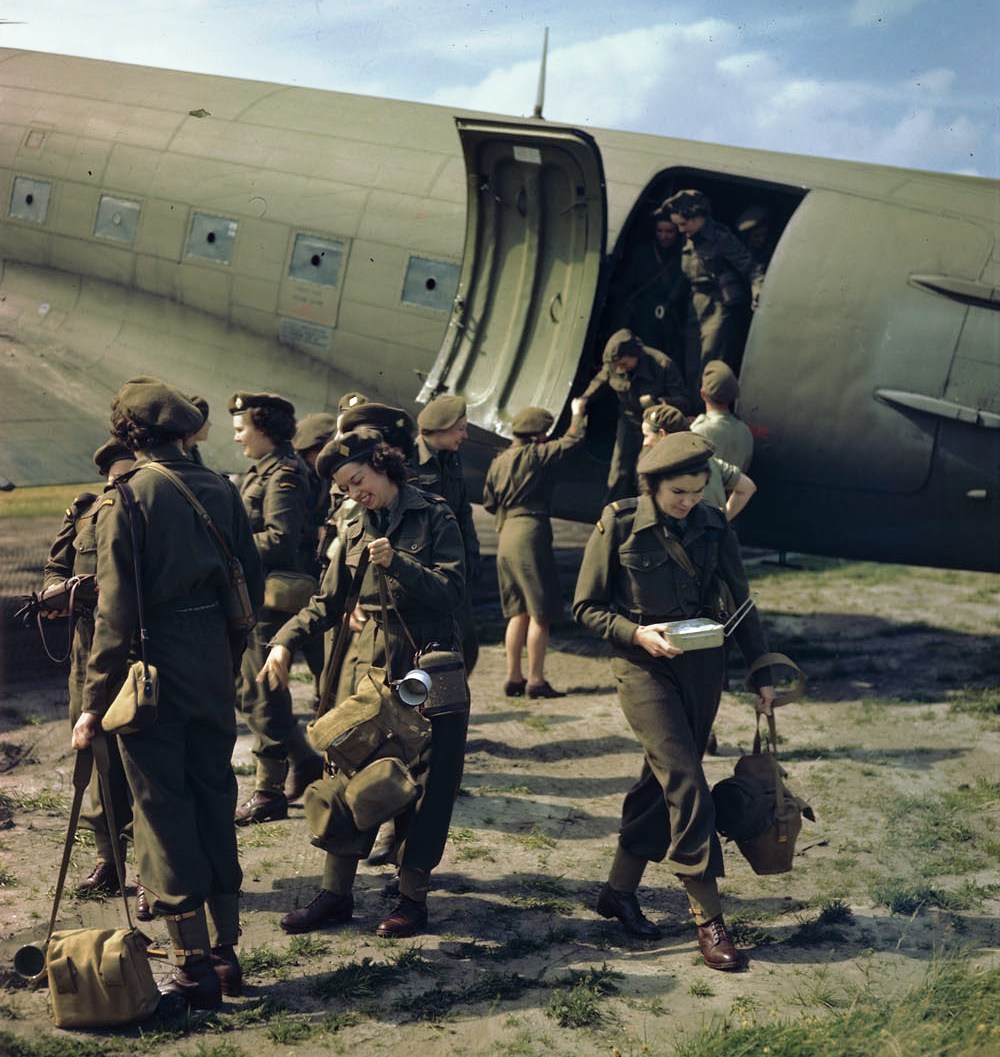
Douglas Dakota with CWAC, Netherlands, ca 1944.
(Library and Archives Canada Photo, MIKAN No. 3583292)
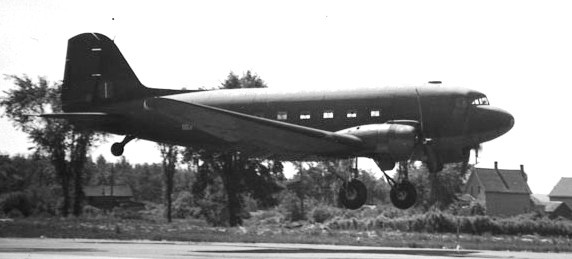
Douglas Dakota landing, 29 May 1944.
(Andre Gerwing Photo)
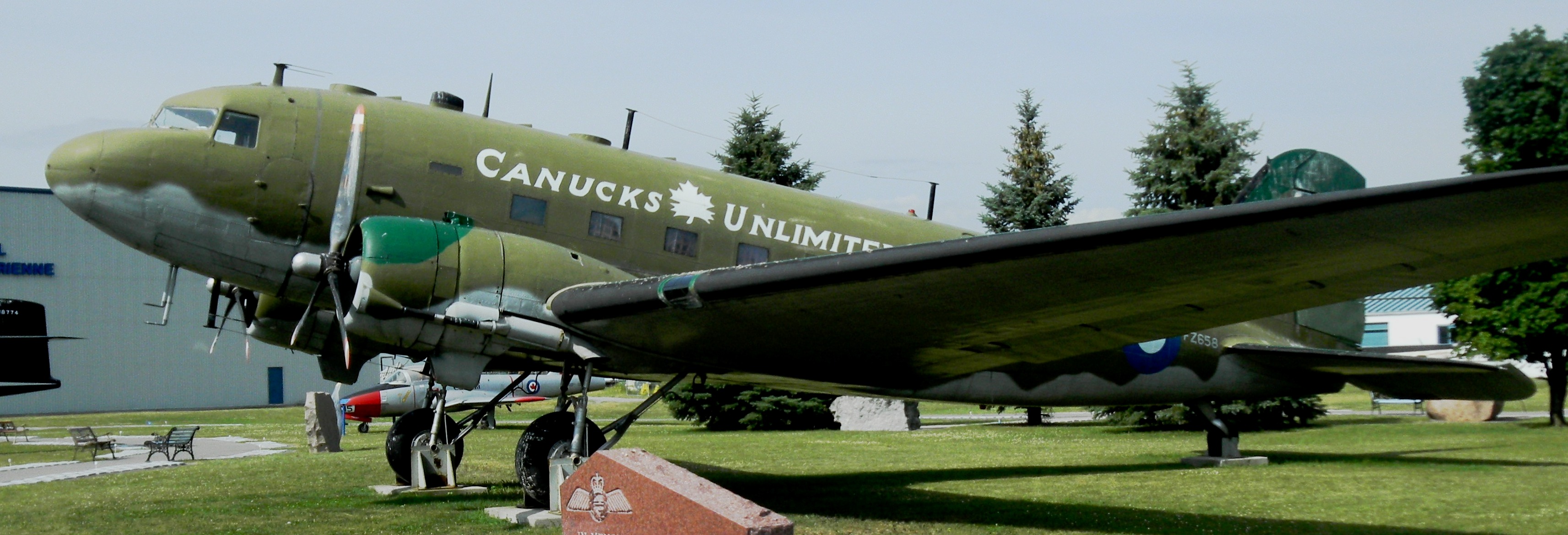
Douglas Dakota III (Serial No. FZ658), c/n 12217, National Air Force Museum of Canada, CFB Trenton, Ontario.
(Author Photo)
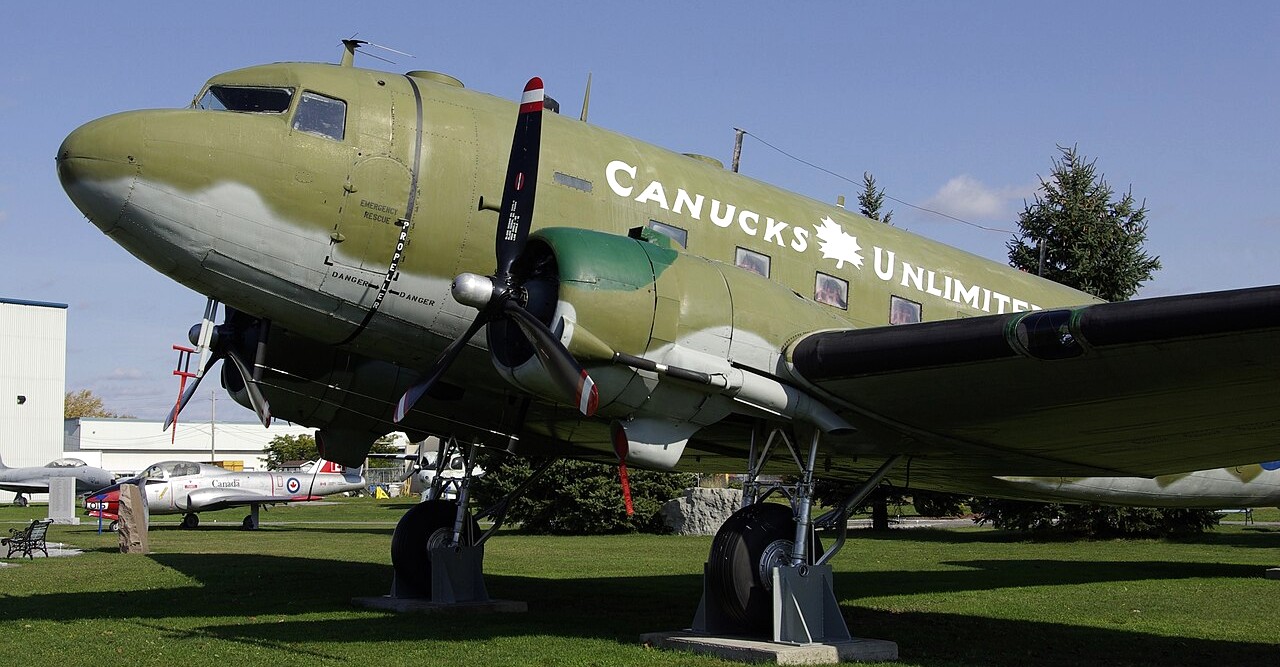
Douglas CC-129 Dakota (Serial No. 12963), the Second World War camouflage, “Canucks Unlimited”. The museum’s Dakota served with RCAF No. 435 & No. 436 Squadrons in India from 1944-1946. It was one of many DC-3s used to transport supplies and troops to the British Army in Burma. After the Second World War, it served in various squadrons in Canada until its retirement in 1989. Dakota 12963 has been repainted in the colours it wore while serving in Burma. (NAFMC)
(Author Photo)
Douglas CC-129 Dakota (Serial No. 12963), the Second World War camouflage, “Canucks Unlimited”.
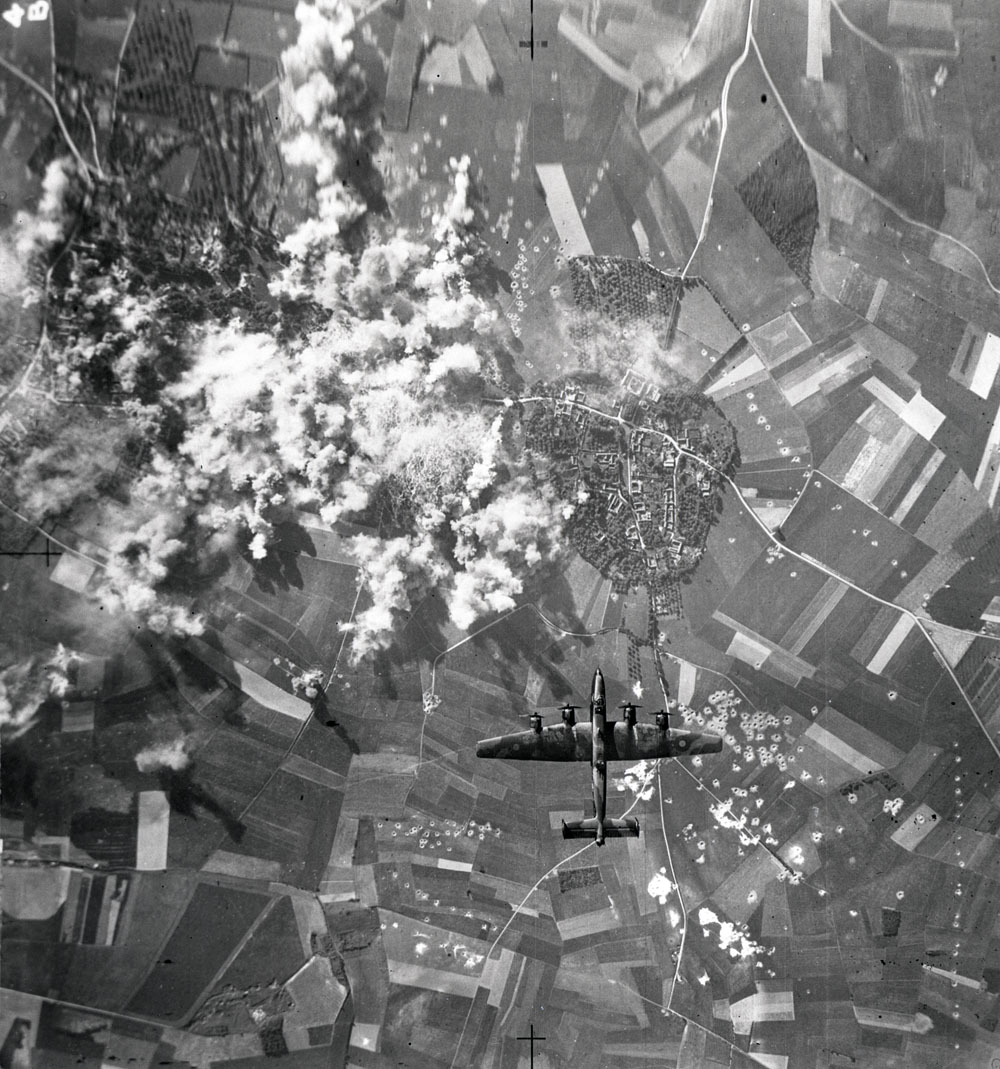
(Library and Archives Canada Photo, MIKAN No. 4002568)
Handley Page Halifax on a daylight bombing raid over Europe ca 1945.
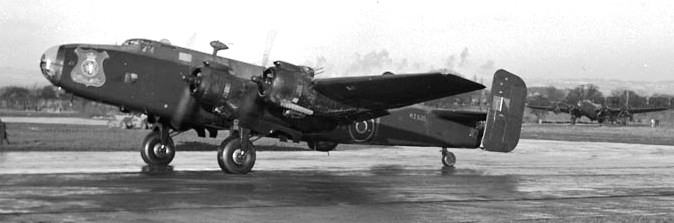
(Library and Archives Canada Photo, MIKAN No. 4752281)
Handley Page Halifax Mk. III, RCAF (Serial No. MZ620), No. 6 Group, No. 425 Alouette Squadron, England, 6 Jan 1945. The identifier T is visible above the landing gear. Coded KW-T, this Halifax flew with 425 Sqn until the 8th of Feb 1945, after completing 60 missions.
MZ620 was photographed with the same Nose Art on the 23rd of November 1944 parked at dispersal with four other 425 SQN aircraft, KW-S (MZ464), KW-U (LL596), and two others not identified. One WEB site identifies it as KW-Q, probably because it somewhat resembles the nose art on Halifax KW-Q NP957, “Ville de Quebec”, which can be seen today on a wall in the War Museum in Ottawa. However that painting was done during March 1945. It did not exist in November 1944.
It was also photographed on the 2nd of July 1944 (PL-30749) but without the crest that resembles a police badge. At that time it was erroneously identified as belonging to KW-A, probably because “Alouette” was visible on the painting. On the 28th of June 1944, at 02:00 in the morning, KW-A MZ683 was destroyed after colliding with another Halifax while landing at Tholthorpe. By July 2nd 1944, it had been replaced by KW-A NA527. The replacement NA527 received the identical nose art that MZ683 had sported, a stylized Lark with “Alouette” written above and “Je t’y Plumerai” below.
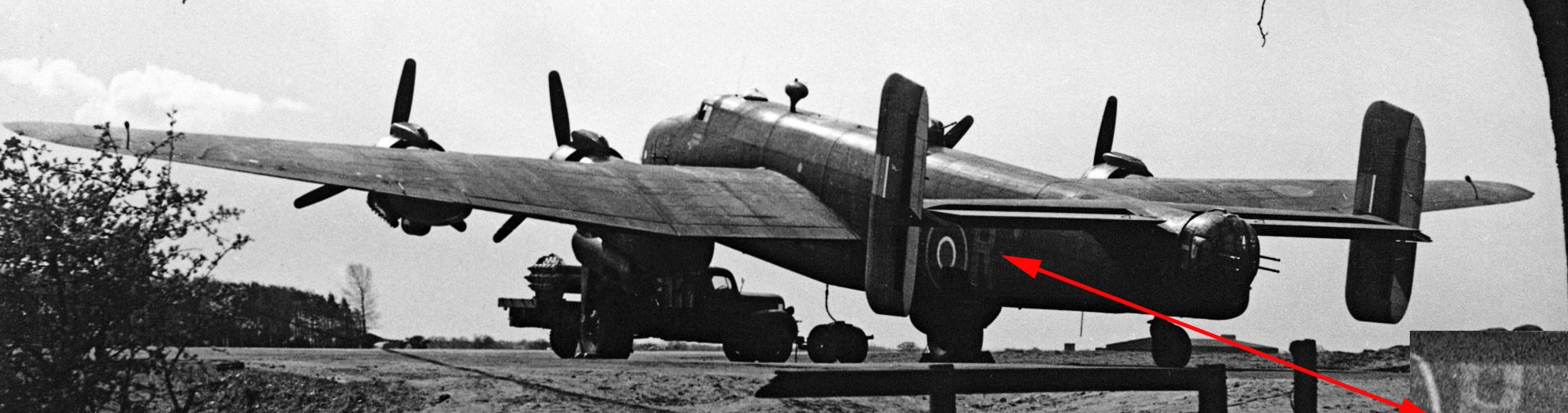
(Library and Archives Canada Photo, MIKAN No. 4752284)
Handley Page Halifax Mk. III, RCAF No. 6 Group, No. 420 Squadron, England, 6 Jan 1945.
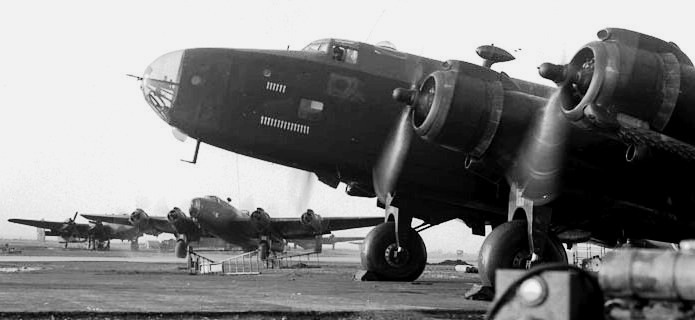
(Robert Taylor Photo)
Handley Page HP 57 Halifax Mk. VII (Serial No. NA337). This aircraft was a Special Duties aircraft built by Rootes Motors, at Liverpool Airport. NA337 flew with No. 644 Squadron RAF, then based at RAF Tarrant Rushton, and was shot down in April 1945. It was retrieved from the bottom of Lake Mjøsa in Norway in 1995, and taken to Canada where restoration was completed at CFB Trenton in 2005.
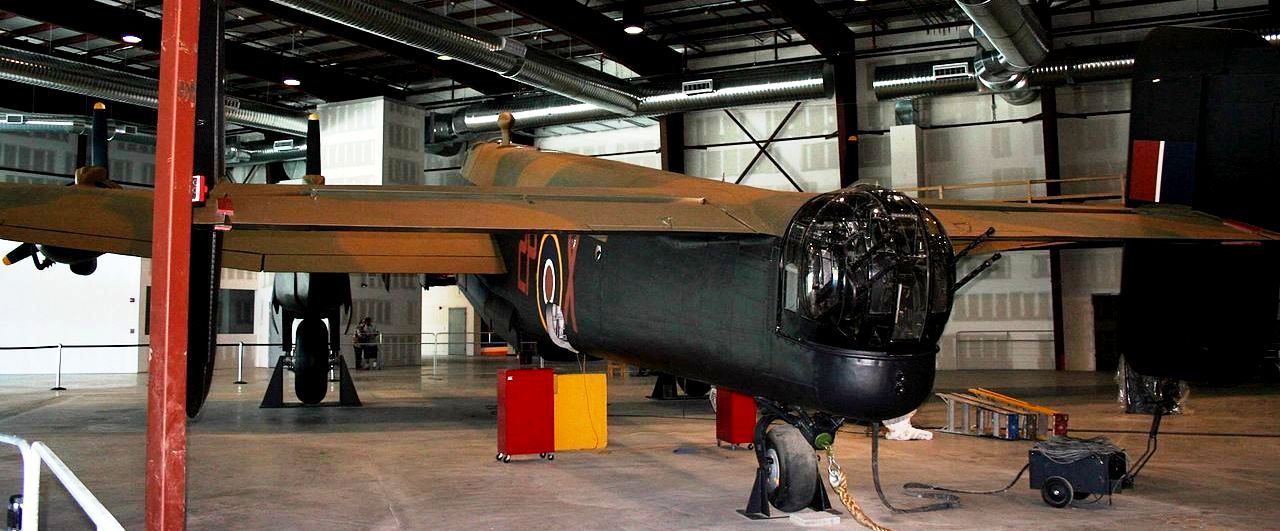
(Robert Taylor Photo)
Handley Page HP 57 Halifax Mk. VII (Serial No. NA337).
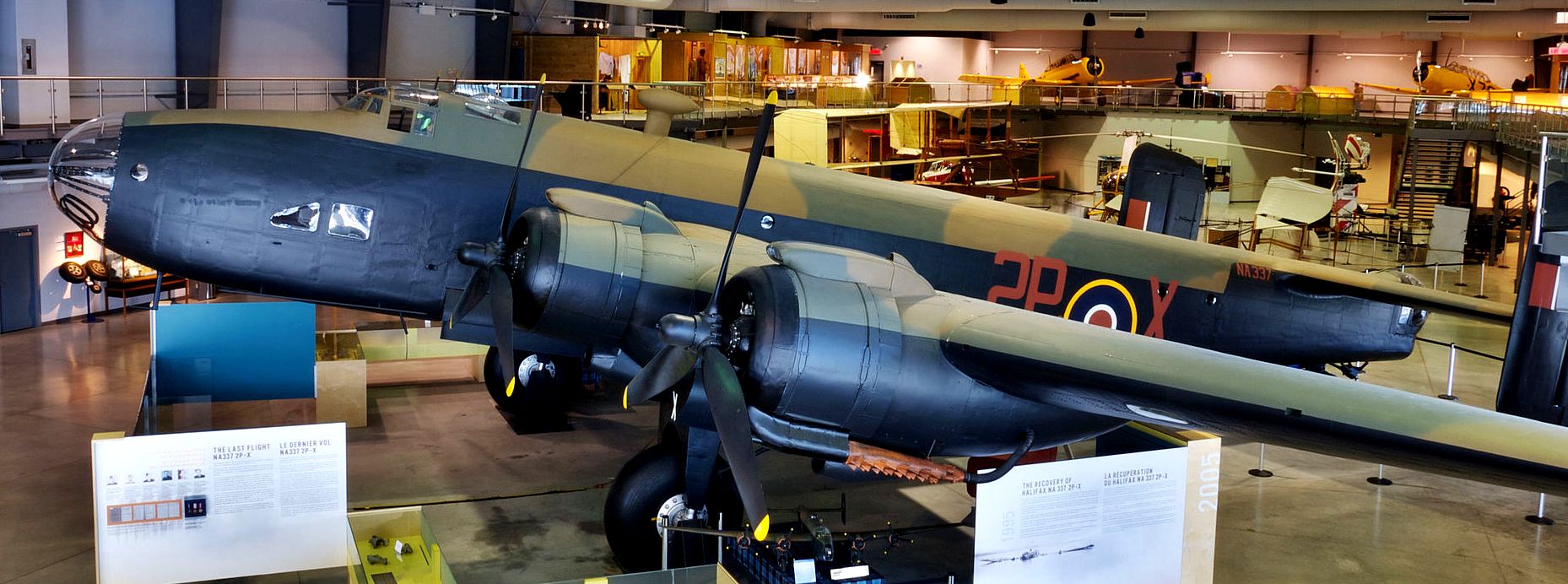
(JustSomePics Photo)
Handley Page HP 57 Halifax Mk. VII (Serial No. NA337).
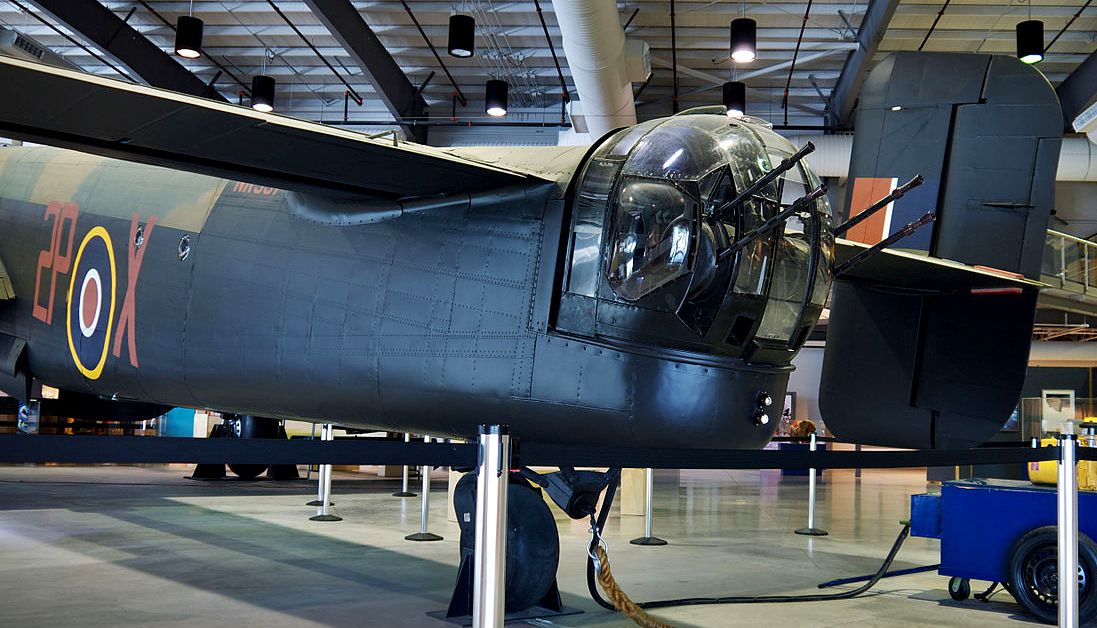
(JustSomePics Photo)
Handley Page HP 57 Halifax Mk. VII (Serial No. NA337).
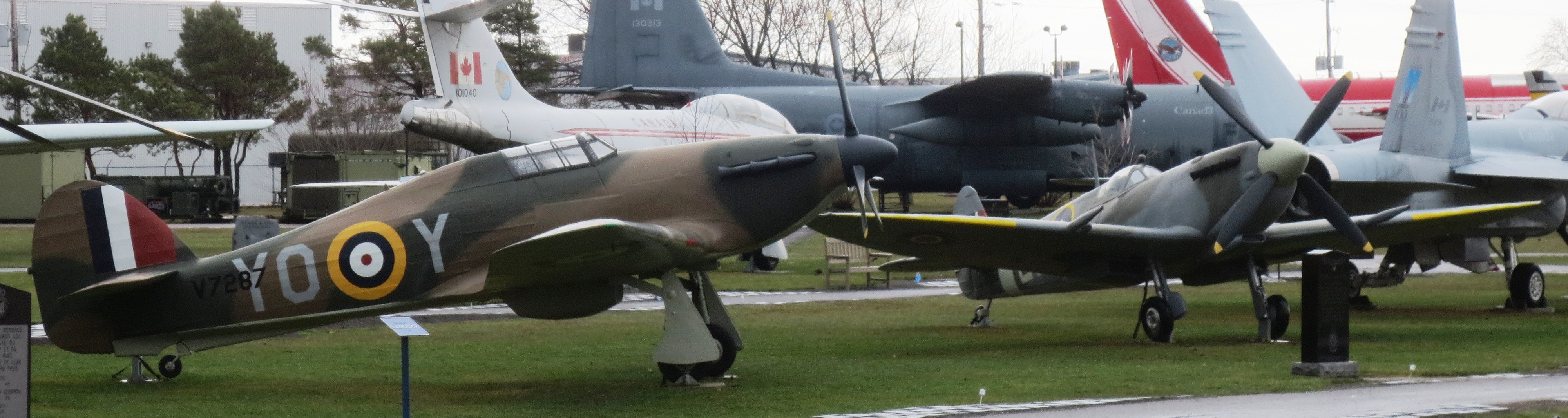
(Author Photo)
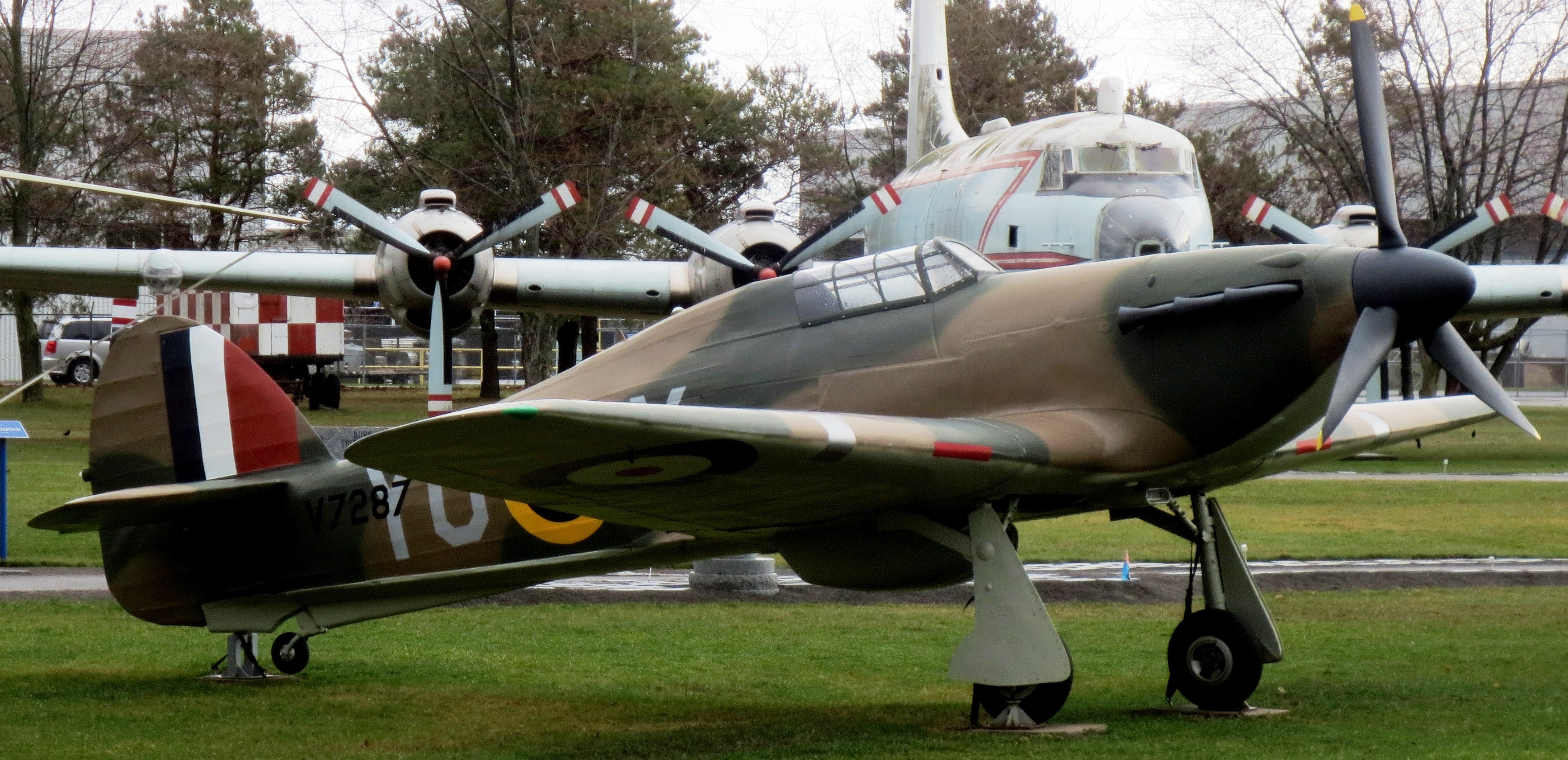
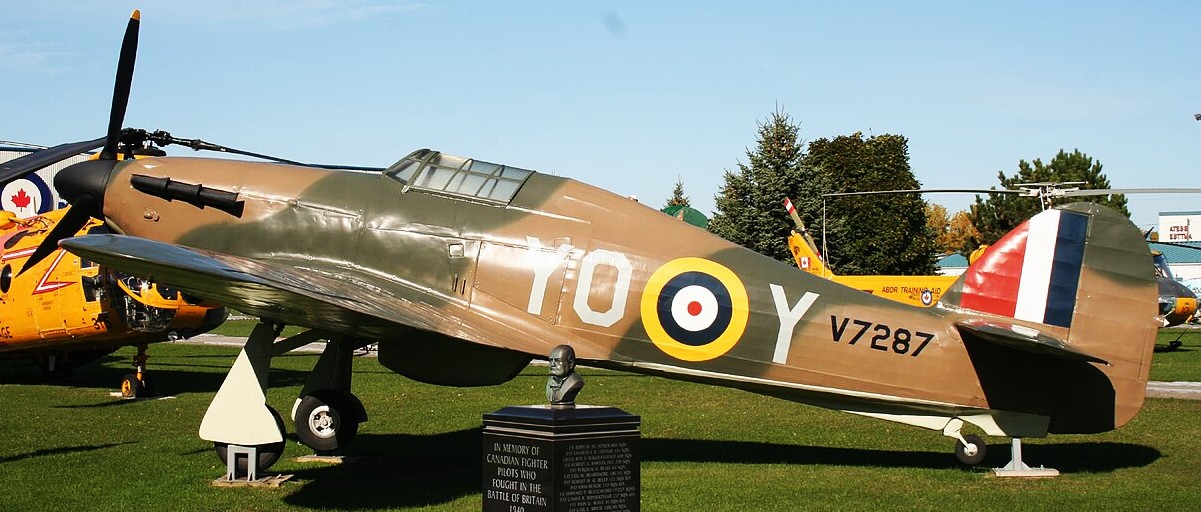
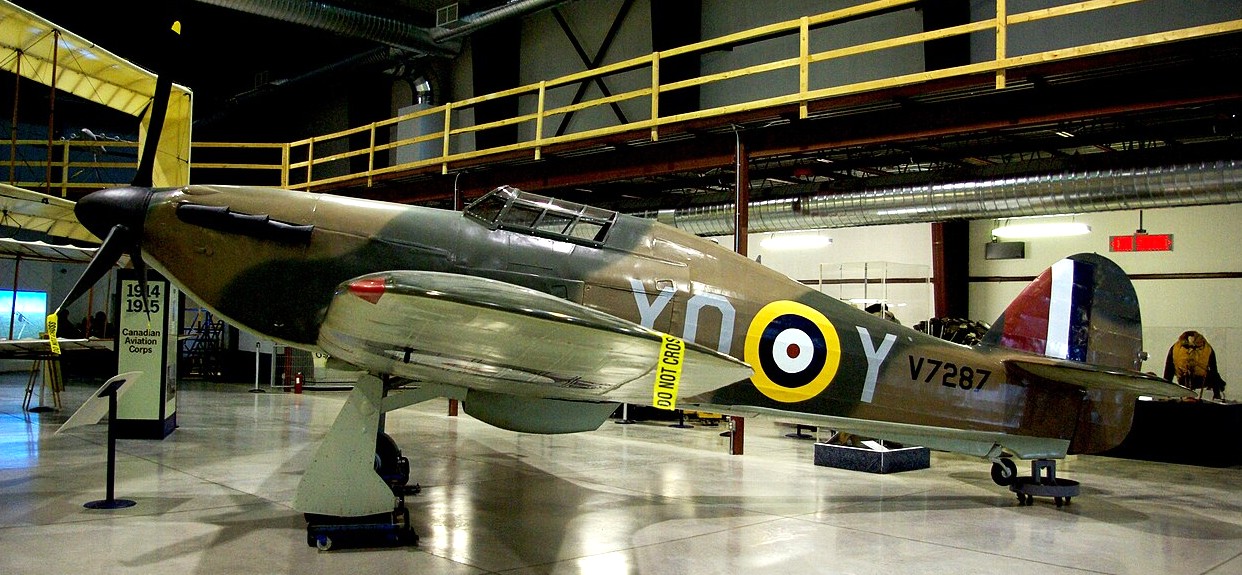
Hawker Hurricane, Y-OY, and Supermarine Spitfire replicas from the UK.
(Author Photo)
(Robert Taylor Photo)
(Andre Gerwing Photo)
Hawker Hurricane, Y-OY, replica from the UK. The Museum’s Hurricane is a full-size fibreglass replica. It has been with the National Air Force Museum since 2004 and was donated by George Weston Ltd. with special contributions from Tony Ditheridge and the Canadian Fighter Pilots Association. It is painted to depict the Hurricane flown by Toronto-born Flight Lieutenant B.D. “Dal” Russel during the Battle of Britain. Flight Lieutenant Russel, during the course of the War, made 286 operational sorties in three operational tours and was awarded the Distinguished Service Order and the Distinguished Flying Cross and bar. (NAFMC)
(Justsomepics Photo)
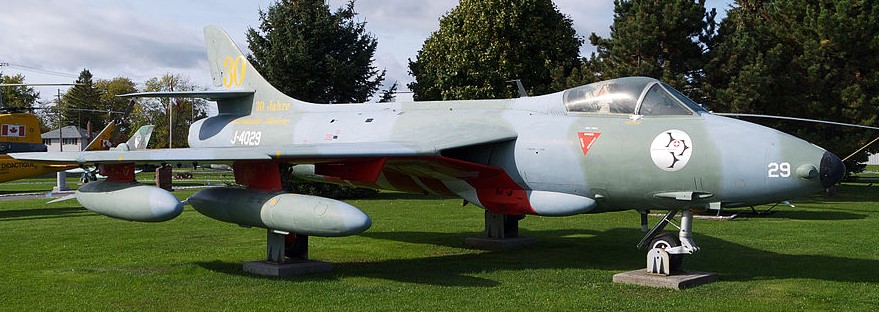
(Author Photo)
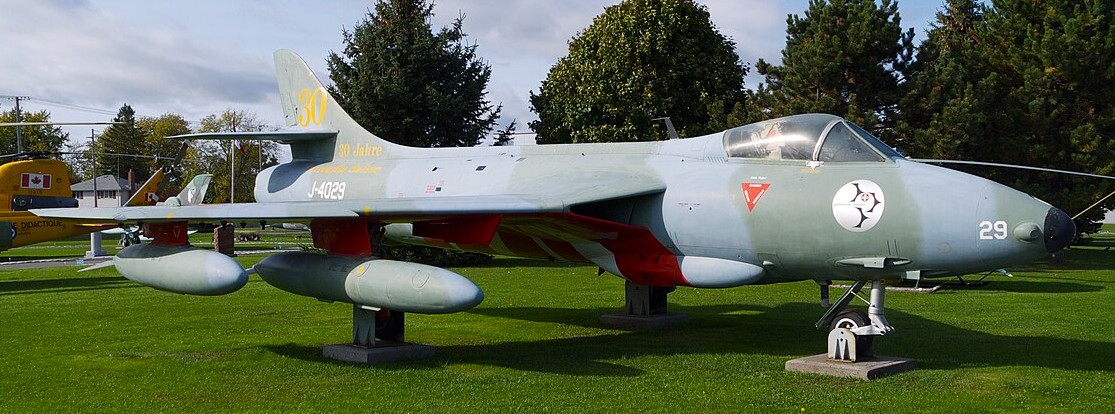
Hawker Hunter F. Mk. 6 (Serial No. J-4029). This aircraft was donated by the government of Switzerland and has been in the collection since 1995. The museum’s example flew with the official aerobatics team of the Swiss Air Force ‘Patrouille Suisse’ from 1959 to 1994. It is painted in the team’s official colours, and “30 Jahre Patrouille Suisse”. The Swiss flew the aircraft to Lyneham, England, where it was disassembled and shipped to CFB Trenton in a CC-130 Hercules. It was towed into the Museum’s Air Park on 16 Sep 1995. (NAFMC)
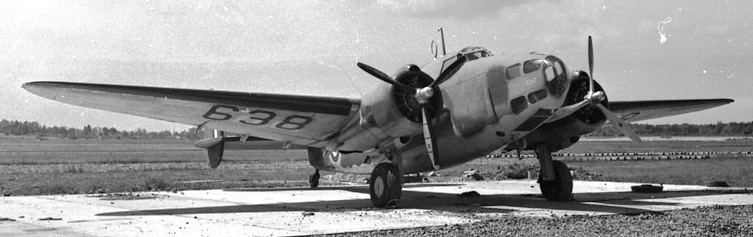
(Library and Archives Canada Photo, MIKAN No. 3589746)
Lockheed Hudson, RCAF (Serial No. 638), 21 June 1943.
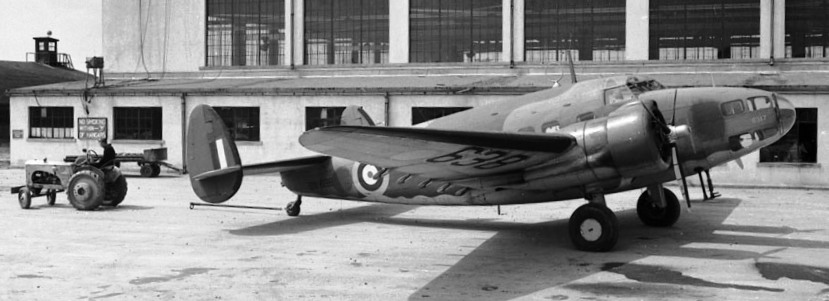
(Library and Archives Canada Photo, MIKAN No. 3589741)
Lockheed Hudson, RCAF, 21 June 1943.
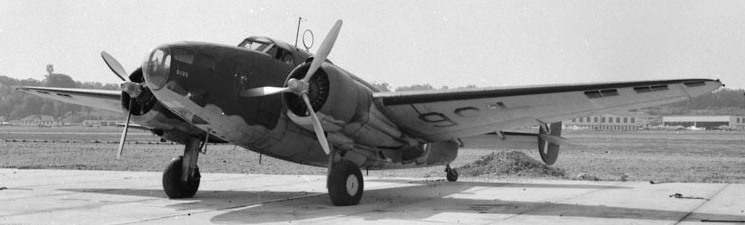
(Library and Archives Canada Photo, MIKAN No. 3589739)
Lockheed Hudson, RCAF (Serial No. 456), 21 June 1943.
Lockheed 414 Hudson Mk. VI (A-28A), fuselage, USAAF (Serial No. 42-47022), C/N 414-6942, Lend-Lease Contract No. DA-908, RAF (Serial No. FK466). This aircraft was is on loan from by the Atlantic Canada Aviation Museum in Halifax and will go back to the ACAM after 20 years. It is undergoing restoration with parts from a Lockheed Lodestar, Reg. No. CF-CEC from the Reynolds Museum, Alberta and a pair of Pratt & Whitney PW1830 radial engines donated by Joe McBryan of Buffalo Airways. Originally allocated to the RAF this aircraft was taken on strength by No. 1 Composite Squadron RCAF at Torbay, Newfoundland. Its gun turret was removed and the aircraft was re-equipped with a lifeboat for use in air-sea rescue operations. In 1945 this aircraft helped save the crew of a downed American Consolidated B-24 Liberator.
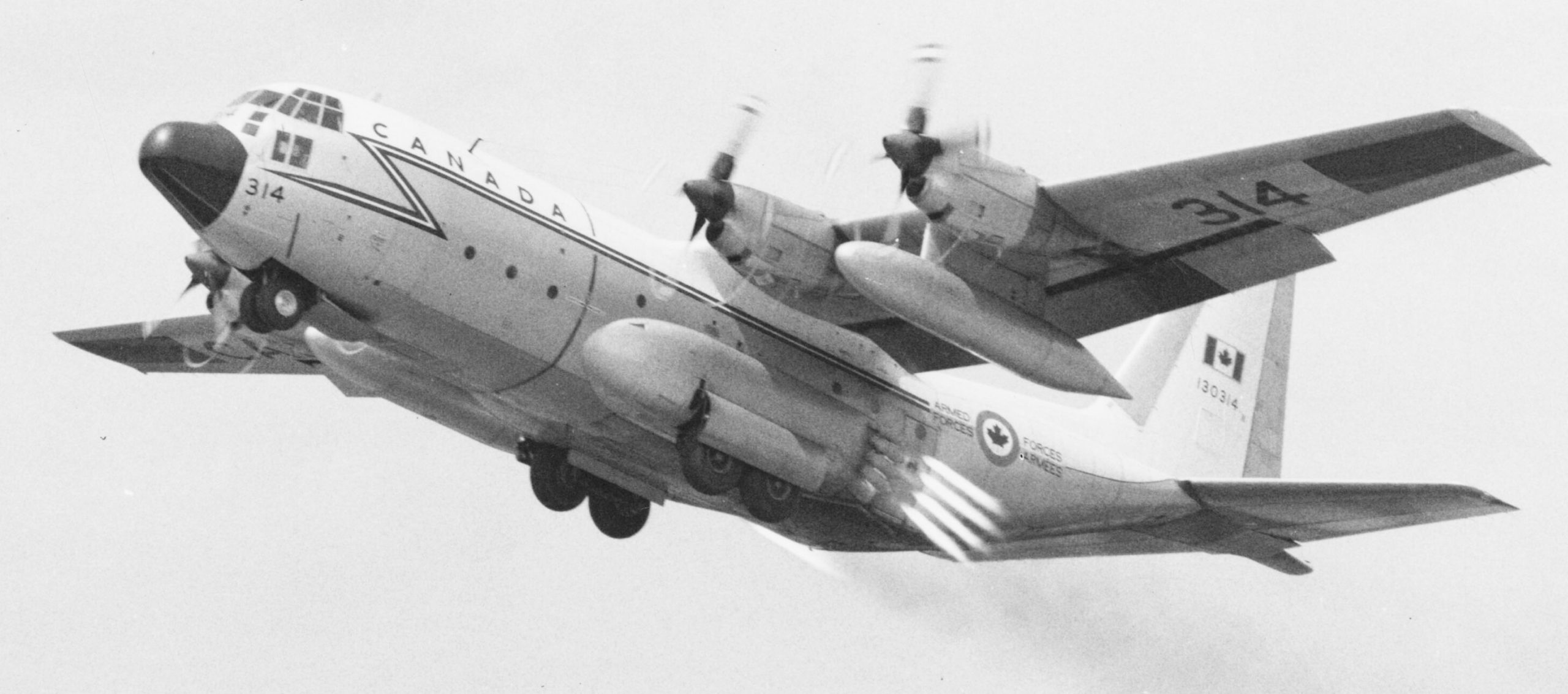
(CAF Photo)
Lockheed CC-130E Hercules (Serial No. 130314), Jet Assisted Take-off (JATO).
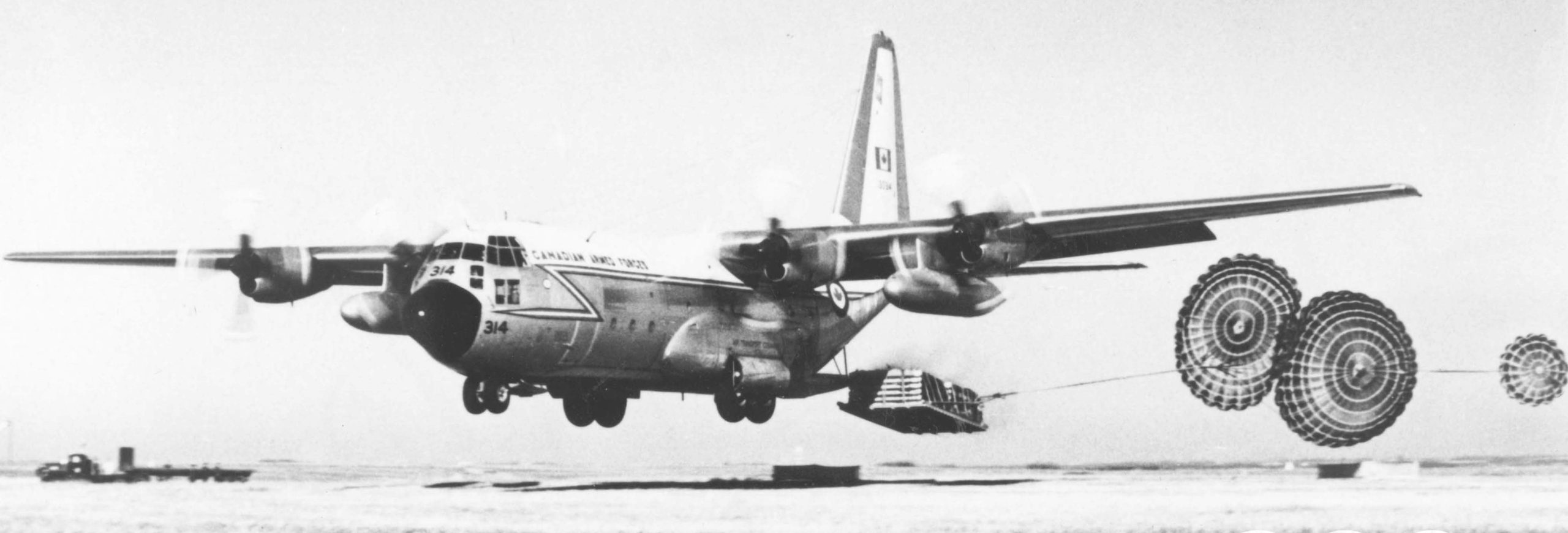
(CAF Photo)
Lockheed CC-130E Hercules (Serial No. 130314), Low-Altitude Parachute Extraction (LAPES).
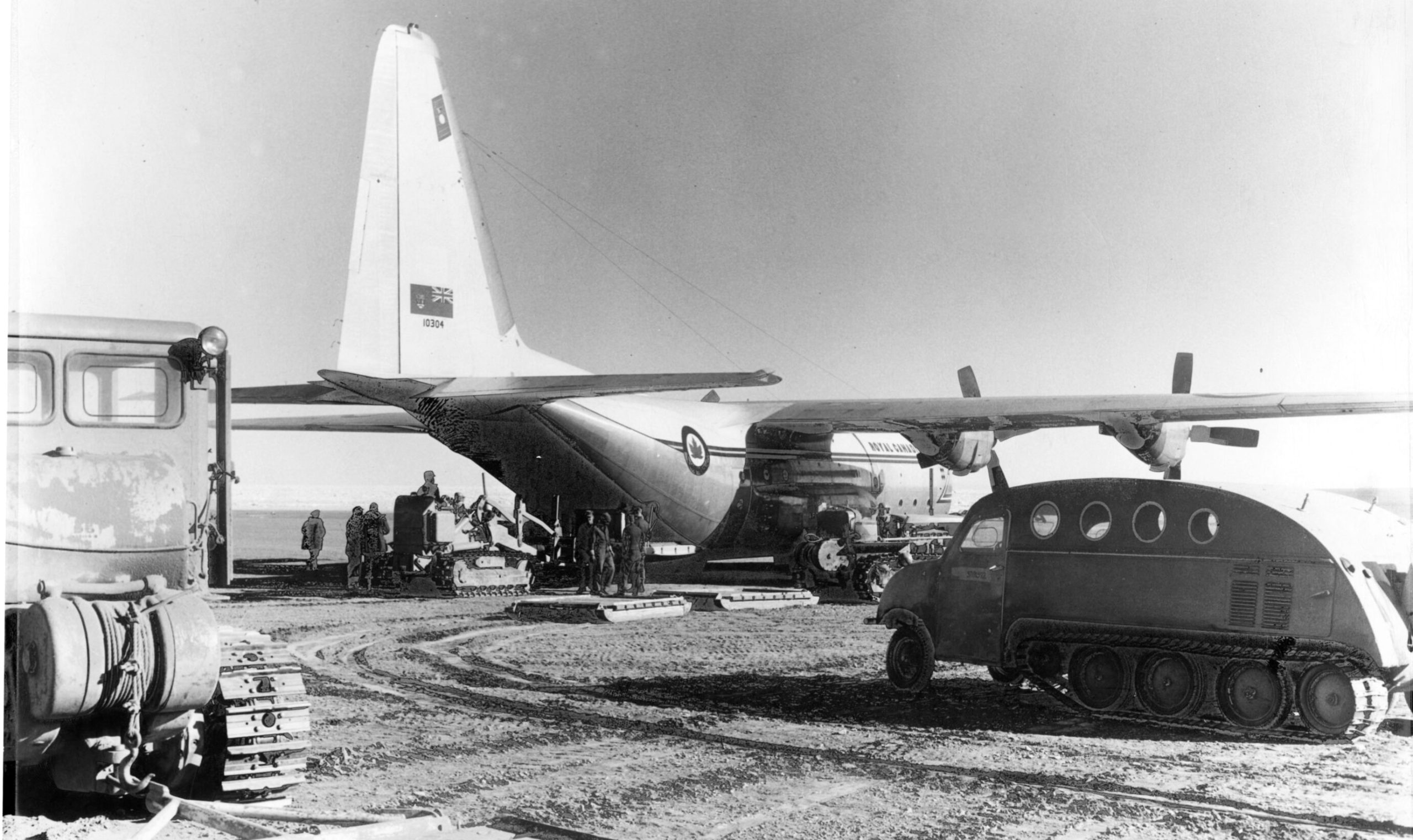
(RCAF Photo)
Lockheed CC-130B Hercules (Serial No. 10304), unloading supplies at CFS Alert, NWT, now Nunuvut, during Operation Boxtop VII, 1962
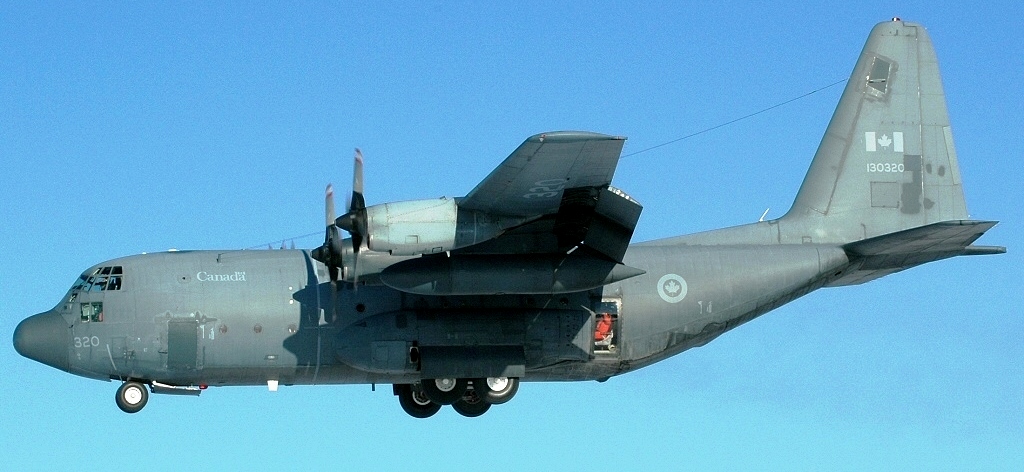
(John Davies Photo)
Lockheed CC-130E Hercules (Serial No. 130320).
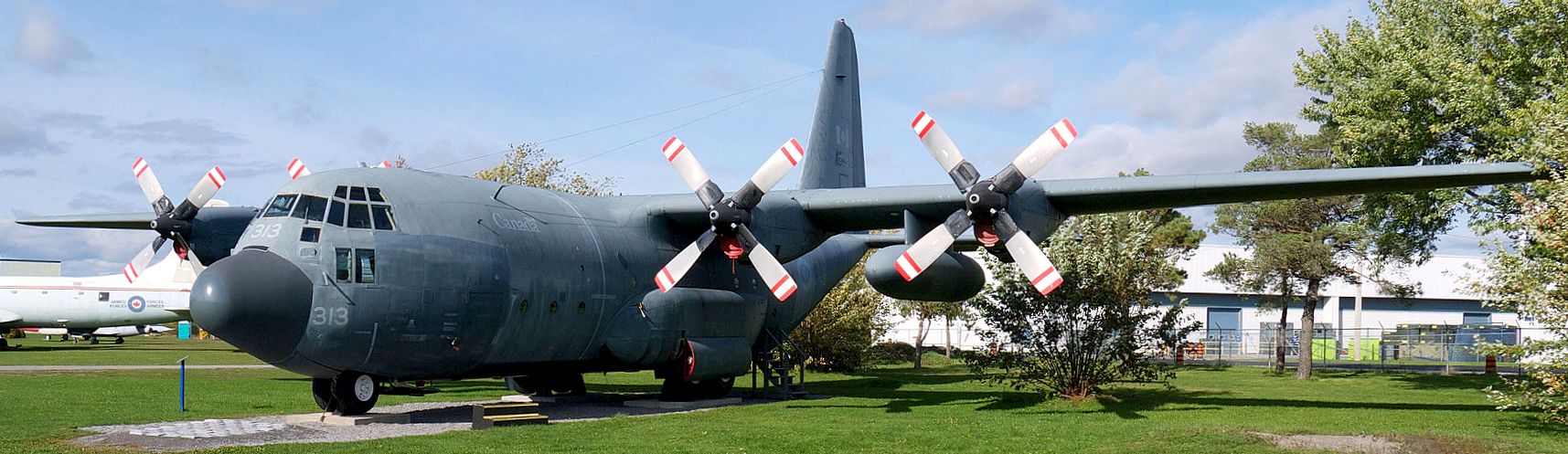
(JustSomePics Photo)
Lockheed CC-130E Hercules (Serial No. 130313).
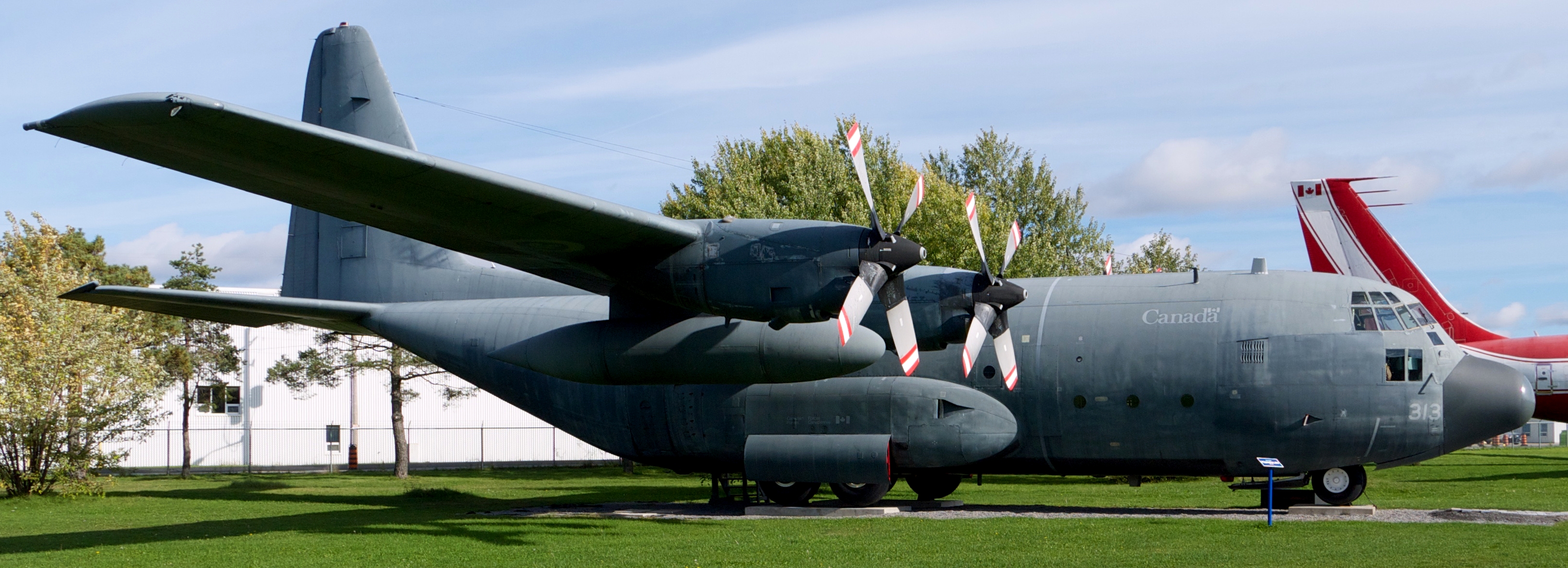
(JustSomePics Photo)
Lockheed CC-130E Hercules (Serial No. 130313).
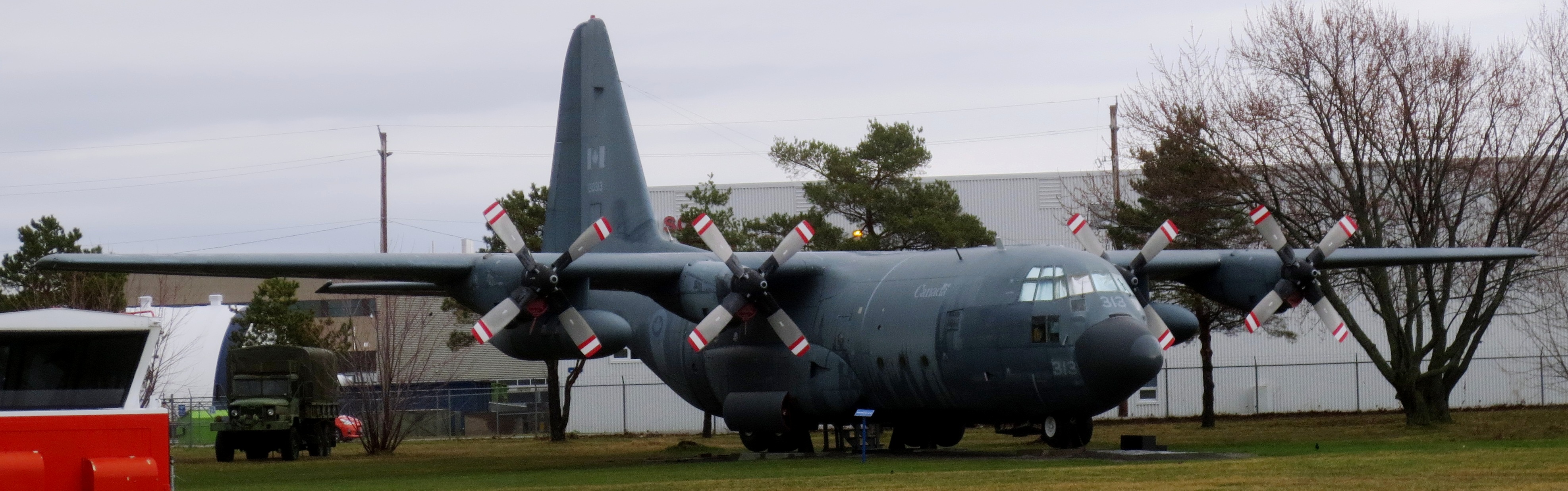
(Author Photo)
Lockheed CC-130E Hercules (Serial No. 130313).
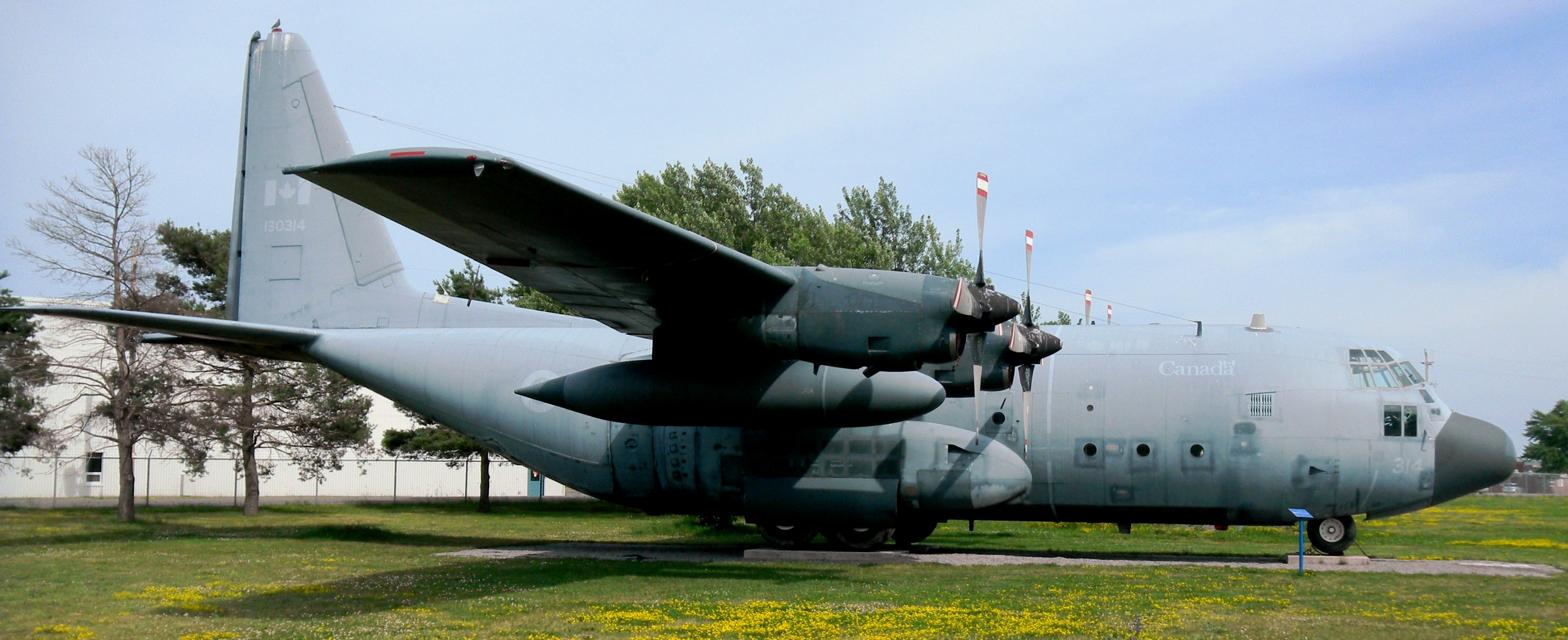
(Author Photo)
Lockheed CC-130E Hercules (Serial No. 130313).
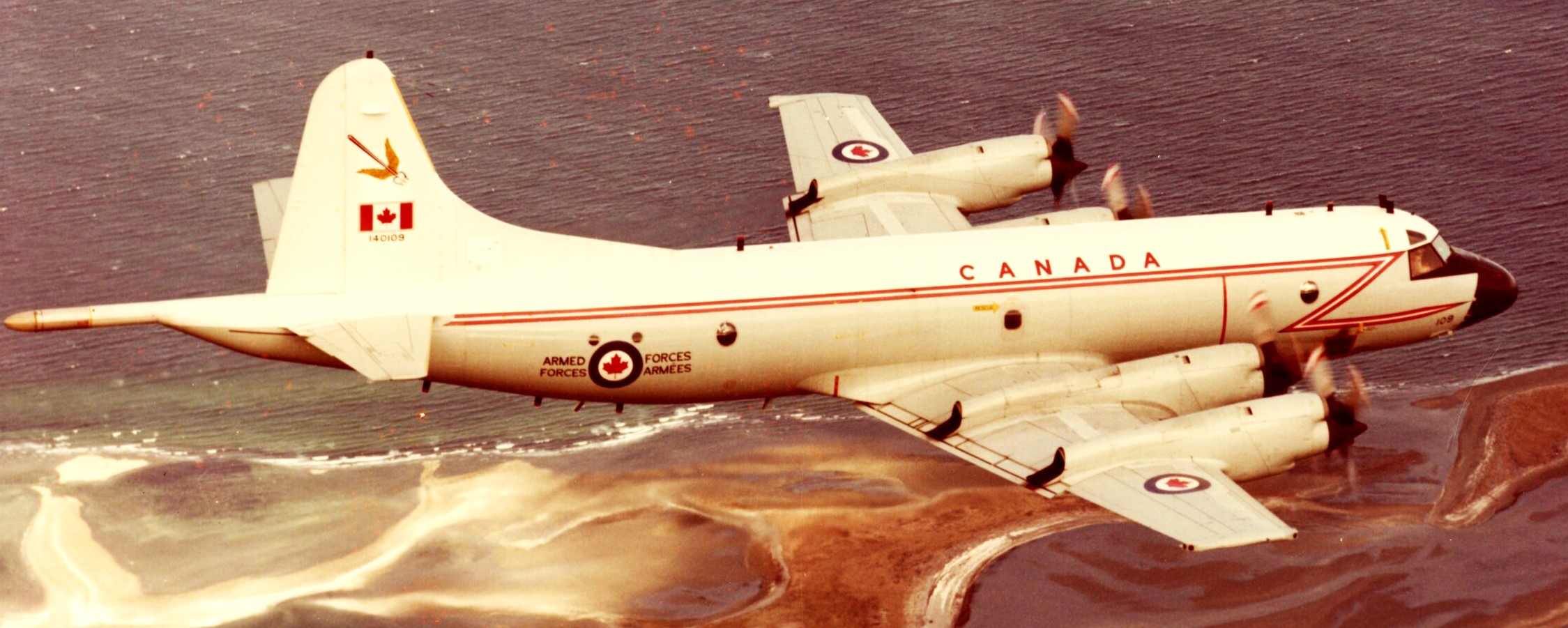
(CAF Photo)
Lockheed CP-140 Aurora (Serial No. 140109).
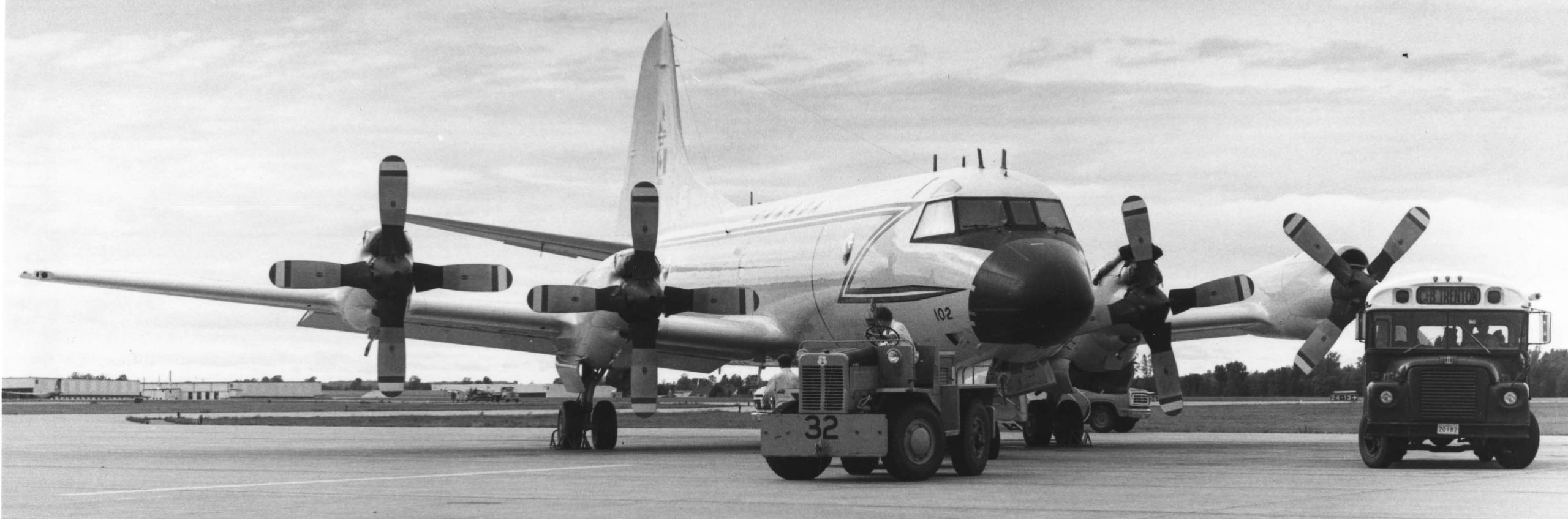
(CAF Photo)
Lockheed CP-140 Aurora (Serial No. 140102). Lockheed CP-140 Aurora (Serial No. 140102). Aurora 140102 was accepted into service on August 20, 1980. It served with 407 (Maritime Patrol) Squadron at CFB Comox, BC and with 405 (Maritime Patrol) Squadron at CFB Greenwood, NS. Throughout its service as a long-range patrol aircraft, Aurora 102 was used for surveillance of Canada’s coastal waters, as well as various operations and exercises. In May 2006, Aurora 102 participated in Exercise Joint Caribbean Lion, an international exercise including personnel, aircraft, and ships from Canada, the United States, the Netherlands, Belgium, and France held in Curaçao and Guadeloupe. In May 2007 it participated in Exercise Neptune Warrior 071, an international live firing training exercise involving 14 countries and a combination of aircraft and naval ships. In 2017 Aurora 140102 was taken out of service and stored at CFB Greenwood, NS until 2018, when is was transported to the NAFMC and re-assembled for display. (NAFMC)
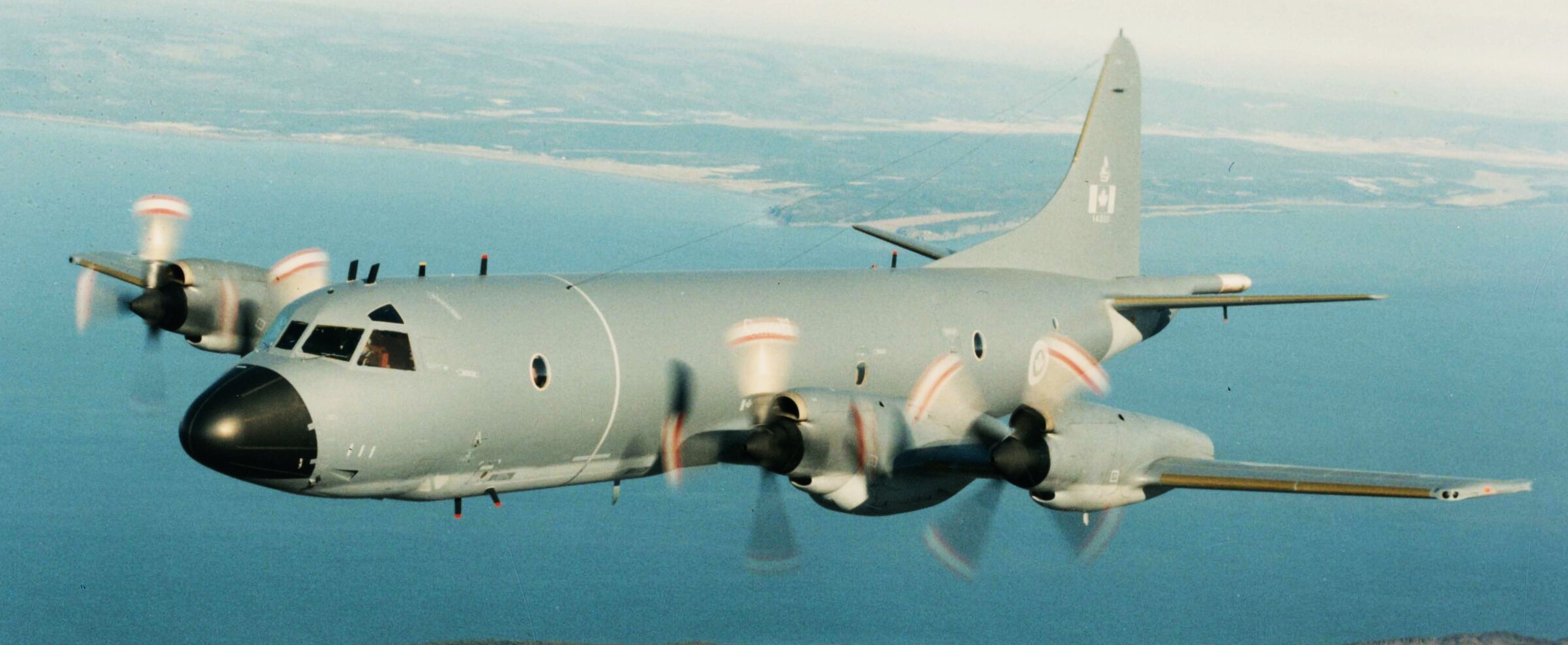
(CAF Photo)
Lockheed CP-140 Aurora (Serial No. 140—).
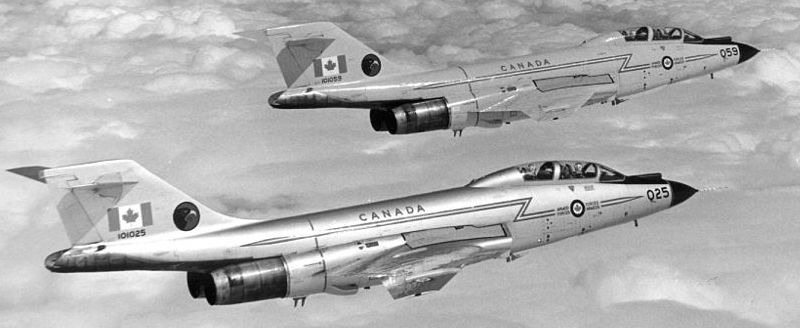
(USN Photo)
McDonnell CF-101B Voodoos, 409 Squadron, ca 1960s.
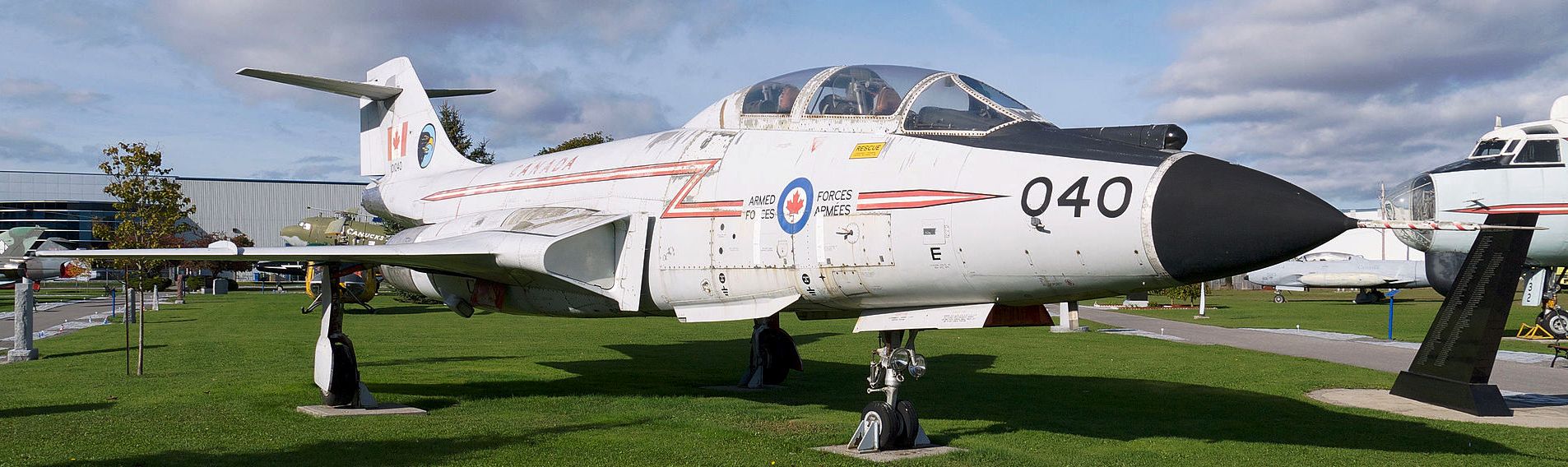
(JustSomePics Photo)
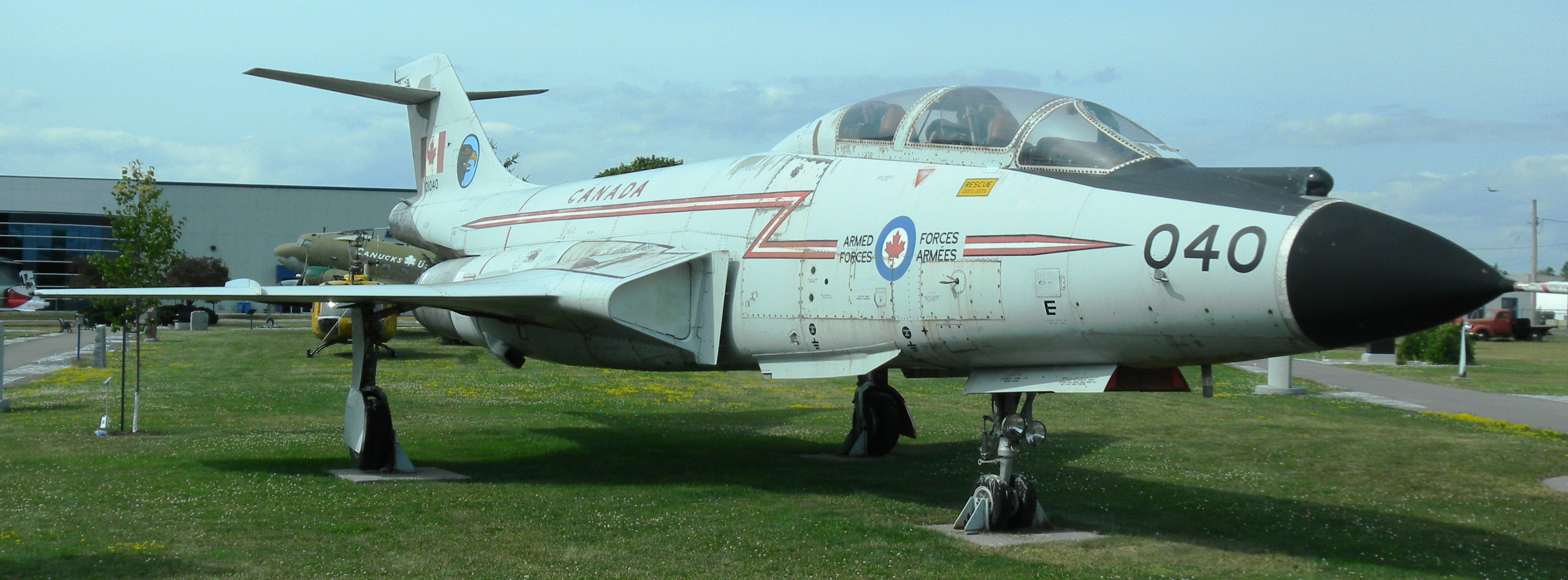
McDonnell CF-101B Voodoo (Serial No. 101040), USAF (Serial No. 57-0373). The RCAF purchased Voodoo 101040 from the United States Air Force in 1971. The aircraft flew with No. 409 ‘Nighthawk’ Squadron, an air defence unit located in Comox, British Columbia, (thus the hawk image located on the tail). It also flew with No. 416 Squadron in CFB Chatham, New Brunswick, which became the last unit in the world to fly the Voodoo. (NAFMC)
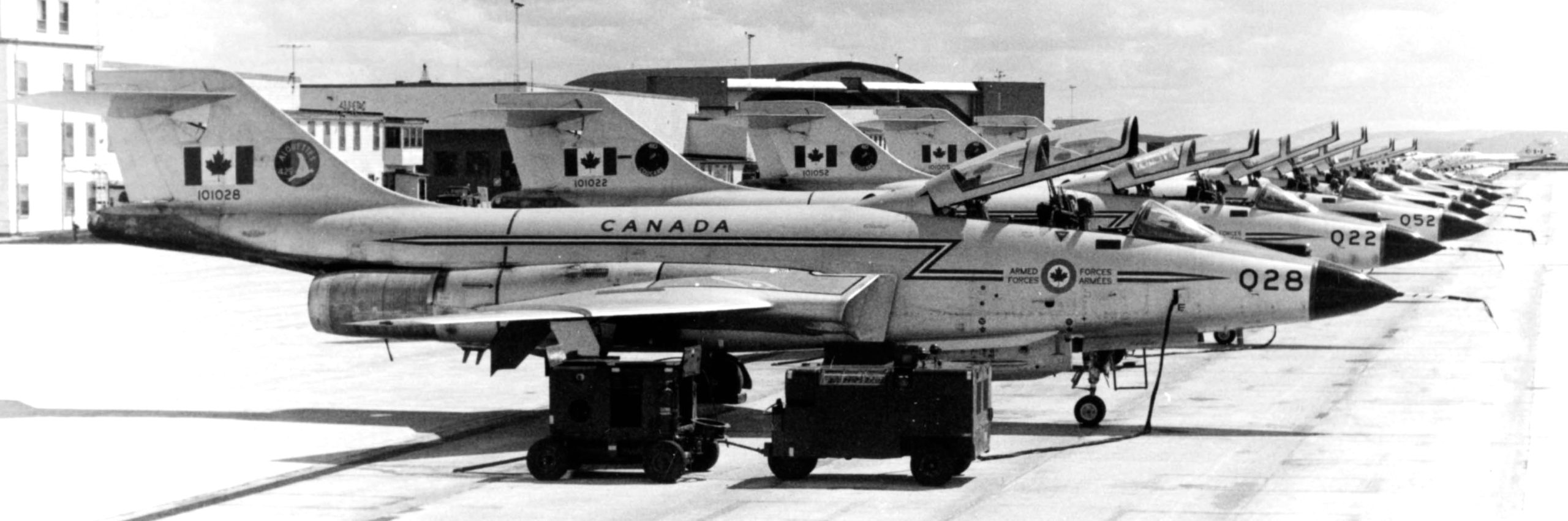
(CAF Photo)
McDonnell CF-101B Voodoo (Serial No. 101028).
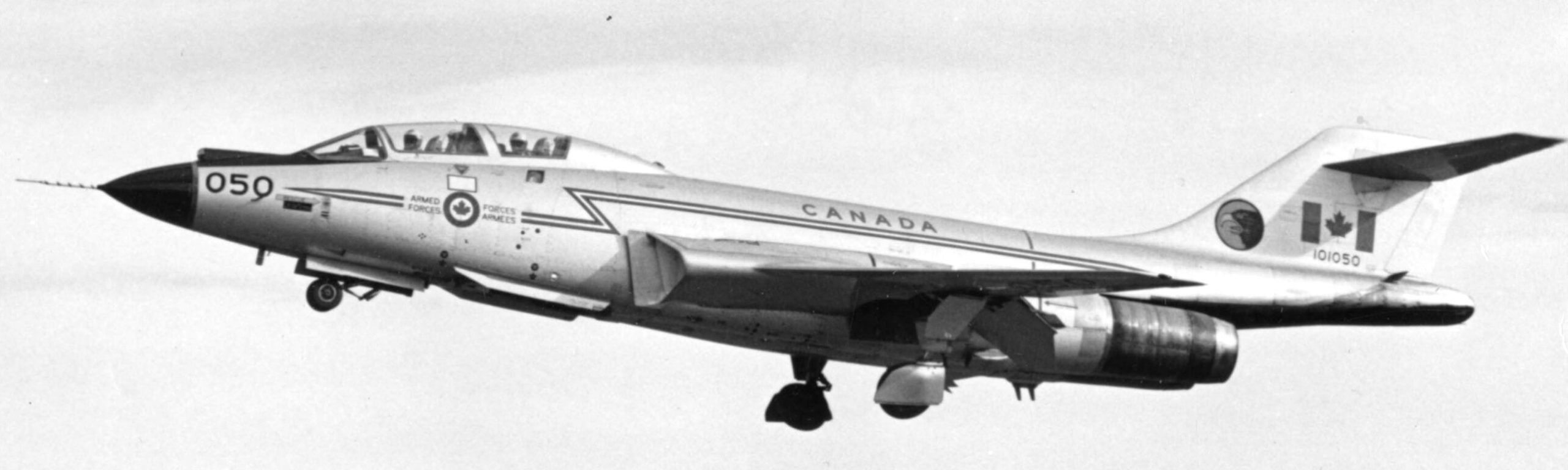
(CAF Photo)
McDonnell CF-101B Voodoo (Serial No. 101050).
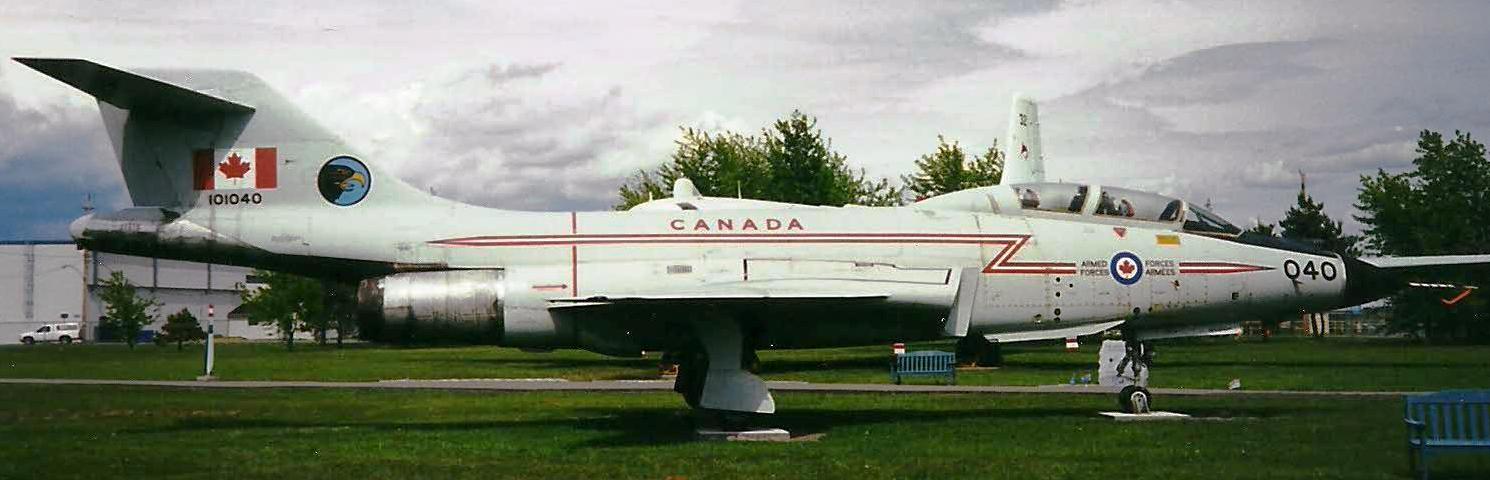
(Author Photo)
McDonnell CF-101B Voodoo (Serial No. 101040), USAF (Serial No. 57-0373).
(Author Photo)
McDonnell CF-101B Voodoo (Serial No. 101040), USAF (Serial No. 57-0373).
(SSgt. Greg L. Davis, USAF Photo)
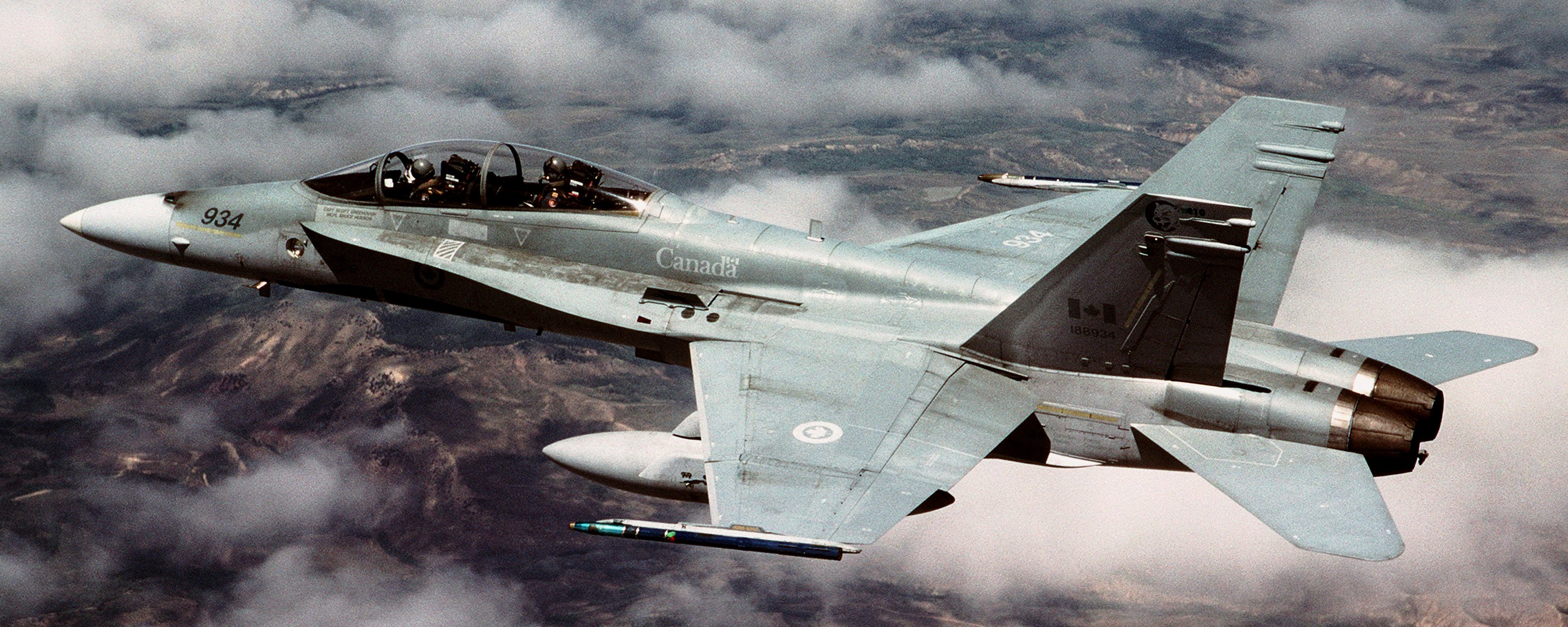
McDonnell Douglas CF-188B Hornet, (Serial No. 188934).
(JustSomePics Photo)
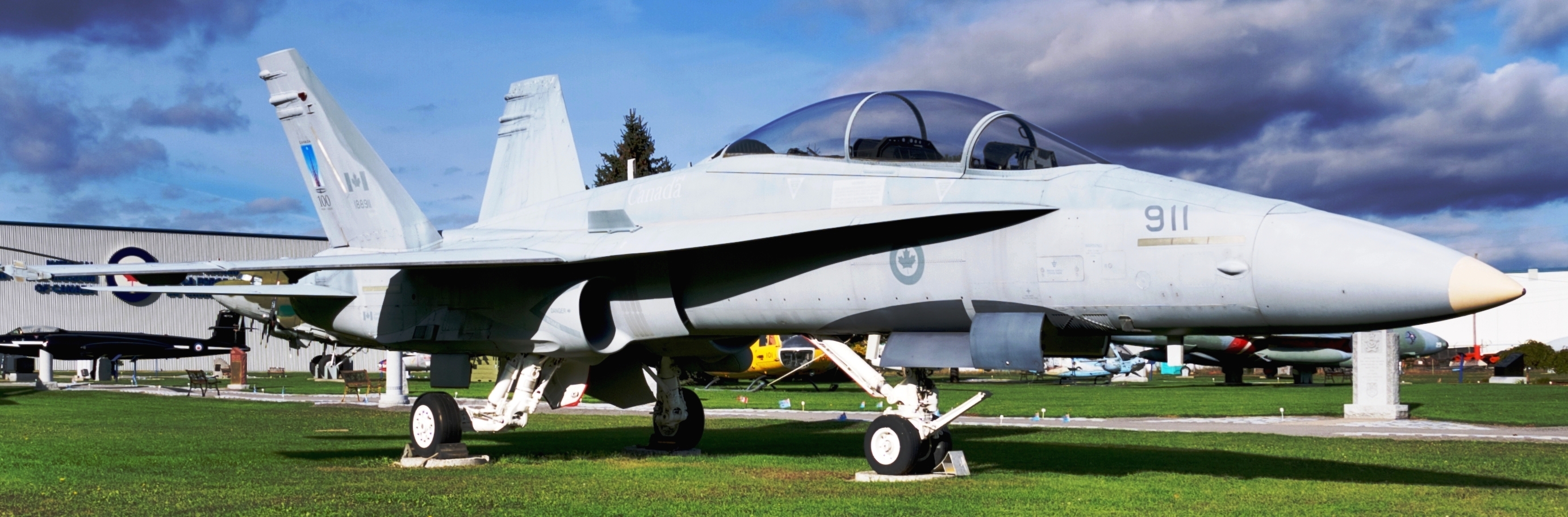
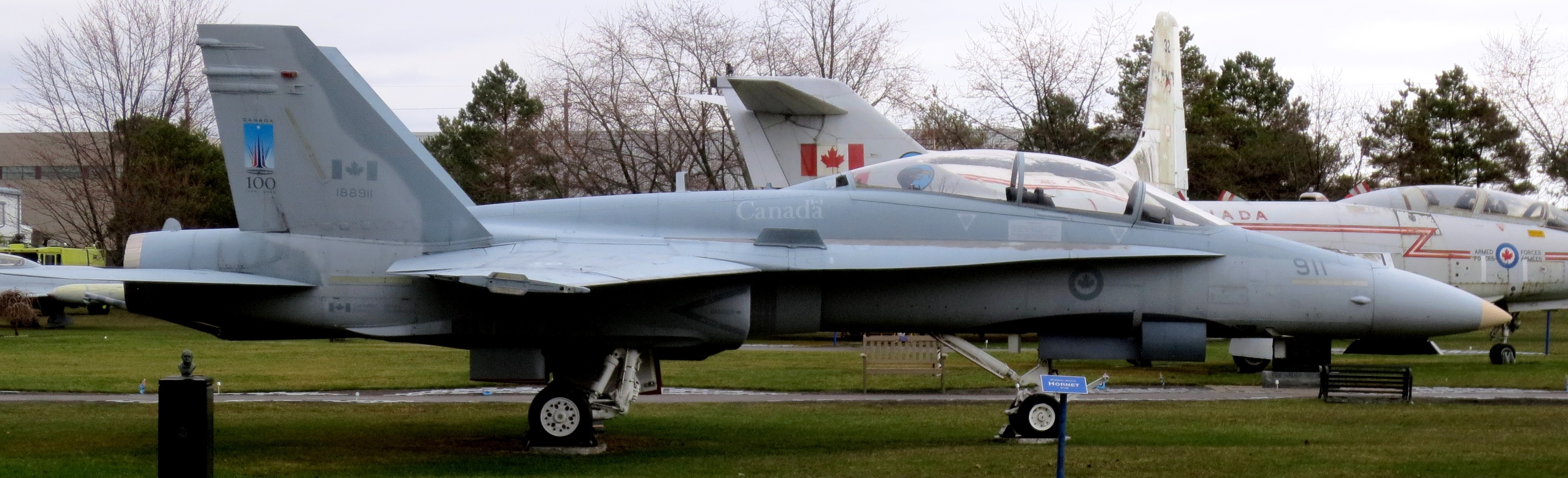
McDonnell Douglas CF-188 Hornet (Serial No. 188911). CF-188 Hornet tail number 188911 entered service in 1982. As one of the dual-seat variants, it was used as a training aircraft by 410 Tactical Fighter (Operational Training) Squadron in Cold Lake, Alberta and 433 Tactical Fighter Squadron in Bagotville, Quebec. The aircraft was presented to the Museum in 2009, in commemoration of the 100 Years of Flight anniversary (1909-2009); the emblem for this anniversary is painted on its tail. (NAFMC)
(Author Photo)
McDonnell Douglas CF-188 Hornet (Serial No. 188911).
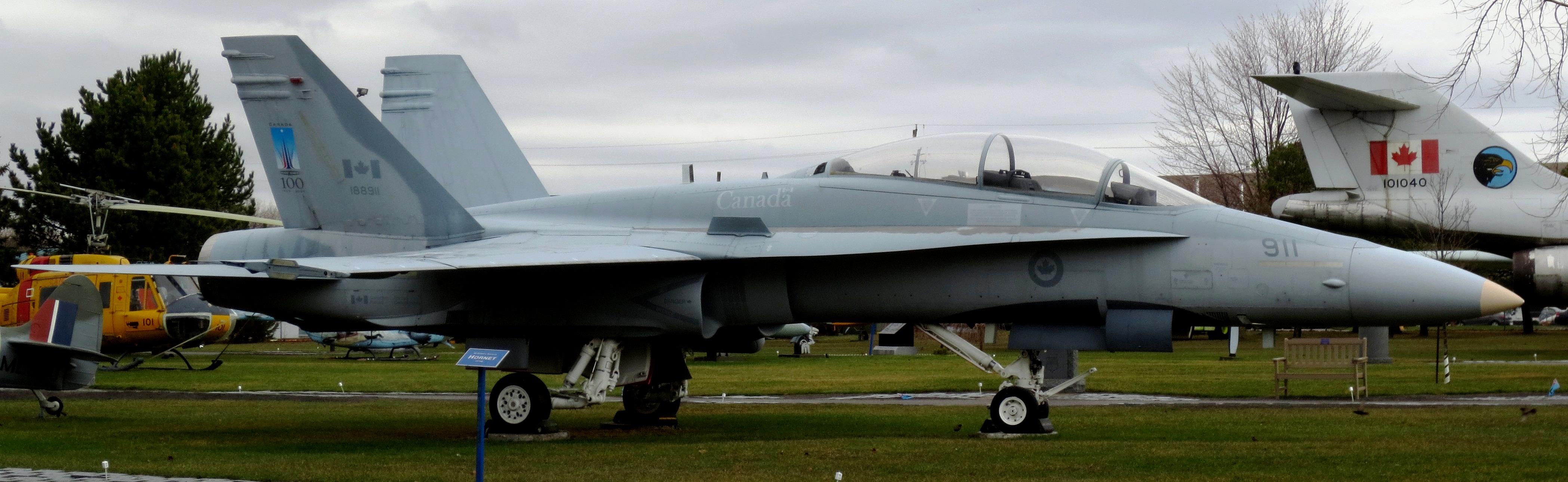
(Author Photo)
McDonnell Douglas CF-188 Hornet (Serial No. 188911).
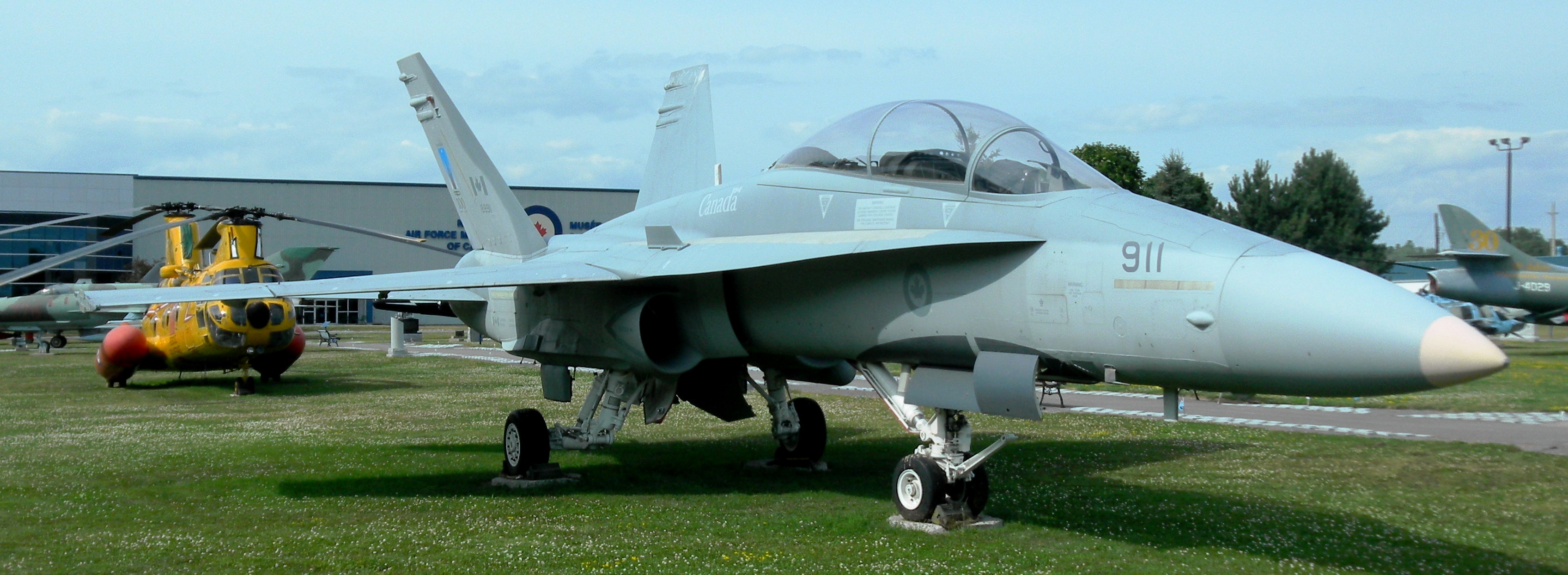
(Author Photo)
McDonnell Douglas CF-188 Hornet (Serial No. 188911).
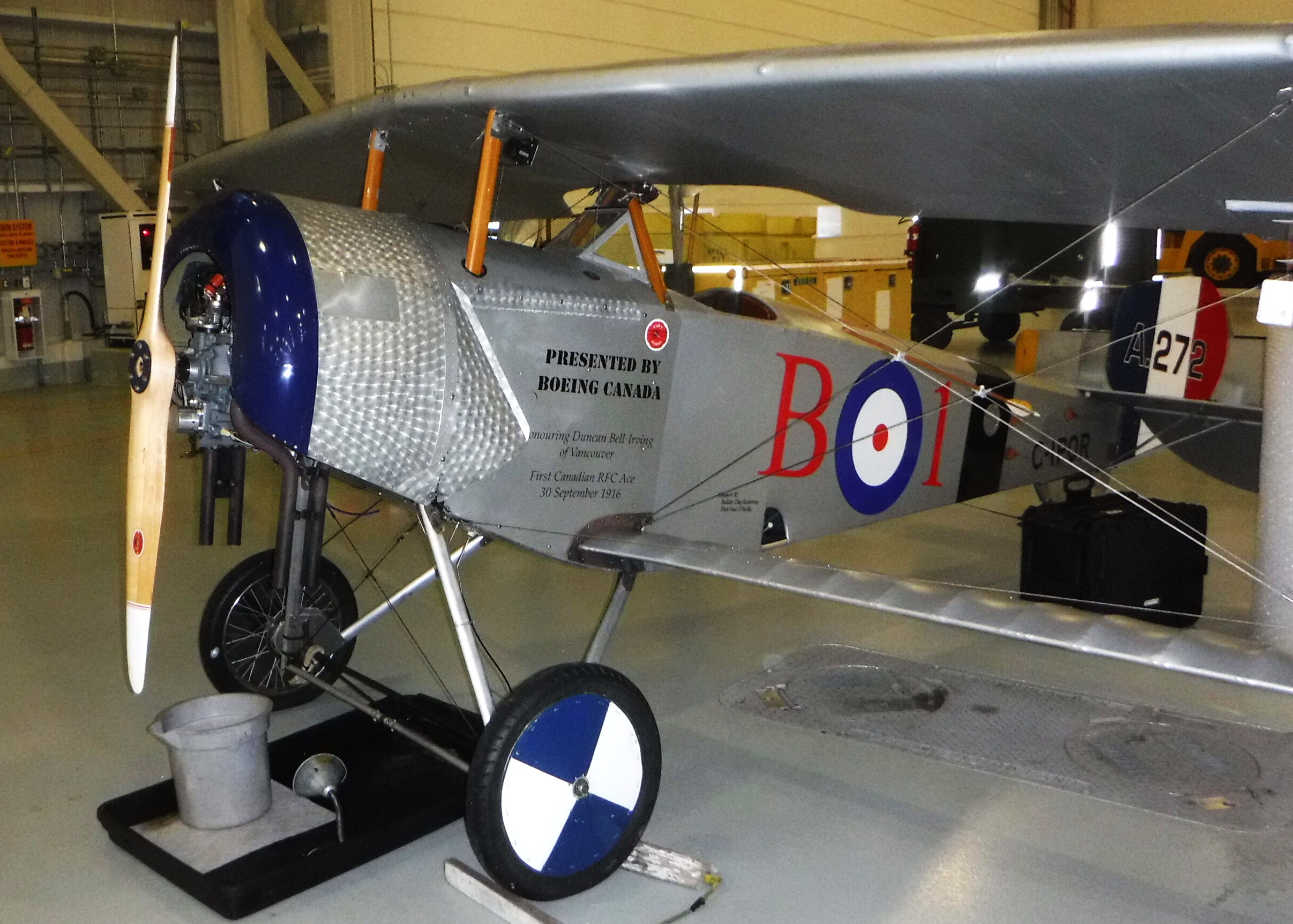
Nieuport XI
((NAFMC Photo)
The Royal Naval Air Service utilized Nieuport XIs during the First World War as a scout and fighter aircraft. Constructed of wood with a fabric covering, this biplane was known for being fast, with a maximum speed of 97 mph, a high rate of climb, and good maneuverability; making it an effective fighter for the period. Originally it was outfitted with a single Lewis gun, which was eventually replaced with synchronized Vickers machine guns. In addition to British service, the Nieuport XI was also used by the French, Italian, Russian, and Dutch air services during the First World War.
This 7/8th scale replica of a Nieuport XI, known as “Pokey”, was built by a dedicated team of volunteers for use in Vimy Flight, part of the commemorations for the 100th anniversary of the Battle of Vimy Ridge in 2017. Alongside reproduction Sopwith Pups, this Nieuport flew over the Vimy Ridge Memorial on April 9, 2017. Upon returning to Canada, it flew across the country as part of the Birth of a Nation tour for Canada 150. When the tour concluded, this aircraft was graciously donated to the National Air Force Museum of Canada by its owner, Mr. Paul O’Reilly. It is currently on loan to the Carling Campus of National Defence Headquarters in Ottawa. (NAFMC)
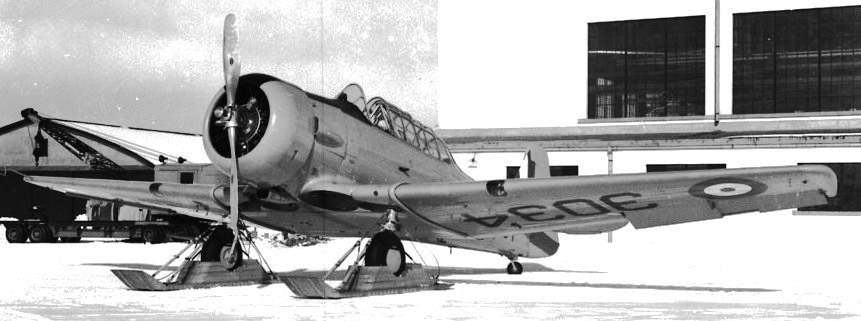
(Library and Archives Canada Photo, MIKAN No. 3203262)
North American AT-6A Harvard Mk. IIB, RCAF (Serial No. 3034), on skis.
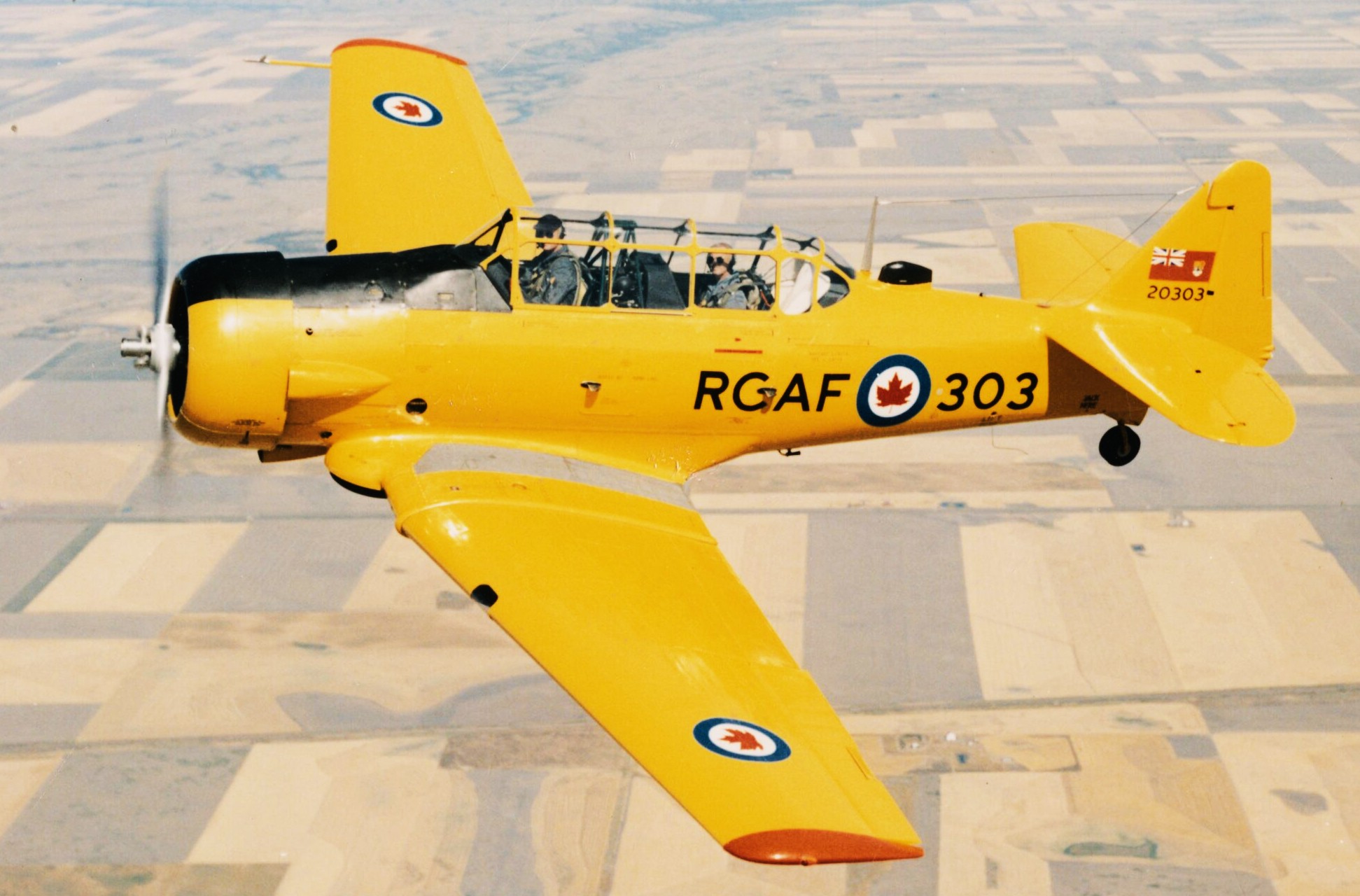
(RCAF Photo)
North American Harvard, RCAF (Serial No. 20303).
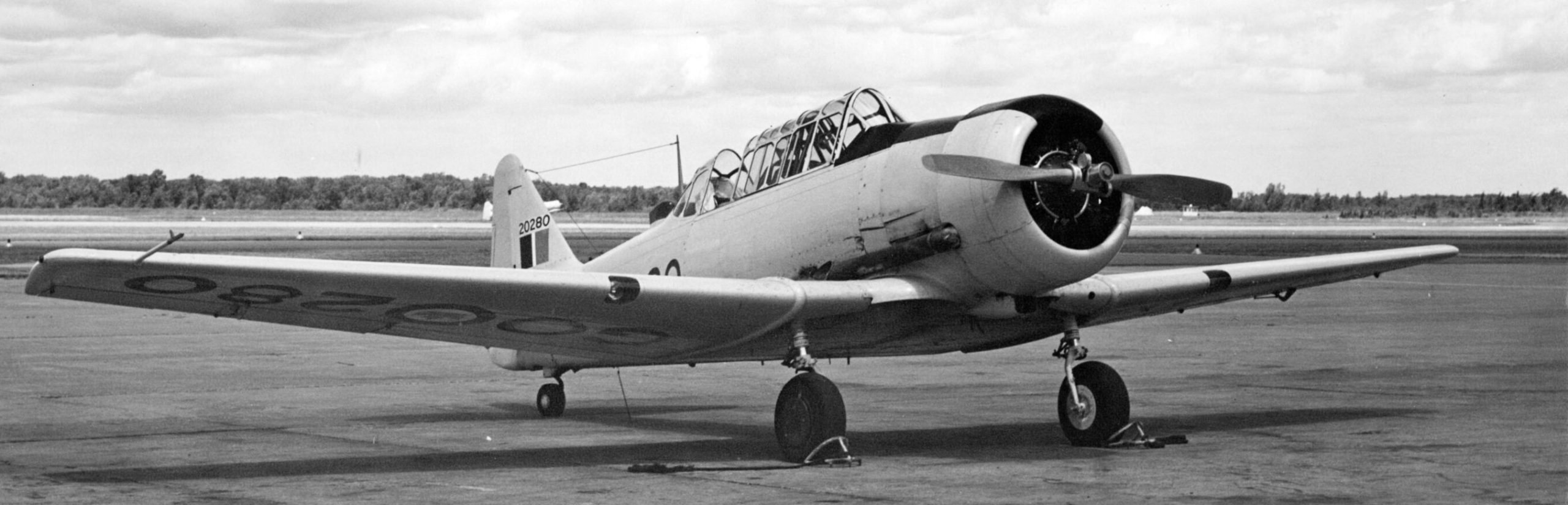
(RCAF Photo)
North American Harvard, RCAF (Serial No. 20280).
North American NA-66 Harvard Mk. IIB, RCAF (Serial No. 3270), AN-C. The museum’s example was first acquired by the RCAF in 1942 and was initially used for pilot training by No. 411 Squadron at RCAF Station Toronto. It later moved to No. 6 Repair Depot in Trenton and subsequently served at RCAF Station Summerside in PEI from 1956-1960. Harvard 3270 was sold in 1960 to a private individual in Guelph, Ontario where it was stored outside and was never flown again. When it arrived at the museum, the aircraft was significantly damaged due to its long-term exposure to the weather.
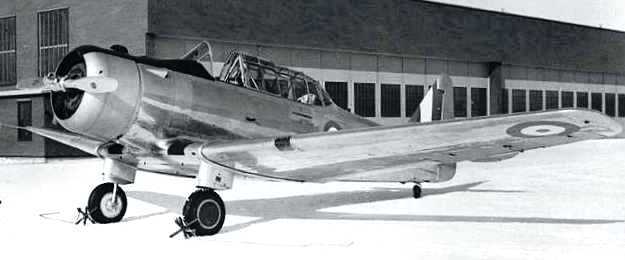
(USN Photo)
North American NA-64 Yale (Serial No. 3390).
North American NA-64 Yale Mk. I, RCAF (Serial No. 34112), c/n 64-2167, built in 1946, X7. This aircraft is on loan to the NAFMC from the Canadian Warplane Heritage Museum, Mount Hope, Ontario.
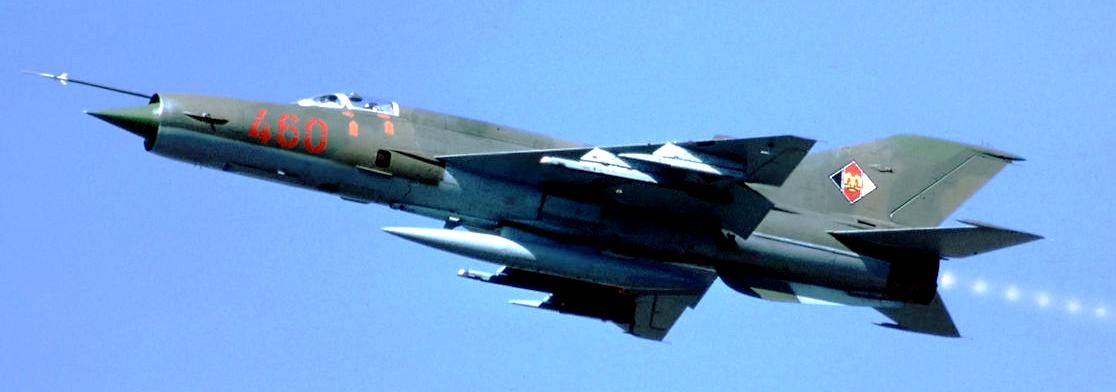
(Rob Schleiffert Photo)
MiG-21MF Fishbved-J, No. 460, of Jagdfliegergeschwader 1 (JG-1) taking off from Holzdorf, Germany, in August 1990.
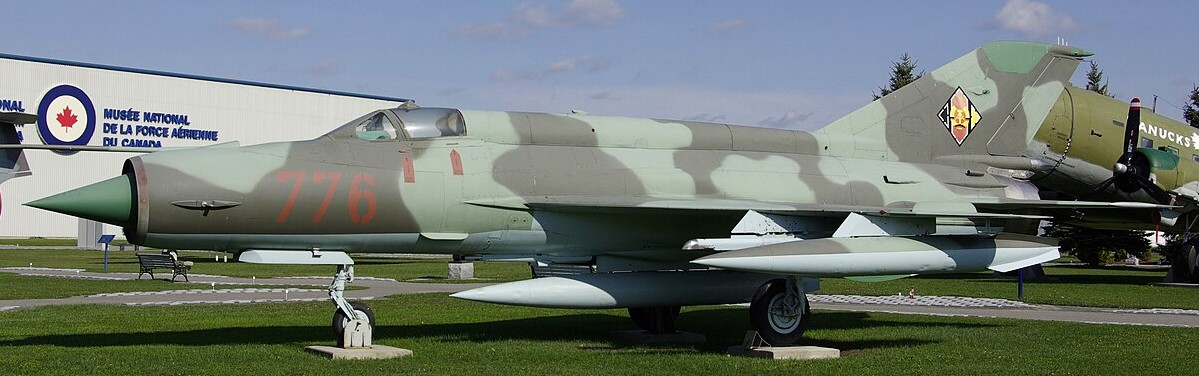
(Andre Gerwing Photo)
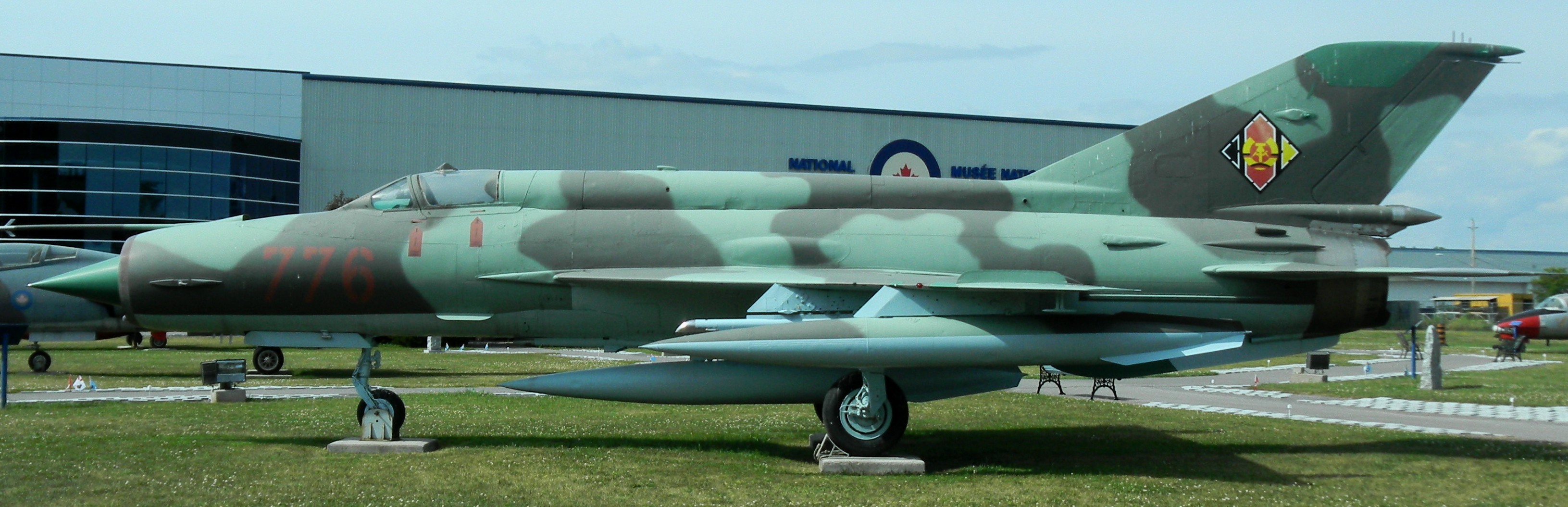
(Author Photo)
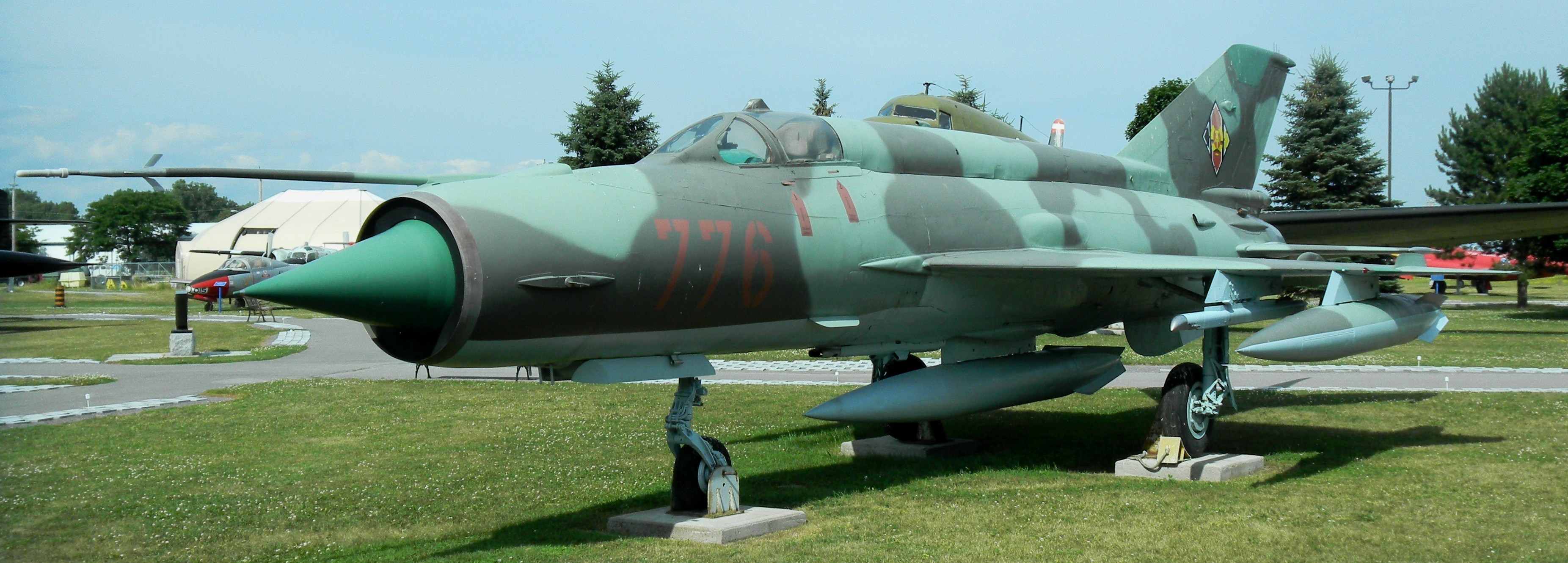
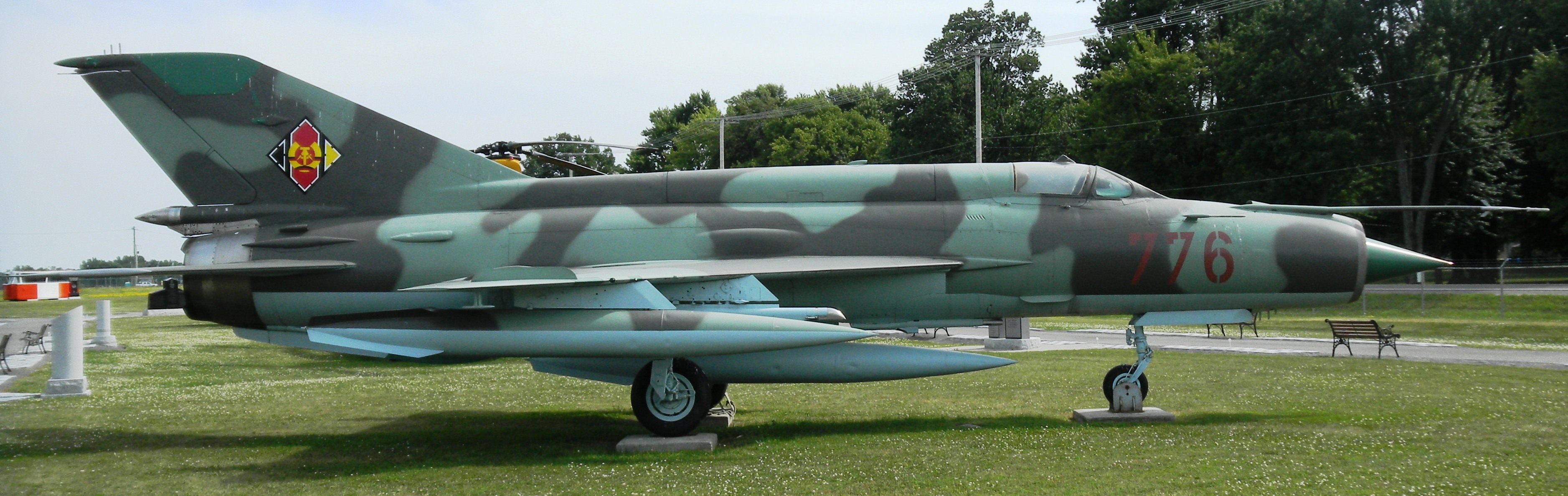
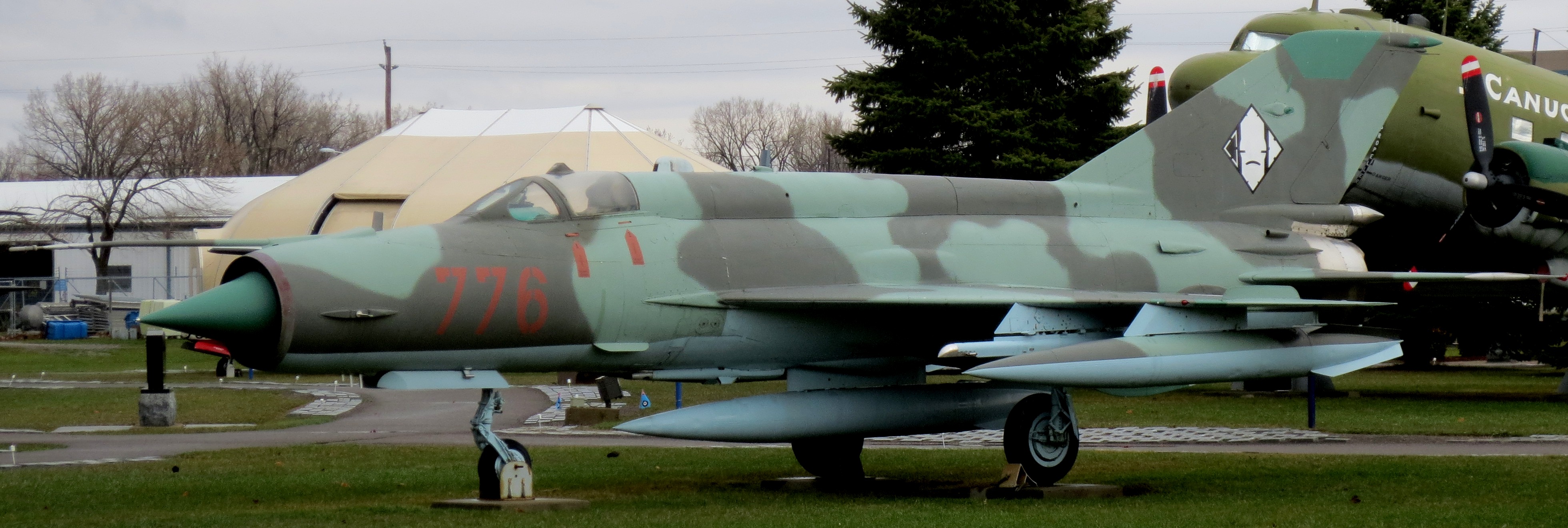
Mikoyan-Gurevich MiG-21MF Fishbed-J (Serial No. 2345), No. 776. The MiG-21 is a Russian-designed aircraft that was never flown by the Canadian military. It was used primarily by countries in the Eastern Bloc, Middle East and Asia during the Cold War. NATO assigned the codename ‘Fishbed’ to the fighter. There were over 10 000 MiG models built and many are still in service today. This particular example was based in East Germany and was in service from 1975-1990. It was donated to the museum in 1993 by the Government of Germany. (NAFMC)
(Author Photo)
Mikoyan-Gurevich MiG-21MF Fishbed-J (Serial No. 2345), No. 776.
(Author Photo)
Mikoyan-Gurevich MiG-21MF Fishbed-J (Serial No. 2345), No. 776.
(Author Photo)
Mikoyan-Gurevich MiG-21MF Fishbed-J (Serial No. 2345), No. 776.
(Library and Archives Canada Photo, MIKAN No. 4315395)
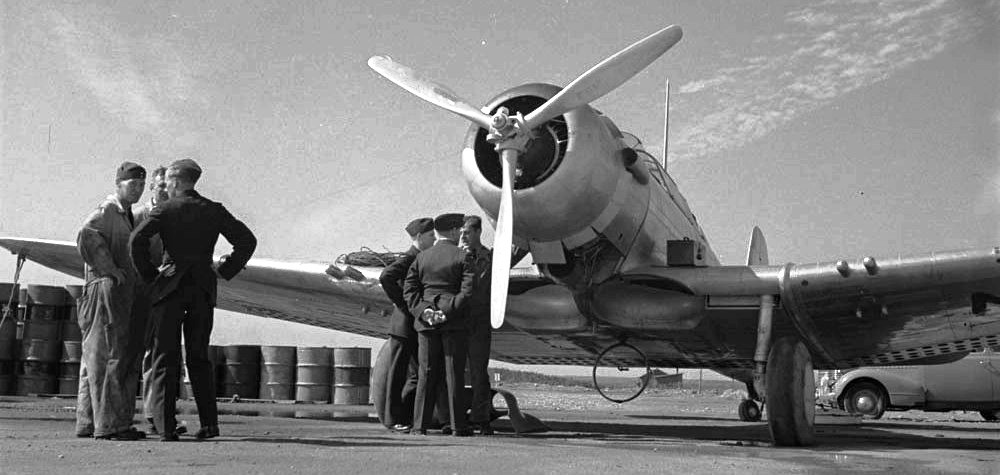
Northrop A17A Nomad, ca 1943.
(RCAF Photo)
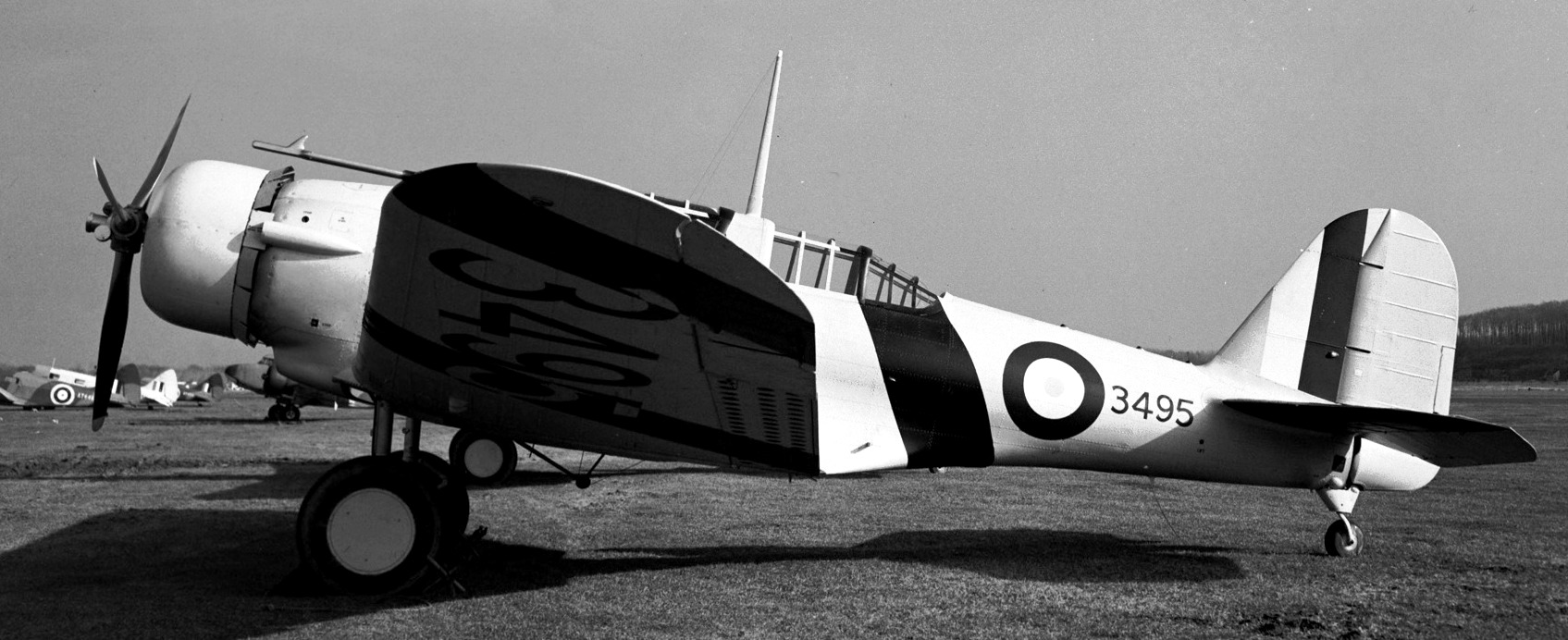
Northrop A-17 Nomad, RCAF (Serial No. 3495).
(RCAF Photo)
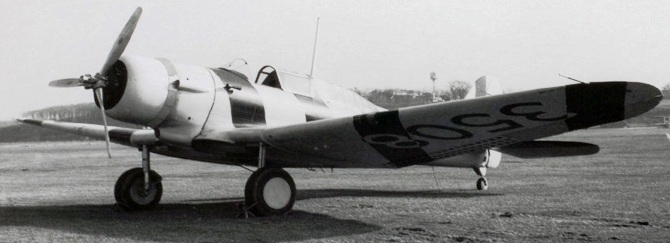
Northrop A-17A Nomad, RCAF (Serial No. 3508).
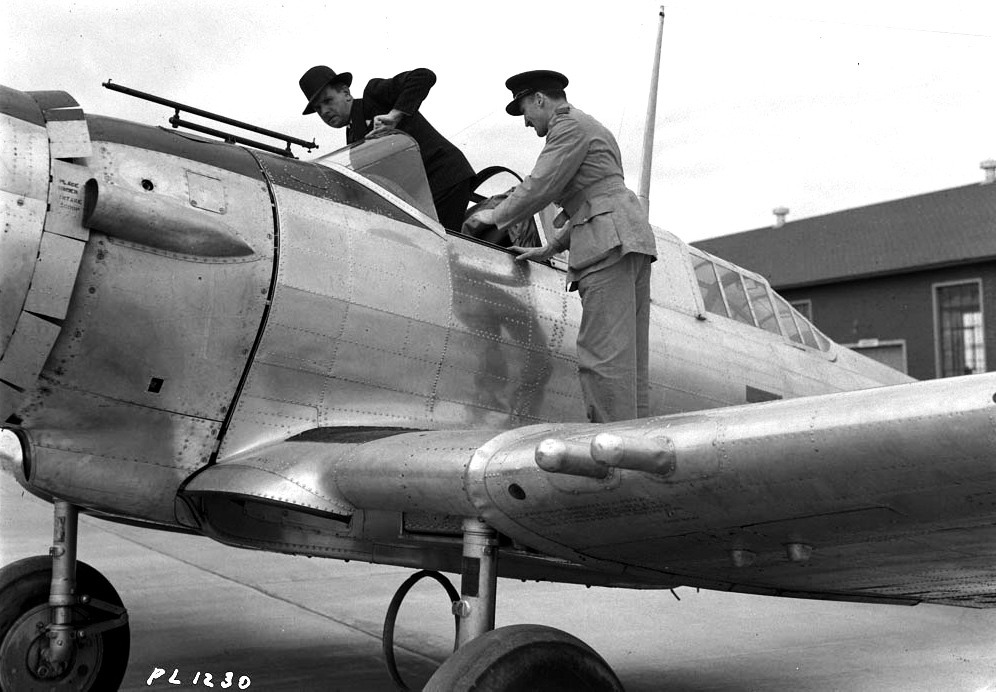
(Library and Archives Canada Photo, MIKAN No. 4327297)
Northrop A-17A Nomad, Uplands, Ontario, ca 1944.
Northrop A-17A Nomad, RCAF (Serial No. 3251). The remains of this aircraft were recovered from Lake Muskoka in Ontario in 2014. The severely damaged aircraft will require considerable restoration work and it is currently in storage. National Air Force Museum of Canada, CFB Trenton, Ontario.
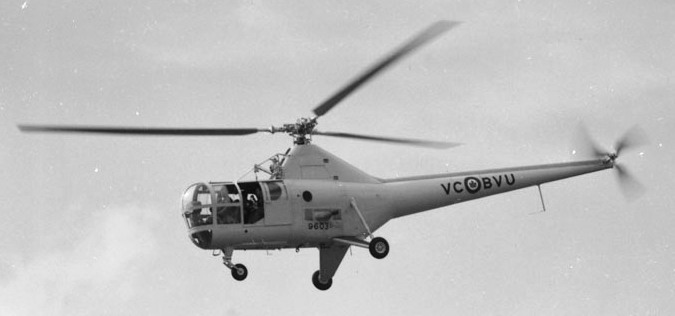
(Library and Archives Canada Photo, MIKAN No. 3390962)
Sikorsky S-51 helicopter, RCAF 9603, 13 June 1950.
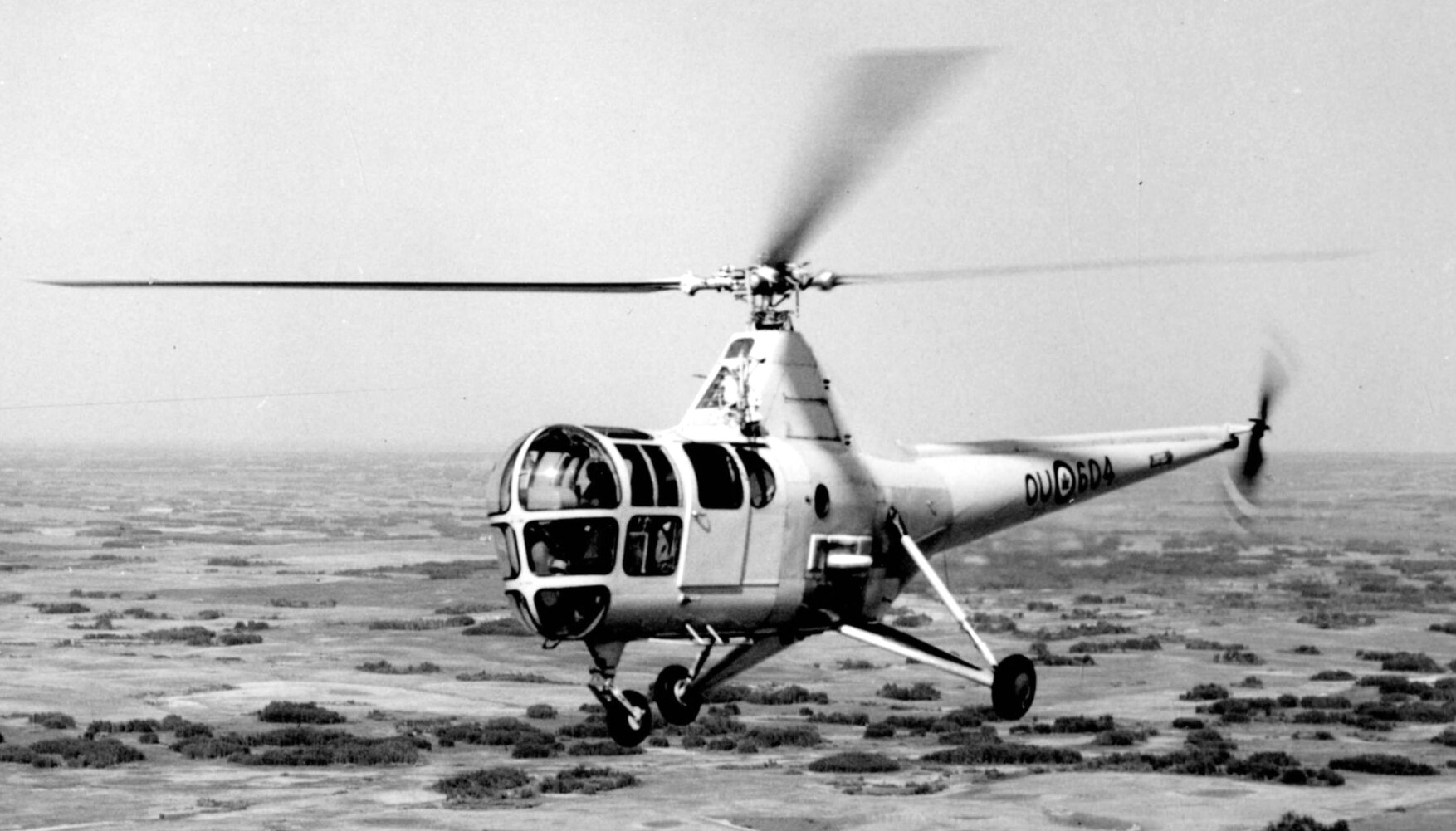
(RCAF Photo)
Sikorsky S-51/H-5 Dragonfly Helicopter (Serial No. 9604).
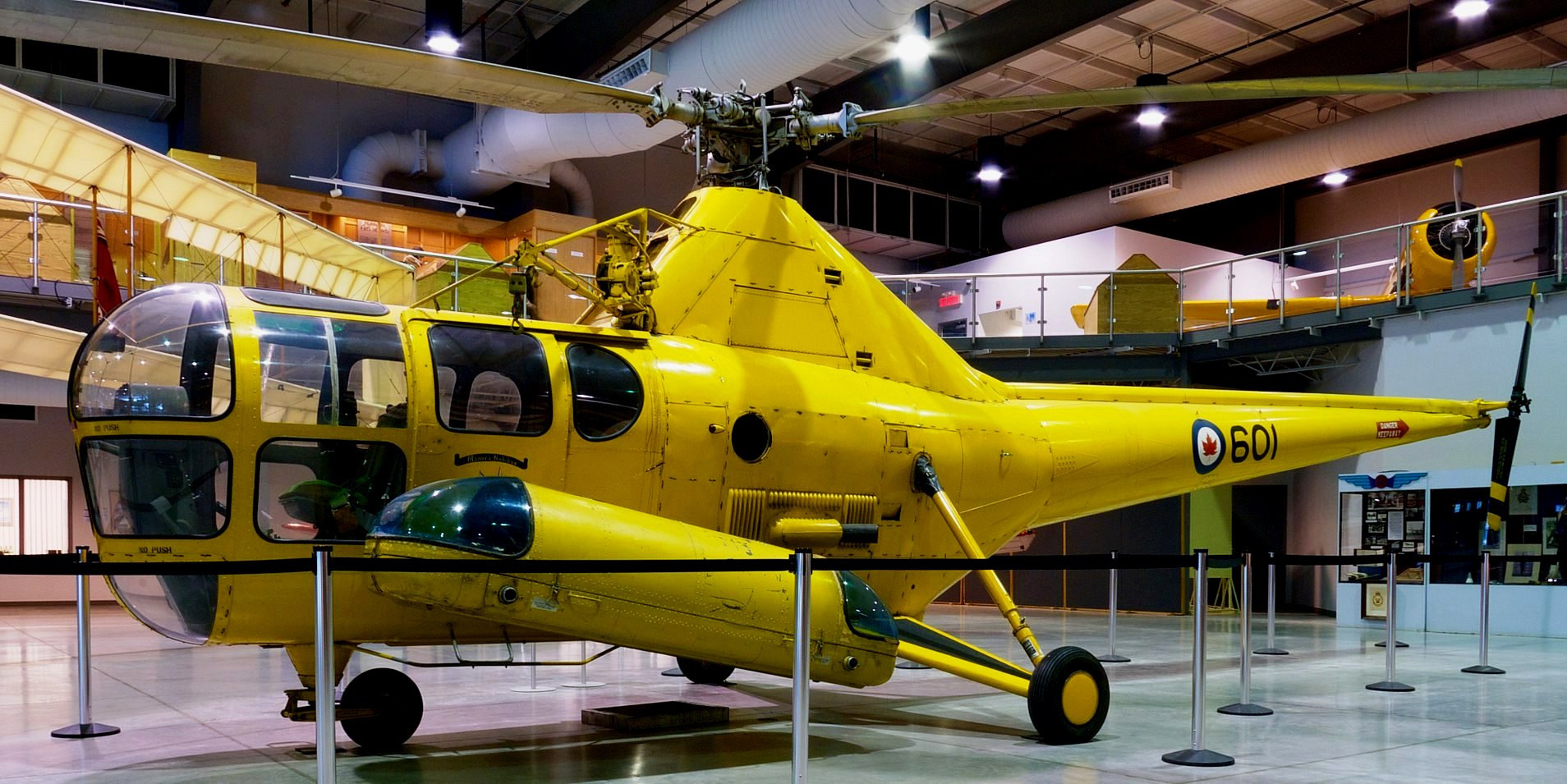
(JustSomePics Photo)
Sikorsky S-51/H-5 Dragonfly Helicopter (Serial No. 9601), (5118). This helicopter is on loan from the CA&SM. H-5 Dragonfly 9601 was taken on strength on 5 Apr 1947. It was the first of the seven Dragonflies that were taken on by the RCAF. It was originally assigned to Trenton for training duties, and then assigned to Edmonton, also for training. In 1950, H-5 Dragonfly 9601 was sent back to Trenton for repair and overhaul. When the overhaul was done, H-5 Dragonfly 9601 was sent to the Canadian Joint Air Training School in Rivers, Manitoba. After three years in the Canadian Joint Air Training School, it was sent to Cold Lake, Alberta, to the Experimental and Proving Establishment for five years. After that, it was sent to Chatham, New Brunswick, for five more years. In January 1965, H-5 Dragonfly 9601 was retired from active service and sent to the Canada Aviation and Space Museum in Ottawa.
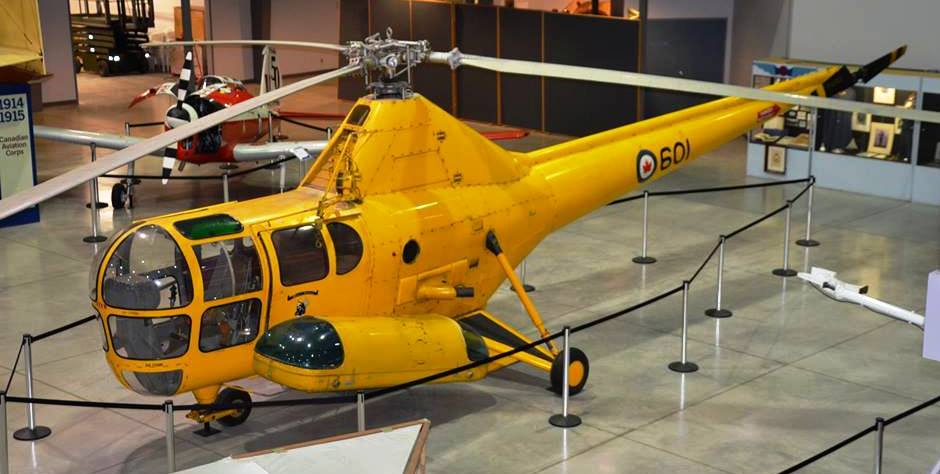
(Mike Kaehler Photo)
Sikorsky S-51/H-5 Dragonfly Helicopter (Serial No. 9601), (5118).
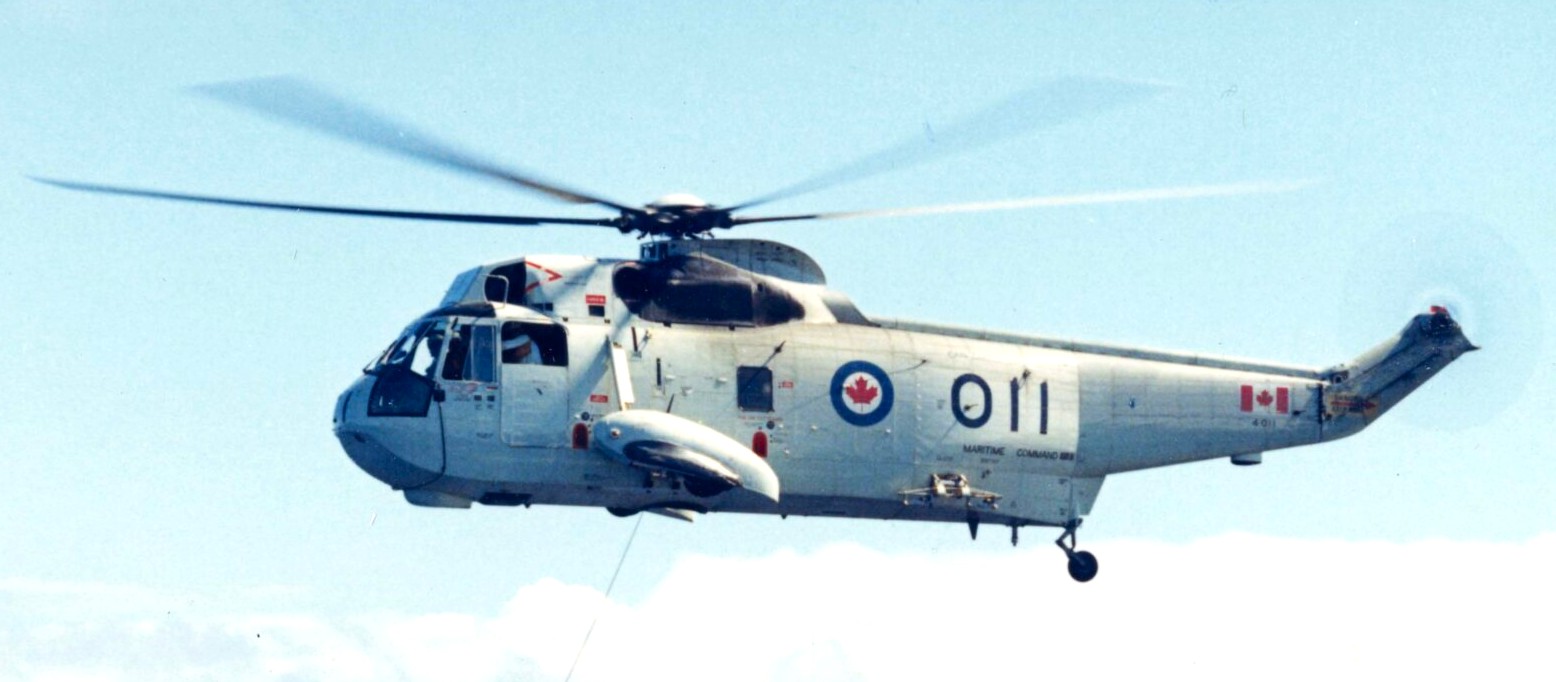
(CAF Photo)
Sikorsky CH-124 Sea King (Serial No. 124011).
Sikorsky CH-124 Sea King (Serial No. 12405). Sea King 12405 was taken on strength by the Royal Canadian Navy (RCN) on May 14, 1964. It was the first of 37 Sea Kings to be assembled in Canada by United Aircraft of Canada based in Longueuil, Quebec, from kits supplied by Sikorsky. Transferred to the Royal Canadian Air Force (RCAF) in 1970, this Sea King served with 423 Squadron, 443 Squadron, and 406 Squadron. It served in the Gulf War as part of Operation Friction in 1991 and with the United Nations in East Timor for Operation Toucan in 1999-2000. Sea King 12405 retired from service in November 2018. Upon its arrival in Trenton, it had 17,755.30 airframe hours, the most of any of the Canadian Sea King fleet.
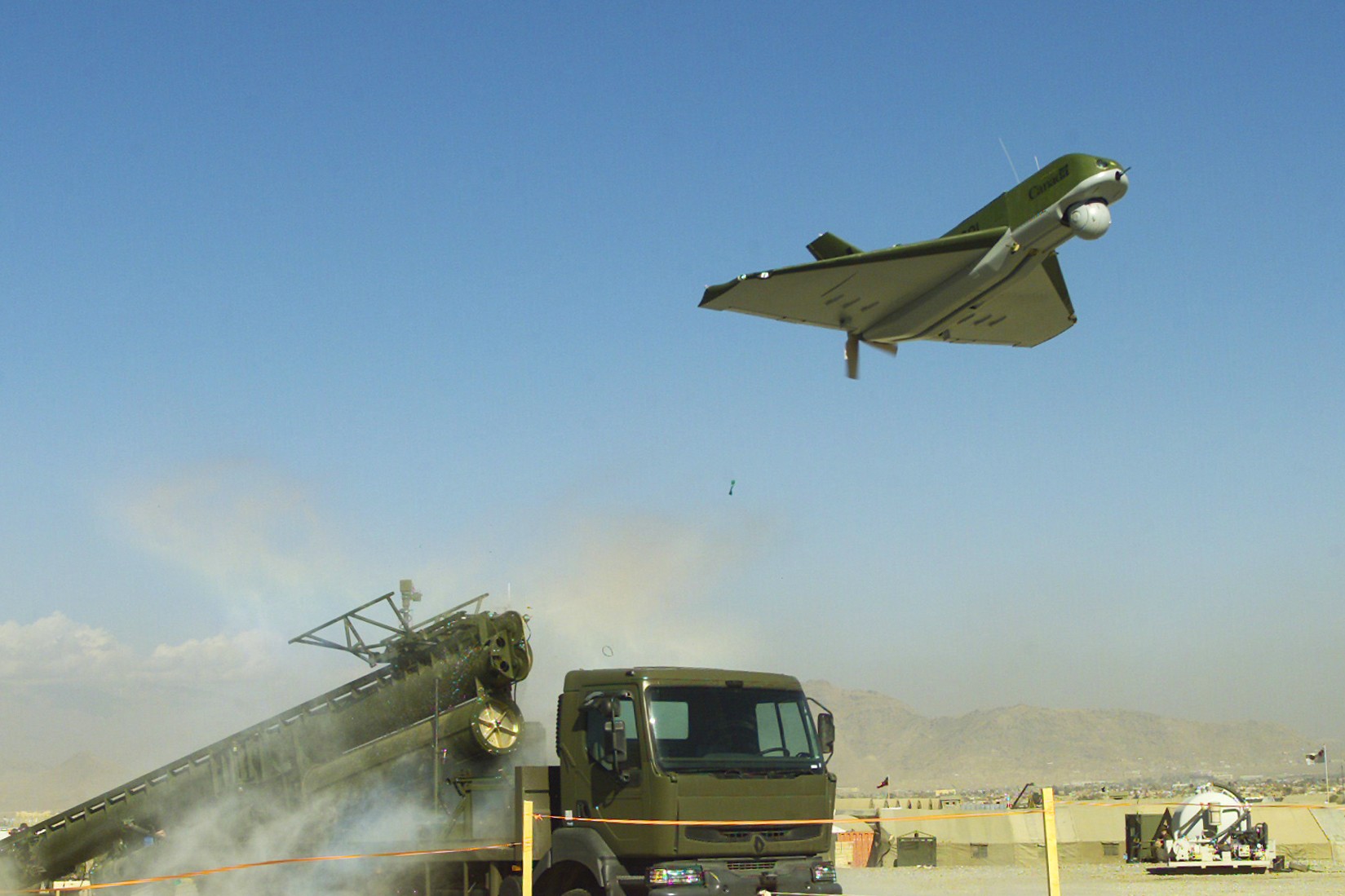
(CF Combat Camera Photo)
SAGEM Sperwer CU-161 UAV (Serial No. 161007). The Sperwer (Dutch for Sparrowhawk) is a 3-meter-long unmanned aerial vehicle manufactured by the French firm SAGEM. T he aircraft is piloted remotely and can cruise at altitudes of over 16,000 feet for as long as five hours. It can send back images of targets up to 150 kilometers from its operators on the ground. The Canadian Forces operated the Sperwer in Afghanistan between 2003 and its last mission on 18 April 2009 when it was replaced with the Israeli built IAI Heron. Sperwer 007 was returned to Canada and arrived at the National Air Force Museum of Canada in 2010. Due to its number, 007, it was painted with a small martini glass while in theatre, in reference to James Bond, agent 007.
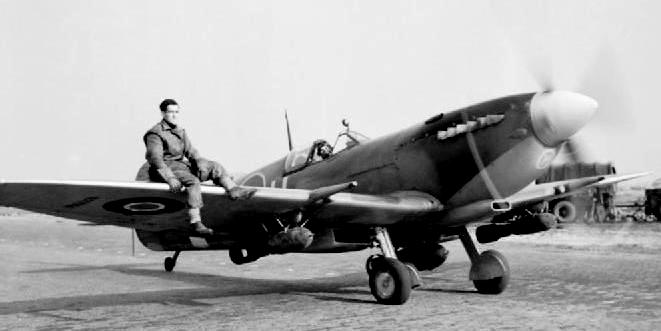
(RCAF Photo)
Supermarine Spitfire Mk. IXE, RCAF No. 412 Squadron, loaded with 250-lb GP bombs, Volkel, Holland, 27 October 1944.
(Author Photo)
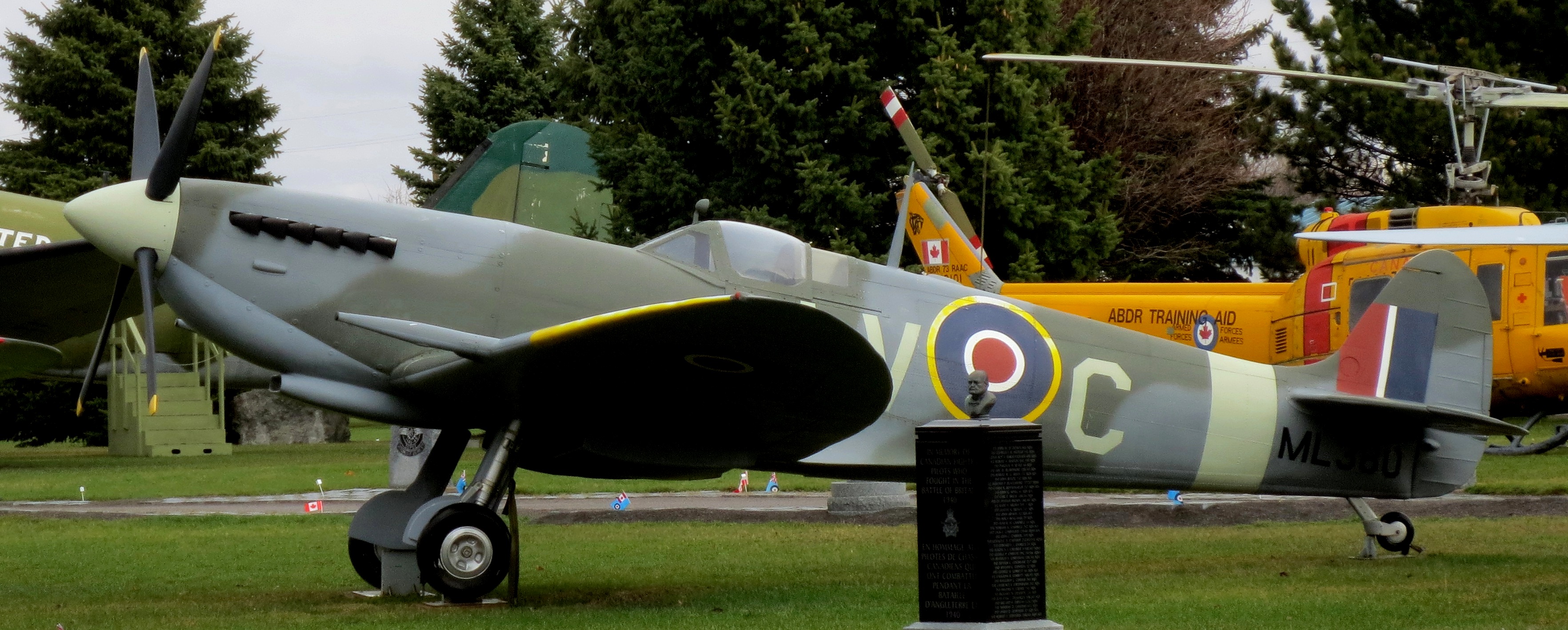
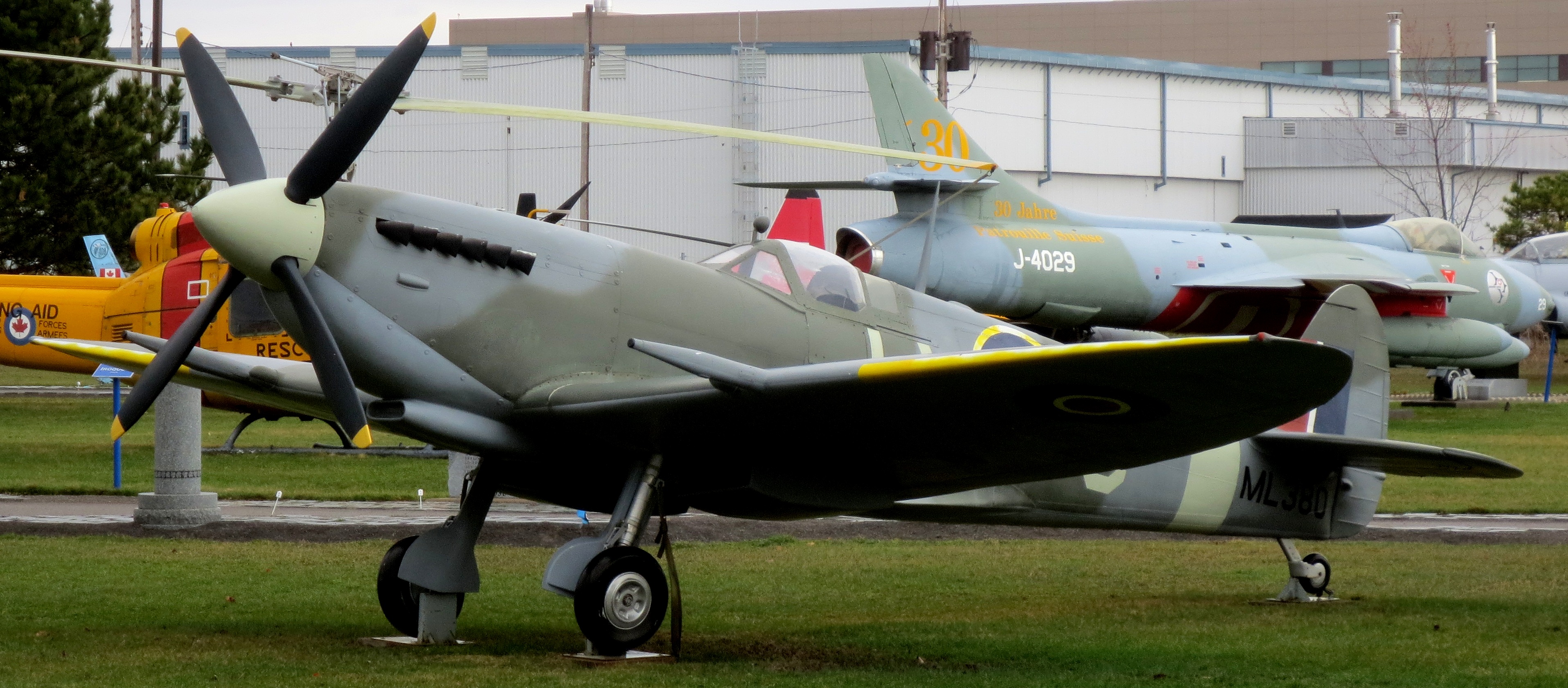
Supermarine Spitfire Mk. IX, L-VC, replica from the UK. This Spitfire replica has been with the National Air Force Museum since 2004. It was donated by George Weston Ltd. with special contributions from the Canadian Fighter Pilots Association. It is painted to depict Canadian pilot, Wing Commander Lloyd Chadburn’s, Spitfire that he flew during the Second World War while he commanded 127 Wing in the United Kingdom and France. Chadburn was awarded the Distinguished Service Order with bar, and the Distinguished Flying Cross for his impressive victories. He was killed in a flying accident during the Normandy Campaign at the age of 25. (NAFMC)
(Author Photo)
Supermarine Spitfire Mk. IX, L-VC, replica from the UK.
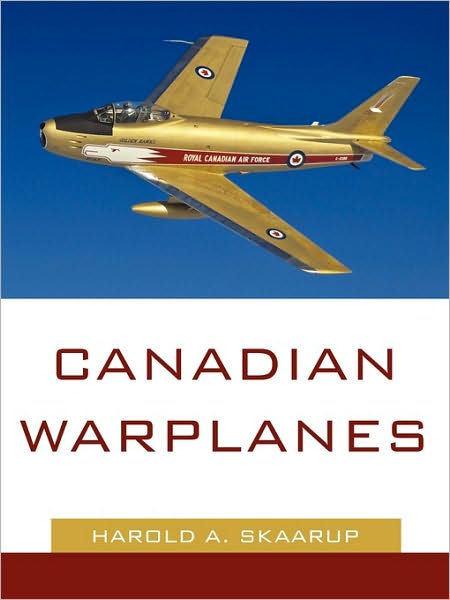
This aviation handbook is designed to be used as a quick reference to the classic military heritage aircraft that have been flown by members of the Canadian Air Force, Royal Canadian Air Force, Royal Canadian Navy, Canadian Army and the Canadian Forces. The interested reader will find useful information and a few technical details on most of the military aircraft that have been in service with active Canadian squadrons both at home and overseas. 100 selected photographs have been included to illustrate a few of the major examples in addition to the serial numbers assigned to Canadian service aircraft. For those who like to actually see the aircraft concerned, aviation museum locations, addresses and contact phone numbers have been included, along with a list of aircraft held in each museum’s current inventory or on display as gate guardians throughout Canada and overseas. The aircraft presented in this edition are listed alphabetically by manufacturer, number and type. Although many of Canada’s heritage warplanes have completely disappeared, a few have been carefully collected, restored and preserved, and some have even been restored to flying condition. This guide-book should help you to find and view Canada’s Warplane survivors.
Order book: http://bookstore.iuniverse.com/Products/SKU-000136656/Canadian-Warplanes.aspx.
Order e-book: http://bookstore.iuniverse.com/Products/SKU-000136656/Canadian-Warplanes.aspx.
Order book in Canada:
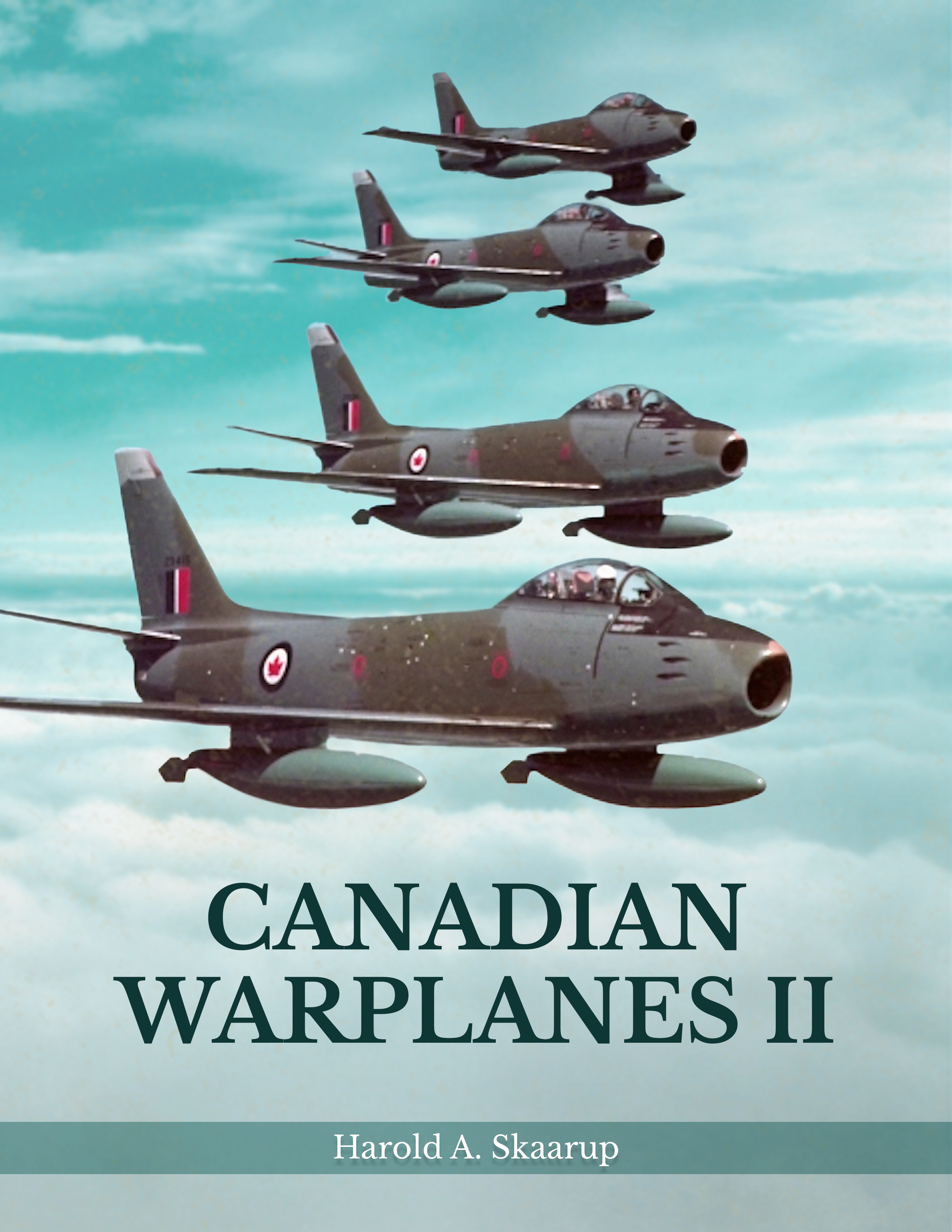
2024, Canadian Warplanes II.
All comments are subject to our Comment Policy. You must be at least 18 years old to comment.
See a comment that violates our guidelines? Report it here.