
Artillery preserved in Georgia at Fort James Jackson
One of the aims of this website is to locate, identify and document every historical piece of artillery and all armoured fighting vehicles preserved in Georgia. Many contributors have assisted in the hunt for these tangible pieces of our military history and the list you see here is constantly being revised as new finds are discovered and the data is updated. The photos have come from various contributors, but the author likes to “ground truth” the reports, so a good number of the photos are by the author unless otherwise credited. Any errors found here are by the author. It often happens that military monuments that are relatively mobile, have been moved for restoration or scrapped, sometimes they are repainted with different markings and serial numbers, or they are replaced with a different piece of kit. For those reasons, any additions, deletions, corrections or amendments that you may be able to add to this list of Artillery and AFVs in Georgia would be most welcome and may be e-mailed to the author at hskaarup@rogers.com. The primary aim is preserve our military history and to keep the record accurate.
Savannah, Old Fort Jackson
Fort James Jackson (usually called Old Fort Jackson or shortened to Fort Jackson) is a restored 19th-century fort located on the Savannah River, two miles east of the city of Savannah in Georgia. It is a National Historic Landmark and the oldest standing brick fort in Georgia.
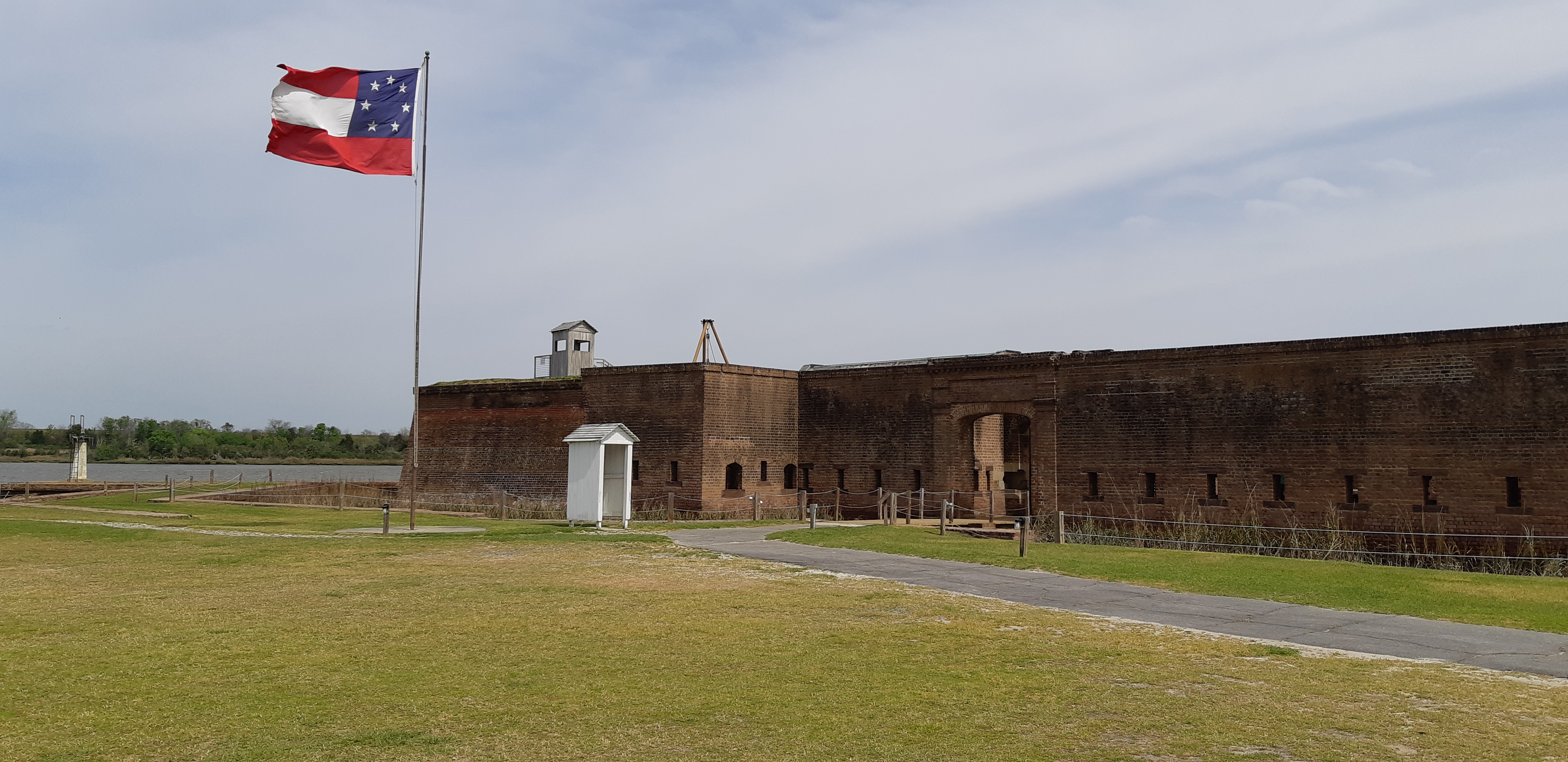
(Author Photo)
Front entrance to Old Fort Jackson, 19 March 2019.
President Thomas Jefferson authorized the construction of a national defense system of fortifications to defend his new nation. Jefferson’s system included Fort Jackson, constructed between 1808 and 1812 over an old earthen battery from the American Revolution. At the time, war with Great Britain or France seemed likely, and Fort Jackson was the best site from which to protect Savannah from attack by sea. In the War of 1812, local militias and U.S. troops saw active duty at Fort Jackson. After the War of 1812, two periods of construction followed at the fort. A moat, drawbridge, brick barracks, privies, a rear wall, and another powder magazine were added.
James Jackson, the namesake of the fort, was a British native who fought for the American cause and rose to the rank of Colonel. When he was twenty-five, Jackson accepted the surrender of the British in Savannah at the close of the revolution.b He was later a US Representative, a US Senator, and Governor of Georgia.
During the American Civil War, Fort Jackson, along with nearby Fort McAllister and Fort Pulaski, defended Savannah from Union attack. In 1862, Fort Jackson was shelled from a ship captained by an escaped slave named Robert Smalls. The fort was commanded by Colonel Edward Clifford Anderson and would become the Confederate Headquarters for the Savannah River defenses, including the Confederate Navy.
When the Union Army commanded by William T. Sherman, captured Savannah by land on 20 December 1864, Confederate troops abandoned the fort and retreated across the Savannah River into South Carolina. Confederate troops from Savannah joined other forces in North Carolina and South Carolina and continued to fight until 26 April 1865, when they surrendered to General Sherman’s army at Durham, North Carolina. Several different regiments garrisoned Fort Jackson during the Union occupation of Savannah. One of these units was the 55th Massachusettes Regiment, which consisted of African American troops.
From 1884 to 1905, Fort Jackson was known as Fort Oglethorpe and was little used by the U.S. military. It was purchased by the city of Savannah in 1924 for park purposes but not fully restored until the 1970s. Fort Jackson is located at 1 Fort Jackson Road, on the Islands Expressway linking Savannah to Fort Pulaski and the town of Tybee Island. (Wikipedia)
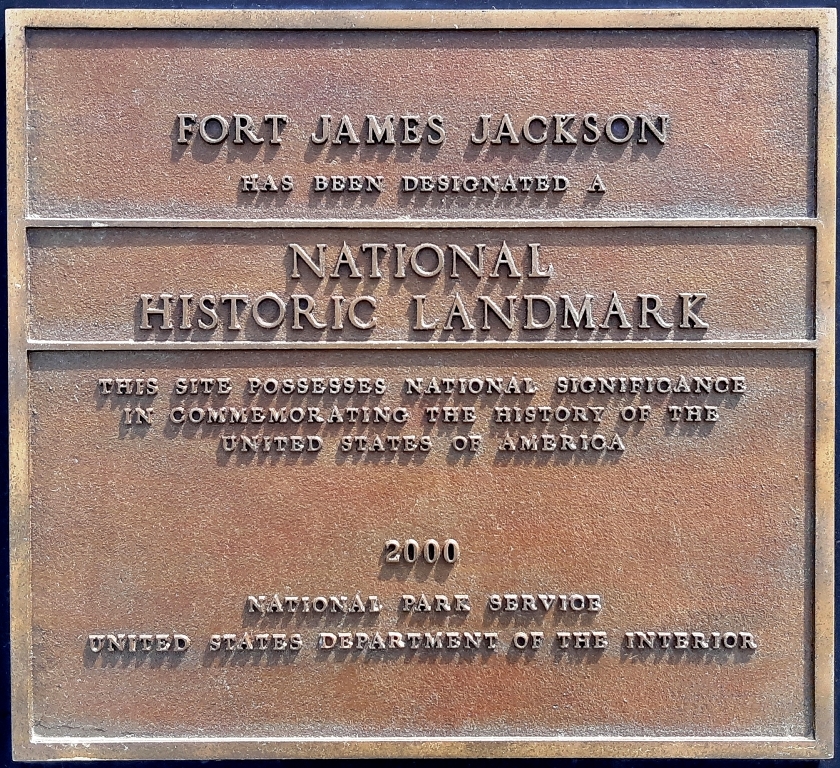
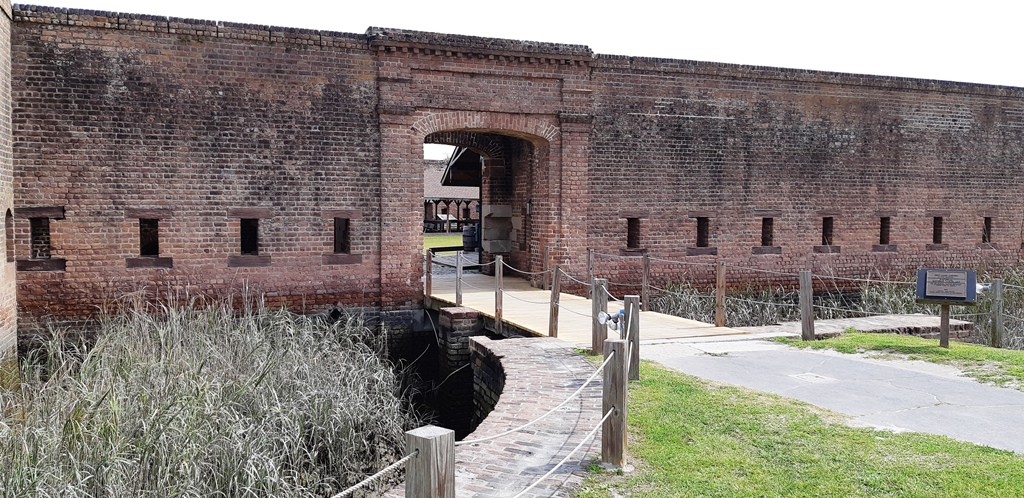
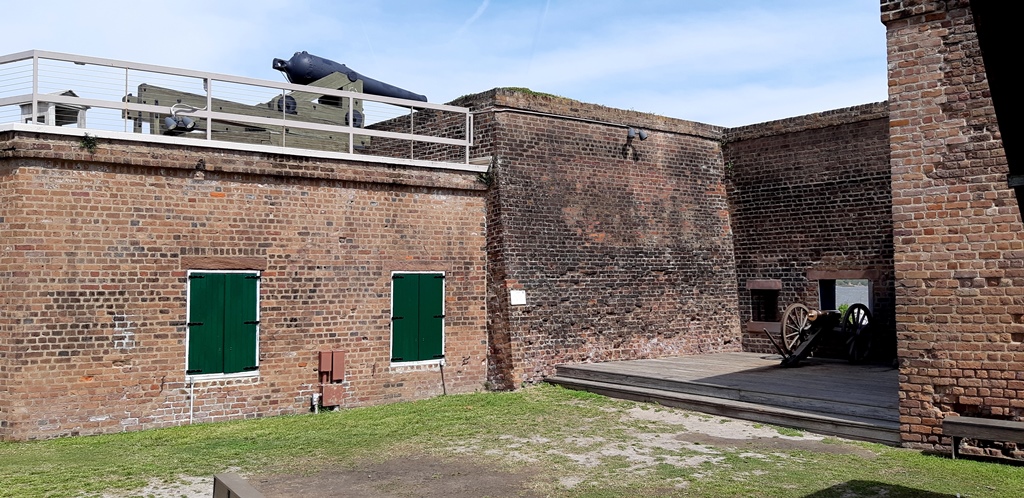
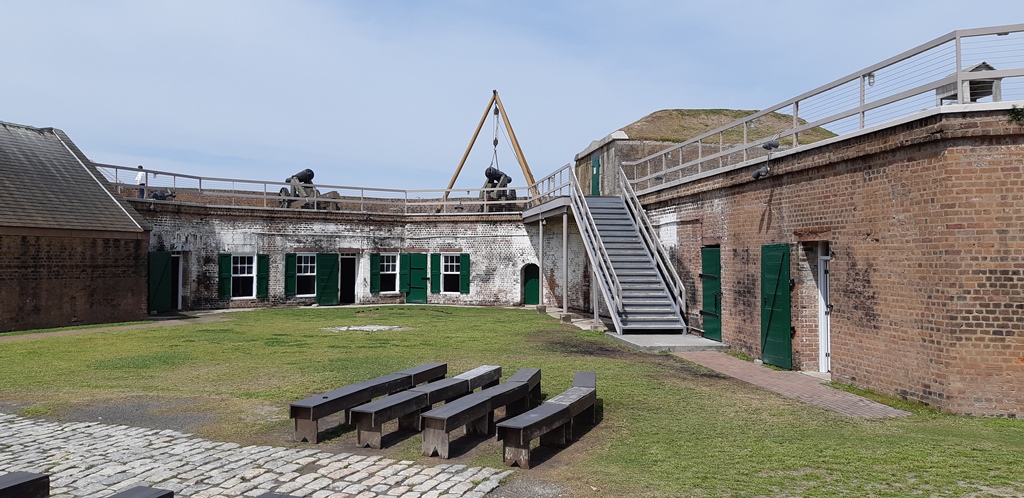
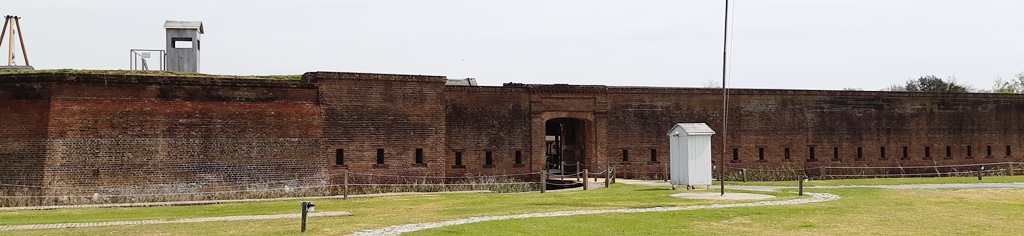
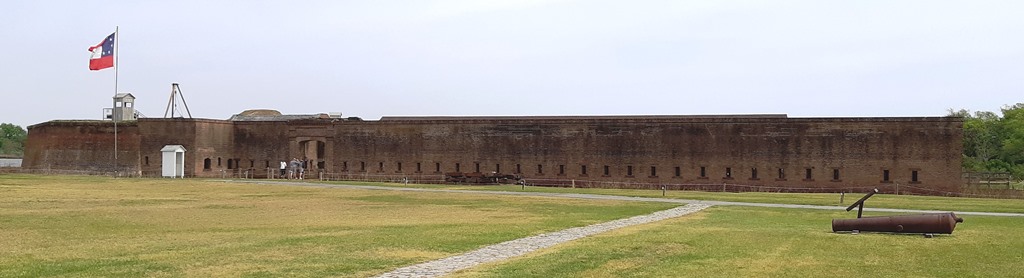
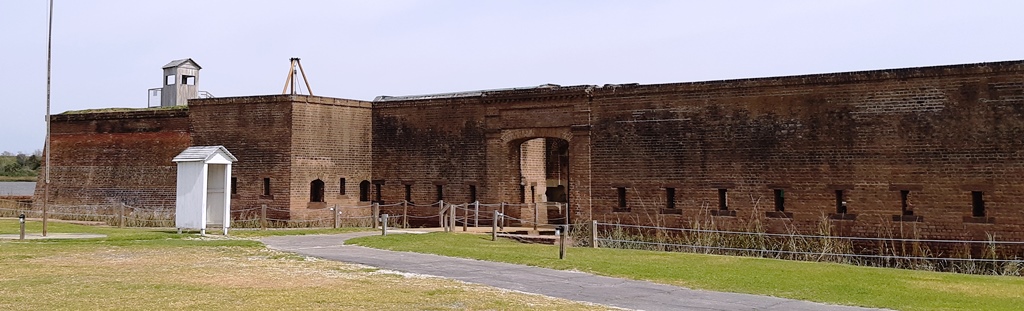
(Author Photos)
Old Fort Jackson.
(Author Photos)
Cast iron rifled 32-pounder Gun, M1846, modified in 1862, weight 6,552-lbs, 32, 1852, on the right trunnion, R CWS on the left trunnion. Originally cast as a smoothbore M1846 32-pounder in Virginia in 1852, (No. 714), at the Bellona Foundry, Midlothian, Virginia, this gun was converted into a rifled gun in 1862. A wrought iron band was then added to the breech for reinforcement. It was mounted on the CSS Georgia ironclad which was anchored in front of Fort Jackson during the American Civil War. It had a maximum range of 3,700 yards (3,383 metres). The gun is mounted on a naval truck carriage built with original Confederate Naval Drawings by the Coastal Heritage Society (CHS).
The cannon likely was among the 1,000 guns captured by the Confederacy when Norfolk Navy Yard was taken in 1861. By 1863 the gun was part of the armament of the ironclad CSS Georgia, in the No. 2 port position. It was still aboard that vessel when she was scuttled in 1864. The gun was raised in 1984 by the US Army Corps of Engineers and conserved through eletrolysis. The cannon is mounted on a reproduction 4 truck naval carriage. It is displayed next to an iron 24-pounder howitzer also from CSS Georgia.
The banded and rifled 32-Pounder (and very often this specific model of 32-Pounder) was inferior to purpose manufactured rifles like the Brooke, and it was not as powerful as the 10-Inch Columbiad. However, it was a weapon available to larger numbers than either of the aforementioned guns, and it formed a significant part of Confederate coastal fortifications. (Santee1821)
(Santee1821 Photo)
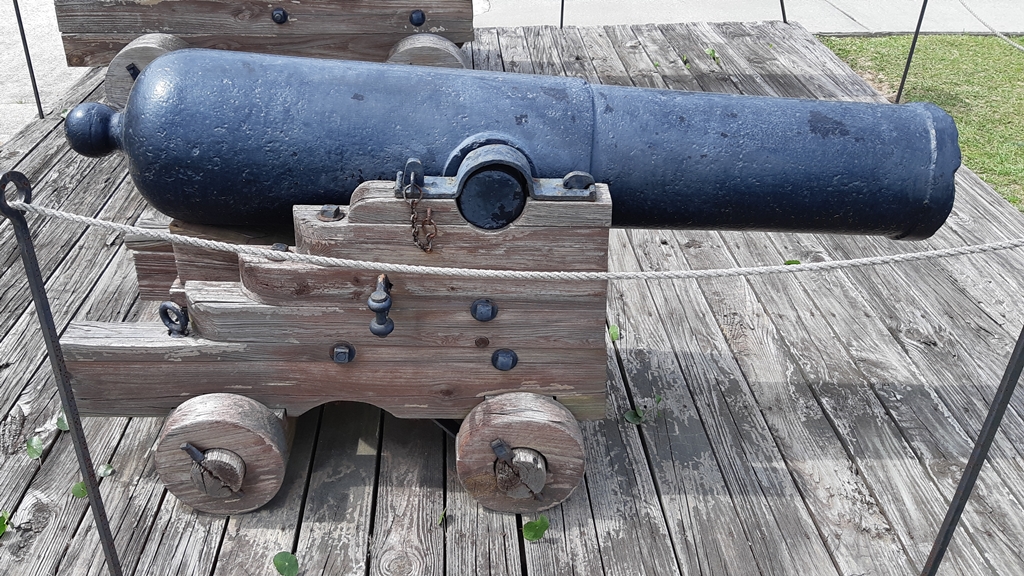
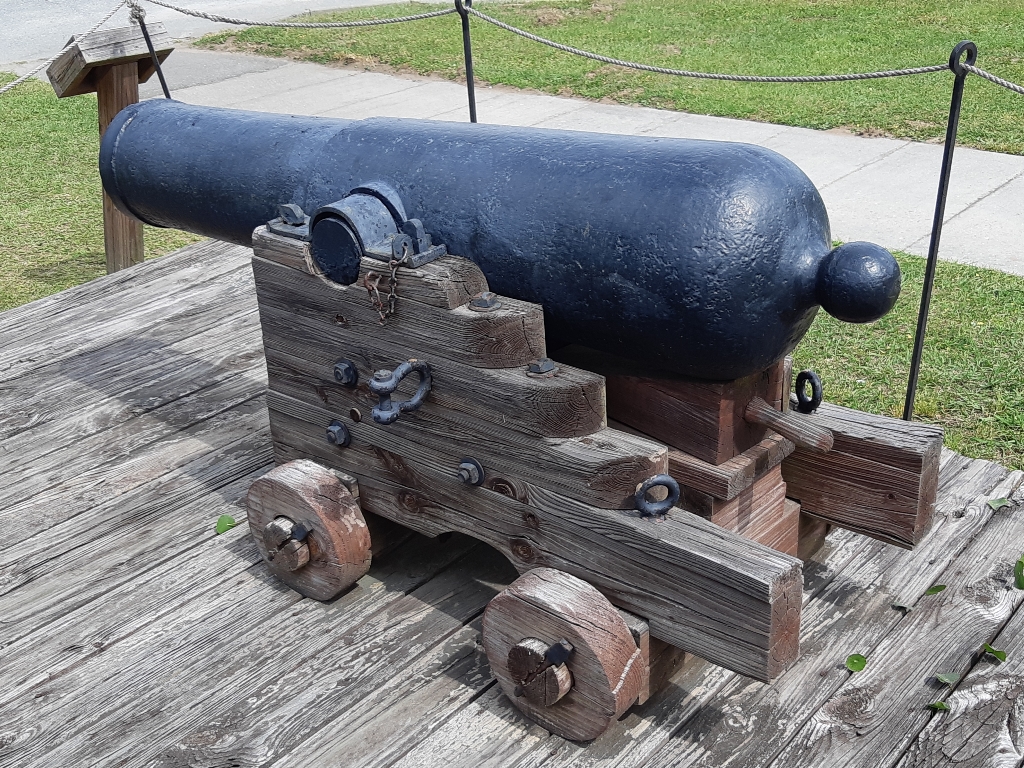
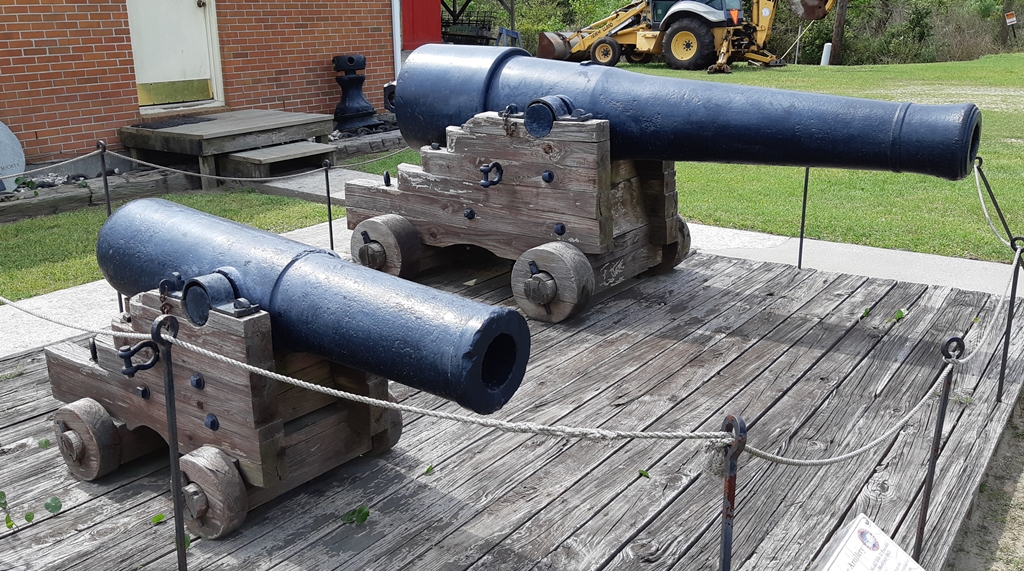
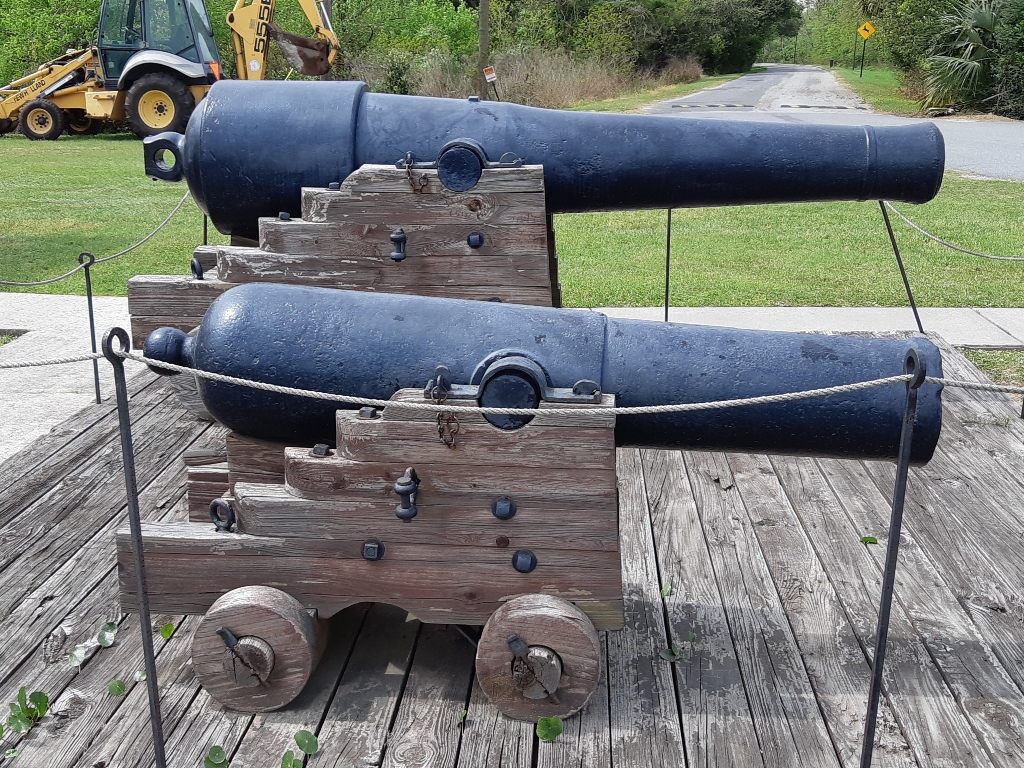
(Author Photos)
Cast iron SBML 24-pounder Howitzer, weight 1,500 lbs, originally mounted on the forward spar decof the k CSS Georgia ironclad which was anchored in front of Fort Jackson during the American Civil War. It was cast by the A.N. Miller Company in Savannah, Georgia in 1862. This howitzer had a maximum range of 1,322 yards (1,208 metres). This is the only known 24-pounder howitzer cast in the South.
(Author Photo)
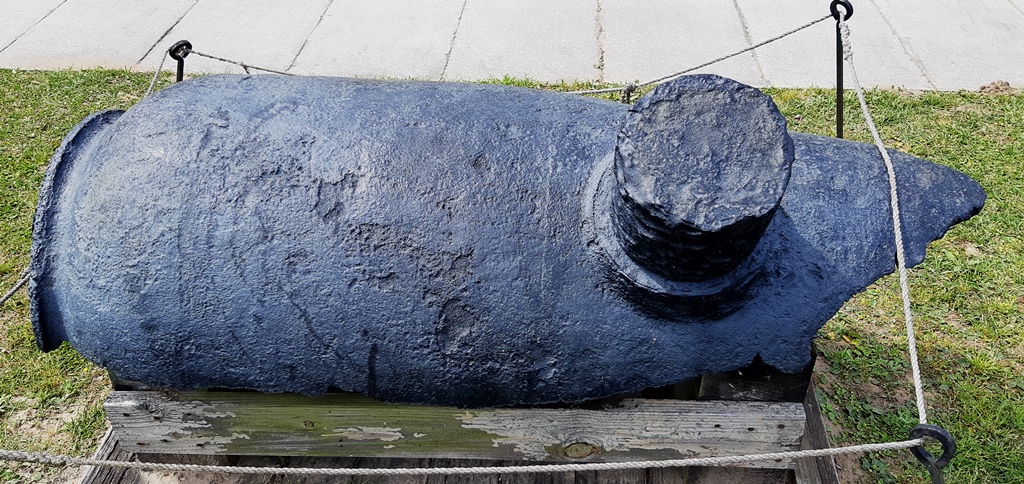
Cast iron 10-inch SBML Columbiad Gun fragment, right rear section, originally mounted at Fort Bartow, near Fort James Jackson. This gun was cast in 1861 at the Tregar Iron Works in Virginia. It had a maximum range of 5 miles (8 km). The gun exploded in 1862 in the presence of General Robert E. Lee.
(Author Photos)
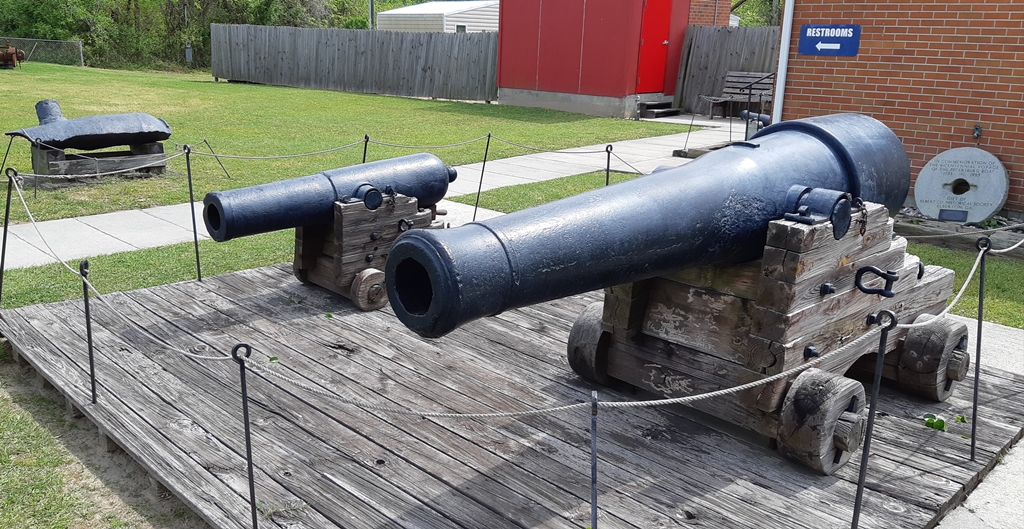
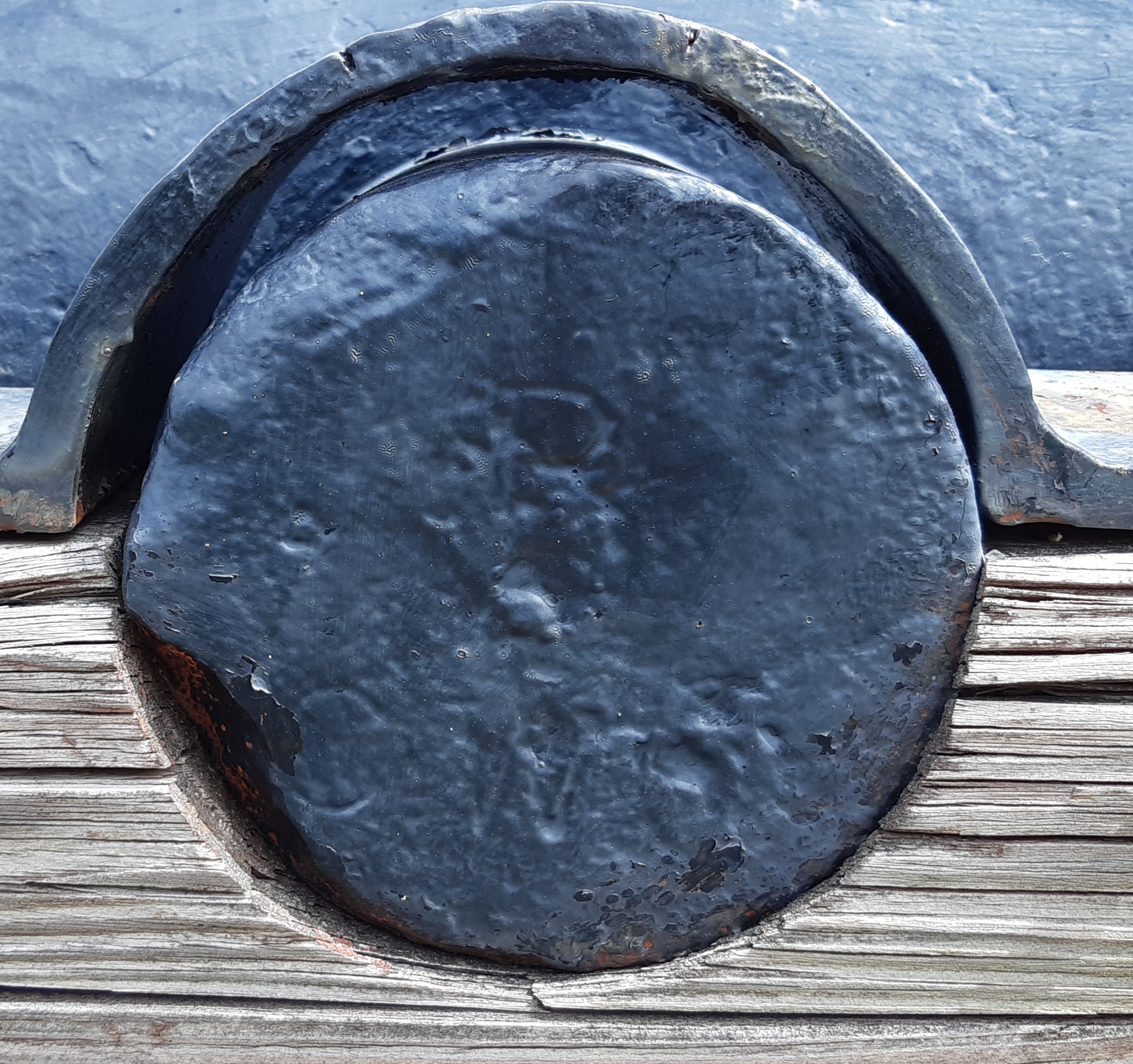
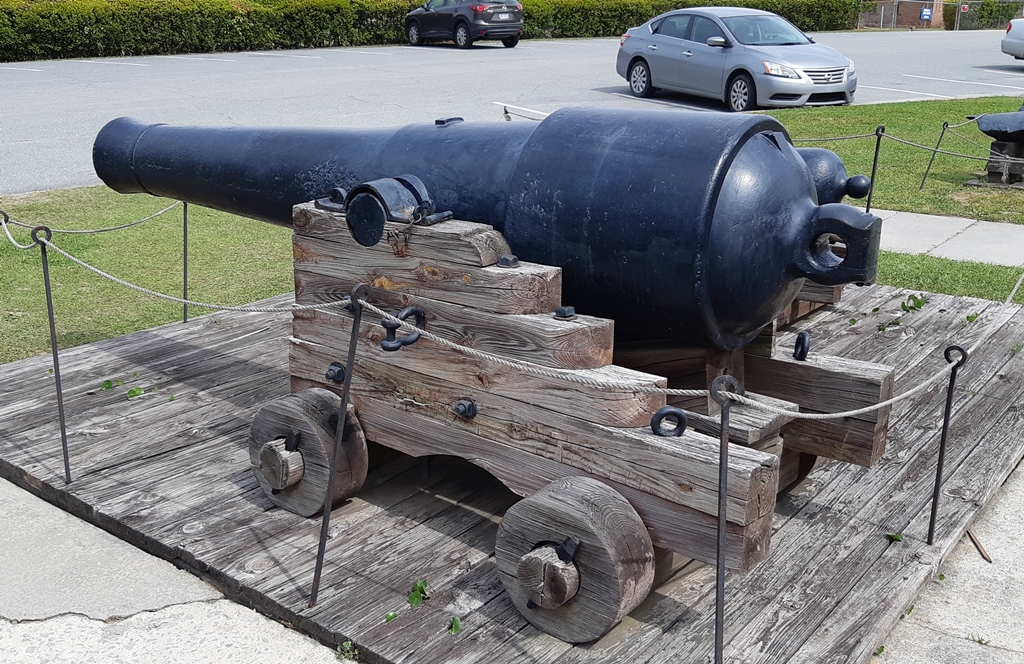
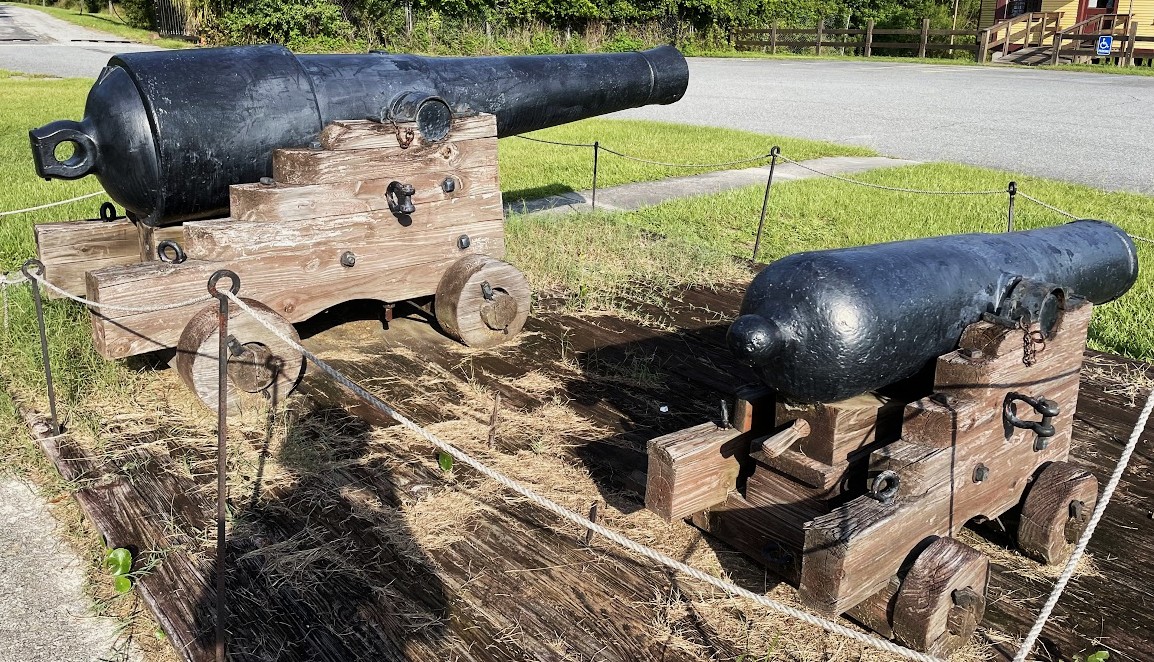
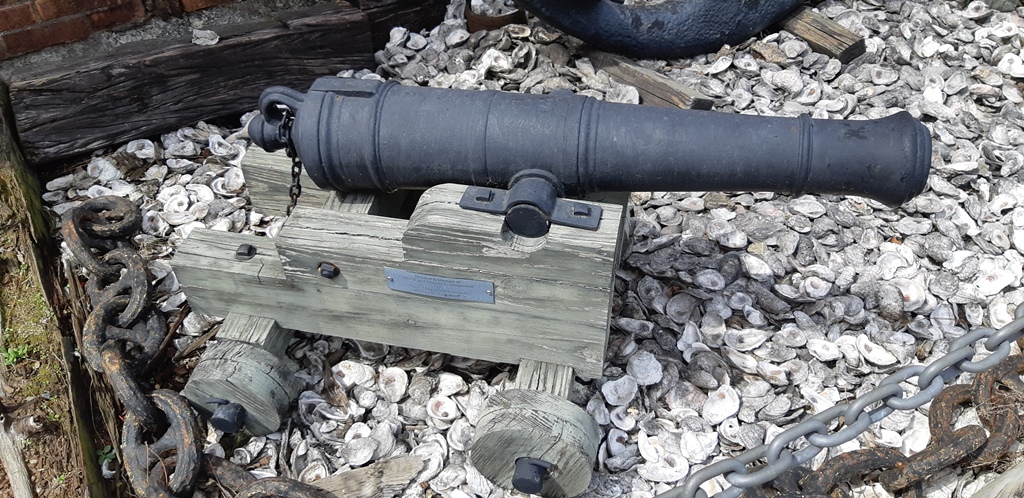
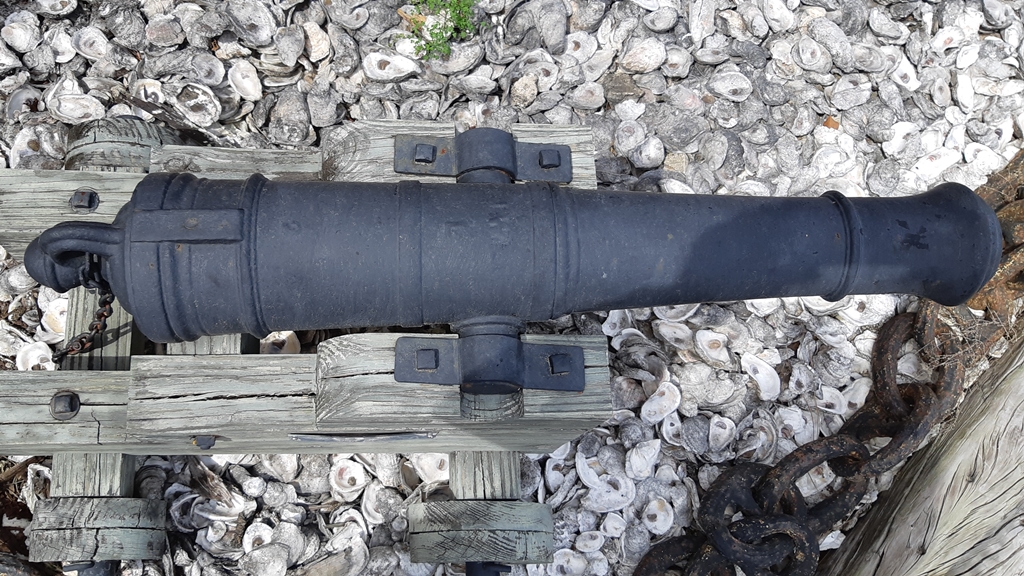
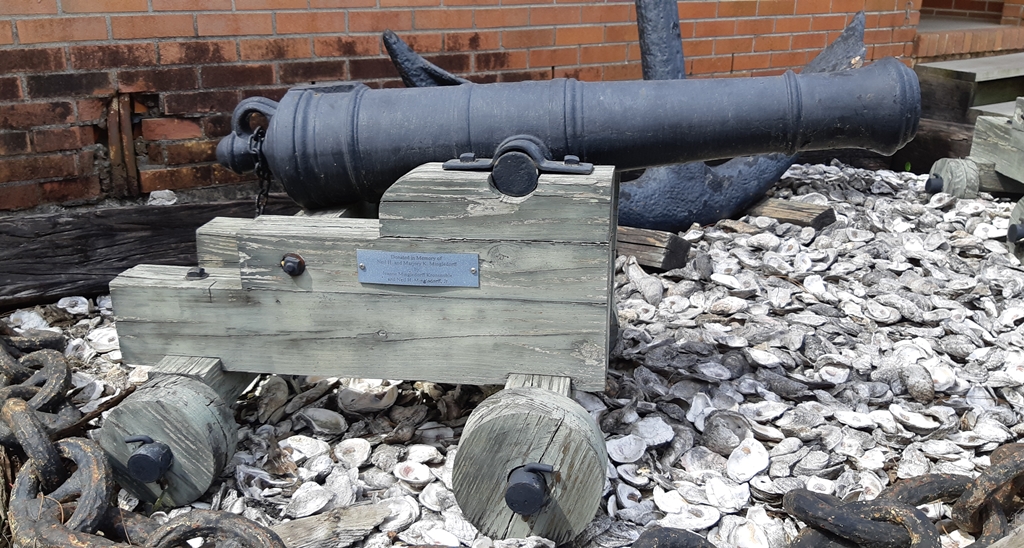
Cast iron SBML cannon with Blomefield pattern breeching ring mounted on a wood naval gun carriages, small calibre artillery and anchors in Old Fort Jackson, to the rear of the larger guns near the main parking lot.
Old Fort Jackson (Fort James Jackson) near Savannah, Georgia is a fantastic site. Intriguingly, at least for the purposes of this page, the fort is “armed” primarily with naval cannon. This naval aspect reflects three circumstances:
1. Virginia captured over 1,100 cannon in April of 1861 at the Gosport Navy Yard. Hundreds of cannon were sent throughout the southern states to arm forts and ships. Some of these guns were overlooked or were too out of the way to bother with after the war and therefore survived scrapping.
2. Some naval cannon have been raised from shipwrecks – including several from CSS Georgia which was scuttled near the fort. Two, a 32-Pounder rifle and a 24-pounder howitzer, are now displayed at the Fort.
3. While the US Army was fairly thorough in scrapping those cannon not donated to local communities, the US Navy had a use for obsolete cannon as bollards. Many survived to the late 20th century half-buried in concrete, and some of that number have been recovered and made available to historic sites.
Old Fort Jackson displays examples of naval guns from all three sources, but quite a number of other forts have a naval element due to one or more of these reasons.
(Santee1821)
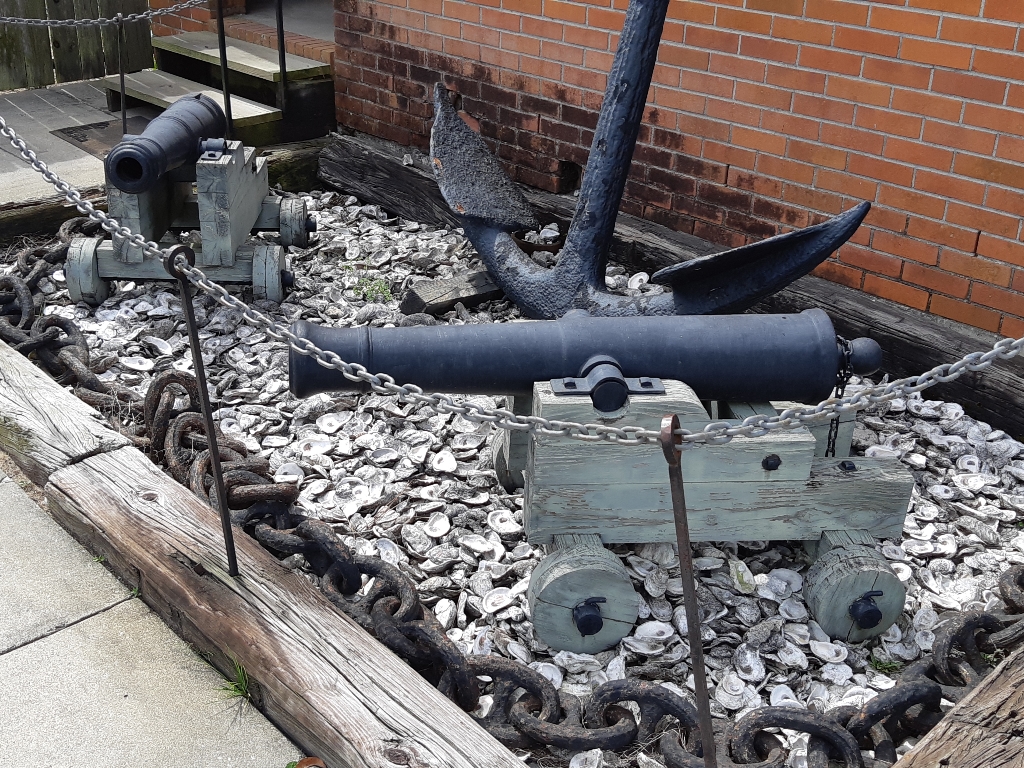
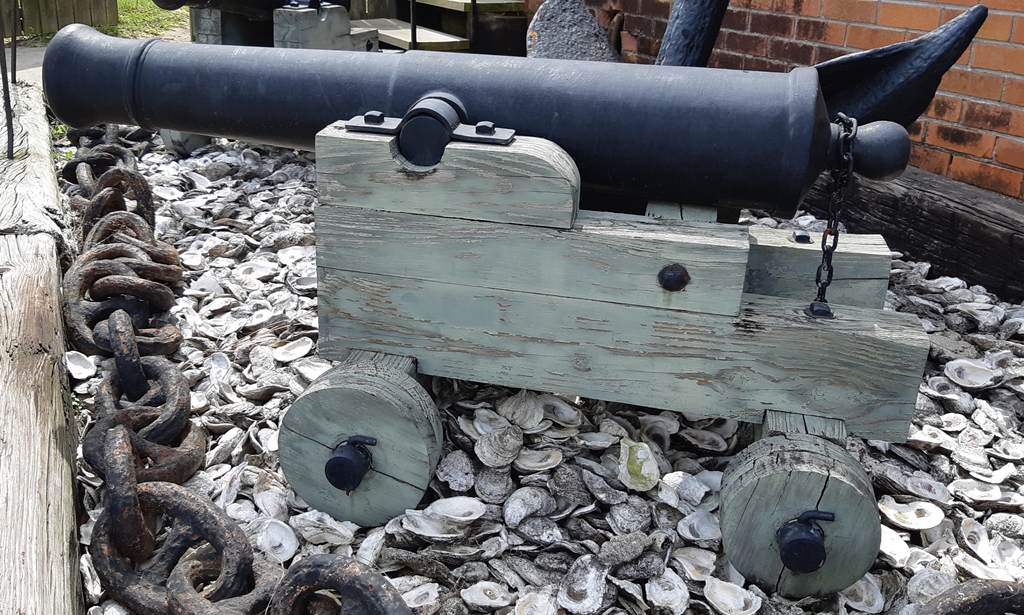
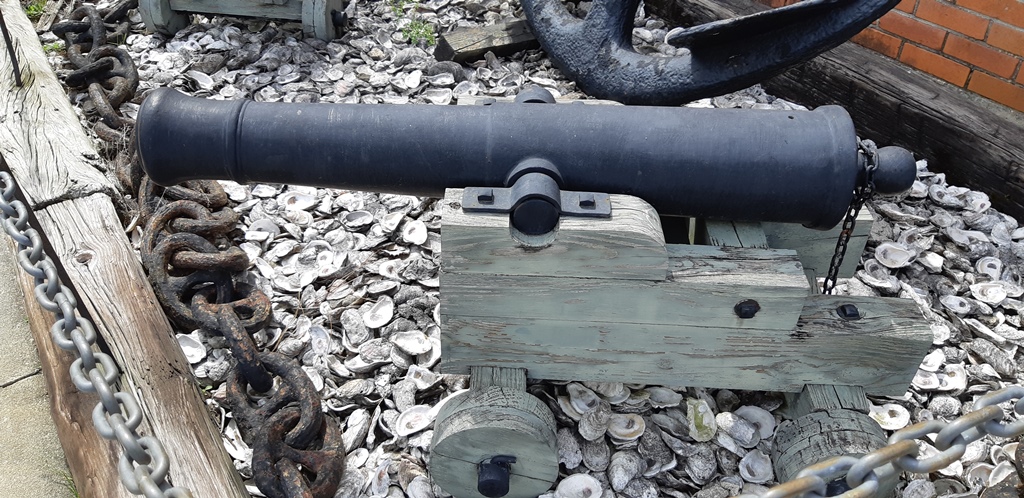
(Author Photos)
Cast iron SBML cannon with round cascable, mounted on a wood naval gun carriages, small calibre artillery and anchors in Old Fort Jackson, to the rear of the larger guns near the main parking lot.
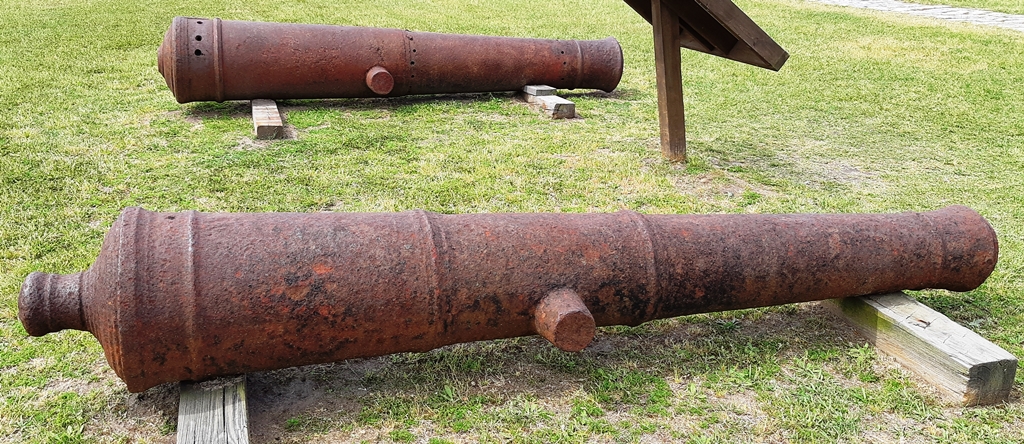
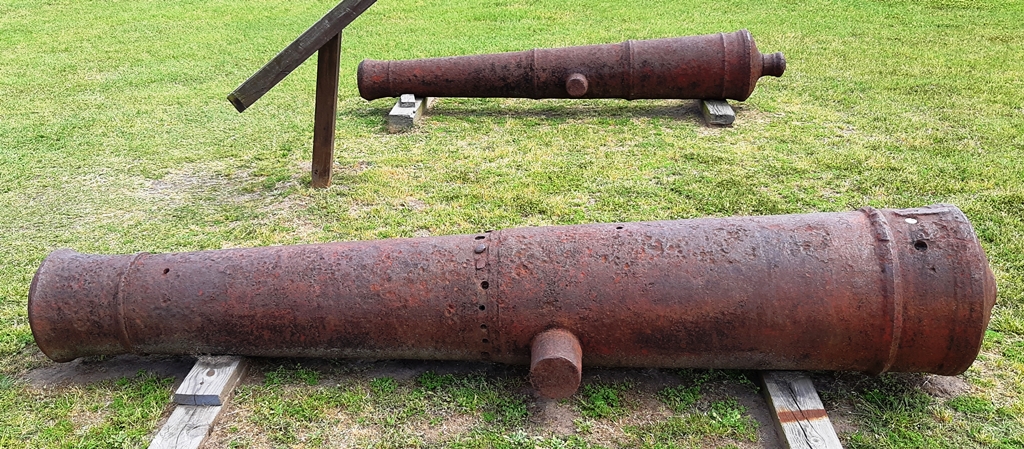
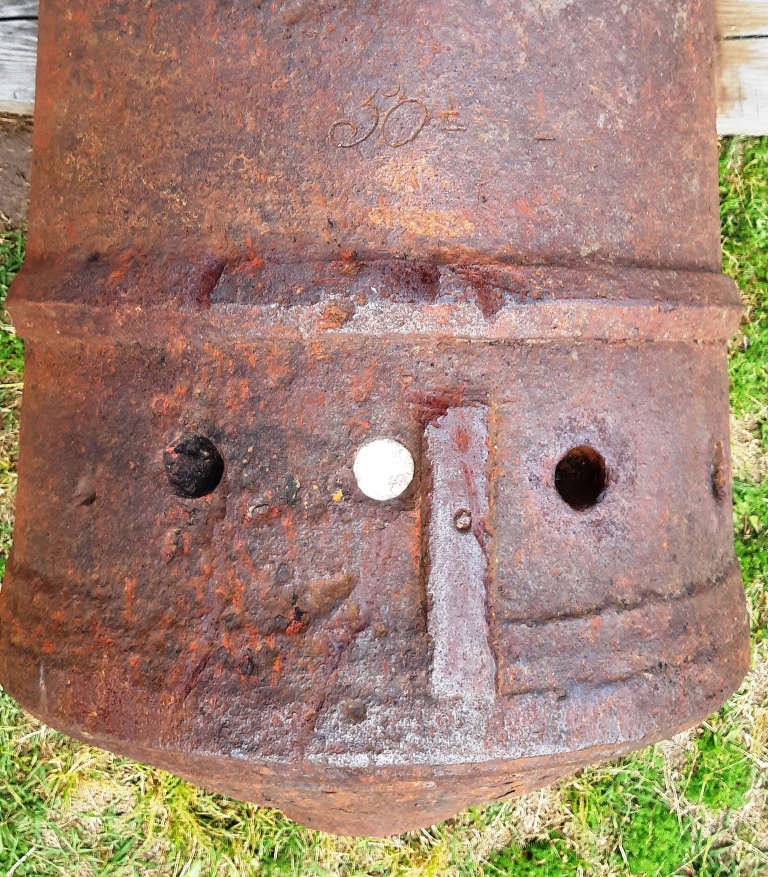
(Author Photos)
Cast-iron 24-pounder 50-cwt smoothbore muzzle-loading Gun, (ca. 1775 – 1815), weight ca 5,516 lbs, modified to fire a 30-lb projectile. During the War of 1812, eight of these 24-pounders were used to defend Savannah, although they were never fired in battle. During the American Civil War fought from 1861 to 1865, six 30-pounders covered the southern defences of Savannah to protect the city from infantry assaults. The guns fired canister or grape shot, but with light charges keep the barrels from bursting due to their age.
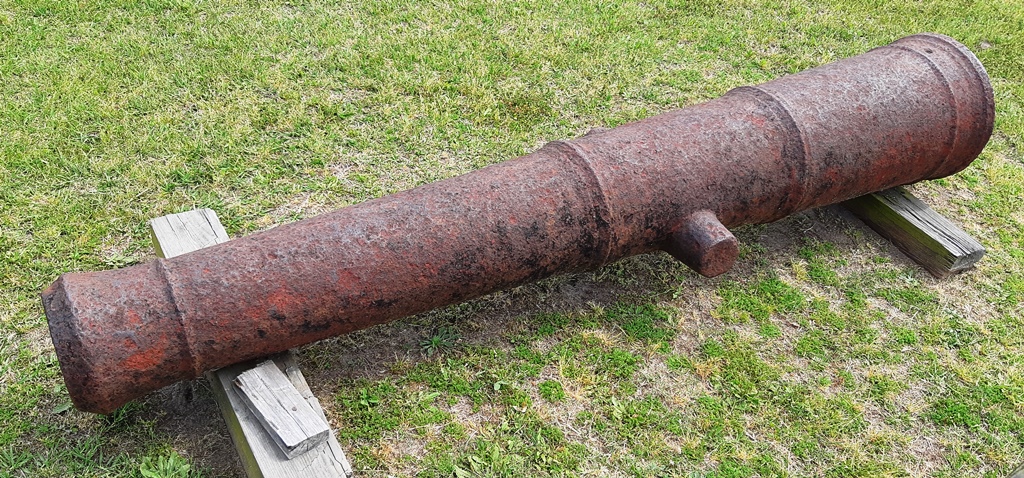
(Author Photos)
Cast iron 18-pounder Smoothbore muzzle loading (SBML) gun on the ground outside Fort Jackson. Cast iron SBML 18-pounder Gun used by British, French and American forces during the American Revolution in the 1779 Battle of Savannah. After the battle, a French Officer reported “two (British SBML) 18-pounders, upon field carriages, charged with canister and placed at the head of the road (Augusta) caused terrible slaughter”. During the War of 1812, six of these 18-pounders were used to defend Savannah. During the American Civil War (1861 to 1865), 18-pounders remained in service for the interior defences of Savannah. Fort Jackson was armed with larger and more powerful guns at that time. 18-pounders were sited at Fort Brown, part of the Southern defences on present day Wheaton Street in Savannah in 1862.
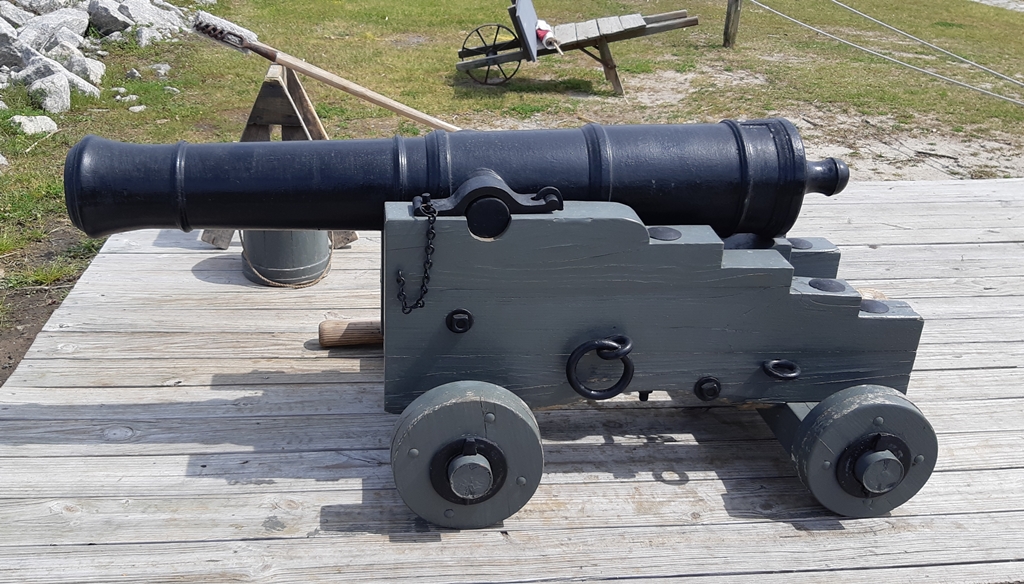
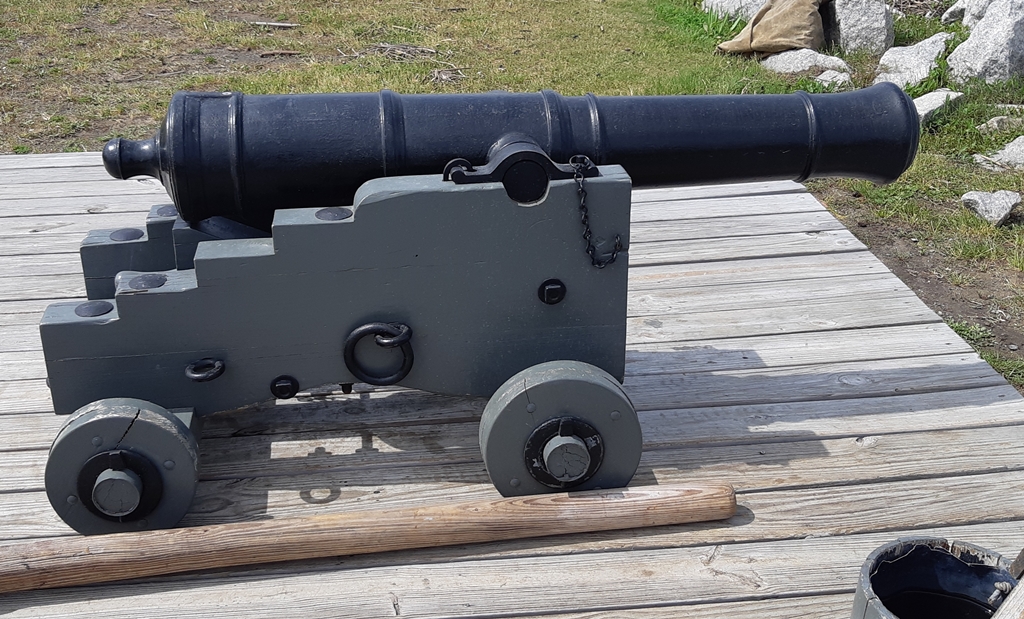
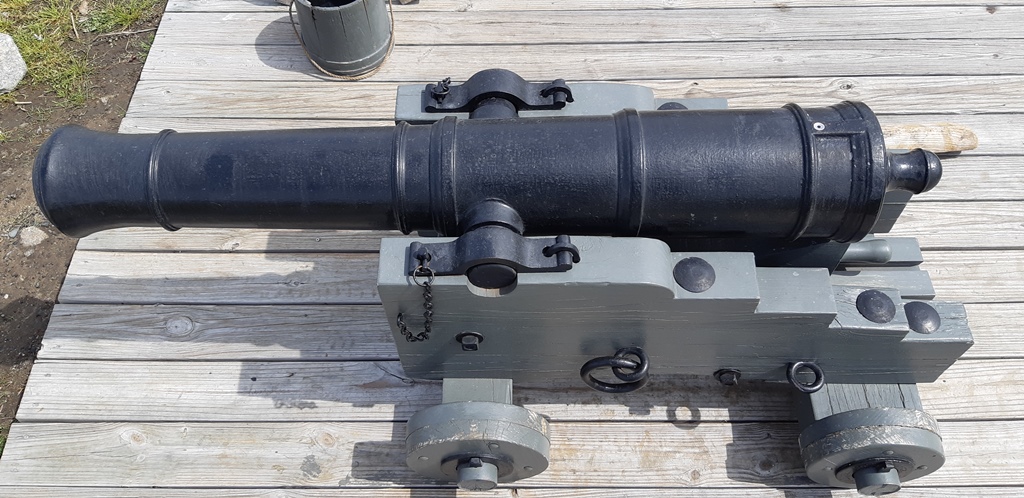
Cast iron SBML saluting gun, mounted on a wood naval carriage, on the waterfront forward of Fort Jackson.
(Santee1821 Photo)
(Author Photos)
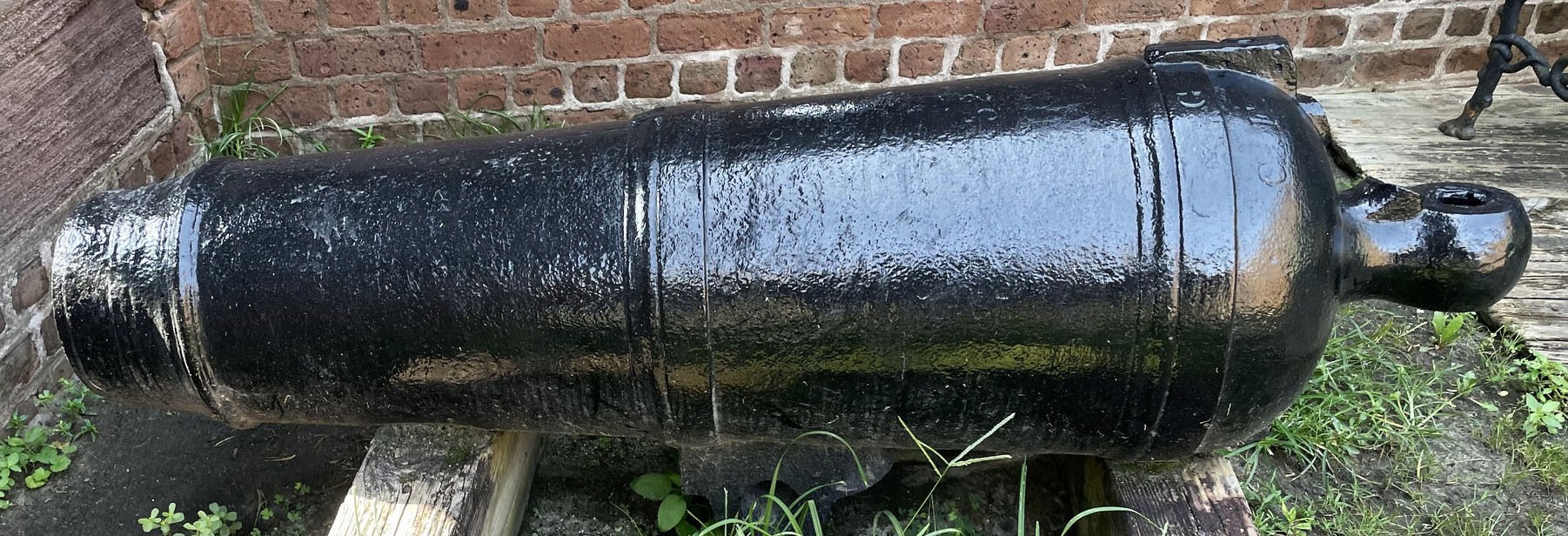
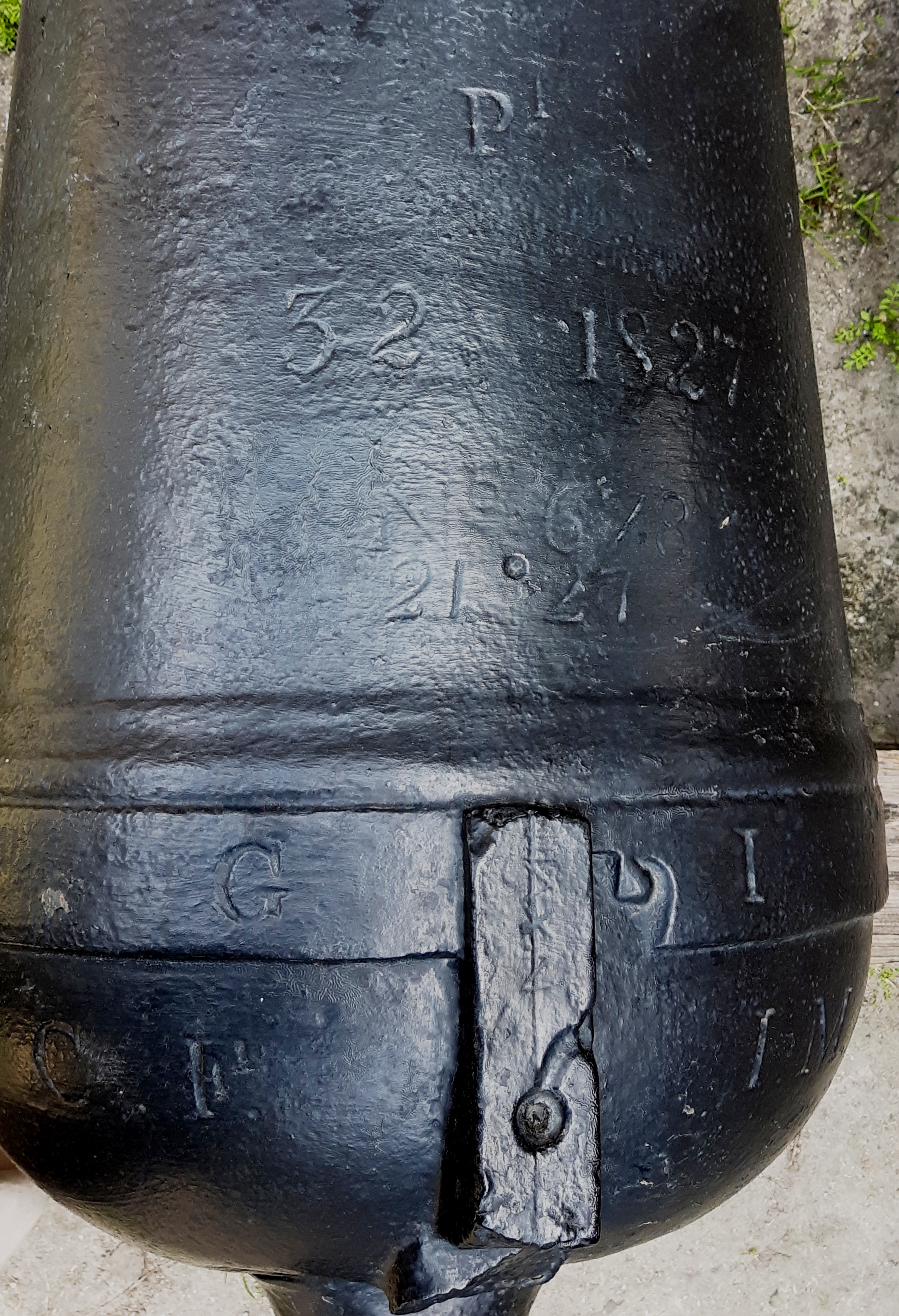
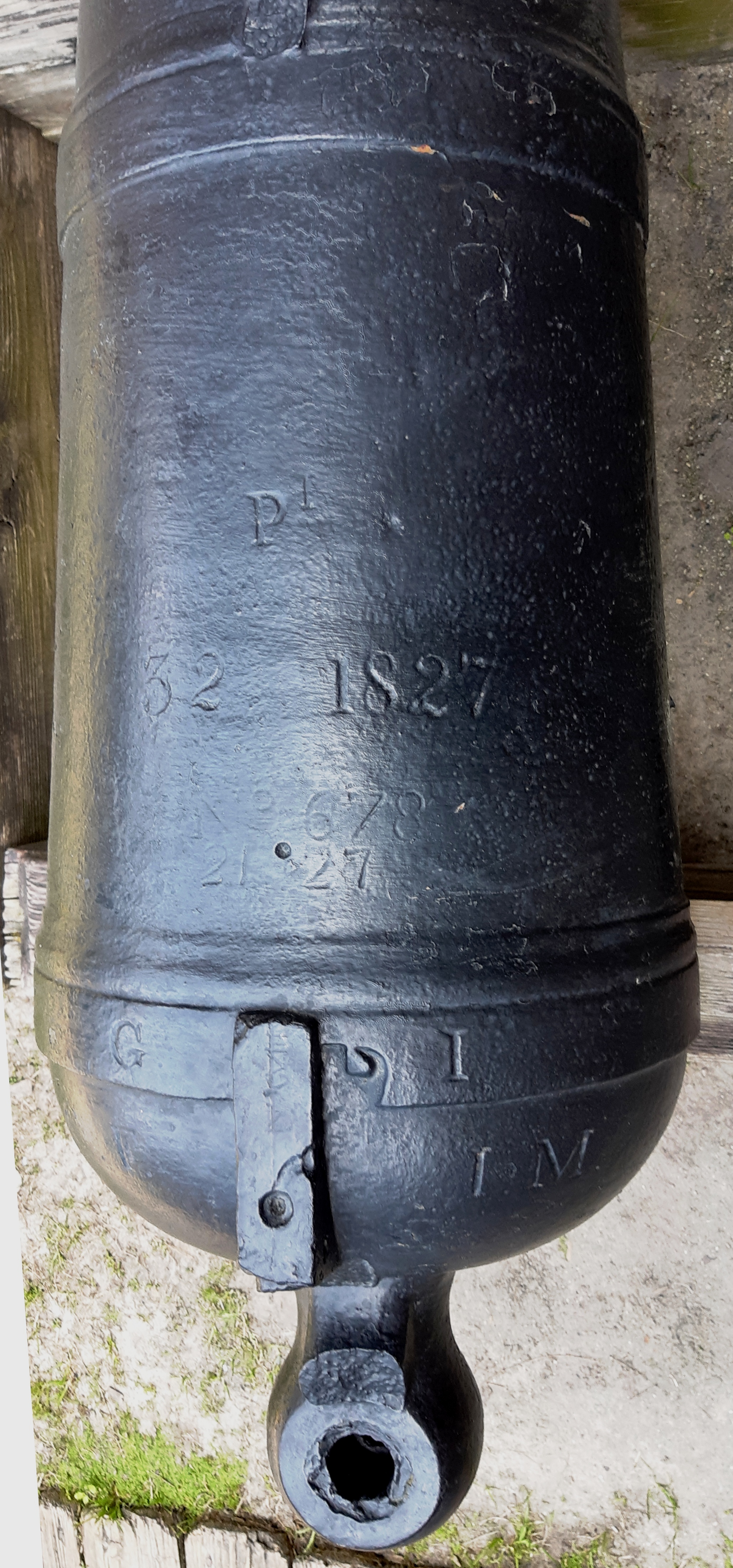
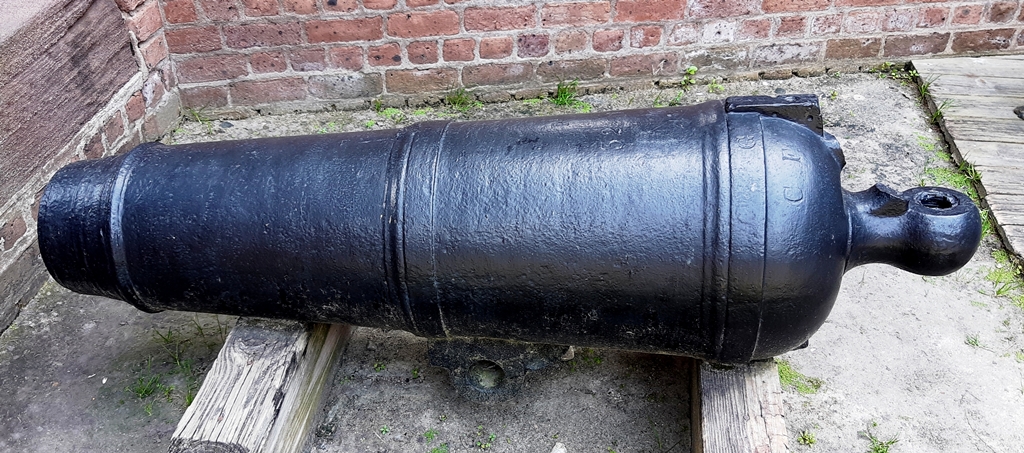
Cast iron SBML Model 1821 32-Pounder Carronade cast in 1827 at the Columbia Foundry in Washington, D.C. Pr, 32, 1827, No. 678, 21-27, GI, I, C.F.I.M on the barrel. It has a broken Blomefield pattern breeching ring, and is set on wooden blocks on the ground inside Fort Jackson. Weight 2,379 lbs. This Carronade was retrieved after the Civil War from a battery at Owens Plantation, which had been part of the outer defences guarding the Western end of Savannah. It was hidden in a ditch when Savannah was evacuated. It was later given to the Georgia Hussars, a local Militia unit. It is on permanent loan from the United Daughters of the Confederacy Chapter # 2.
Old Fort Jackson’s records state that this carronade was also carried aboard USS Potomac. Carronades were little used during the American Civil War. They did see some service as flank howitzers in Confederate fortifications – and the placement of the carronade suggests that usage. In the late 18th and early 19th centuries, the carronade was used to arm the upperworks of larger ships and the main batteries of smaller ships. For a relatively light gun, they were able to throw a heavy shot. However, they were short ranged. In the 1840s and 1850s, the US Navy largely removed carronades from its ships, preferring very light weight cannon, such as the 32-Pounder of 27 Hundredweight of 1846. (Santee1821)
(Author Photos)
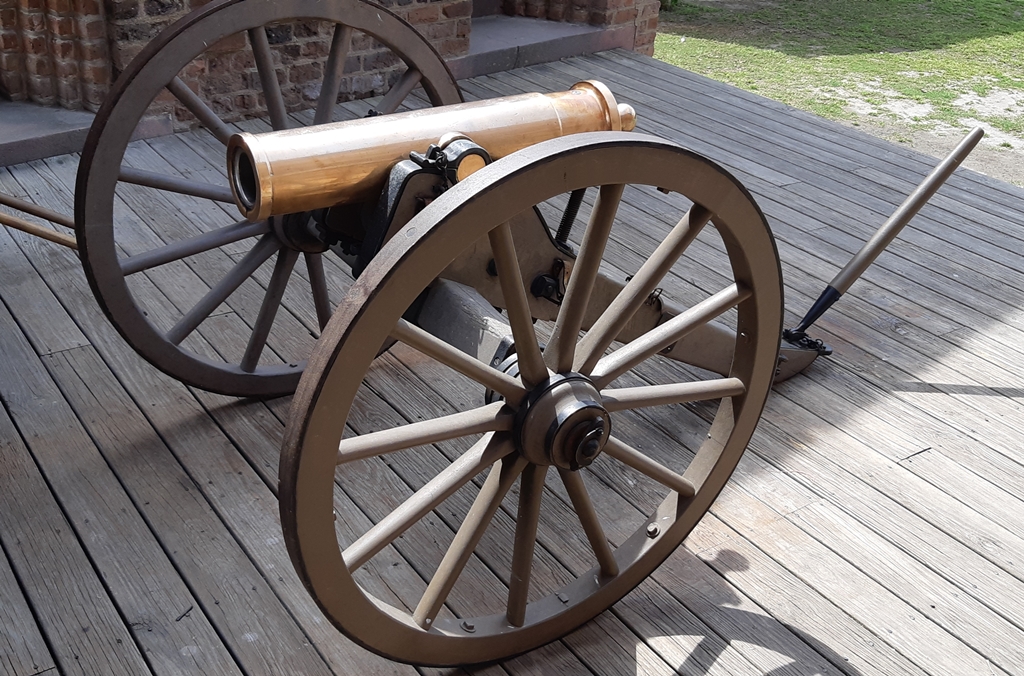
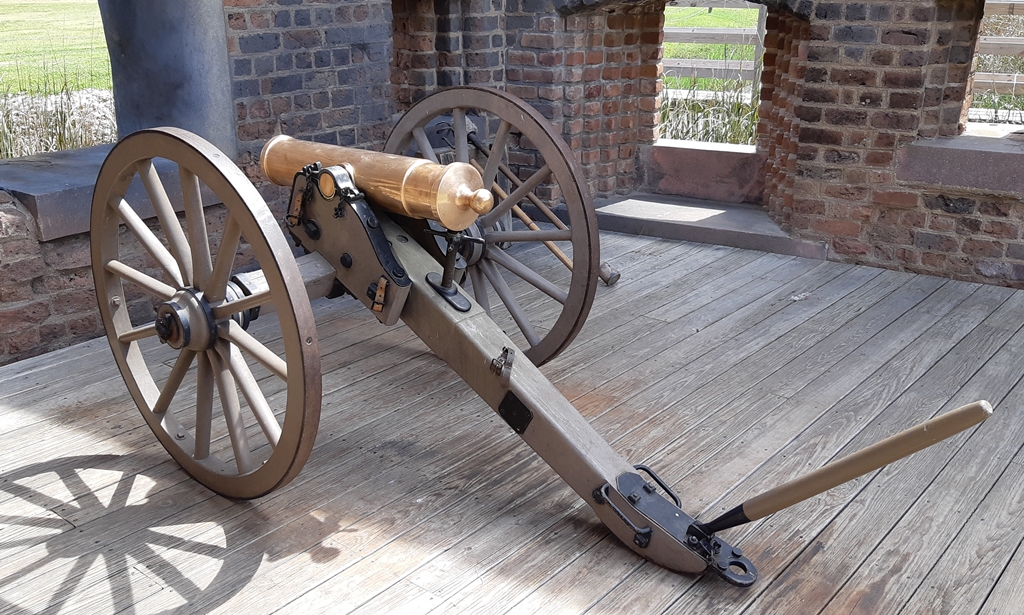
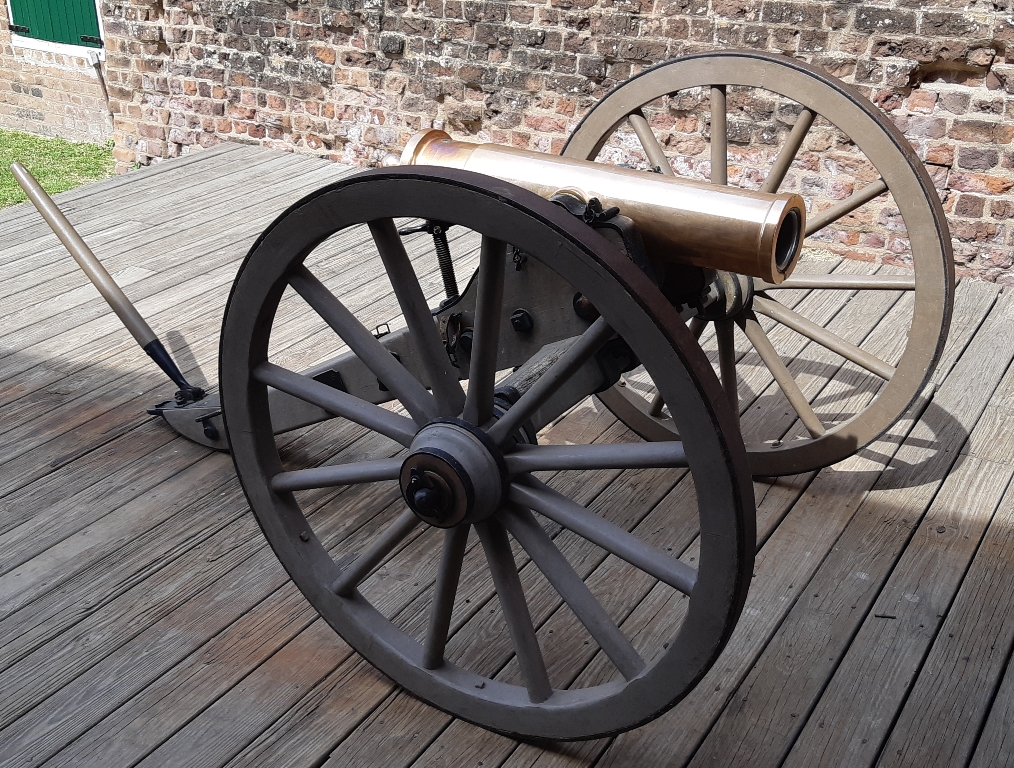
Replica Bronze SBML US Model 1841 12-pounder Mountain Howitzer mounted on a wheeled field carriage, on the grounds inside Fort Jackson. Weight 220 lbs. Marked TJR 221 on the muzzle, made in 1979 at Lapan’s Foundry. Mounted on a 1st Model Prairie Carriage built by Steen Cannons in February 2001. Fort Jackson had one Mountain Howitzer for flank defence during the Civil War.
(Santee1821 Photo)
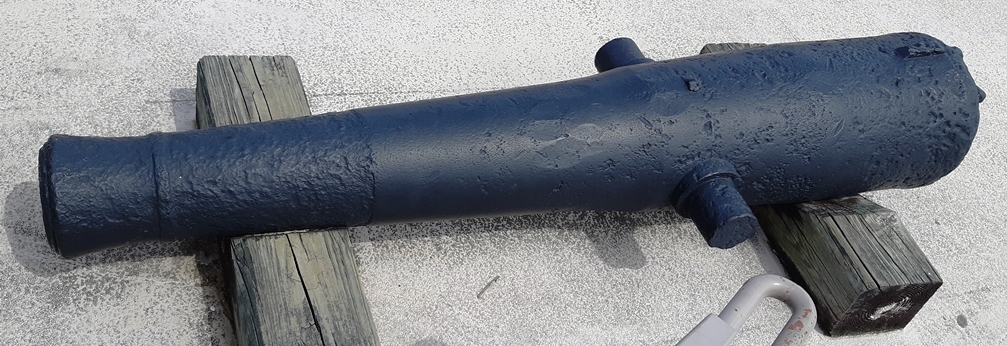
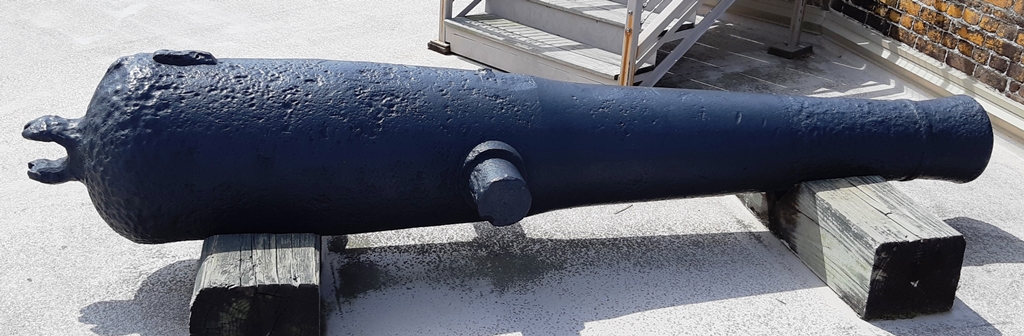
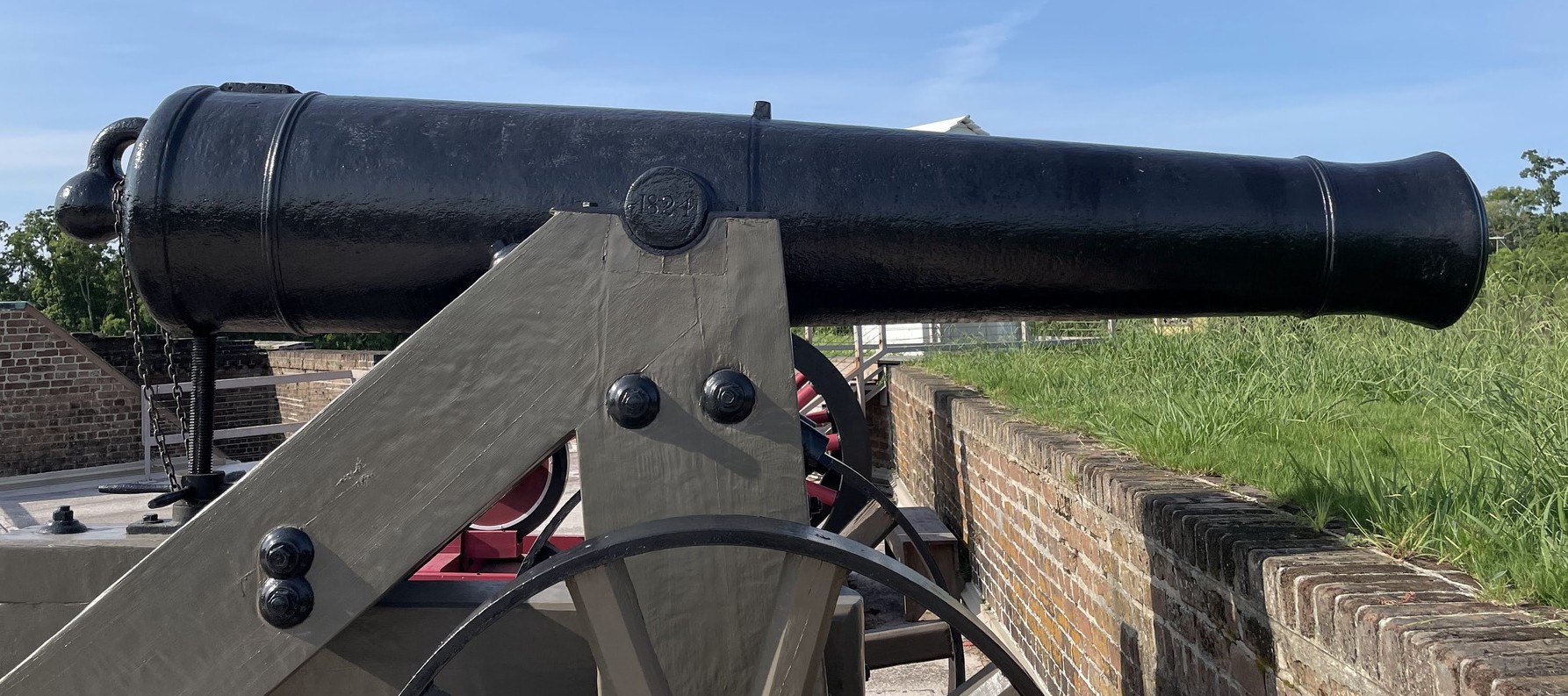
Cast iron SBML Model 1821 “Gradual Increase” 32-Pounder, 63-cwt Siege Gun cast in 1824. These cannon were a type intended to arm the ships-of-the-line and heavy frigates built for the US Navy in the years after 1812.
(Author Photos)
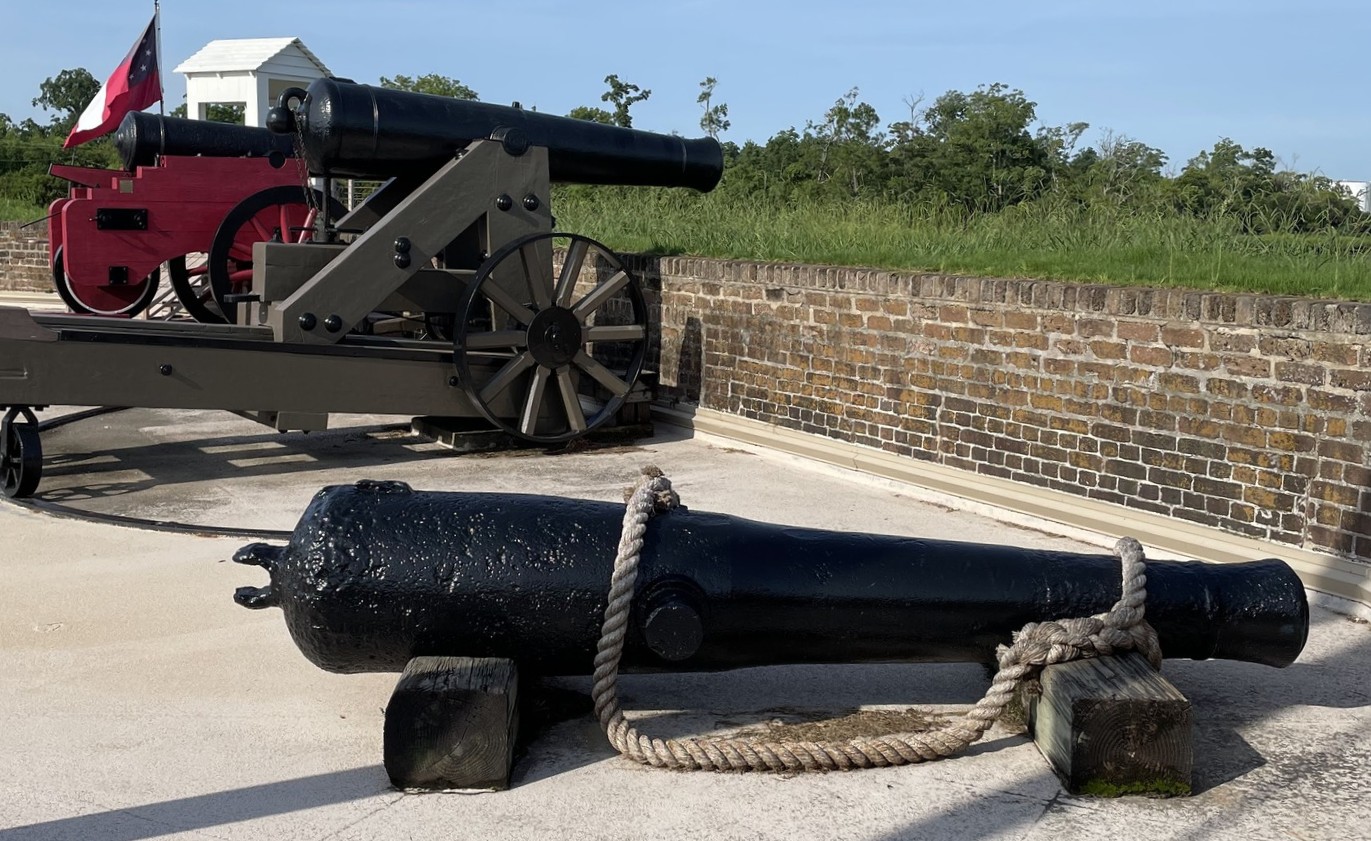
Cast iron SBML US Model 1846 32-Pounder, 57-cwt Gun with a Millar pattern breeching ring, heavily corroded, unmounted on the ground inside Fort Jackson. Weight 6,458 lbs, manufactured in 1846 at the West Point Foundry, Cold Springs, New York. The gun served on the USS Savannah during the Civil War.
This type of cannon was introduced in 1846 as part of a system of uniform 32-Pounder armament. The 57-cwt gun was one of the heavier 32-Pounders in the system. The gun which sits on blocks upon the parapet is an unmodified version of the cannon – however, it also was heavily pitted from corrosion during years of service as a bollard in the Norfolk Naval Yard, Virginia. (Santee1821)
(Santee1821 Photo)
Cast iron SBML 32-Pounder, 57-cwt Gun with a Millar pattern breeching ring, heavily corroded, unmounted on the ground inside Fort Jackson. In the background are a Model 1821 “Gradual Increase” 32-Pounder on a front-pintle barbette carriage and beyond it, an early 19th Century 24-pounder on an early 19th Century Barbette Carriage.
(Santee1821 Photo)
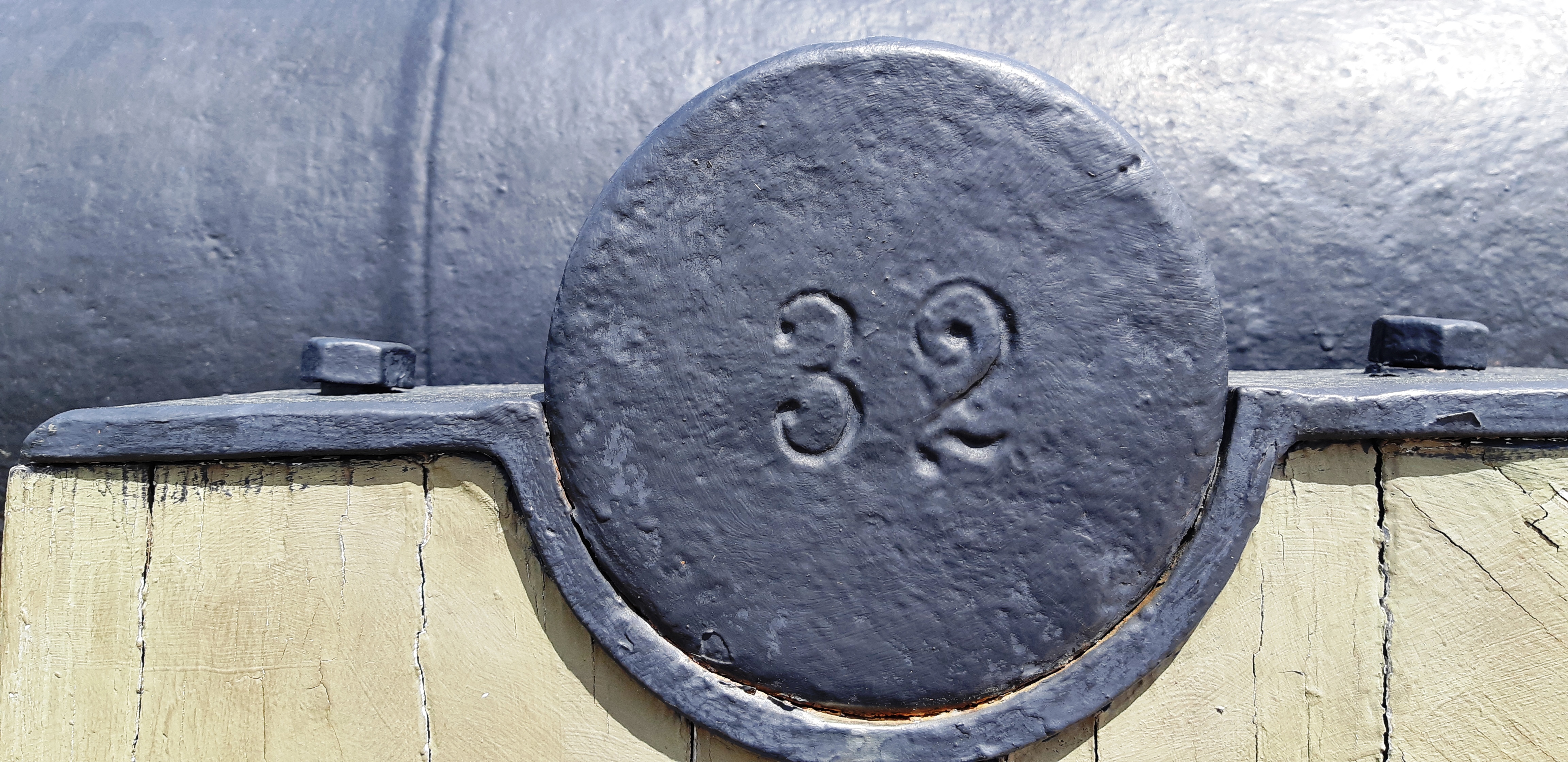
Left trunnion, No. 32.
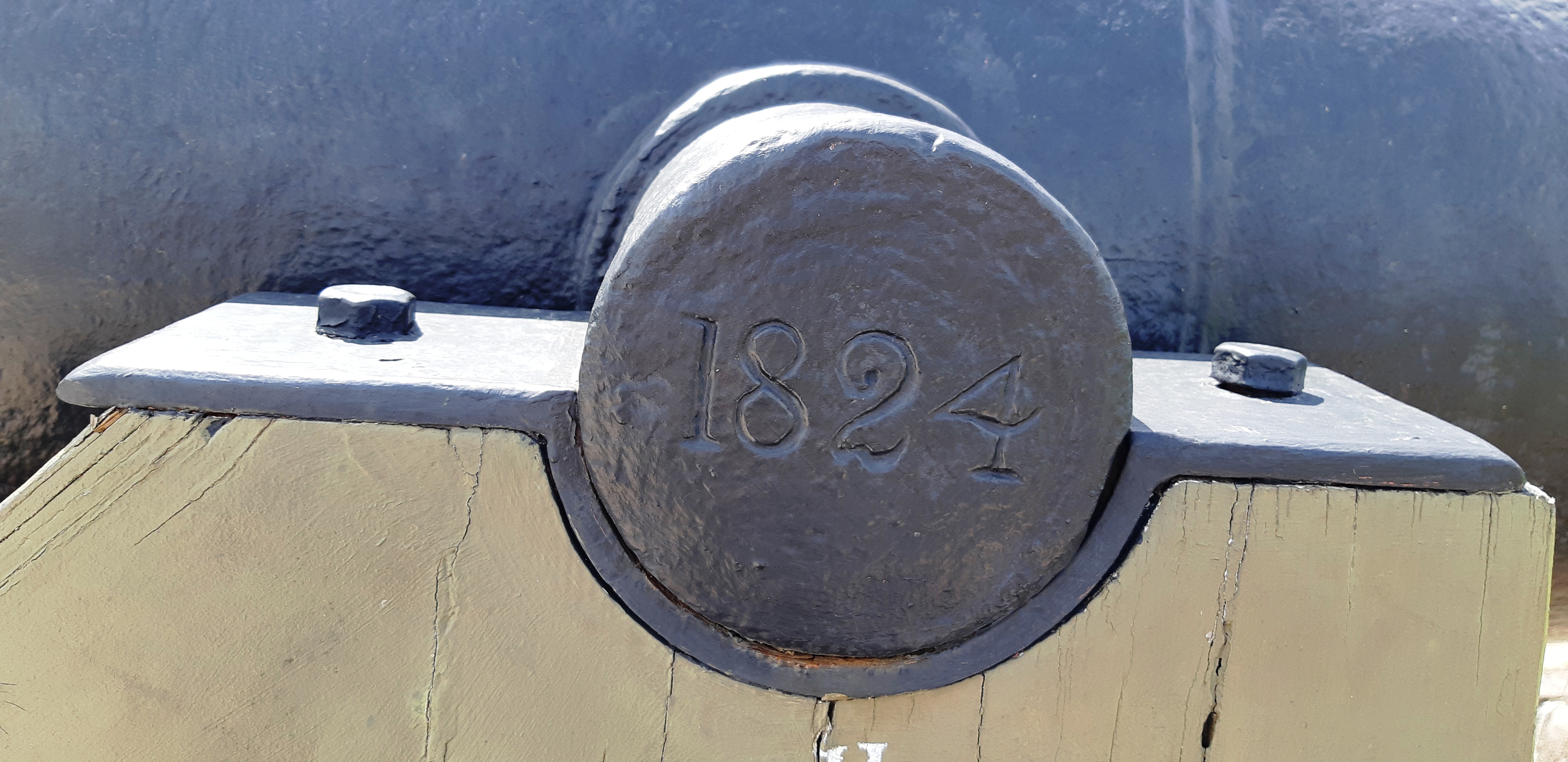
Right trunnion, 1824.
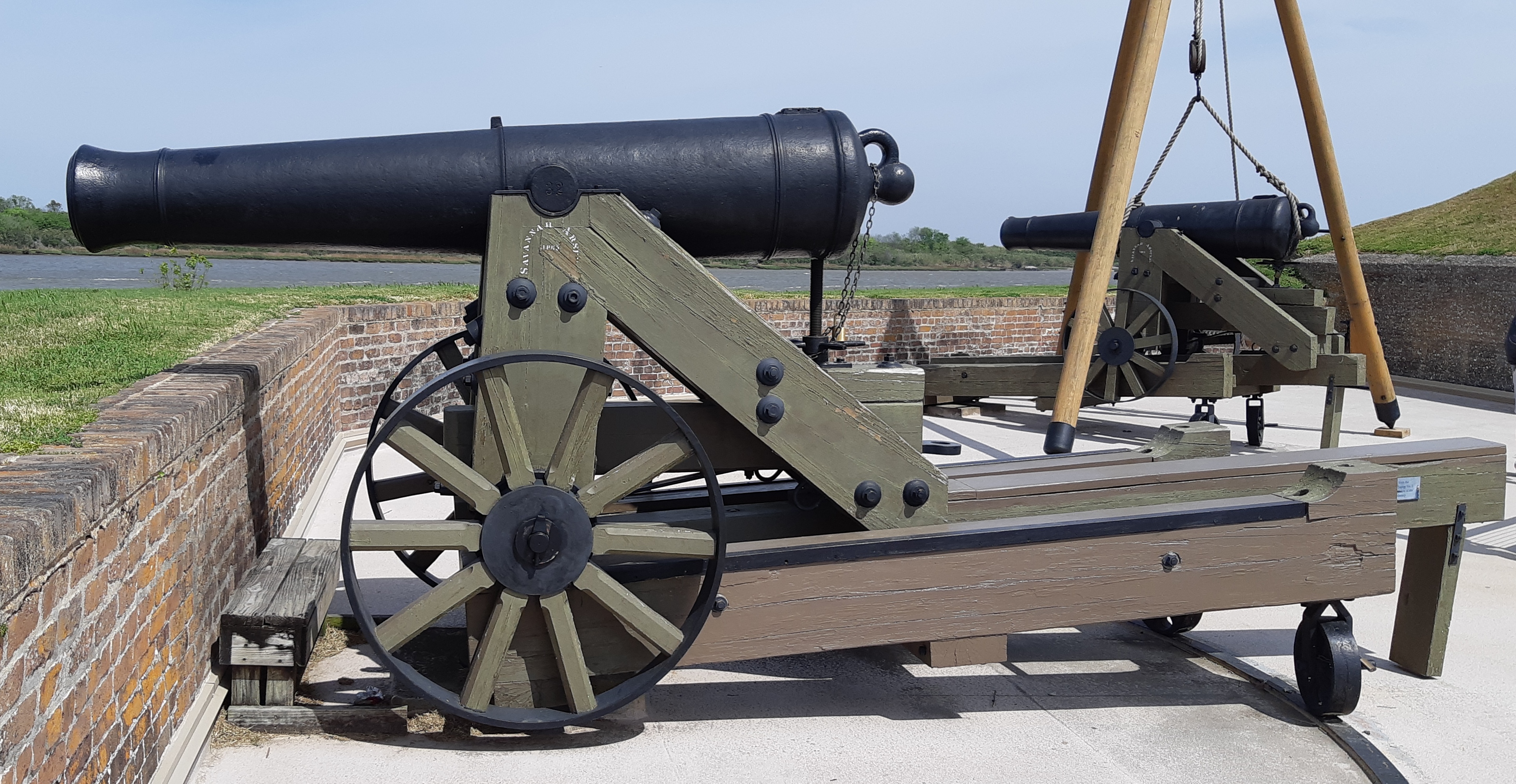
(Author Photos)
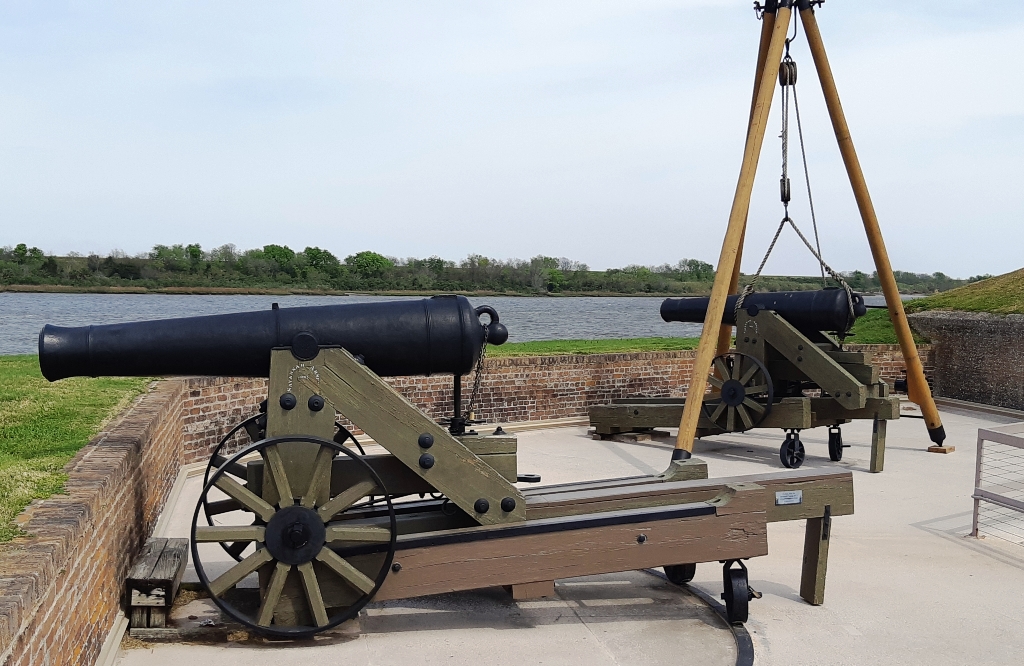
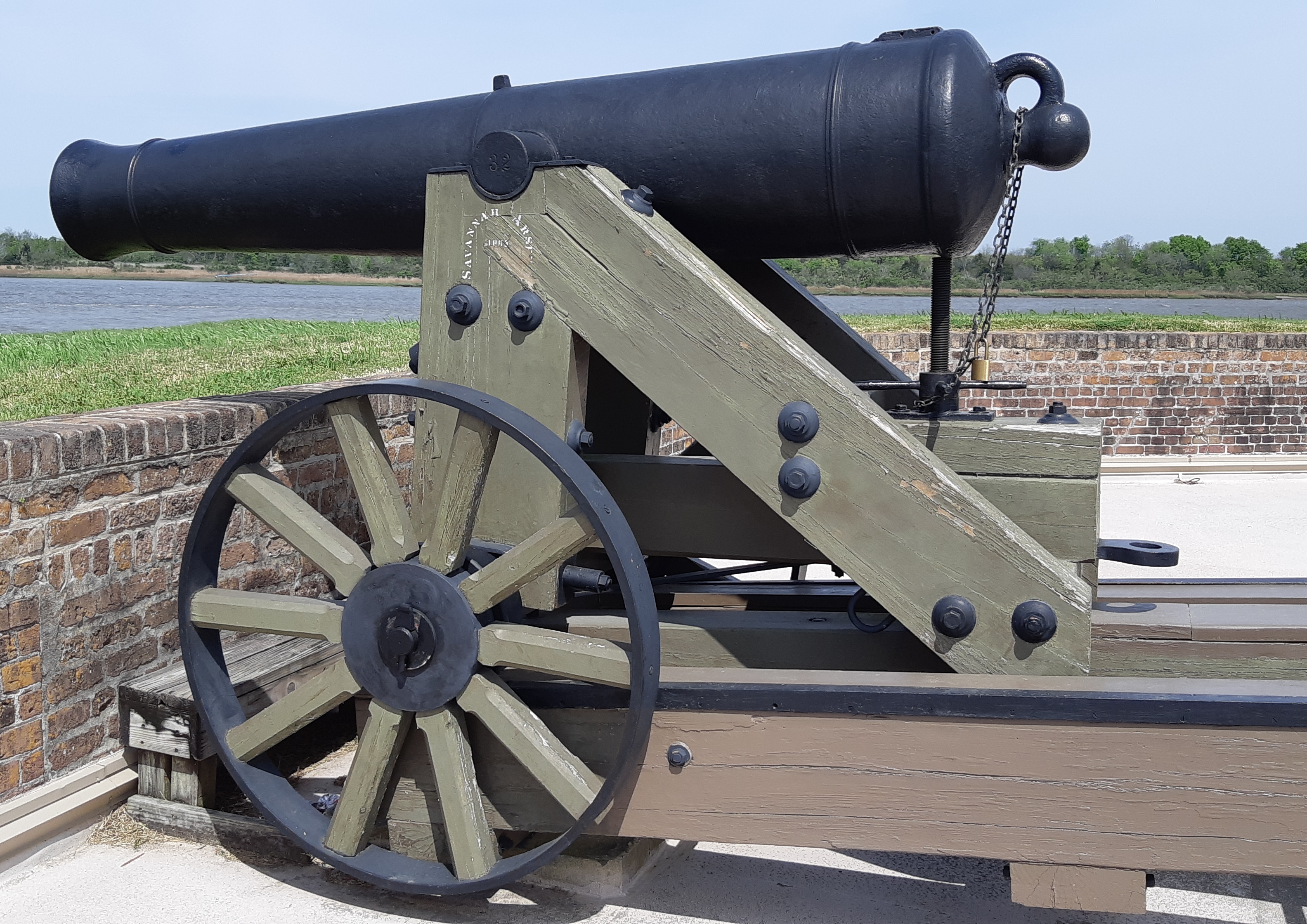
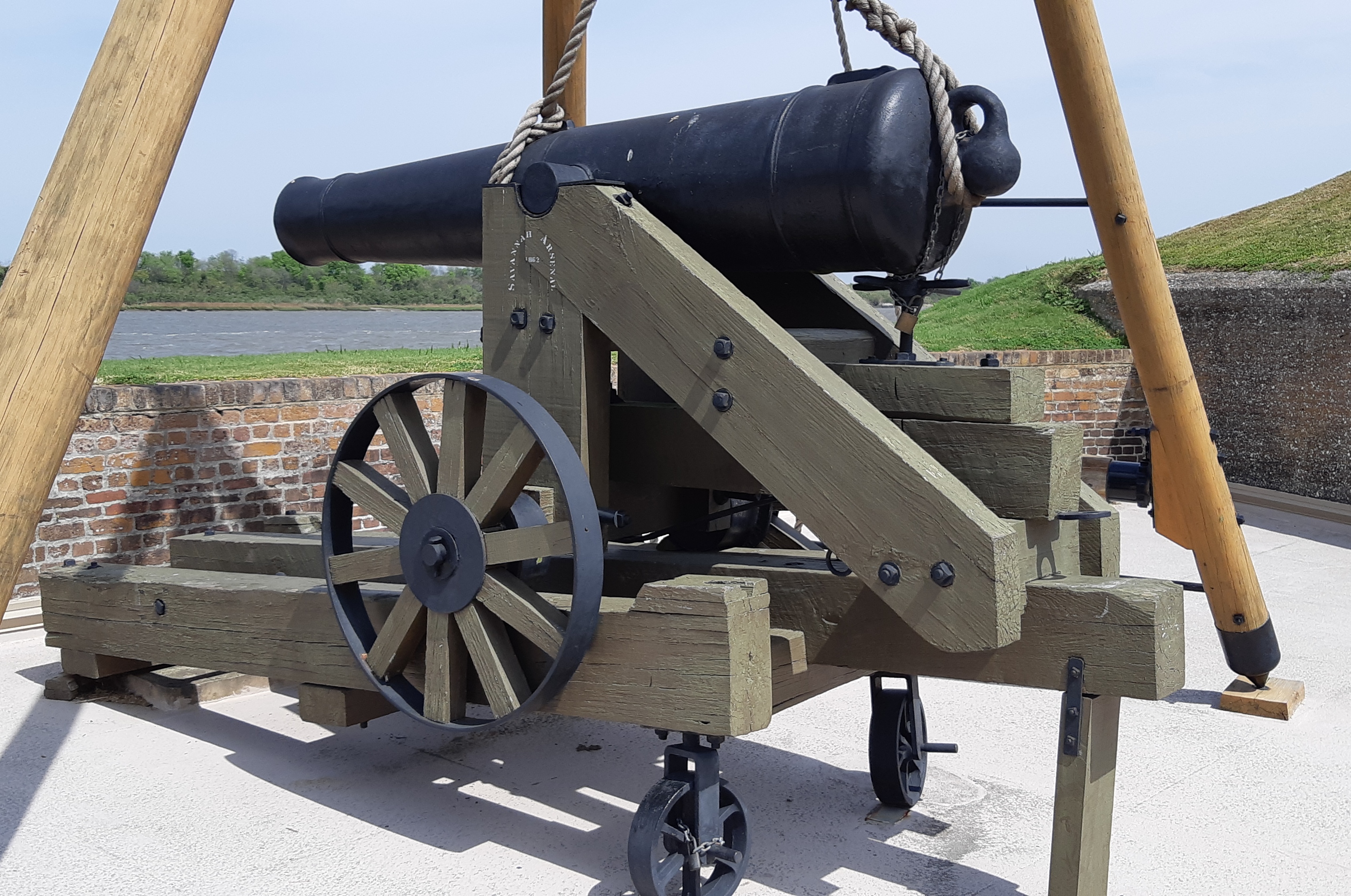
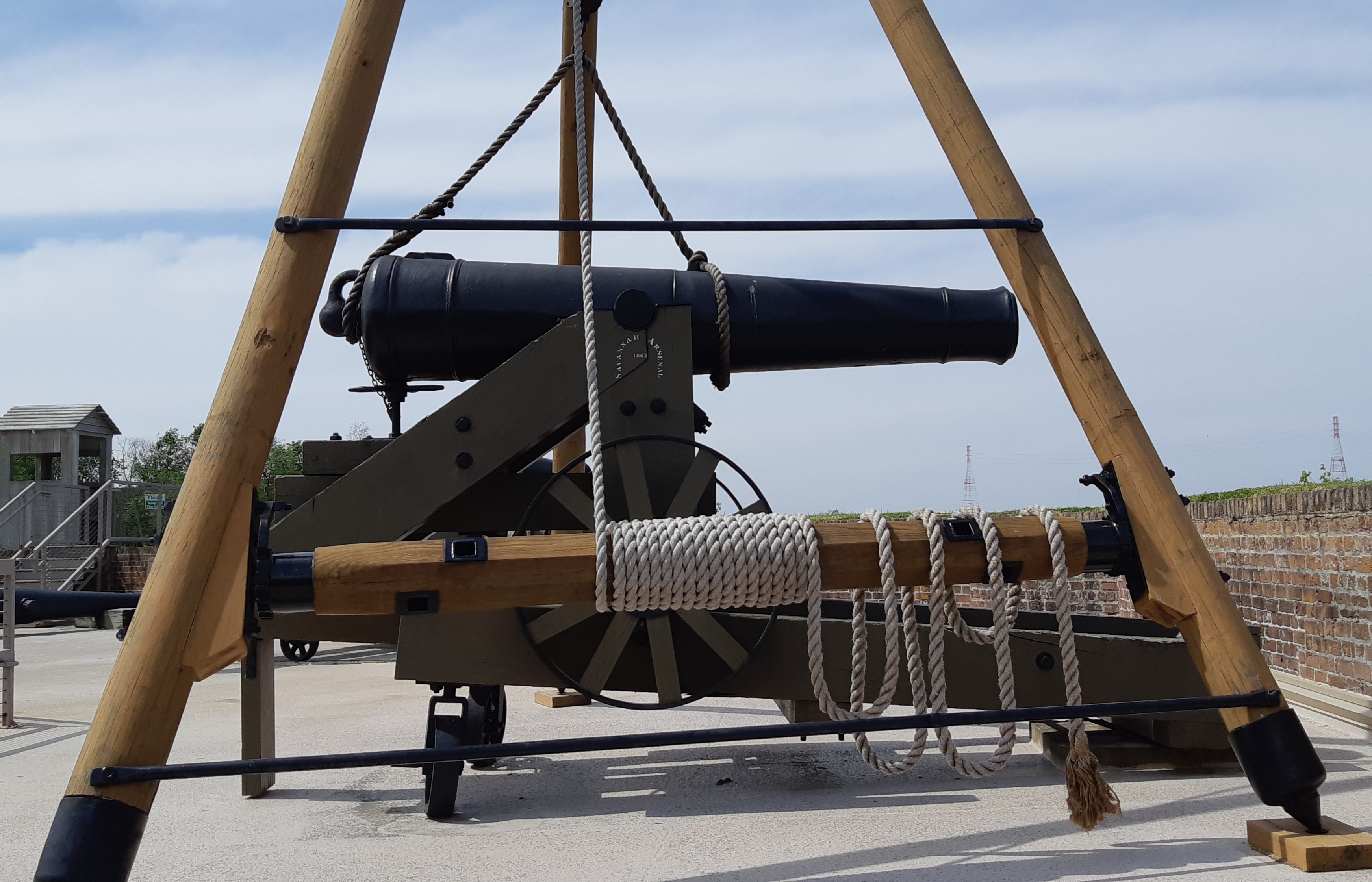
Cast iron SBML Model 1821 “Gradual Increase” 32-Pounder, 63-cwt Siege Gun cast in 1824 at the Columbia Foundry in Washington, D.C. It has a Blomefield pattern breeching ring, mounted on a wood traversing Barbette Carriage on the ramparts of Fort Jackson. Records indicate this cannon was aboard USS Potomac in 1849. Weight 7,086 lbs. 1824 on the right trunnion, 32 on the left trunnion, pf No. 410, 63-1-2, C.F., I.M., G. 26, I. on the breech. It is mounted on a Front Pintle Barbette Carriage built by the CHS. This gun was in Savannah’s outer defences during the Civil War.
In January, 1860 there were 61 forts and batteries that defended America’s coastal cities, not including the numerous forts that guarded the U.S Capital and the approaches along the rivers. Many of these guns were mounted on Barbette Carriages similar to this one, that were designed to be higher than the walls of fortifications.
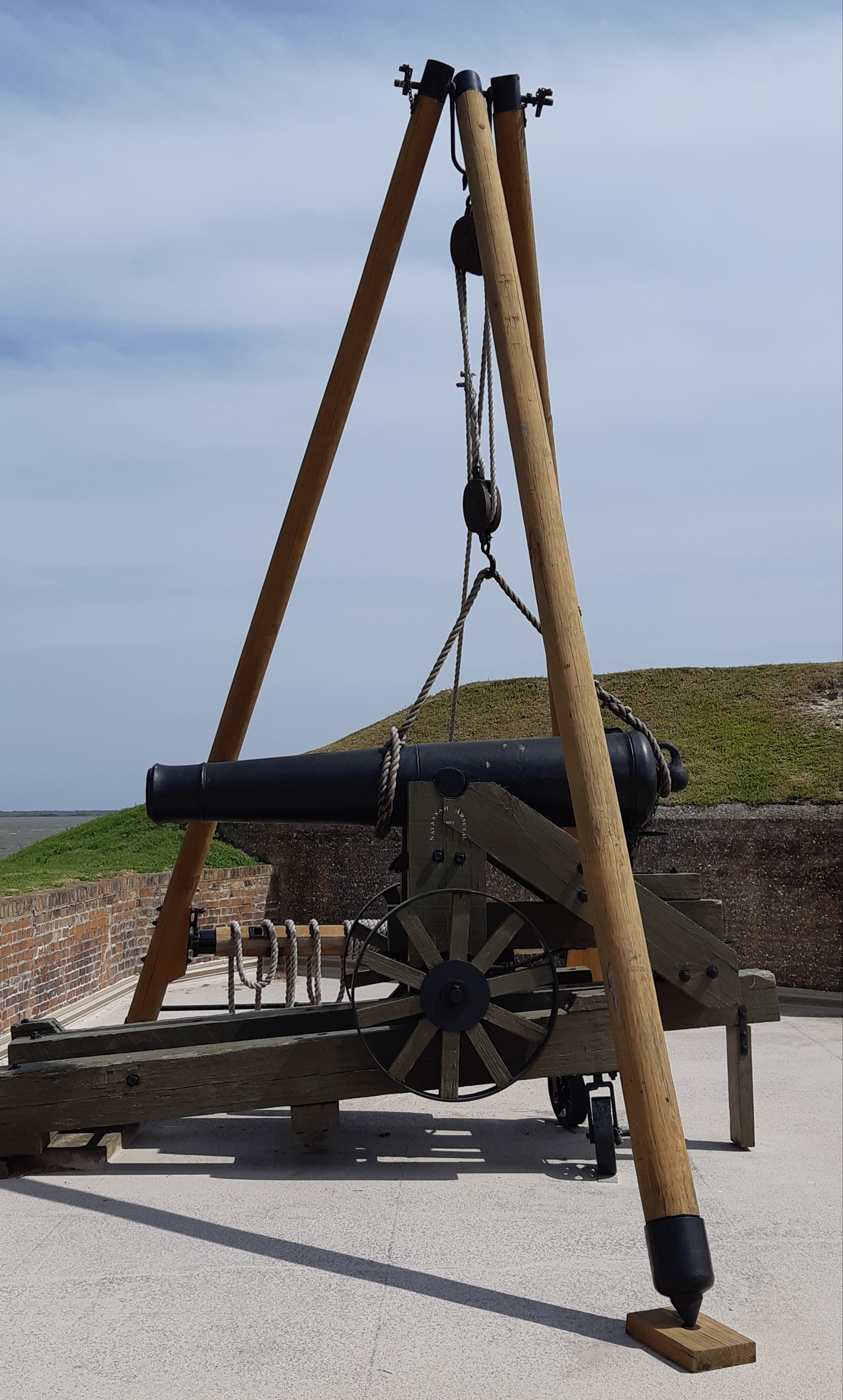
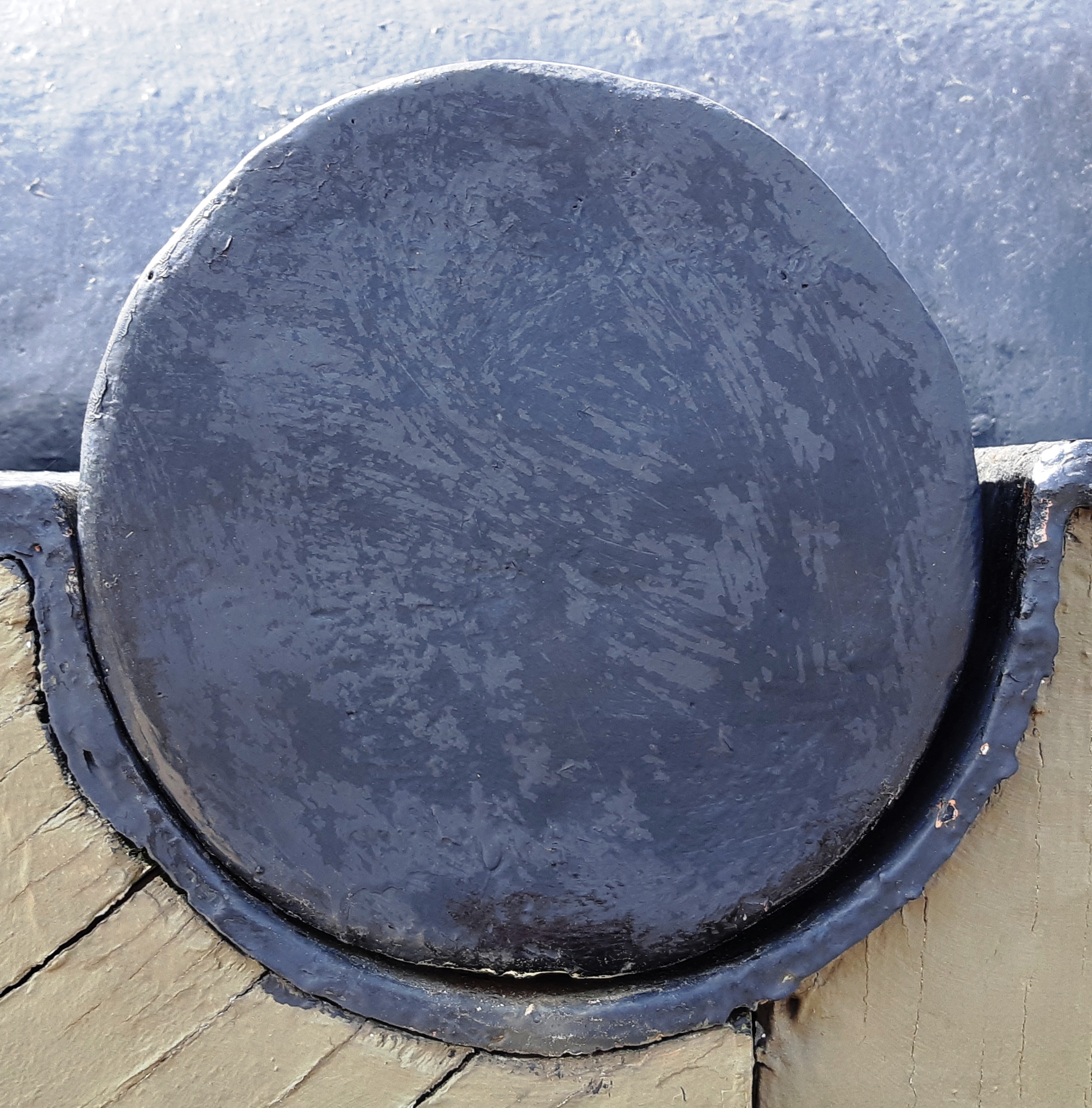
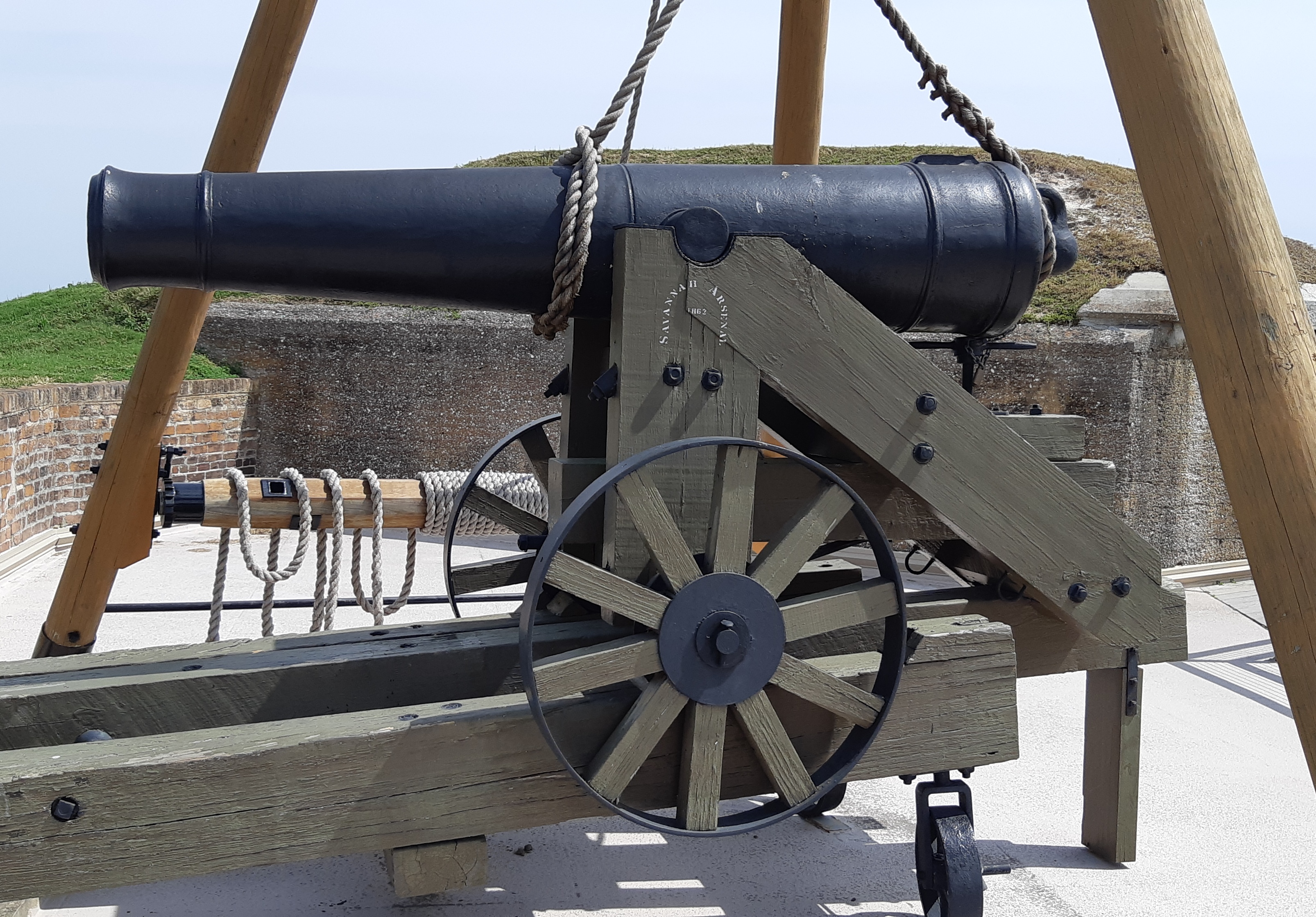
(Author Photos)
Fibreglass replica SBML Model 1821 “Gradual Increase” 32-Pounder, 63-cwt Siege Gun with a Blomefield pattern breeching ring, mounted on a wood traversing Barbette Carriage, under a Gun Gin on the ramparts of Fort Jackson. Weight 150 lbs
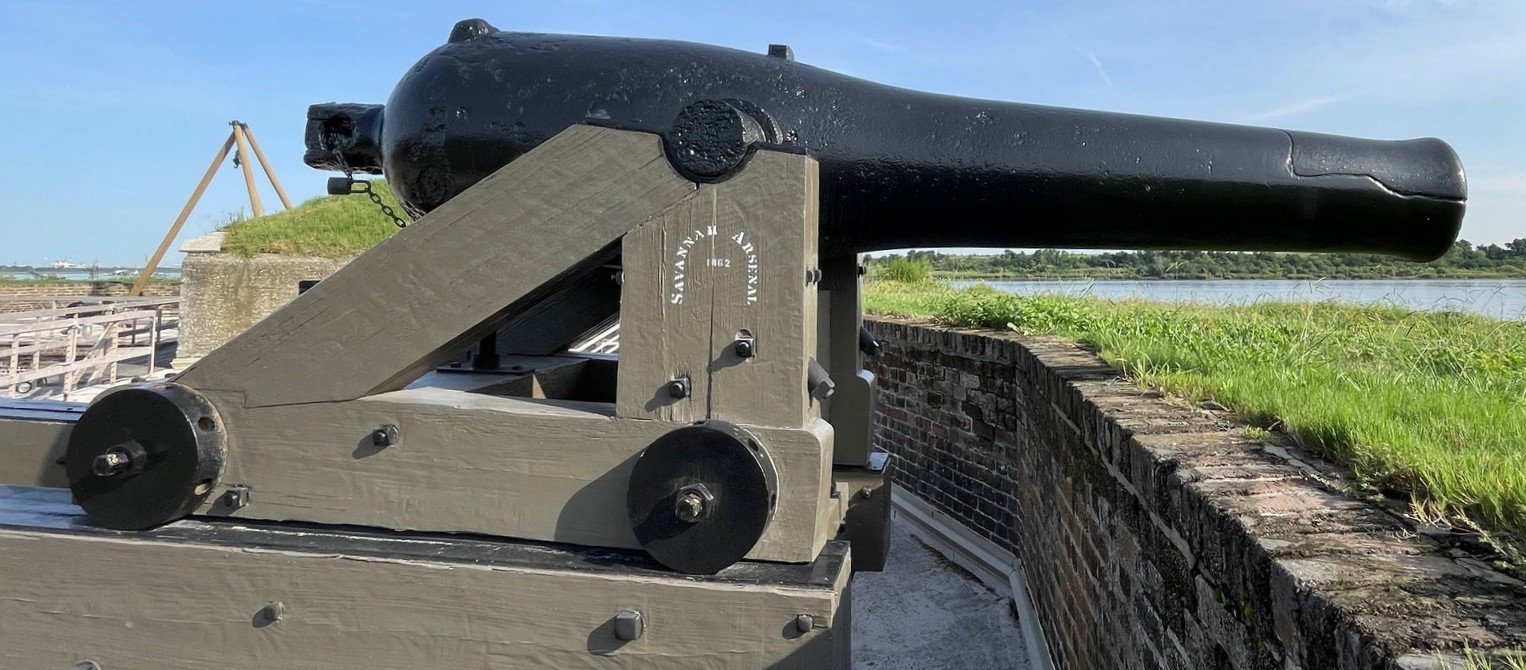
(Santee1821 Photo)
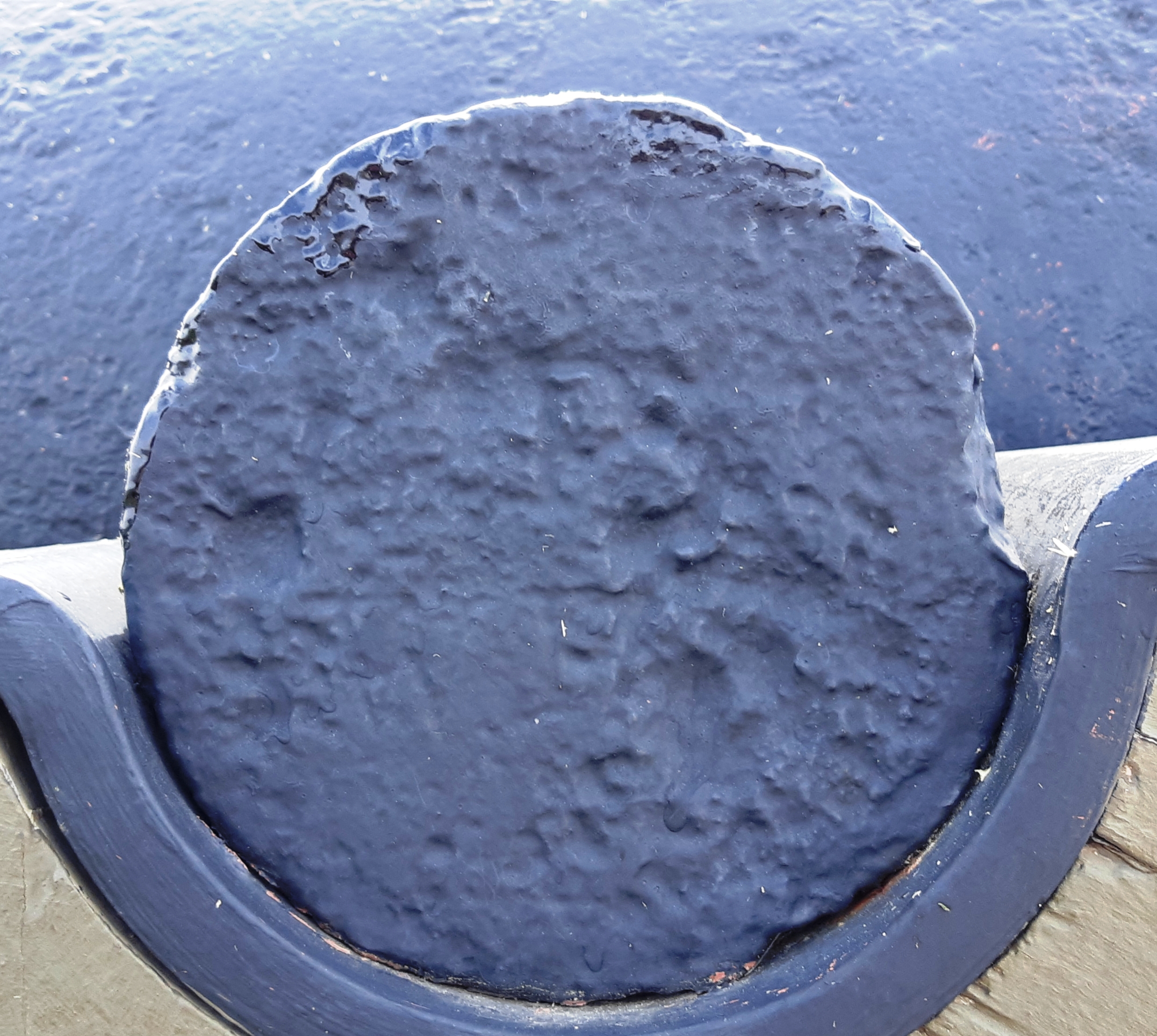
Left trunnion corroded.
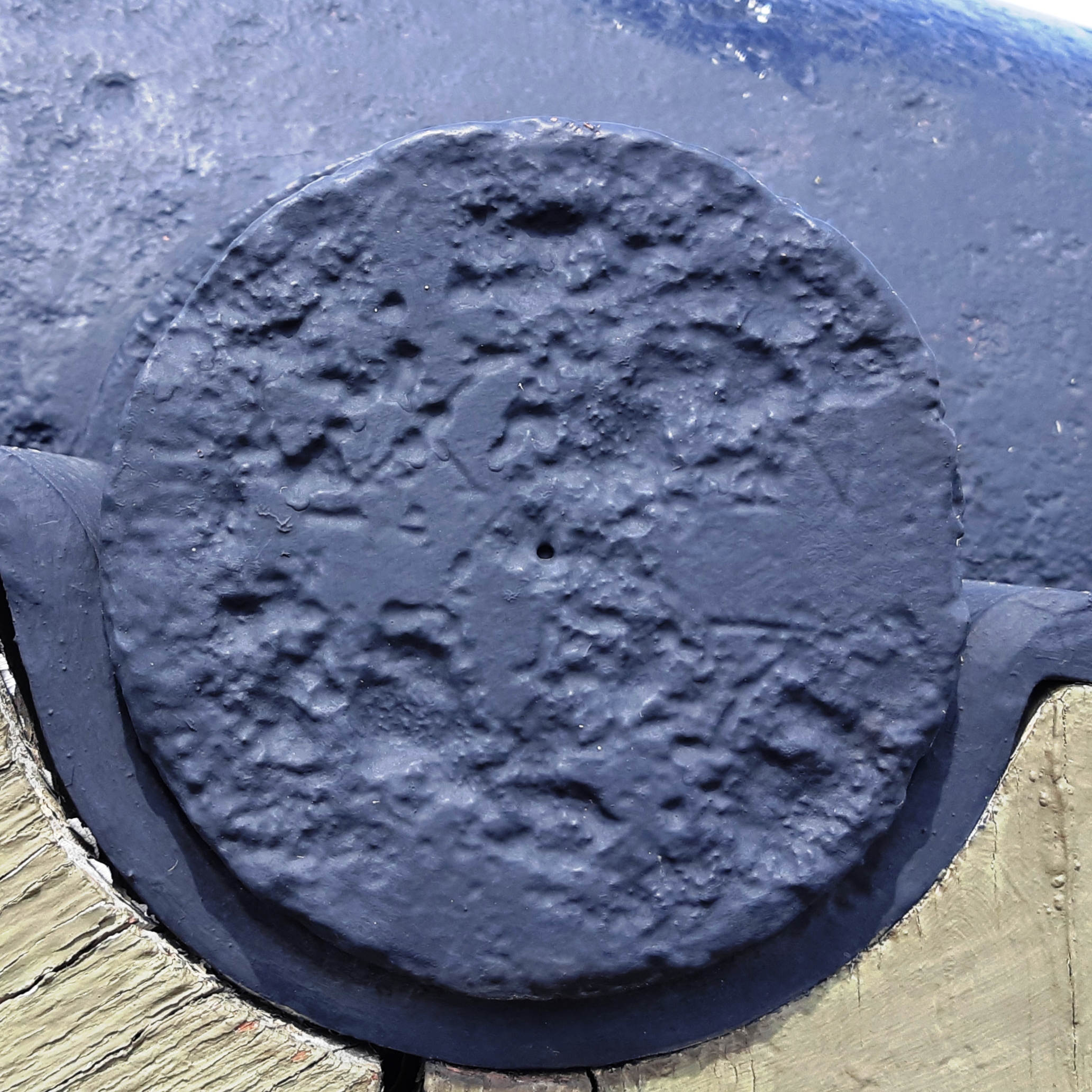
Right trunnion, corroded.
(Author Photos)
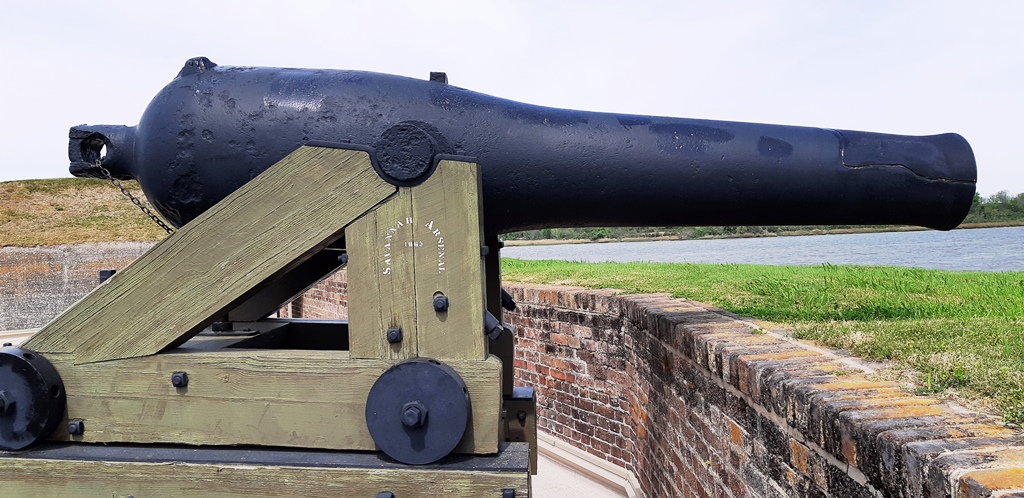
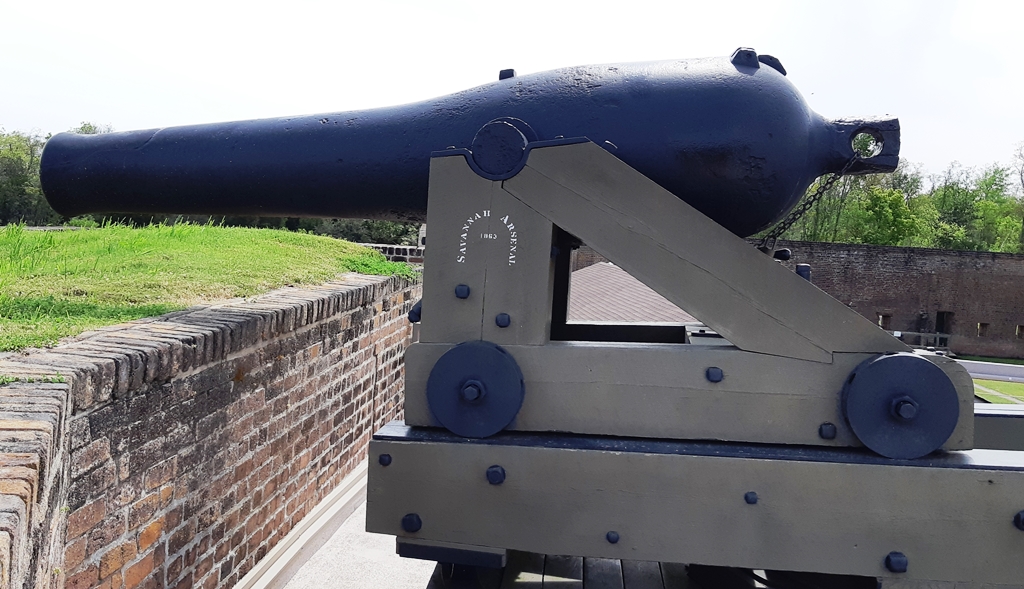
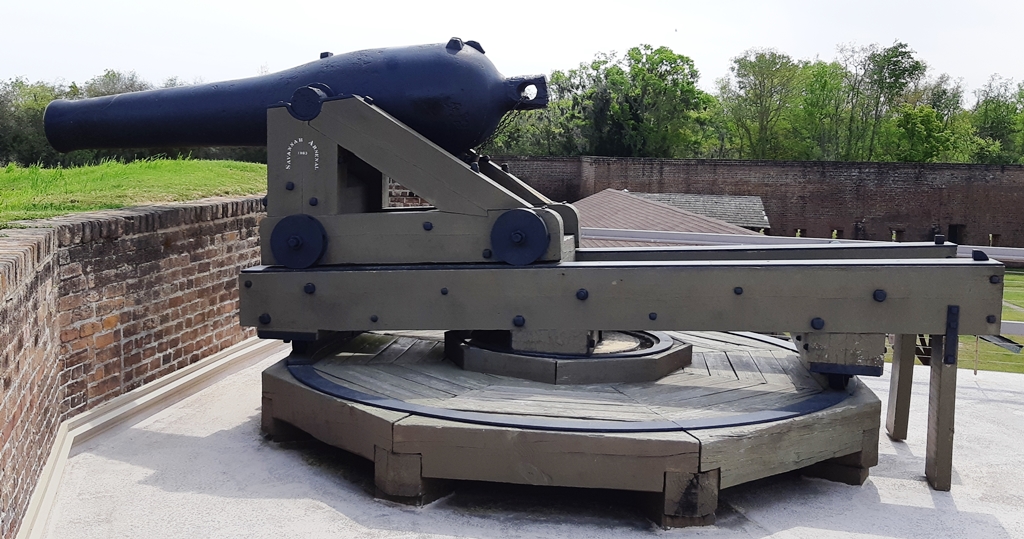
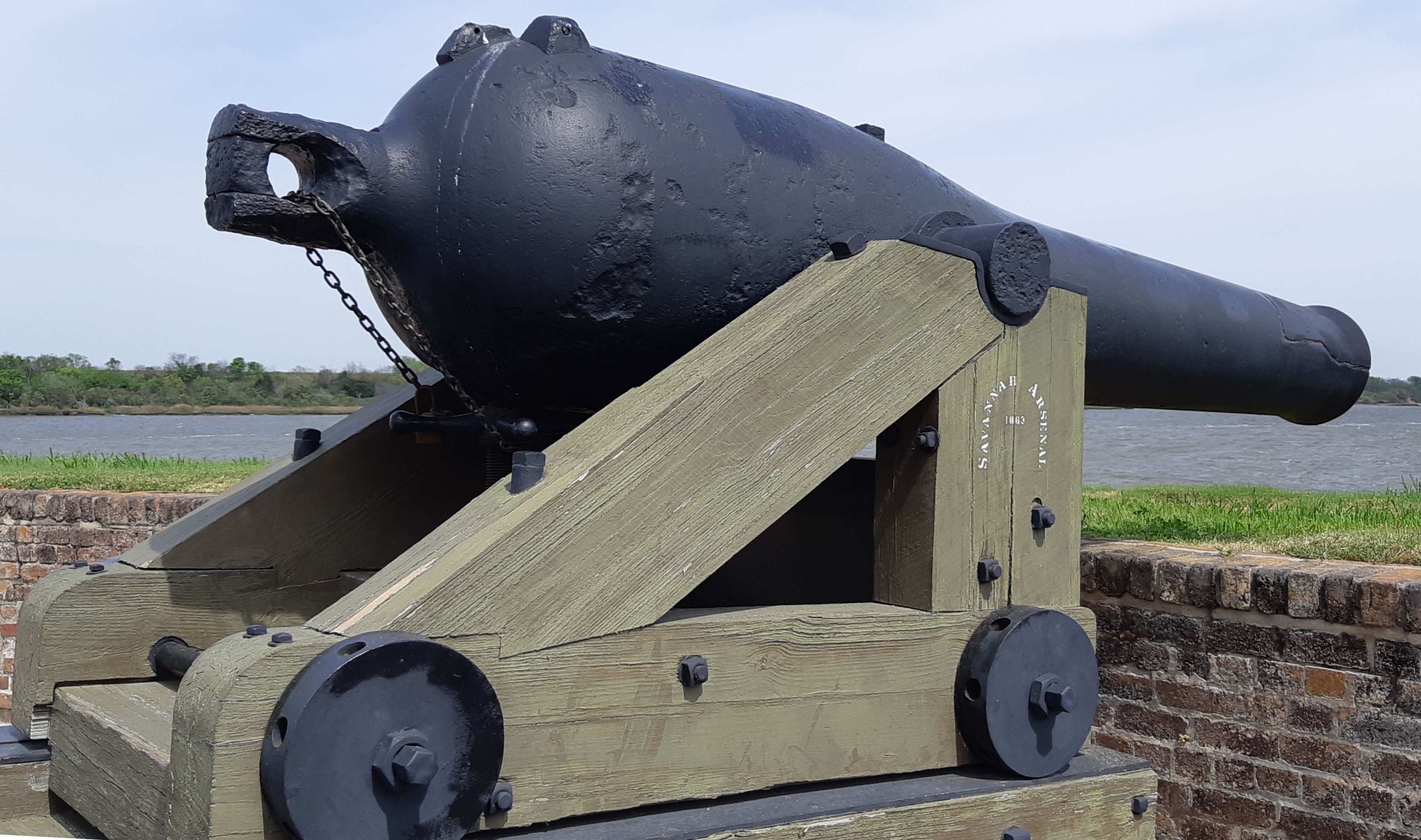
IX-inch Dahlgren 32-pounder smoothbore muzzle-loading Shell Gun with Millar pattern breeching ring, mounted on a wood traversing Barbette Carriage. 9,154 lbs, IV IN 1857 on the right trunnion, P WRT on the left trunnion, T.F. No. 116 on the breech. Manufactured in 1857 at the Tredegar Foundry, Richmond, Virginia. Center Pintle Barbette Carriage built by the Coastal Heritage Society (CHS).The gun had a range of 3,450 yards with a 13-lb charge.
During the Civil War, this naval gun saw service on board the USS Brooklyn, a wooden screw sloop launched in 1858. This ship was involved in several naval battles. Post-war, it was cemented into a dock at the Norfolk Naval Yard, Virginia. At some point, a large piece of the muzzle was broken. This damage was repaired and a carbon sleel sleeve and a stainless steel vent were added by the CHS. It is fired on special occasiions.
All comments are subject to our Comment Policy. You must be at least 18 years old to comment.
See a comment that violates our guidelines? Report it here.