
Artillery in Finland
The author had the privilege of serving with members of the Finnish Defence Forces in Kabul, Afghanistan.
The Finnish Defence Forces (Puolustusvoimat) consist of the Finnish Army, the Finnish Navy and the Finnish Air Force. In wartime the Finnish Border Guard (which is its own military unit in peacetime) becomes part of the Finnish Defence Forces. Universal male conscription is in place, under which all men serve for 165, 255, or 347 days, from the year they turn 18 until the year they turn 29. Alternative non-military service for men and voluntary service for women is available. Finland is the only non-NATO European Union state bordering Russia and Finland.
In 2022, Finland and Sweden asked to join NATO. Finland’s official policy states that a wartime military strength of 280,000 personnel constitutes a sufficient deterrent. The army consists of a highly mobile field army backed up by local defence units. The army defends the national territory and its military strategy employs the use of the heavily forested terrain and numerous lakes to wear down an aggressor, instead of attempting to hold the attacking army on the frontier. Voluntary overseas service is highly popular and troops serve around the world in UN, NATO and EU missions.
With an arsenal of 700 howitzers, 700 heavy mortars and 100 multiple rocket launchers, Finland has the largest artillery capability in western Europe. Homeland defence willingness against a superior enemy is at 76%, one of the highest rates in Europe. The Finnish Defence Forces cooperate closely with the Finnish Border Guard. The Finnish Border Guard has its own yearly and long term investment budget. Wikipedia)
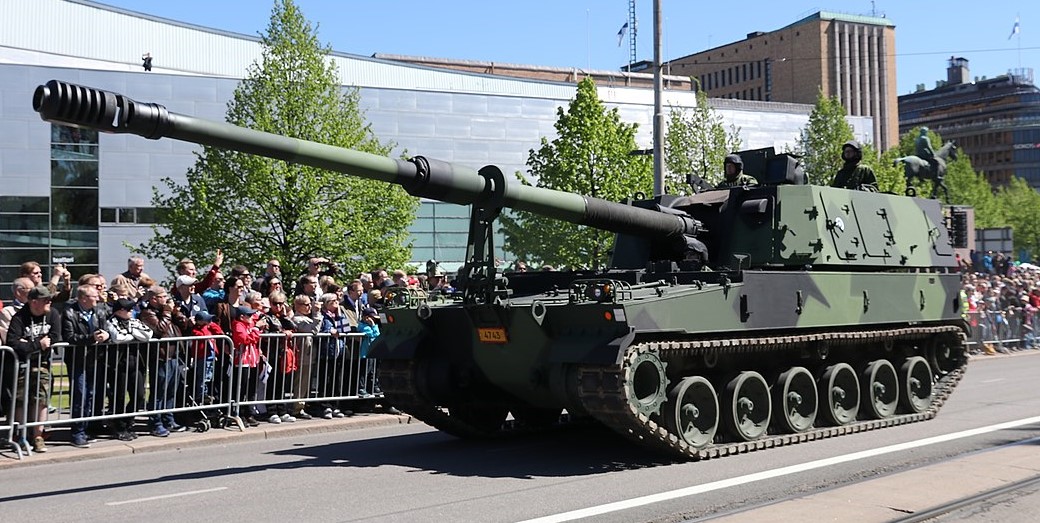
(MKFI Photo)
Finnish defence forces, 155-mm K9 Thunder self-propelled gun.
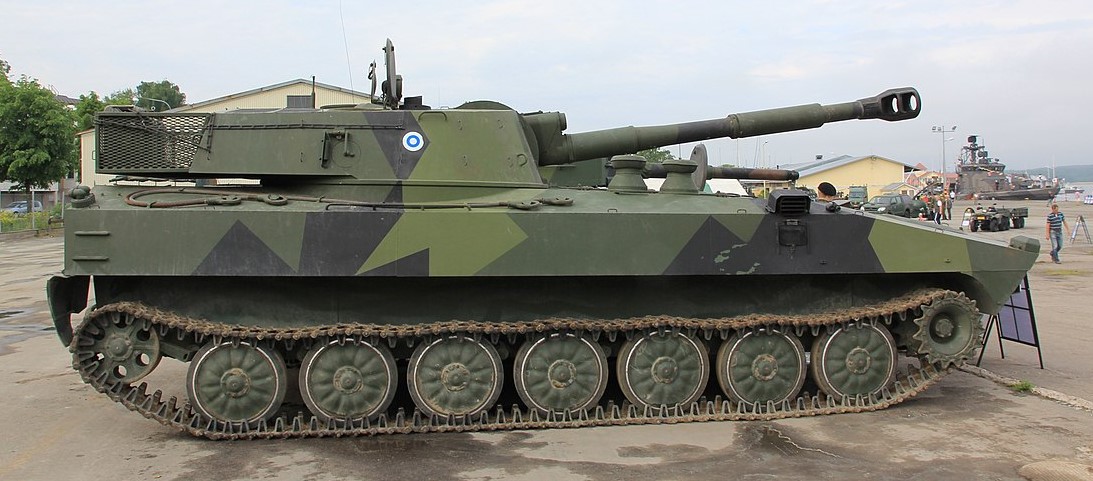
(MFKI Photo)
Finnish Defence Forces 122-mm 2S1 self-propelled howitzer (Ps 521-127).
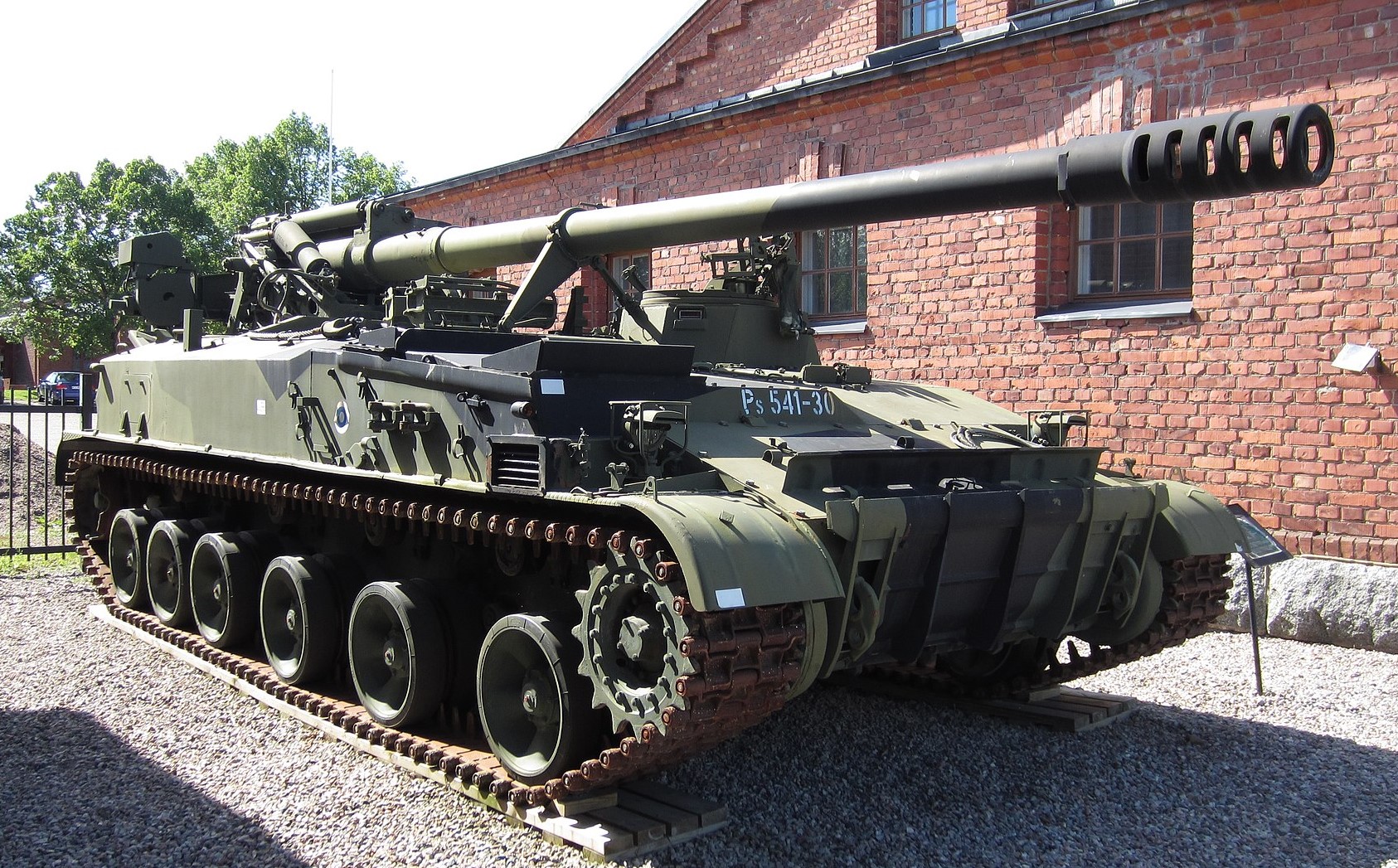
(XorvaX Photo)
Finnish Defence Forces 152-mm TELAK 91 self-propelled gun (2S5 Giatsint-S), Museo Militaria, Hämeenlinna, Finland. (Ps 541-30).
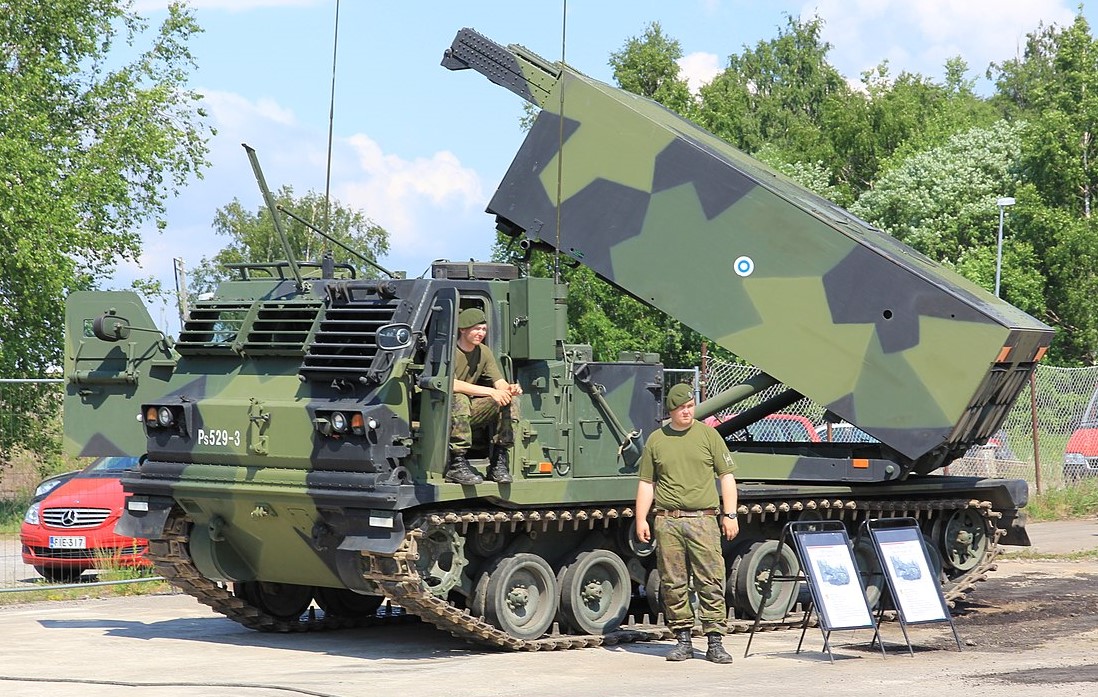
(MFKI Photo)
Finnish Defence Forces M270 MLRS (registry Ps 529-3), Ekenäs harbour.
Suomenlinna Fortress
Suomenlinna is a sea fortress composed of eight islands, of which six have been fortified. It is located about four kilometres (2.5 mi) southeast of the city center of Helsinki, Finland.
Construction of the fortress began in 1748 under the Swedish Crown as a defense against Russia. The general responsibility for the fortification work was given to Admiral Augustin Ehrensvärd. The original plan of the bastion fortress was heavily influenced by Vauban, a renowned French military engineer, and incorporated the principles of the star fort style of fortifications, albeit adapted to a group of rocky islands.
During the Finnish War, Russian forces besieged the fortress in 1808. Despite its formidable reputation as the “Gibraltar of the North”, the fortress surrendered after two months, on 3 May 1808. Its loss paved the way for Russia’s seizure of Finland in 1809, and the subsequent establishment of the Grand Duchy of Finland, an autonomous state within the Russian Empire.
Under Russian rule, the fortress served as a base for the Baltic Fleet during the First World War, and in 1915, construction began on the Krepost Sveaborg defense system. Russian forces abandoned the fortress after Finland declared independence in 1917. Originally named Sveaborg (“Fortress of Sweden”) and known as Viapori ([ˈviaˌpori]) in Finnish, it was renamed Suomenlinna (“Fortress of Finland”) in 1918. In Swedish, however, it retains its original name. In the aftermath of the Finnish Civil War, the islands housed the Suomenlinna prison camp for captured Red soldiers.
Suomenlinna remained under the control of the Finnish Defense Department until 1973, when most of it was transferred to civilian administration. Famous for its bastion fortifications, the fortress was designated a UNESCO World Heritage Site in 1991. (Wikipedia)
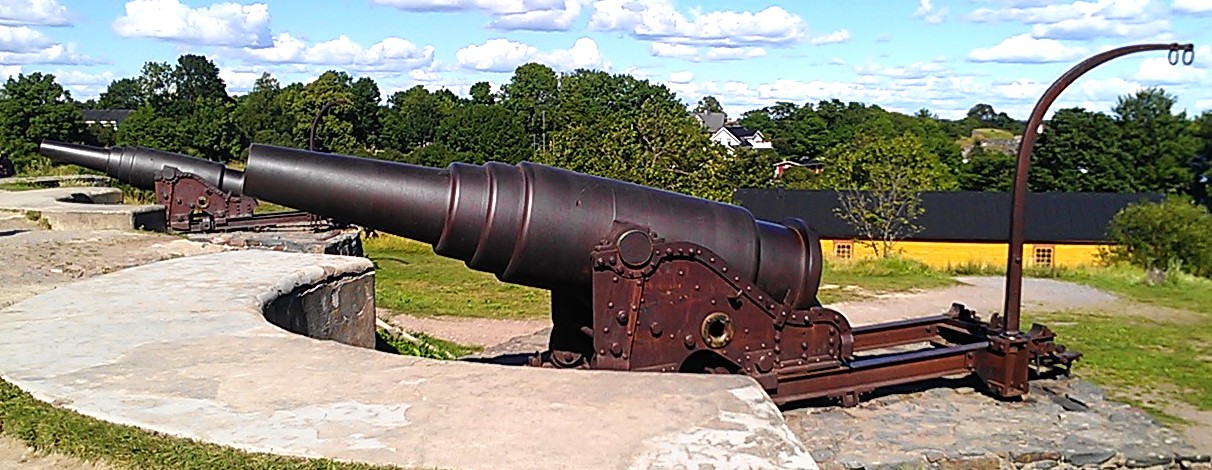
(Ethan Doyle White Photo)
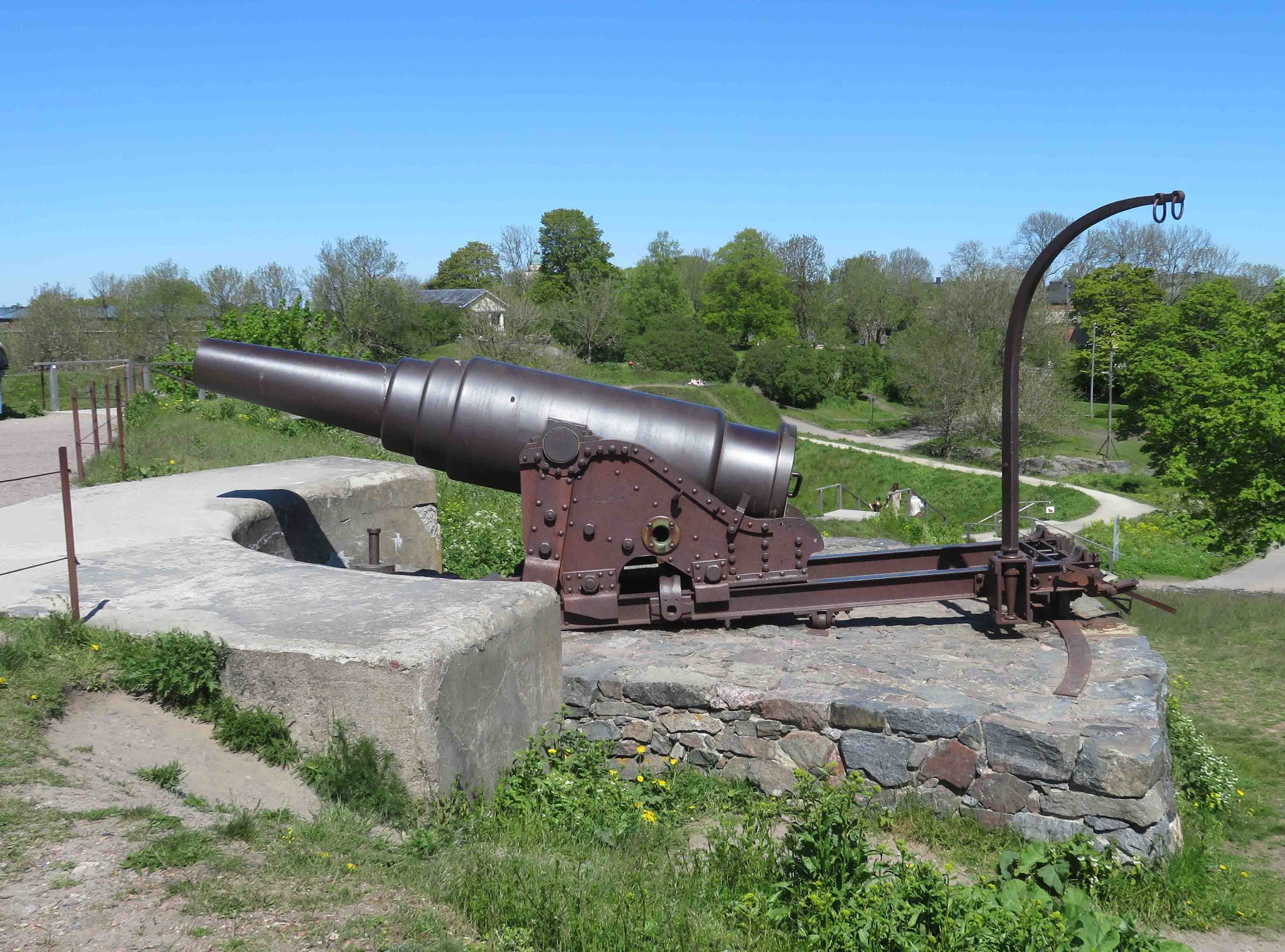
(RRB Photo)
Russian 11-inch M1867 gun (280-mm) (орудие обр. 1867 г.) used by the Russian Empire mounted on ships and for coastal defense. Russia ordered 76 11-inch cannons from Krupp in 1869. No. 4 in Sveaborg Fortress, Kustaanmiekka, Suomenlinna, near Helsinki, Finland. Photos by Ruth Rhynas Brown and Kay Smith borrowed from “The Big Cannon Project”. There are a lot of guns “over there” that would take several lifetimes to record and document in detail. Ruth and Kay are making a serious effort to do so, and I am borrowing these photos from their fascinating travel experiences. All credit to Ruth and Kay.
Nico Brink noted: In the book “Schiffs und Küstenartillerie” by Hans Mehl (2001 page 173) is a different explanation: These rifled muzzleloading coastal mortars were designed by the Russian artillery engineer N.W. Maijkevskij in 1867 and produced in the ordnance factory of Perm in 1871. With a barrel length of 4.8 m. and bore 22,9cm. 122.8 kg. steel grenades could be fired with a range of 6400 meters. The rate of fire was one shot in three minutes. Examples are in the artillery museums of St. Petersburg, Russia and Suomenlinna, Finland. (Wikipedia)
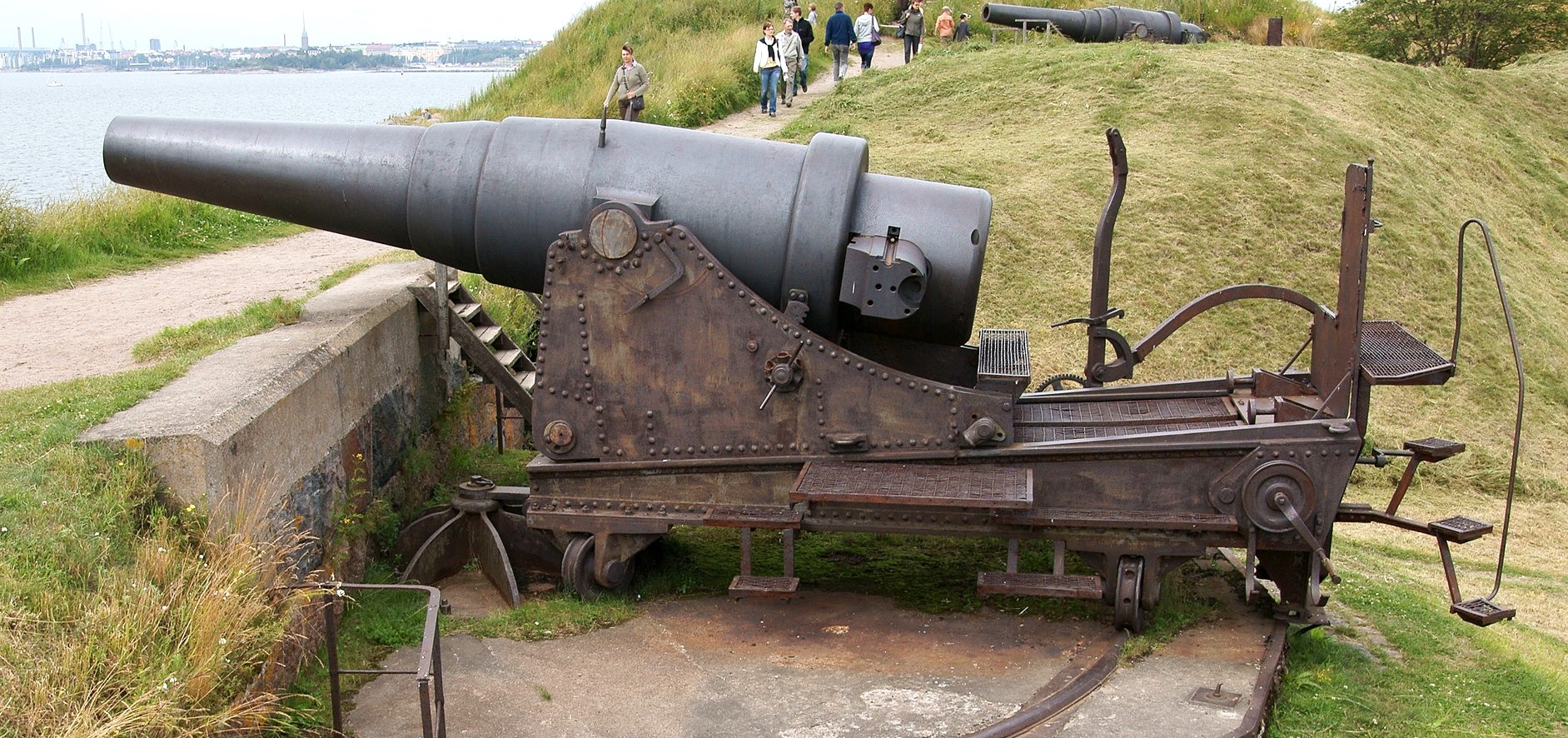
(Kallerna Photo)
The 11-inch gun M1877 was a Russian 280 mm (11 in) coastal, fortress and siege gun that was used in the Russo-Japanese War and the First World War. The M1877 was first designed and produced by the Obukhov State Plant in Saint Petersburg and was fairly conventional for its time and most nations had similar guns with similar roles such as the French Canon de 240 L Mle 1884 or British BL 10 inch gun Mk I – IV. The M1877 was a short barreled breech-loading gun. The barrel was a typical built-up gun of the period with reinforcing hoops which was built from cast iron and steel. The gun had an early form of Krupp horizontal sliding-block breech and it fired separate-loading, bagged charges and projectiles. (Wikipedia)

All comments are subject to our Comment Policy. You must be at least 18 years old to comment.
See a comment that violates our guidelines? Report it here.