
Royal Regiment of Canadian Artillery Museum, British, French, Russian, Czech and Yugoslavian artillery
(Terry Honour Photos)
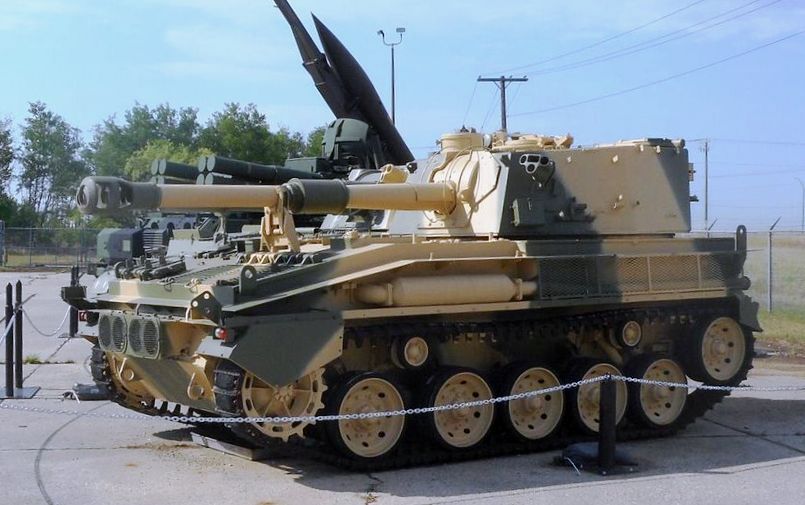
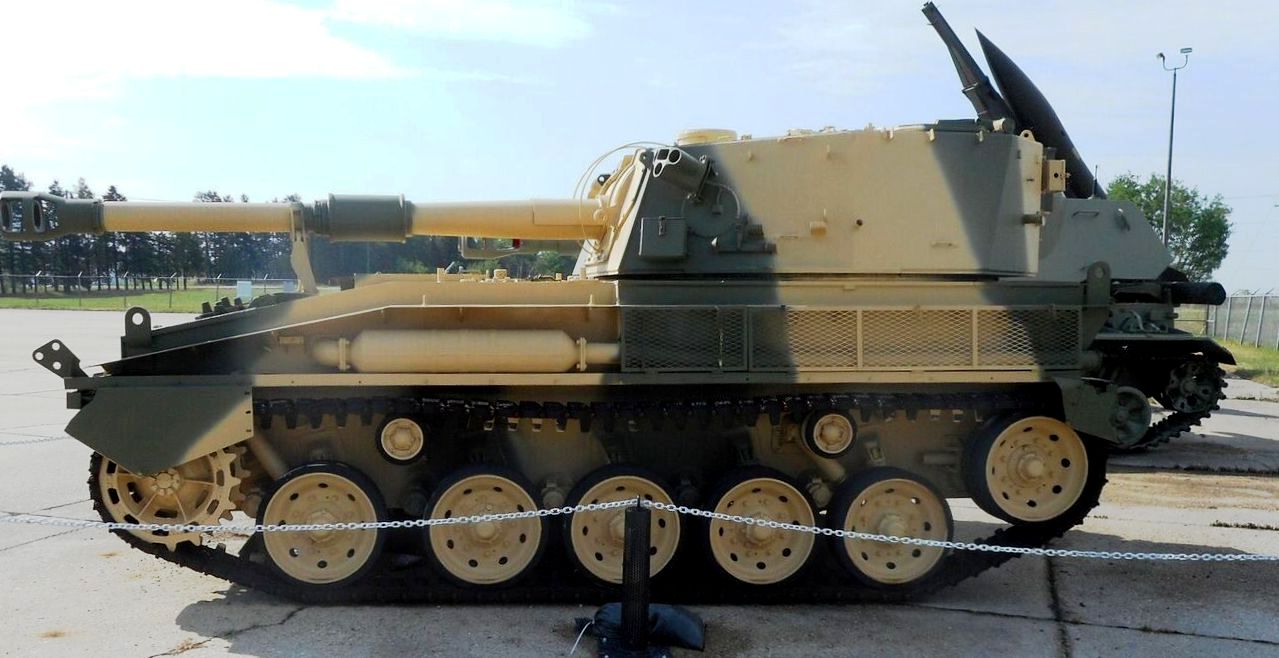
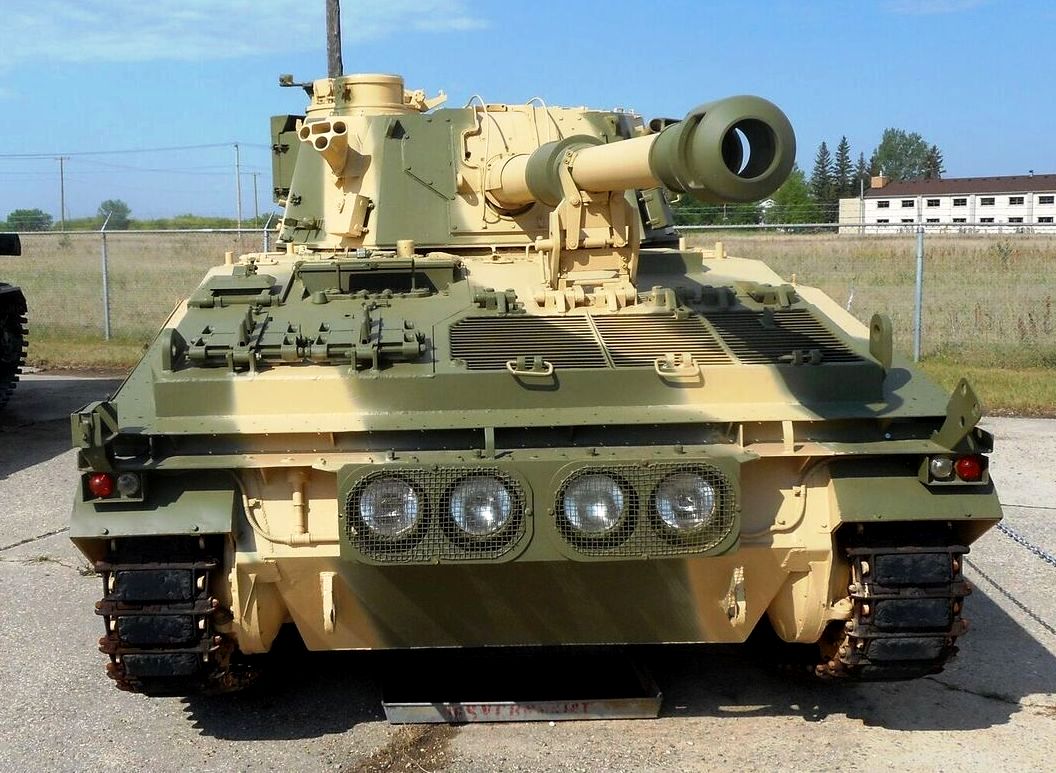
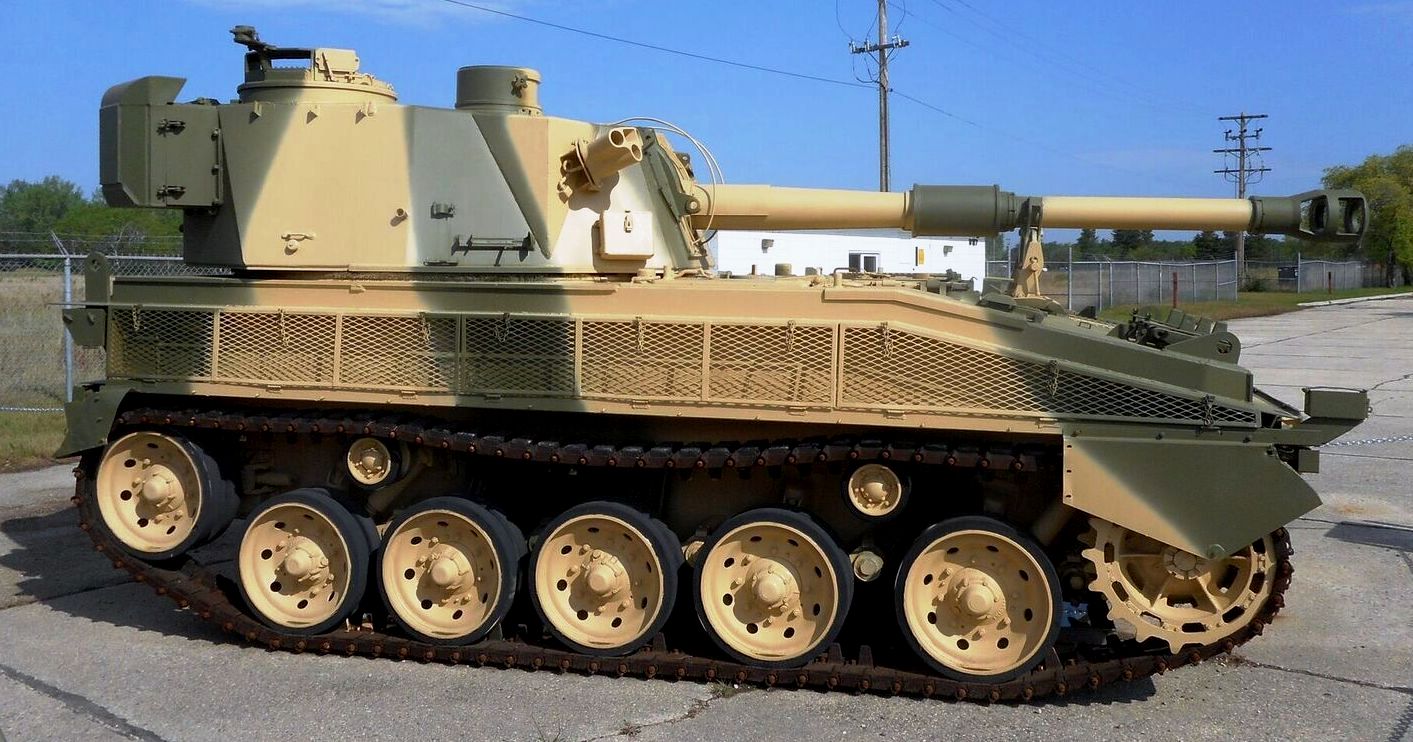
British 105-mm FV433 Abbot Self-Propelled Gun.
FV433, 105mm, Field Artillery, Self-Propelled “Abbot” is the self-propelled artillery, or more specifically self-propelled gun (SPG), variant of the British Army FV430 series of armoured fighting vehicles (AFVs), using much of the chassis of the FV430 but with a fully rotating turret at the rear housing the 105 mm gun and given the vehicle designation of FV433. Designed as a Sexton replacement, its correct designation was “Gun Equipment 105mm L109 (Abbot)”. “L109” was little used, probably to avoid confusion with the 155 mm M109 howitzer that entered UK service at about the same time. The name “Abbot” continued the Second World War style of naming self-propelled artillery after ecclesiastical titles. The FV433 used a different configuration of power pack from other vehicles in the FV430 series. (Wikipedia)
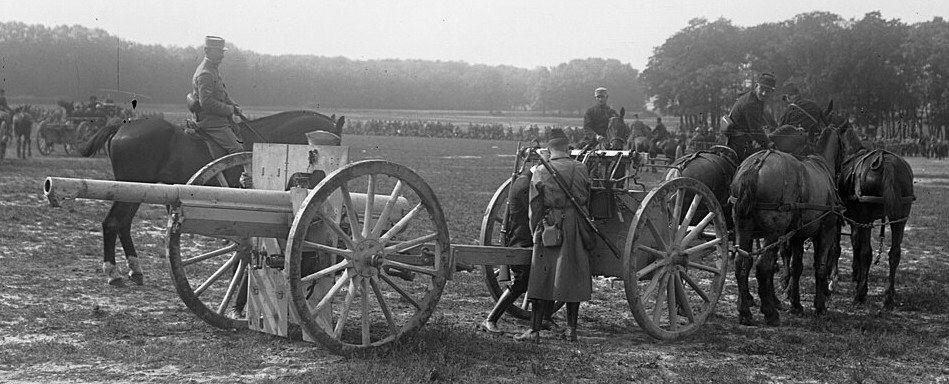
(Bibliothèque nationale de France Photo)
French 75-mm M1897 Field Gun (Canon de 75-mm modèle 1897), 28 May 1916.
The French 75 mm field gun is a quick-firing field artillery piece adopted in March 1898. Its official French designation was: Matériel de 75 mm Mle 1897. It was commonly known as the French 75, simply the 75 and Soixante-Quinze (French for “seventy-five”). The French 75 was designed as an anti-personnel weapon system for delivering large volumes of time-fused shrapnel shells on enemy troops advancing in the open. After 1915 and the onset of trench warfare, impact-detonated high-explosive shells prevailed. By 1918, the 75 became the main agents of delivery for toxic gas shells. The 75s also became widely used as truck mounted anti-aircraft artillery. They were the main armament of the Saint-Chamond tank in 1918 and the Char 2C.
The French 75 is widely regarded as the first modern artillery piece. It was the first field gun to include a hydro-pneumatic recoil mechanism, which kept the gun’s trail and wheels perfectly still during the firing sequence. Since it did not need to be re-aimed after each shot, the crew could reload and fire as soon as the barrel returned to its resting position. In typical use, the French 75 could deliver fifteen rounds per minute on its target, either shrapnel or melinite high-explosive, up to about 8,500 m (5.3 mi) away. Its firing rate could even reach close to 30 rounds per minute, albeit only for a very short time and with a highly experienced crew.
At the opening of the First World War, in 1914, the French Army had about 4,000 of these field guns in service. By the end of the war, about 12,000 had been produced. It was also in service with the American Expeditionary Forces, which had been supplied with about 2,000 French 75 field guns. Several thousand were still in use in the French Army at the opening of the Second World War, updated with new wheels and tires to allow towing by trucks rather than by horses. The French 75 set the pattern for almost all early-20th century field pieces, with guns of mostly 75 mm forming the basis of many field artillery units into the early stages of the Second World War. (Wikipedia)
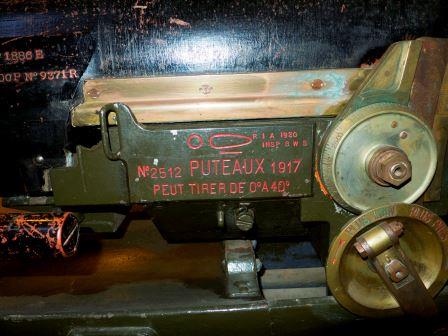
(Clive Prothero-Brooks Photos)
French 75-mm M1897 Field Gun (Canon de 75-mm modèle 1897), No. 2512, Puteaux, 1917.
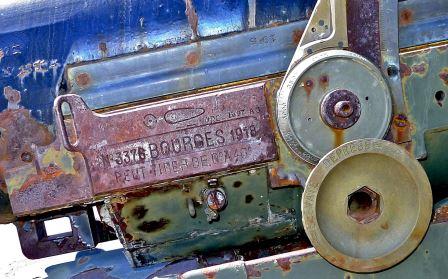
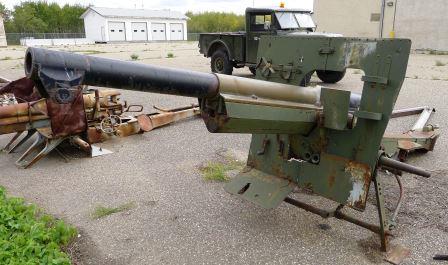
(Clive Prothero-Brooks Photos)
French 75-mm M1897 Field Gun (Canon de 75-mm modèle 1897), No. 3378, Bourges 1918.
(Clive Prothero-Brooks Photo)
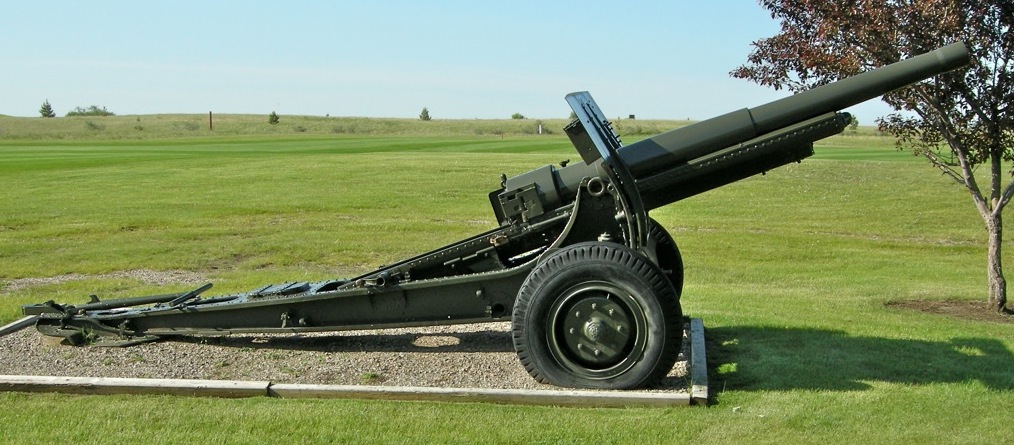
French 105-mm M1913 Schneider Field Gun (Canon de 105 mle 1913).
The Canon de 105 Mle 1913 Schneider was a French artillery piece used in both World Wars and by many European countries. The lighter 75 mm guns were of limited use against trenches; so, once the western front in World War I had settled down to trench warfare, the French army ordered large numbers of the L 13 S, which, with its larger 15.74 kg (34.7 lb) shell, was more effective against fortified positions and had a range of 12,000 metres (7.5 mi).
(Clive Prothero-Brooks Photo)
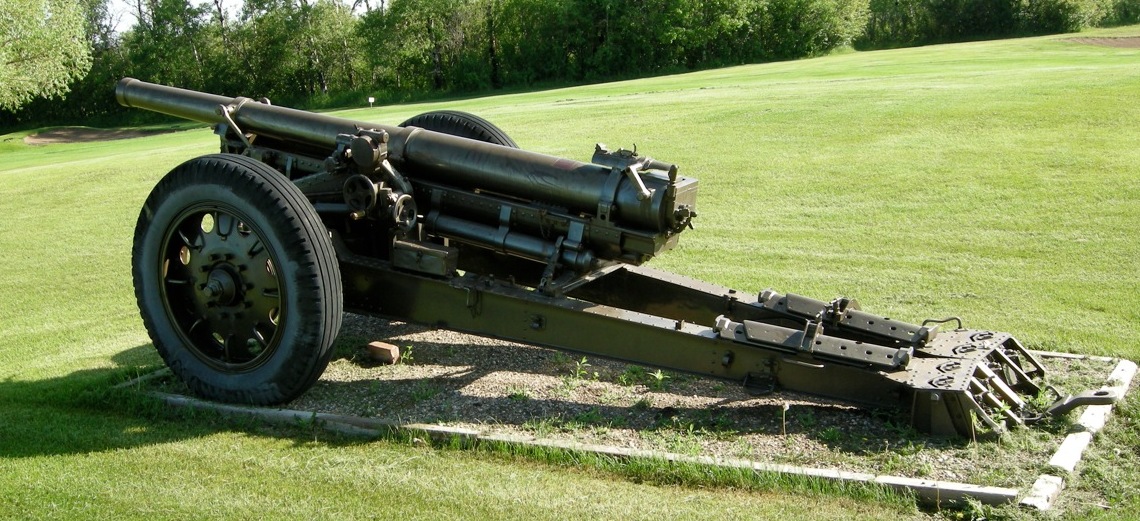
French 105-mm M1936 Schneider Field Gun (Canon de 105 L modèle 1936).
The Canon de 105 L modèle 1936 Schneider was a field gun used by France in the Second World War. It was built in two versions, one with steel wheels and pneumatic tires for tractor towing and the other with wooden spoked wheels for horse towing. Its range was still inferior to its German equivalents. In France, 159 were in service in 1939. They were used in organic Corps artillery regiments. Captured examples in the Second World War were placed into German service as the 10.5 cm schwere Kanone 332(f) where they mainly served on coast defense duties. The French army used 105 L Schneider during Indochina and Algerian Wars. (Wikipedia)
(Clive Prothero-Brooks Photos)
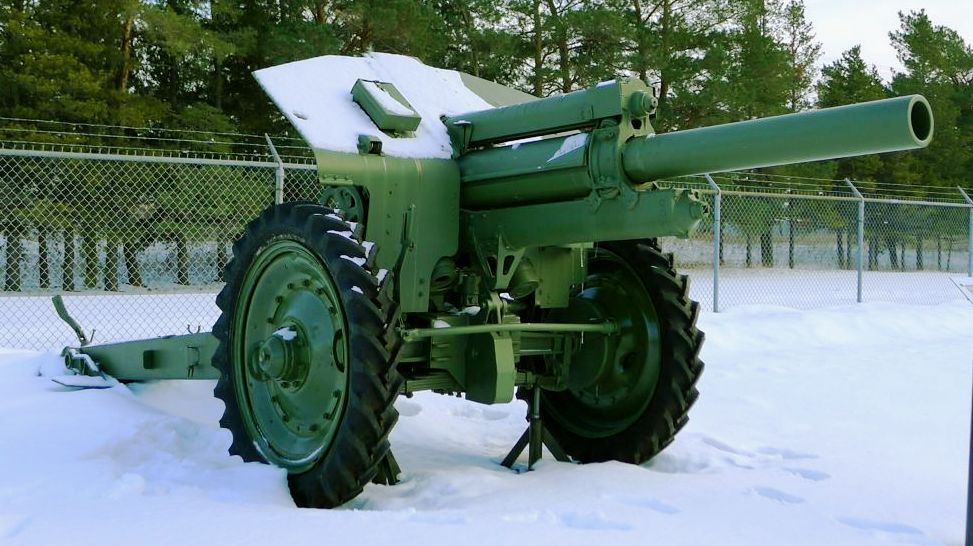
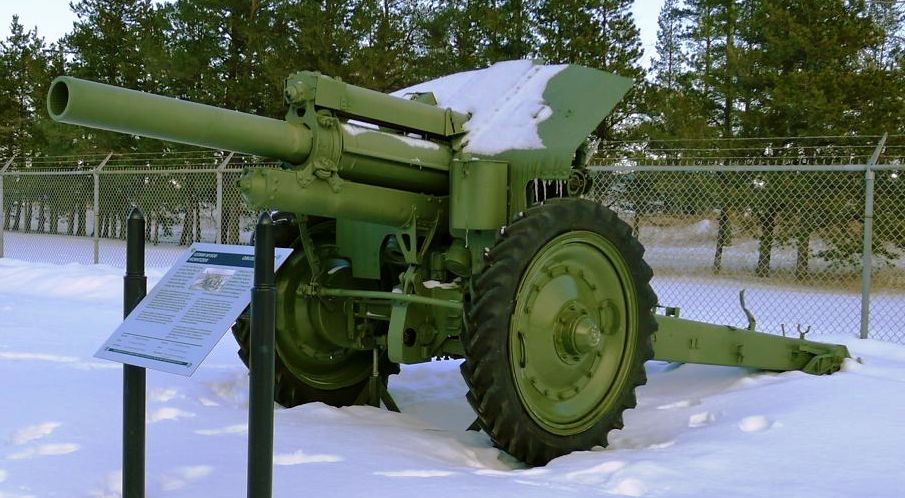
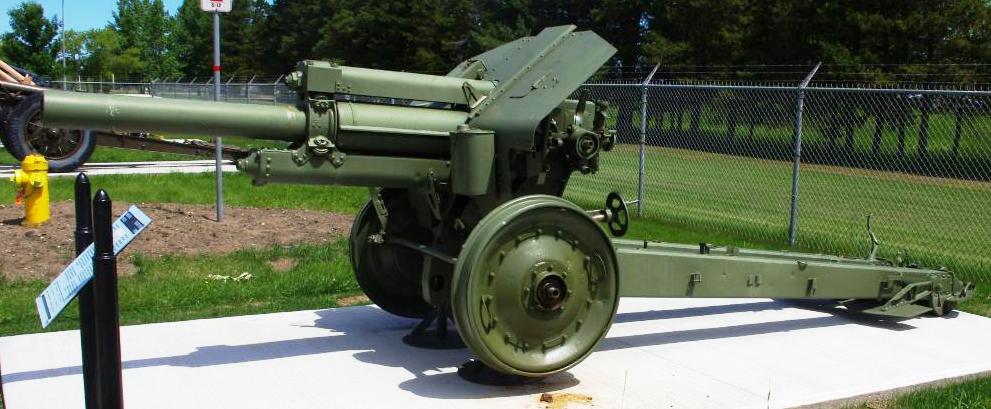
Russian 122-mm M1938 (M30) Howitzer.
The 122 mm howitzer M1938 (M-30) (GRAU index: 52-G-463) is a Soviet 121.92 mm (4.8 inch) howitzer. The weapon was developed by the design bureau of Motovilikha Plants, headed by F. F. Petrov, in the late 1930s, and was in production from 1939 to 1955. The M-30 saw action in the Second World War, mainly as a divisional artillery piece of the Red Army (RKKA). Captured guns were also employed later in the conflict by the German Wehrmacht and the Finnish Army. Post Second World War the M-30 saw combat in numerous conflicts of the mid- to late twentieth century in service of other countries’ armies, notably in the Middle East. (Wikipedia)
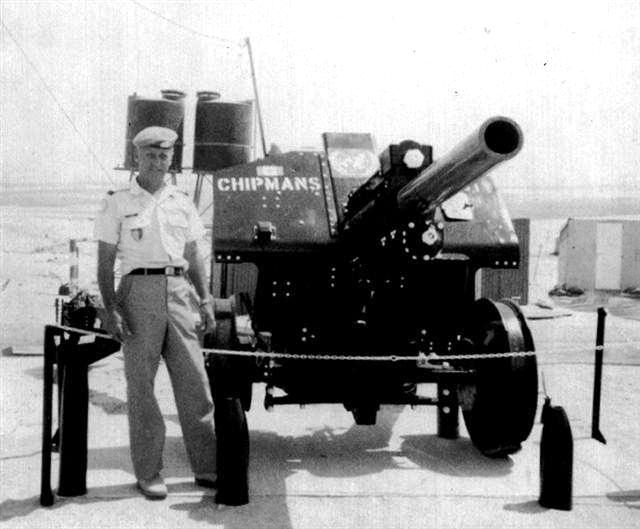
(Chipman family Photo)
MWO Jim Chipman with the same gun in Egypt, ca. 1970.
(Clive Prothero-Brooks Photo)
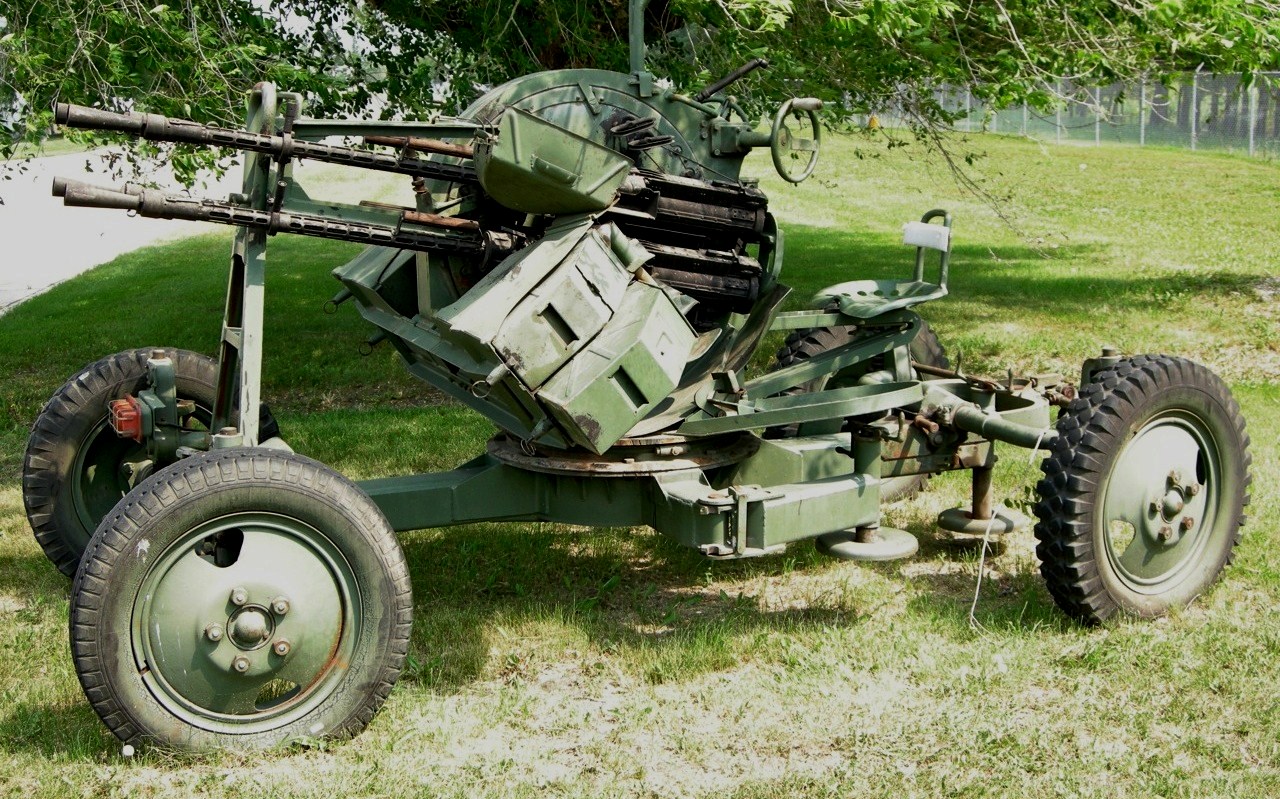
Russian 14.5-mm ZPU-4 Anti-Aircraft Gun.
The ZPU (Russian: ЗПУ; зенитная пулемётная установка, romanized: zenitnaya pulemotnaya ustanovka, lit. ’anti-aircraft machine gun mount’) is a family of towed anti-aircraft guns based on the Soviet 14.5×114mm KPV heavy machine gun. It entered service with the Soviet Union in 1949 and is used by over 50 countries worldwide. Quadruple-barreled (ZPU-4), double-barreled (ZPU-2 and ZU-2), and single-barreled (ZPU-1) versions of the weapon exist. (Wikipedia)
(Clive Prothero-Brooks Photos)
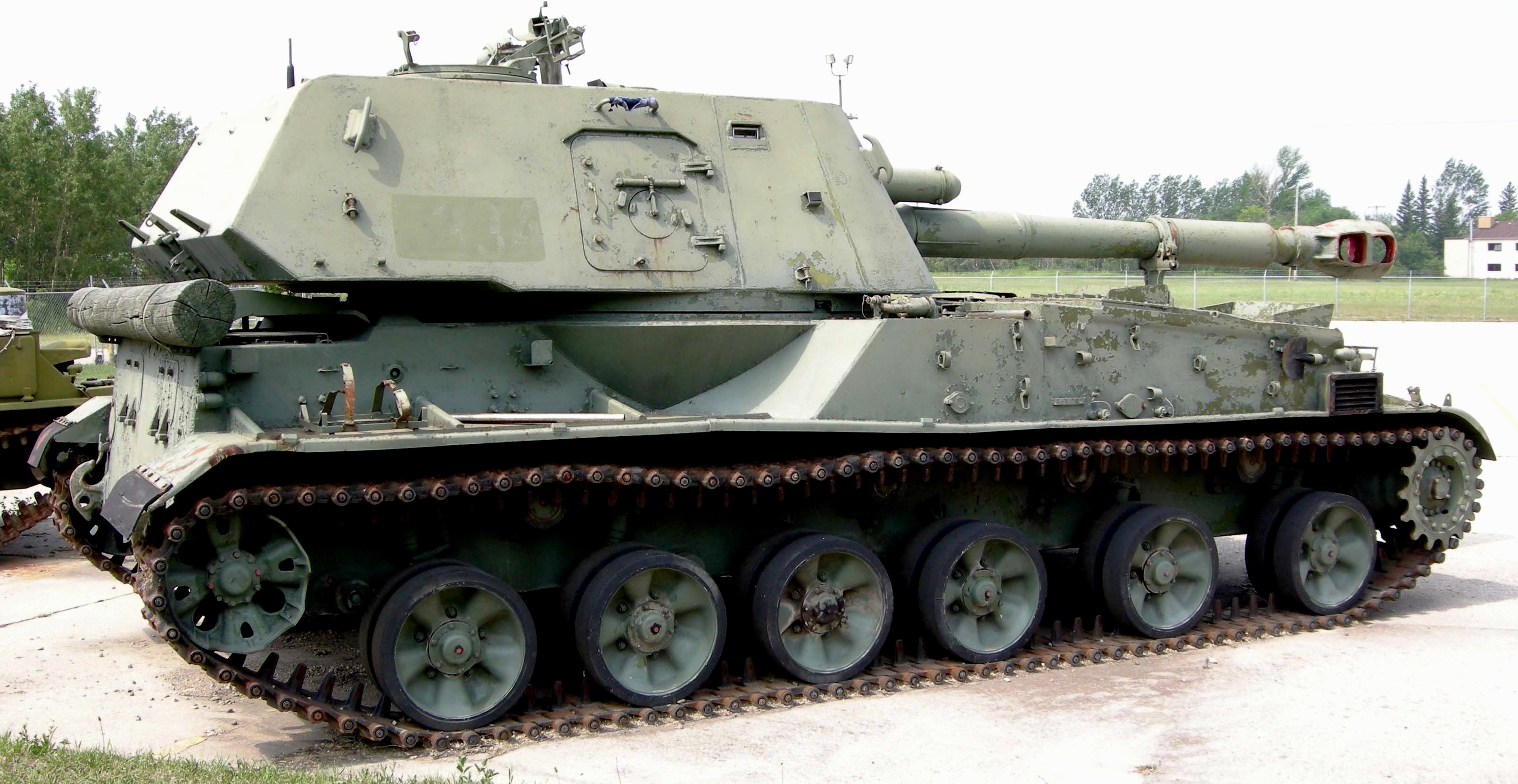
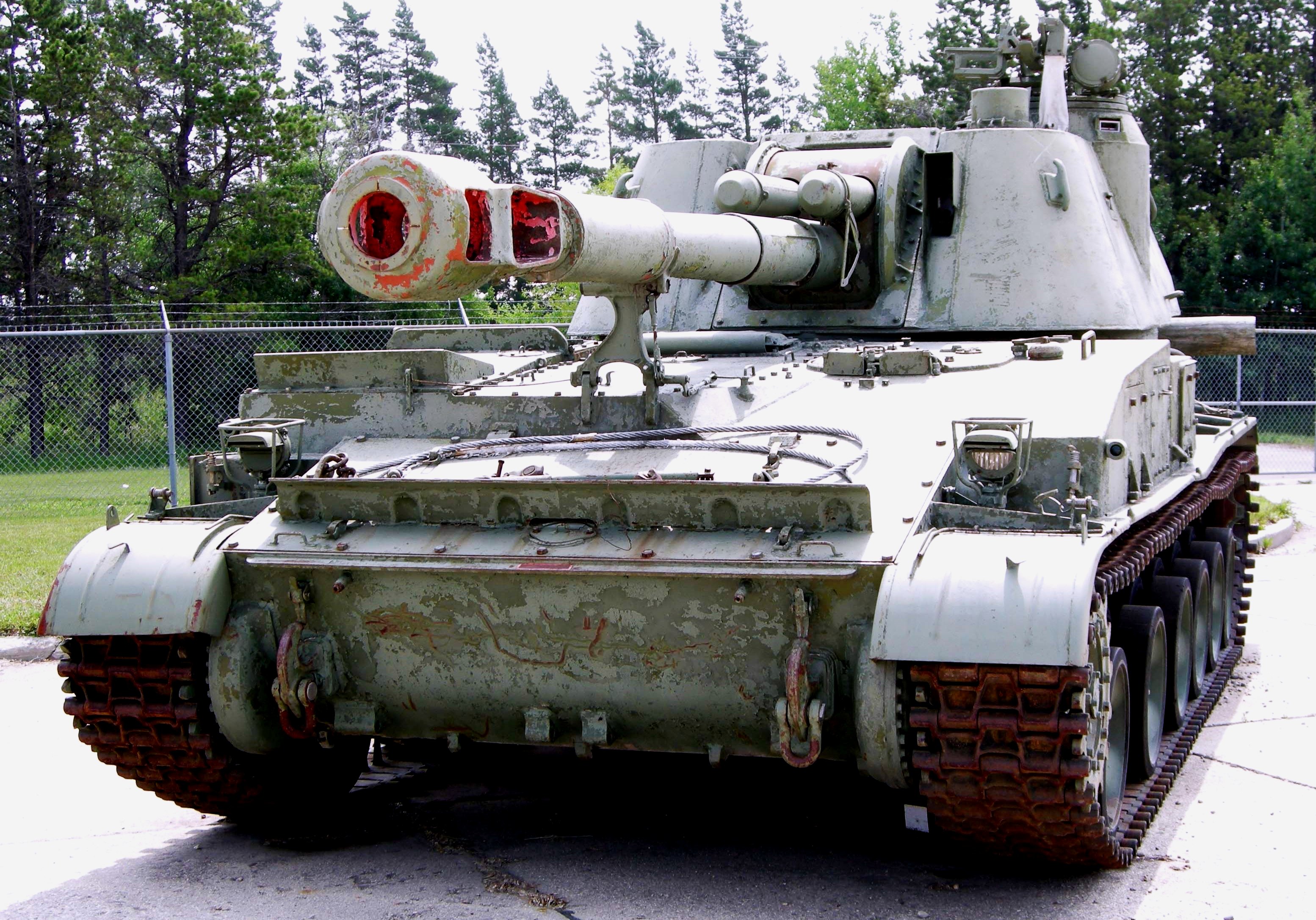
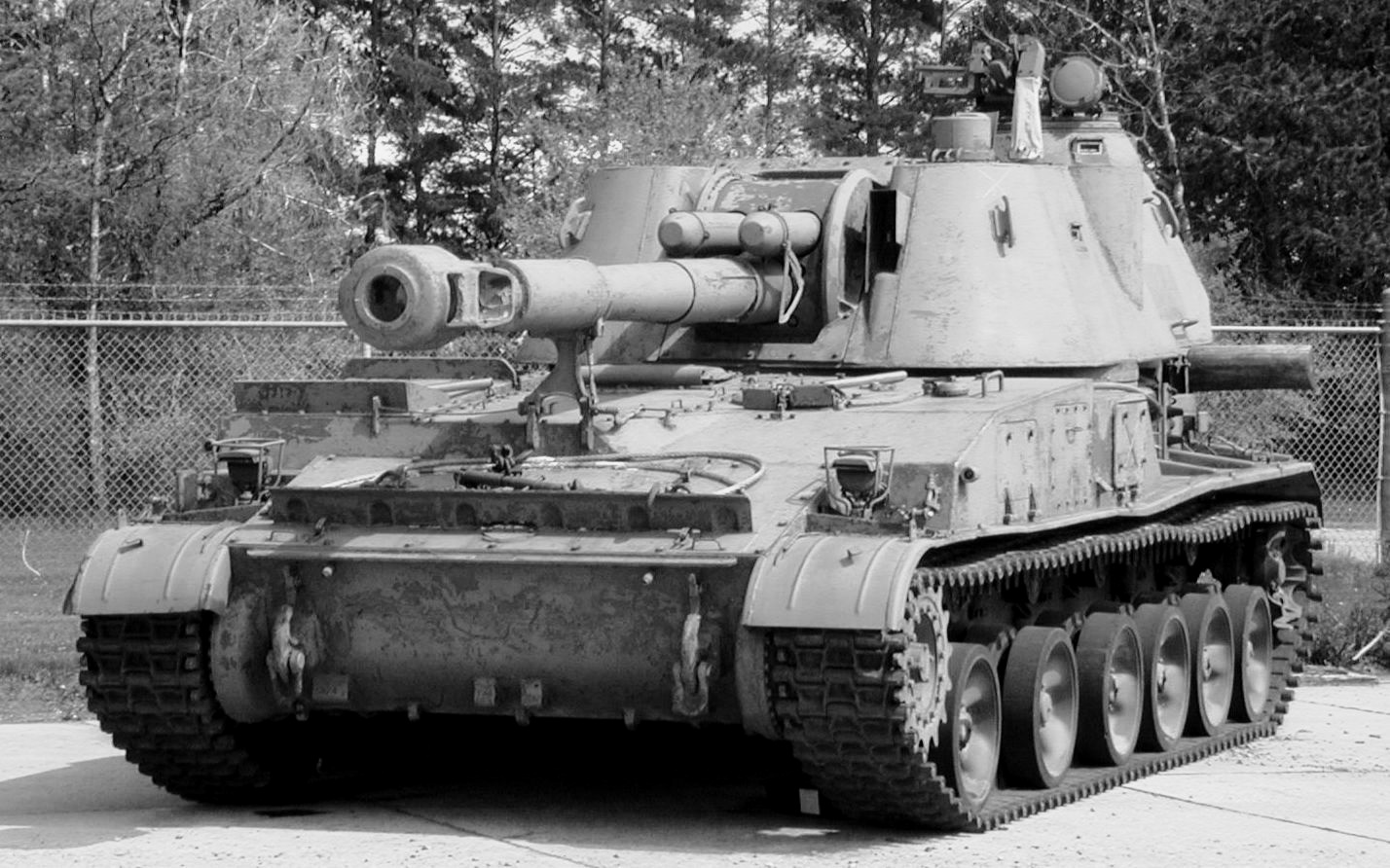
Russian 152-mm 2S3 Akatsiya M1973 SP Gun.
The SO-152 (Russian: СО-152), usually known by its GRAU designation 2S3 (Russian: 2С3), is a Soviet 152.4 mm self-propelled gun developed in 1968, as a response to the American 155 mm M109 howitzer. Development began in 1967, according to the Resolution of the Council of Ministers of the Soviet Union from July 4, 1967. In 1968, the SO-152 was completed and in 1971 entered service. The fighting vehicle also received the added designation Akatsiya (Акация), which is Russian for Acacia.
Designated M1973 by the Soviet Army, the Akatsiya is armed with a 152.4 mm howitzer based on the Soviet 152.4 mm D-20 howitzer. The artillery system was developed at the design bureau No. 9 of Sverdlovsk. The factory designation of the howitzer is D-22 and the GRAU designation, 2A33. The chassis was developed by Uraltransmash.The driver’s and engine-transmission compartments are located in the front part of the hull, and the fighting compartment with rotatory turret in middle and rear parts of the hull. The armor is welded rolled steel. The SPG is equipped with an R-123 radio set, an R-124 intercom, an automatic CBRN defense system with filtration unit and fire-fighting equipment. The V-59 12-cylinder four-stroke water-cooled diesel engine connects to a mechanical two-speed transmission. The gear box is combined into one block with a planetary steering gear. The 2S3 has self-entrenching equipment which allows it to prepare a trench within 20–40 min.The crew consists of 4–6 men: a driver, a gunner, a loader, a commander, and two ammunition bearers, which are positioned to the rear of the vehicle feeding rounds through two hatches in the hull rear when in masked firing position.
The 152.4 mm L/27 howitzer D-22 (2A33) can elevate from −4° to +60° with a turret traverse of a full 360°. Rate of fire is 2.6 – 3.5 rounds/min depending on firing conditions.[citation needed] The howitzer is equipped with a double-baffle muzzle brake, a semi-automatic vertical wedge breechblock and an ejector. The 2S3 has a periscopic sight for laying the howitzer, and telescopic sight for engaging targets with direct fire. The howitzer has separate type of loading with ammunition (35 rounds, later raised to up to 46) arranged in two mechanized stowages (in the turret and in the hull rear). The Akatsiya can fire OF-540 and OF-25 high-explosive fragmenting (HE-Frag) 43.56 kg projectiles (also all types of rounds developed for 152.4 mm towed howitzer-guns ML-20 and D-20, and for towed howitzer D-1) at a maximum range of 18.5 km depending on used charge or rocket-assisted projectiles (RAP) to a maximum of 24 km. Other projectiles available to the Akatsiya include BP-540 high-explosive anti-tank (HEAT-FS) with sight distance of 3 km and 250 mm armor penetration, Br-540B and Br-540 armour-piercing ammunition (AP-T) with 115–120 mm armor penetration at a 1000 m, OF-38 Krasnopol laser-guided rocket-assisted projectiles, S1 illuminating, ZH3 smoke, nuclear (explosive yield of 2 kilotons). Secondary armament consists of a remotely controlled 7.62 mm PK machine gun tank (PKT) on commander’s cupola for close range anti-aircraft and self defence. (Wikipedia)
(Clive Prothero-Brooks Photos)
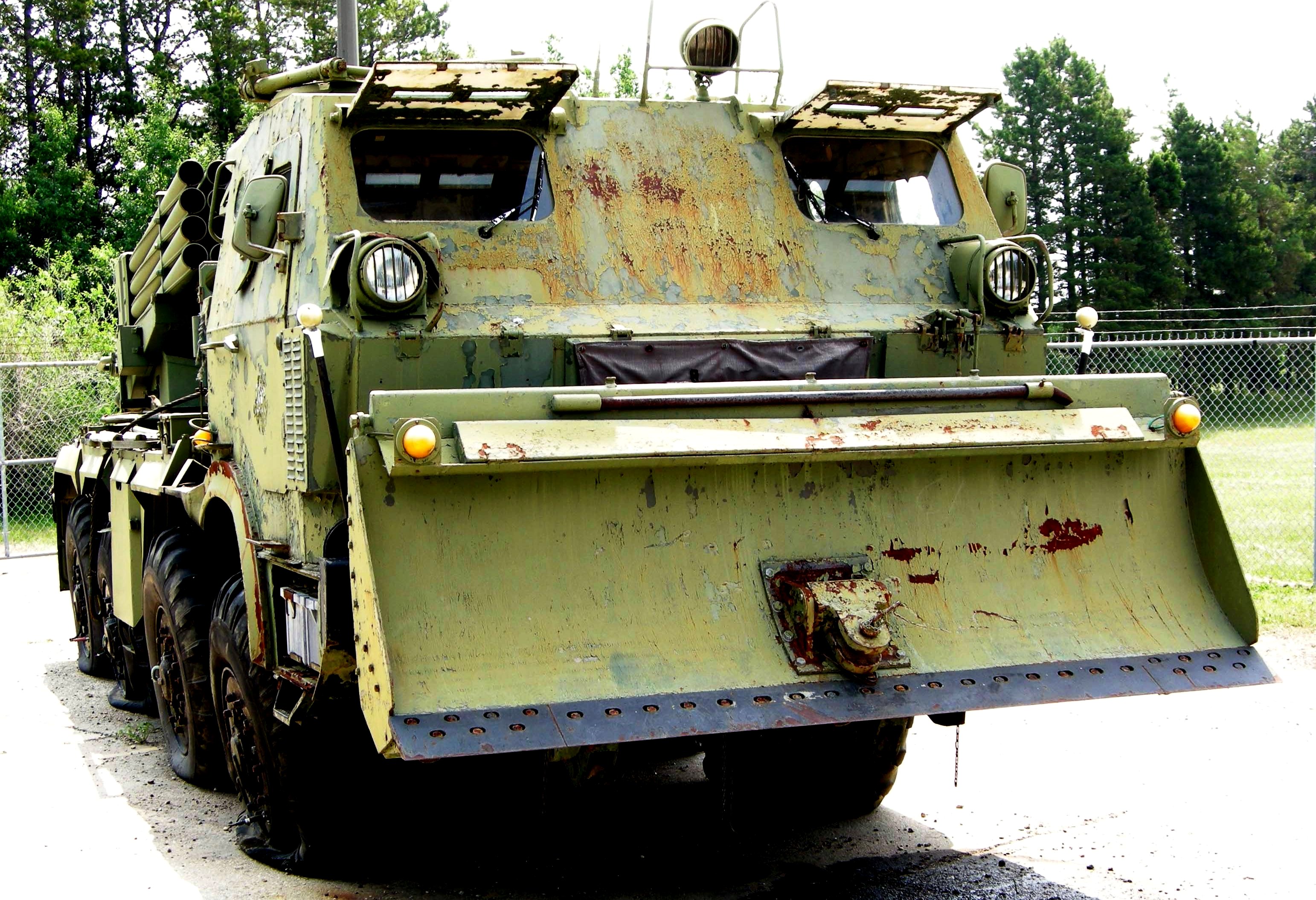
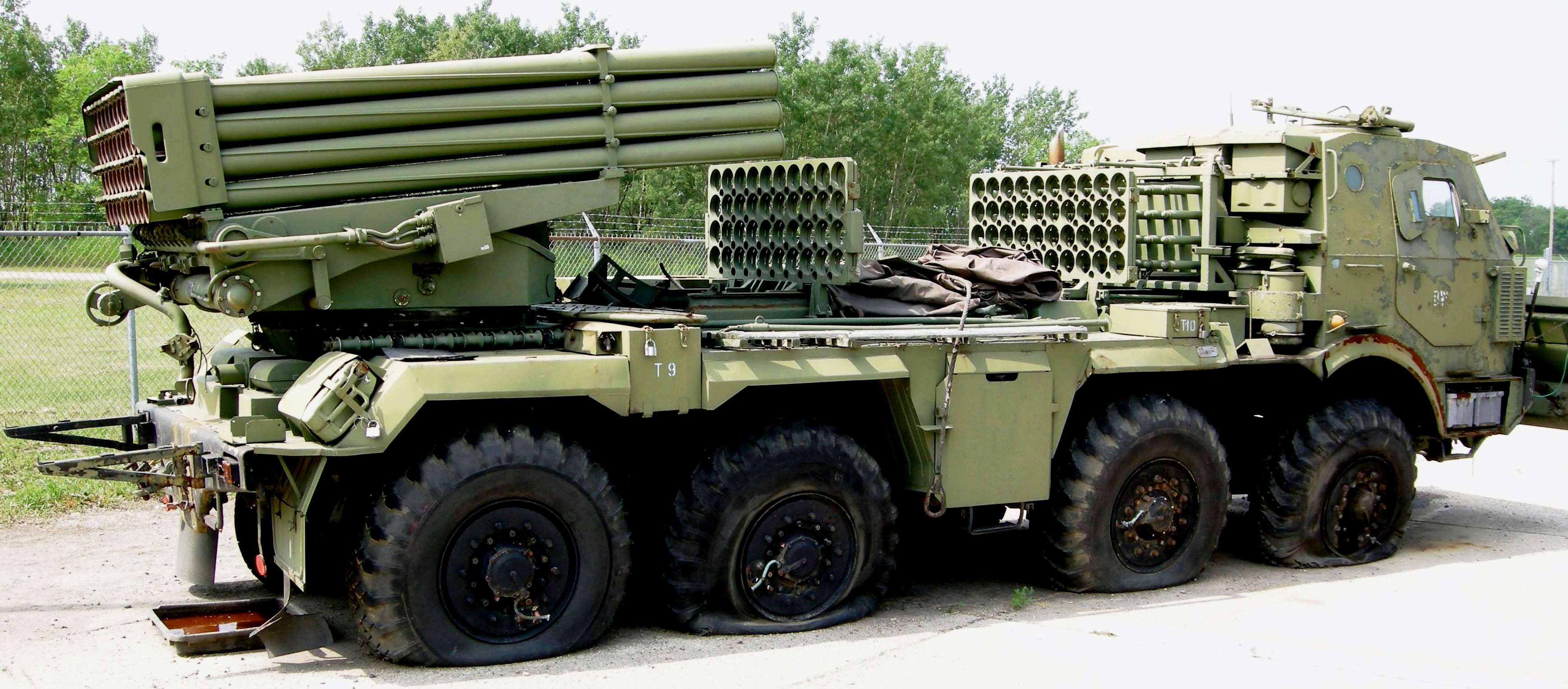
Czech RM-70 Multiple Rocket Launcher.
The RM-70 (Raketomet vzor 1970) multiple rocket launcher is a Czechoslovak Army version and heavier variant of the BM-21 Grad multiple rocket launcher, providing enhanced performance over its parent area-saturation rocket artillery system that was introduced in 1971[3] (the NATO designation is M1972). (Wikipedia)
(Clive Prothero-Brooks Photos)
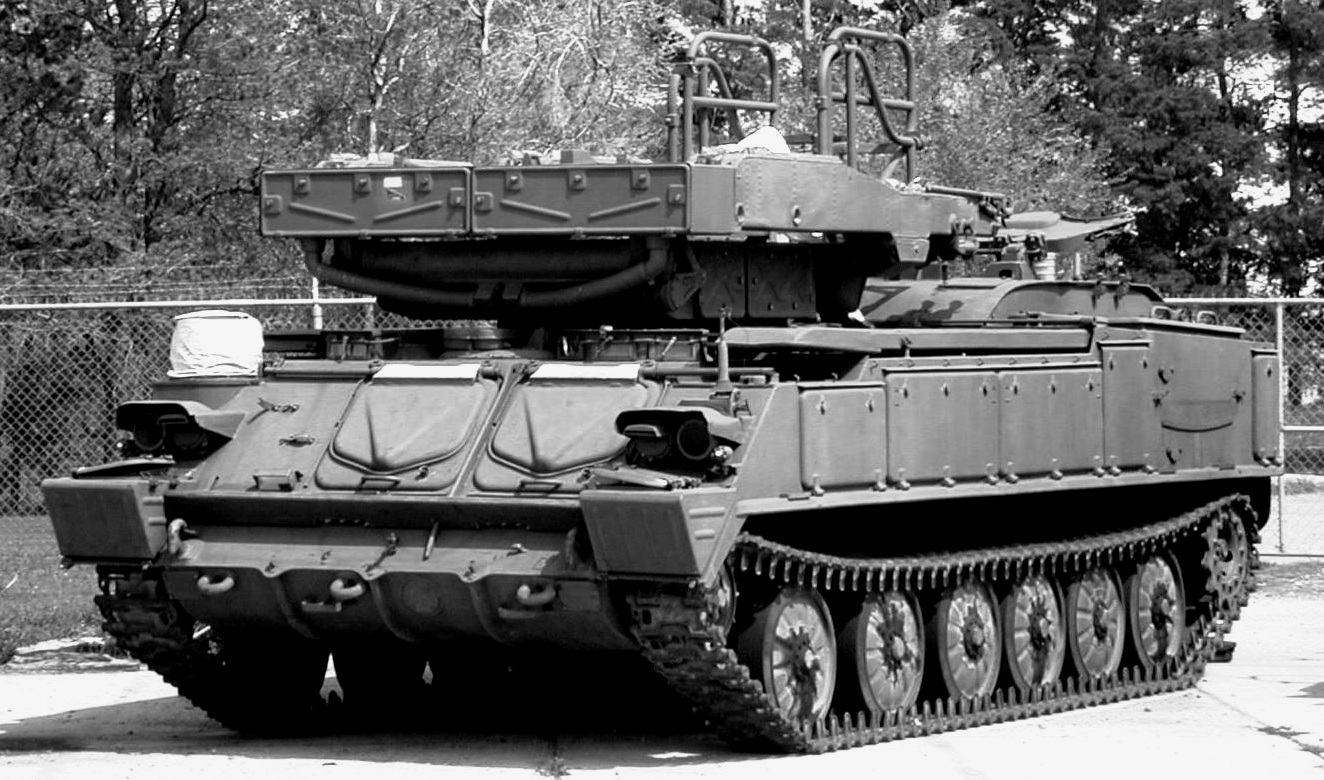
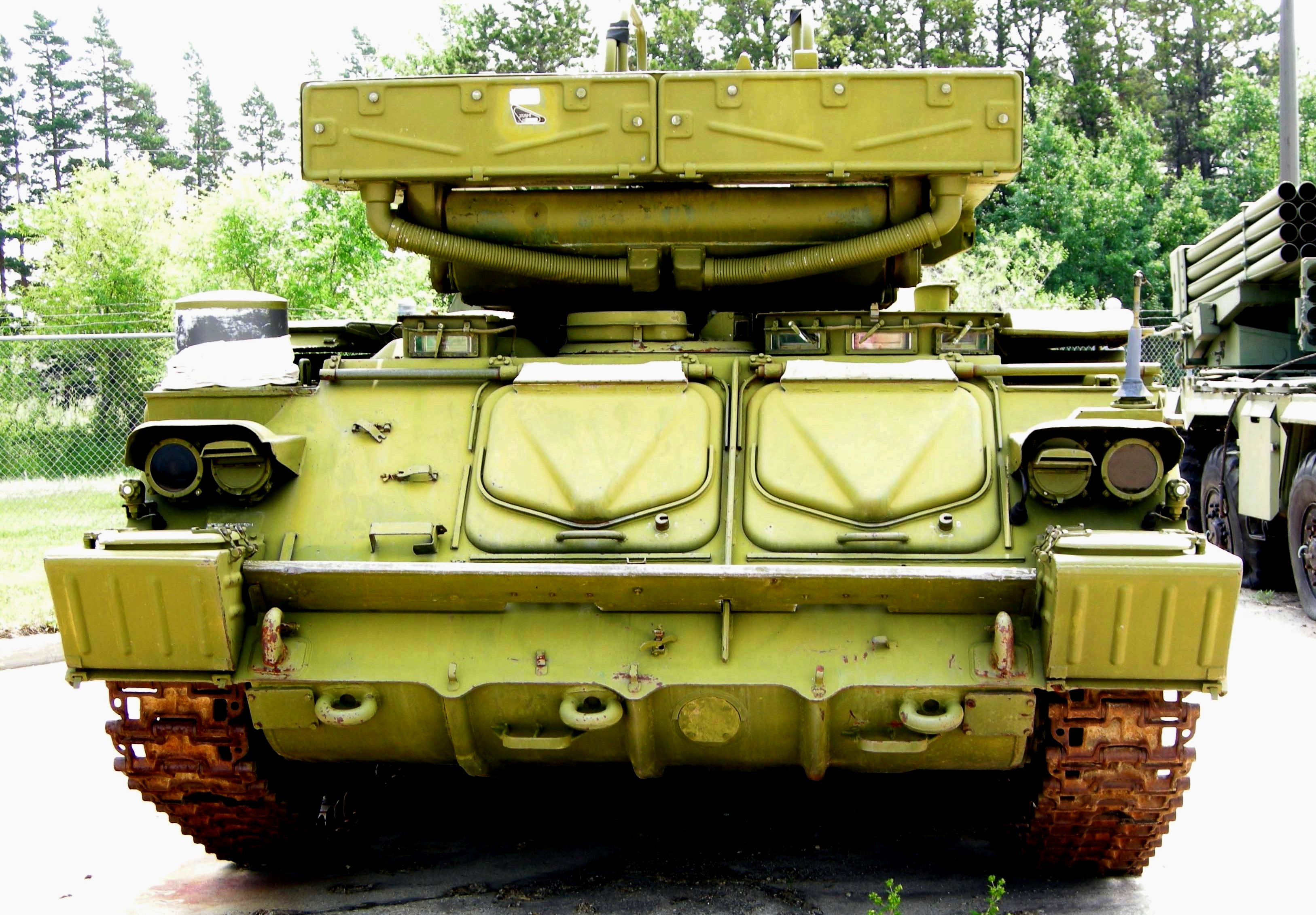
Russian/Czech 2P25 SA-6 Gainful Transporter Erector Launcher (TEL).
The 2P25, also known as the SA-6 Gainful Transporter Erector Launcher (TEL), is a mobile vehicle from the Russian/Czech 2K12 Kub air defense system that carries and launches three 3M9 surface-to-air missiles. It is based on a GM-578 tracked chassis and works in conjunction with the 1S91 “Straight Flush” radar vehicle to detect and track targets. The TEL is designed to be self-propelled, allowing it to rapidly deploy, elevate its missiles, and launch them in a matter of minutes. (Wikipedia)
(Maxwell J. Toms Photo)
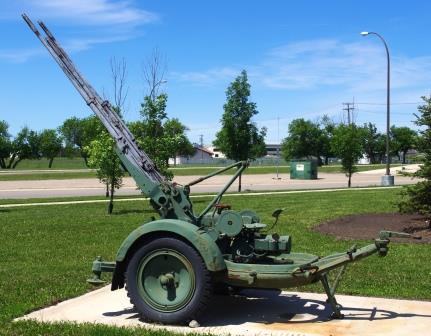
Yugoslav M-55A Triple 20mm Anti-Aircraft Gun, No. 1 of 3.
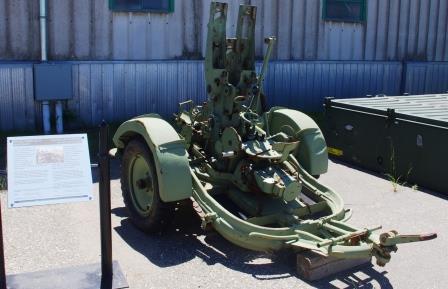
The Zastava M55, also designated 20/3-mm-M55, is a Yugoslavian/Serbian 20mm triple-barreled automatic anti-aircraft gun developed in 1955 and produced by Crvena Zastava (now Zastava Arms company) in Kragujevac, Serbia, for Yugoslav People’s Army use and also for the export market. In addition to the basic towed model M55 A2, the variants M55 A3 B1, M55 A4 B1, and the BOV-3 SPAAG were also developed. (Wikipedia)
(Maxwell J. Toms Photo)
Yugoslav M-55A Triple 20mm Anti-Aircraft Gun, No. 2 of 3.
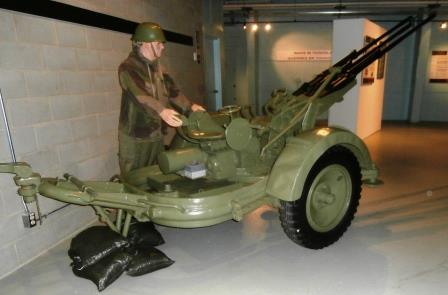
(Maxwell J. Toms Photo)
Yugoslav M-55A Triple 20mm Anti-Aircraft Gun, No. 3 of 3.
All comments are subject to our Comment Policy. You must be at least 18 years old to comment.
See a comment that violates our guidelines? Report it here.