
Armour in Canada: Surviving Second World War Sherman tanks in Canada
CFB Borden, Ontario
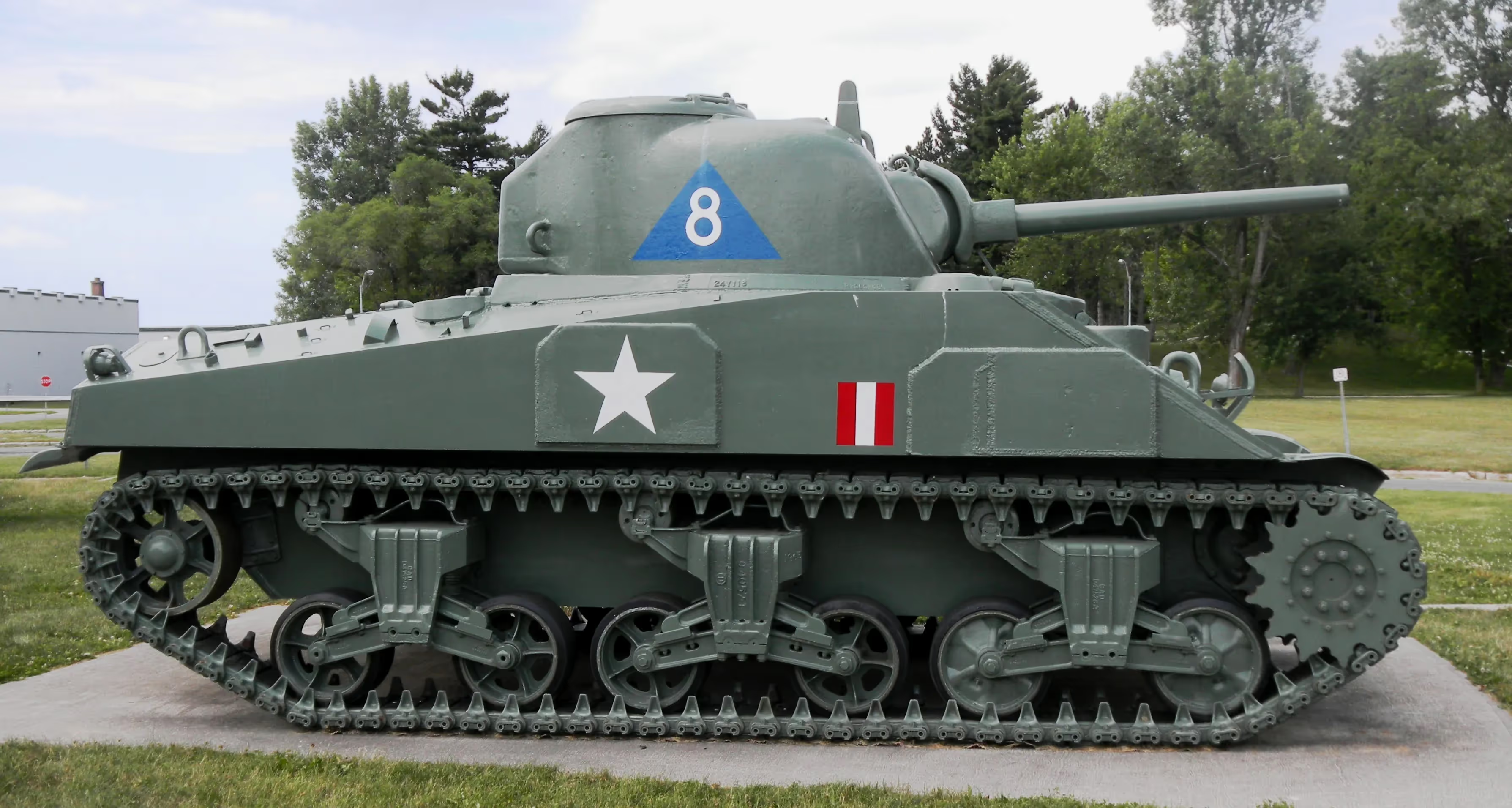
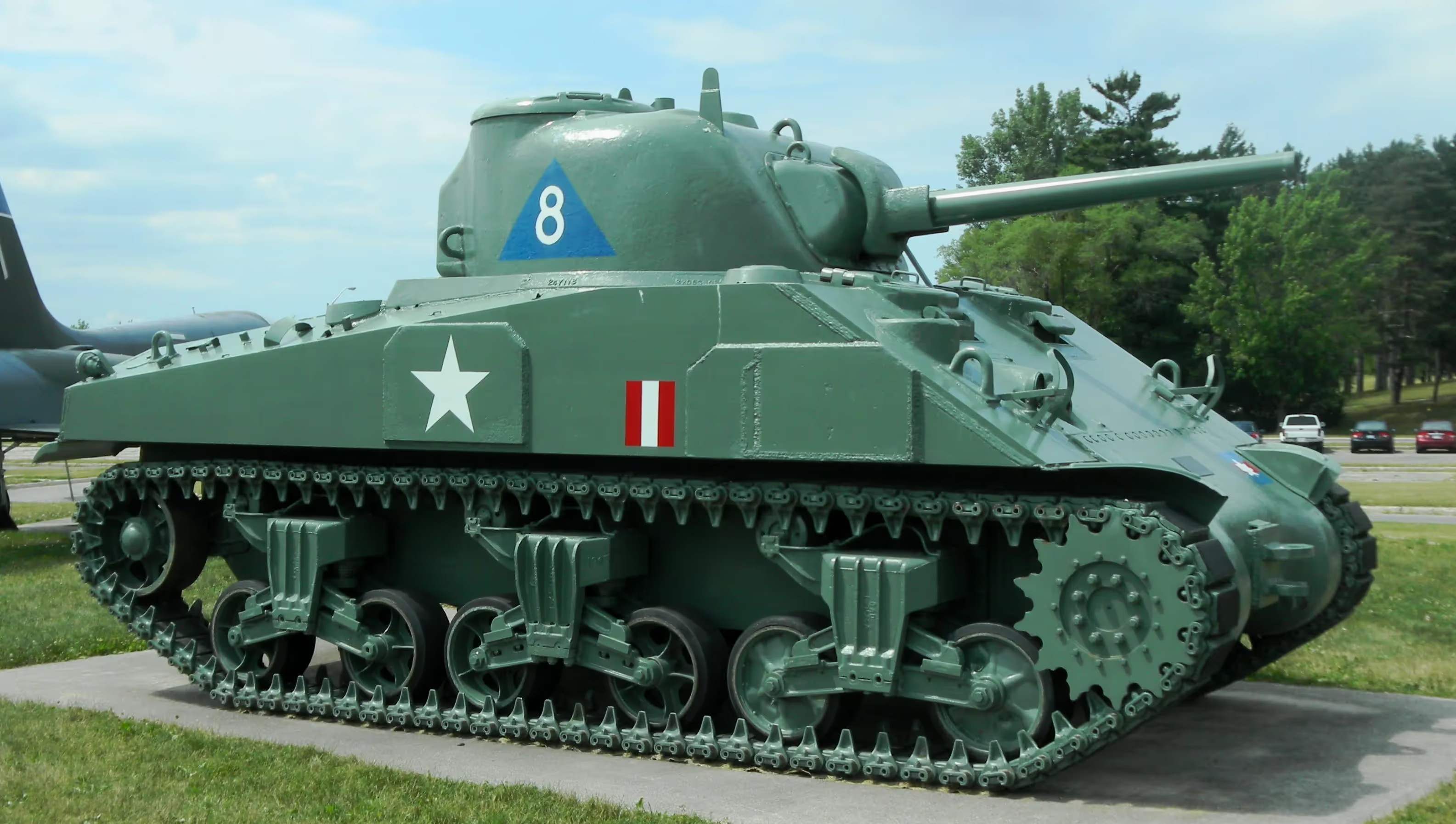
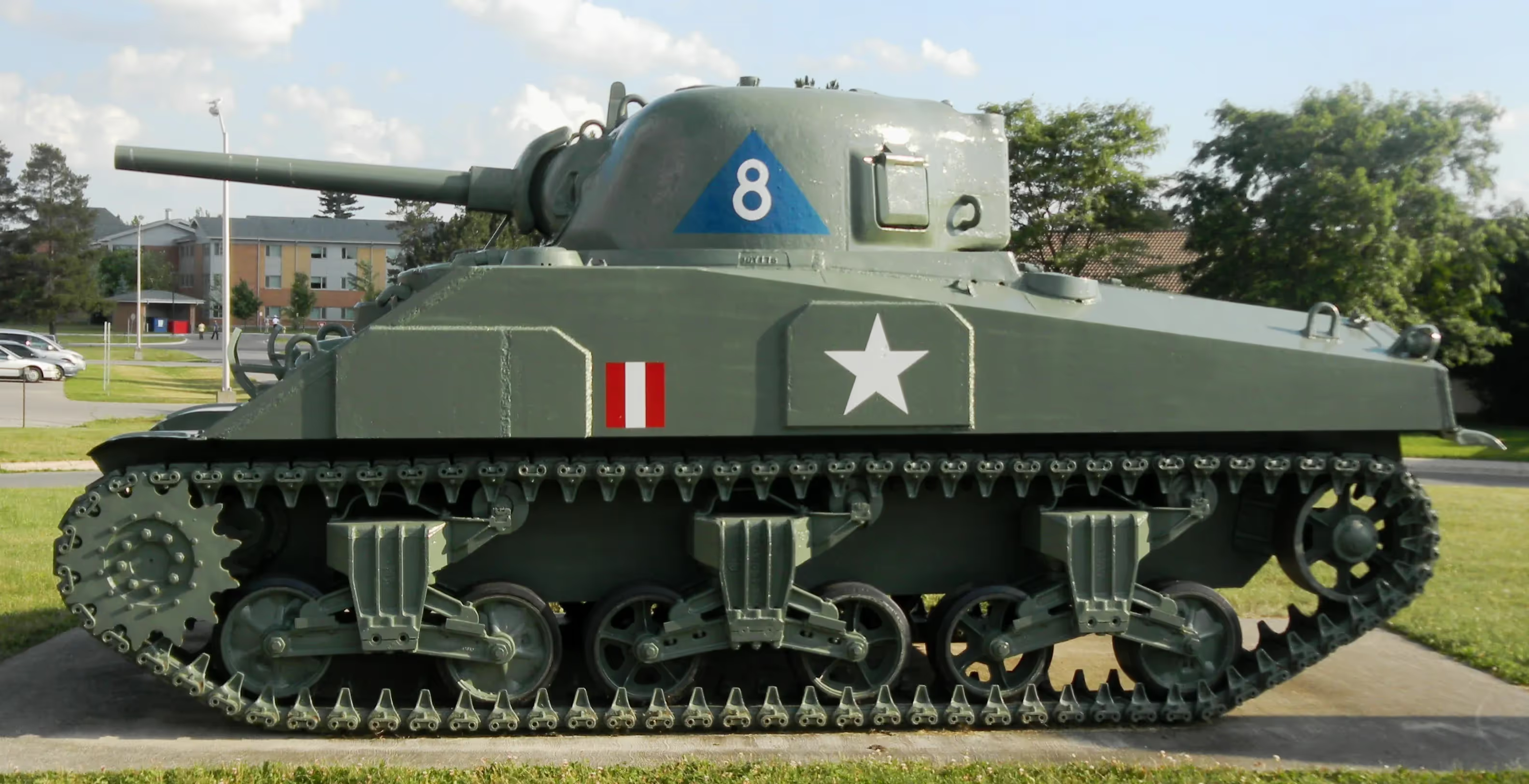
(Author Photos)
Sherman III tank (75-mm), No. 8, (Shop No. 217), 75-mm gun, fitted with “Canadian Indestructible Roller Device” landmine exploder (CIRD) fittings, Waterloo Officer’s Mess, CFB Borden Military Museum, Ontario. Diesel variant.
The US Army had seven main sub-designations for M4 variants during production: M4, M4A1, M4A2, M4A3, M4A4, M4A5, and M4A6. These designations did not necessarily indicate linear improvement; in that “M4A4” did not indicate it was better than “M4A3”. These sub-types indicated standardized production variations, which were often manufactured concurrently at different locations. The sub-types differed mainly in engines, although the M4A1 differed from the other variants by its fully cast upper hull, with a distinctive rounded appearance. The M4A4 had a longer engine that required a longer hull and more track blocks, and thus the most distinguishing feature of the M4A4 was the wider longitudinal spacing between the bogies. “M4A5” was an administrative placeholder designation for Canadian Ram tank. The M4A6 had a radial diesel engine as well as the elongated chassis of the M4A4, but only 75 of these were ever produced. (Wikipedia)
In the British naming system, the major variants were identified by Mark numbers, the M4 being “Sherman I”, the M4A1 “Sherman II” and so on. Letters after the mark number denoted modifications to the base model: “A” for the 76 mm L/55 gun instead of the 75mm, “B” for the 105 mm M4 L/22.5 howitzer, “C” for the British 76.2 mm QF 17-pounder gun, and “Y” for the later wider-tracked Horizontal Volute Spring Suspension (HVSS) type suspension. Gun and suspension letters were used in combination, e.g. Sherman IBY. However, not every combination appeared eg no production 75mm Shermans were built with HVSS and hence no HVSS 17pdr conversions – which would have been designated “CY” – therefore existed. HVSS Shermans were only fitted with 76mm M1 guns or 105mm M4 howitzers, AY and BY respectively in British service. (Wikipedia)
Sherman I – M4 with 75 mm M3 L/40 gun and Continental R9759-cylinder radial petrol engine.
Sherman Hybrid I – Sherman I with composite hull (cast front, welded rear).
Sherman IB – Sherman I with 105 mm M4 L/22.5 howitzer.
Sherman IBY – Sherman IB with HVSS.
Sherman IC – Sherman I with 76.2 mm QF17-pounder gun.
Sherman II – M4A1 with 75 mm M3 L/40 gun and Continental R975 radial petrolengine.
Sherman IIA – M4A1(76)W, Sherman II with 76mm M1 L/55 gun.
Sherman IIAY – M4A1(76)W HVSS, Sherman IIA with HVSS.
Sherman III – M4A2 with 75 mm M3 L/40 gun and GM6046 twin 6-cylinder dieselengine.
Sherman IIIA – M4A2(76)W, Sherman III with 76 mm M1A2 L/55 gun (unlikely tohave been used by UK troops).
Sherman IIIAY – M4A2(76)W HVSS,Sherman IIIA with HVSS (not used operationally by UK troops).
Sherman IV – M4A3 with 75 mm M3L/40 gun (no Sherman IVs used operationally) and Ford GAA V8 petrol engine.
Sherman IVA – M4A3(76)W, Sherman IVwith 76mm M1A2 L/55 gun.
Sherman IVB – M4A3(105), Sherman IVwith 105mm M4 L/22.5 howitzer.
Sherman IVBY – M4A3(105) HVSS,Sherman IVB with HVSS.
Sherman V – M4A4 with 75 mm M3 L/40gun andChrysler A57 multibank 30-cylinder “cloverleaf” petrol enginein a longer rear hull with more widely spaced bogies.
Sherman VC – Sherman V with 76.2 mmQF17-pounder gun.
The term Sherman VI was not used.The”M4A5″ was an American tested late production Ram Mk I cruisertank. In British service it was named Tank Cruiser, Ram Mk I or Mk II.
Sherman VII – M4A6 with 75 mm M3L/40 gun, composite cast/welded hull and Ordnance RD-1820 9-cylinder radialdiesel engine. Only 75 M4A6 were built and none are believed to have reachedthe UK.
Sherman II ARV III – M32B1 TRV(M4A1 Sherman II chassis) recovery vehicle.
Sherman V ARV III – M32B4 TRV (M4A4Sherman V chassis) recovery vehicle. (Wikipedia)
A number of Sherman tanks were converted to carry different armament or fill different roles than those for which the tank was originally manufactured. Among these were:
Tank AA, 20 mm Quad, Skink – Canadian prototype anti-aircraft vehicle with four 20 mm Polsten cannon mounted in a turret on a Grizzly hull (tank made in Canada, not Lend-Leased).
Sherman Duplex Drive (DD) – British-developed swimming gear fitted to British, Canadian, and US Shermans for the Normandy landings.
Sherman 17pdr aka “Firefly” – British Sherman I or V re-armed with QF 17 pounder (76.2 mm) anti-tank gun with C added to designation (as in Sherman IC or VC). A few Sherman IIIC are believed to have existed, issued to units equipped with standard Sherman III for mechanical commonality: Aberdeen Proving Ground in the USA has one. Post-war the “Firefly” name is commonly used to refer to these vehicles, but it was not an official name and not commonly used during the war.
Combat engineering Weathered Military VehiclesBritish developments for Shermans were extensive and included the fascine carrier (used by 79th Armoured Division), “Crib”, “Twaby Ark”, “Octopus”.
Sherman Bridgelayer –”Plymouth” – carrying Bailey bridge.
Sherman AVRE with Small Box Girder bridge.
Sherman CIRD – fitted with “Canadian Indestructible Roller Device” landmine exploder.
Sherman Crab – British Sherman with mine flail, one of a long line of flail devices.
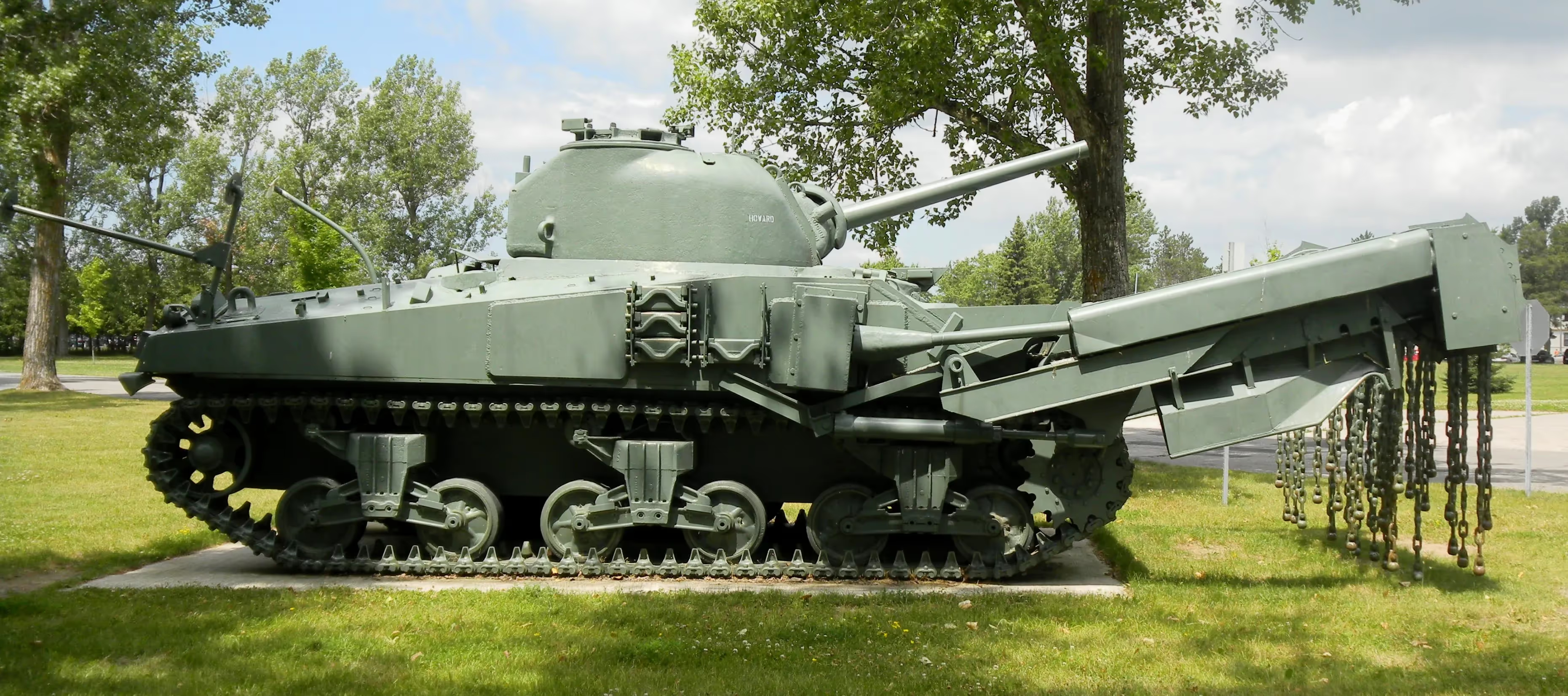
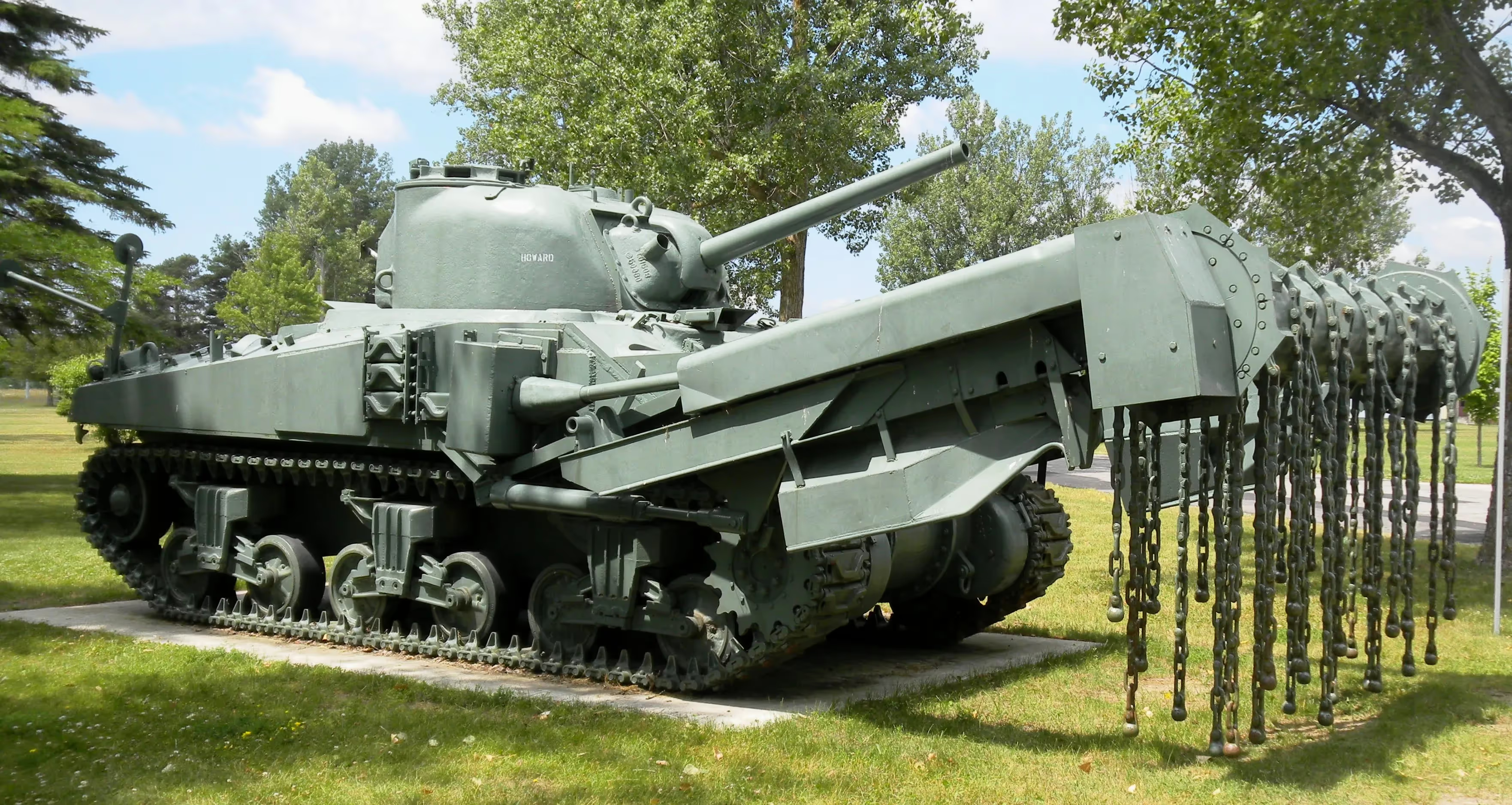
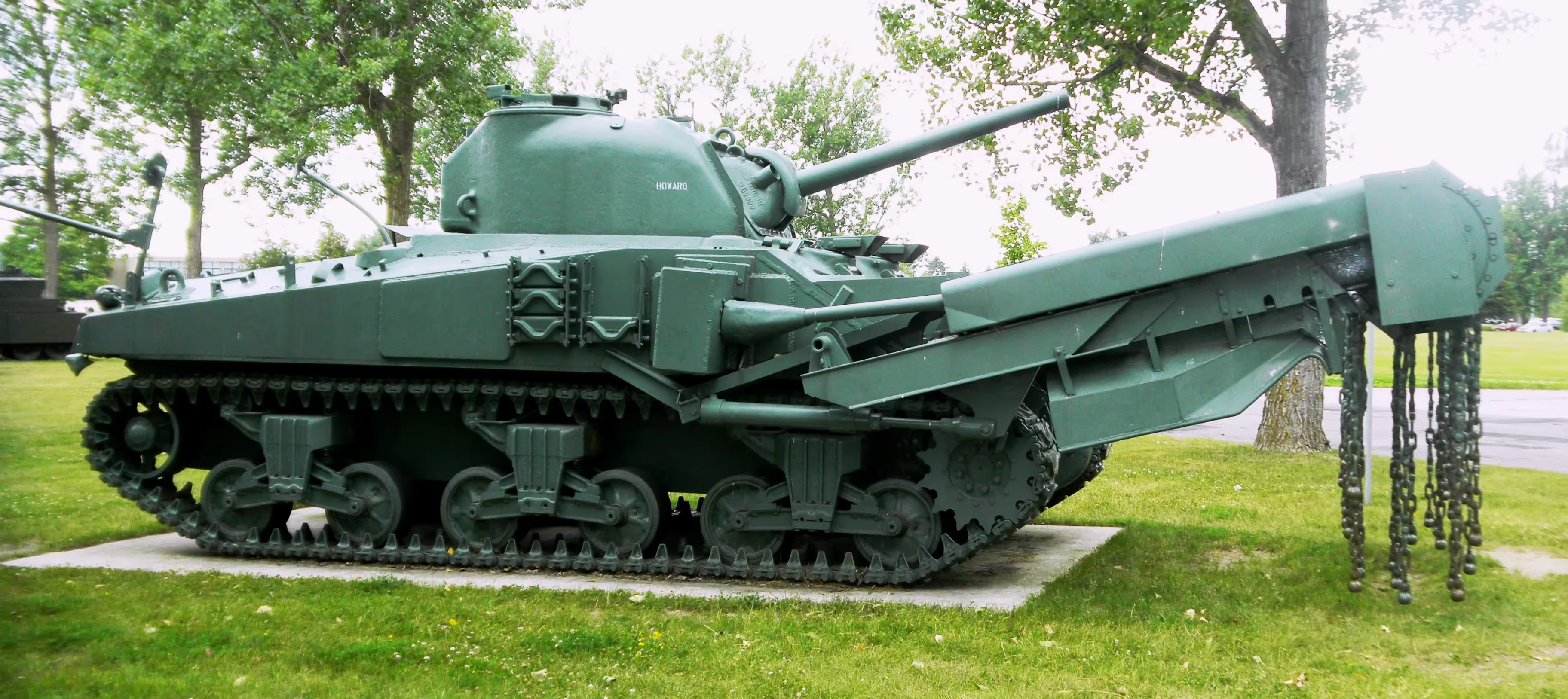
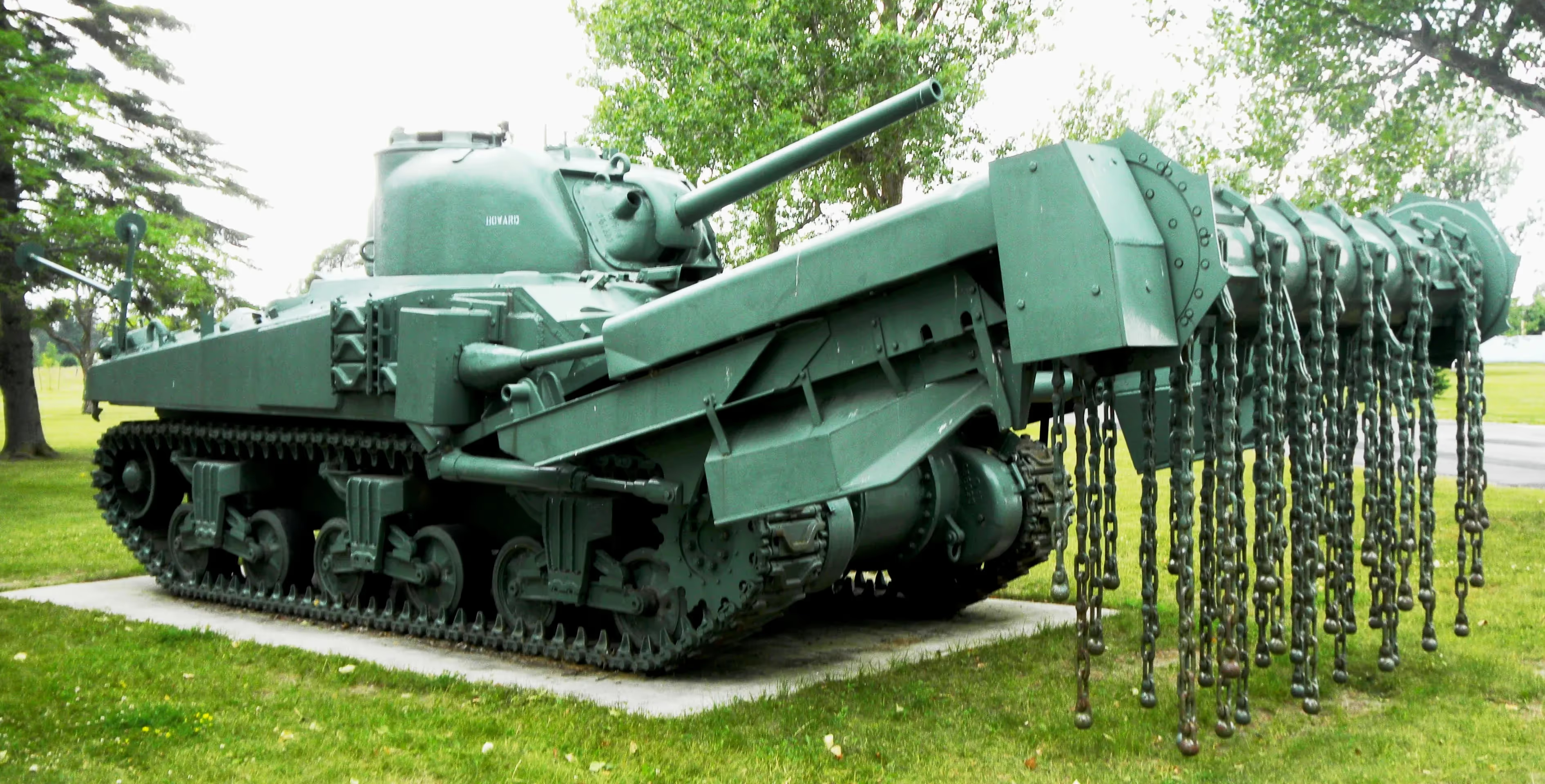
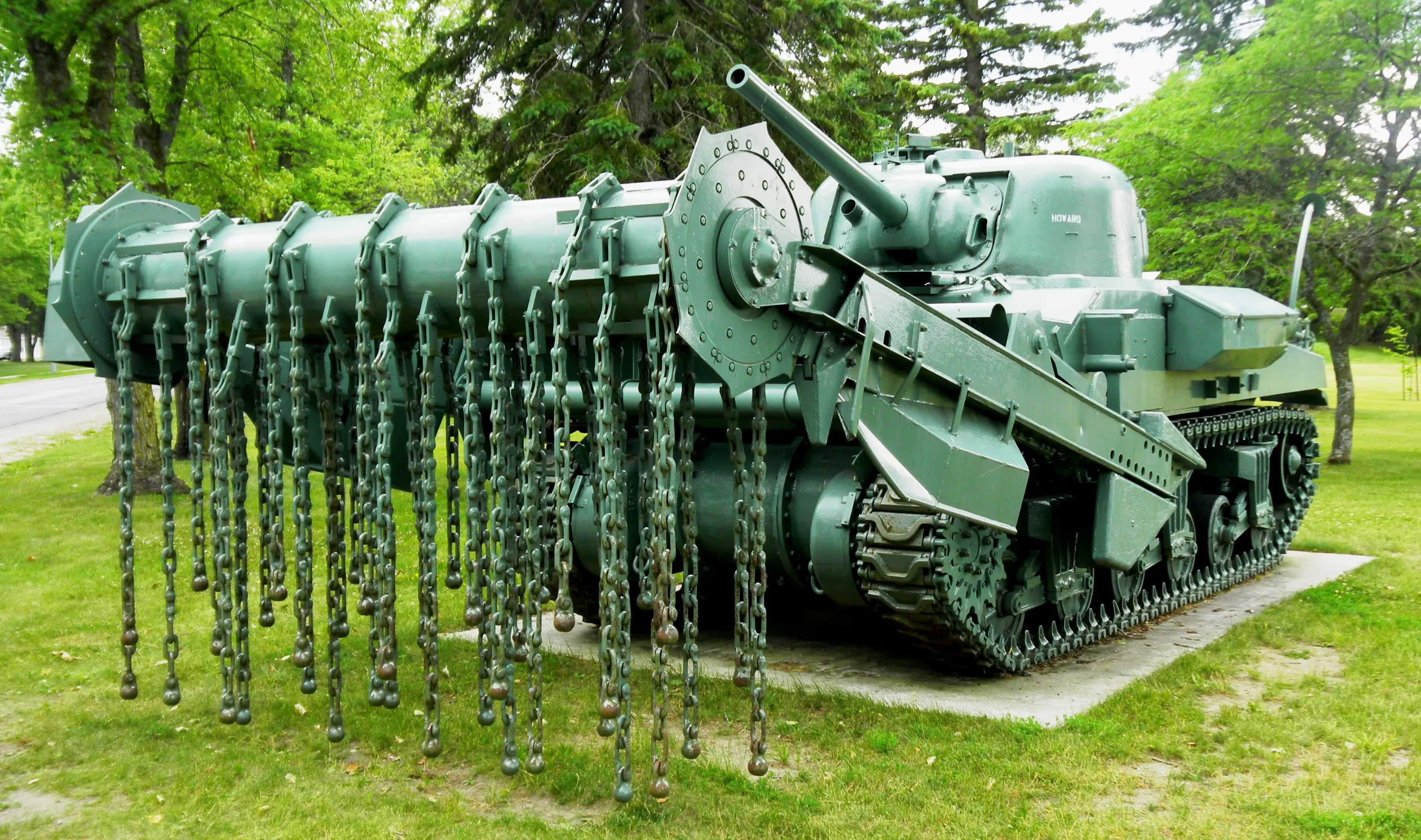
(Author Photos)
Sherman Crab Mk. II mine flail tank with 75mm gun, built by Chrysler, Manufacturers Serial No. 5072, US Army Registration No. 3056882, Direct Vision (DV). MGen Worthington Memorial Park.
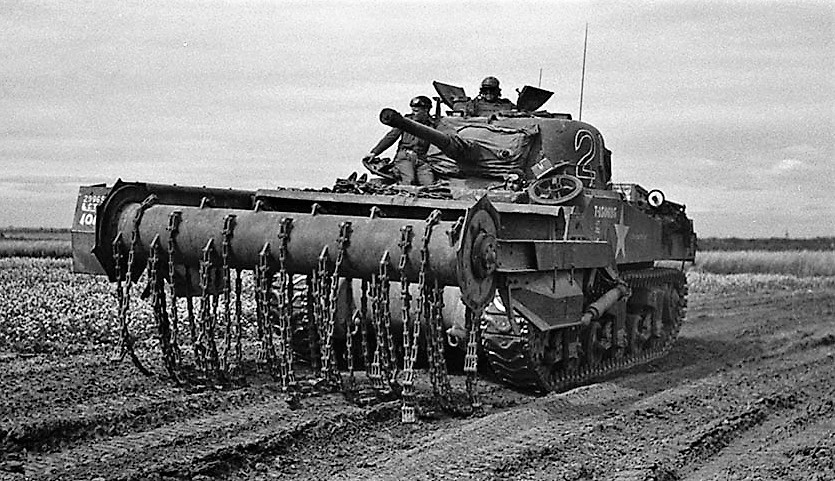
(Library and Archives Canada Photo, MIKAN No. 3205407)
Sherman Crab flail tank in Normandy, 4 July 1944. The mine flail consists of a number of heavy chains ending in fist-sized steel balls (flails) that are attached to a horizontal, rapidly rotating rotor mounted on two arms in front of the vehicle. The rotor’s rotation makes the flails spin wildly and violently pound the ground. The force of a flail strike above a buried mine mimics the weight of a person or vehicle and causes the mine to detonate, but in a safe manner that does little damage to the flails or the vehicle.
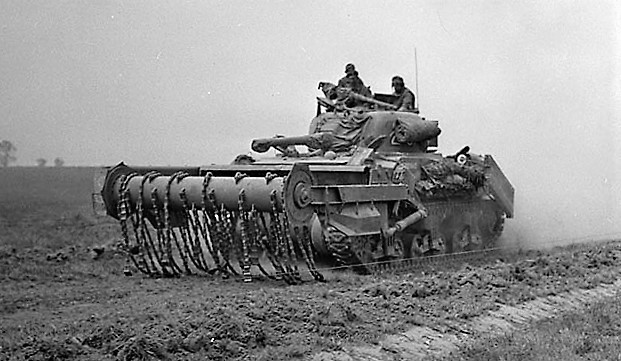
(Library and Archives Canada Photo, MIKAN No. 3224832)
Sherman Crab flail tank in Normandy, 6 August 1944.
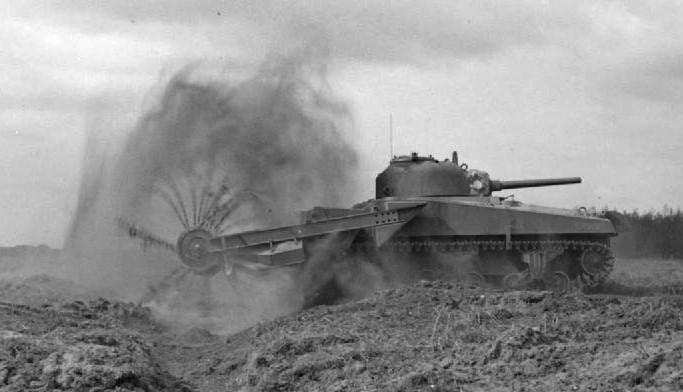
(IWM Photo, H 38080)
Sherman Crab flail tank in operation.
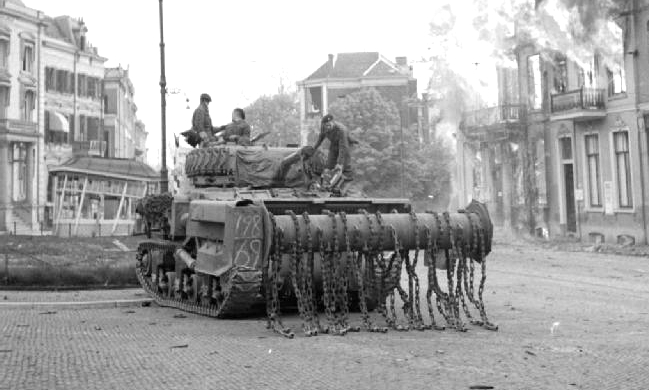
(IWM Photo, BU 3515)
Sherman Crab flail tank in front of burning buildings in Arnhem, 14 April 1945.
Canadian War Museum, Ottawa, Ontario
(Author Photo)
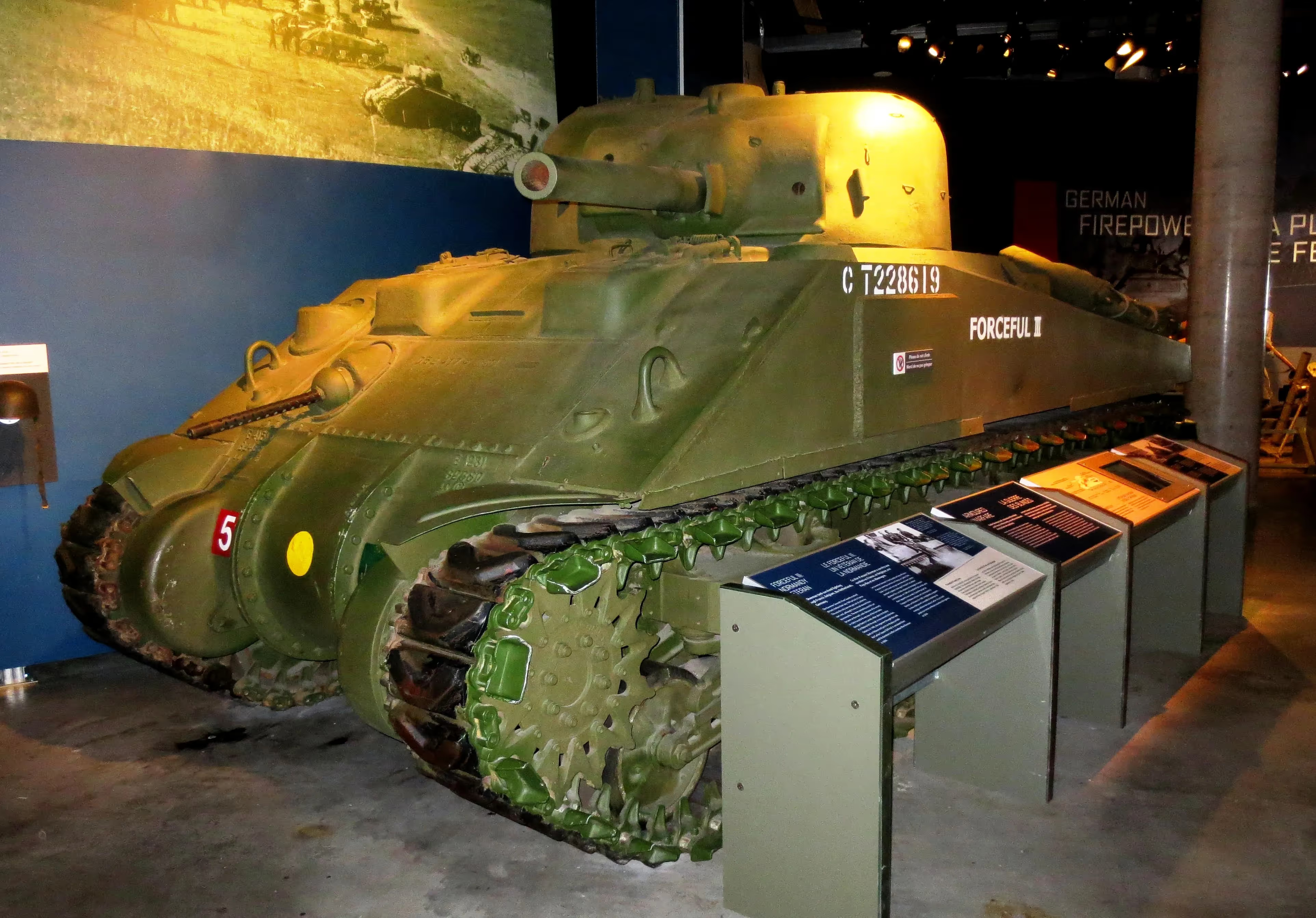
Sherman V Medium Tank with 75-mm gun, (Serial No. 21424), built by Chrysler,US Army Registration No. 3021730, (WD No. CT-228619), 51, 30, (Serial No. 21424), “Forceful III”, previously on display at Cartier Square Drill Hall, 21st Canadian Armoured Regiment (Governor General’s Foot Guards). This is an M4A4 with 75 mm M3 L/40 gun and Chrysler A57 multibank 30-cylinder “cloverleaf” petrol engine in a longer rear hull with more widely spaced bogies.
Sherman V Medium Tank, Manufacturers Serial No. 5457, US Army Registration No. 3057267, built by Chrysler. Fitted with “Canadian Indestructible Roller Device” (CIRD) landmine exploder fittings, no gun. Direct Vision (DV). This tank was previously on display at Brantford, Ontario.
London, Ontario
(Lucas Freitas Photo)
(Terry Honour Photo)
(Bob Scott Photo)
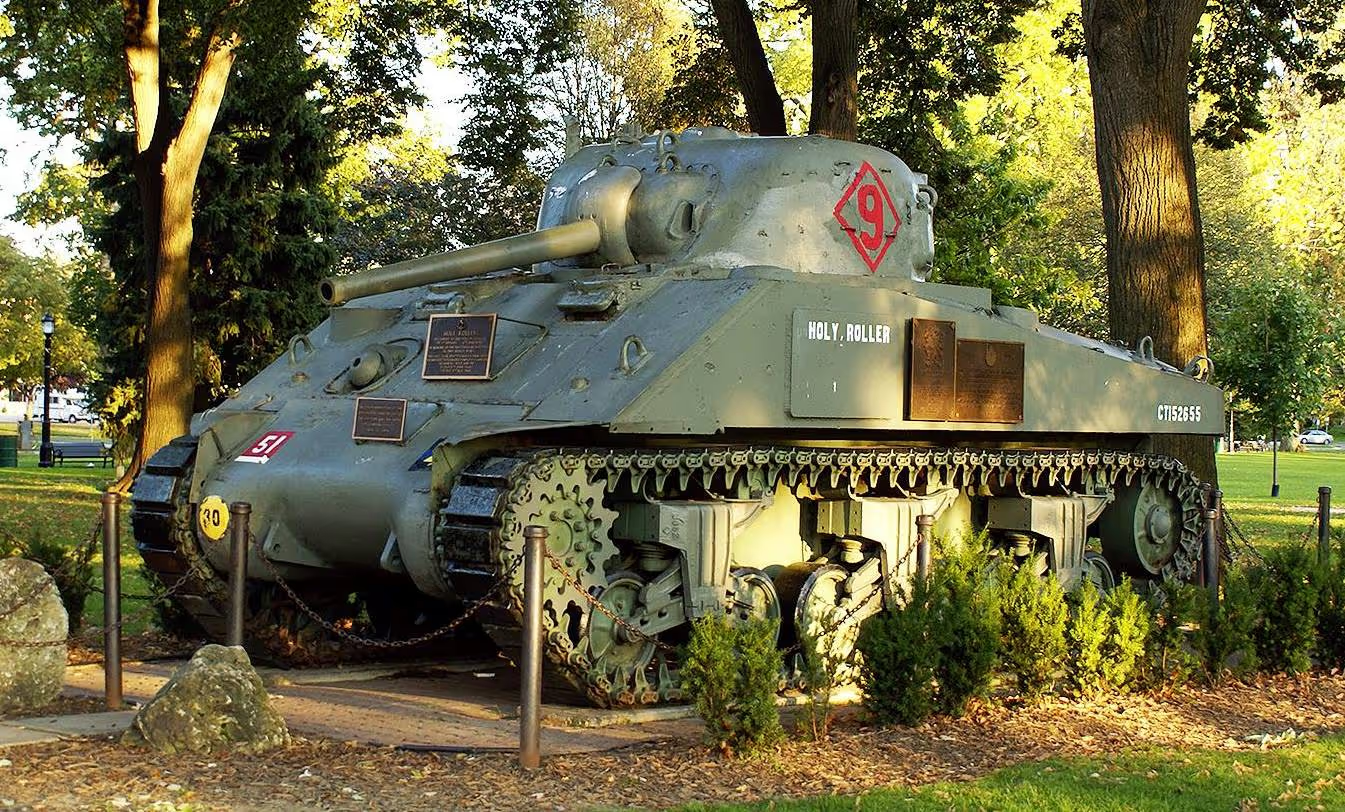
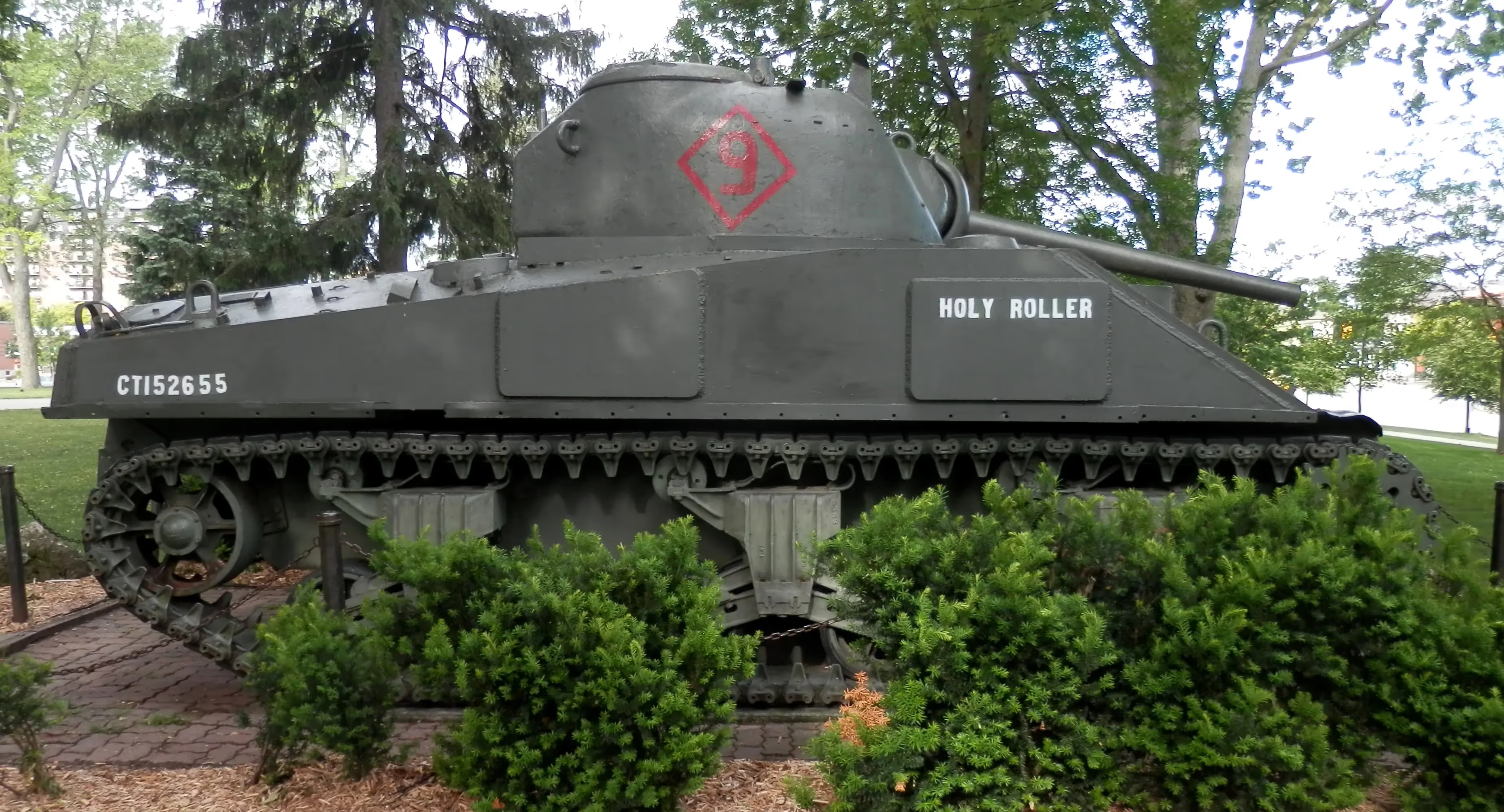
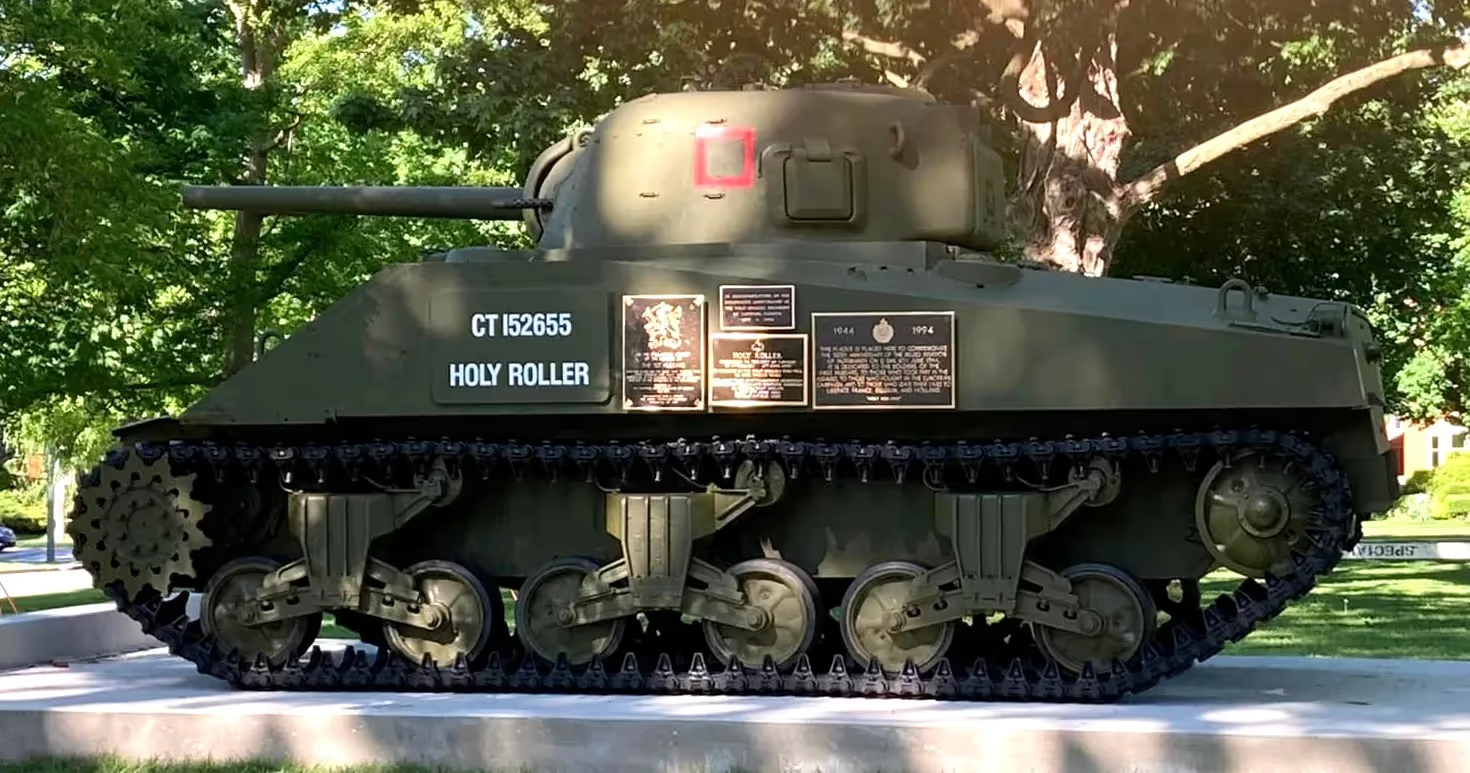
Sherman III tank, (Serial No. 7606), US Reg. No. 3062855, built at General Motor’s Fisher Tank Arsenal in Flint, Michigan in the last week of September 1942. It is a “small hatch” Sherman, WD No. CT-152655, No. 51, “Holy Roller”. It has early direct vision ports for the driver and co-driver, but also has appliqué armour on the hull sides and trailing return rollers found on the VVSS version. It also has an M34 mantlet and a late one piece final drive, possibly upgraded post-war. It was shipped to England where it was issued with the War Department number CT-152655. It wasn’t until late May/early June 1944 that it was issued to the 6th Armoured Regiment (1st Hussars), just before D-Day.
“Holy Roller” was crewed by five men when it landed on Juno Beach, including then 21-year old gunner William Reed, Frank White, Ted Doherty, Everett Smith and Frank Fowler (who came up with the name “Holy Roller” because it is the only Hussar tank which survived the war). Manned in the battle by these 1st Hussars, it has been on display as the 1st Hussar Memorial, in London’s Victoria Park on Central Ave, since 1950 when it was dedicated to the regiment. The 1st Hussars are lauded for being the only regiment to reach its objective in the Normandy invasion.
This tank saw combat in NW Europe from D-Day, 6 June 1944 to VE-Day, 8 May 1945. “Holy Roller” is one of only two tanks to land on D-Day that survived intact to the end of the war. The other is “Bomb“, on display in the William Street Armoury in Sherbrooke, Quebec. There are only four original Shermans that fought in Europe and returned to Canada in 1945. The remaining two are “Cathy” at Trois-Rivieres, Quebec, and “Forceful III” in the Canadian War Museum, Ottawa, Ontario.
Sherbrooke, Quebec
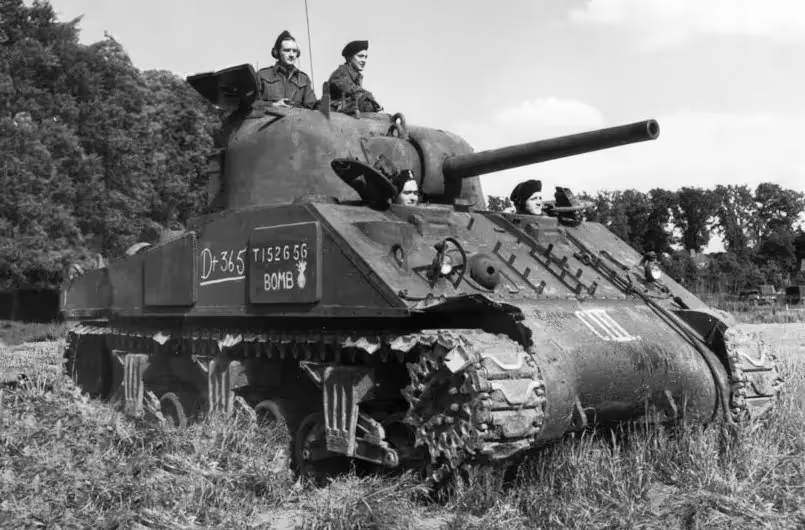
(Library and Archives Canada Photo, MIKAN No. 3397558/Bibliothèque et Archives Canada Photo, MIKAN No. 3397558)
Sherman III tank, (Serial No. 8007), built by Fisher, 3063256, Build No. 898, WD No. T-152656, “Bomb”, Sherbrooke Fusiliers, Zutphen, Netherlands, 8 June 1945.
“Bomb”, is a Sherman III tank (British Commonwealth designation of the M4A2 Sherman), War Department registration T152656, serial number 8007, built by Fisher build number 898. This tank survived from D-Day to VE-Day without being knocked out; an improbable achievement because of the high casualty rate amongst front line combat equipment. Bomb’s crewmembers, originally Troopers A.W. Rudolph, “Red” Fletcher, Trooper J.W. (Tiny) Hall, Lance-Corporal R. (Rudy) Moreault and Sergeant Harold Frutter, crew commander, kept the tank in service, despite firing over 6,000 rounds and surviving at least one enemy shell impact. Frutter was wounded in July 1944 and one other man were replaced in Normandy by Lieutenant Paul Ayriss and Trooper Ken Jeroux. Lieutenant J.W. Neill replaced Ayriss in August 1944, and was later awarded the Military Cross. Two more officers to command Bomb were Lieutenant Walter White who was wounded in April 1945 and Lieutenant Earnest Mingo who replaced him until war’s end. The tank and crewmembers Rudolph, Moreault and Hall were the subject of a Canadian Army Film and Photographic Unit production entitled, “Green Fields Beyond” (number 2090) in 1945. The tank was on display at the Champs de Mars park, Queen Boulevard North, Sherbrooke, Quebec and in Sept 2011 was relocated to the front lawns of the William Street Armoury, 315 William Street, Sherbrooke, Quebec.
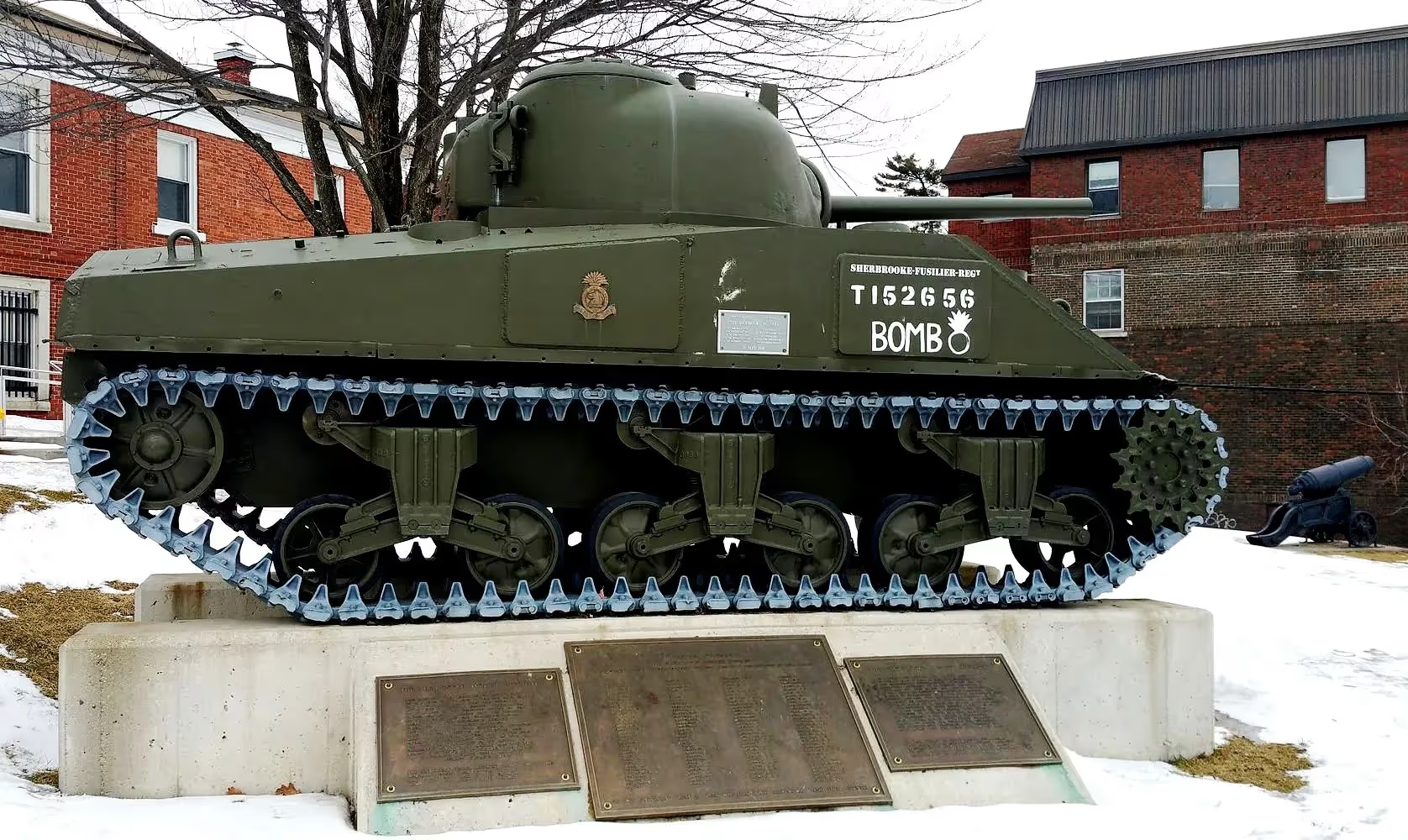
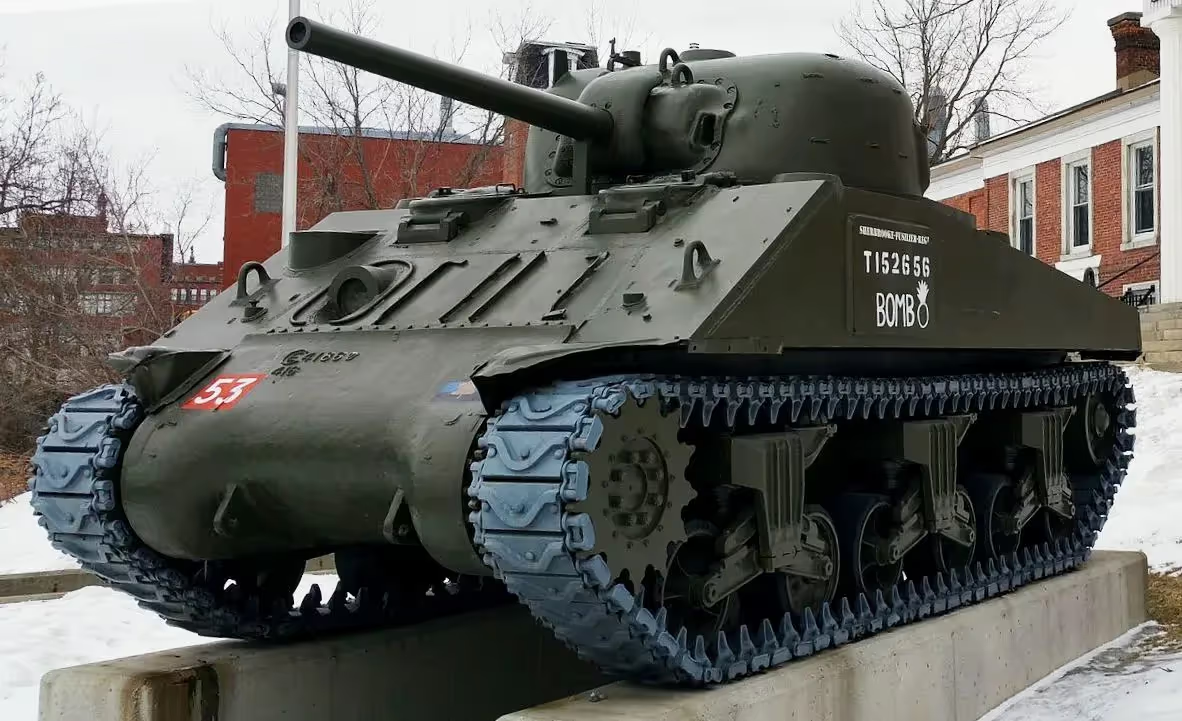
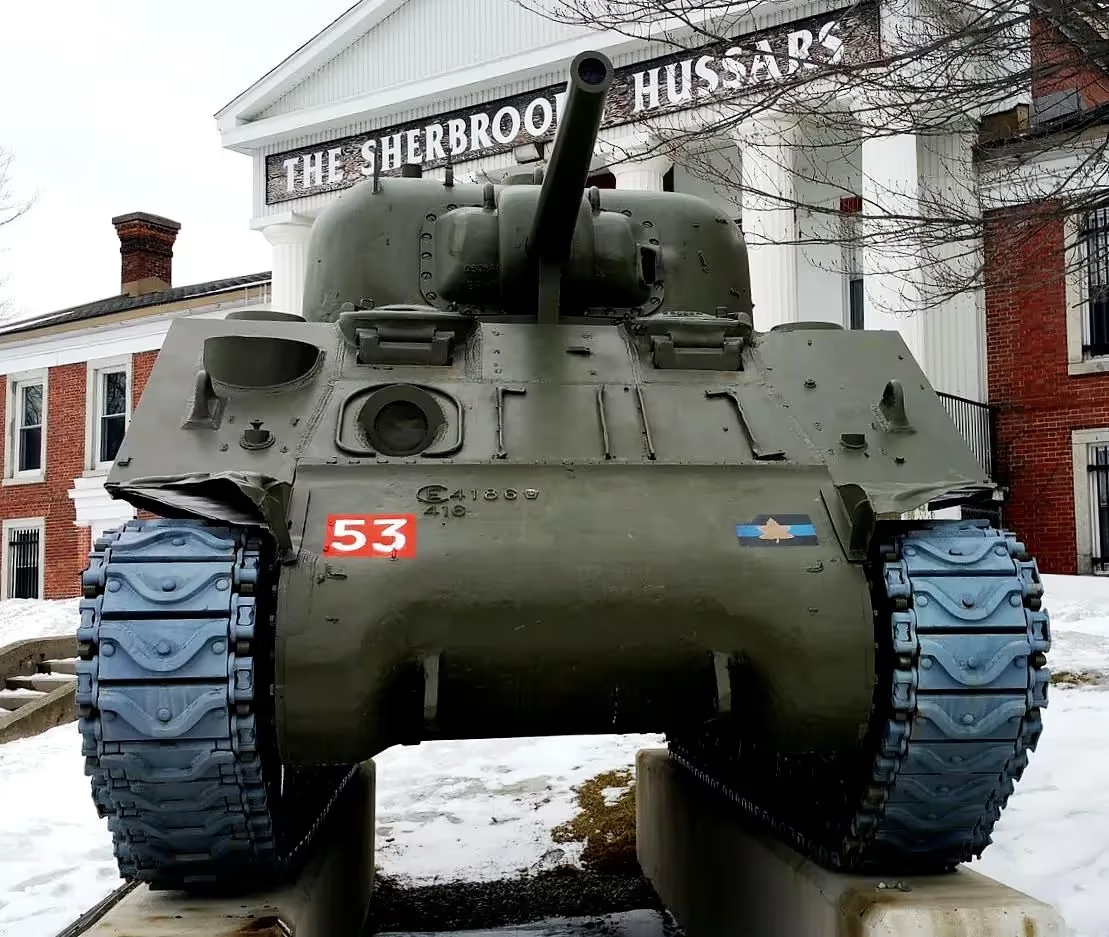
(Jaylimo84 Photos)
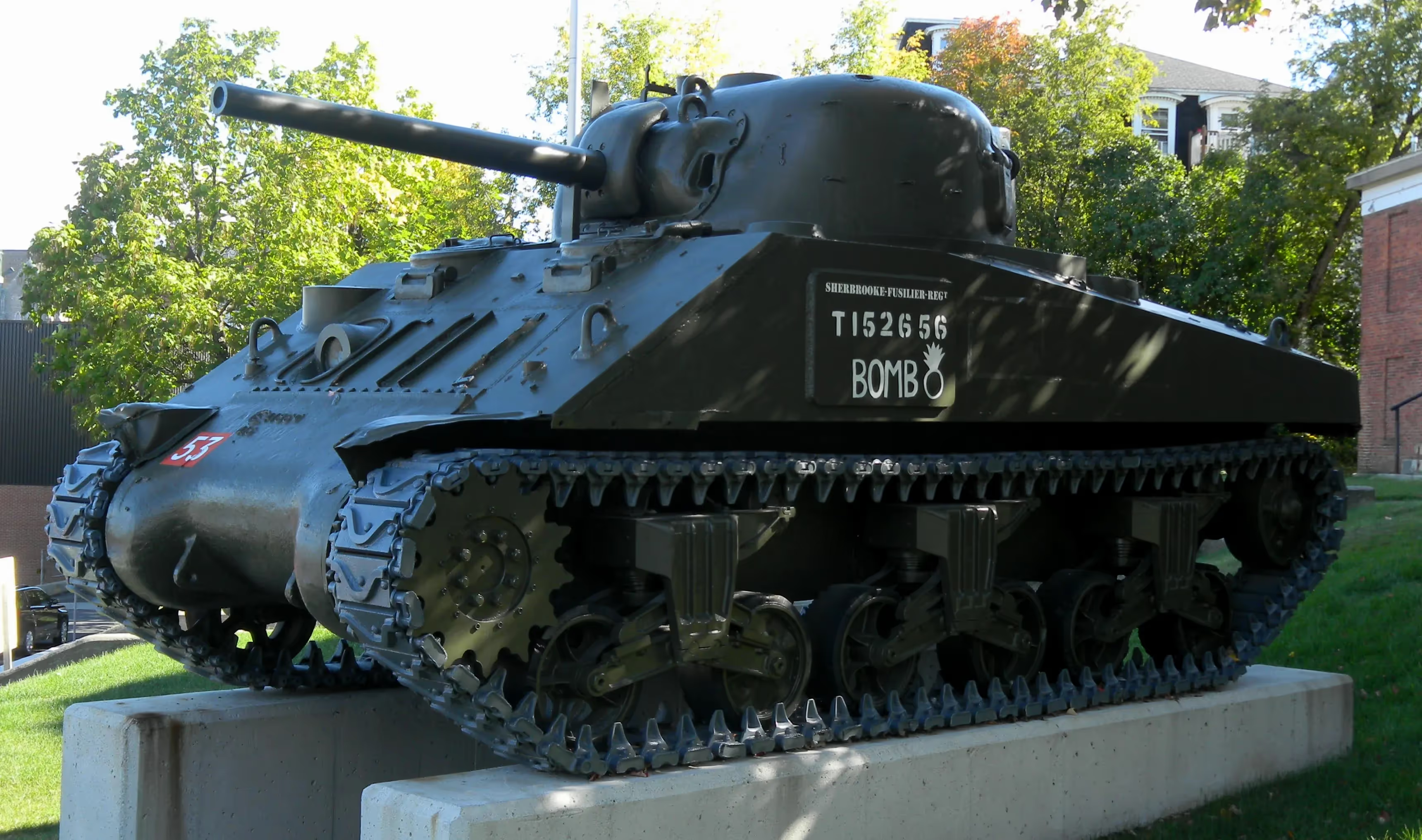
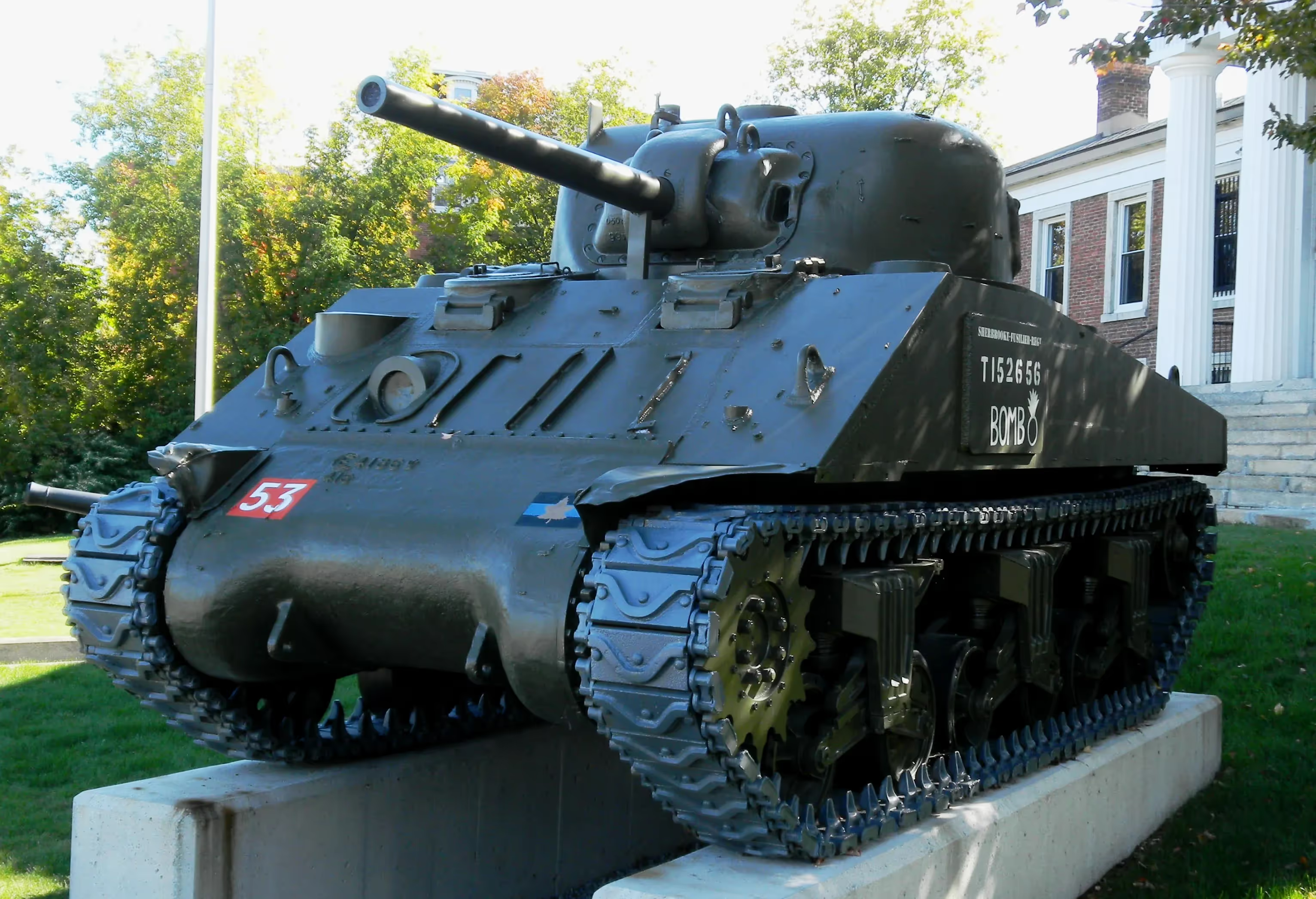
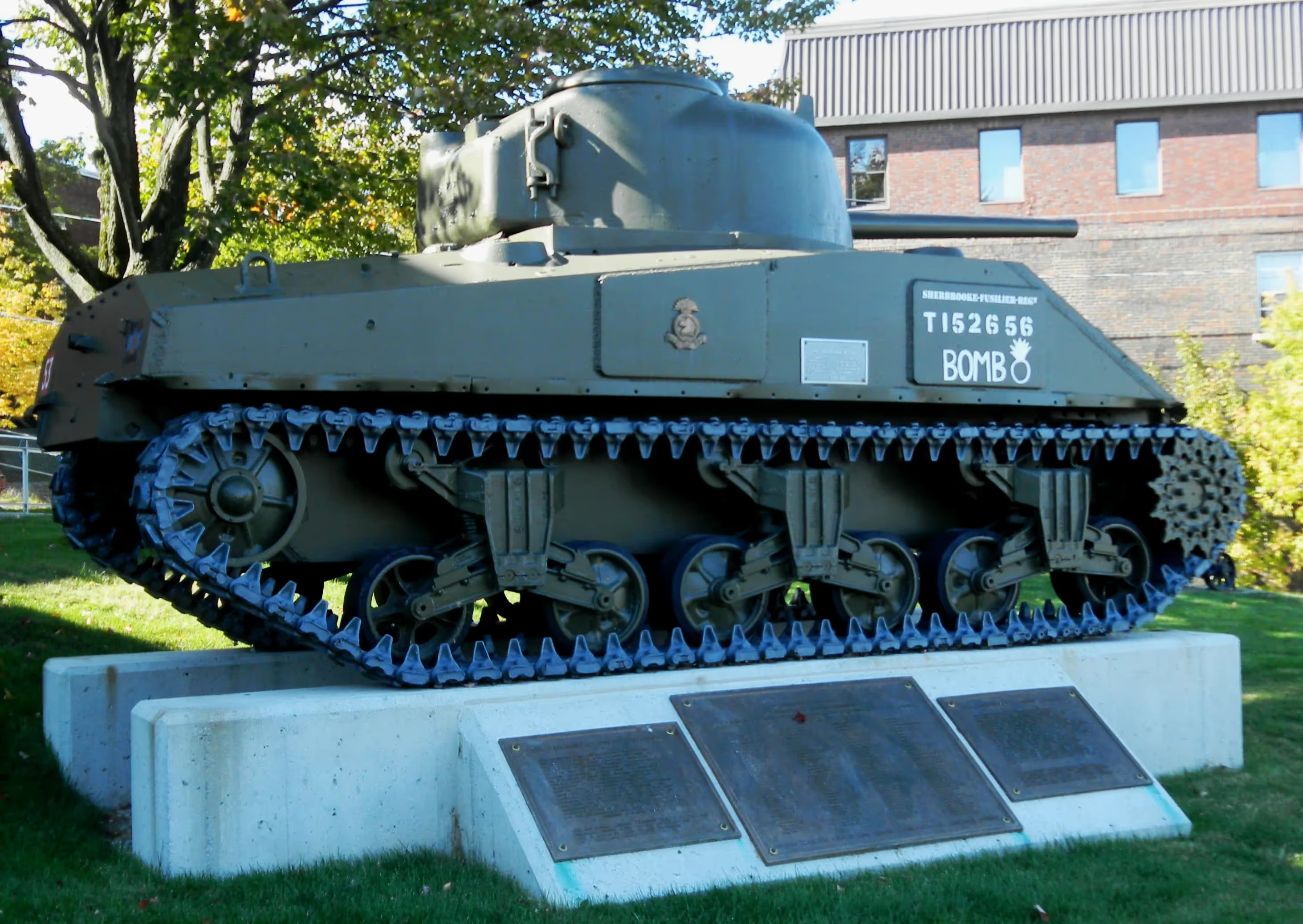
(Photos de l’auteur / Author Photos)
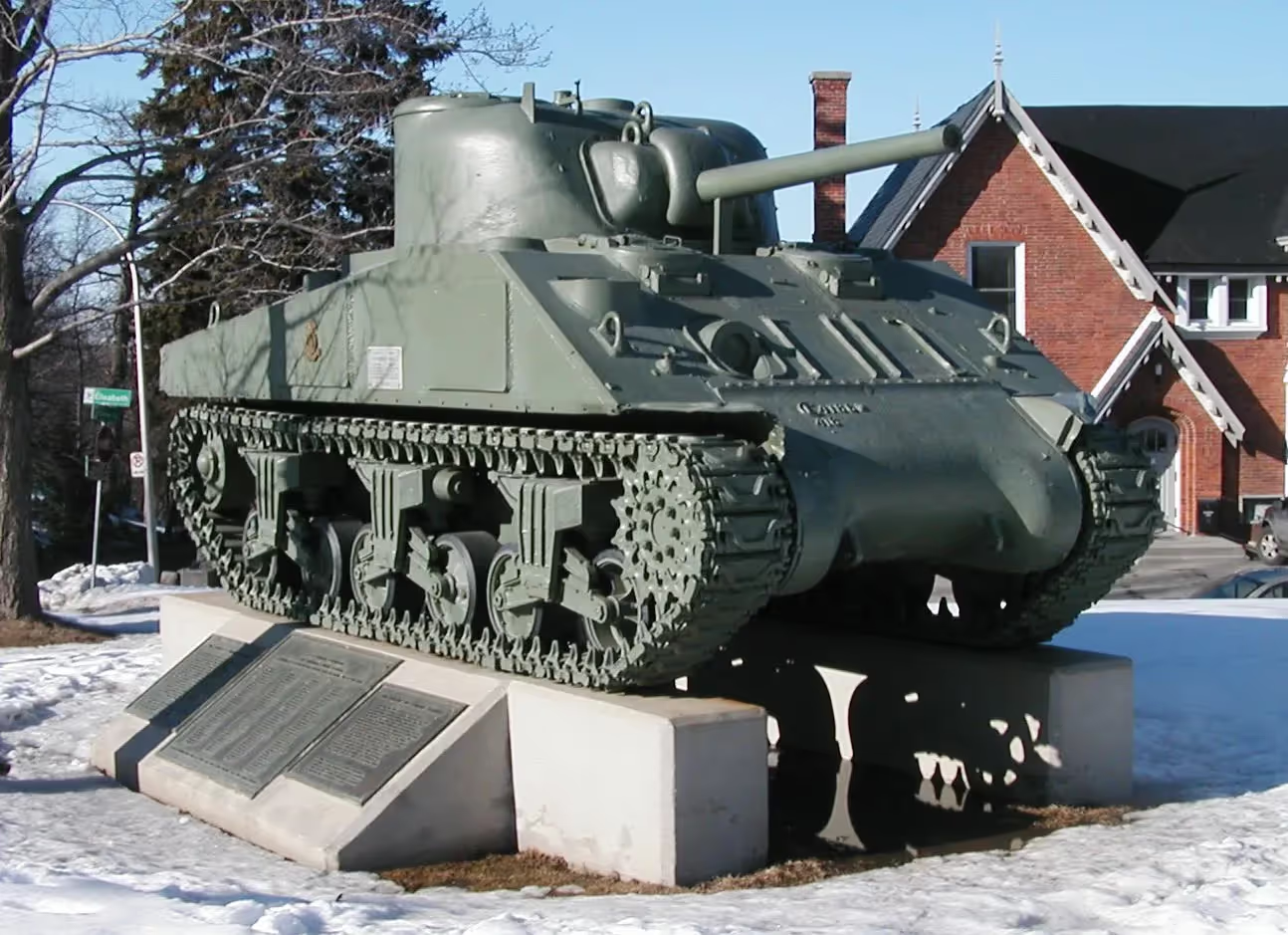
(Terry Warner Photo)
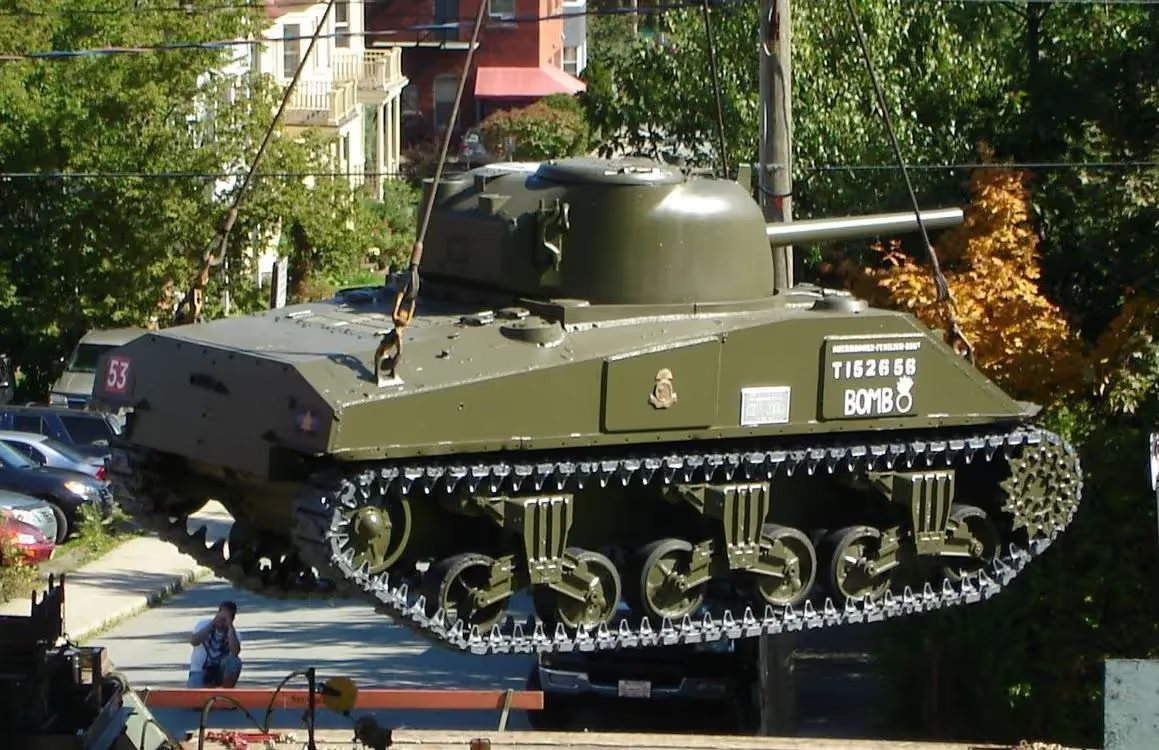
Sherman III tank, (Serial No. 8007), built by Fisher, R/N 3063256, Build No. 898, WD No. T-152656, “Bomb”, Sherbrooke Hussars Regiment, 315 Rue William. This tank is one of four surviving original Shermans that fought in Europe, returned to Canada in 1945. “Holy Roller“, in London, Ontario, “Cathy” at Trois-Rivieres, Quebec, and “Forceful II” in the Canadian War Museum, Ottawa, Ontario are the other survivors.
(Terry Warner Photo)
Sherman III tank, (Serial No. 8007), built by Fisher, R/N 3063256, Build No. 898, WD No. T-152656, “Bomb”, Sherbrooke Hussars Regiment, 315 Rue William. The tank is shown here being moved to a location nearby on the grass.
Trois-Rivières, Jean Victor Allard Armoury, 574 St Francis Xavier/Manège militaire Jean Victor Allard, 574 St François Xavier. Quebec
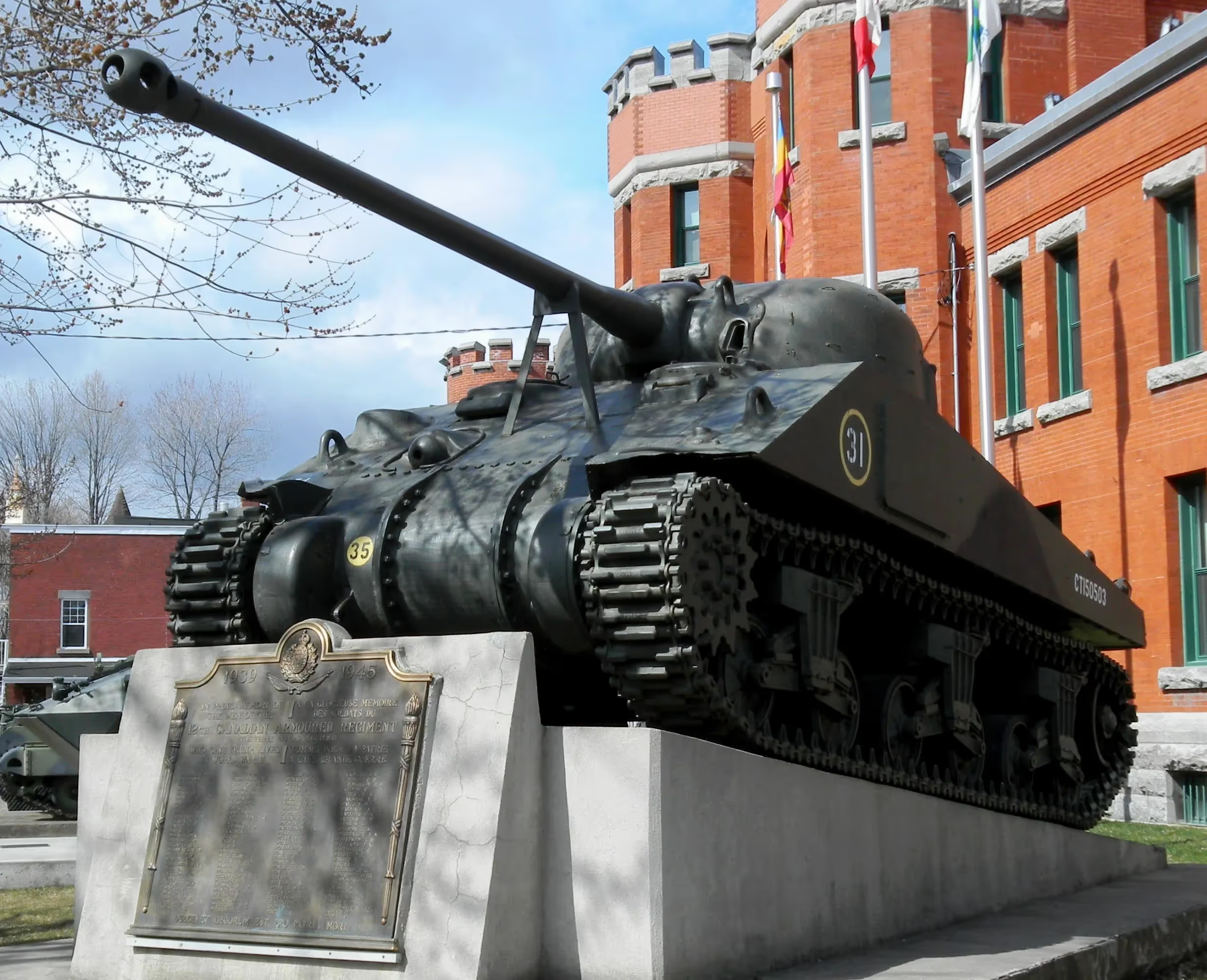
(Author Photos)
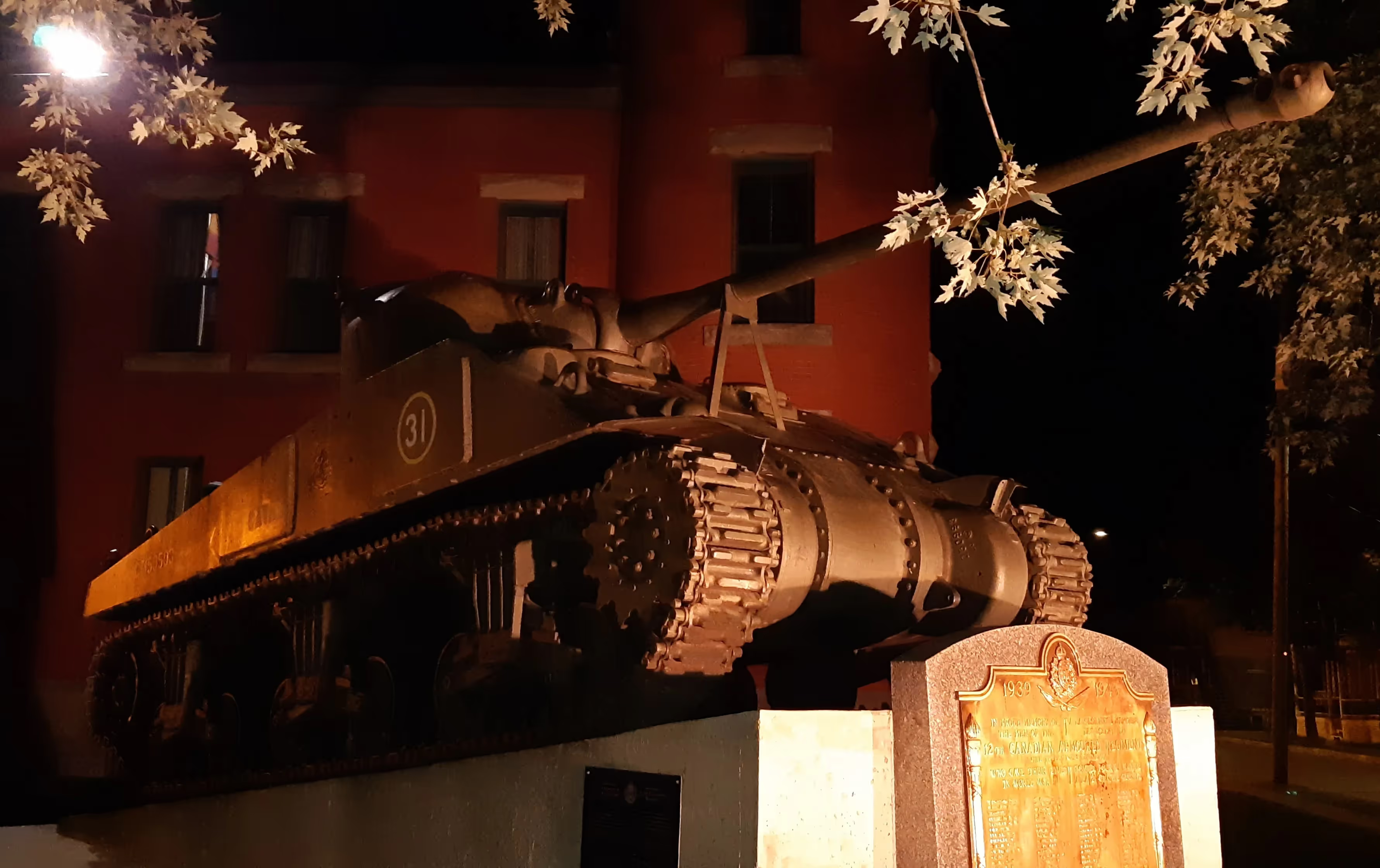
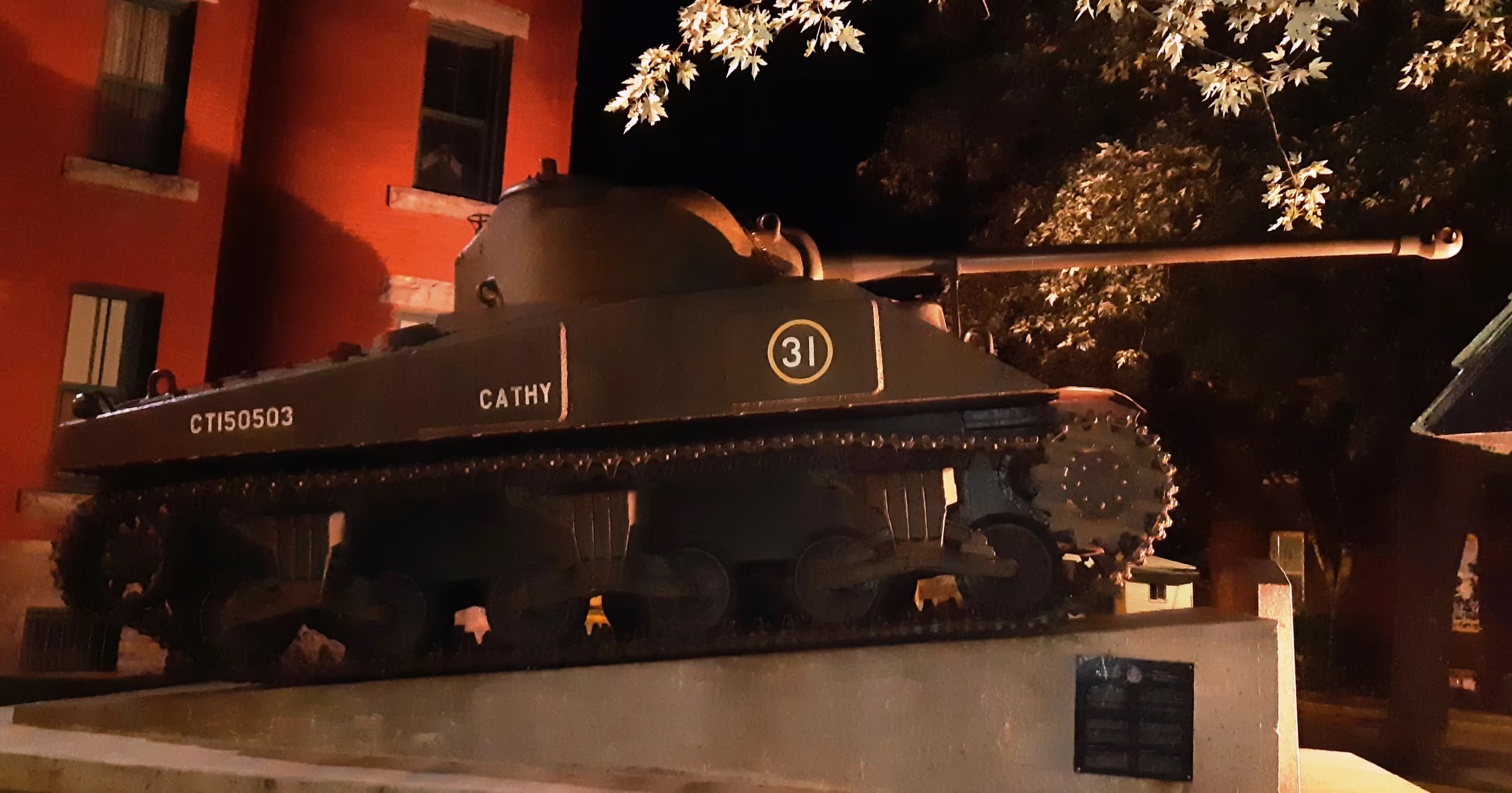
(Author Photos)
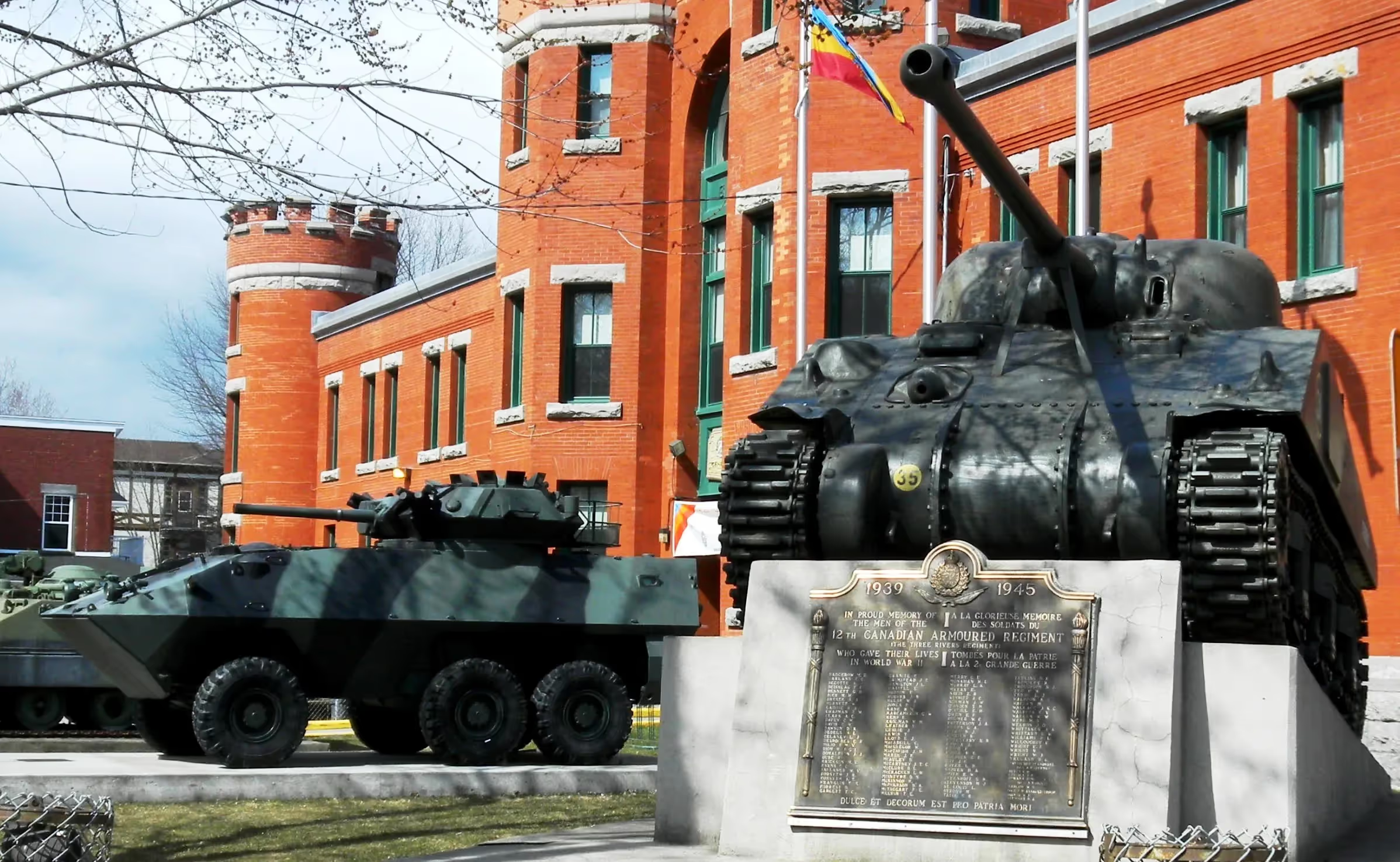
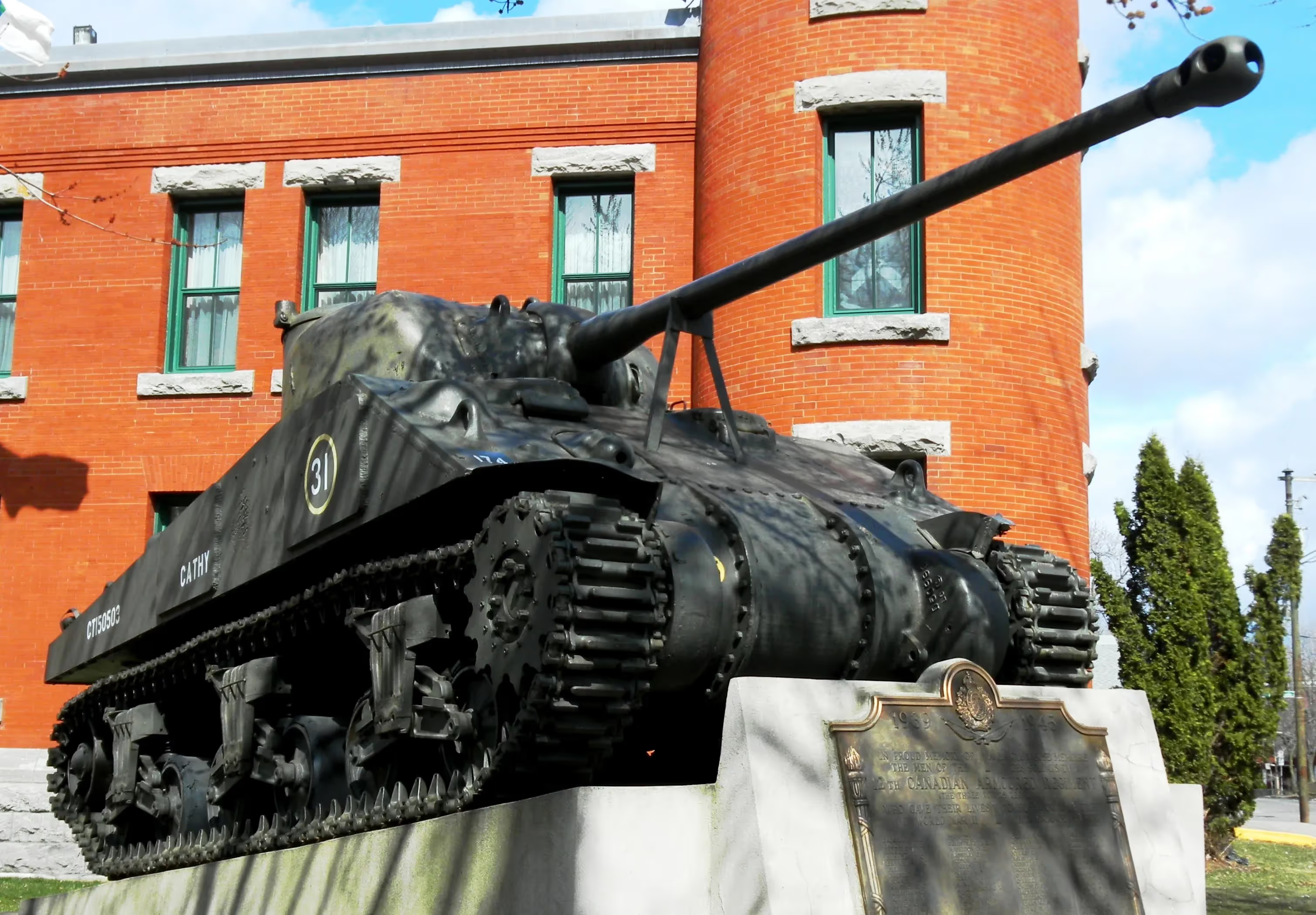
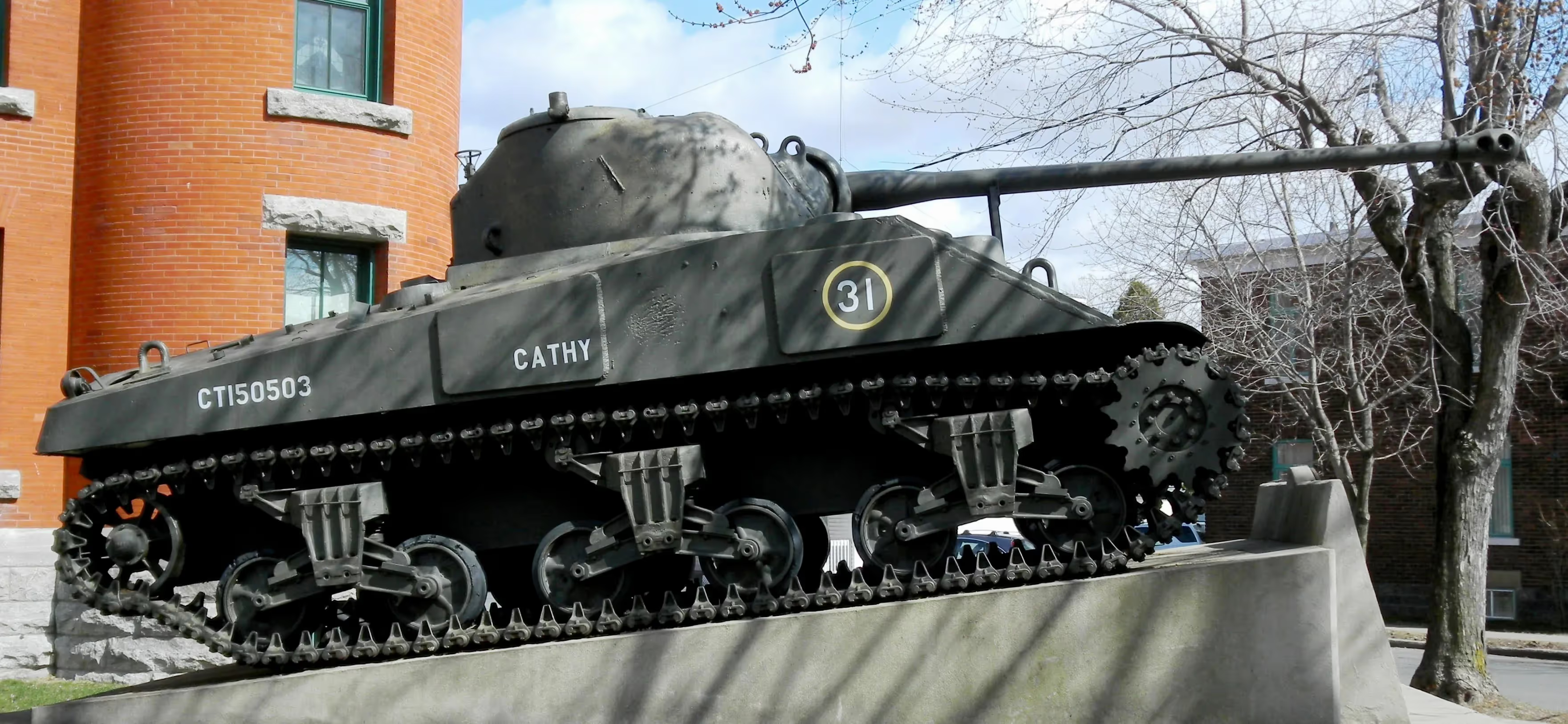
Sherman VC Firefly 17-pounder, CFR No. WD CT150503, “Cathy”. 12e RBC monument. This M4A4 is reported to have served with the Three Rivers Regiment in Sicily, Italy, and in the Netherlands during the Second World War. It was returned to Canada as a “War Trophy,” and is on display as a monument in Trois Riviers, Quebec. Its original 75-mm gun has been replaced with a 17-pounder anti-tank gun. The tank’s original Serial Number is 5235, indicating it was accepted in Sep 1942. The bullet splash plates on this tank are welded onto the air intake grill.
All comments are subject to our Comment Policy. You must be at least 18 years old to comment.
See a comment that violates our guidelines? Report it here.