
Warplanes preserved in the USA: Ohio: Dayton, National Museum of the USAF: Loening OA-1A
(NMUSAF Photo)
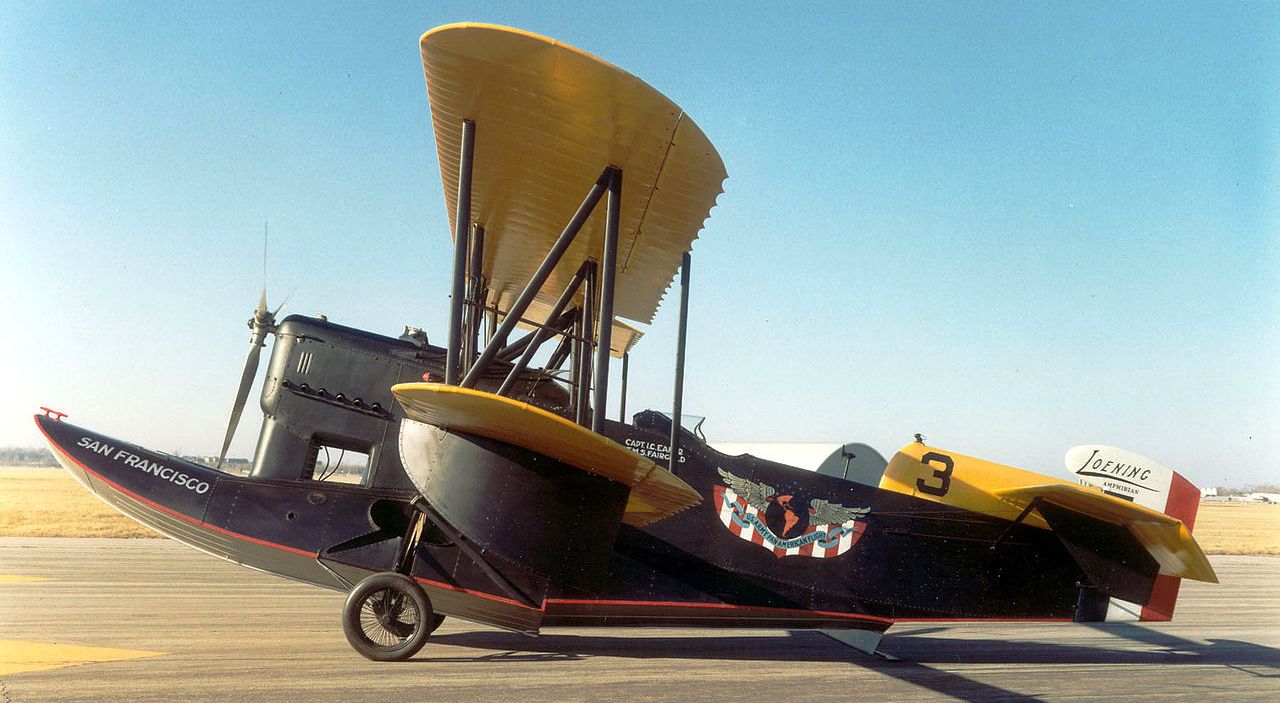
Loening OA-1A (Serial No. 26-431). of the U.S. Army Pan American Flight.
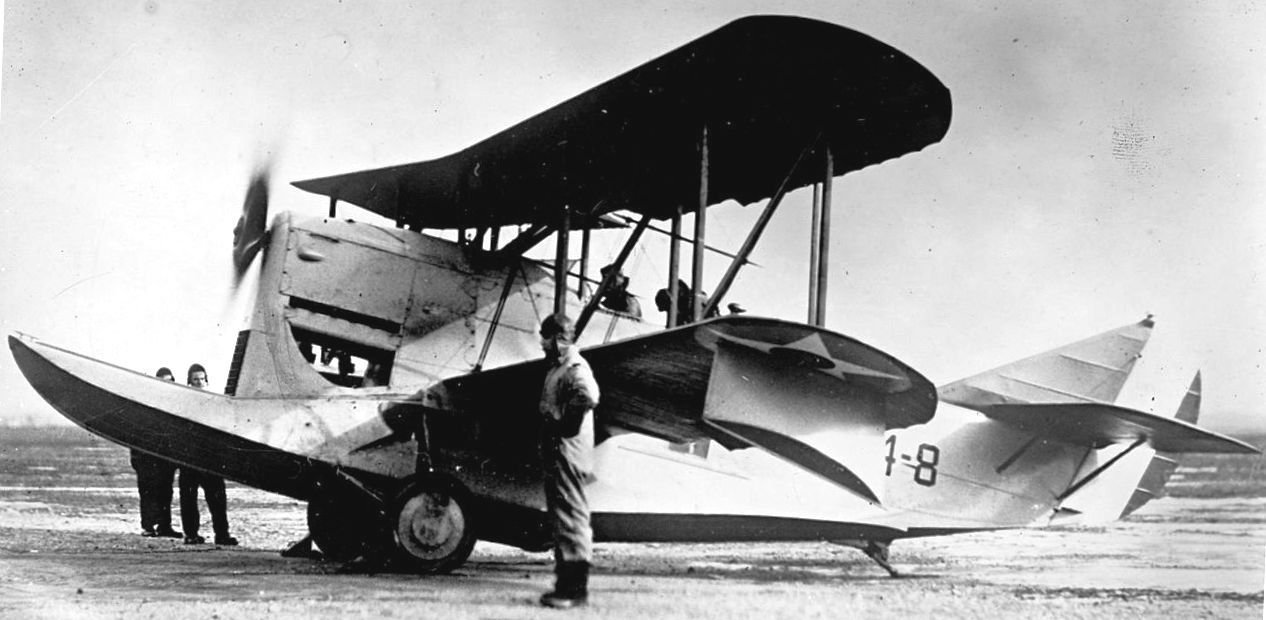
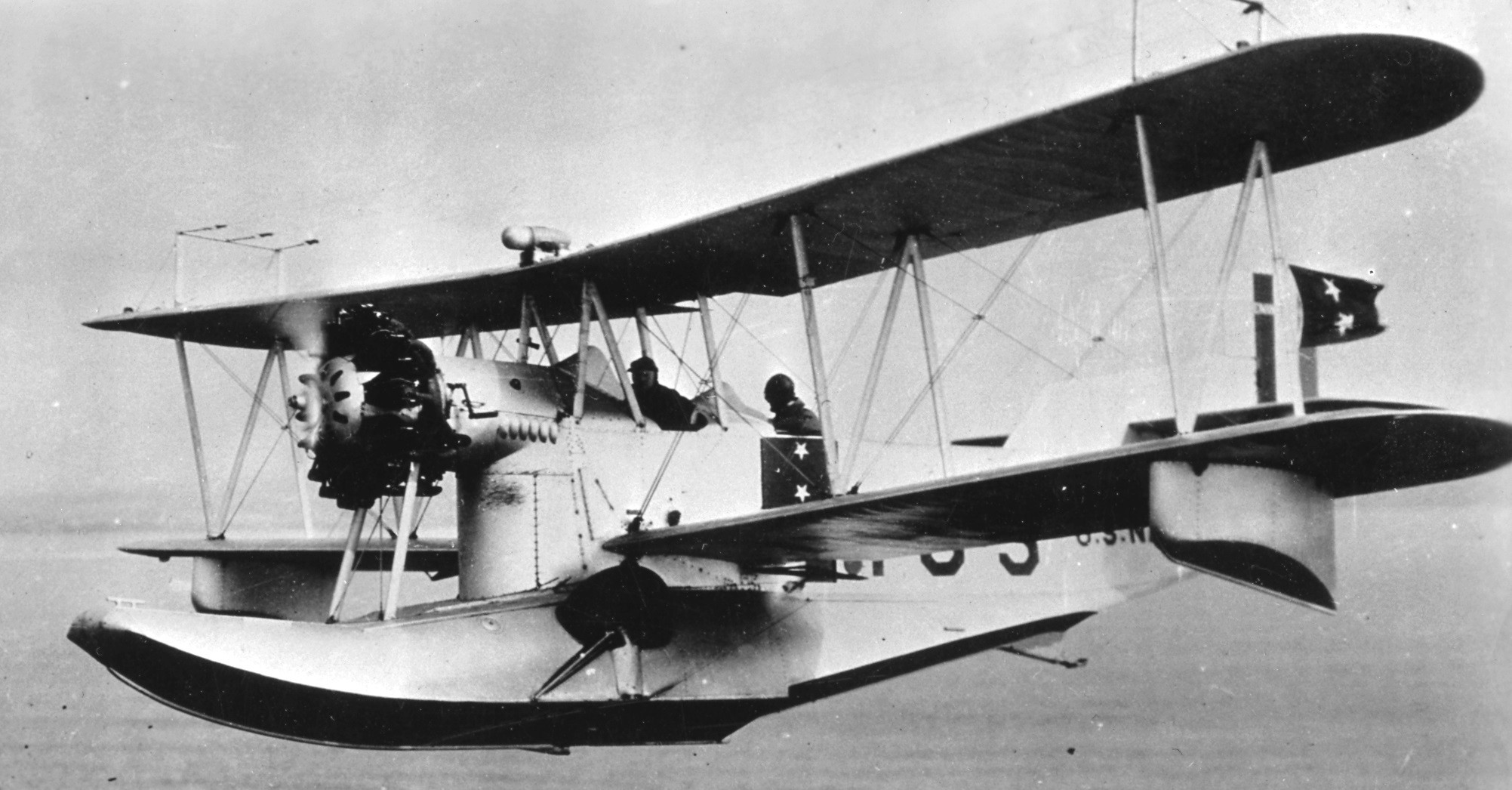
The Loening OL, also known as the Loening Amphibian, is an American two-seat amphibious biplane designed by Grover Loening and built by Loening for the United States Army Air Corps and the United States Navy. First flown in 1923, the OL was a high-performance amphibian with a large single hull and stabilizing floats fitted underneath each lower wing. The landing gear was retractable by use of a hand crank in the cockpit, and the plane was equipped with a tailskid for operations on land. It had a tandem open cockpit for a crew of two. The aircraft could be flown from either cockpit, with a wheel control in the forward cockpit and a removable stick control in the rear. Navigation and engine instruments were located in the forward cockpit.
The United States Army Air Corps ordered four prototypes as the XCOA-1, powered by a 400-hp Liberty V-1650-1 engine mounted inverted for clearance of the three-bladed variable-pitch steel propeller. The engine came with a fire suppression sprinkler system and was encased in a streamlined cowling to protect it from sea spray. Oil from a tank in the fuselage was cooled by passing through a spiral copper tube exposed to the slipstream on top of the cowling. The fuel tanks were mounted inside the hull, with a 140-gallon (530-liter) gasoline tank under the wings, and a reserve 60-gallon (230-liter) gasoline-benzol tank between the cockpits. Total fuel capacity provided for roughly ten hours of flight.
A number of variants were introduced for both the Army and the Navy. During later production, the company merged with the Keystone Aircraft Corporation. (Wikipedia)
(NASM Photo)
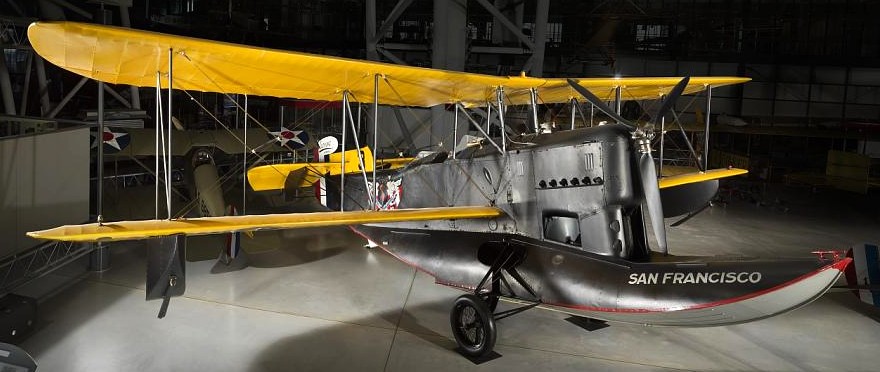
The historic Pan-American Goodwill Flight of 1926 and 1927 through Mexico and Central and South America was intended to improve relations with Latin American countries, to encourage commercial aviation, and to provide valuable training for Air Corps personnel. The flight was made by ten pilots in five Loening OA-1A amphibian aircraft. To stimulate public interest, each airplane was named after a major U.S. city-the New York, the San Antonio, the San Francisco, the Detroit, and the St. Louis.
The 35,200 km (22,000 mi) flight began on December 21, 1926, from San Antonio, Texas. The journey took 59 flying days, interspersed with 74 days for scheduled maintenance and diplomatic meetings and ceremonies. The flight concluded at Bolling Field in Washington, D.C., on May 2, 1927. Within three weeks, however, the impressive achievement was eclipsed by Lindbergh’s solo trans-Atlantic flight in the Spirit of St. Louis. (NASM)
(Library of Congress Photo)
Loening OL/OA-1A amphibian, USN, 1923.
(Library and Archives Canada Photo, MIKAN No. 3580124)
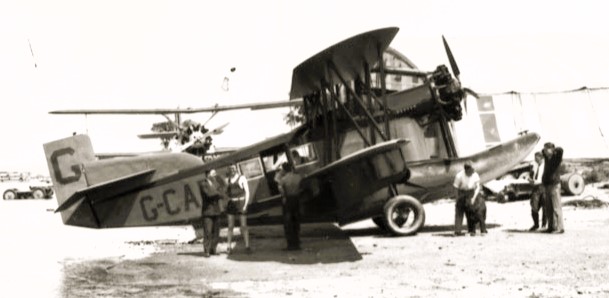
Loening amphibian, Reg. No. G-CA…, 18 Aug 1928.
(abionslegendaires Photo)
Loening amphibian.