
Royal Navy pre-dreadnought battleships: HMS Royal Sovereign, HMS Hood, HMS Empress of India, HMS Ramillies, HMS Resolution, HMS Revenge, HMS Repulse, HMS Royal Oak
The British Royal Navy built a series of pre-dreadnought battleships as part of a naval expansion programme that began with the Naval Defence Act 1889. These ships were characterised by a main battery of four heavy guns—typically 12-inch (305 mm) guns—in two twin mounts, a secondary armament that usually comprised 4.7-to-6-inch (120 to 150 mm) guns, and a high freeboard.[a] Primarily concerned with maintaining its “two-power standard” of numerical superiority over the combined French and Russian fleets, the Royal Navy built or purchased a total of fifty-two battleships of this type prior to the 1906 completion of the revolutionary all-big-gun Dreadnought, which gave the pre-dreadnoughts their name. William Henry White served as the Director of Naval Construction from 1885 to 1902 and thus oversaw the development of most of the pre-dreadnoughts.
The first class, the Royal Sovereign class, comprised eight ships and introduced the standard armament layout associated with pre-dreadnought type battleships. They were followed by a trio of smaller, second-class battleships intended for overseas duties: the two Centurion-class battleships and HMS Renown. The nine Majestic-class battleships followed as refinements of White’s original design, and they proved to be widely influential as foreign navies copied their general characteristics. Six slightly smaller Canopus-class battleships intended for the China Station followed, after which White designed another tranche of eight larger battleships: three Formidable- and five very similar London-class ships. The latter were built as a stopgap while White completed work on the faster Duncan class, which were intended to counter new Russian ships. A trend toward larger secondary batteries in foreign battleships led to the eight-ship King Edward VII class, which carried 9.2 in (234 mm) guns. A pair of small battleships originally built for the Chilean Navy—what became the Swiftsure class—were purchased after the Chileans placed them for sale in 1903. A final class of two ships, designed by Philip Watts, was built while Dreadnought was being developed: the Lord Nelson class.
The ships built for the Royal Navy served in a variety of roles across the globe, seeing service in the Mediterranean, Home, and Atlantic Fleets, among others. The second-class ships generally operated abroad on the China Station or elsewhere in the British Empire. As newer ships came into service, older vessels were placed in reserve or converted for subsidiary duties, including serving as barracks ships and depot vessels. One vessel, Montagu, was lost in an accidental grounding in 1906 and the oldest battleships of the Royal Sovereign and Centurion classes were broken up beginning in the early 1910s. With the start of the First World War in 1914, many of the vessels were mobilised for combat, and many served in the Dardanelles campaign, where five were lost to torpedoes and mines. Another five were sunk elsewhere during the war. The surviving vessels were all broken up in the post-war reduction in naval strength save one, Agamemnon, which was converted into a radio-controlled target ship. She served in this role until 1927, when she was sold for scrap. (Wikipedia)
Royal Sovereign class
HMS Royal Sovereign, HMS Hood, HMS Empress of India, HMS Ramillies, HMS Resolution, HMS Revenge, HMS Repulse, HMS Royal Oak
The Royal Sovereign class was authorised under the Naval Defence Act 1889, which established the “two-power standard” and led to a major naval construction programme. They were ordered in response to a war scare with the Russian Empire and a realisation that the fleet would be insufficient in the event of a conflict with France. The class is frequently regarded as the first of what would later become known as the pre-dreadnought battleship, as they marked a clear departure from the period of design experimentation that characterised ironclad battleship construction in the 1870s and 1880s. They introduced what became the standard form for battleships for the next fifteen years, which included a main battery of four heavy guns in a pair of two-gun mounts and a high freeboard suitable for operation on the high seas, though the development of modern gun turrets would come with subsequent designs. They were the first in a series of British battleships designed by William Henry White, the Director of Naval Construction (DNC); he was to be responsible for most of the pre-dreadnoughts built in Britain.[1][2][3][4]
All eight ships had entered service by 1894, with most serving with the Channel Fleet initially, though Ramillies and Hood were assigned to the Mediterranean Fleet and Revenge and Royal Oak served briefly with the Flying Squadron in 1896. Empress of India and Royal Sovereign were transferred to the Mediterranean to take part in the International Squadron during a rebellion on the island of Crete in 1897. Starting in 1900, all members of the class in the Mediterranean were recalled to Britain for refits except Hood, and afterward they were placed in reserve by 1904–1905. Long-since obsolete by the early 1910s, the members of the class began to be discarded: Repulse was broken up in 1911 and Empress of India was expended as a target ship in 1913. Royal Sovereign and Ramillies were scrapped that year, and Royal Oak and Resolution followed in 1914. After the British entry into the First World War in August 1914, Hood was scuttled as a blockship to bar one of the entrances to Portland Harbour. Revenge was the only member of the class to see active service during the war, being used for coastal bombardment off Flanders. Converted to a barracks ship by late 1915, she was ultimately scrapped in 1919. (Wikipedia)
HMS Royal Sovereign
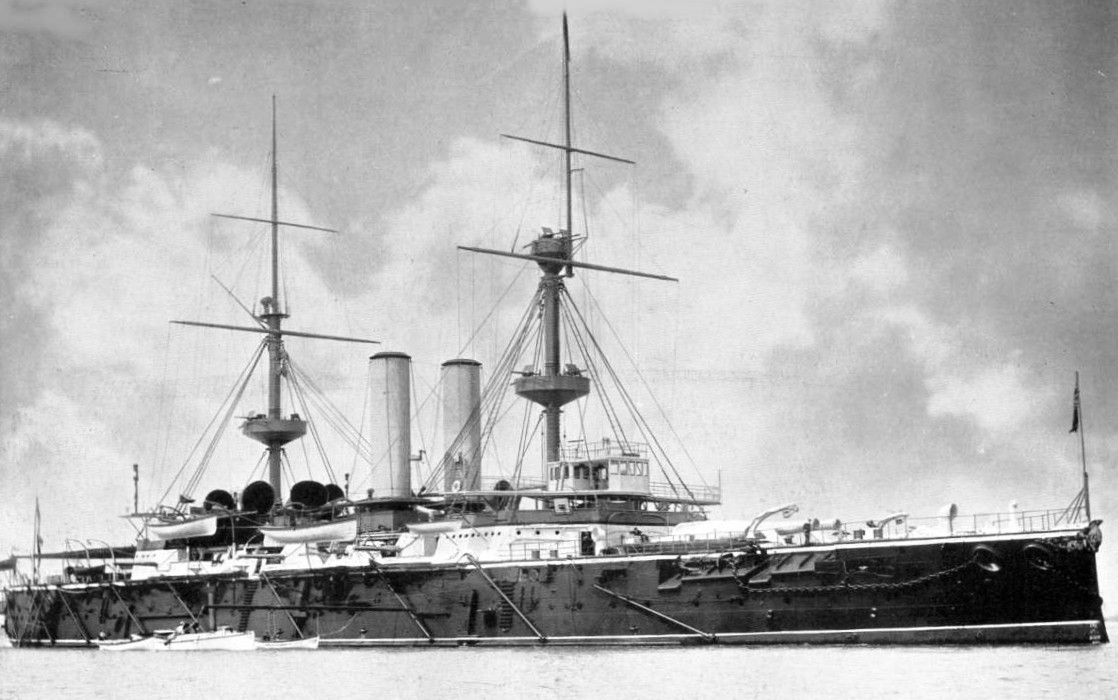
(Royal Navy Photo, c1897)
HMS Royal Sovereign was the lead ship of the seven ships in her class of pre-dreadnought battleships built for the Royal Navy in the 1890s. The ship was commissioned in 1892 and served as the flagship of the Channel Fleet for the next five years. She was transferred to the Mediterranean Fleet in 1897 and returned home in 1902, and was briefly assigned as a coast guard ship before she began a lengthy refit in 1903–1904. Royal Sovereign was reduced to reserve in 1905 and was taken out of service in 1909. The ship was sold for scrap four years later and subsequently broken up in Italy. (Wikipedia)
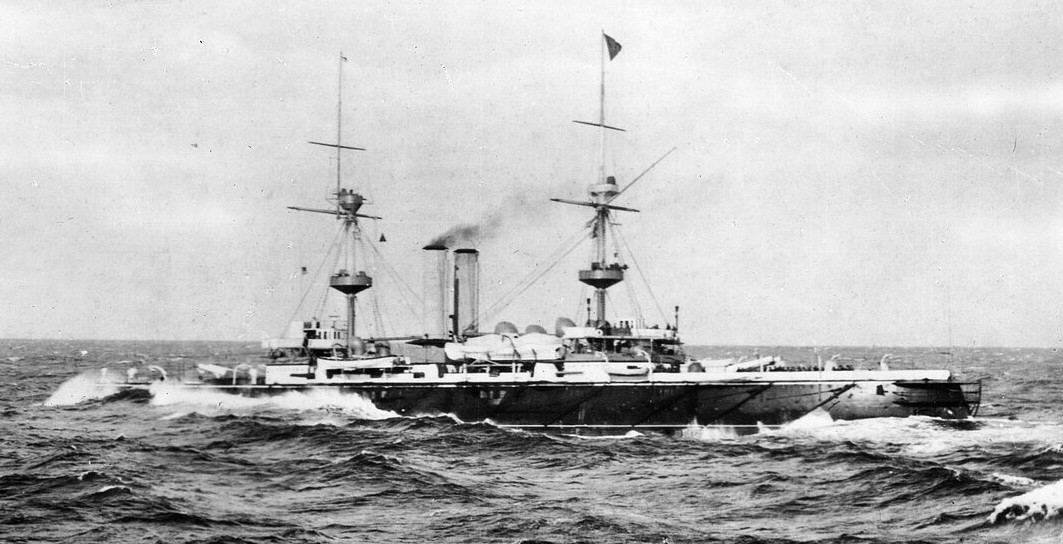
(Royal Navy Photo)
HMS Royal Sovereign at sea, 1913.
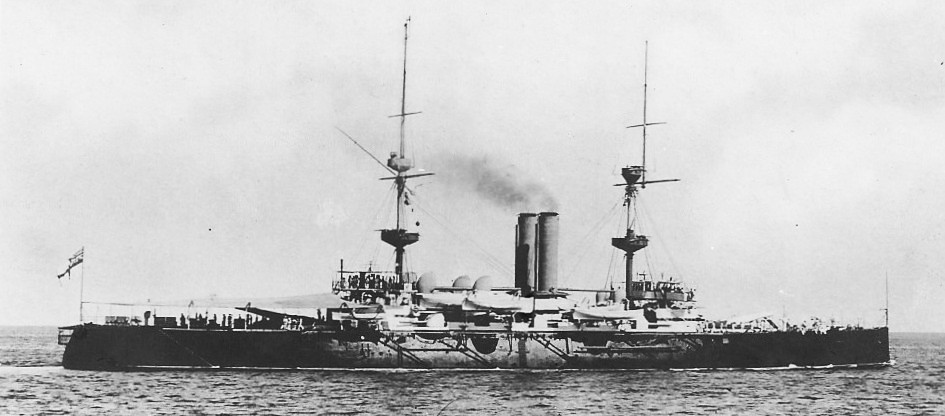
(Rotary Photographic Company Photo)
HMS Royal Sovereign.
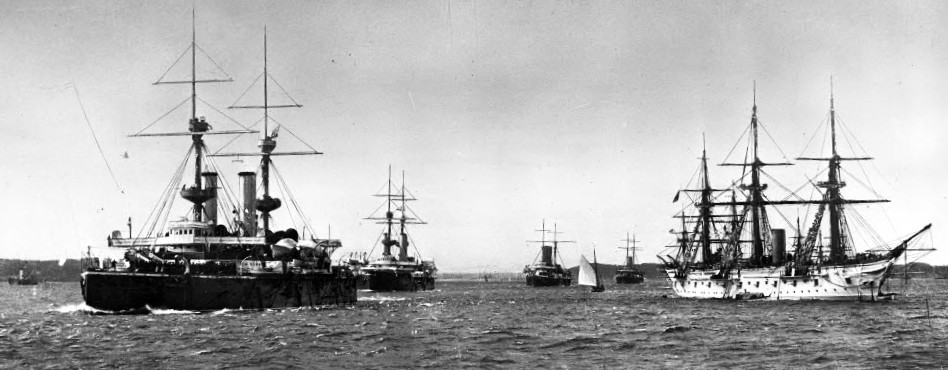
(Arthur Renard Photo)
HMS Royal Sovereign, HMS Empress of India, HMS Repulse, and HMS Resolution, Kiel, Germany, June 1895.
HMS Hood
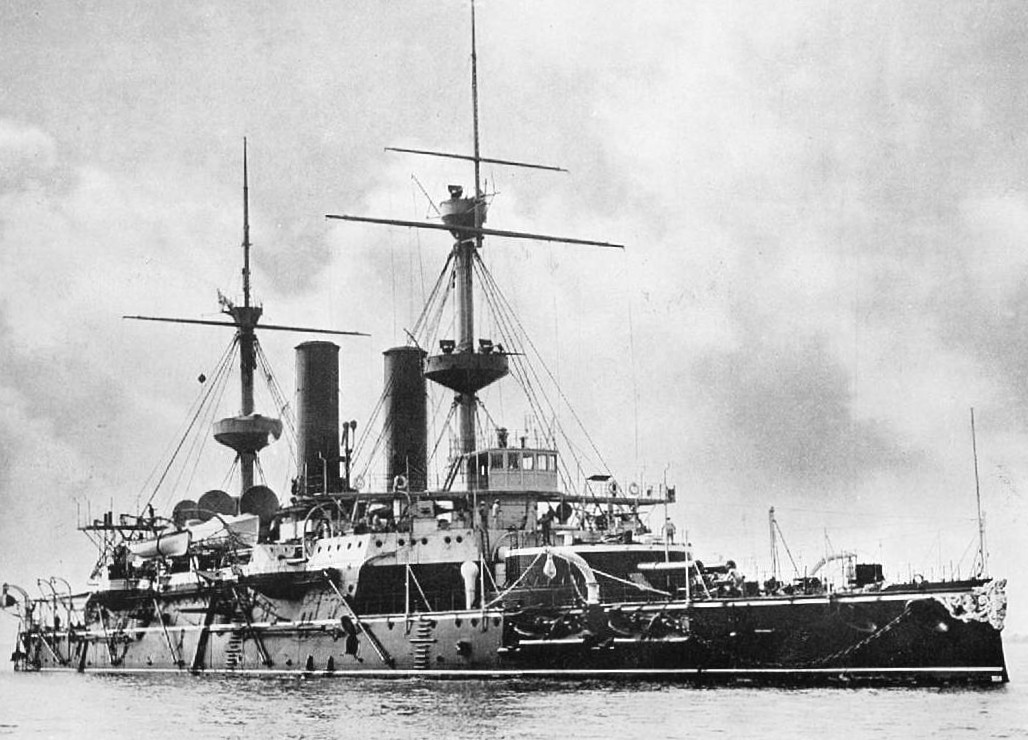
(Royal Navy Photo, 1890)
HMS Hood was a modified Royal Sovereign-class pre-dreadnought battleship built for the Royal Navy in the early 1890s. She differed from the other ships of the class in that she had cylindrical gun turrets instead of barbettes and a lower freeboard. She served most of her active career in the Mediterranean Sea, where her low freeboard was less of a disadvantage. The ship was placed in reserve in 1907 and later became the receiving ship at Queenstown, Ireland. Hood was used in the development of anti-torpedo bulges in 1913 and was scuttled in late 1914 to act as a blockship across the southern entrance of Portland Harbour after the start of the First World War. (Wikipedia)
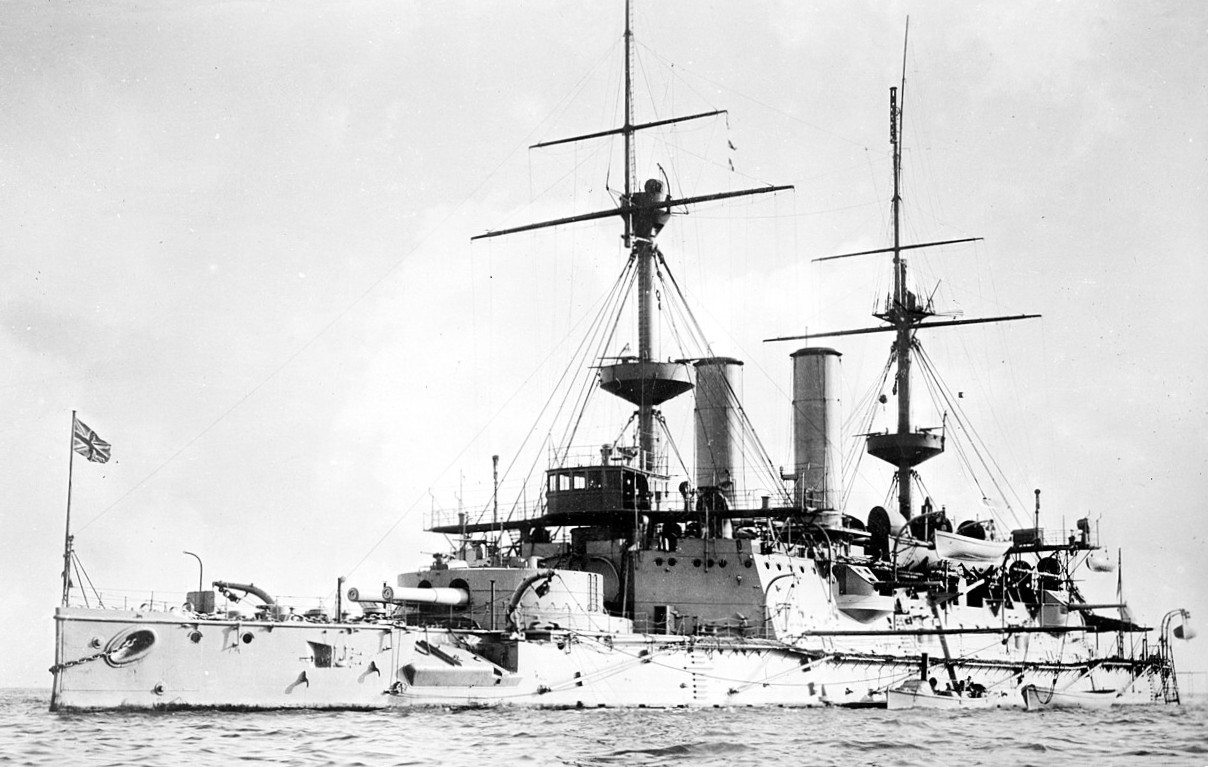
(Library of Congress Photo)
HMS Hood, 1910.
HMS Empress of India
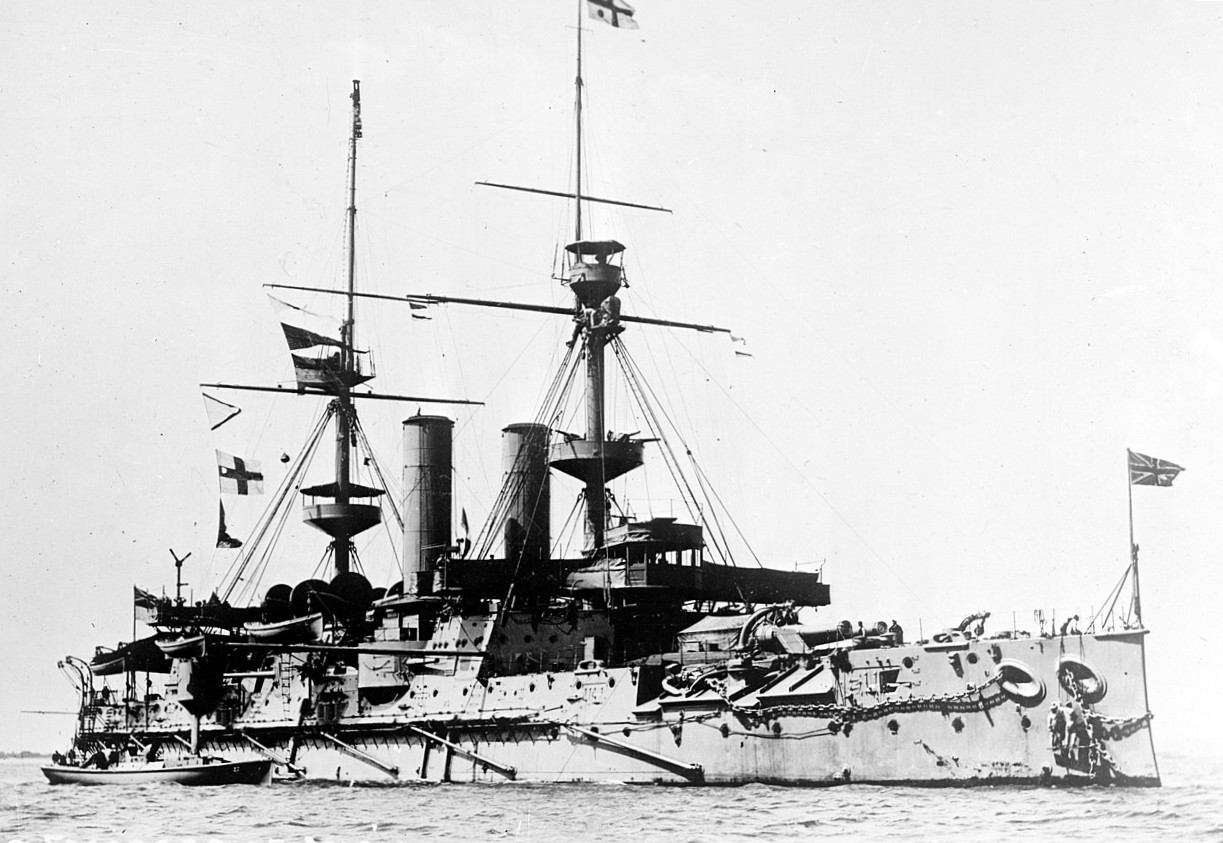
(Library of Congress Photo, 1906)
HMS Empress of India was one of seven Royal Sovereign-class pre-dreadnought battleships built for the Royal Navy during the 1890s. The ship was commissioned in 1893 and served as the flagship of the second-in-command of the Channel Fleet for two years. She was transferred to the Mediterranean Fleet in 1897, during which time Empress of India was assigned to the International Squadron blockading Crete during the uprising there. She returned home in 1901 and was briefly assigned as a coast guard ship in Ireland before she became the second flagship of the Home Fleet. The ship was reduced to reserve in 1905 and accidentally collided with the submarine HMS A10 the following year. Empress of India was taken out of service in early 1912 and accidentally struck a German sailing ship while under tow. She was sunk as a target ship in 1913. (Wikipedia)
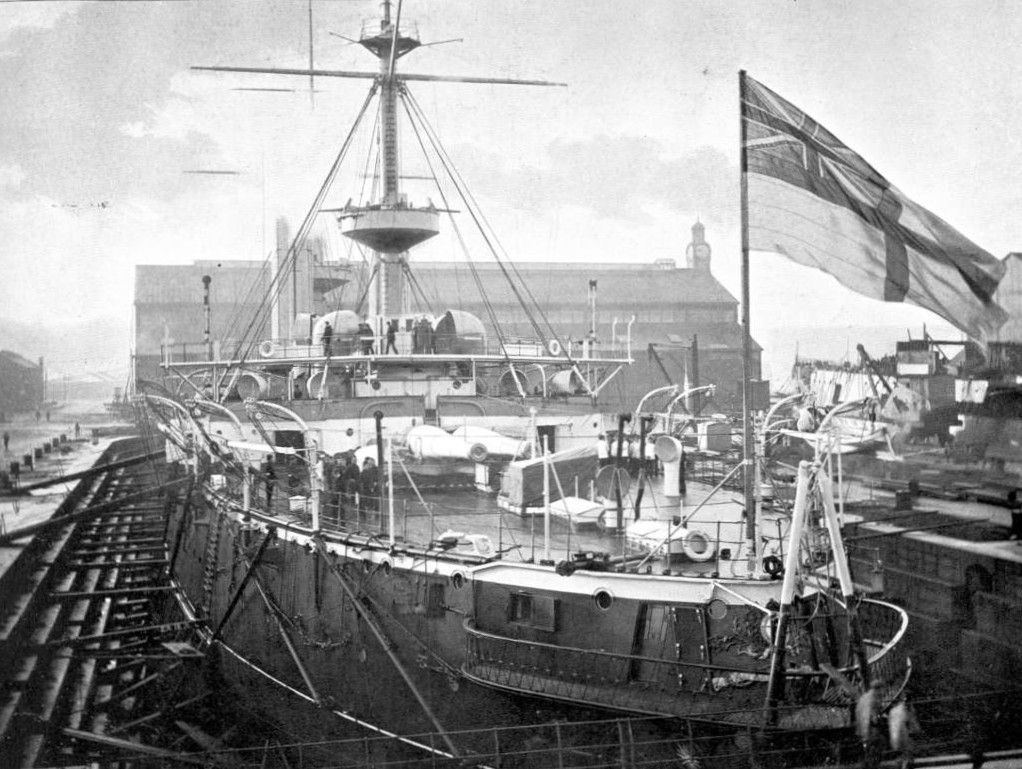
(Royal Navy Photo)
HMS Empress of India in drydock at Chatham, last December. Twin 13.5 inch guns mounted on barbette are visible, 20 March 1896.
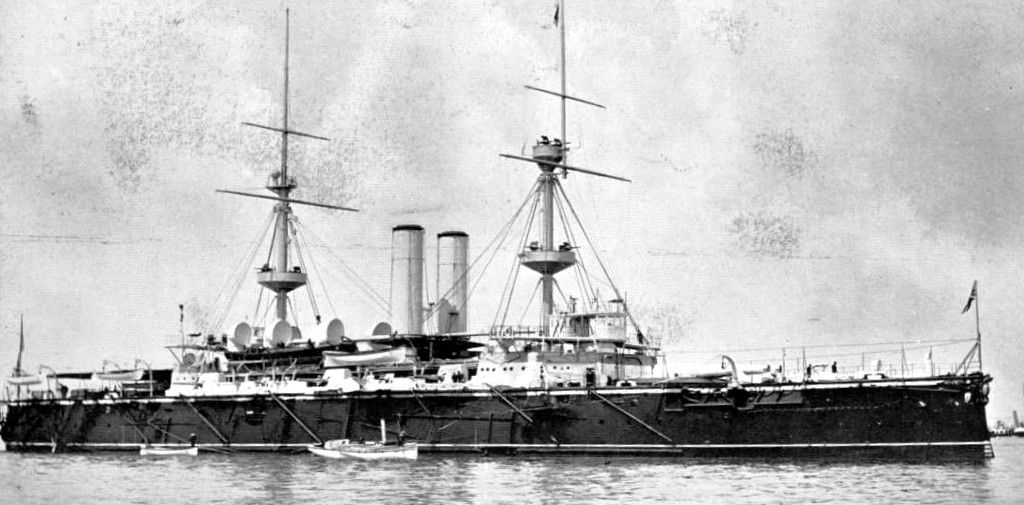
(Royal Navy Photo)
HMS Empress of India, 1897.
HMS Ramillies
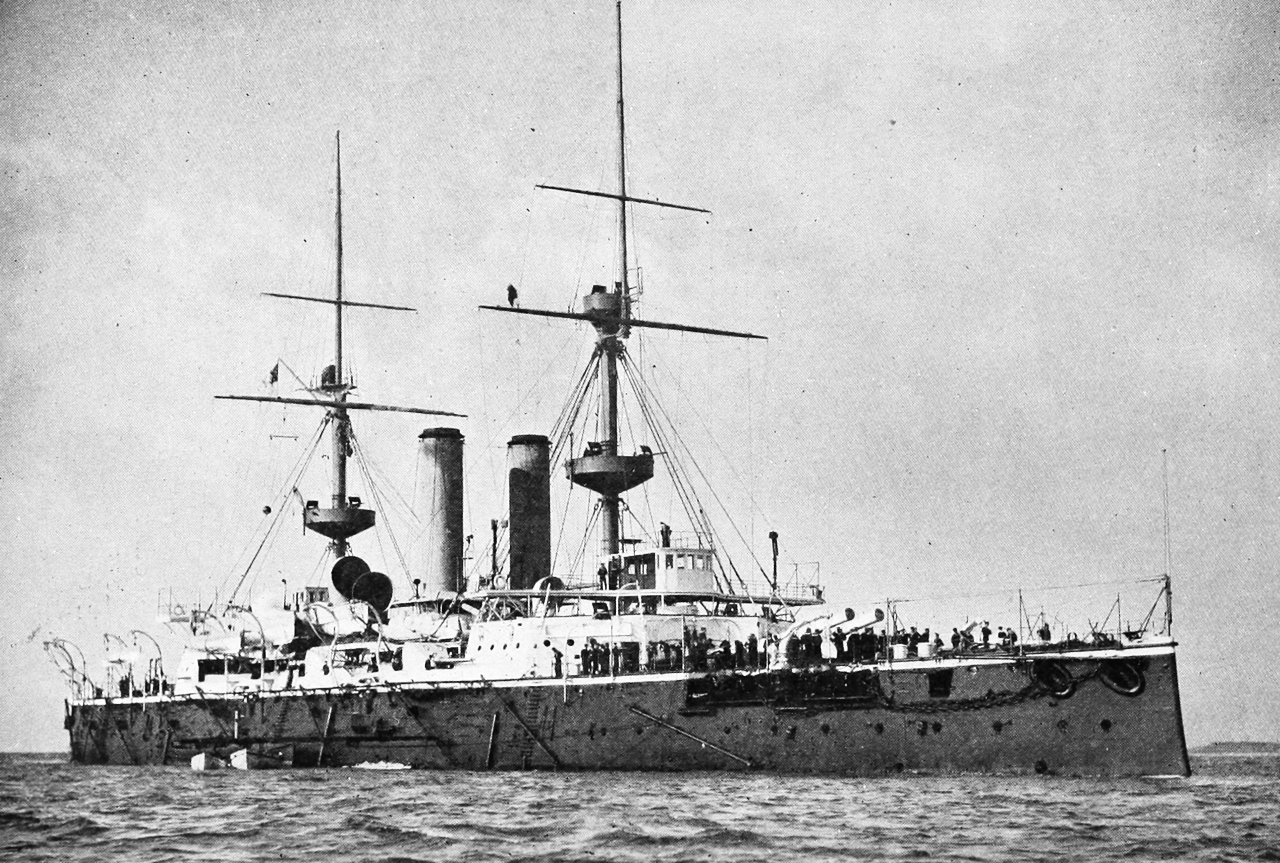
(Symonds & Co, Portsmouth Photo, Cassier’s magazine, 1893)
HMS Ramillies was a Royal Sovereign-class pre-dreadnought battleship of the Royal Navy, named after the Battle of Ramillies. The ship was built by J. & G. Thompson at Clydebank, starting with her keel laying in August 1890. She was launched in March 1892 and commissioned into the Mediterranean Fleet as flagship the following October. She was armed with a main battery of four 13.5-inch guns and a secondary battery of ten 6-inch guns. The ship had a top speed of 16.5 knots.
Ramillies served as flagship of the Mediterranean Fleet up to 1899, and again from 1900 to 1902. After taking part in manoeuvres off the coast of Portugal, she returned to England for a refit in 1903. Upon completion, she was commissioned into the Reserve in 1905. She suffered damage while participating in combined manoeuvres the following year, and was recommissioned into the Special Service Division of the Home Fleet in 1907, becoming the Parent Ship of the 4th Division of the Home Fleet in 1910. She was relieved of that role a year later, before being reduced to material reserve at Devonport in August 1911, and stripped and laid up at Motherbank for disposal in July 1913. She was sold for scrap in October 1913 and towed to Italy to be broken up the following month. (Wikipedia)
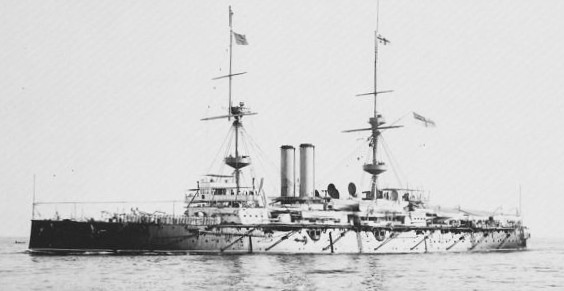
(Royal Navy Photo)
HMS Ramillies, 1901.
HMS Resolution
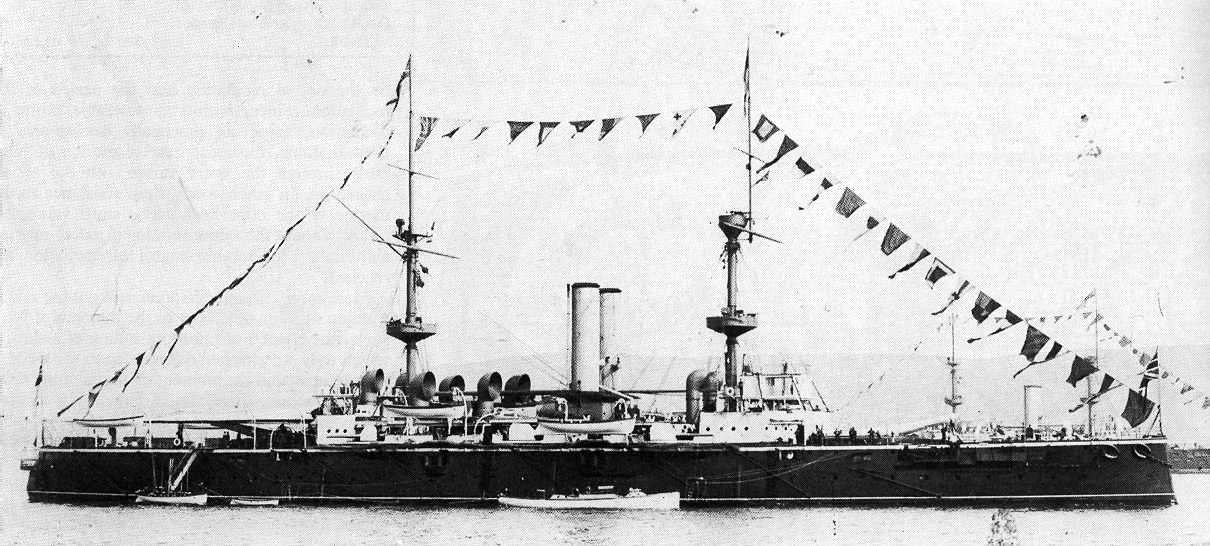
(Royal Navy Photo, 1895)
HMS Resolution was a Royal Sovereign-class pre-dreadnought battleship of the Royal Navy. The ship was built by Palmers Shipbuilding and Iron Company, starting with her keel laying in June 1890. She was launched in May 1892 and, after completing trials, was commissioned into the Channel Squadron the following December. She was armed with a main battery of four 13.5-inch guns and a secondary battery of ten 6-inch guns. The ship had a top speed of 16.5 knots.
Resolution served with the Channel Squadron up to 1901; she took part in the Diamond Jubilee Fleet Review and a number of manoeuvres in the Atlantic and the Southwest Approaches. She was recommissioned as a coast guard ship later in 1901 and underwent a refit in 1903, after which she served at Sheerness as a port guard ship, before entering the Fleet Reserve at Chatham in June 1904. She suffered damage while participating in combined manoeuvres in 1906, and was recommissioned into the Special Service Division of the Home Fleet the following year. She was decommissioned in August 1911 and laid up at Motherbank for disposal, before being sold for scrap in April 1914 and towed to the Netherlands to be broken up the following month. (Wikipedia)
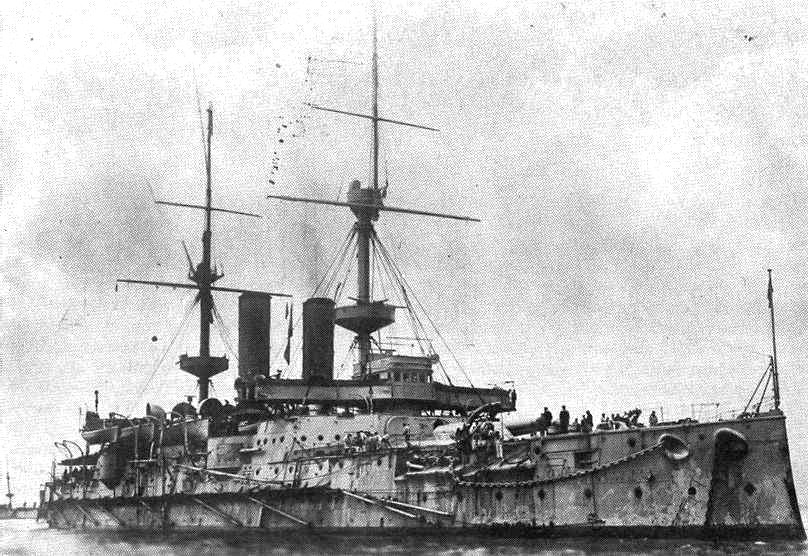
(Royal Navy Photo)
HMS Resolution, 1903.
HMS Revenge
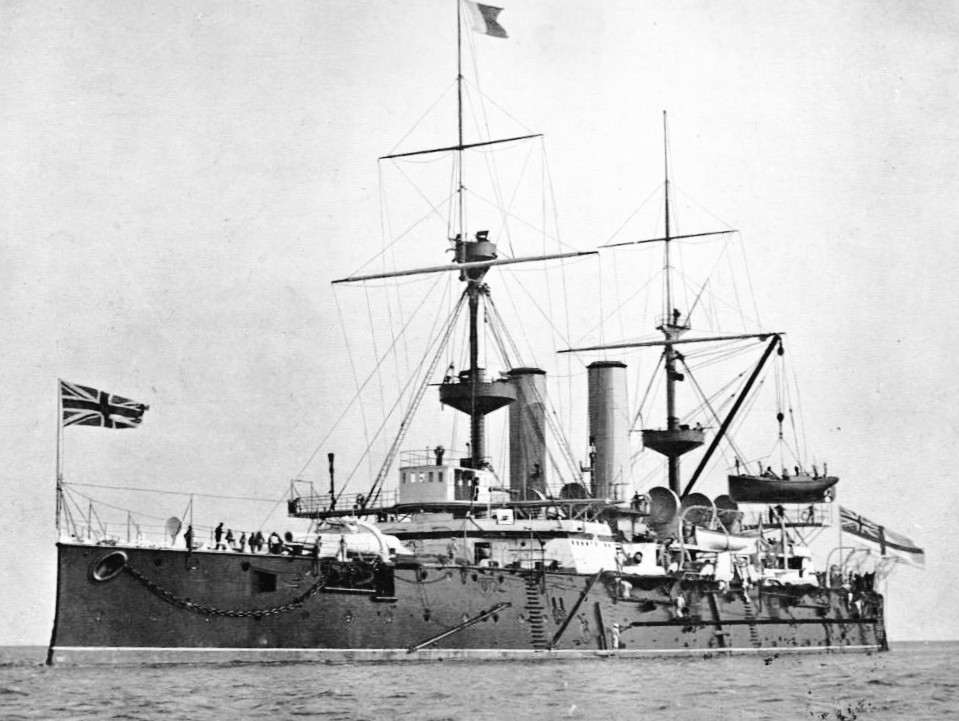
(Royal Navy Photo, 1897)
HMS Revenge was one of seven Royal Sovereign-class pre-dreadnought battleships built for the Royal Navy during the 1890s. She spent much of her early career as a flagship for the Flying Squadron and in the Mediterranean, Home and Channel Fleets. Revenge was assigned to the International Squadron blockading Crete during the 1897–1898 revolt there against the Ottoman Empire. She was placed in reserve upon her return home in 1900, and was then briefly assigned as a coast guard ship before she joined the Home Fleet in 1902. The ship became a gunnery training ship in 1906 until she was paid off in 1913.
Revenge was recommissioned the following year, after the start of the First World War, to bombard the coast of Flanders as part of the Dover Patrol, during which she was hit four times, but was not seriously damaged. She had anti-torpedo bulges fitted in early 1915, the first ship to be fitted with them operationally. The ship was renamed Redoubtable later that year and was refitted as an accommodation ship by the end of the year. The last surviving member of her class, the ship was sold for scrap in November 1919. (Wikipedia)
HMS Repulse
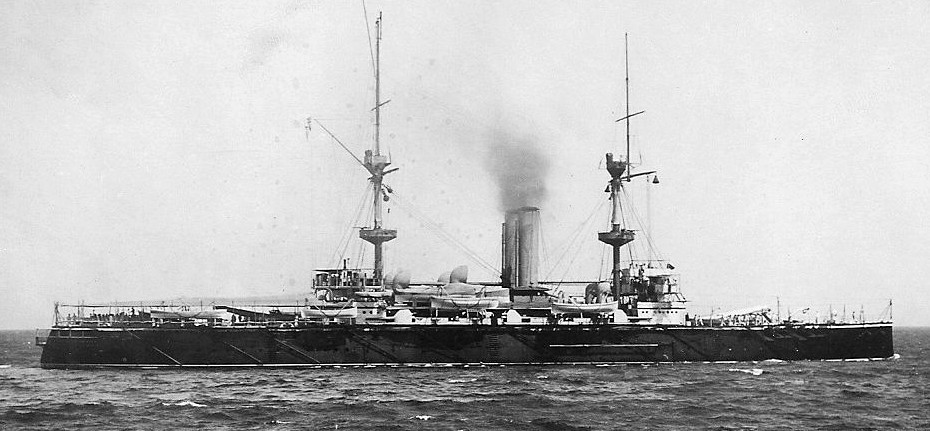
(Royal Navy Photo)
HMS Repulse was one of seven Royal Sovereign-class pre-dreadnought battleships built for the Royal Navy in the 1890s. Assigned to the Channel Fleet, where she often served as a flagship, after commissioning in 1894, the ship participated in a series of annual manoeuvres, and the Queen Victoria’s Diamond Jubilee Fleet Review during the rest of the decade. Repulse was transferred to the Mediterranean Fleet in 1902 and remained there until December 1903, when she returned home for an extensive refit. After its completion in 1905, Repulse was assigned to the Reserve Fleet until she was sold for scrap in 1911. (Wikipedia)

(Royal Navy Photo)
HMS Repulse at anchor in Portsmouth Dockyard, 1893.
HMS Royal Oak
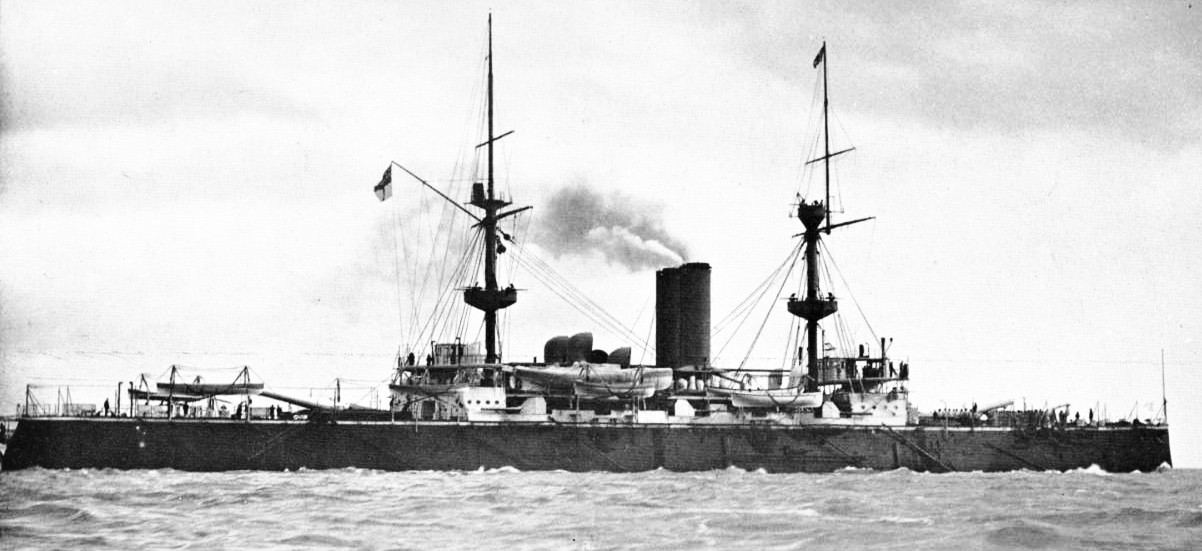
(Royal Navy Photo)
HMS Royal Oak in 1897
HMS Royal Oak was one of seven Royal Sovereign-class battleships built for the Royal Navy during the 1890s. Upon her completion in 1894, she was initially placed in reserve until mobilised in 1896 for service with the Flying Squadron. After returning briefly to reserve, the ship was assigned the following year to the Mediterranean Fleet. Royal Oak remained there until 1902 when she returned home; after a refit, the ship was assigned to the Home Fleet, where she served as the flagship of the fleet’s second-in-command in 1904–05. Royal Oak was then reduced to reserve until she was taken out of service in 1911. The ship was sold for scrap in early 1914. (Wikipedia)
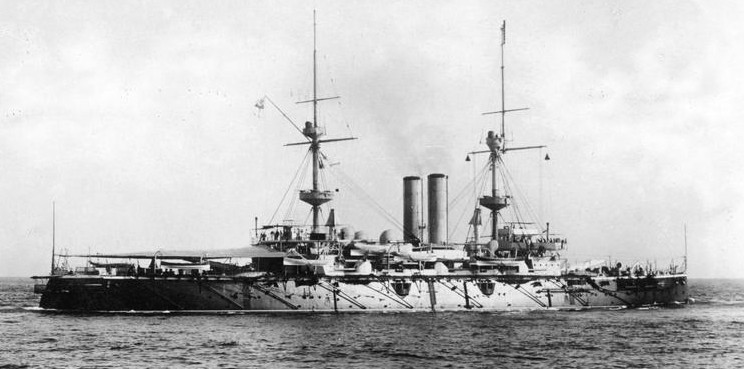
(IWM Photo, Q 75480)
HMS Royal Oak before 1902.
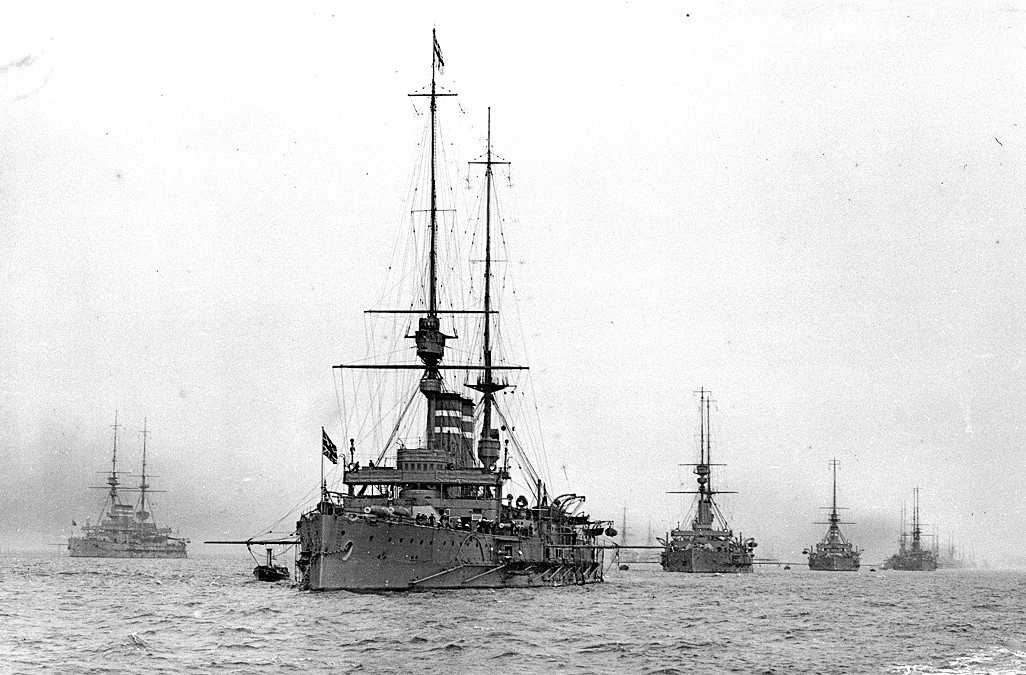
(National Maritime Museum Photo)
HMS King Edward VII in front, with HMS Britannia, HMS Hindostan, and HMS Dominion behind. The ship on the column on the left side on the photo is HMS Queen. The ships were at Spithead for a naval review witnessed by King Edward VII, July 1909.