
Royal Navy Lion class Battlecruisers: HMS Lion, HMS Princess Royal
The Lion class were a pair of battlecruisers built for the Royal Navy before the First World War. Nicknamed the “Splendid Cats”, the ships were a significant improvement over their predecessors of the Indefatigable class in speed, armament and armour. These improvements were in response to the German battlecruisers of the Moltke class, which were in turn larger and more powerful than the first British battlecruisers of the Invincible class.
Lion served as the flagship of the Grand Fleet’s battlecruisers throughout the First World War. She sank the German light cruiser Cöln during the Battle of Heligoland Bight in August 1914 and participated in the battles of Dogger Bank in 1915 and Jutland the following year. She was so badly damaged at the Battle of Dogger Bank that she had to be towed back to port. During the Battle of Jutland, Lion suffered a serious cordite fire that could have destroyed the ship.
Her sister ship, Princess Royal, also played a role in the Battle of Heligoland Bight, and was then sent south to the Caribbean to intercept the German East Asia Squadron in case they used the Panama Canal. After the squadron was sunk at the Battle of the Falkland Islands in December 1914, Princess Royal rejoined the 1st Battlecruiser Squadron (BCS). During the Battle of Dogger Bank, she scored only a few hits, but one crippled the German armoured cruiser Blücher, which allowed the enemy vessel to be caught and sunk by the concentrated fire of the British battlecruisers. Shortly afterwards, Princess Royal became the flagship of the 1st BCS and participated in the Battle of Jutland. Both ships were present during the inconclusive Action of 19 August 1916.
The sisters spent the rest of the war on uneventful patrols in the North Sea; they provided distant cover during the Second Battle of Heligoland Bight in 1917. In 1920, they were put into reserve and were then sold for scrap a few years later in accordance with the terms of the Washington Naval Treaty of 1922. (Wikipedia)
HMS Lion
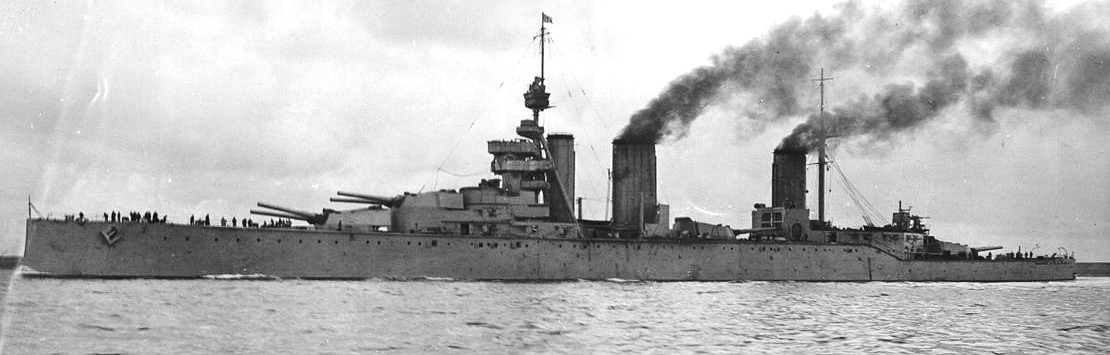
(IWM Photo, 1900-01)
HMS Lion was a battlecruiser built for the Royal Navy in the 1910s. She was the lead ship of her class, which were nicknamed the “Splendid Cats”.[1] They were significant improvements over their predecessors of the Indefatigable class in terms of speed, armament and armour. This was in response to the first German battlecruisers, the Moltke class, which were very much larger and more powerful than the first British battlecruisers, the Invincible class.
Lion served as the flagship of the Grand Fleet’s battlecruisers throughout World War I, except when she was being refitted or under repair.[2] She sank the German light cruiser Cöln during the Battle of Heligoland Bight and served as Vice-Admiral David Beatty’s flagship at the Battles of Dogger Bank and Jutland. She was so badly damaged at the first of these battles that she had to be towed back to port and was under repair for more than two months. During the Battle of Jutland she suffered a serious propellant fire that could have destroyed the ship had it not been for the bravery of Royal Marine Major Francis Harvey, the gun turret commander, who posthumously received the Victoria Cross for having ordered the magazine flooded. The fire destroyed one gun turret which had to be removed for rebuilding while she was under repair for several months. She spent the rest of the war on uneventful patrols in the North Sea, although she did provide distant cover during the Second Battle of Heligoland Bight in 1917. She was put into reserve in 1920 and sold for scrap in 1924 under the terms of the Washington Naval Treaty. (Wikipedia)
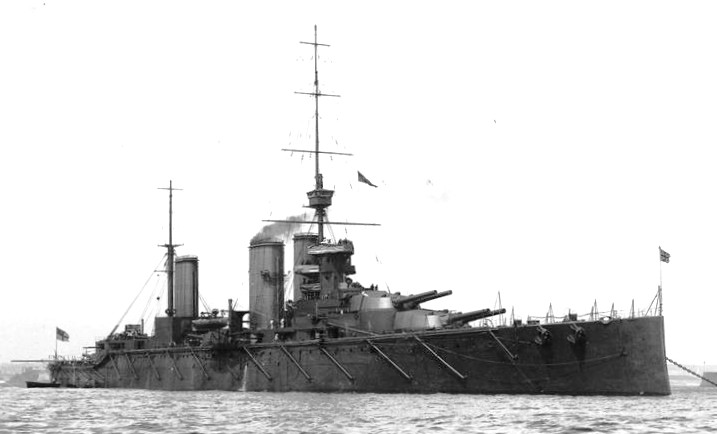
(IWM Photo, Q 75277)
Battlecruiser HMS Lion.
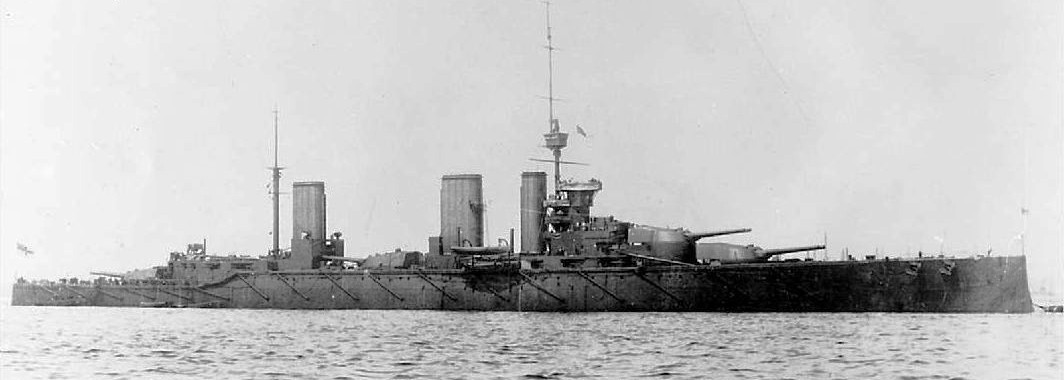
(Royal Navy Photo)
Battlecruiser HMS Lion.
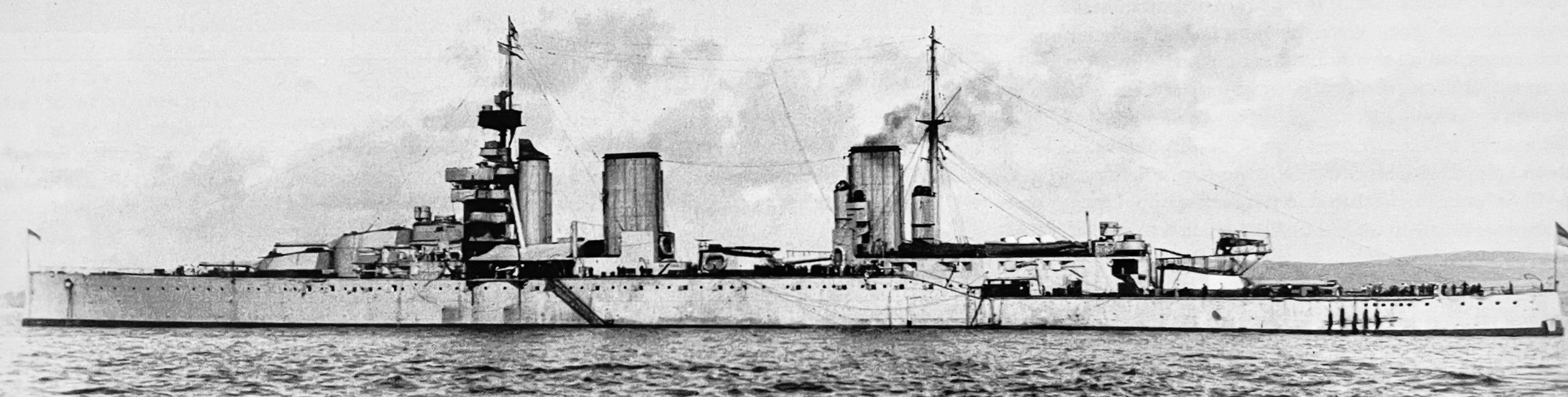
(Royal Navy Photo)
Battlecruiser HMS Lion, 1918. Note, the turrets arranged in the A-B-Q-X layout instead of the more conventional A-B-X-Y. Separating the after pair of the turrets had several advantages. It gave more space for the engine and boiler rooms. The separated turrets were less likely to be knocked out by a single hit. The turrets fitted had open sighting hoods (for spotting the fall of shot); for superfiring turrets, the blast from the upper turret could enter the lower turret through these hoods if the turrets were firing ahead (or astern). This reduced the advantage of superfiring turrets. The Lion had a platform for launching airplanes. Lion carried a Sopwith Pup and a Sopwith Strutter. The Q and X turrets had platforms. One of the planes is visible on the X platform. The flying-off platform was used for launching a Sopwith Camel fighter to intercept Zeppelins. The fighter would either have to ditch or land ashore. They were used pretty rarely, but did score some successes.
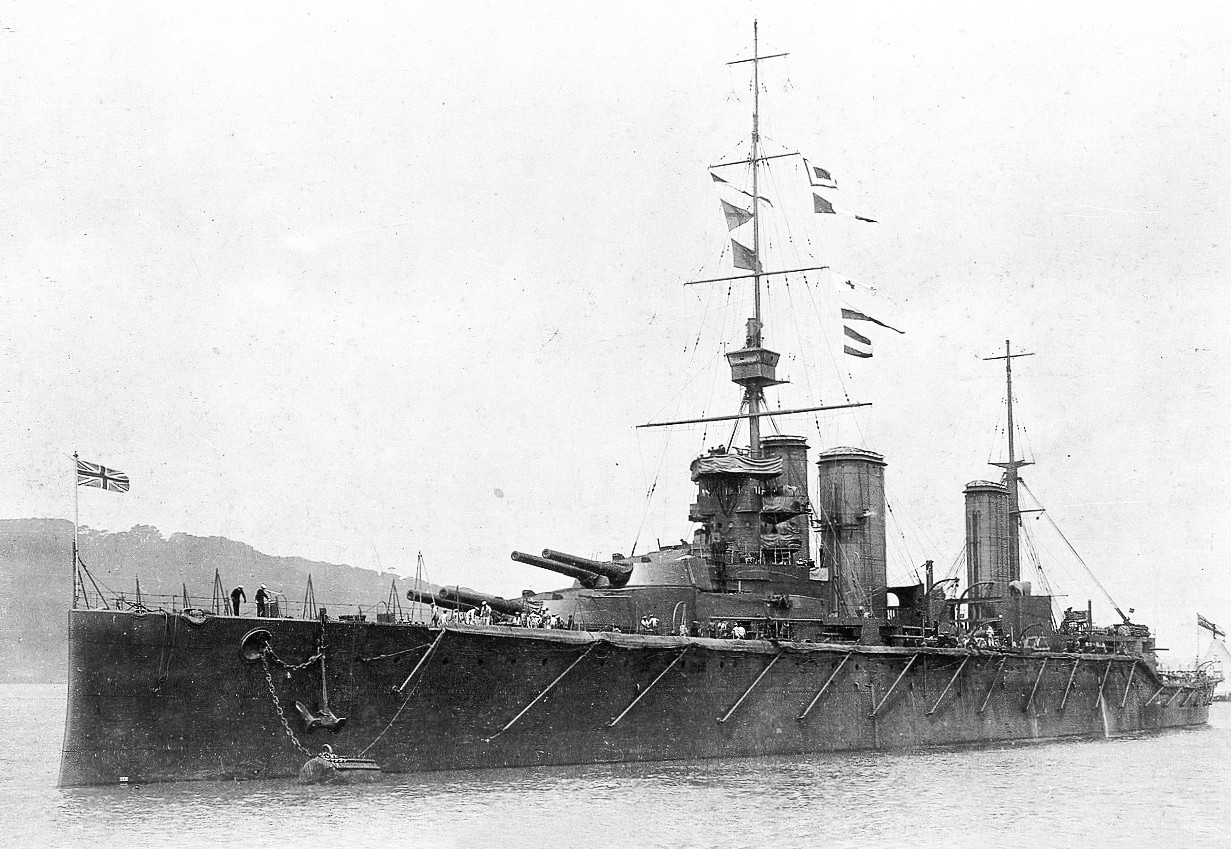
(Fotoafdrukken Koninklijke Marine Photo)
Battlecruiser HMS Lion.
When completed these were the largest warships in the Royal Navy. With a legend displacement of 26,475 tons and a length overall of 700 ft, they displaced 18% more and were 20% longer than the contemporary Orion class battleships (22,500 tons and 581 ft respectively).
Capable of 28 knots, they were 12% faster than previous battlecruisers (25 knots) and 33% faster than the main battle line (21 knots). Armour, while not at battleship (or German battlecruiser) levels, was substantially improved compared to previous battlecruisers. The main belt was 50% thicker (9″ vs 6″), barbettes and turret faceplates up to 29% thicker (9″ vs 7″) and there was a new 6″ upper belt not present in previous ships.
The biggest upgrade was perhaps armament, which a 47% increase in broadside weight. The eight 13.5″ guns could deliver a broadside of 10,000 lbs. The Indefatigables could do 6,800 lbs and the Invincibles, due to their turret layout, 5,100 lbs. Their half-sister Queen Mary and cousin Tiger further enhanced the firepower, as these ships could fire the heavy 13.5″ shell, giving them a broadside of 11,200 lbs.
Despite their flaws, these ships were a source of pride for the Royal Navy in the lead up to the First World War.
HMS Princess Royal
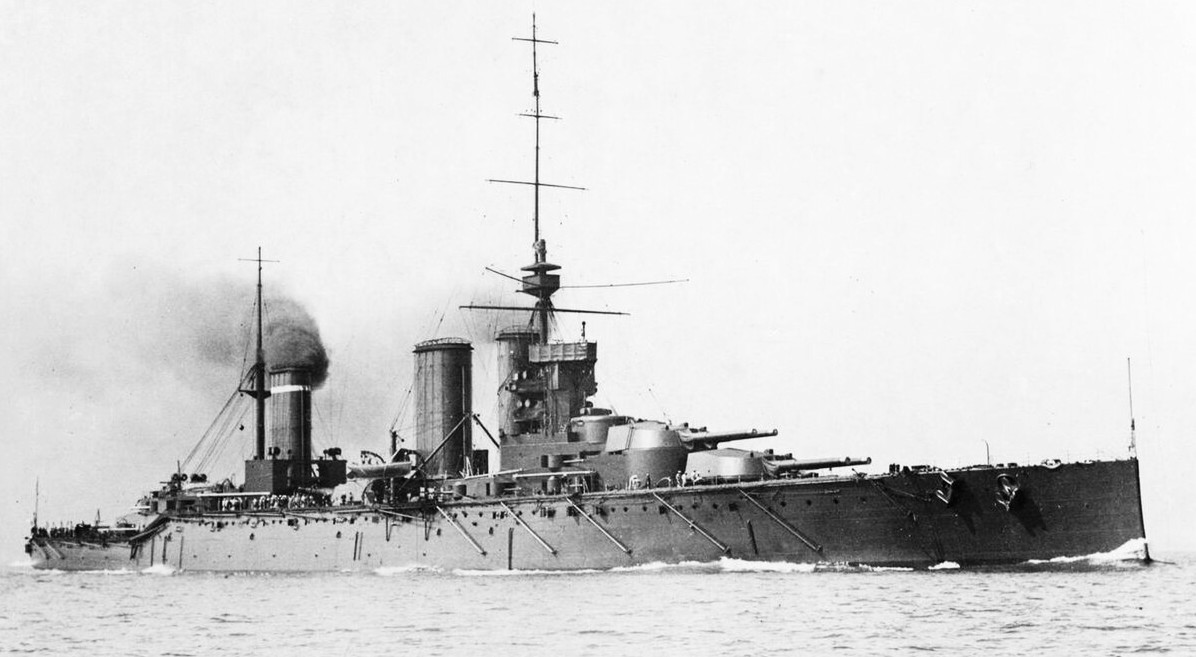
(IWM Photo, Q 75276)
Battlecruiser HMS Princess Royal.
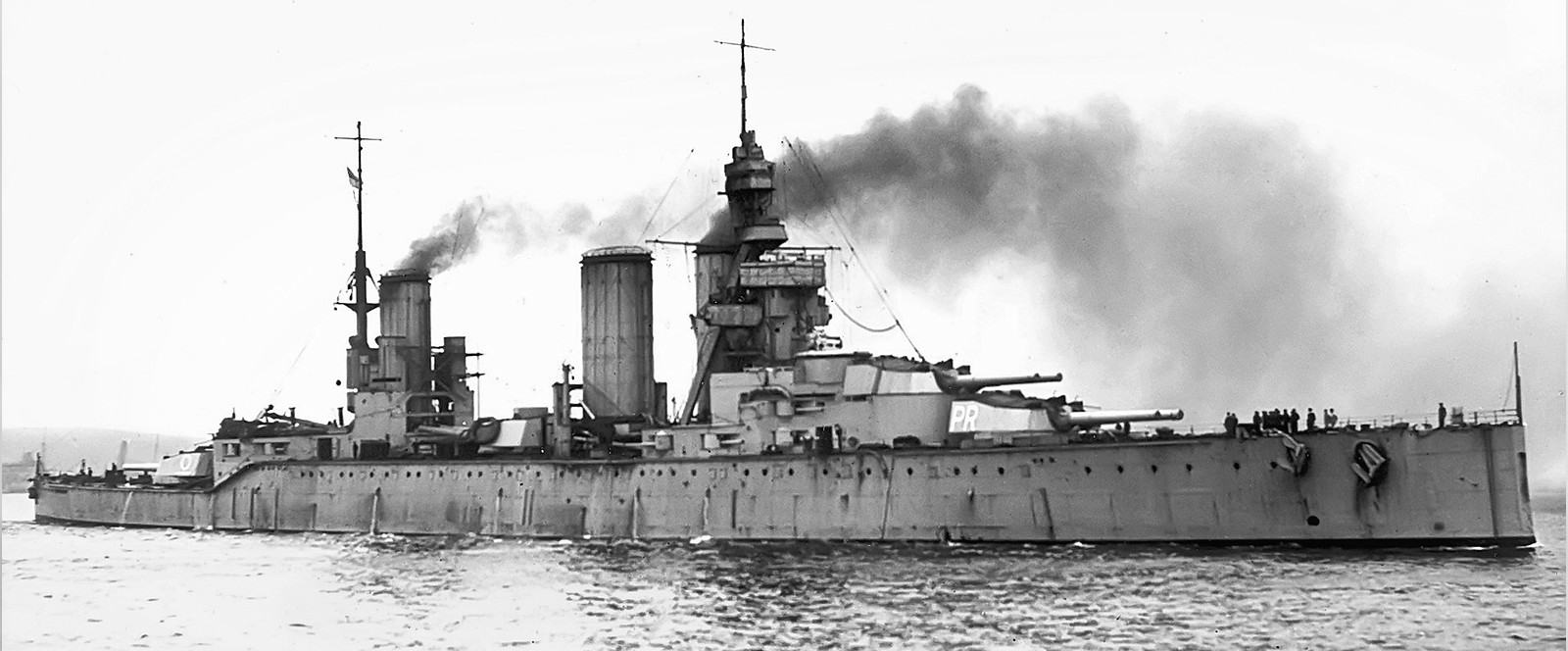
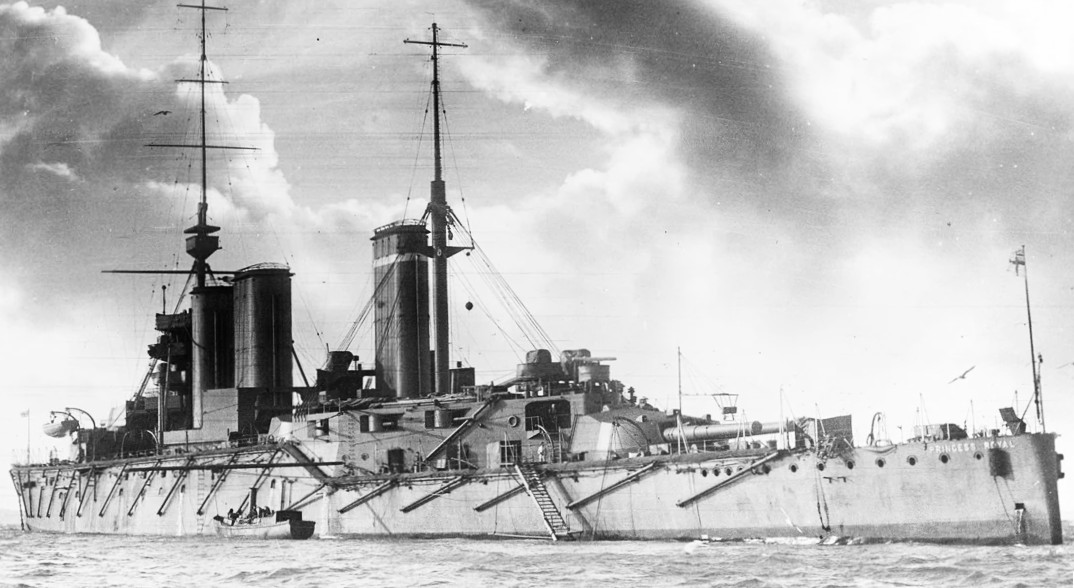
HMS Princess Royal was the second of two Lion-class battlecruisers built for the Royal Navy before the First World War. Designed in response to the Moltke-class battlecruisers of the Imperial German Navy, the ships significantly improved on the speed, armament, and armour of the preceding Indefatigable class. The ship was named after Louise, The Princess Royal, a title occasionally granted to the Monarch’s eldest daughter.
Completed in 1913, Princess Royal participated in the Battle of Heligoland Bight a month after the start of the First World War in August 1914. She was then sent to the Caribbean Sea to prevent the German East Asia Squadron from using the Panama Canal. After the East Asia Squadron was sunk at the Battle of the Falkland Islands in December, Princess Royal rejoined the 1st Battlecruiser Squadron (BCS). During the Battle of Dogger Bank, the ship scored only a few hits, although one crippled the German armoured cruiser Blücher. Shortly afterward, she became the flagship of the 1st BCS, under the command of Rear-Admiral Osmond Brock.
HMS Princess Royal was moderately damaged during the Battle of Jutland and required a month and a half of repairs. Apart from providing distant support during the Second Battle of Heligoland Bight in 1917, the ship spent the rest of the war on uneventful patrols of the North Sea. She was placed into reserve in 1920, then was sold for scrap in 1922 to meet the terms of the Washington Naval Treaty. (Wikipedia)
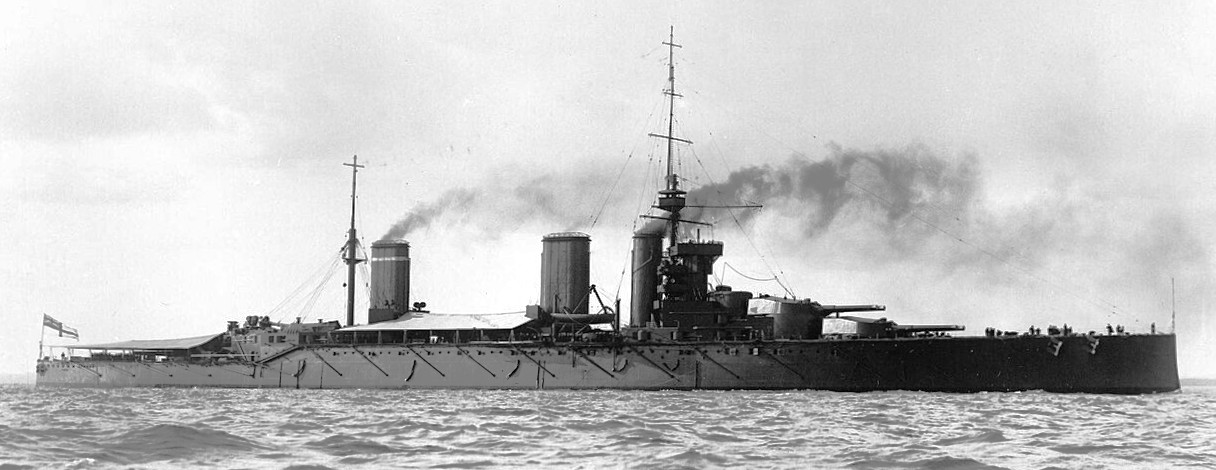
(IWM Photo, Q21654)
HMS Princess Royal.
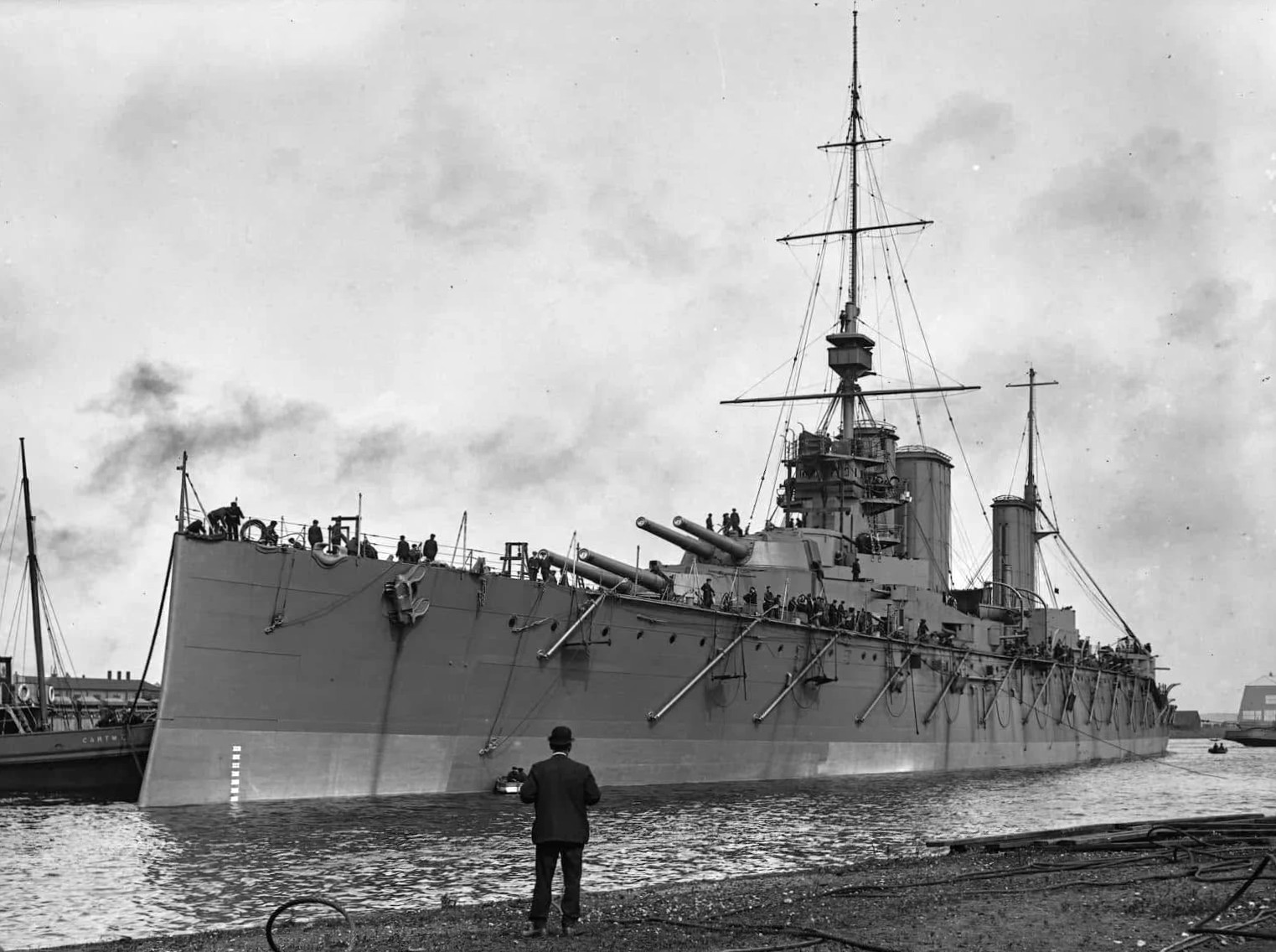
(Royal Navy Photo)
The Lion-class battlecruiser HMS Princess Royal being manoeuvred by tugs at the Vickers yard at Barrow-in-Furness prior to her being commissioned which took place on 14 November 1912.
(Royal Navy Photo)
HMS Princess Royal.
(Royal Navy Photo)
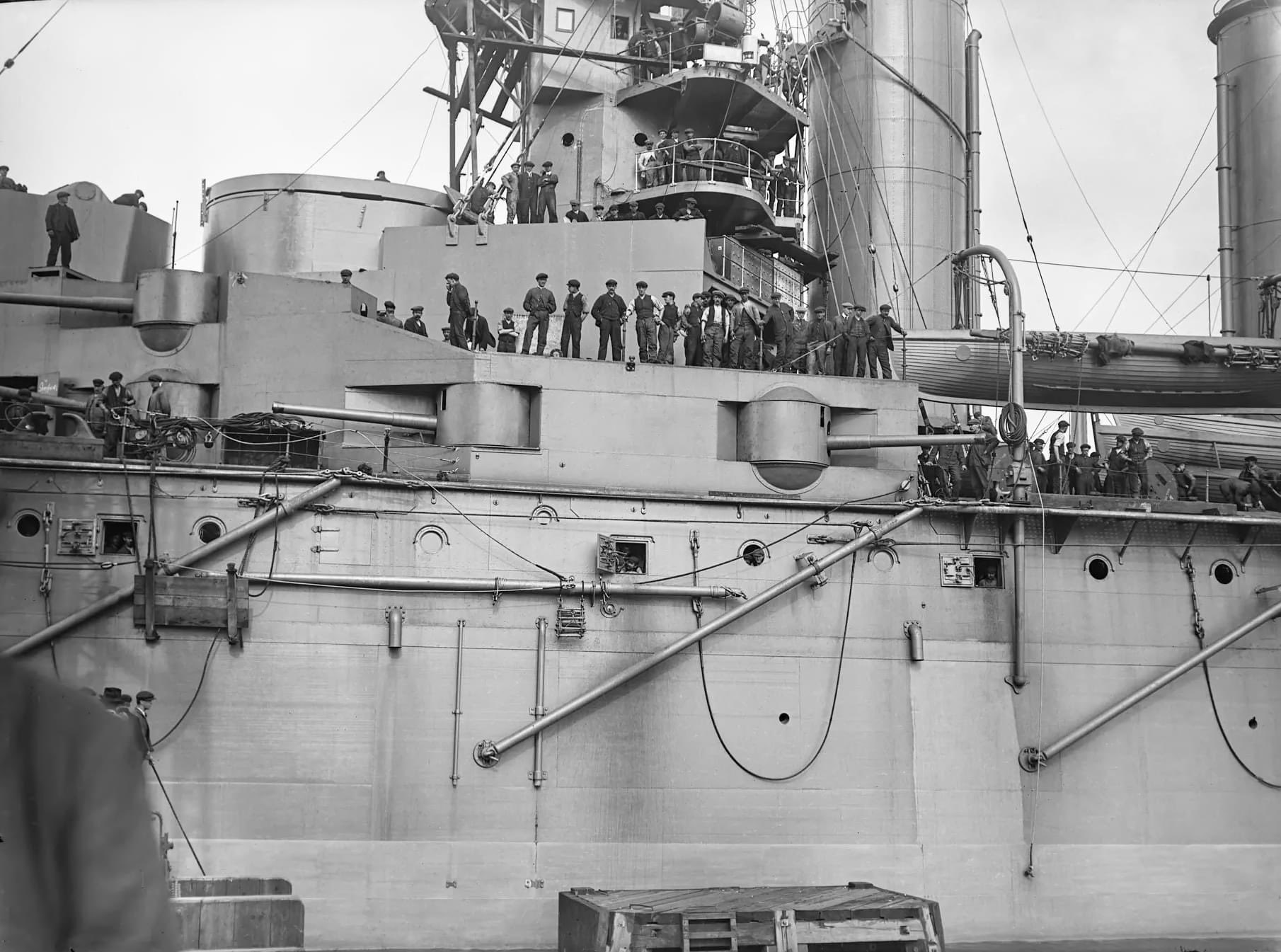
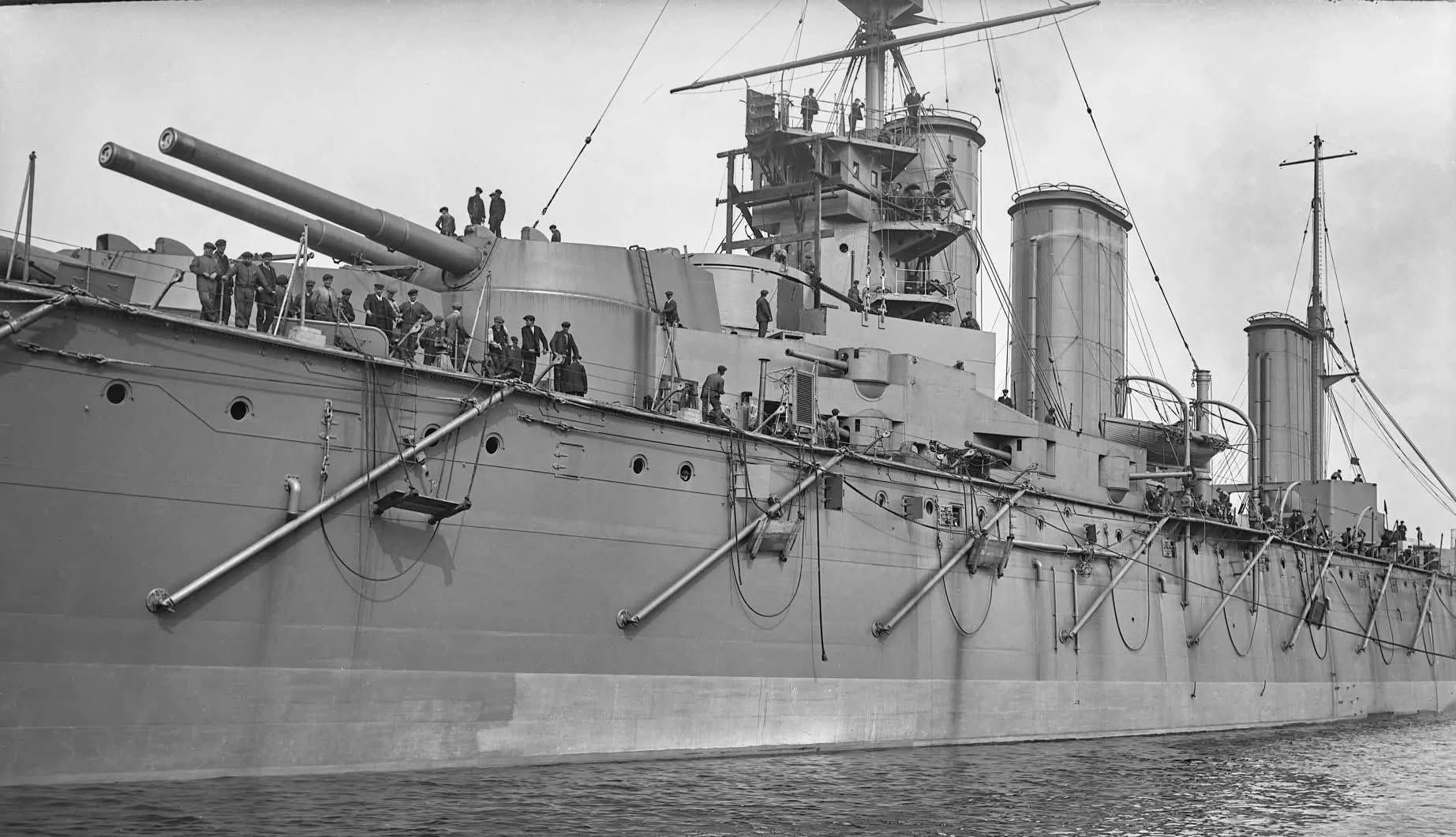
HMS Princess Royal. Torpedo nets were a passive ship defensive device against torpedoes. They were in common use from the 1890s until the Second World War. They were superseded by the anti-torpedo bulge and torpedo belts.
(Royal Navy Photo)
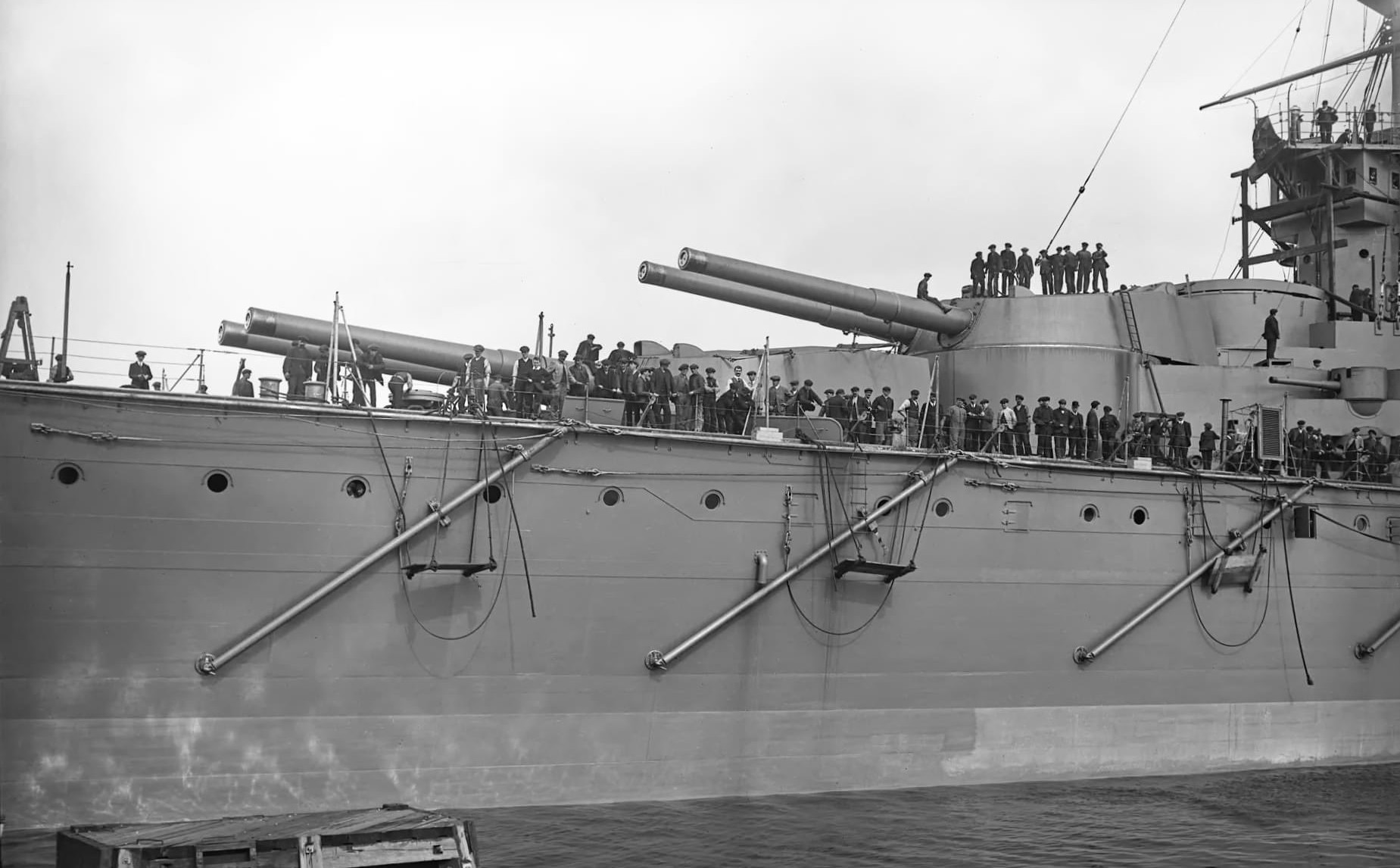
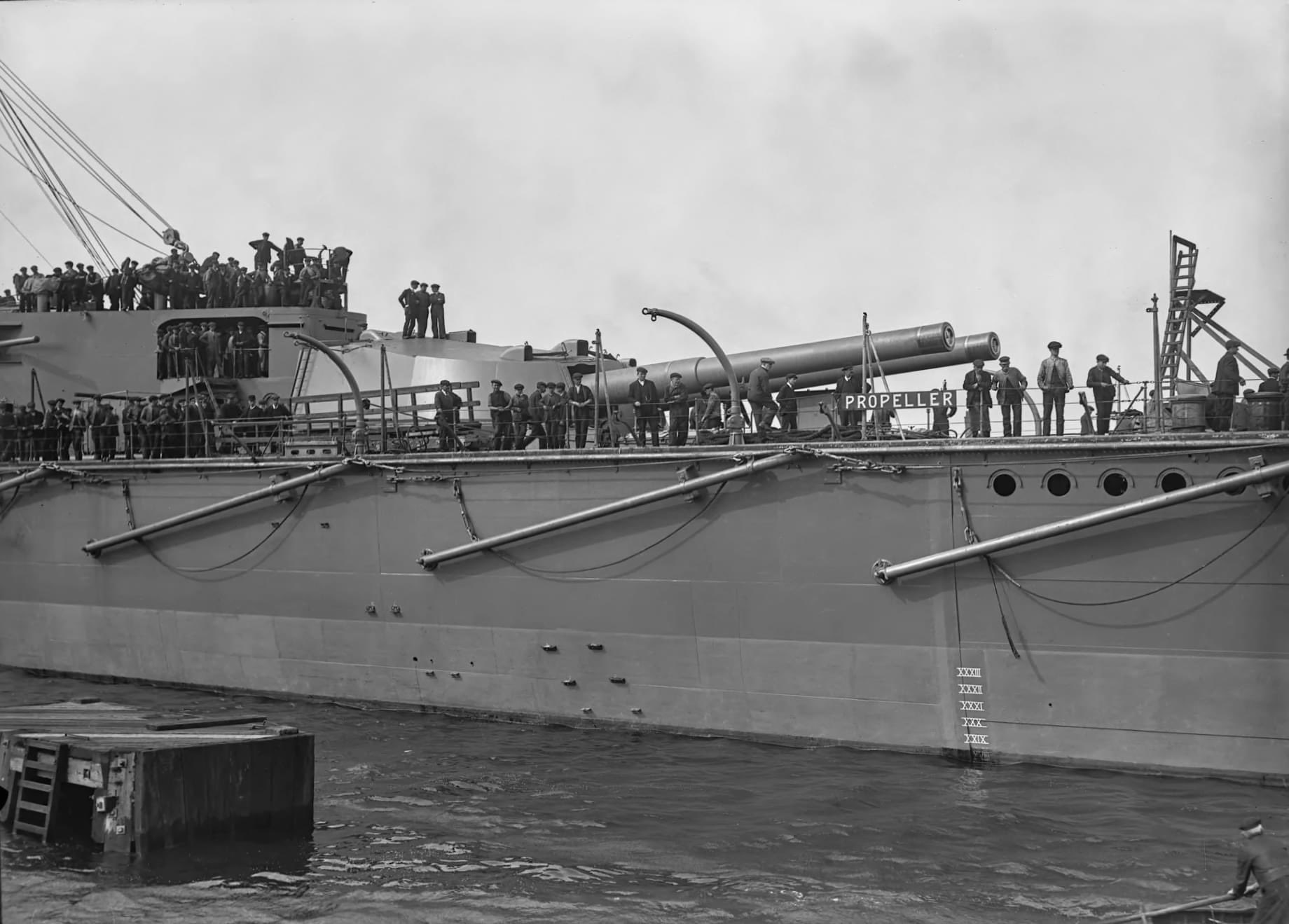
Lion Class Battlecruiser HMS Princess Royal departing Vickers Buccleuch Dock, Barrow-in-Furness in 1912.
(Royal Navy Photo)
Lion Class Battlecruiser HMS Princess Royal departing Vickers Buccleuch Dock, Barrow-in-Furness in 1912.
(Royal Navy Photo)
Lion Class Battlecruiser HMS Princess Royal departing Vickers Buccleuch Dock, Barrow-in-Furness in 1912.
(Royal Navy Photo)
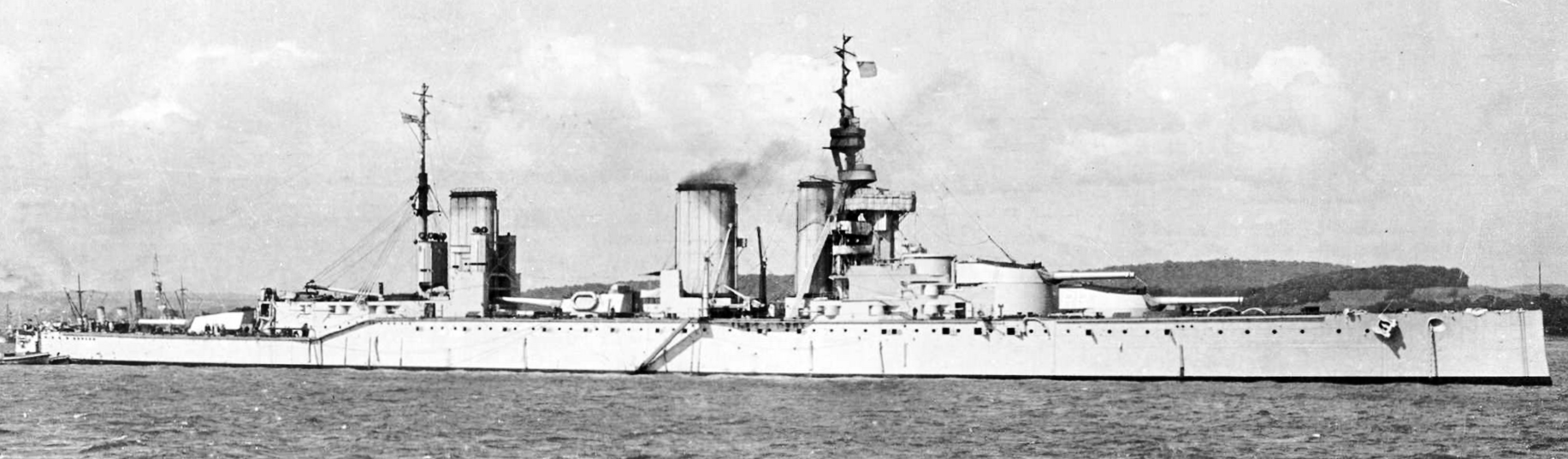
Lion Class Battlecruiser HMS Princess Royal departing Vickers Buccleuch Dock, Barrow-in-Furness in 1912.
(Royal Navy Photo)
The Lion-class battlecruiser HMS Princess Royal.