
Kaiserliche Marine (Imperial German Navy) pre-dreadnought battleships: Kaiser Friedrich III class (1904): SMS Kaiser Friedrich III, SMS Kaiser Wilhelm II, SMS Kaiser Wilhelm der Grosse, SMS Kaiser Barbarossa, SMS Kaiser Karl der Grosse
SMS Kaiser Friedrich III
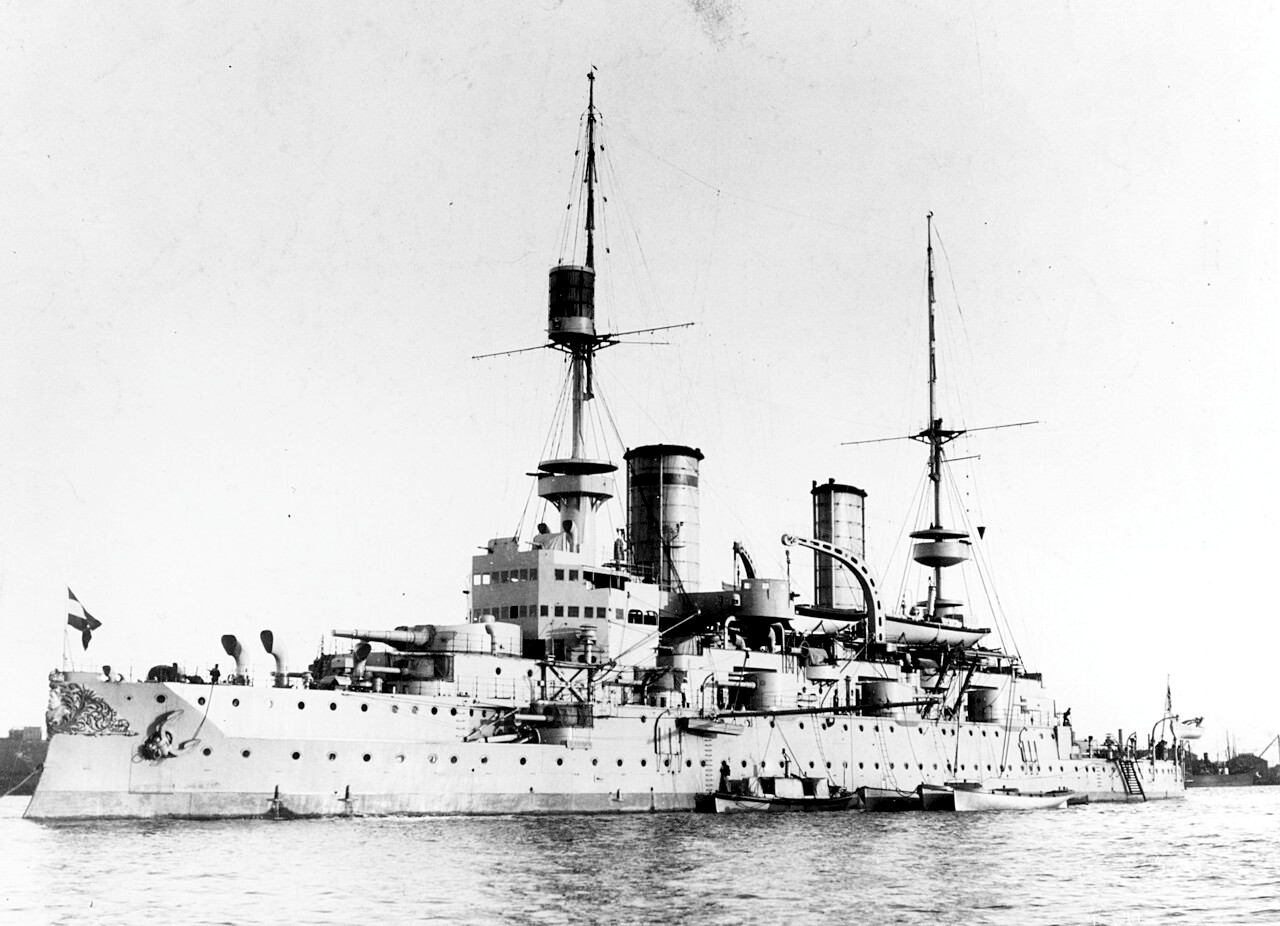
(Arthur Renard Photo)
SMS Kaiser Friedrich III (“His Majesty’s Ship Emperor Frederick III”) was the lead ship of the Kaiser Friedrich III class of pre-dreadnought battleships. She was laid down at the Kaiserliche Werft in Wilhelmshaven in March 1895, launched in July 1896, and finished in October 1898. The ship was armed with a main battery of four 24-centimeter (9.4 in) guns in two twin gun turrets supported by a secondary battery of eighteen 15 cm (5.9 in) guns.
Sea trials and modifications lasted more than a year, and once she entered active service in October 1899, the ship became the flagship of Prince Heinrich in I Squadron of the German Heimatflotte (Home Fleet). I Squadron was primarily occupied with training exercises throughout each year, and also made numerous trips to other European countries, particularly Great Britain and Sweden–Norway. In 1901, the ship was severely damaged after striking submerged rocks in the Baltic Sea; the incident contributed to design changes in later German battleships to make them more resistant to underwater damage.
Kaiser Friedrich III was extensively modernized in 1908; her secondary guns were reorganized and her superstructure was cut down to reduce top-heaviness. After returning to service in 1910, Kaiser Friedrich III was placed in the Reserve Formation; she spent the next two years laid up, being activated only for the annual fleet maneuvers. The years 1913 and 1914 passed without any active service until the outbreak of the First World War in July 1914. Though obsolete, Kaiser Friedrich III and her sister ships served in a limited capacity as coastal defense ships in V Battle Squadron in the early months of the war, tasked with defending Germany’s North Sea coastline. The ships conducted two operations in the Baltic but did not encounter any hostile warships. By February 1915, Kaiser Friedrich was withdrawn from service and eventually decommissioned in November, thereafter being employed as a prison ship and later as a barracks ship. She was scrapped in 1920. (Wikipedia)
SMS Kaiser Wilhelm II
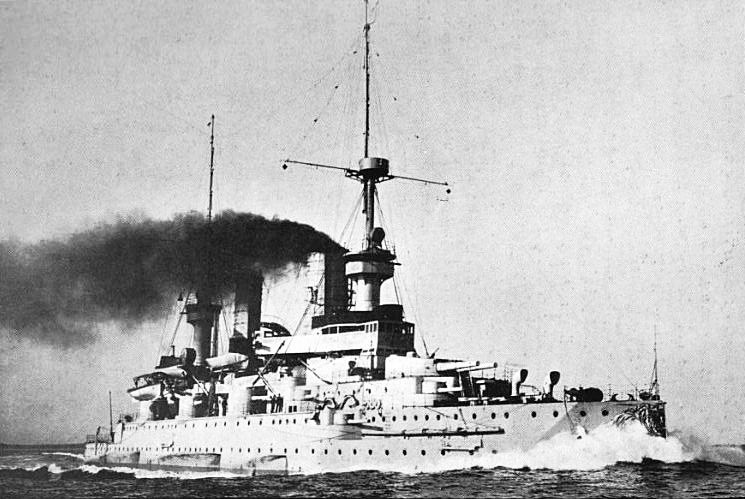
(Kaiserliche Marine Photo, c1908)
SMS Kaiser Wilhelm II (“His Majesty’s Ship Emperor William II”) was the second ship of the Kaiser Friedrich III class of pre-dreadnought battleships. She was built at the Imperial Dockyard in Wilhelmshaven and launched on 14 September 1897. The ship was commissioned into the fleet as its flagship on 13 February 1900. Kaiser Wilhelm II was armed with a main battery of four 24-centimeter (9.45 in) guns in two twin turrets. She was powered by triple expansion engines that delivered a top speed of 17.5 knots (32.4 km/h; 20.1 mph).
Kaiser Wilhelm II served as the flagship of the Active Battle Fleet until 1906, participating in numerous fleet training exercises and visits to foreign ports. She was replaced as flagship by the new battleship SMS Deutschland. After the new dreadnought battleships began entering service in 1908, Kaiser Wilhelm II was decommissioned and put into reserve. She was reactivated in 1910 for training ship duties in the Baltic, but was again taken out of service in 1912.
With the outbreak of the First World War in August 1914, Kaiser Wilhelm II and her sisters were brought back into active duty as coastal defense ships in V Battle Squadron. Her age, coupled with shortages of ship crews, led to her withdrawal from this role in February 1915, after which she served as a command ship for the High Seas Fleet, based in Wilhelmshaven. Following the end of the war in November 1918, Kaiser Wilhelm II was stricken from the navy list and sold for scrap in the early 1920s. Her bow ornament is preserved at the Military History Museum of the Bundeswehr in Dresden. (Wikipedia)
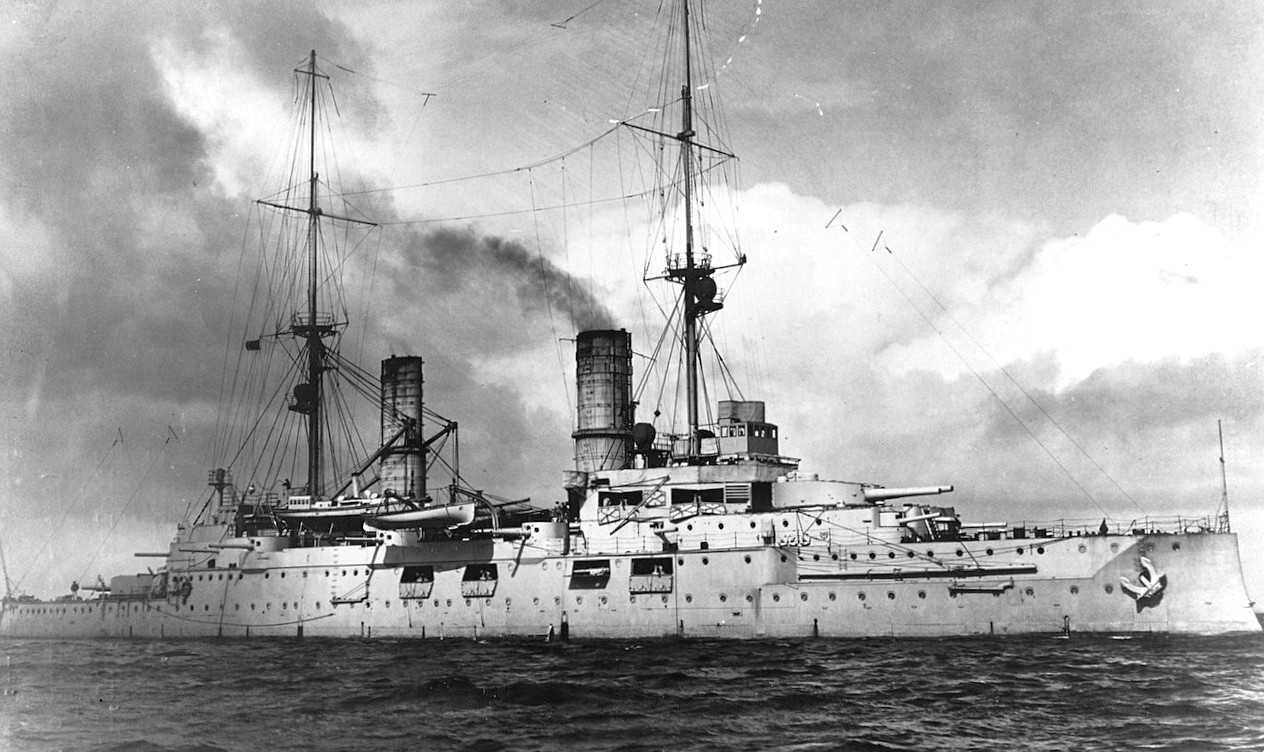
(Arthur Renard Photo)
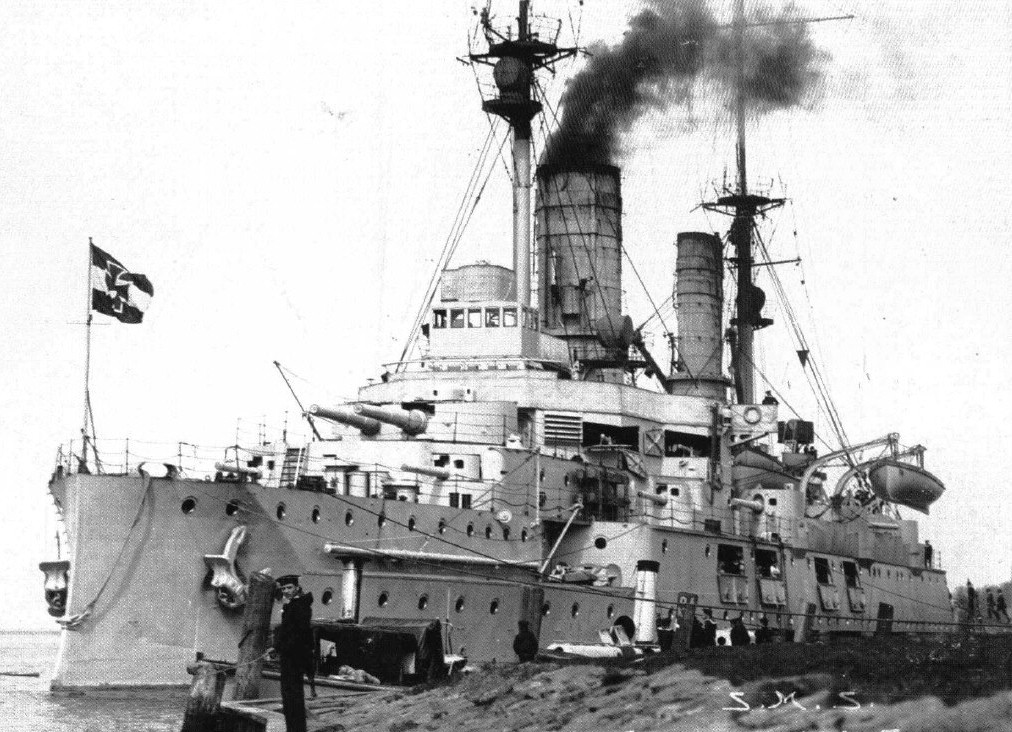
SMS Kaiser Wilhelm der Grosse
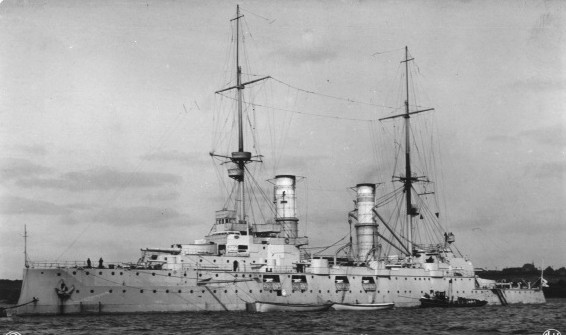
SMS Kaiser Wilhelm der Grosse (“HMS Emperor William the Great”) was a German pre-dreadnought battleship of the Kaiser Friedrich III class, built around the turn of the 20th century. The ship was one of the first battleships built by the German Imperial Navy (Kaiserliche Marine) as part of a program of naval expansion under Kaiser Wilhelm II. Kaiser Wilhelm der Grosse[b] was built in Kiel at the Germaniawerft shipyard. She was laid down in January 1898, launched in June 1899, and completed in May 1901. The ship was armed with a main battery of four 24-centimeter (9.4 in) guns in two twin turrets.
Kaiser Wilhelm der Grosse served in the main fleet—the Heimatflotte (Home Fleet) and later the Hochseeflotte (High Seas Fleet)—for the first seven years of her career. She participated in several of the fleet’s training cruises and maneuvers, primarily in the North and Baltic Seas. Her peacetime career was relatively uneventful and she suffered no accidents. She was decommissioned for a major reconstruction in 1908–10, after which she was assigned to the Reserve Division with her four sister ships, all of which were essentially obsolete by that time.
At the outbreak of World War I in 1914, the battleship and her sisters were placed back in active service as V Battle Squadron of the High Seas Fleet and deployed to coastal defense in the North Sea. They were also deployed briefly to the Baltic but saw no action. In 1915, the ships were again withdrawn from service and relegated to secondary duties. Kaiser Wilhelm der Grosse was used as a depot ship in Kiel and eventually a torpedo target ship. After the war, the Treaty of Versailles greatly reduced the size of the German Navy. The vessel was sold for scrap to a German company and broken up in 1920. (Wikipedia)
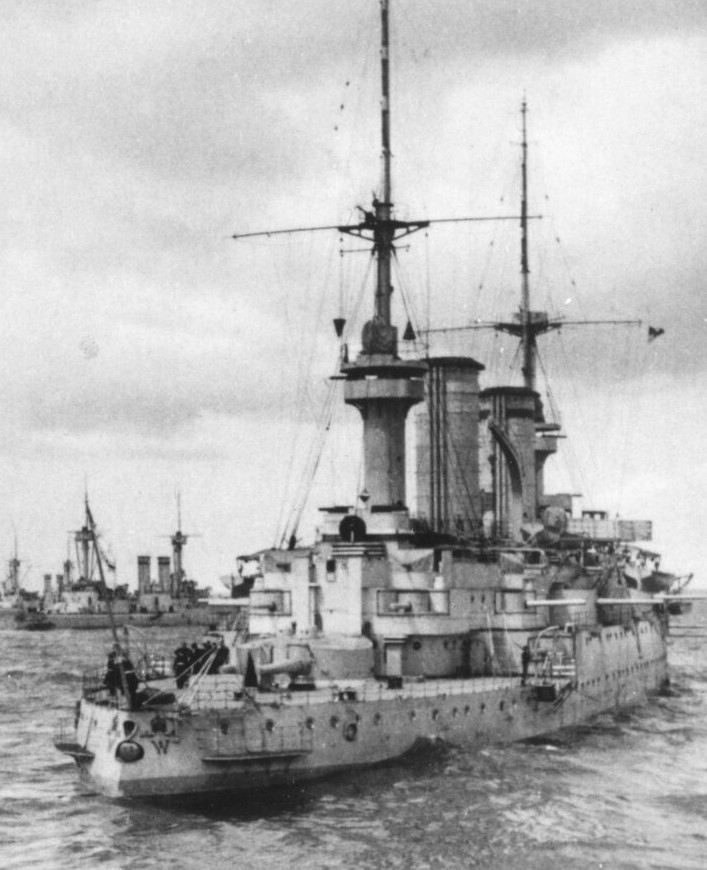
SMS Kaiser Wilhelm der Grosse, c1903.
SMS Kaiser Barbarossa
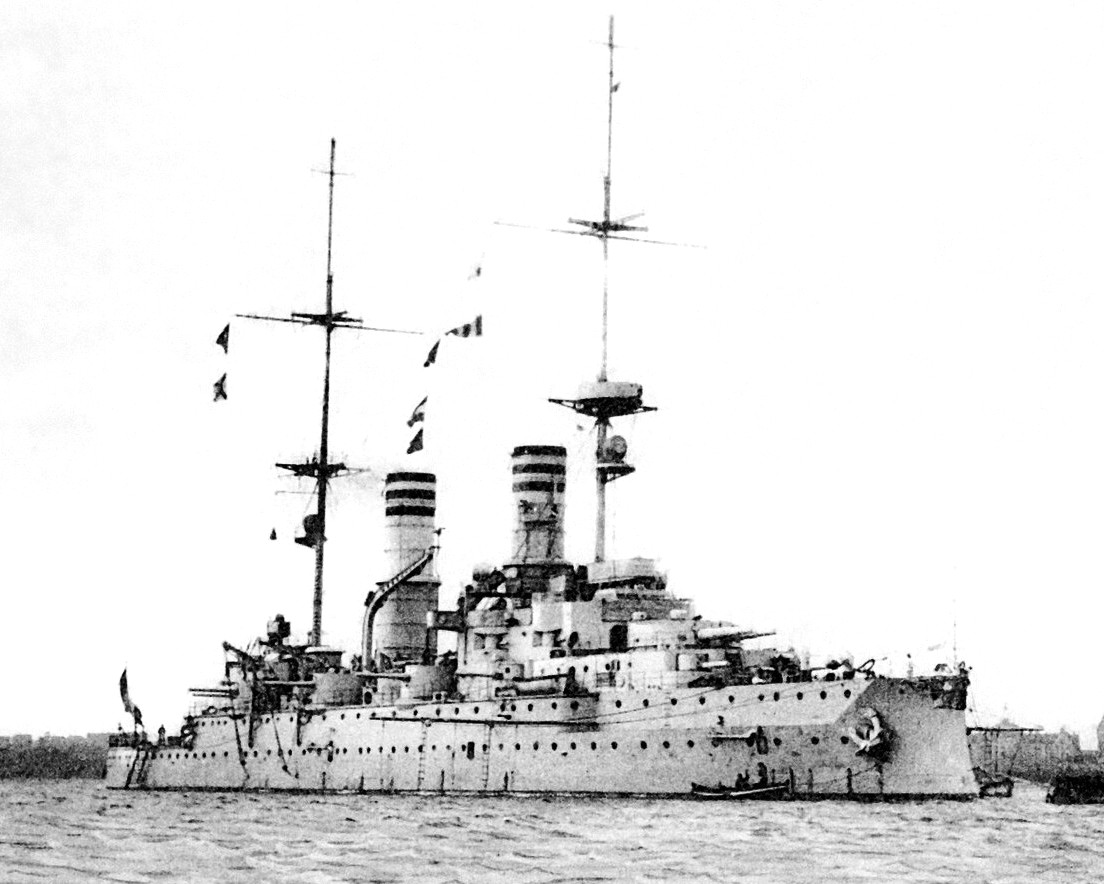
(Kaiserliche Marine Photo)
SMS Kaiser Barbarossa was a German pre-dreadnought battleship of the Kaiser Friedrich III class. The ship was built for the Imperial Navy, which had begun a program of expansion at the direction of Kaiser Wilhelm II. Construction took place at Schichau, in Danzig. Kaiser Barbarossa was laid down in August 1898, launched on 21 April 1900, and commissioned in June 1901. The ship was armed with a main battery of four 24-centimeter (9.4 in) guns in two twin-gun turrets.
Kaiser Barbarossa served with the German navy from her commissioning in 1901, though her active career was limited by two lengthy stays in dry dock. The first was for repairs following damage to her rudder in 1903, which lasted until early 1905, and the second for a major modernization, which began immediately after the conclusion of repair work in 1905 and lasted until late 1907. She returned to service for another two years, before being decommissioned in 1909 and placed in the Reserve Division. She continued to participate in fleet training exercises for the next three years.
Following the outbreak of the First World War in August 1914, Kaiser Barbarossa and her sisters were mobilized as coastal defense ships in V Battle Squadron and assigned to the North and Baltic Seas. She saw no combat during the war and, due to a shortage of crews, the ships were withdrawn from active duty in February 1915 and relegated to secondary duties. Kaiser Barbarossa was briefly used as a torpedo target ship for most of 1915 and thereafter spent the remainder of the war as a prison ship in Wilhelmshaven. Following the end of the war in 1918, Kaiser Barbarossa was decommissioned and sold for scrap metal. The ship was broken up in 1919–20. (Wikipedia)
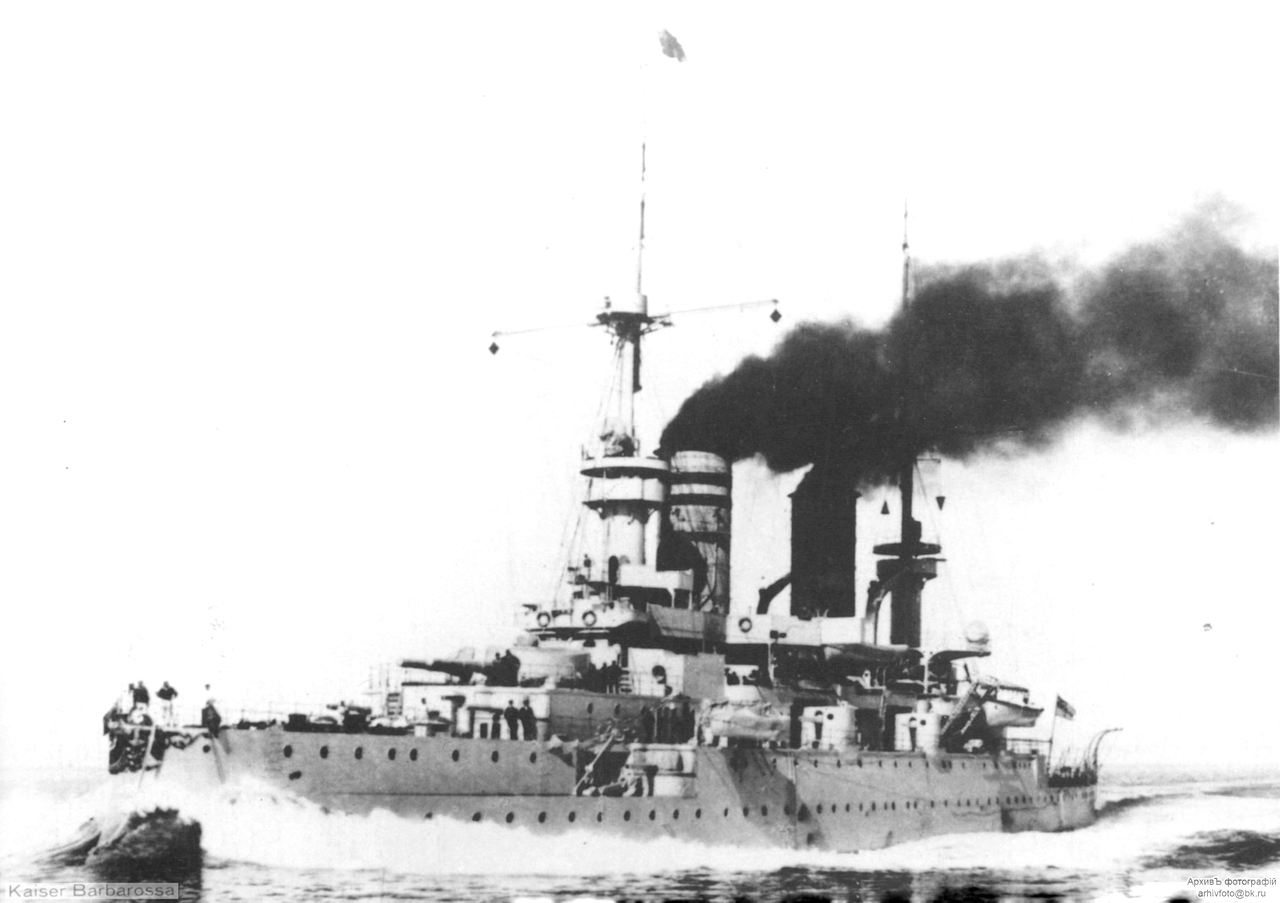
(Kaiserliche Marine Photo)
SMS Kaiser Barbarossa, c1908.
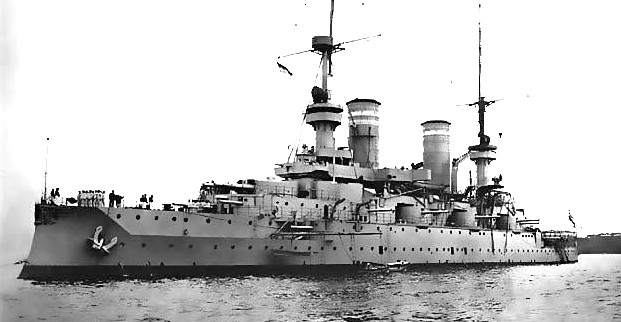
(Kaiserliche Marine Photo)
SMS Kaiser Barbarossa, c1908.
SMS Kaiser Karl der Grosse

(Arthur Renard Photo, c1902)
SMS Kaiser Karl der Grosse was a German pre-dreadnought battleship of the Kaiser Friedrich III class, built around the turn of the 20th century for the Kaiserliche Marine (Imperial Navy).[b] Named for the Emperor Charlemagne, Kaiser Karl der Grosse was built in Hamburg, at the Blohm and Voss shipyard. She was laid down in September 1898 and launched in October 1899. A shipyard strike and an accidental grounding delayed her completion until February 1902; she was therefore the last member of her class to enter service. The ship was armed with four 24-centimeter (9.4 in) guns in two twin gun turrets and had a top speed of 17.5 knots (32.4 km/h; 20.1 mph).
Kaiser Karl der Grosse served with the active fleet until 1908, participating in the normal peacetime routine of training cruises and fleet maneuvers. By 1908, the new “all-big-gun” dreadnought battleships were entering service. As these rendered her obsolete, Kaiser Karl der Grosse was withdrawn from active service and placed in the Reserve Division. At the outbreak of World War I in August 1914, the ship was placed back in active duty as a coastal defense ship in V Battle Squadron, though by February 1915 she was again placed in reserve. Kaiser Karl der Grosse was briefly used as a training ship and ended her career as a prison ship for prisoners of war in Wilhelmshaven. After the German defeat in November 1918, she was sold to ship-breakers and scrapped in 1920. (Wikipedia)