
Kaiserliche Marine (Imperial German Navy) pre-dreadnought battleships: Braunschweig class (1902): SMS Braunschweig, SMS Elsass, SMS Hessen, SMS Preussen, SMS Lothringen.
SMS Braunschweig
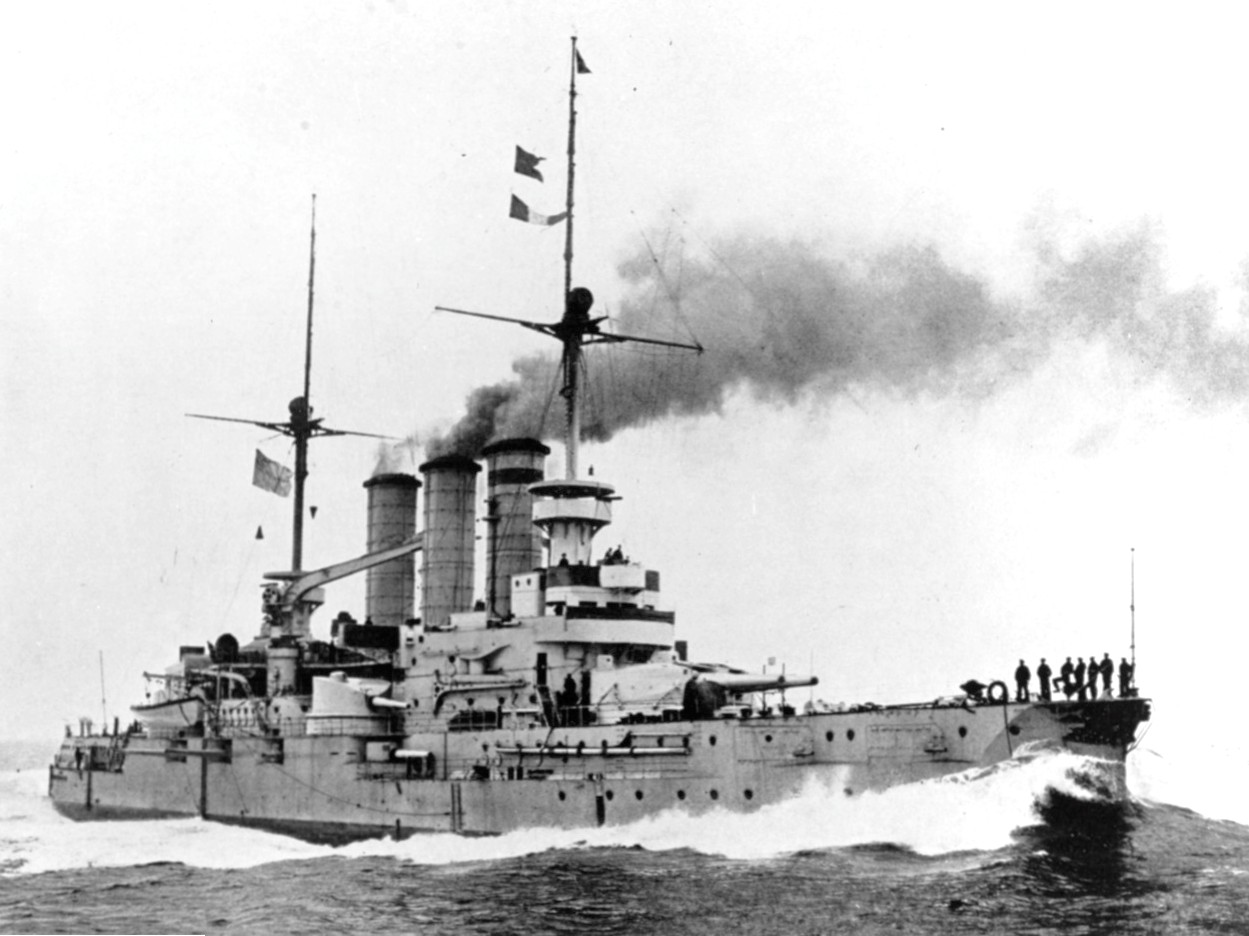
(Kaiserliche Marine Photo)
SMS Braunschweig was the first of five pre-dreadnought battleships of the Braunschweig class built for the German Kaiserliche Marine (Imperial Navy). She was laid down in October 1901, launched in December 1902, and commissioned in October 1904. She was named after the Duchy of Brunswick (German: Braunschweig). The ship was armed with a battery of four 28 cm (11 in) guns and had a top speed of 18 knots (33 km/h; 21 mph). Like all other pre-dreadnoughts built at the turn of the century, Braunschweig was quickly made obsolete by the launching of the revolutionary HMS Dreadnought in 1906; as a result, her career as a front-line battleship was cut short.
The ship served in II Squadron of the German fleet after entering service. During this period, she was occupied with extensive annual training, as well as making good-will visits to foreign countries. She also served as a flagship for most of her pre-war career. Surpassed by new dreadnought battleships, Braunschweig was decommissioned in 1913, but reactivated a year later following the outbreak of the First World War. She was assigned to IV Battle Squadron, which operated in both the North Sea, protecting the German coast, and the Baltic Sea, where it opposed the Russian Baltic Fleet. Braunschweig saw action during the Battle of the Gulf of Riga in August 1915, when she engaged the Russian battleship Slava.
By late 1915, crew shortages and the threat from British submarines forced the Kaiserliche Marine to withdraw older battleships like Braunschweig, and she spent the rest of the war first as a headquarters ship, then as a training ship, and finally as a barracks ship. Under the terms of the Treaty of Versailles, she was retained after the end of the war and modernized in 1921–22. Braunschweig served in the reformed Reichsmarine, operating as the flagship of naval forces assigned to the North Sea. She made several cruises abroad, including a voyage into the Atlantic in 1924. The ship was decommissioned again in January 1926 and was stricken from the Navy Directory in March 1931, hulked, and subsequently broken up for scrap. (Wikipedia)
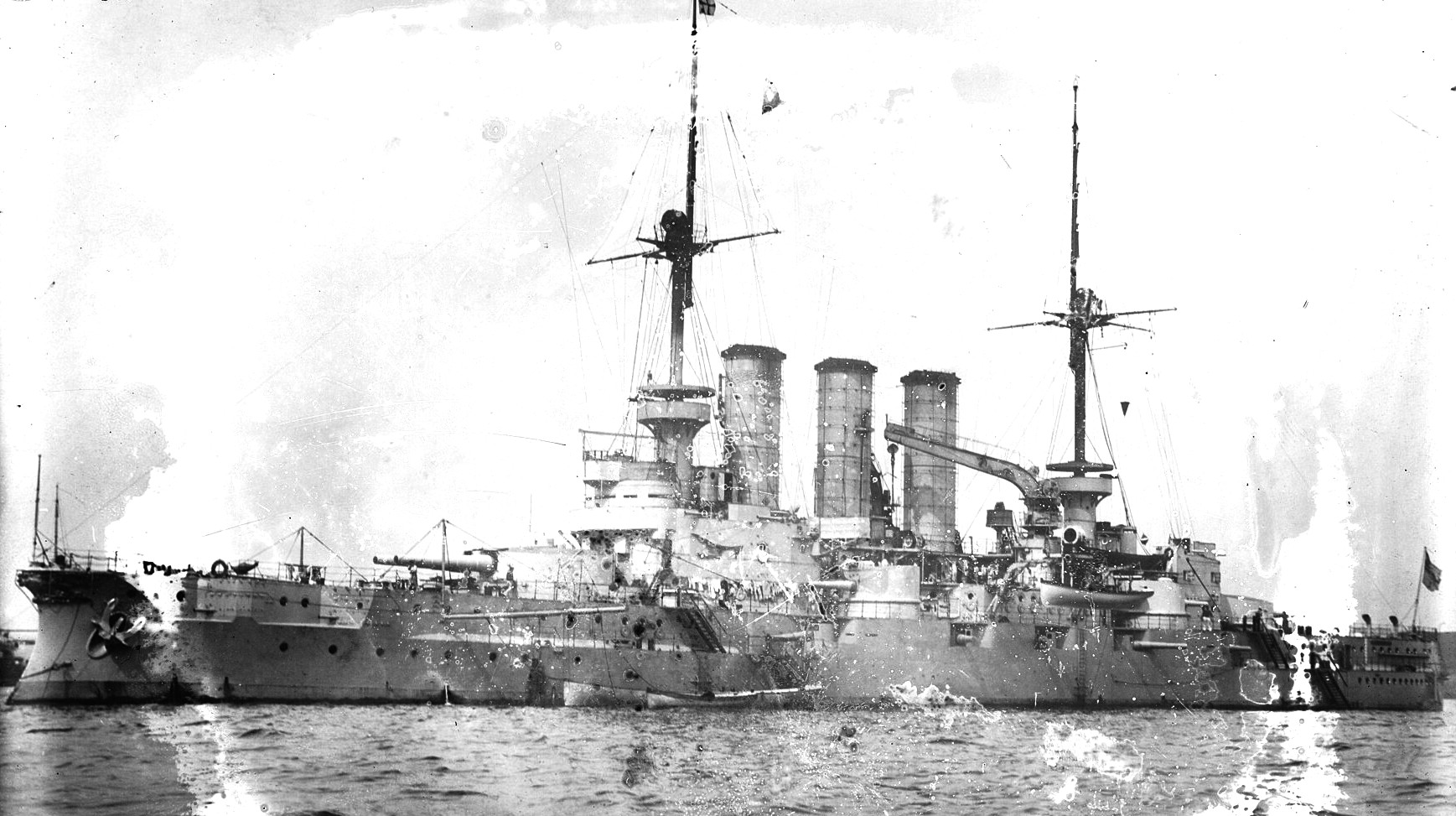
(Library of Congress Photo)
SMS Braunschweig, 1915.
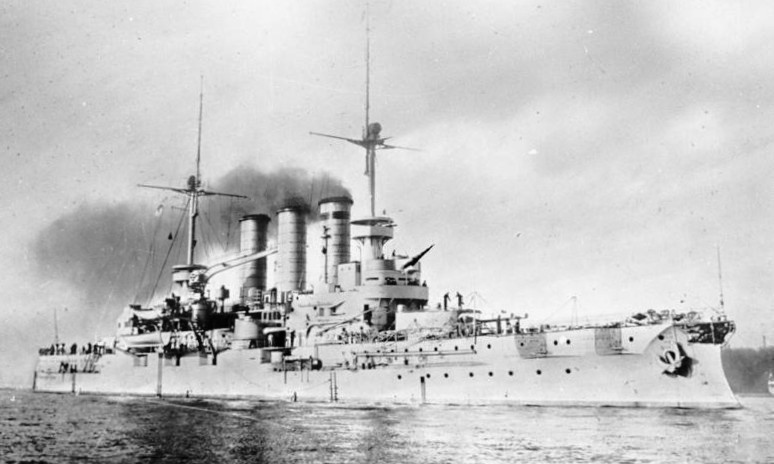
(Bundesarchiv, DVM 10 Bild-23-61-31 / CC-BY-SA 3.0, c1904)
SMS Braunschweig.
SMS Elsass
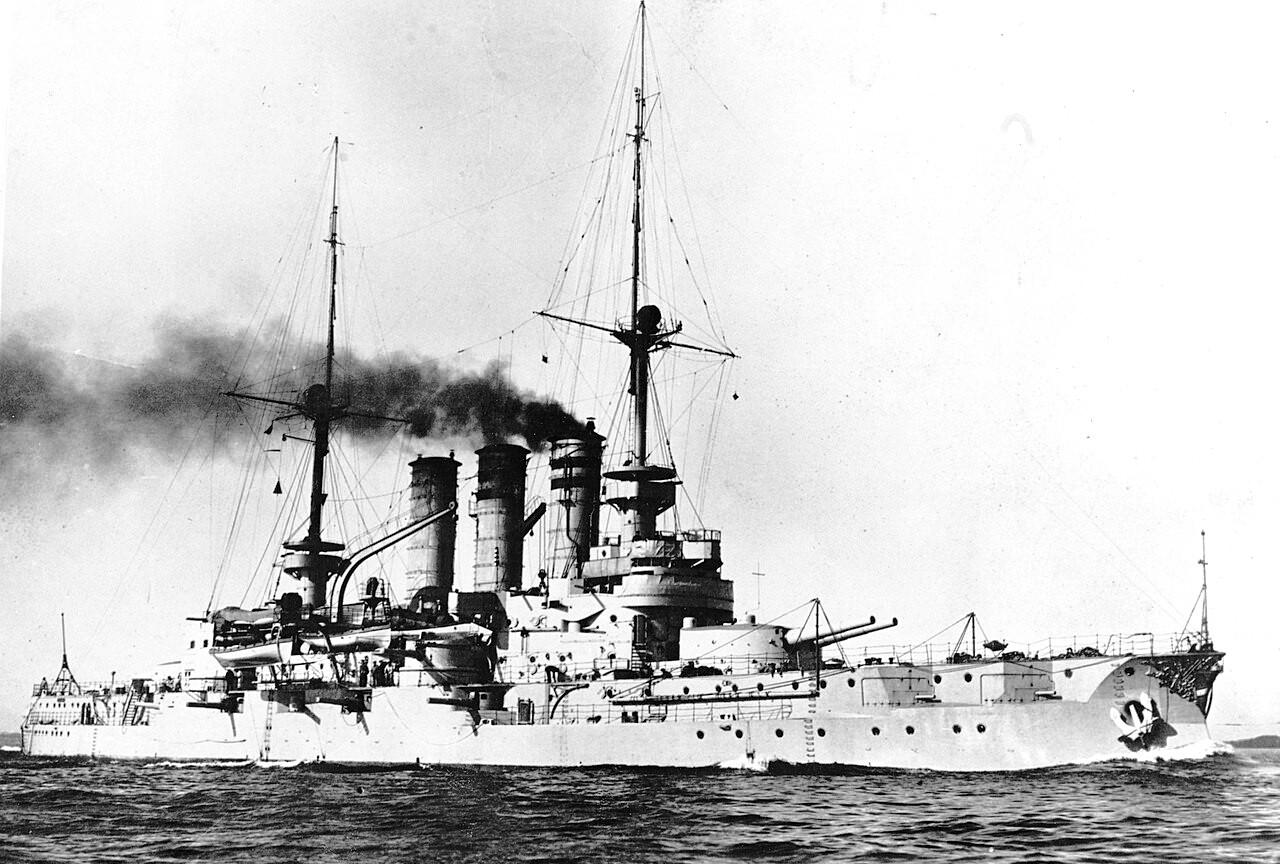
(Kaiserliche Marine Photo)
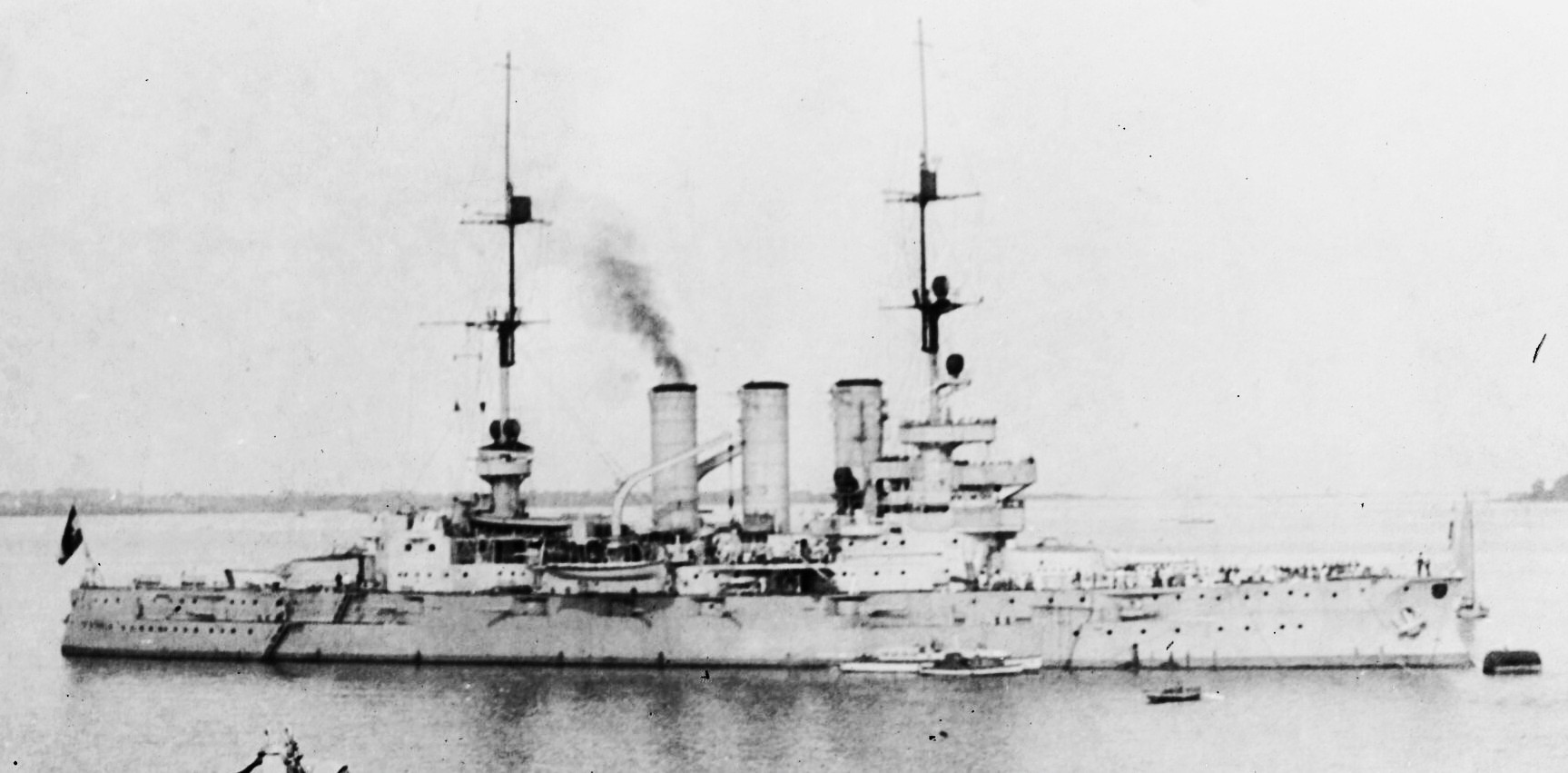
SMS Elsass was the second of five pre-dreadnought battleships of the Braunschweig class in the German Imperial Navy. She was laid down in May 1901, launched in May 1903, and commissioned in November 1904, though an accident during sea trials delayed her completion until May 1905. She was named for the German province of Elsass, now the French region of Alsace. Her sister ships were Braunschweig, Hessen, Preussen and Lothringen. The ship was armed with a battery of four 28 cm (11 in) guns and had a top speed of 18 knots (33 km/h; 21 mph). Like all other pre-dreadnoughts built at the turn of the century, Elsass was quickly made obsolete by the launching of the revolutionary HMS Dreadnought in 1906; as a result, her career as a frontline battleship was cut short.
The ship served in II Squadron of the German fleet after commissioning, and during this period, she was occupied with extensive annual training, as well as making good-will visits to foreign countries. Surpassed by new dreadnought battleships, Elsass was decommissioned in 1913, though she was reactivated a year later following the outbreak of World War I and assigned to IV Battle Squadron. Elsass saw action in the Baltic Sea against the Russian Navy. In August 1915, she participated in the Battle of the Gulf of Riga, during which she engaged the Russian battleship Slava. In 1916, she was placed in reserve because of crew shortages and the threat of British submarines operating in the Baltic, and she spent the remainder of the war as a training ship.
She was retained after the war under the terms of the Treaty of Versailles, and was modernized in 1923–1924. Elsass served in the Reichsmarine with the surface fleet until 1930, conducting training operations and visits to foreign ports as she had earlier in her career. In 1930, she was again placed in reserve, and the following year she was stricken from the naval register. Elsass was used for a short time as a hulk in Wilhelmshaven. The outdated battleship was sold to Norddeutscher Lloyd in late 1935 and was broken up for scrap the following year. (Wikipedia)
(USN Photo)
SMS Elsass, Kiel, 1926.
SMS Hessen
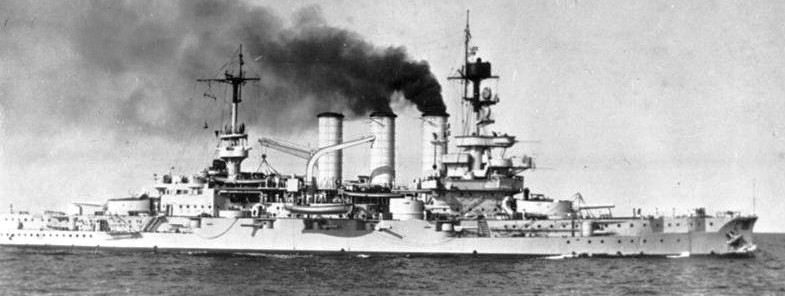
(Bundesarchiv, DVM 10 Bild-23-63-56 / CC-BY-SA 3.0)
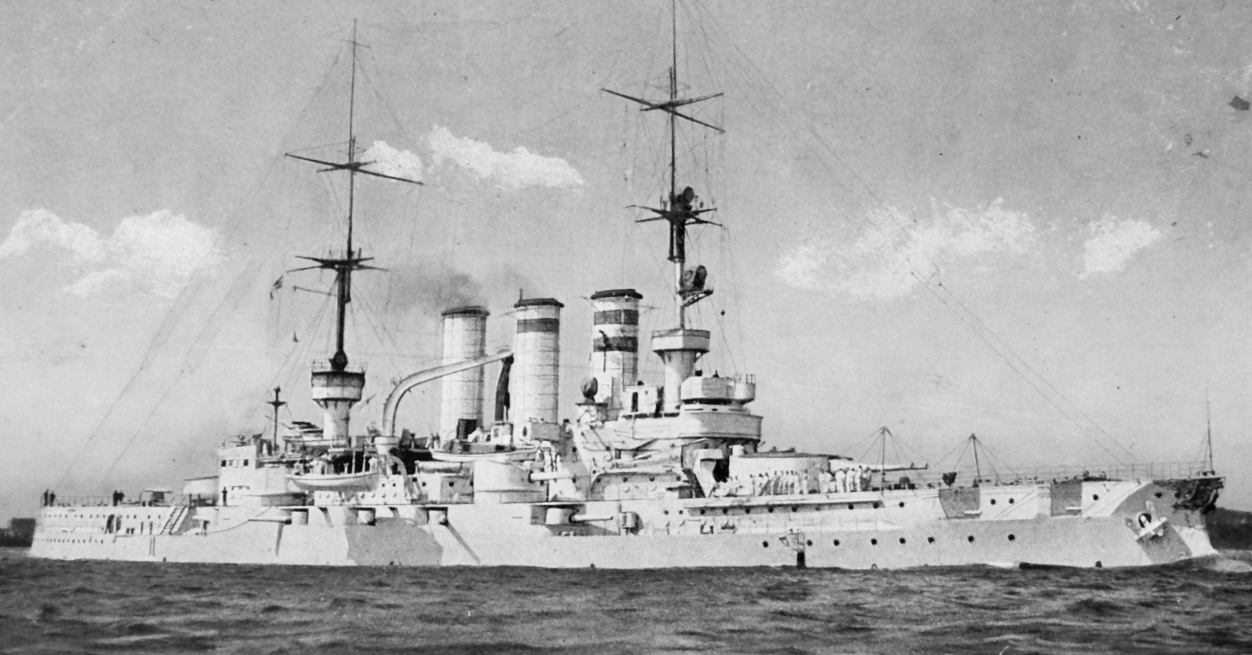
SMS Hessen was the third of five pre-dreadnought battleships of the Braunschweig class. She was laid down in 1902, was launched in September 1903, and was commissioned into the German Kaiserliche Marine (Imperial Navy) in September 1905. Named after the state of Hesse, the ship was armed with a battery of four 28 cm (11 in) guns and had a top speed of 18 knots (33 km/h; 21 mph). Like all other pre-dreadnoughts built at the turn of the century, Hessen was quickly made obsolete by the launching of the revolutionary HMS Dreadnought in 1906; as a result, she saw only limited service with the German fleet.
Hessen’s peacetime career centered on squadron and fleet exercises and training cruises. She was involved in two accidental collisions, with a Danish steamship in 1911 and a German torpedo boat in 1913. Hessen was slated to be withdrawn from service in August 1914, but the start of World War I in July interrupted that plan and she remained in service with the High Seas Fleet. She performed a variety of roles in the first two years, serving as a guard ship at the mouth of the Elbe, patrolling the Danish Straits, and supporting attacks on the British coast, including the raid on Scarborough, Hartlepool and Whitby in December 1914 and the Bombardment of Yarmouth and Lowestoft in April 1916. The following month, Hessen was present at the Battle of Jutland, the largest naval battle of the war. In the last daytime action between capital ships on 31 May, Hessen and the other pre-dreadnoughts of II Battle Squadron covered the retreat of the battered German battlecruisers away from the British battlecruiser squadron.
Jutland revealed how inadequate pre-dreadnoughts like Hessen were in the face of more modern weapons, so she and the rest of II Squadron ships were withdrawn from service with the fleet. She was decommissioned in December 1916, disarmed and used as a depot ship for the rest of the war. Hessen was one of the few obsolete battleships Germany was permitted to retain under the terms of the Treaty of Versailles. Rearmed, she served with the fleet in the 1920s and early 1930s, though she was withdrawn from front-line service in 1934. The following year, Hessen was converted into a radio-controlled target ship. She served in this capacity through the Second World War, also working as an icebreaker in the Baltic and North Seas. The ship was ceded to the Soviet Union in 1946 after the war, renamed Tsel, and served until she was scrapped in 1960. (Wikipedia)
(Kaiserliche Marine Photo)
SMS Hessen.
(Kaiserliche Marine Photo)
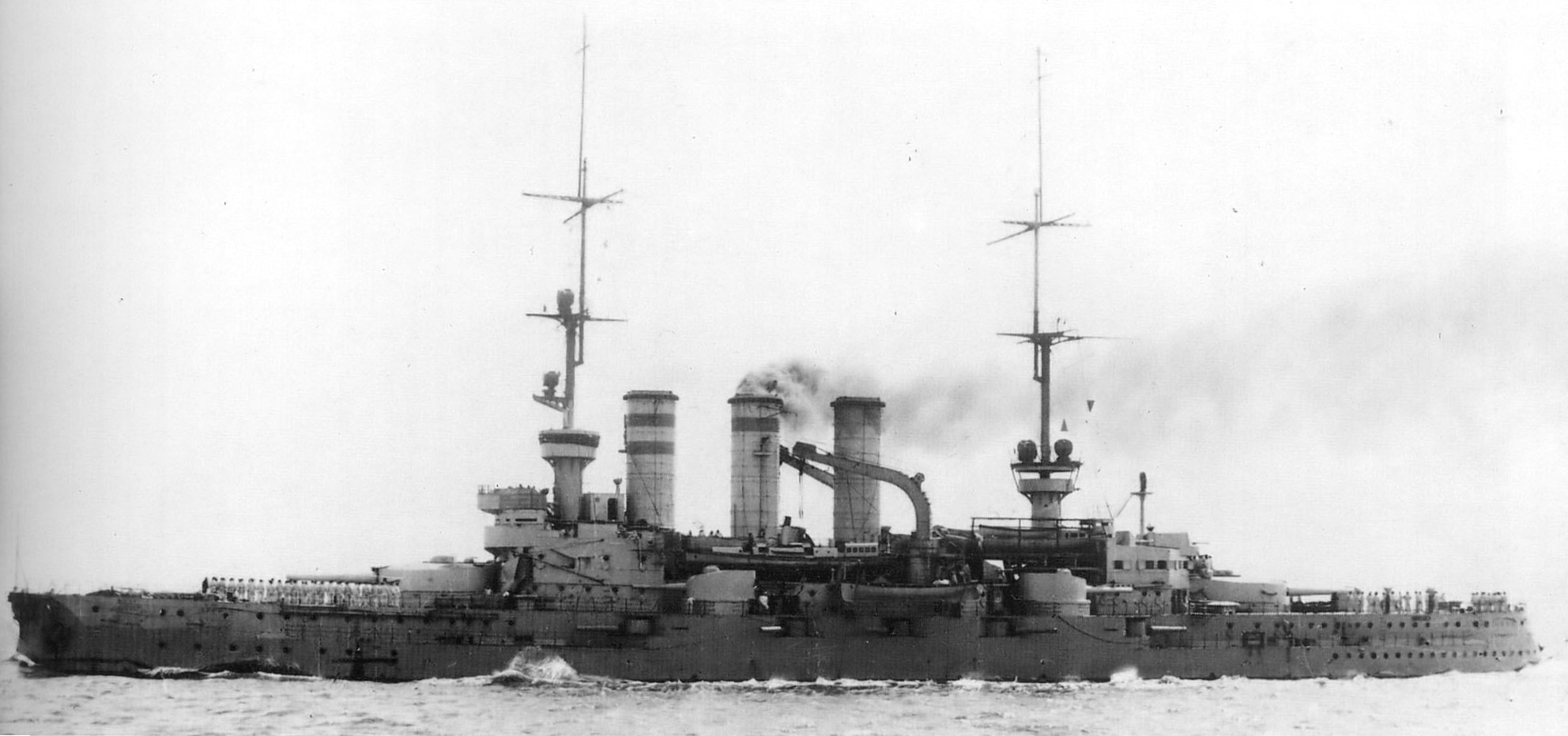
SMS Hessen.
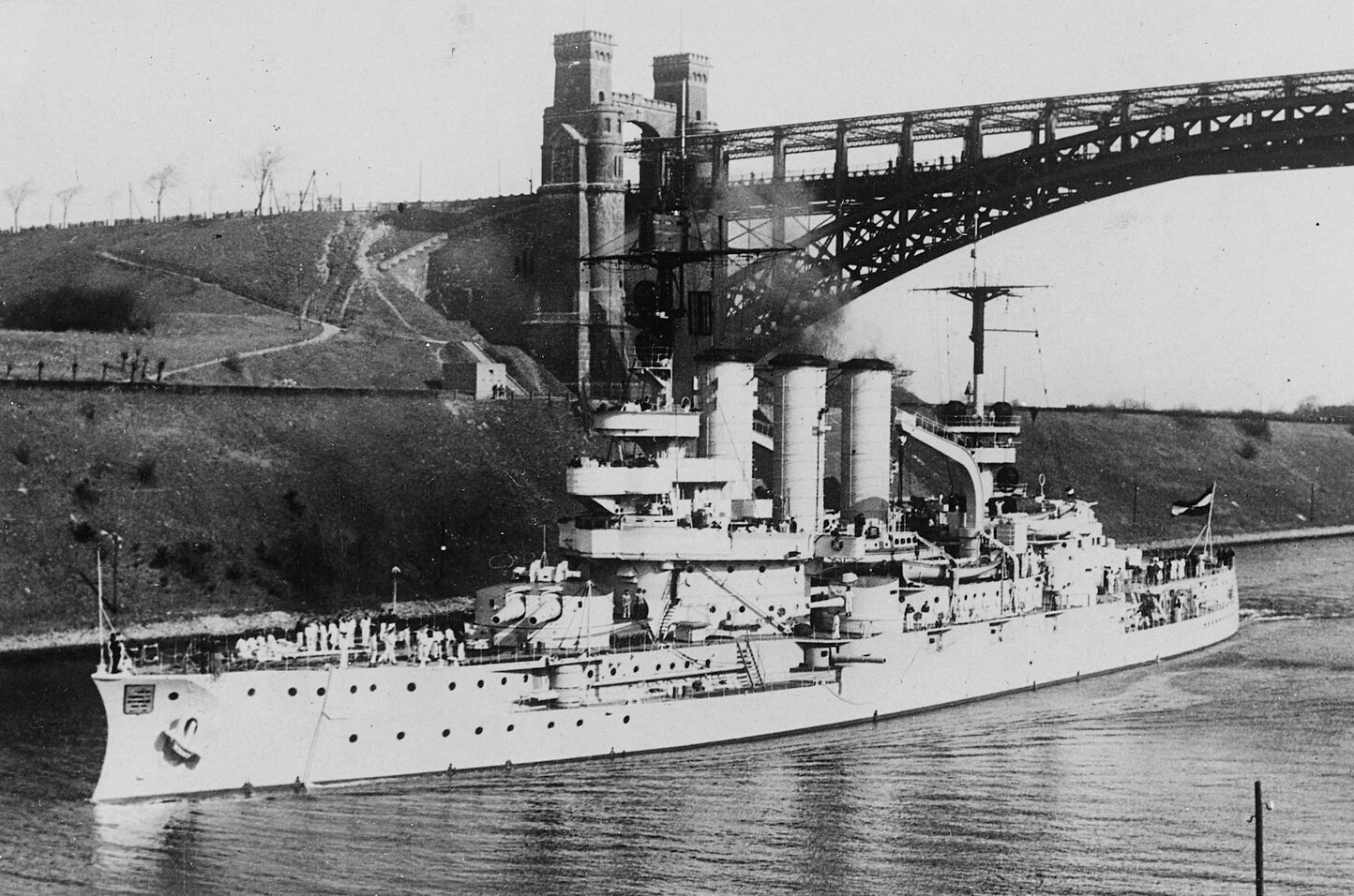
SMS Hessen passing under the Levensau Bridge while transiting the Kiel Canal, circa 1925-1934.
SMS Preussen
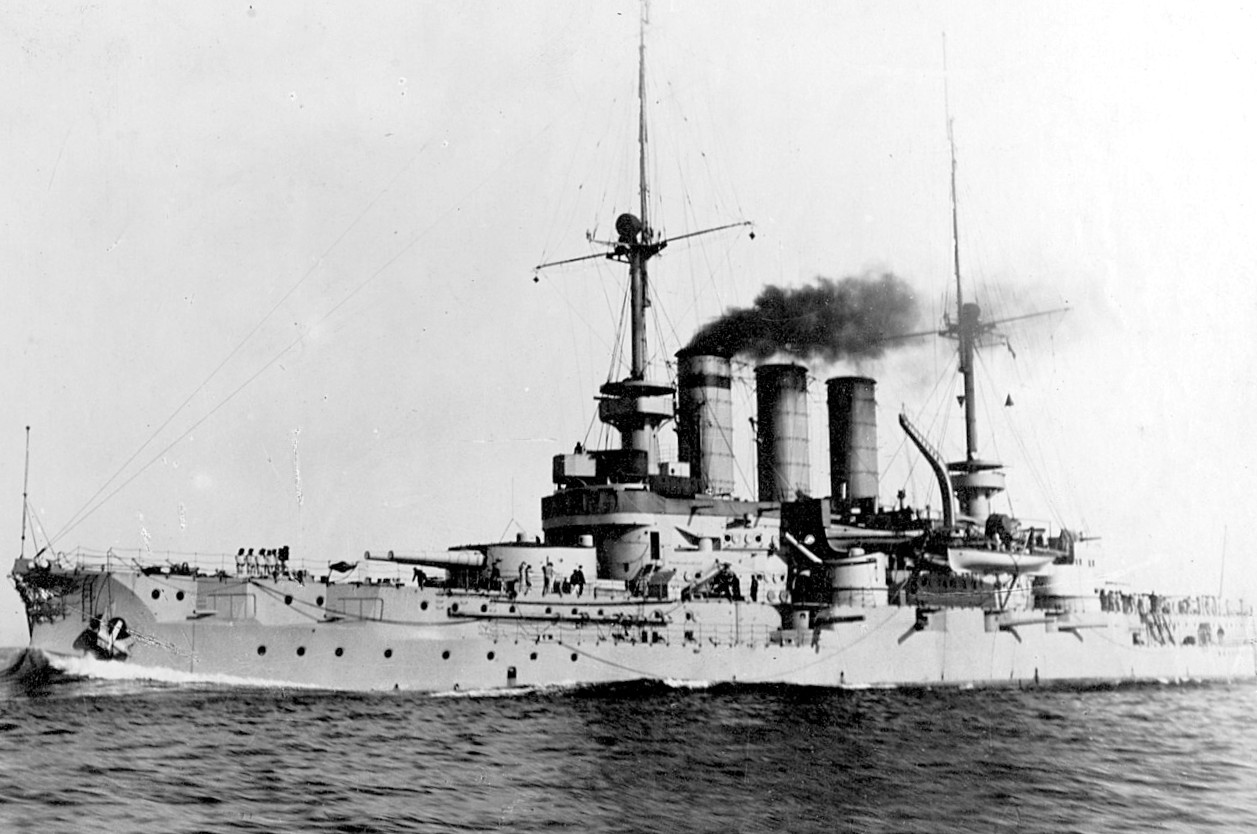
(Naval History and Heritage Command Photo, c1907)
SMS Preussen was the fourth of five pre-dreadnought battleships of the Braunschweig class, built for the German Kaiserliche Marine (Imperial Navy). She was laid down in April 1902, was launched in October 1903, and was commissioned in July 1905. Named for the state of Prussia, the ship was armed with a battery of four 28 cm (11 in) guns and had a top speed of 18 knots (33 km/h; 21 mph). Like all pre-dreadnoughts built at the turn of the century, Preussen was quickly made obsolete by the launching of the revolutionary HMS Dreadnought in 1906; as a result, she saw only limited service with the German fleet.
Preussen’s peacetime career centered on squadron and fleet exercises and training cruises to foreign ports. The ship served as the flagship of II Battle Squadron of the High Seas Fleet for the majority of her career. During the First World War, she served as a guard ship in the German Bight and later in the Danish Straits. She participated in a fleet sortie in December 1914 in support of the Raid on Scarborough, Hartlepool and Whitby during which the German fleet briefly clashed with a detachment of the British Grand Fleet. Preussen had been temporarily assigned to guard ship duties in the Baltic in May 1916, and so missed the Battle of Jutland. Due to her age, she did not rejoin the fleet, and instead continued to serve as a guard ship until 1917, when she became a tender for U-boats based in Wilhelmshaven.
After the war, Preussen was retained by the re-formed Reichsmarine and converted into a depot ship for F-type minesweepers. She was stricken from the naval register in April 1929 and sold to ship breakers in 1931. A 63-meter (207 ft) section of her hull was retained as a target; it was bombed and sunk in 1945 by Allied bombers at the end of the Second World War, and was scrapped in 1954. (Wikipedia)
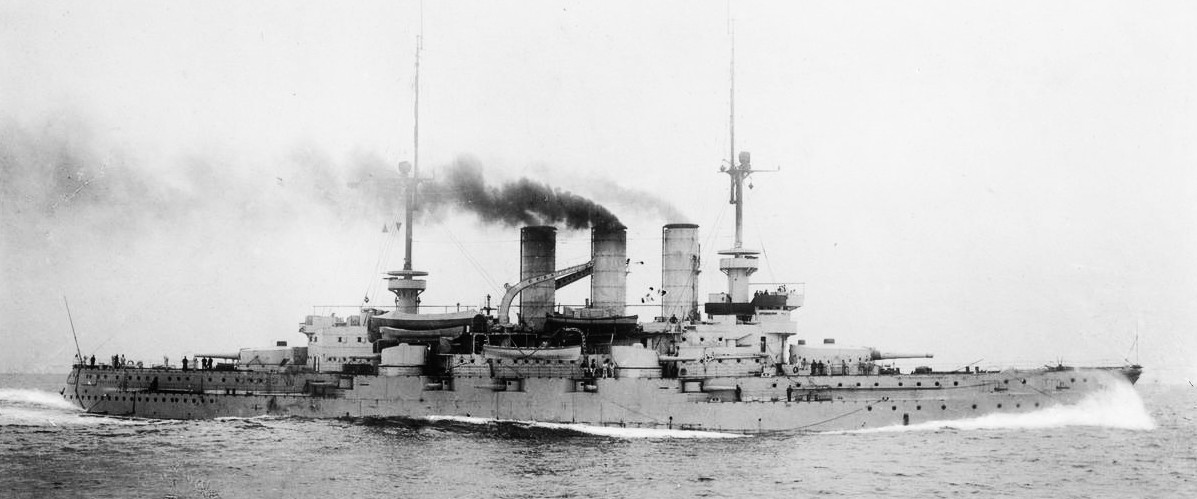
(IWM Photo, Q 22357)
SMS Preussen, 1910.
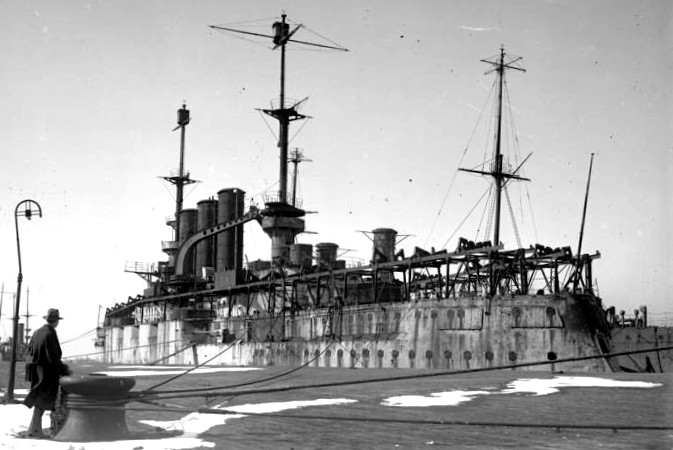
(Bundesarchiv Bild 102-13211)
SMS Preussen converted to a depot ship, c1929.
SMS Lothringen
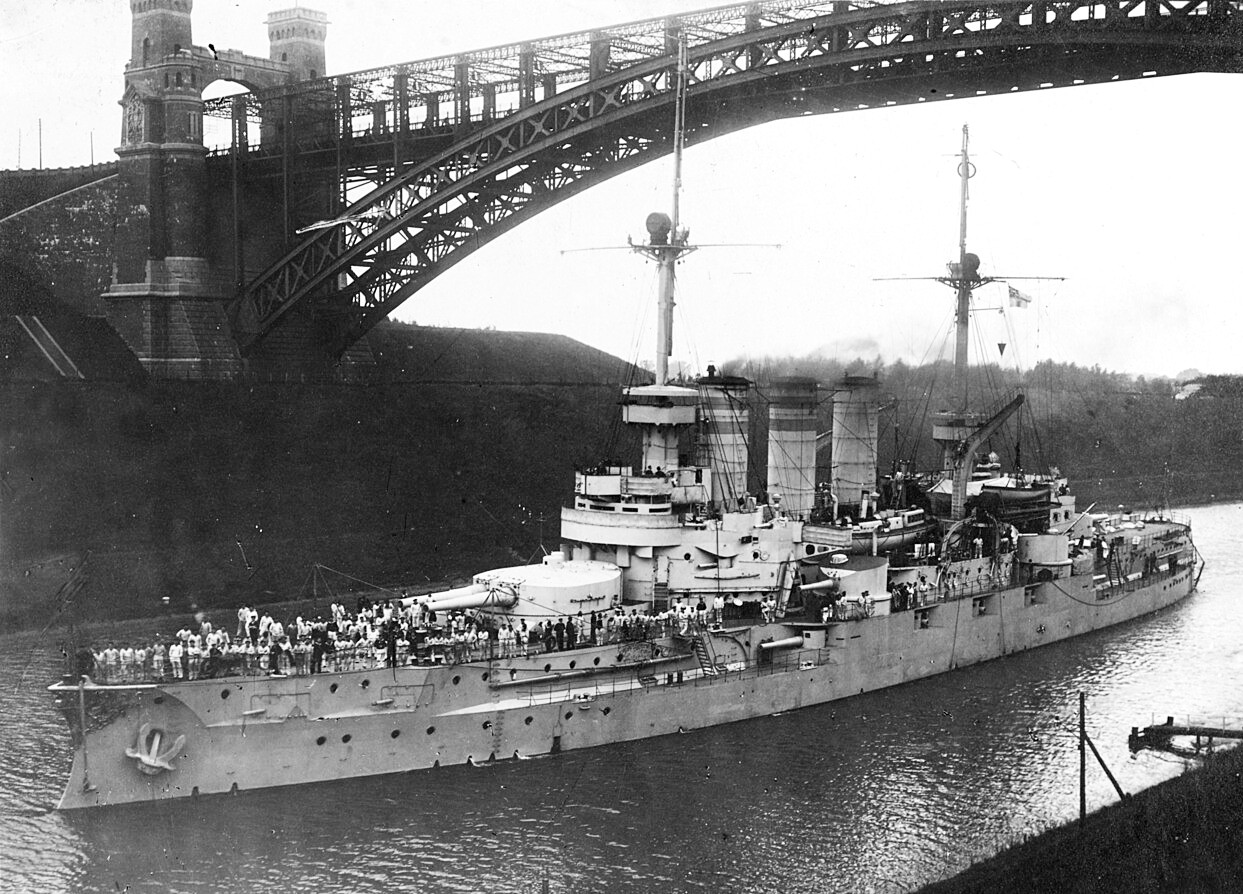
(USN Photo)
SMS Lothringen passing under the Levensau Bridge of the Kiel Canal before the First World War.
SMS Lothringen was the last of five pre-dreadnought battleships of the Braunschweig class, built for the German Kaiserliche Marine (Imperial Navy). She was laid down in December 1902, was launched in May 1904, and was commissioned in May 1906. She was named for Lothringen (now Lorraine), a province of the German Empire from 1871 to 1918. The ship was armed with a battery of four 28 cm (11 in) guns and had a top speed of 18 knots (33 km/h; 21 mph). Like all other pre-dreadnoughts built around the turn of the century, Lothringen was quickly made obsolete by the launching of the revolutionary HMS Dreadnought in December 1906; as a result, her career as a front-line battleship was cut short.
Lothringen’s peacetime career centered on squadron and fleet exercises and training cruises with II Battle Squadron. Scheduled to be withdrawn from service in July 1914 and replaced by newer dreadnought battleships, the outbreak of the First World War that month prevented her retirement. She spent the first two years of the war primarily serving as a guard ship in the German Bight. She and the rest of II Squadron joined the dreadnoughts of the High Seas Fleet to support the raid on Scarborough, Hartlepool, and Whitby in December 1914. In poor condition by 1916, she was withdrawn from fleet service in February. She thereafter patrolled the Danish Straits until she was replaced by the battleship Hannover in September 1917. She spent the rest of the war as a disarmed training ship.
After the war, Lothringen was retained by the re-formed Reichsmarine and converted into a depot ship for F-type minesweepers from 1919 to 1920. After the task of clearing the wartime minefields in the North Sea was completed, she was placed in reserve in March 1920. The ship remained inactive for the next decade and was stricken from the naval register in March 1931 and sold to ship breakers later that year. (Wikipedia)
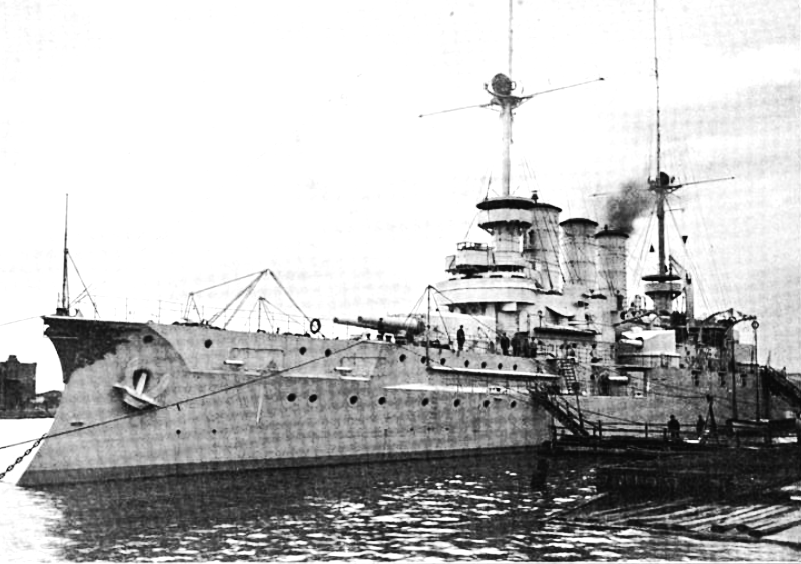
(Kaiserliche Marine Photo)
SMS Lothringen , c1908.
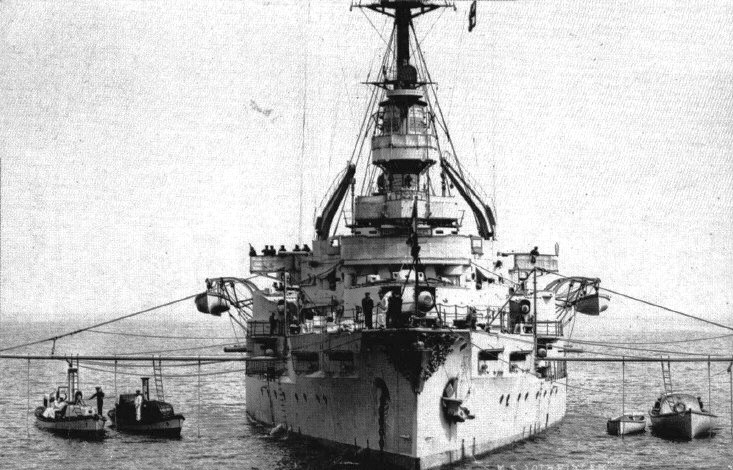
(Max Dreblow Photo)
SMS Lothringen, 1910.