
US Navy dreadnought Battleships: USS South Carolina (BB-26), USS Michigan (BB-27), USS Delaware (BB-28), USS North Dakota (BB-29), USS Florida (BB-30), USS Utah (BB-31)
South Carolina class: USS South Carolina (BB-26), USS Michigan (BB-27)
USS South Carolina (BB-26)

(USN Photo, NH 61225)
USS South Carolina (BB-26), 1910.
USS South Carolina (BB-26), the lead ship of her class of dreadnought battleships, was the fourth ship of the United States Navy to be named in honor of the eighth state. She was also the first American dreadnought; though she did not incorporate turbine propulsion like HMS Dreadnought, South Carolina’s design included revolutionary aspects as well, primarily the superfiring arrangement of her main battery. The ship was laid down in December 1906 and launched in July 1908 before being commissioned into the US Atlantic Fleet in March 1910.
South Carolina spent much of her career in the Atlantic and Caribbean patrolling the eastern coast of the United States. She made two trips to Europe in 1910 and 1911 and participated in a visit by a German cruiser squadron in 1912. In 1913–14, she frequently patrolled the coast of Mexico to protect American interests during the Mexican Revolution, and in April 1914 she took part in the United States occupation of Veracruz. After the United States entered World War I in April 1917, South Carolina trained sailors for the rapidly expanding wartime navy, and in late 1918, she was assigned to convoy escort duty. An accident with her propellers in September kept her from active service for the remainder of the conflict. In 1919, she made four trips to bring American soldiers back from Europe. Midshipmen training cruises followed in 1920–21, but the Washington Naval Treaty of 1922 cut her career short. She was broken up for scrap as part of the arms limitation treaty, starting in mid-1924. (Wikipedia)
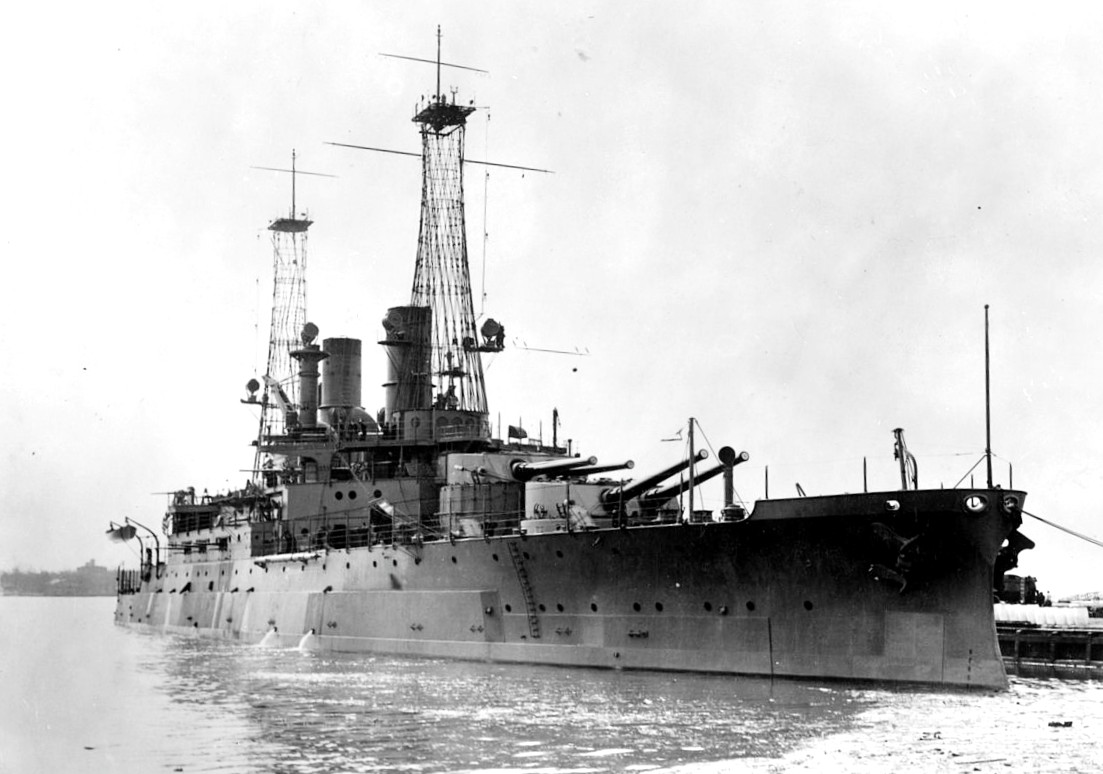
(USN Photo, NH 61225)
USS South Carolina (BB-26), 1910.
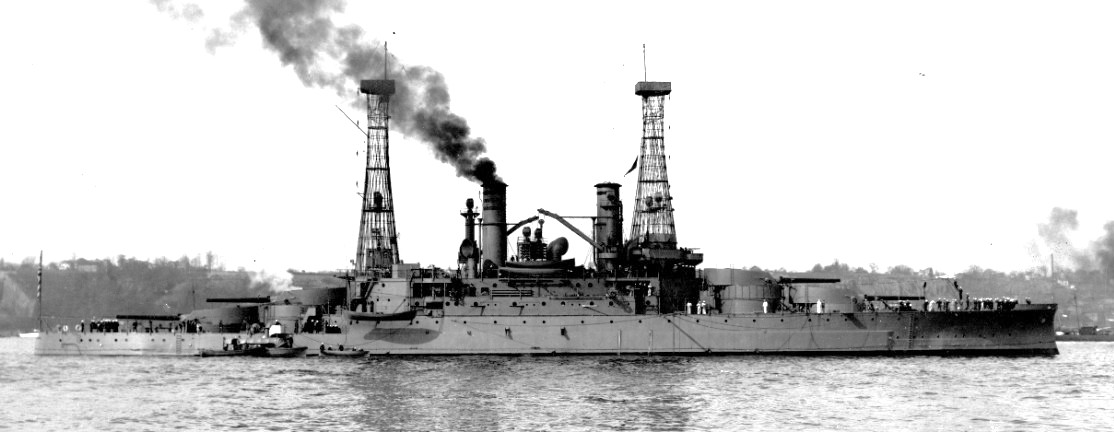
(USN Photo)
US battleship USS South Carolina (BB-26) in the w:New York Navy Yard 3 October 1911.
USS Michigan (BB-27)
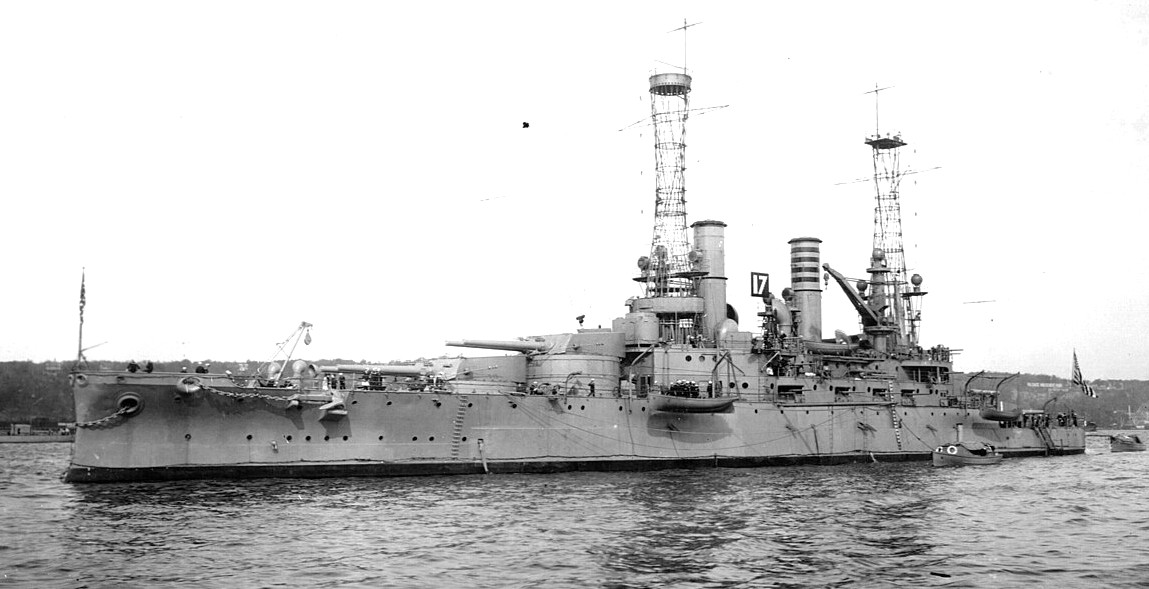
(USN Photo)
USS Michigan (BB-27), 1912.
USS Michigan (BB-27), a South Carolina-class battleship, was the second ship of the United States Navy to be named in honor of the 26th state. She was the second member of her class, the first dreadnought battleships built for the US Navy. She was laid down in December 1906, launched in May 1908, and commissioned into the fleet 4 January 1910. Michigan and South Carolina were armed with a main battery of eight 12-inch (305 mm) guns in superfiring twin gun turrets; they were the first dreadnoughts to feature this arrangement.
Michigan spent her career in the Atlantic Fleet. She frequently cruised the east coast of the United States and the Caribbean Sea, and in April 1914 took part in the United States occupation of Veracruz during the Mexican Civil War. After the United States entered World War I in April 1917, Michigan was employed as a convoy escort and training ship for the rapidly expanding wartime navy. In January 1918, her forward cage mast collapsed in heavy seas, killing six men. In 1919, she ferried soldiers back from Europe. The ship conducted training cruises in 1920 and 1921, but her career was cut short by the Washington Naval Treaty signed in February 1922, which mandated the disposal of Michigan and South Carolina. Michigan was decommissioned in February 1923 and broken up for scrap the following year. (Wikipedia)
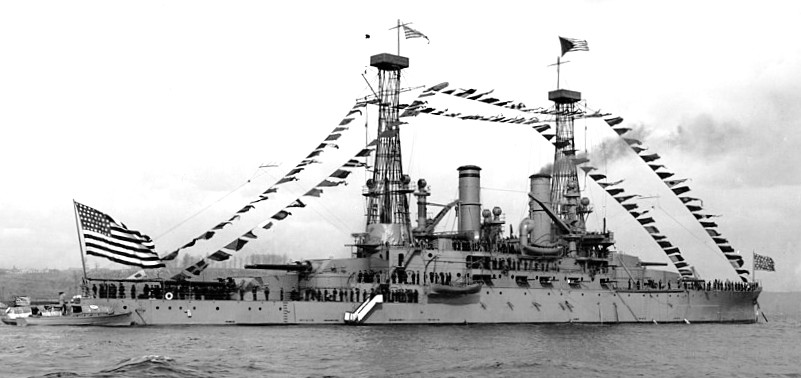
(USN Photo)
USS Michigan (BB-27), dressed for a naval review off New York in October 1911.
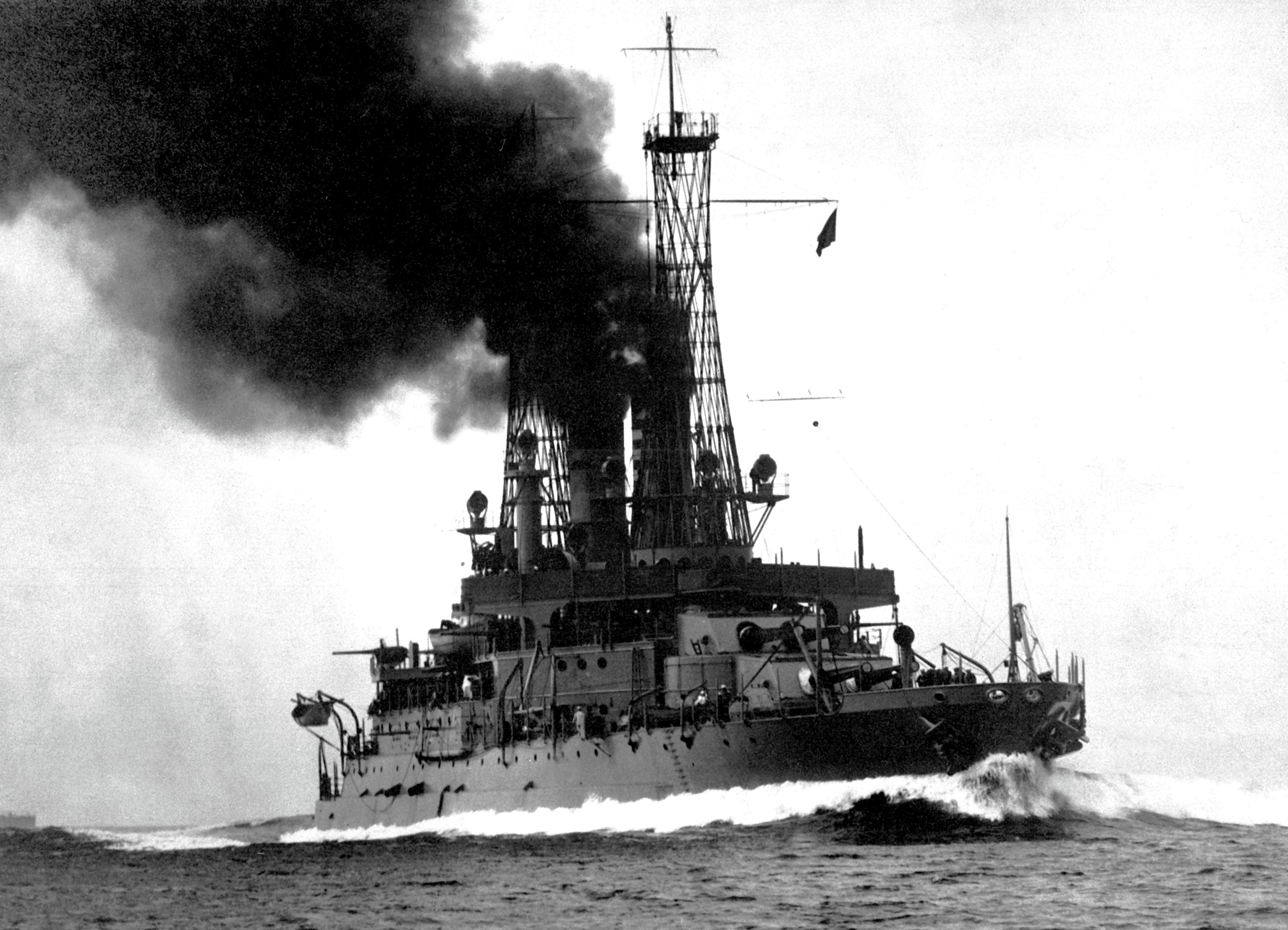
(USN Photo)
USS Michigan (BB-27), steaming at high speed, ca 1918.
Delaware class: USS Delaware (BB-28), USS North Dakota (BB-29)
USS Delaware (BB-28)
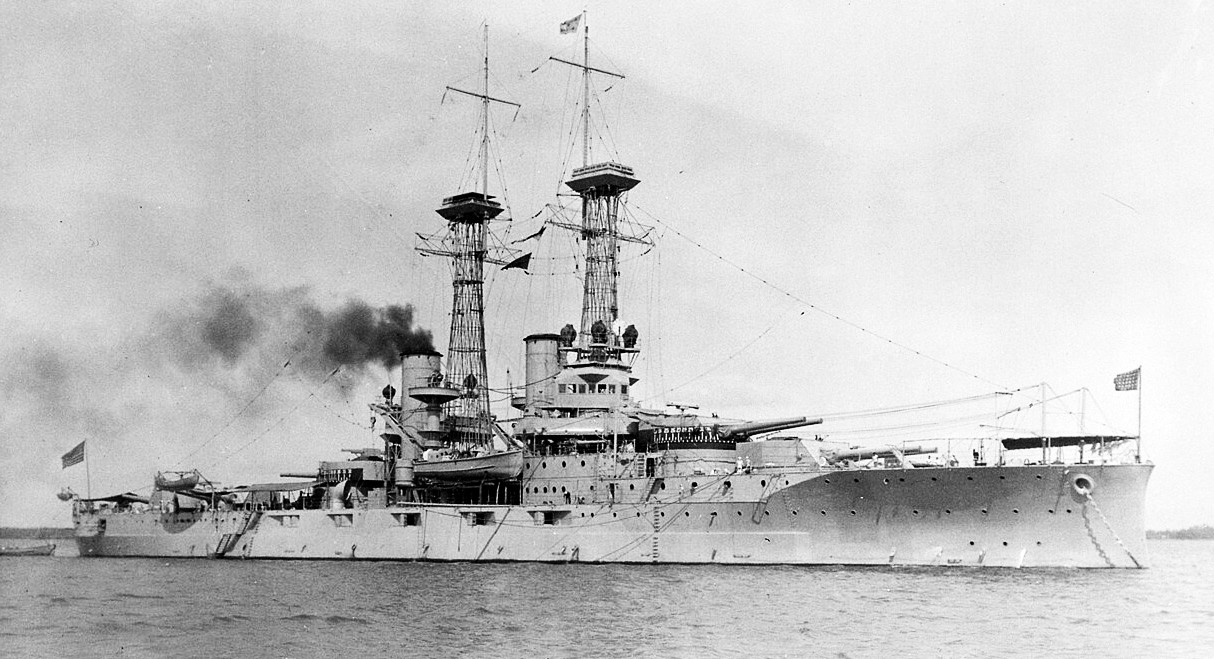
(USN Photo)
USS Delaware (BB-28), Guantanamo Bay, 1920.
USS Delaware (BB-28) was a dreadnought battleship of the United States Navy, the lead ship of her class. She was laid down at Newport News Shipbuilding in November 1907, launched in January 1909, and completed in April 1910. The sixth ship to be named for the First State, Delaware was armed with a main battery of ten 12-inch (305 mm) guns all on the centerline, making her the most powerful battleship in the world at the time of her construction. She was also the first battleship of the US Navy to be capable of steaming at full speed for 24 continuous hours without suffering a breakdown.
Delaware served in the Atlantic Fleet throughout her career. During World War I, she sailed to Great Britain to reinforce the British Grand Fleet, in the 6th Battle Squadron. She saw no action during the war, however, as both the British and Germans had abandoned direct confrontation with each other. After the end of the war, she returned to her peacetime duties of fleet maneuvers, midshipmen cruises, and good-will visits to foreign ports. Under the terms of the Washington Naval Treaty, Delaware was retained until the new battleship USS Colorado was completed in 1924, at which point she was broken up for scrap in accordance with the treaty. (Wikipedia)
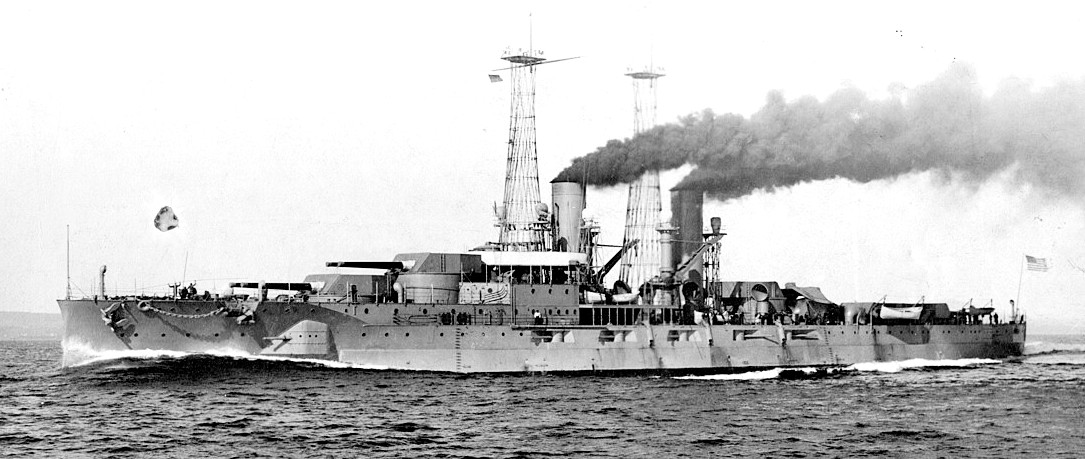
(U.S. Naval History and Heritage Command Photo)
USS Delaware (BB-28), running trials, circa late 1909.
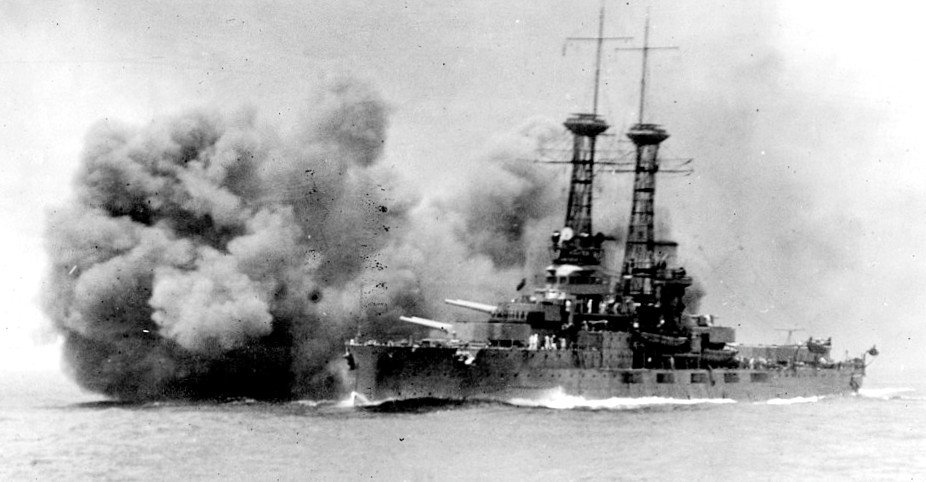
(U.S. Naval History and Heritage Command Photo)
USS Delaware (BB-28), firing her 12/45 main battery guns during battle practice, 26 June 1920.
USS North Dakota (BB-29)
(USN Photo)
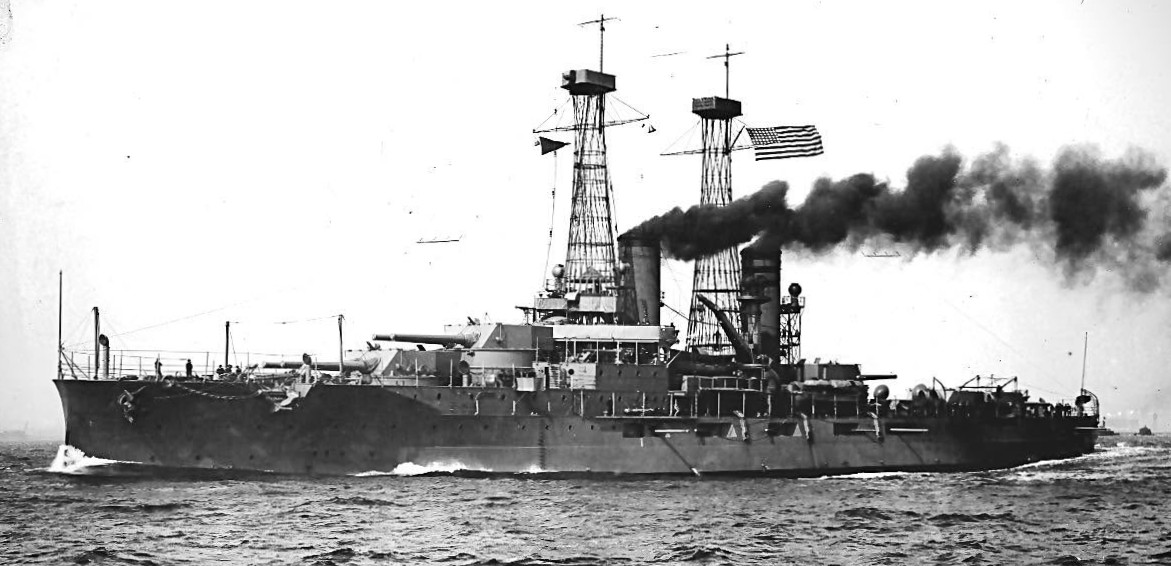
USS North Dakota (BB-29) underway circa 1912.
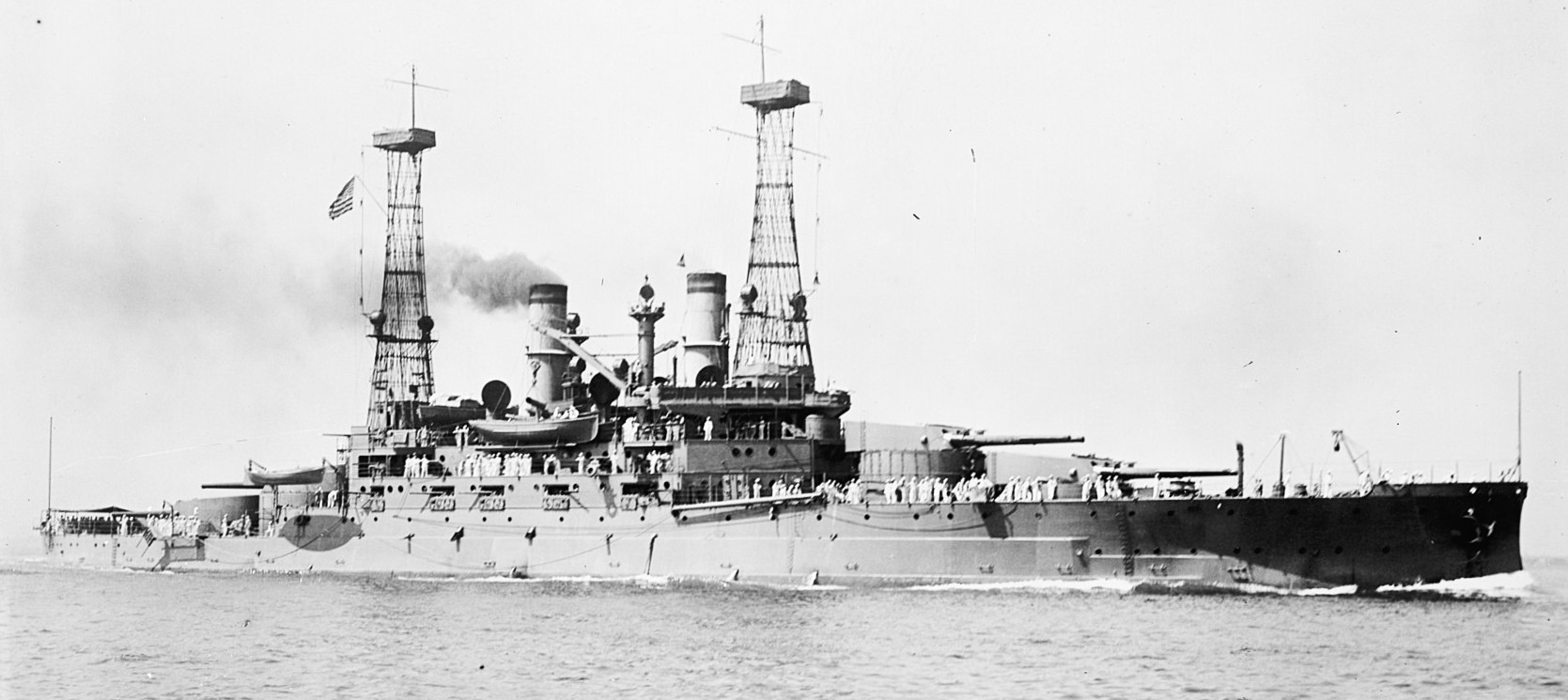
USS North Dakota (BB-29) was a dreadnought battleship of the United States Navy, the second member of the Delaware class, her only sister ship being Delaware. North Dakota was laid down at the Fore River Shipyard in December 1907, was launched in November 1908, and commissioned into the US Navy in April 1910. She was armed with a main battery of ten 12-inch (305 mm) guns and was capable of a top speed of 21 kn (24 mph; 39 km/h). North Dakota was the first vessel of the US Navy to be named after the 39th state.
North Dakota had a peaceful career; she was present during the United States occupation of Veracruz in 1914, but did not see action. After the United States entered World War I in April 1917, North Dakota remained in the US, training crewmen for the rapidly expanding wartime Navy, and therefore did not see combat. She remained on active duty through the early 1920s, until she was decommissioned under the terms of the Washington Naval Treaty in November 1923, and converted into a radio-controlled target ship. She served in that capacity until 1930, when she was replaced in that role by Utah. In 1931, she was sold for scrapping and thereafter dismantled. (Wikipedia)
(Library of Congress Photo)
USS North Dakota (BB-29), ca 1915-1917.
(USN Photo)
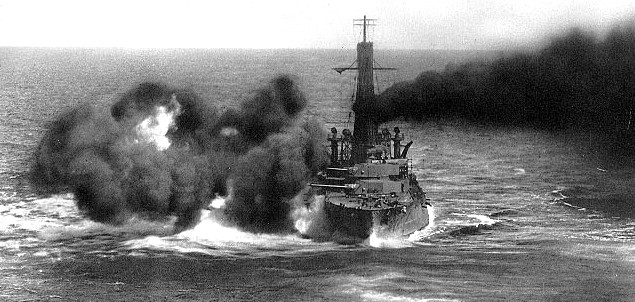
USS North Dakota (BB-29) firing a broadside during gunnery maneuvers before the First World War.
(USN Photo)
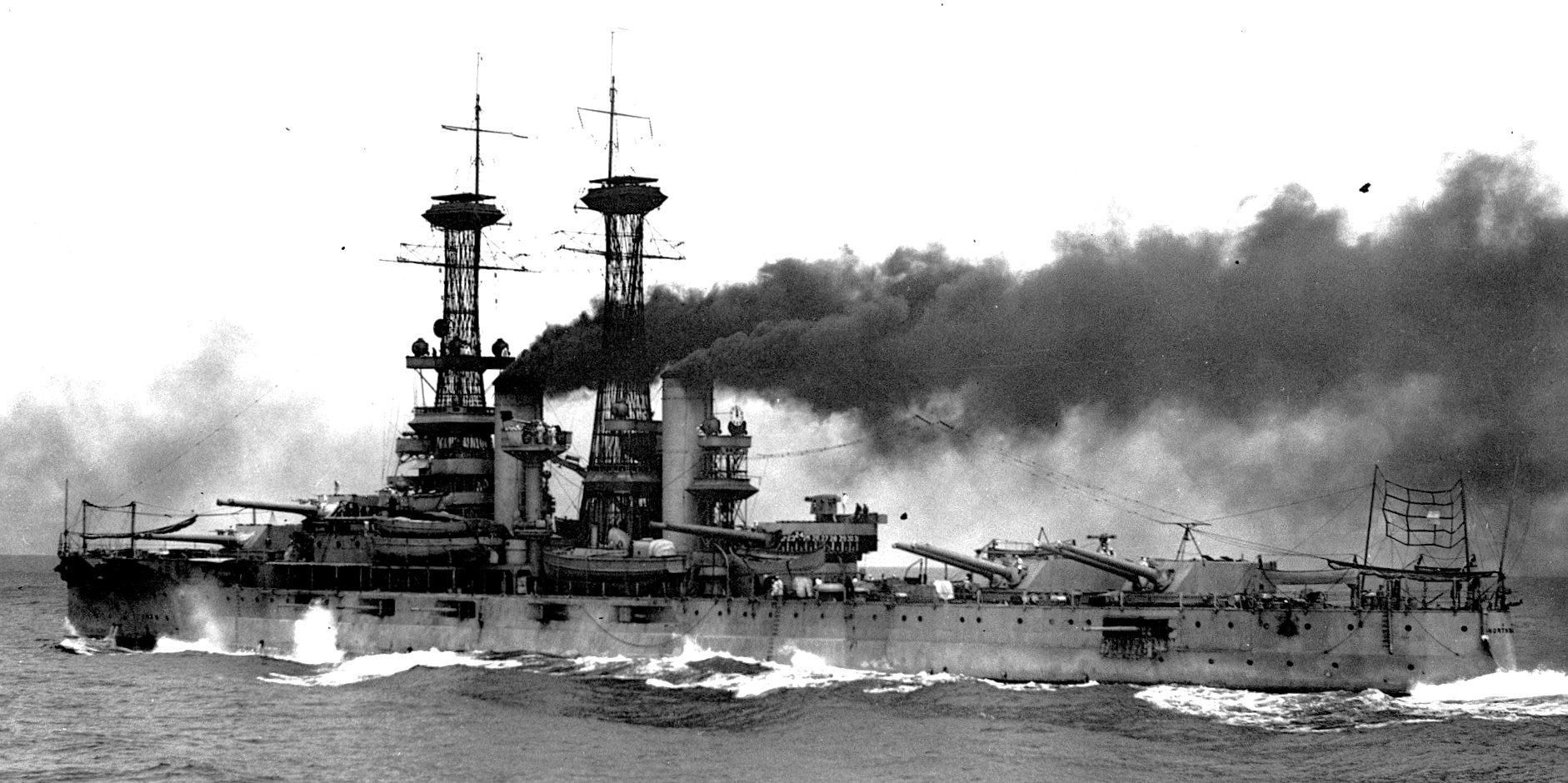
USS North Dakota (BB-29) underway during battle practice, circa 1921. Note sighting target mounted above her stern; all guns trained out on the port beam; heavy coal smoke.
Florida class: USS Florida (BB-30), USS Utah (BB-31)
USS Florida (BB-30)
(USN Photo)
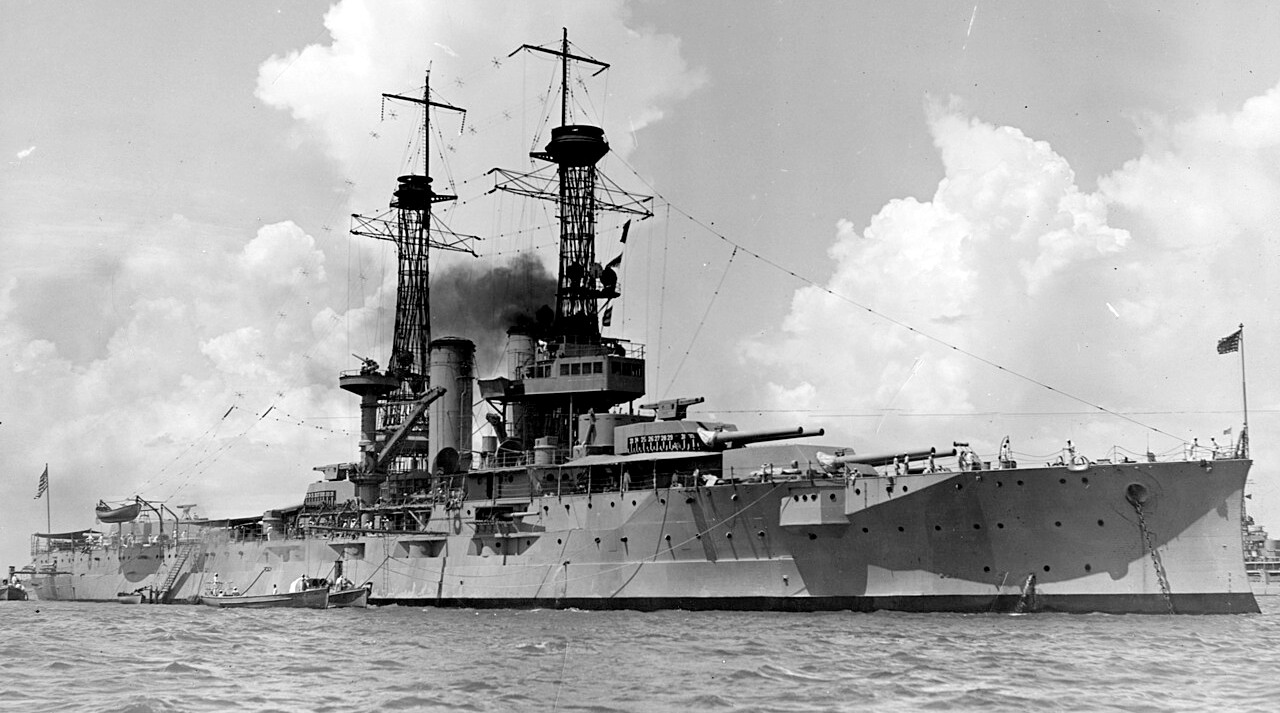
USS Florida (BB-30), ca 1931.
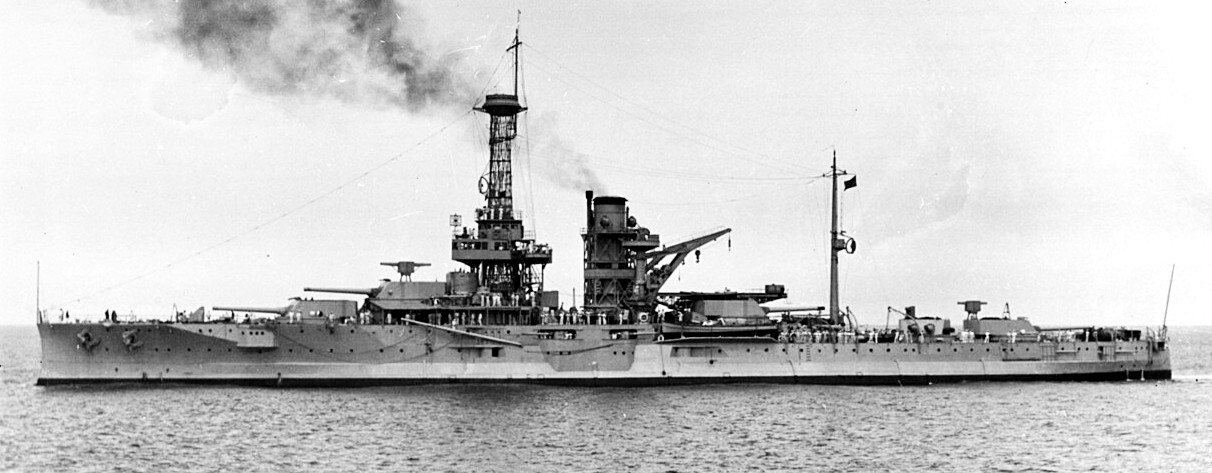
USS Florida (BB-30) was the lead ship of the Florida class of dreadnought battleships of the United States Navy. She had one sister ship, Utah. Florida was laid down at the New York Navy Yard in March 1909, launched in May 1910, and commissioned into the US Navy in September 1911. She was armed with a main battery of ten 12-inch (305 mm) guns and was very similar in design to the preceding Delaware-class battleships.
Florida was one of the first ships to arrive during the United States occupation of Veracruz in early 1914, and part of her crew joined the landing party that occupied the city. She was assigned to United States Battleship Division 9 after the American entrance into the First World War in April 1917; the division was sent to Europe to reinforce the British Grand Fleet. During the war, Florida and the rest of her unit, reassigned as the 6th Battle Squadron of the Grand Fleet, conducted patrols in the North Sea and escorted convoys to Norway. She saw no action against the German High Seas Fleet, however.
Florida returned to normal peacetime duties in 1919. She was heavily modernized in 1924–1926, including a complete overhaul of her propulsion system. She remained in service until 1930, when the London Naval Treaty was signed. Under the terms of the treaty, Florida and Utah were removed from active service. Therefore, Florida was decommissioned in 1931 and scrapped the next year in Philadelphia. (Wikipedia)
(USN Photo)
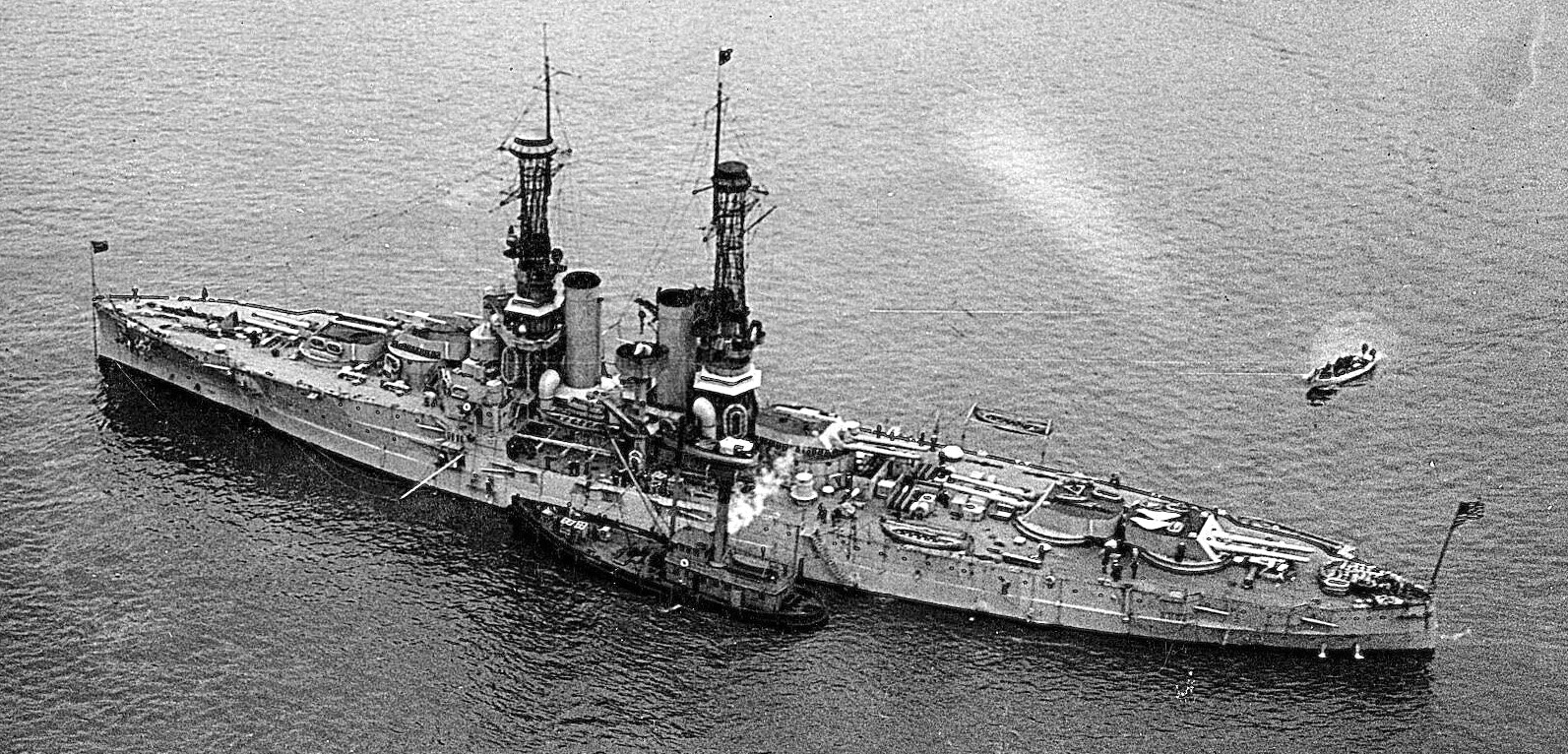
USS Florida (BB-30). The lead ship of her class the Battleship USS Florida (BB-30) photographed from the air on 23 April 1919. From this angle you can clearly see the layout of five 12-inch/45-caliber Mark 5 gun turrets. Under the terms of the London Naval Treaty of 1930, which reduced the battle fleets of the signatory countries, she was to be disposed of. Florida was decommissioned accordingly on February 16th 1931 at the Philadelphia Naval Yard, struck from the naval register on April 6th and was broken up in Philadelphia later that year. Demolition work was completed by 30 Sep 1932. (Bill Cox)
(U.S. Naval History and Heritage Command Photo)
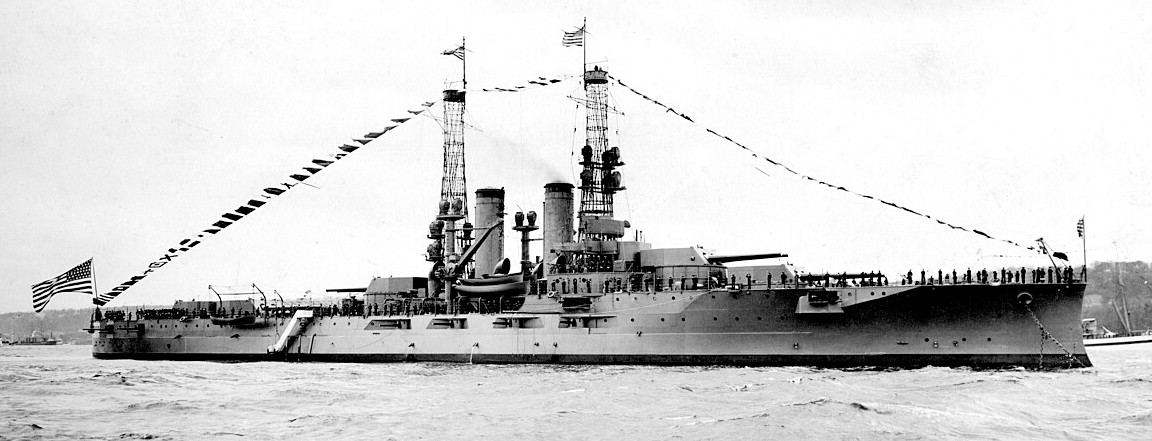
USS Florida (BB-30), dressed with flags during the Naval Review off New York City, 3 October 1911.
(NARA Photo)
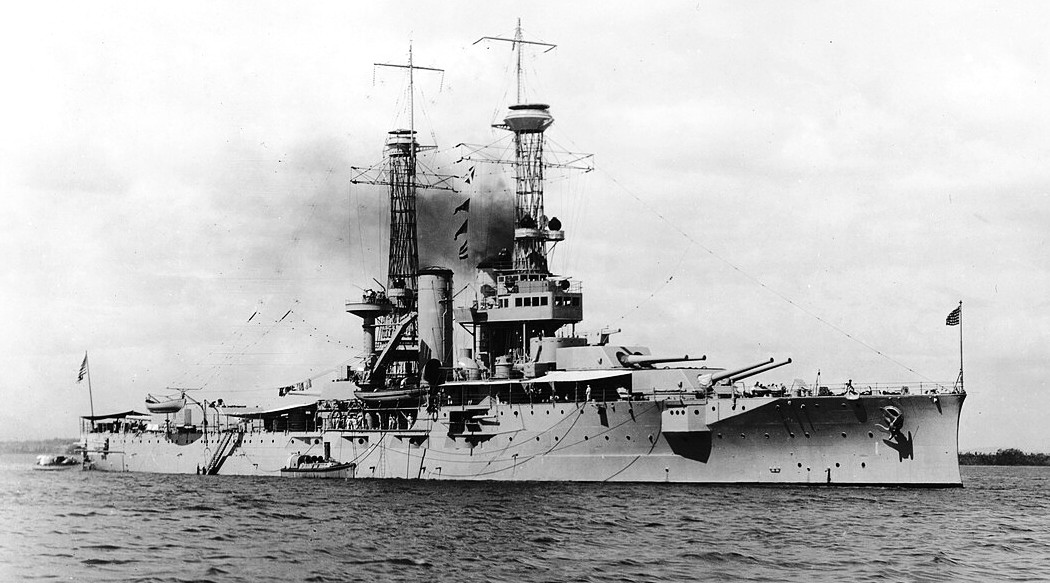
USS Florida (BB-30), 1920.
(U.S. Naval History and Heritage Command Photo)
USS Florida (BB-30), Hampton Roads, Oct 1929.
USS Utah (BB-31)
(USN Photo)
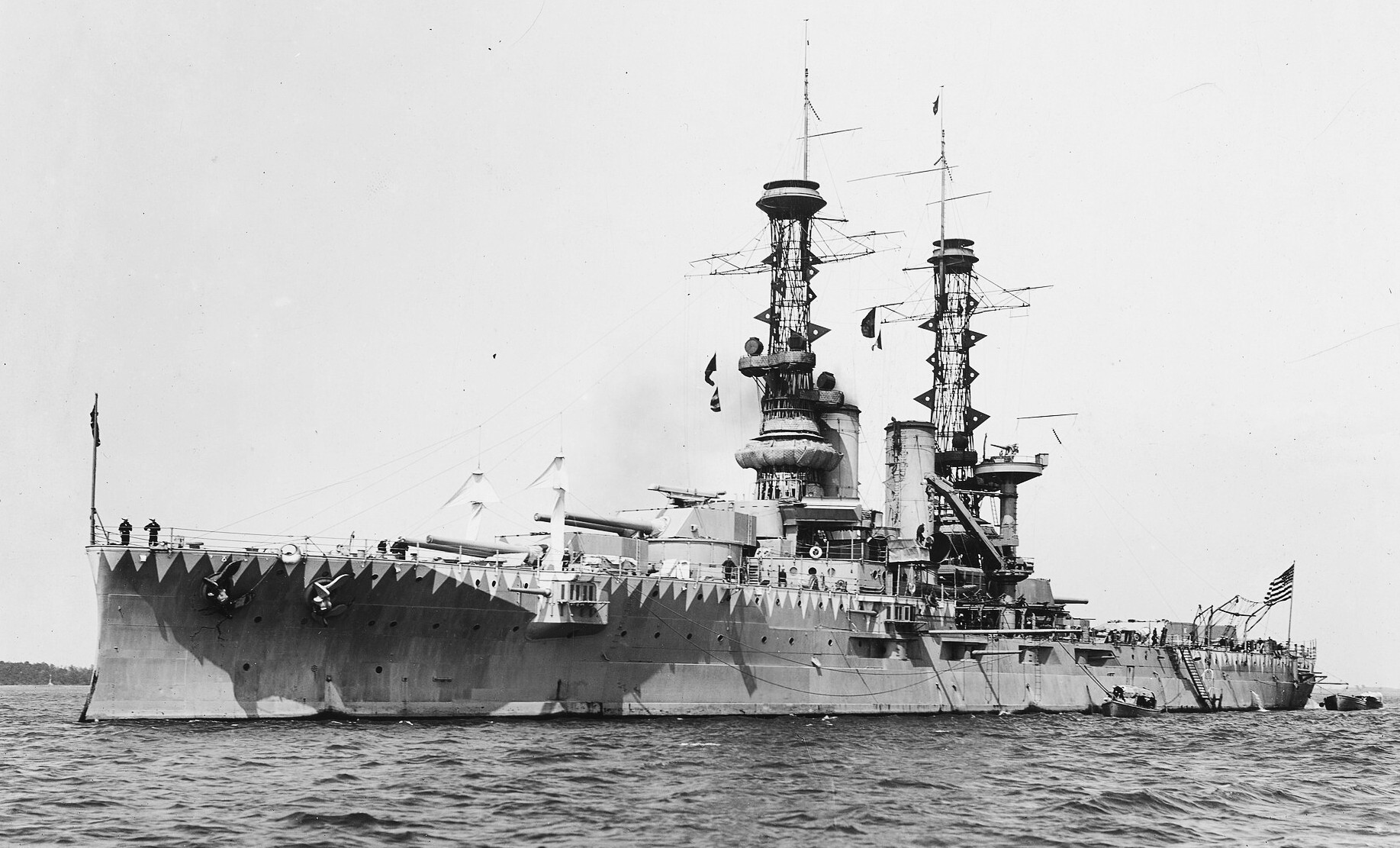
USS Utah (BB-31) painted with dazzle camouflage during the First World War.
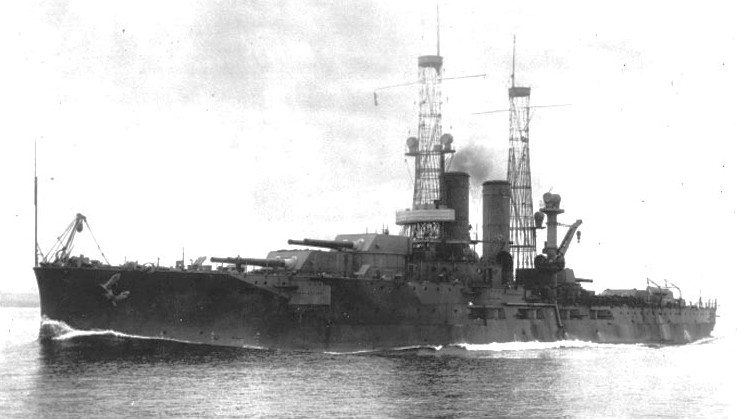
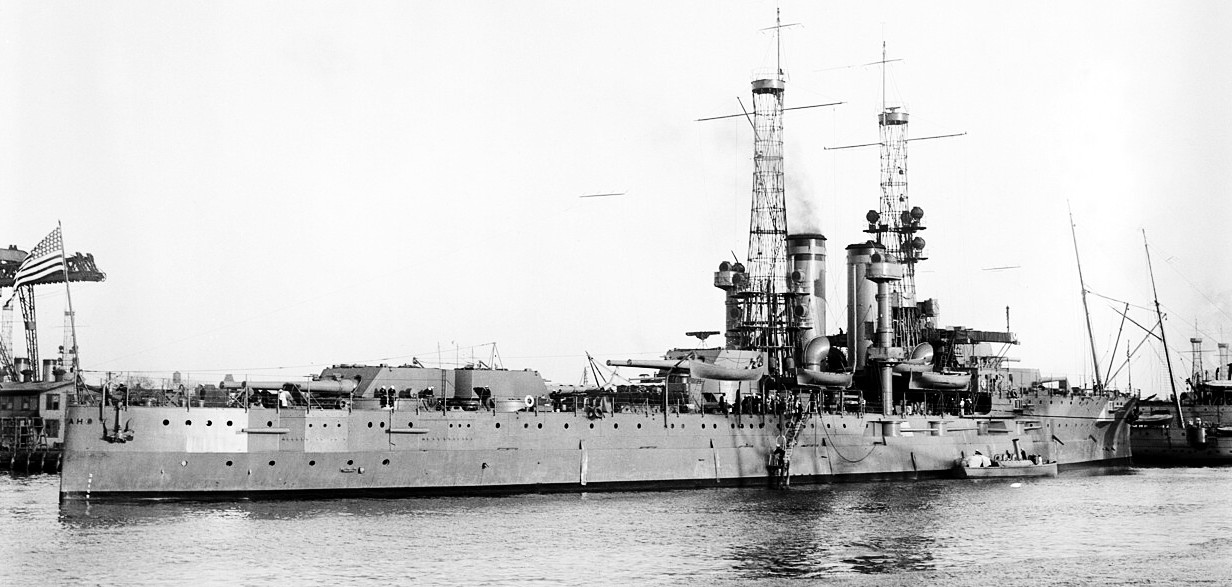
USS Utah (BB-31/AG-16) was the second of two Florida class dreadnought battleships. The first ship of the United States Navy named after the state of Utah, she had one sister ship, Florida. Utah was built by the New York Shipbuilding Corporation, laid down in March 1909 and launched in December of that year. She was completed in August 1911, and was armed with a main battery of ten 12-inch (305 mm) guns in five twin gun turrets.
Utah and Florida were the first ships to arrive during the United States occupation of Veracruz in 1914 during the Mexican Revolution. The two battleships sent ashore a landing party that began the occupation of the city. After the American entrance into World War I, Utah was stationed at Berehaven in Bantry Bay, Ireland, where she protected convoys from potential German surface raiders. Throughout the 1920s, the ship conducted numerous training cruises and fleet maneuvers, and carried dignitaries on tours of South America twice, in 1924 and 1928.
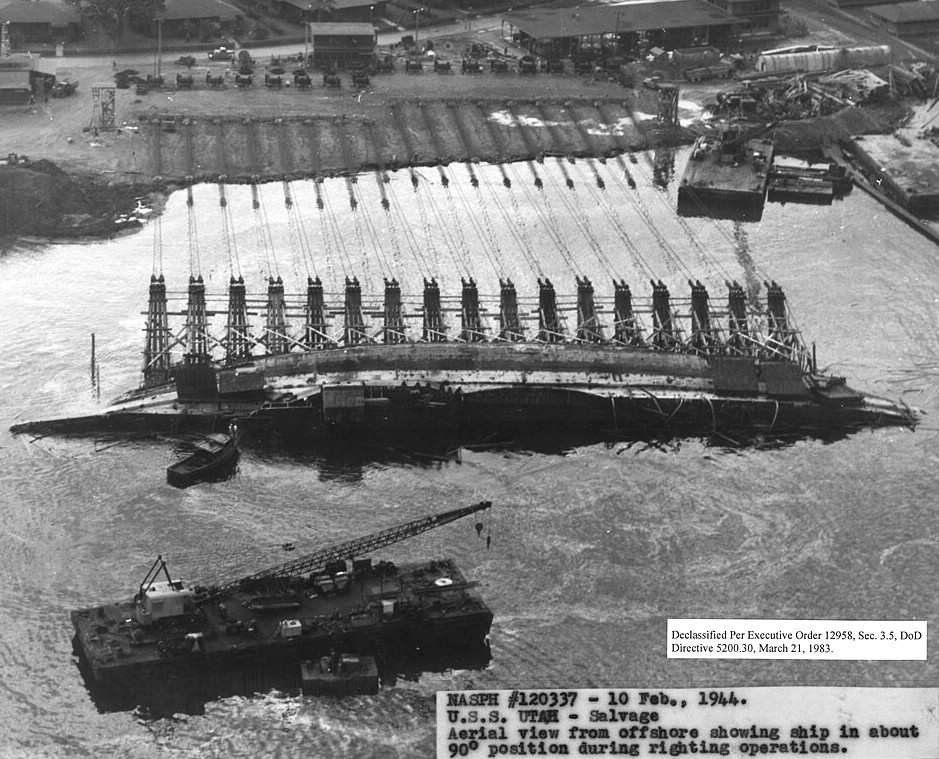
In 1931, Utah was demilitarized and converted into a target ship and re-designated as AG-16, in accordance with the terms of the London Naval Treaty signed the previous year. She was also equipped with numerous anti-aircraft guns of different types to train gunners for the fleet. She served in these two roles for the rest of the decade. She was in port at Pearl Harbor on the morning of 7 December 1941, and in the first minutes of the Japanese attack, was hit by two torpedoes, which caused serious flooding. Utah quickly rolled over and sank; 58 men were killed, while 461 of her crew were able to escape. The wreck remains in the harbour, and in 1972, a memorial was erected near the ship. (Wikipedia)
(USN Photo)
USS Utah (BB-31) ca 1910.
(USN Photo)
USS Utah (BB-31).
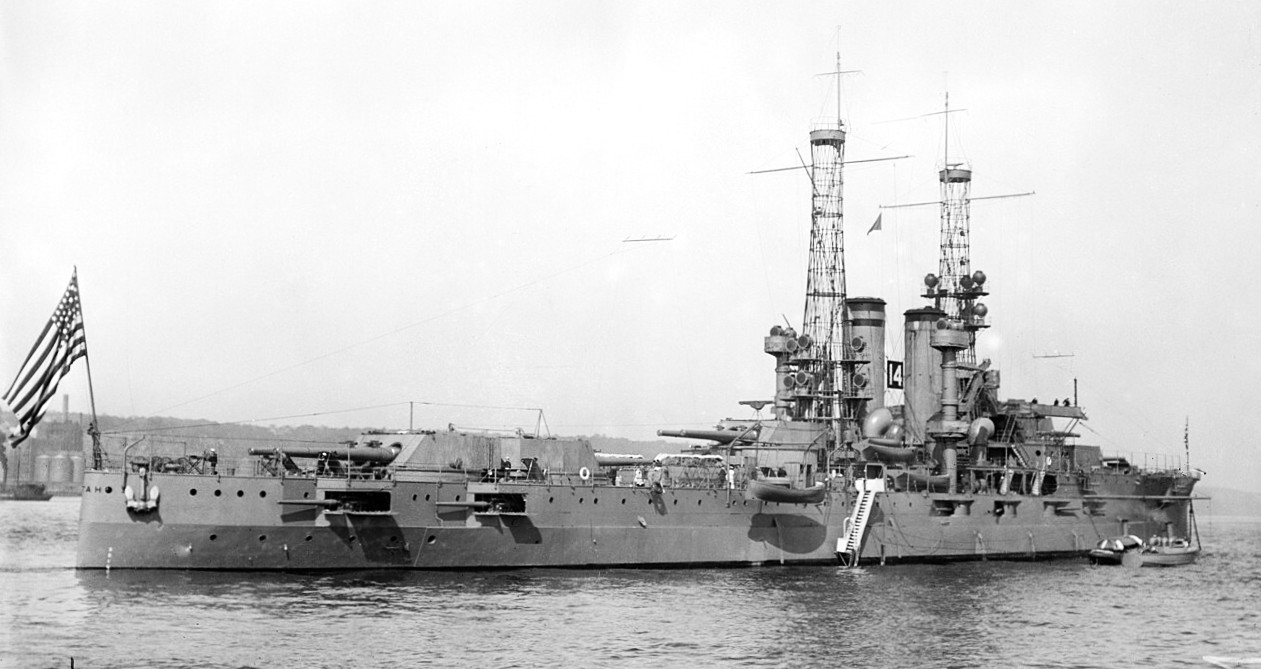
(Library of Congress Photo)
USS Utah (BB-31), ca 1910-1915.
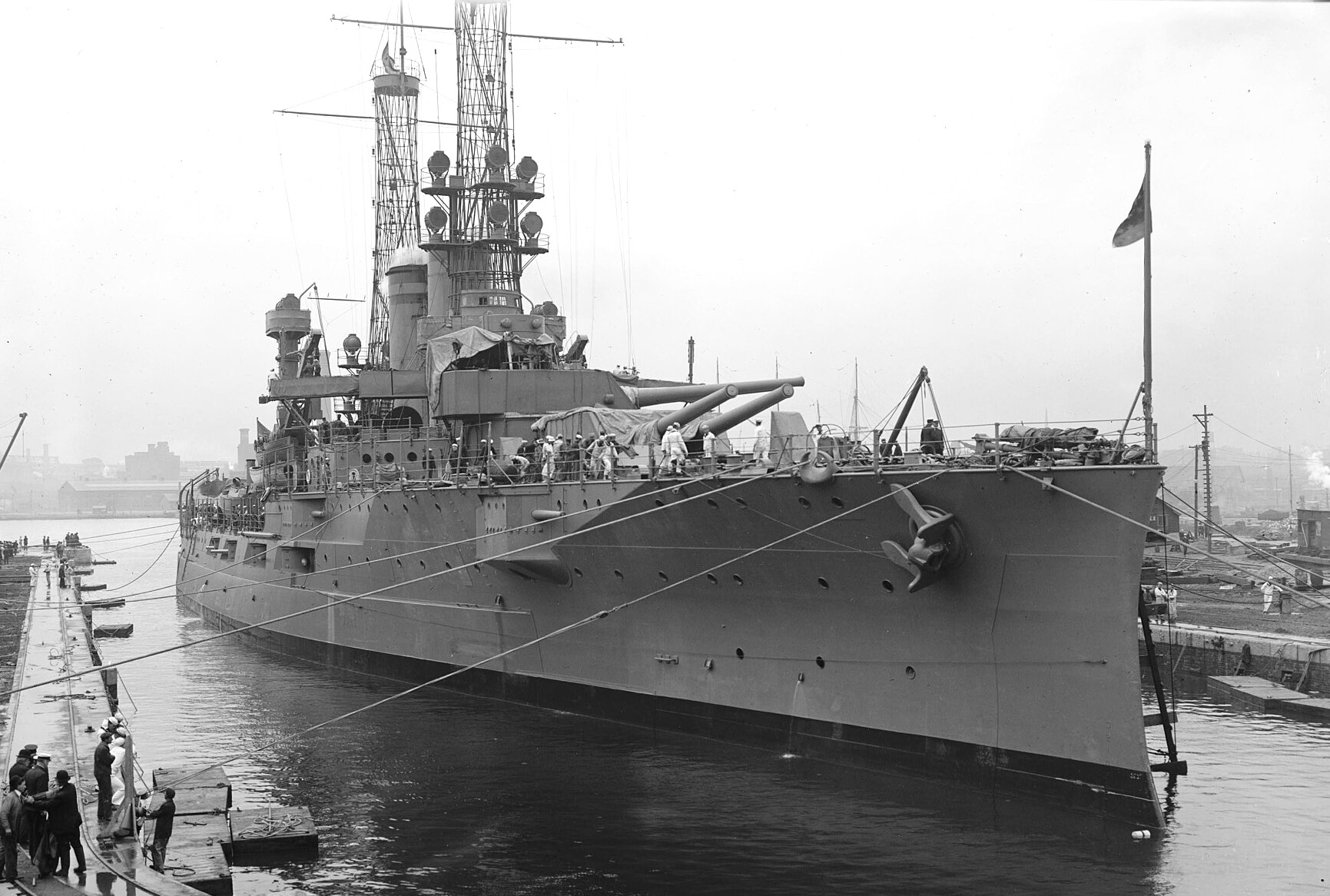
(USN Photo)
USS Utah (BB-31) in drydock No. 4, Brooklyn Navy Yard, New York, 9 May 1912.
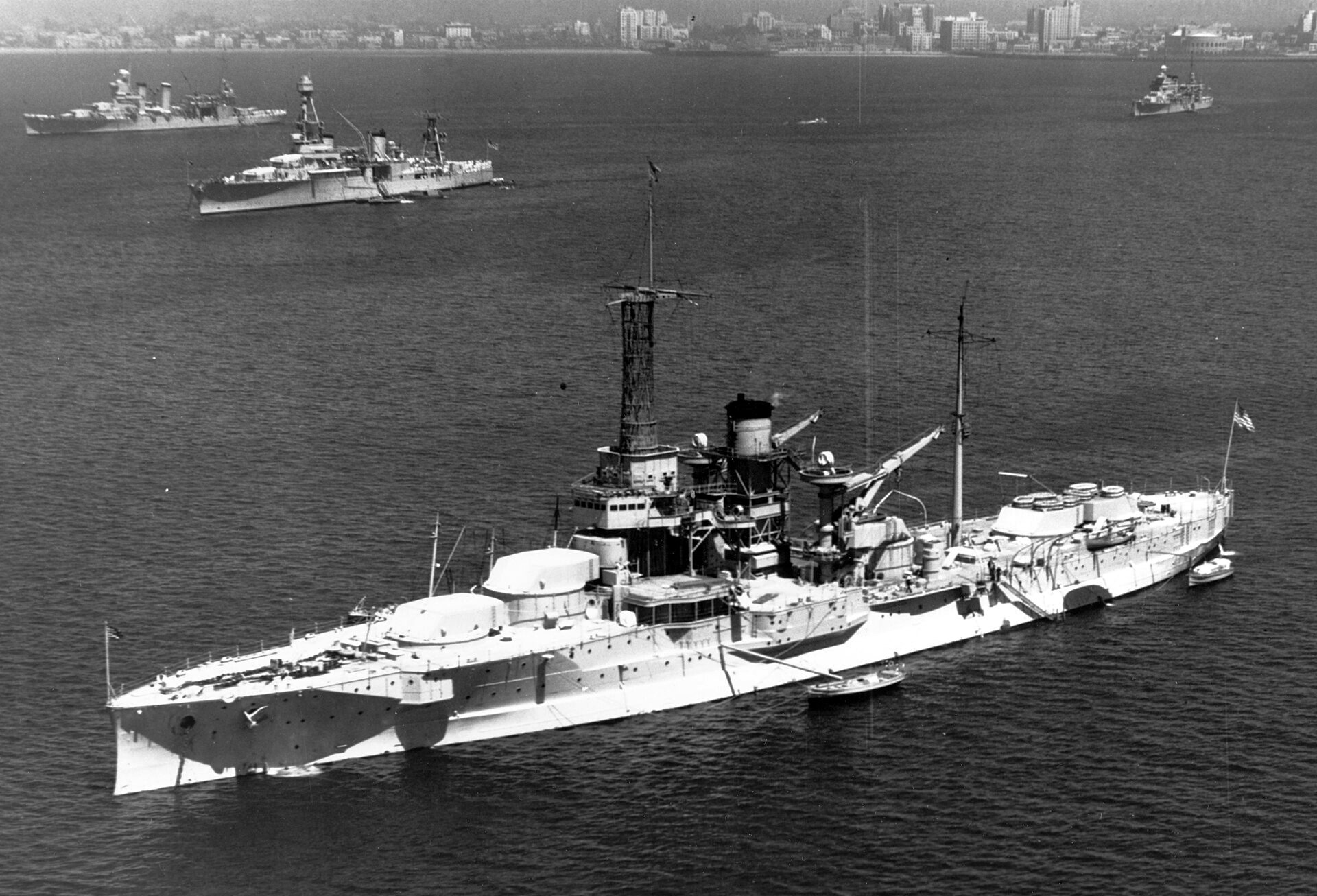
(USN Photo)
USS Utah (AG-16). Anchored off Long Beach, California, 18 April 1935, while serving as a target ship. Three heavy cruisers are in the middle distance, with the city of Long Beach beyond them.
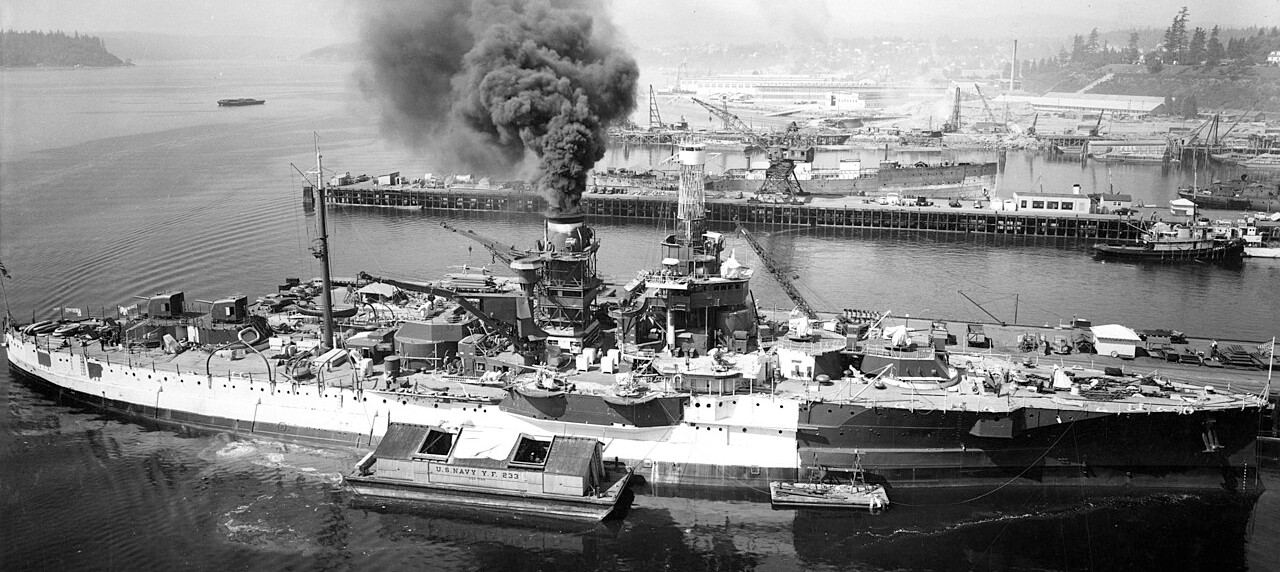
(USN Photo)
The U.S. Navy training ship USS Utah (AG-16) at the Puget Sound Naval Shipyard, Bremerton, Washington (USA), 18 August 1941. She has been rearmed with several small training guns and partially repainted into Measure 1 camouflage. The U.S. Navy lighter YF-233 is alongside, and USS Aroostook (AK-44) is being disassembled in the background.
(National Archives Photo)
USS Utah, salvage operation underway, 10 Feb 1944. Aerial view from offshore showing the ship in about the 90 degree position.
The United States Navy began the construction of battleships with USS Texas in 1892, although its first ship to be designated as such was USS Indiana. USS Texas and USS Maine, commissioned three years later in 1895, were part of the New Navy program of the late 19th century, a proposal by then Secretary of the Navy William H. Hunt to match Europe’s navies that ignited a years-long debate that was suddenly settled in Hunt’s favour when the Brazilian Empire commissioned the battleship Riachuelo.
In 1890, Alfred Thayer Mahan’s book The Influence of Sea Power upon History was published and significantly influenced future naval policy—as an indirect result of its influence on Secretary Benjamin F. Tracy, the Navy Act of 30 June 1890 authorized the construction of “three sea-going, coast-line battle ships” which became the Indiana class.
The Navy Act of 19 July 1892 authorized construction of a fourth “sea-going, coast-line battle ship”, which became USS Iowa. Despite much later claims that these were to be purely defensive and were authorized as “coastal defense ships”, they were almost immediately used for offensive operations in the Spanish–American War. By the start of the 20th century, the United States Navy had in service or under construction the three Illinois-class and two Kearsarge-class battleships, making the United States the world’s fifth strongest power at sea from a nation that had been 12th in 1870.
Except for the USS Kearsarge, named by an act of Congress, all U.S. Navy battleships have been named for states, and each of the 48 contiguous states has had at least one battleship named for it except Montana; two battleships were authorized to be named Montana but both were cancelled before construction started. Alaska and Hawaii did not become states until 1959, after the end of battleship building, but the battlecruiser, or “Large Cruiser,” USS Alaska was built during the Second World War and her sister, USS Hawaii, was begun but never completed. The pre-dreadnoughts USS Zrinyi (formerly the Austrian SMS Zrínyi), USS Radetzky (formerly the Austrian SMS Radetzky), and the dreadnought USS Ostfriesland (formerly the German SMS Ostfriesland), taken as prizes of war after the First World War, were commissioned in the US Navy, but were not assigned hull classification symbols.
No American battleship has ever been lost at sea, though four were sunk during the attack on Pearl Harbor. Of these, only USS Arizona (BB-39) and USS Oklahoma (BB-37) were permanently destroyed as a result of enemy action. Several other battleships have been sunk as targets, and USS Utah, demilitarized and converted into a target and training ship, was permanently destroyed at Pearl Harbor. The hulk of the USS Oklahoma was salvaged, but was lost at sea while being towed to the mainland for scrapping. Two American-built pre-dreadnought battleships, USS Mississippi (BB-23) and her sister USS Idaho (BB-24), were sunk in 1941 by German bombers during their Second World War invasion of Greece. The ships had been sold to Greece in 1914, becoming Kilkis and Lemnos respectively. (Wikipedia)
USS Maine and USS Texas were part of the “New Navy” program of the 1880s. Texas and BB-1 to BB-4 were authorized as “coast defense battleships”, but Maine was ordered as an armoured cruiser and was only re-rated as a “second class battleship” when she turned out too slow to be a cruiser. The next group, BB-5 Kearsarge through BB-25 New Hampshire, followed general global pre-dreadnought design characteristics and entered service between 1900 and 1909. The definitive American pre-dreadnought was the penultimate class of the type, the Connecticut class, sporting the usual four-gun array of 12-inch (305 mm) weapons, a very heavy intermediate and secondary battery, and a moderate tertiary battery. They were good sea boats and heavily armed and armoured for their type. The final American pre-dreadnought class, the Mississippi-class, were an experiment in increasing numbers with slower ships of limited range. The Navy soon rejected the concept and within 6 years of commissioning, sold these to Greece in 1914 to pay for a new super-dreadnought USS Idaho (BB-42).
The dreadnoughts, BB-26 South Carolina through BB-35 Texas, commissioned between 1910 and 1914, uniformly possessed twin turrets, introduced the superimposed turret arrangement that would later become standard on all battleships, and had relatively heavy armor and moderate speed (19–21 knots, 35–39 km/h, 22–24 mph). Five of the ten ships used the established vertical triple expansion (VTE) propulsion rather than faster direct-drive turbines, used by the British which had higher fuel consumption. The ships had 8 (South Carolina class), 10 (Delaware and Florida) or 12 (Wyoming class) 12-inch guns, or 10 (New York class) 14-inch (356 mm) guns. The dreadnoughts gave good service, the last two classes surviving through World War II before being scrapped. However, they had some faults that were never worked out, and the midships turrets in the ten and twelve-gun ships were located near boilers and high-pressure steam lines, a factor that made refrigeration very difficult and problematic in hot climates. One of their number, Texas (BB-35), is the last remaining American battleship of the pre–Second World War era and the only remaining dreadnought in the world.
Next came the twelve Standards, beginning with BB-36 Nevada, commissioned over the period 1914 to 1920. The last ship commissioned was BB-48 West Virginia (BB-49 through 54 were also Standards, but were never commissioned, and scrapped under the Washington Naval Treaty). Oklahoma (BB-37) was the last American battleship commissioned with triple expansion machinery; all the other Standards used either geared steam turbines (Nevada, the Pennsylvania class, Idaho and Mississippi) or turbo-electric propulsion (New Mexico, the Tennessee and Colorado classes). The Standards were a group of ships with four turrets, oil fuel, a 21-knot (39 km/h; 24 mph) top speed, a 700-yard (640 m) tactical diameter at top speed, and heavy armor distributed on the “All or Nothing” principle. Armament was fairly consistent, starting with ten 14-inch guns in the Nevada class, twelve in the Pennsylvania, New Mexico and Tennessee classes, and eight 16-inch (406 mm) guns in the Colorado class. (Wikipedia)
After the 1930s “builders holiday,” the USN commissioned ten more battleships of an entirely new style, the so-called fast battleship. These ships began with BB-55 North Carolina and the last ship laid down was BB-66 Kentucky (the last completed ship was BB-64 Wisconsin). These ships were a nearly clean break from previous American design practices. All ten ships were built to a Panamax design (technically post-Panamax, as they exceeded normal Panamax beam by two feet, but they were still able to transit the canal). They were fast battleships, and could travel with the aircraft carriers at cruising speed (their speed was not intended for that role, but rather so they could run down and destroy enemy battlecruisers). They possessed almost completely homogeneous main armament (nine 16-inch guns in each ship, the sole difference being an increase in length from 45 to 50 calibers with the Iowa-class vessels), very high speed relative to other American designs (28 knots, 52 km/h, 32 mph in the North Carolina and South Dakota classes, 33 knots, 61 km/h, 38 mph in the Iowa class), and moderate armor. The North Carolina class was of particular concern, as their protection was rated as only “adequate” against the 16-inch super-heavy shells. They had been designed with, and armored against, a battery of three quadruple 14-inch guns, then changed to triple 16-inch guns after the escalator clause in the Second London Naval Treaty had been triggered. Secondary armament in these ships was almost homogeneous as well: Except for South Dakota, configured as a flagship, the other nine ships of this group sported a uniform 20-gun 5-inch (127 mm) secondary battery (South Dakota deleted two 5-inch mounts to make room for flag facilities).
Visually, the Second World War ships are distinguished by their three-turret arrangement and the massive columnar mast that dominates the superstructure. The last ship, Wisconsin (BB-64), commissioned in 1944 (Wisconsin was approved last; however, Missouri (BB-63) was commissioned three months later, due to delays from additional aircraft carrier construction). Missouri (BB-63), famous for being the ship on which the Japanese Instrument of Surrender was signed, was the last battleship in the world to be decommissioned on 31 March 1992. Seven of these ten ships are still in existence. South Dakota, Washington and Indiana were scrapped, but the remainder are now museum ships. There was intended to be another class of five of these ships, the Montana class (BB-67 Montana through BB-71 Louisiana), but they were cancelled before being laid down in favor of a greater number of aircraft carriers. The Montana-class ships would have been built to a 60,000-ton post-Panamax design, and carried a greater number of guns (twelve 16-inch guns) and heavier armour than the other ships; otherwise they would have been homogeneous with the rest of the Second World War battleships. In October 2006, the last battleships, (USS Iowa and USS Wisconsin), were stricken from the Naval Registry. (Wikipedia)