
US Navy pre-dreadnought Battleships: Mississippi class: USS Mississippi (BB-23), USS Idaho (BB-24)
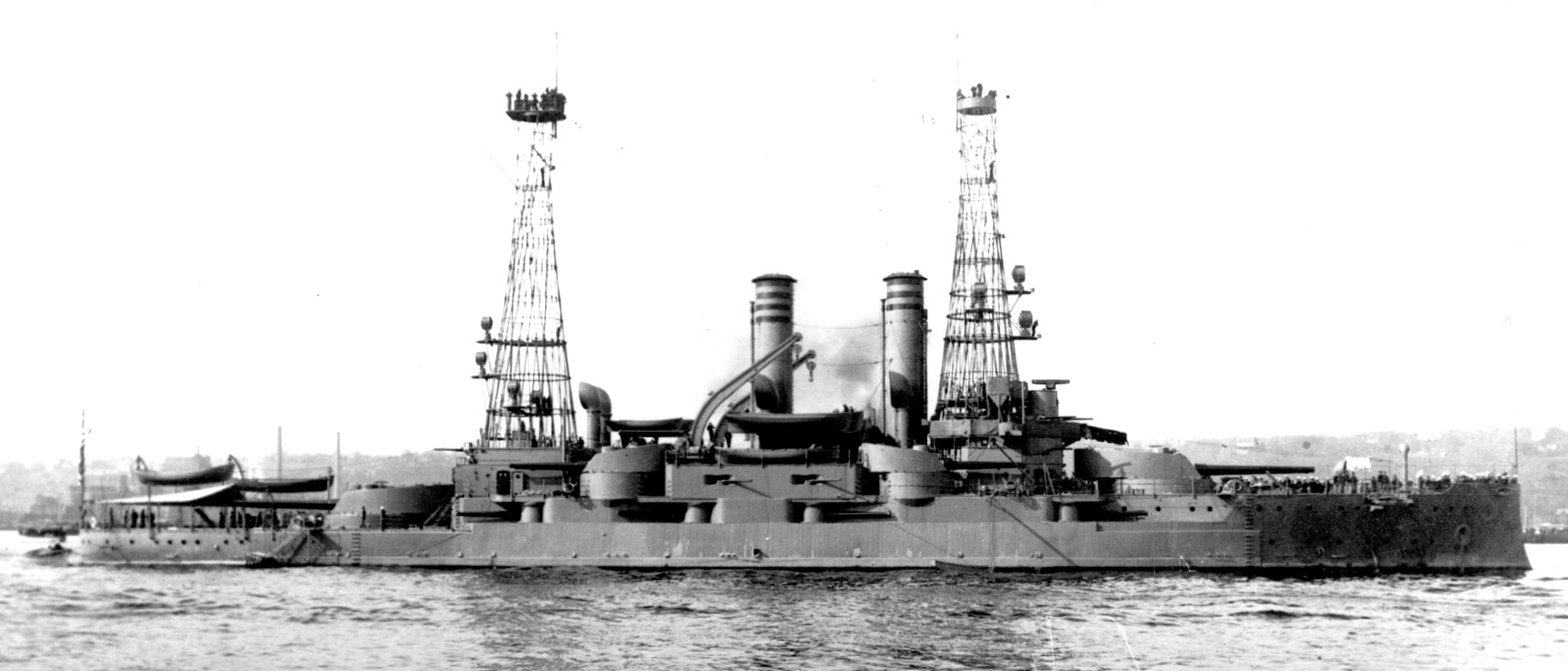
(USN Photo)
USS Mississippi (BB-23), 3 Oct 1911.
USS Mississippi (BB-23) was the lead ship of the Mississippi class originally built by the US Navy in 1904–1908. The class was built to a design smaller than other American battleships as the result of a limit on displacement imposed by Congress as part of an effort to constrain costs. The ships were armed with a main battery of four 12 in (305 mm), the standard for pre-dreadnought battleships of the time, but to secure that heavy primary armament, significant compromises in speed, secondary batteries, and armour protection were necessary to keep the ship within the prescribed displacement limit.
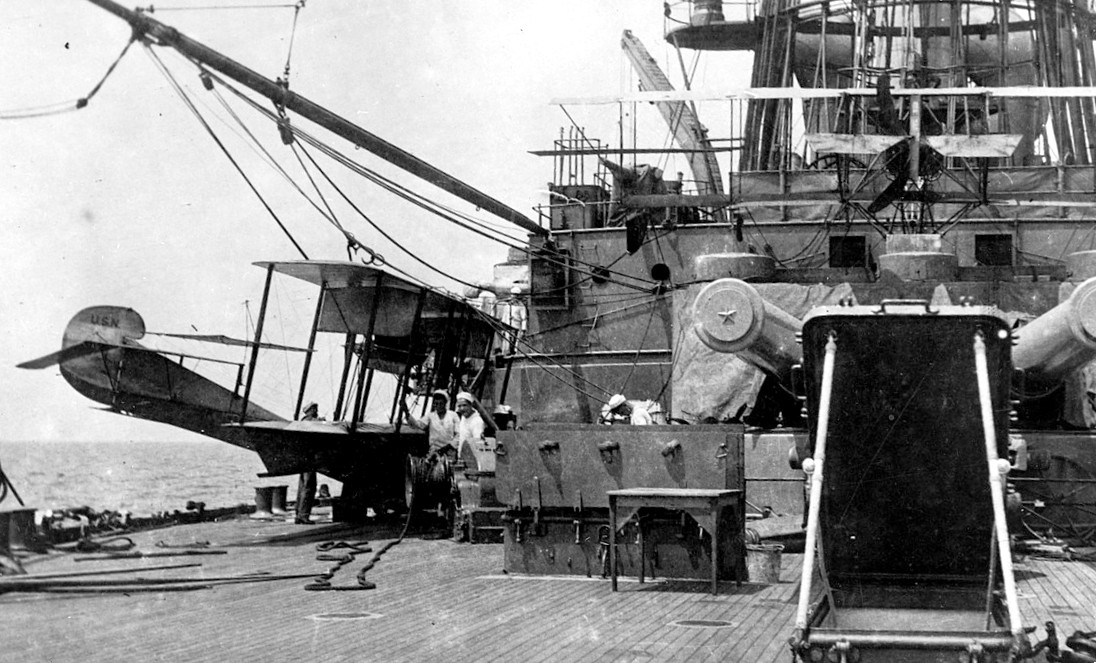
Mississippi served with the Atlantic Fleet from 1909 to 1912, which consisted primarily of routine training operations. In 1910, she and other ships of the fleet visited Europe and in 1912, she carried marines to Cuba during civil unrest in the country. Too slow to operate effectively with the fleet, she was placed in reserve in 1912. Mississippi was reactivated in January 1914 for use as an aviation support ship assigned to the Naval Air Station Pensacola, and she supported flying boats during the occupation of Veracruz, Mexico in April 1914. By this time, the navy was prepared to dispose of the ship, and Greece, which had entered a naval arms race with the Ottoman Empire, sought to acquire warships as quickly as possible.
Greece bought Mississippi in July 1914 and renamed her Kilkis (Greek: Θ/Κ Κιλκίς); she thereafter became the flagship of the Greek fleet. She did not see action during World War I, as the Greek government remained neutral until 1917, and after entering the war she only served as a harbor defense ship. She saw service during the Allied intervention in the Russian Civil War and the Greco-Turkish War of 1919–1922, supporting landings in Turkey and covering the final withdrawal of Greek forces in September 1922. Still plagued by her low speed, Kilkis was withdrawn from flagship duties in 1930, placed in reserve in 1932, and used as a training ship until the outbreak of World War II, after which she was used as a floating battery. During the German invasion of Greece on 23 April, she was attacked and sunk by German Ju 87 Stuka dive-bombers at Salamis Naval Base, together with her sister ship Lemnos. The two ships were ultimately raised in the 1950s and broken up for scrap. (Wikipedia)
(USN Photo)
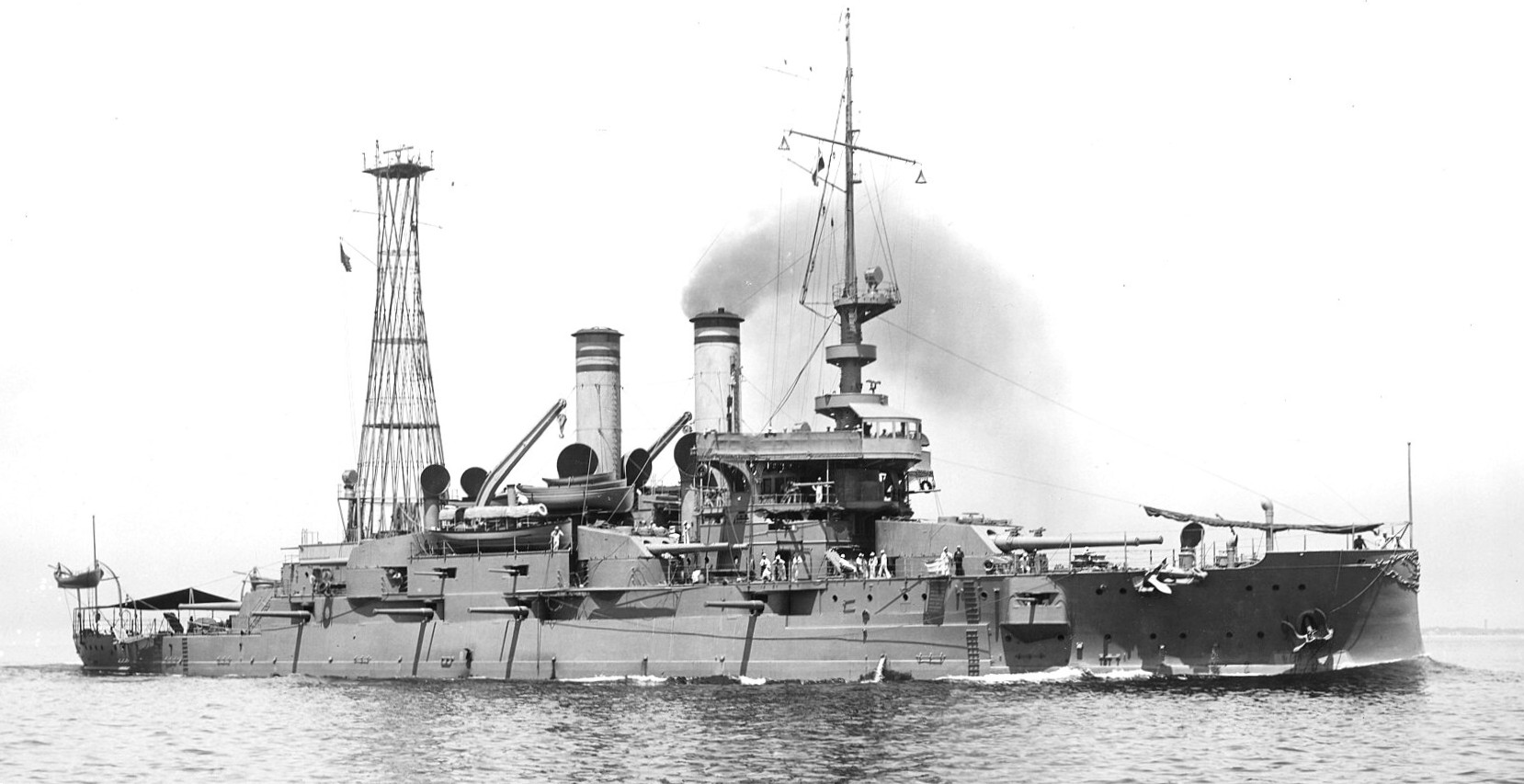
USS Mississippi (BB-23) after her aft lattice mast was installed in 1909.
(USN Photo)
The United States battleship USS Mississippi (BB-23) view on the ship’s afterdeck, while she was carrying the Navy’s first combat air group to Vera Cruz, Mexico, in April 1914. Planes visible include a Curtiss AB type flying boat (on deck at left), and a Curtiss AH type floatplane (atop the after 12/45 gun turret). Note boom rigged to the battleship’s superstructure, at left, for hoisting the planes on and off the ship.
(U.S. Naval History and Heritage Command Photo)
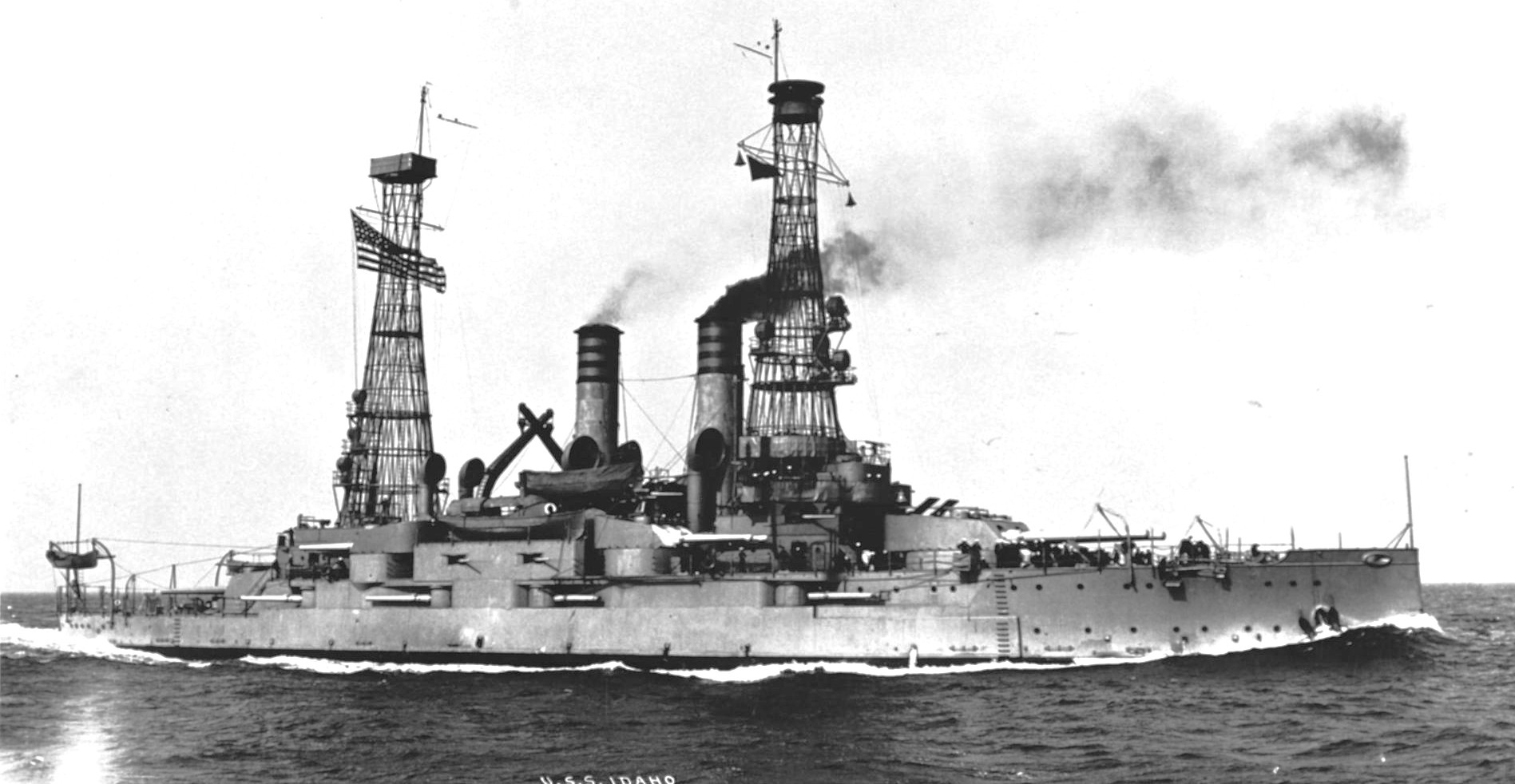
USS Idaho (BB-24) underway in 1912.
The two Mississippi-class battleships were ordered under the terms of the 1903 naval appropriations, which stipulated a maximum designed displacement of 13,000 long tons (13,209 t), as recommended by senior naval officers including Admiral George Dewey and Captain Alfred Thayer Mahan, who believed a force of smaller but more numerous (pre-dreadnought) battleships would better suit the navy’s needs. Elements in Congress also opposed the continually increasing size and, more importantly, cost of battleship designs. The displacement was limited to 3,000 long tons (3,048 t) less than the preceding Connecticut class, which necessitated significant compromises in speed, armament, and armor, making them poor designs unable to serve with the main fleet, and led to their quick disposal.
Idaho was 382 feet (116 m) long overall and had a beam of 77 ft (23 m) and a draft of 24 ft 8 in (7.52 m). She displaced 13,000 long tons as designed and up to 14,465 long tons (14,697 t) at full load. The ship was powered by two-shaft vertical triple-expansion steam engines with steam provided by eight coal-fired Babcock & Wilcox boilers that were ducted into two funnels. The engines were rated to produce 10,000 indicated horsepower (7,500 kW) for a top speed of 17 knots (31 km/h; 20 mph). Lattice masts were installed in 1909. She had a crew of 744 officers and enlisted men.
The ship was armed with a main battery of four 12 in (305 mm) L/45 guns in two twin turrets, one on either end of the superstructure. The secondary battery comprised eight 8 in (203 mm) L/45 guns mounted in four twin turrets, two on other side of the vessel amidships and eight 7 in (178 mm) L/45 guns mounted individually in casemates along the length of the hull, two fewer than the Connecticut class. Close-range defense against torpedo boats was provided by a battery of twelve 3 in (76 mm) L/50 guns (compared to twenty aboard the Connecticuts), six 3-pounder guns and two 1-pounder guns. The ship had two 21 in (533 mm) torpedo tubes submerged in her hull.
The ship’s main armoured belt was 7 to 9 in (178 to 229 mm) thick, reducing to 4 to 7 in (100 to 180 mm) on either end, two inches less than the Connecticuts. The main battery gun turrets had 12 in (305 mm) thick faces, mounted atop 10 in (250 mm) barbettes. Her secondary battery was protected by 7 in (180 mm) side armor. The forward conning tower had 9 in thick sides.Lemnos or Limnos was the English-language name of Θ/Κ Λήμνος, a 13,000 ton Mississippi-class battleship originally built by the United States Navy in 1904–1908. As USS Idaho (hull number: BB-24), she was purchased by the Greek Navy in 1914 and renamed Lemnos, along with her sister Mississippi, renamed Kilkis. Lemnos was named for the Battle of Lemnos, a crucial engagement of the First Balkan War. Armed with a main battery of four 12 in (305 mm) guns, Lemnos and her sister were the most powerful vessels in the Greek fleet.
The ship saw limited action during the First World War. Greece’s pro-German monarch, Constantine I opted to remain neutral until October 1916, when pressure from the opposing Triple Entente forced him to abdicate in favor of a pro-Entente government. For the remainder of the war, Lemnos operated solely as a harbor defense ship. In the aftermath of World War I, she saw service during the Allied intervention in the Russian Civil War and the Greco-Turkish War of 1919–1922. During the war with Turkey, Lemnos supported Greek landings in Turkey and participated in the final Greek sea-borne withdrawal in 1922. She remained in service until 1932, when she was used as a barracks ship and subsequently disarmed. During the Second World War German invasion of Greece in 1941, she and her sister were sunk in Salamis by German Junkers Ju 87 dive bombers. The two ships were ultimately raised and broken up for scrap after the end of the war. (Wikipedia)
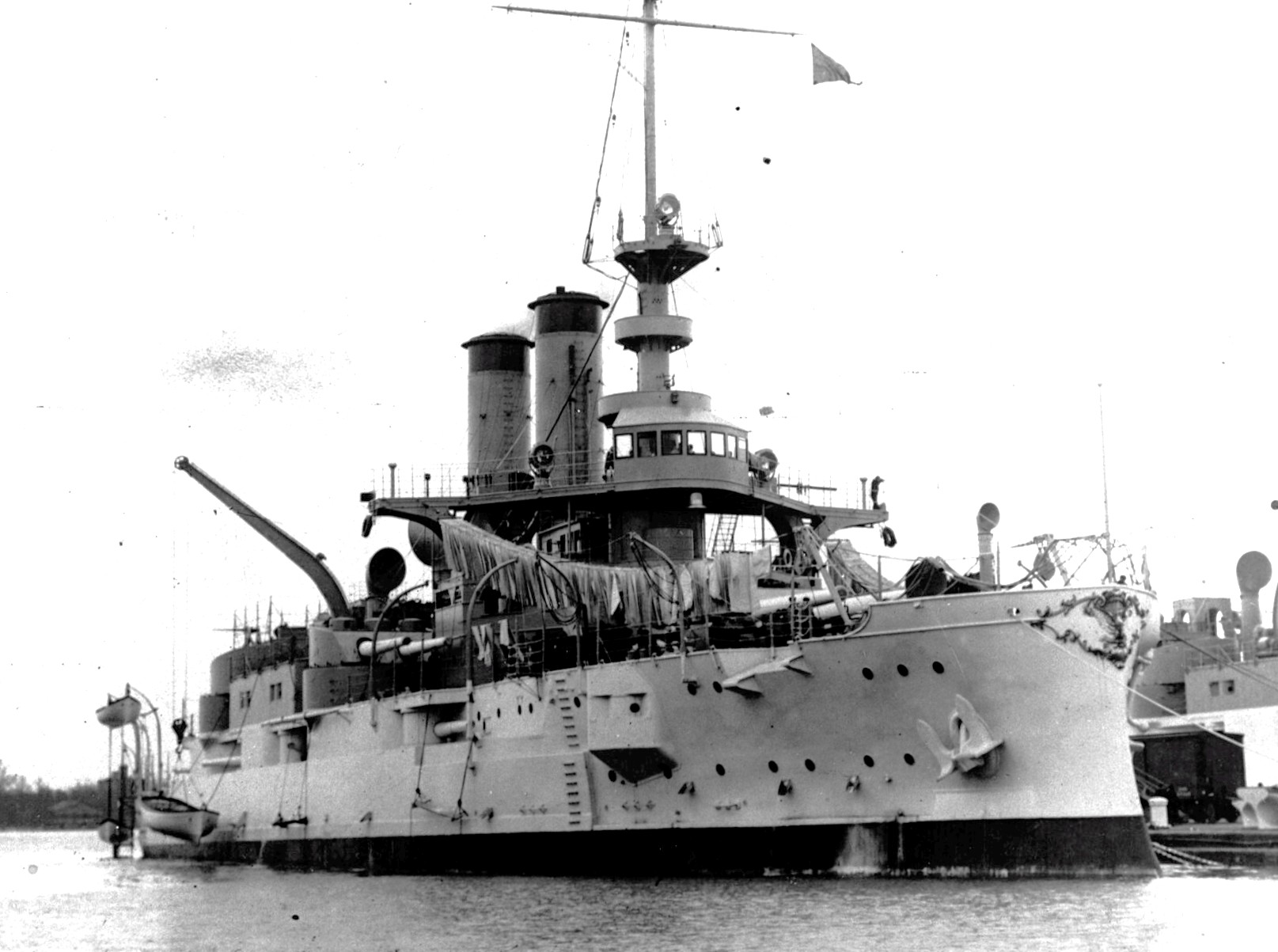
(U.S. Naval History and Heritage Command Photo)
USS Idaho (BB-24). Fitting out at the Cramp shipyard, Philadelphia, Pennsylvania, circa late 1907 or early 1908.
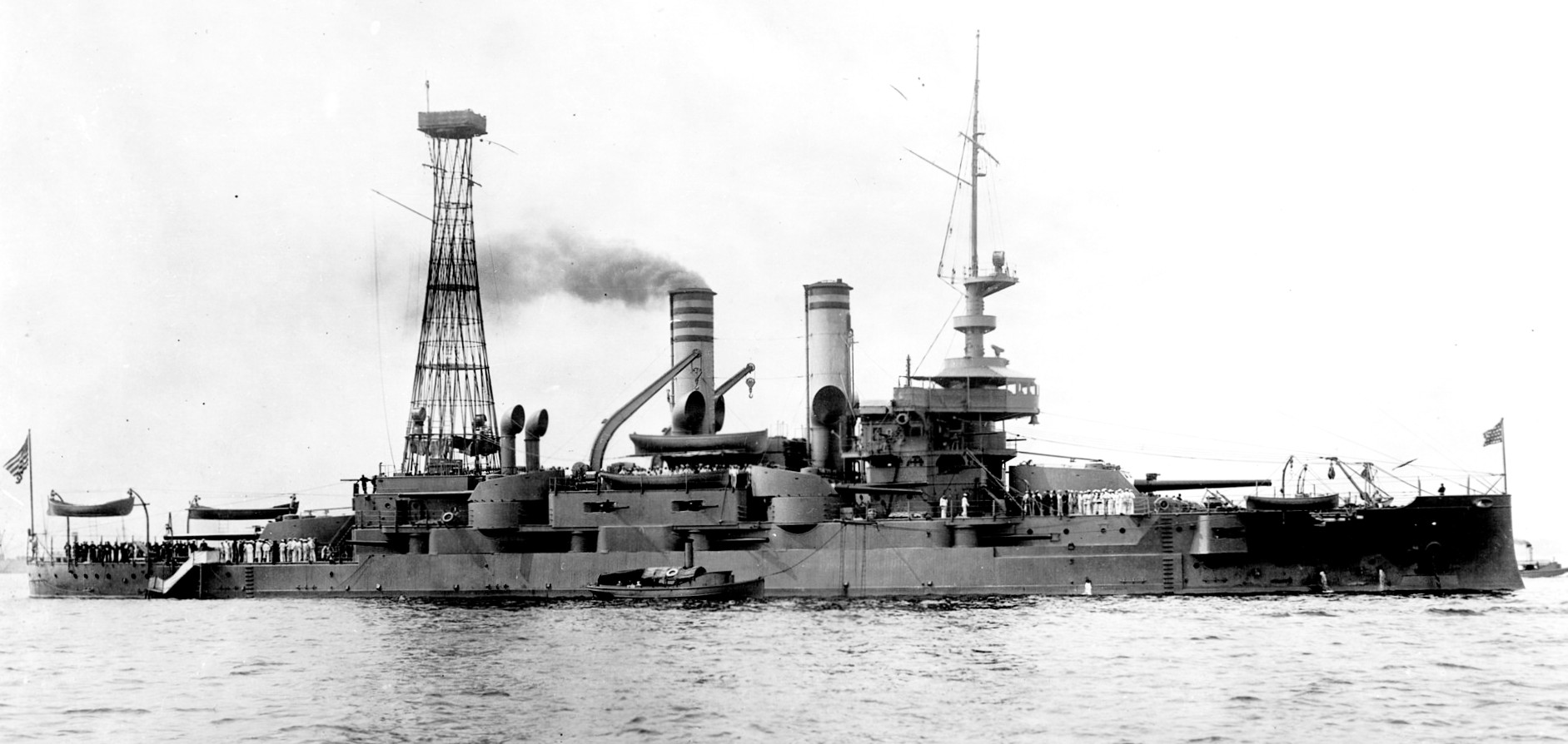
(U.S. Naval History and Heritage Command Photo)
USS Idaho (BB-24).
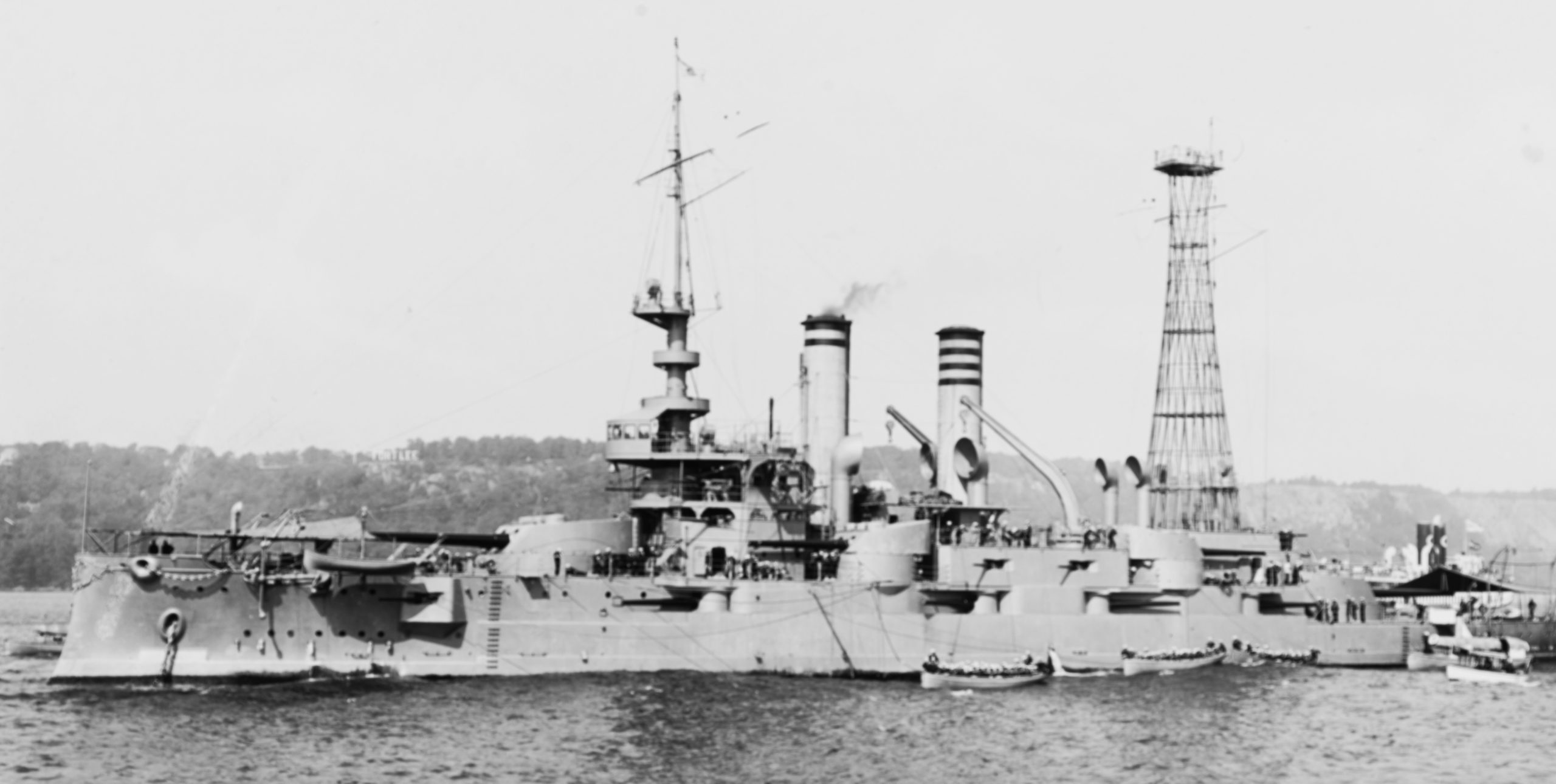
(U.S. Naval History and Heritage Command Photo)
USS Idaho (BB-24), in the Hudson River off Fort Lee, New York, 1909.
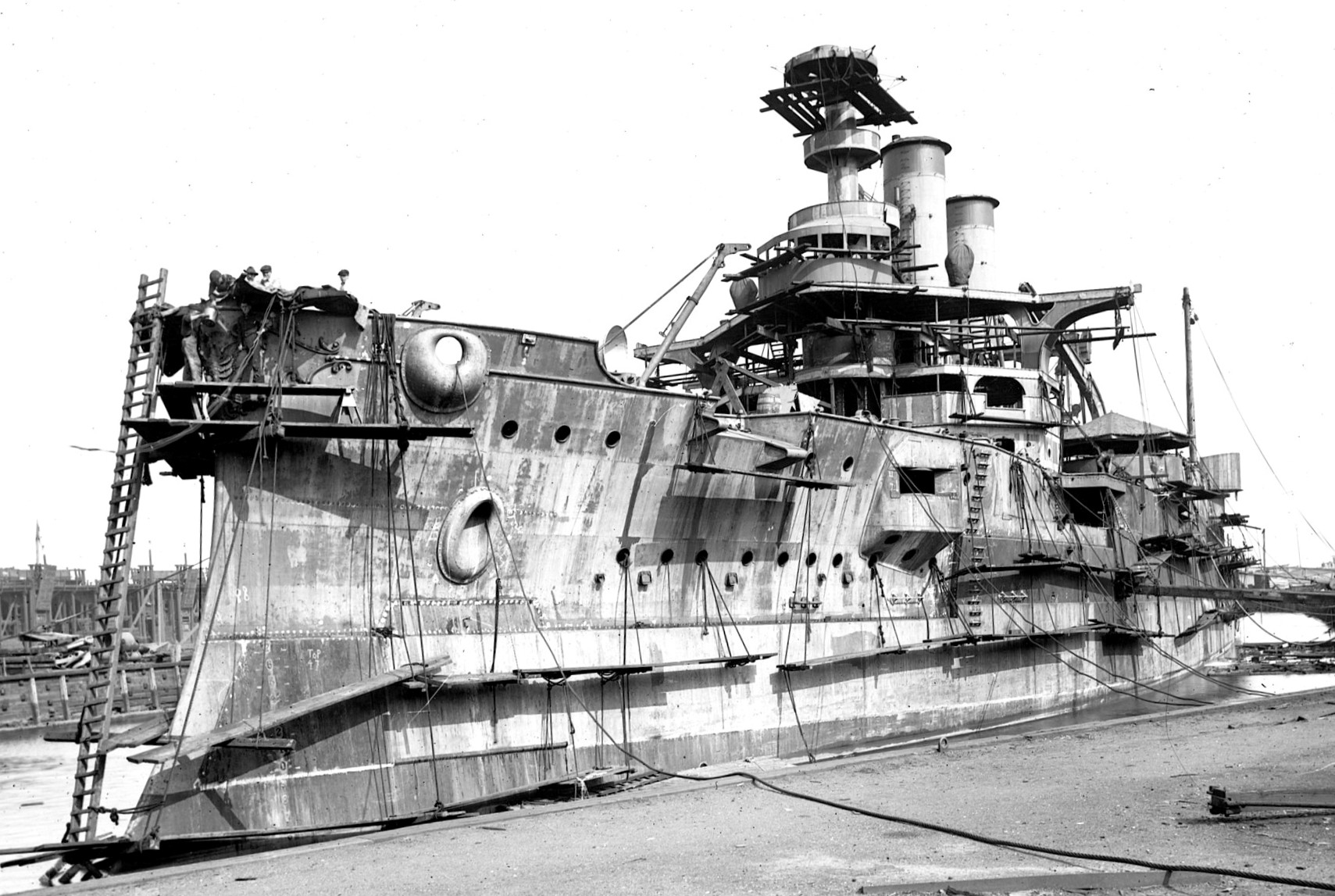
U.S. Naval History and Heritage Command Photo)
USS Idaho (BB-24) fitting out at the Cramp shipyard, Philadelphia, Pennsylvania, circa 1906.
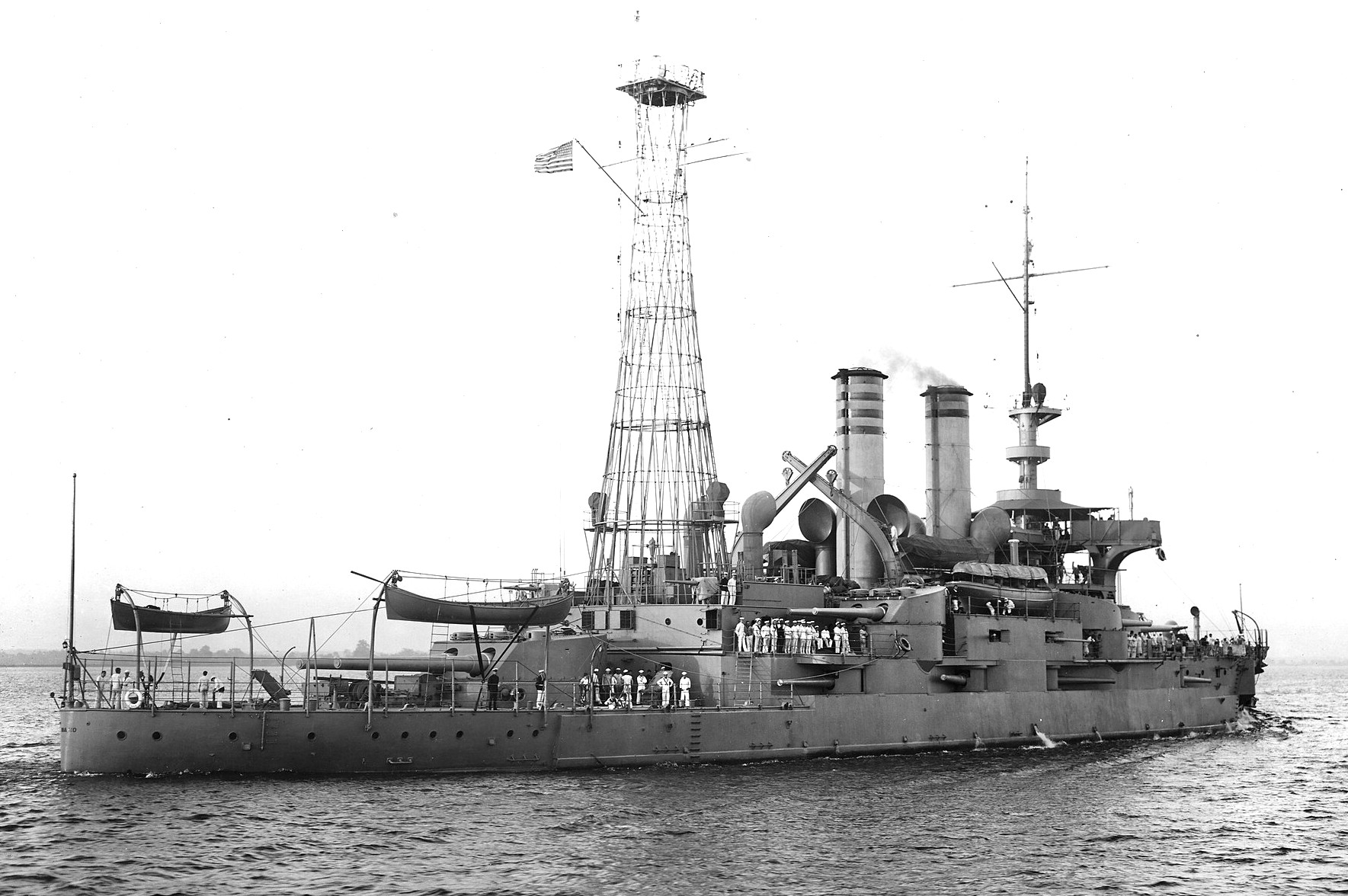
(U.S. Naval History and Heritage Command Photo)
USS Idaho (BB-24), 25 July 1909.
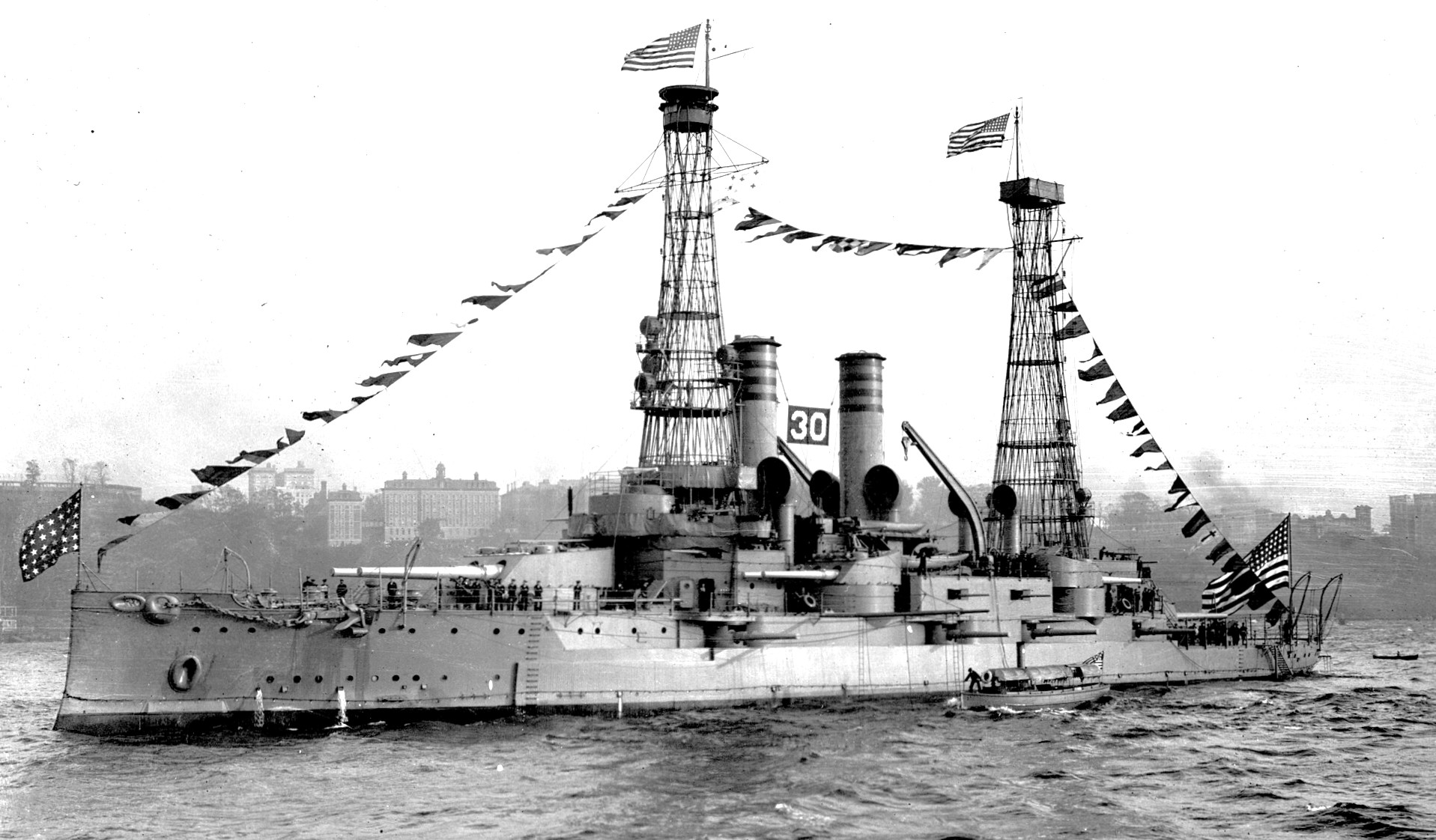
(U.S. Naval History and Heritage Command Photo)
USS Idaho (BB-24), dressed with flags during the Naval Review off New York City, October 1912.
The United States Navy began the construction of battleships with USS Texas in 1892, although its first ship to be designated as such was USS Indiana. USS Texas and USS Maine, commissioned three years later in 1895, were part of the New Navy program of the late 19th century, a proposal by then Secretary of the Navy William H. Hunt to match Europe’s navies that ignited a years-long debate that was suddenly settled in Hunt’s favour when the Brazilian Empire commissioned the battleship Riachuelo.
In 1890, Alfred Thayer Mahan’s book The Influence of Sea Power upon History was published and significantly influenced future naval policy—as an indirect result of its influence on Secretary Benjamin F. Tracy, the Navy Act of 30 June 1890 authorized the construction of “three sea-going, coast-line battle ships” which became the Indiana class.
The Navy Act of 19 July 1892 authorized construction of a fourth “sea-going, coast-line battle ship”, which became USS Iowa. Despite much later claims that these were to be purely defensive and were authorized as “coastal defense ships”, they were almost immediately used for offensive operations in the Spanish–American War. By the start of the 20th century, the United States Navy had in service or under construction the three Illinois-class and two Kearsarge-class battleships, making the United States the world’s fifth strongest power at sea from a nation that had been 12th in 1870.
Except for the USS Kearsarge, named by an act of Congress, all U.S. Navy battleships have been named for states, and each of the 48 contiguous states has had at least one battleship named for it except Montana; two battleships were authorized to be named Montana but both were cancelled before construction started. Alaska and Hawaii did not become states until 1959, after the end of battleship building, but the battlecruiser, or “Large Cruiser,” USS Alaska was built during the Second World War and her sister, USS Hawaii, was begun but never completed. The pre-dreadnoughts USS Zrinyi (formerly the Austrian SMS Zrínyi), USS Radetzky (formerly the Austrian SMS Radetzky), and the dreadnought USS Ostfriesland (formerly the German SMS Ostfriesland), taken as prizes of war after the First World War, were commissioned in the US Navy, but were not assigned hull classification symbols.
No American battleship has ever been lost at sea, though four were sunk during the attack on Pearl Harbor. Of these, only USS Arizona (BB-39) and USS Oklahoma (BB-37) were permanently destroyed as a result of enemy action. Several other battleships have been sunk as targets, and USS Utah, demilitarized and converted into a target and training ship, was permanently destroyed at Pearl Harbor. The hulk of the USS Oklahoma was salvaged, but was lost at sea while being towed to the mainland for scrapping. Two American-built pre-dreadnought battleships, USS Mississippi (BB-23) and her sister USS Idaho (BB-24), were sunk in 1941 by German bombers during their Second World War invasion of Greece. The ships had been sold to Greece in 1914, becoming Kilkis and Lemnos respectively. (Wikipedia)
USS Maine and USS Texas were part of the “New Navy” program of the 1880s. Texas and BB-1 to BB-4 were authorized as “coast defense battleships”, but Maine was ordered as an armoured cruiser and was only re-rated as a “second class battleship” when she turned out too slow to be a cruiser. The next group, BB-5 Kearsarge through BB-25 New Hampshire, followed general global pre-dreadnought design characteristics and entered service between 1900 and 1909. The definitive American pre-dreadnought was the penultimate class of the type, the Connecticut class, sporting the usual four-gun array of 12-inch (305 mm) weapons, a very heavy intermediate and secondary battery, and a moderate tertiary battery. They were good sea boats and heavily armed and armoured for their type. The final American pre-dreadnought class, the Mississippi-class, were an experiment in increasing numbers with slower ships of limited range. The Navy soon rejected the concept and within 6 years of commissioning, sold these to Greece in 1914 to pay for a new super-dreadnought USS Idaho (BB-42).
The dreadnoughts, BB-26 South Carolina through BB-35 Texas, commissioned between 1910 and 1914, uniformly possessed twin turrets, introduced the superimposed turret arrangement that would later become standard on all battleships, and had relatively heavy armor and moderate speed (19–21 knots, 35–39 km/h, 22–24 mph). Five of the ten ships used the established vertical triple expansion (VTE) propulsion rather than faster direct-drive turbines, used by the British which had higher fuel consumption. The ships had 8 (South Carolina class), 10 (Delaware and Florida) or 12 (Wyoming class) 12-inch guns, or 10 (New York class) 14-inch (356 mm) guns. The dreadnoughts gave good service, the last two classes surviving through World War II before being scrapped. However, they had some faults that were never worked out, and the midships turrets in the ten and twelve-gun ships were located near boilers and high-pressure steam lines, a factor that made refrigeration very difficult and problematic in hot climates. One of their number, Texas (BB-35), is the last remaining American battleship of the pre–Second World War era and the only remaining dreadnought in the world.
Next came the twelve Standards, beginning with BB-36 Nevada, commissioned over the period 1914 to 1920. The last ship commissioned was BB-48 West Virginia (BB-49 through 54 were also Standards, but were never commissioned, and scrapped under the Washington Naval Treaty). Oklahoma (BB-37) was the last American battleship commissioned with triple expansion machinery; all the other Standards used either geared steam turbines (Nevada, the Pennsylvania class, Idaho and Mississippi) or turbo-electric propulsion (New Mexico, the Tennessee and Colorado classes). The Standards were a group of ships with four turrets, oil fuel, a 21-knot (39 km/h; 24 mph) top speed, a 700-yard (640 m) tactical diameter at top speed, and heavy armor distributed on the “All or Nothing” principle. Armament was fairly consistent, starting with ten 14-inch guns in the Nevada class, twelve in the Pennsylvania, New Mexico and Tennessee classes, and eight 16-inch (406 mm) guns in the Colorado class. (Wikipedia)
After the 1930s “builders holiday,” the USN commissioned ten more battleships of an entirely new style, the so-called fast battleship. These ships began with BB-55 North Carolina and the last ship laid down was BB-66 Kentucky (the last completed ship was BB-64 Wisconsin). These ships were a nearly clean break from previous American design practices. All ten ships were built to a Panamax design (technically post-Panamax, as they exceeded normal Panamax beam by two feet, but they were still able to transit the canal). They were fast battleships, and could travel with the aircraft carriers at cruising speed (their speed was not intended for that role, but rather so they could run down and destroy enemy battlecruisers). They possessed almost completely homogeneous main armament (nine 16-inch guns in each ship, the sole difference being an increase in length from 45 to 50 calibers with the Iowa-class vessels), very high speed relative to other American designs (28 knots, 52 km/h, 32 mph in the North Carolina and South Dakota classes, 33 knots, 61 km/h, 38 mph in the Iowa class), and moderate armor. The North Carolina class was of particular concern, as their protection was rated as only “adequate” against the 16-inch super-heavy shells. They had been designed with, and armored against, a battery of three quadruple 14-inch guns, then changed to triple 16-inch guns after the escalator clause in the Second London Naval Treaty had been triggered. Secondary armament in these ships was almost homogeneous as well: Except for South Dakota, configured as a flagship, the other nine ships of this group sported a uniform 20-gun 5-inch (127 mm) secondary battery (South Dakota deleted two 5-inch mounts to make room for flag facilities).
Visually, the Second World War ships are distinguished by their three-turret arrangement and the massive columnar mast that dominates the superstructure. The last ship, Wisconsin (BB-64), commissioned in 1944 (Wisconsin was approved last; however, Missouri (BB-63) was commissioned three months later, due to delays from additional aircraft carrier construction). Missouri (BB-63), famous for being the ship on which the Japanese Instrument of Surrender was signed, was the last battleship in the world to be decommissioned on 31 March 1992. Seven of these ten ships are still in existence. South Dakota, Washington and Indiana were scrapped, but the remainder are now museum ships. There was intended to be another class of five of these ships, the Montana class (BB-67 Montana through BB-71 Louisiana), but they were cancelled before being laid down in favor of a greater number of aircraft carriers. The Montana-class ships would have been built to a 60,000-ton post-Panamax design, and carried a greater number of guns (twelve 16-inch guns) and heavier armour than the other ships; otherwise they would have been homogeneous with the rest of the Second World War battleships. In October 2006, the last battleships, (USS Iowa and USS Wisconsin), were stricken from the Naval Registry. (Wikipedia)