
Warplanes of the USA: Vought UO-1, US Navy
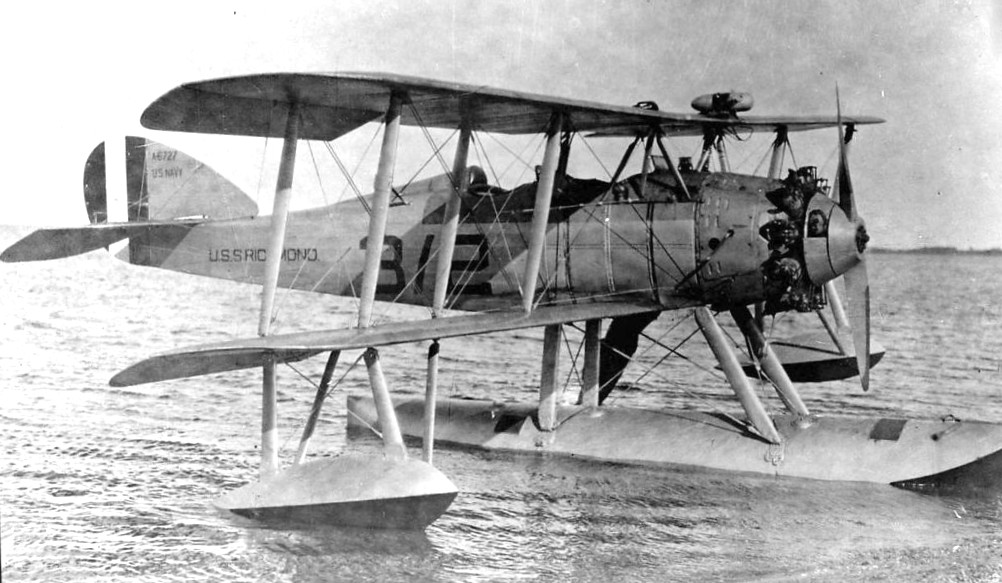
(RAAF Museum Photo)
Vought UO-1 floatplane (Serial No. A6727) from the USS Richmond (CL-4) visiting RAAF Point Cook Air Base, VIC in July 1925.
The Vought UO-1 was designed as a two-seat observation biplane for operation from ships of the United States Navy fleet, to be fitted with a single centre float and outrigger floats, to be catapulted off ships of the fleet and make unarmed reconnaissance, returning to the ship and landing on the open sea, being lifted on board by a derrick. The design was a development of the VE-7/9 series and was initially to be operated in the fighter role but as more specialised fighters were under development, it was built for more mundane duties. A total of 141 examples was completed and these were in service for some years on board ships of the American fleet, including Battleships and Cruisers.
The design initially was to be fitted with a 186 kw (250 hp) Aeromarine U-873 engine but by the time an order had been placed, the US Navy had decided to fit its aircraft with an air-cooled radial engine and a 149 kw (200 hp) Lawrance J-1 nine-cylinder radial engine was proposed, this engine later becoming the Wright J-1 when the Lawrance Aero Engine Corporation was taken over by the Wright Aeronautical Corporation.
The airframe was identical to the former fleet aircraft, the VE series, the wings and horizontal tail surfaces being interchangeable and, other than the fuselage of the UO-1 being rounded, a new engine and re-designed vertical tail surfaces, they were basically the same. By 1927 the aircraft were having their engines replaced with the 164 kw (220 hp) Wright J-5 engine which later became known as the Whirlwind. Eventually examples served with the US Coast Guard, these being fitted with the J-5 engine, and were used for chasing rum-runners during prohibition.
The prototype of the UO-1 first flew in 1922 and the type entered service with the US Navy fleet the following year, the first vessel equipped being the USS Richmond. They proved to be superior to other observation types which had been in service up to that time and the fleet’s fifteen Class 1 Battleships then in service were equipped with two or more UO-1s each. They were also placed on board the US Navy Scout Cruisers then entering service. A UO-1 was the first aircraft to be catapulted from a ship of the US fleet at night, this occurring on 26 November 1924 from the USS California in San Diego harbour. Twelve examples were supplied to Cuba as the QO-1, and a further two to Peru as the UO-1A. A UO-1 was also the first aircraft to be picked up on a hook in mid-air by the US Navy dirigible, the USS Los Angeles, in 1929. The type was retired by 1933.
In July 1925 ships of the US Navy Pacific fleet visited ports along the Australian east coast, sailing into Sydney Harbour, NSW on 23 July. This fleet consisted of three Battleships, six Cruisers and supporting vessels, the vessels including the USS Maryland, USS California, USS Colorado, USS Tennessee, USS Virginia, USS New Mexico, USS Mississippi and USS Idaho. When the fleet reached Port Phillip Bay in Melbourne, VIC six of the UO-1 seaplanes were flown off and landed on the bay, being drawn up on the beach at Point Cook, VIC. The fleet continued up Australi’s eastern seaboard, leaving Sydney on 6 August and proceeding to New Zealand, where they visited Lyttleton and Wellington before returning to the United States. No examples of the type have survived but a replica has been built in the United States by members of the Vought Aircraft Heritage Foundation. (aeropedia)

(USN Photo)
A U.S. Navy Vought UO-1 observation plane (BuNo. A-67–) at a naval air station, circa in the mid-1920s. The aircraft was assigned to the light cruiser USS Omaha (CL-4).
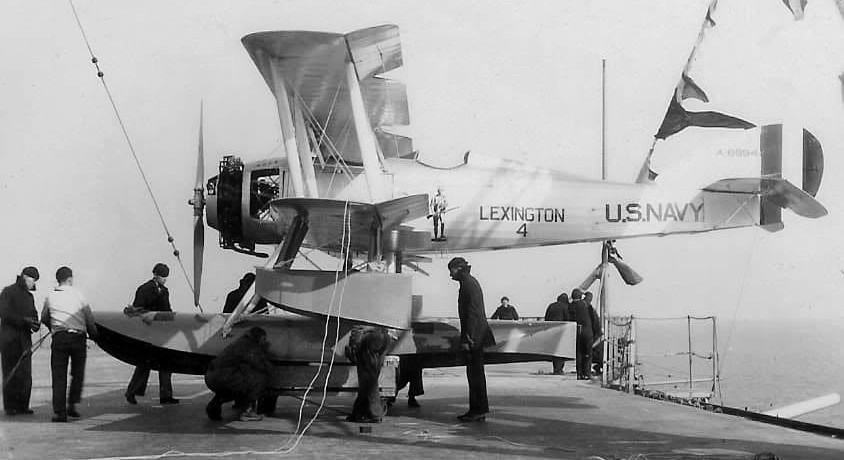
(USN Photo)
Vought UO-1 scout/observation seaplane, USS Lexington. First flown in the fall of 1922, the UO-1 entered service with the USS Richmond in 1923. As their superiority over potential competing types became evident, they became the only observation type in use on the fleet’s catapult-equipped combat ships. Vought UO-1 was the first airplane to be catapulted from a battleship at night.

(Aero Digest Photo)
Vought UO-1 photo from Aero Digest June 1926